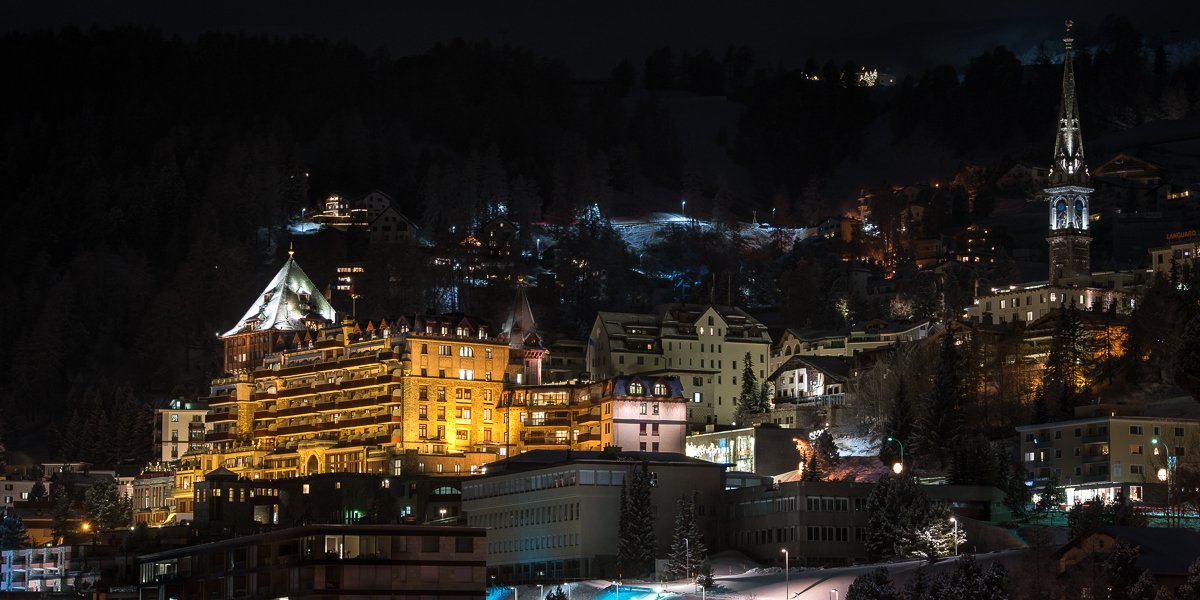
City Guide
St. Moritz
Suiza · Best time to visit: Dec-Mar, Jun-Sep.
Day-by-day plan
Choose your pace
Duración del viaje
09:00
Landmark
From St. Moritz Dorf station, cross Plazza da la Staziun and climb four minutes up Via Serlas to the Corviglia funicular valley terminal; the 1928 cable-cog threads through larch forest and emerges at 2,486 m, where a second cable car carries you to Piz Nair at 3,057 m. Here the Bernina Range — Piz Bernina, Piz Palü, and the Morteratsch Glacier — unfolds as one single snowbound horizon. A 20-minute ridge walk circles the summit bronze marmot and reveals all four Engadin valleys at once.
Tip: Board the very first funicular at 08:10 — by 10:30 the transfer queue at Corviglia doubles and afternoon clouds start capping Piz Bernina by noon. At the counter ask for the 'Piz Nair round-trip' chip (CHF 59) which includes both stages; the machine sells only the lower segment. From the summit, walk the ridge path west for ten minutes to the lone wooden bench above Val Suvretta — this is the angle postcards never show, with zero handrails in the frame.
Open in Google Maps →12:30
Food
From the Corviglia funicular valley station, walk two minutes east along Via Serlas to Hanselmann's green-and-white facade at the junction with Via Maistra. Since 1894 this is the quintessential Engadin café — wood-paneled salons, white-linen pastry counters, and the family's own Engadiner Nusstorte that every local grandmother measures her own against. The takeaway counter at the front moves fast and lets you refuel without losing the afternoon.
Tip: Order the Engadiner Nusstorte (€7/slice) — caramelized walnut tart invented in this very valley — plus the Bündner Bauernschinken-Käse sandwich on dark Engadin rye (€11). Ignore the table-service queue snaking into the tea room; the stand-up counter clears in five minutes. Buy a second Nusstorte in a paper sleeve to go — the shelf life is three weeks and it survives a transatlantic flight better than any souvenir you'll pick up in Switzerland.
Open in Google Maps →13:30
Landmark
From Hanselmann's doorway, cross Via Maistra and climb the stone stairway of Via Quadrellas for five minutes — the lake materializes first, then the tilted spire punches the skyline. This is all that remains of the 1139 Church of St. Mauritius: 33 meters tall, leaning 5.5 degrees (more pronounced than Pisa's 3.97), and entirely free to visit. The body of the church was demolished in 1893; the tower was spared for its beauty alone.
Tip: Stand on the lake-side of the tower and tilt your camera so the spire falls diagonally across the frame toward Piz Rosatsch on the far shore — the line cuts across both the tilt and the lake in one geometric motion. Best light lands at 13:30 in summer when the south face catches direct sun. Walk twenty paces past the tower to the low stone wall: from there the whole lake basin opens with zero railings in frame — the most-missed free viewpoint in town.
Open in Google Maps →14:15
Landmark
Retrace the stone stairway down Via Quadrellas, then turn west onto Via Serlas — you'll pass Chopard's flagship, Cartier, and Bulgari in rapid succession before the five turrets of Badrutt's Palace appear at the road's end. Via Serlas is Europe's highest-altitude luxury shopping street, twenty boutiques compressed into 300 meters with windows refreshed weekly for the returning winter set. At the vanishing point stands the 1896 fairy-tale hotel whose turreted silhouette is St. Moritz's visual signature, its sun terrace hanging directly over the lake.
Tip: Walk straight through Badrutt's public lobby as if you belong — no one stops anyone who isn't dripping. Exit the glass doors on the lobby's south side onto the sun terrace, and take your shot from the terrace's far-west corner: at 15:30 the yellow awnings frame Piz Corvatsch across the lake in perfect golden-hour light. Do NOT sit down — the terrace espresso is €14 and the waiter will time his arrival the moment you do.
Open in Google Maps →16:15
Park
From the Palace terrace, descend the switchback Via Brattas — eight minutes downhill through larch trees and pocket meadows — to the lakeside path at the wooden boat jetty. A 7-kilometer gravel loop circles Lej da San Murezzan, passing the century-old sailing boathouse, the Meierei Seehaus on the far shore, and the pine-shadowed return. In summer the water turns cobalt; each January the lake freezes solid and becomes the ice pitch for the White Turf horse races and Snow Polo World Cup.
Tip: Walk clockwise toward the Meierei footbridge first — you face the town on the return, so you collect two golden-hour angles for the price of one. At 17:00 in summer (15:30 in winter), the sinking sun paints the Piz Rosatsch wall on the opposite shore red-gold. Do NOT detour toward St. Moritz Bad midway; the map makes it look close but it adds 4 km of roadside asphalt with zero scenic payoff. The gravel turns ice-slick from November to April — grippy soles are non-negotiable.
Open in Google Maps →19:30
Food
From the lake promenade, climb the stone stairway back up Via Brattas — seven minutes of switchbacks under larch branches — and emerge across a quiet square from Chesa Veglia's carved-timber facade. A 1658 Engadin farmhouse transformed by Badrutt's Palace into the valley's most atmospheric dining room: three floors of hand-painted sgraffito, low pine-beamed ceilings, and the original hearth still lit nightly. This is the dinner jet-setters book on repeat, and the one sit-down meal worth slowing a layover for.
Tip: Reserve three weeks ahead by email (not phone — they reply same day by email); ask specifically for a table in the 'Patrizier-Stube' upstairs, the oldest timbered room of the 1658 farmhouse. Order the Pizokel al forno (€28) — Engadin buckwheat dumplings baked under mountain cheese and crispy speck — and a glass of local Valtellina Nebbiolo from the by-the-glass pour rather than a bottle. PITFALL: ignore the 'alpine fondue cruise' leaflets at the lake jetty (€120/person) — it's microwave cheese on a floating tarp. Equally skip any restaurant along Via dal Bagn in St. Moritz Bad that posts a six-language menu; the mark-up on Capuns and Pizokel there runs 40–60% above Dorf prices, and the Nusstorte they serve is factory-made.
Open in Google Maps →Saltar al día
09:00
Landmark
From St. Moritz train station, take the 6-minute regional train to Punt Muragl, then the 1907 funicular up through larch forest — 25 minutes door to panorama. The terrace at 2,456 m delivers the defining image of the Engadin: all four valley lakes strung like sapphires beneath Piz Bernina's glacier. Walk the gentle Philosopher's Loop counter-clockwise so the view unfolds gradually.
Tip: Take the 08:30 first funicular — by 10:00 tour buses from Samedan fill the trail. Stand at the wooden signpost marked '4 Lakes' for the postcard shot; morning light hits the southern faces of Piz Rosatsch best between 09:30 and 10:15.
Open in Google Maps →12:00
Food
Back down the funicular, train to St. Moritz, then walk 8 minutes up Via Maistra — the main village street lined with sgraffiti-carved Engadin houses. Hanselmann's has been the village café since 1894 and its frescoed corner building is a landmark in itself. The back room has table service under painted ceilings; the front counter is tourist theatre.
Tip: Order the Engadiner Nusstorte (CHF 7.50 a slice — the caramelized walnut tart invented in this valley) with a Plain in Pigna rösti (CHF 22). Skip the overpriced sundaes. Queue before noon or after 13:30 — midday the German bus tours arrive.
Open in Google Maps →13:30
Museum
Continue west along Via Somplaz for 5 minutes — you'll see the distinctive circular stone rotunda appear half-hidden among larch trees. The museum was designed in 1908 to house Giovanni Segantini's Alpine Triptych, the three monumental canvases 'Life–Nature–Death' the painter made in the surrounding mountains before dying at 41 on the Schafberg. Nothing else in the Alps comes close to this as a fusion of art, architecture, and landscape.
Tip: Stand at the exact center of the rotunda beneath the skylight — the three canvases only resolve into a single circular panorama from that spot. Closed Mondays; last entry 17:30. Skip the audio guide: the wall text in English is better written.
Open in Google Maps →15:30
Landmark
Walk back east along Via Somplaz for 8 minutes, then turn up toward the parish plateau — the 33-meter Romanesque tower suddenly appears, tilted a dramatic 5.5° above the rooftops. It is the sole surviving fragment of the 12th-century Mauritius church that stood here before the village slid downhill in the 19th century. Continue 30 meters to the Mauritius Spring, the iron-rich holy source that gave St. Moritz its name and launched its 3,500-year career as a pilgrimage spa.
Tip: The best shot is from the Klostergartenweg footpath behind the tower — not from the main square. From that angle the lean is most dramatic with the lake in the background. Taste the spring water from the free public tap inside the covered pavilion; it's the same mineral source that bottles Bad St. Moritz thermal water.
Open in Google Maps →17:00
Park
From the tower, descend the Quellenweg footpath for 7 minutes — it curves past the Mauritius Spring pavilion and lands you at the lake's northern shore. Follow the wooden boardwalk west along the water with Piz Rosatsch's pyramid straight ahead. This is the walk the Badrutt family paced in 1864 when they wagered summer guests on whether they could return in winter — the bet that invented Alpine winter tourism.
Tip: Time this for golden hour — around 18:00 in summer, 16:00 in winter — when the light on Piz Rosatsch turns copper. Walk west toward the Meierei headland for the widest reflection shot. Avoid the pedal-boat rental at the eastern end (CHF 45/hour) — it is the most overpriced activity in town.
Open in Google Maps →19:30
Food
Follow the promenade back to Via Serlas for 10 minutes, passing Badrutt's Palace — Chesa Veglia is the 1658 farmhouse just behind the hotel, now Badrutt's own rustic restaurant compound under three low-beamed Stuben. Dining here is the ritual of St. Moritz: every ski-season Hollywood name has sat in these carved larch booths since the 1930s. The Patrizier Stuben on the upper floor is the one with the painted ceiling and the history.
Tip: Reserve three weeks ahead for the Patrizier Stuben dining room — the ground-floor pizza and grill rooms are fine but any hotel can do those. Order Bündner Capuns (CHF 38 — Swiss chard parcels with salsiz) or wild game in season; skip the CHF 200+ tasting menu. Warning: Chesa Veglia is the real thing, but the 'lakeside view' restaurants lining the promenade outside Badrutt's are the classic St. Moritz tourist trap — inflated prices for average food and soft drinks at CHF 12. Decline the sommelier's wine pairing and order by the glass.
Open in Google Maps →08:30
Landmark
From the village, a 4-minute walk up Via Chantarella brings you to the funicular station at the eastern edge of town — two stages (funicular to Corviglia, then cable car) lift you to 3,057 m. The summit terrace opens onto the full Bernina range: Piz Bernina, Piz Palü, Piz Morteratsch in a single crescent of ice. In winter this is the top of the Corviglia ski area; in summer it's the easiest 3,000-meter panorama in the Alps, reached without a step of climbing.
Tip: Buy the combined return ticket at Chantarella (CHF 88, 50% off with Swiss Travel Pass). At the summit, walk the 3-minute ridge path to the bronze ibex sculpture — that angle frames both the Engadin lakes to the south and the Bernina glaciers to the east in one shot. Go early: the summit is in shade until 09:15 but clear of afternoon cloud that builds from 13:00.
Open in Google Maps →12:00
Food
On the way down, hop off the cable car at Corviglia mid-station — La Marmite is directly at the station, no walking between lift and table. Chef Reto Mathis's perched mountain restaurant is the Alps' most famous altitude dining room, a pilgrimage for the CHF 48 truffle risotto served in an iron marmite pot. The south-facing terrace looks straight down onto the four Engadin lakes you stood above yesterday.
Tip: Order the truffle risotto (CHF 48) — people fly from Zurich in winter just for it; seasonal black truffle is shaved at the table. Reserve 24 hours ahead for the sunny terrace in peak season. The self-service canteen downstairs is a quarter the price but none of the ritual; if budget matters, come here for coffee and the view and eat lunch in town.
Open in Google Maps →14:00
Shopping
Ride the funicular's final leg back to town, then stroll 2 minutes to Via Serlas — the short street that concentrates more luxury names per meter than anywhere outside Milan's Montenapoleone. Cartier, Louis Vuitton, Gucci, Chopard, Graff and Asprey sit shoulder to shoulder in sgraffiti-painted 18th-century buildings. The street is pedestrian and worth walking even without buying — the window displays are changed to match whichever royal family is in residence.
Tip: Duck into the alley Plazza dal Mulin behind Via Serlas — the smaller independent jewellers (Bulgari, La Serlas watch specialists) sit there, and their tax-free export paperwork is faster than the flagship stores. For window-only browsers, the Cartier display at No. 24 and the Asprey silver collection at No. 35 are the set pieces.
Open in Google Maps →15:15
Museum
From Via Serlas, cross to Via dal Bagn and walk 6 minutes downhill — the museum occupies a re-creation of a traditional Engadin patrician house, sgraffiti carvings and all. Inside: 3,500 years of Engadin life, from Bronze Age bronze pins found in the Mauritius Spring to the painted 17th-century parlours of the merchant families who grew rich on the Italy-Venice salt trade. This is the museum that lets you read every building in the valley afterward.
Tip: Go straight to Room 7 for the reconstructed 1683 Engadin stua — the larch-panelled parlour was moved stone-by-stone from a real house in Zuoz, and the ceiling rose is the most beautiful piece of Alpine woodwork in Switzerland. Ignore the first-floor textile gallery; it's 20 minutes you won't get back. Closed Saturdays and the full month of November.
Open in Google Maps →17:00
Park
From the museum, follow the signposted Staz forest path south for 20 minutes — a pine-scented trail along the lakeshore that ends at a hidden second lake tucked behind the pines. Lej da Staz is the Engadiners' own swimming hole, invisible from the road and 400 meters from the Bernina railway yet somehow never crowded. A single wooden restaurant (Chesa Staz) sits on the northern shore; the rest is forest, reeds and turquoise water.
Tip: In summer (Jul-Aug) the western shore is a natural swimming beach — public, free, and the warmest water in the valley at around 22°C in midday sun. Changing is behind the pine trunks; bring a towel. In winter the lake is a cross-country ski loop track and still worth the walk at sunset for the pink light on Piz Julier.
Open in Google Maps →19:30
Food
Walk back along the same forest path (or take the summer motorboat across Lake St. Moritz if it is running) — Engiadina sits at Plazza da Scoula, a 5-minute climb from the lakefront. This is the locals' regional restaurant: cheese fondue, Capuns, Pizzoccheri, and the valley's own Veltliner wines served in a cluttered wood-panelled dining room where the ski instructors eat in the off-season. No celebrity sightings, no English menu card — which is exactly the point after 48 hours of Badrutt's polish.
Tip: Order the Pizzoccheri (CHF 28) — the buckwheat pasta baked with Alp cheese, potato and savoy cabbage, a Valtellina-Engadin border dish almost no St. Moritz tourist finds. Arrive by 19:00 to secure a table without reservation; after 20:00 the Italian-speaking late crowd fills it. Warning: the 'panoramic' restaurants along the Bad-side lakefront — especially the ones at the thermal spa — are the final tourist trap of St. Moritz; identical menus to Engiadina at three times the price because of the window view.
Open in Google Maps →
Trip builder
Plan this trip around St. Moritz
Turn this guide into a bookable rail itinerary with FlipEarth.
Keep exploring
Related cities
More in the same country

FAQ
Frequently asked questions
How many days do you need in St. Moritz?
Most travelers enjoy St. Moritz in 1 days, with enough time for headline sights and a slower meal or museum stop.
What's the best time to visit St. Moritz?
The easiest season for most travelers is Dec-Mar, Jun-Sep, especially if you want good weather and manageable crowds.
What's the daily budget for St. Moritz?
A practical starting point is about €180 per person per day before hotels, then adjust based on museums, dining, and transport.
What are the must-see attractions in St. Moritz?
A good first shortlist for St. Moritz includes Piz Nair Summit via Corviglia Funicular, The Leaning Tower of St. Moritz (Schiefer Turm), Via Serlas and Badrutt's Palace Hotel Terrace.