City Guide
Liverpool
Reino Unido · Best time to visit: May-Sep.
Day-by-day plan
Choose your pace
Duración del viaje
09:00
Religious
The largest cathedral in Britain and the fifth largest church in the world — from outside, the sheer scale of this red sandstone Gothic revival colossus is almost incomprehensible. Circle the full exterior, then descend into St James' Gardens below — a sunken Victorian cemetery carved from an old quarry directly beneath the cathedral's towering south wall, where moss-covered tombstones sit under ancient trees in one of Liverpool's most atmospheric hidden corners.
Tip: The definitive photograph is from St James' Mount looking up at the full west facade — at 09:00 the morning sun strikes the sandstone and turns it deep copper-gold. Then walk down into the sunken cemetery gardens for a dramatically different angle: the cathedral looming above the quarry wall like a medieval fortress. Most visitors never find this spot.
Open in Google Maps →10:45
Religious
Walk north up Hope Street — a 15-minute stroll past Georgian terraces and the ornate facade of the Philharmonic Dining Rooms, a Grade I listed Victorian pub so extravagant it deserves a pause. At the far end, the Metropolitan Cathedral appears: a 1960s concrete-and-glass crown that locals call 'Paddy's Wigwam,' its soaring lantern tower ringed with coloured glass — an electrifying contrast to the Gothic sandstone you just left. Circle the building completely for the full effect.
Tip: The best exterior photo angle is from the University of Liverpool campus side to the east, where you can capture the full conical shape against the sky without obstruction. These two cathedrals represent 500 years of faith 800 metres apart — the most dramatic architectural dialogue in any British city.
Open in Google Maps →12:00
Food
Head south-west down Mount Pleasant and turn onto Bold Street — an 8-minute downhill walk into Liverpool's most eclectic food street. Bakchich is a fast-casual Lebanese spot perpetually packed with students and locals: the falafel wrap (£7.50) is crisp-shelled and deeply herbed, and the chicken shawarma plate (£11) with garlic toum is the move if you have ten minutes to sit. Counter-order, no reservation needed.
Tip: Order at the counter and grab a table upstairs — it is less frenetic than the ground floor. The house-made hot sauce is superb but genuinely fierce; ask for it on the side. Budget £8–12 per person.
Open in Google Maps →13:00
Entertainment
Walk north along Bold Street, cut through Slater Street to Whitechapel, and turn left into Mathew Street — about 10 minutes on foot. This narrow cobblestone alley is where The Beatles played 292 times at The Cavern Club before the world learned their names. Walk the full length slowly: the rebuilt Cavern Club facade, the Wall of Fame listing every artist who performed there, the bronze John Lennon statue leaning against a wall with arms crossed, and the Eleanor Rigby sculpture sitting alone on a bench on nearby Stanley Street.
Tip: The John Lennon statue outside The Cavern Club is the single most-photographed spot in Liverpool — early afternoon means manageable crowds and good overhead light with no harsh shadows on the face. For a quieter portrait, sit beside the Eleanor Rigby statue on Stanley Street. Skip the 'original Cavern brick' souvenirs in the surrounding shops — mass-produced novelties at triple the price.
Open in Google Maps →14:45
Landmark
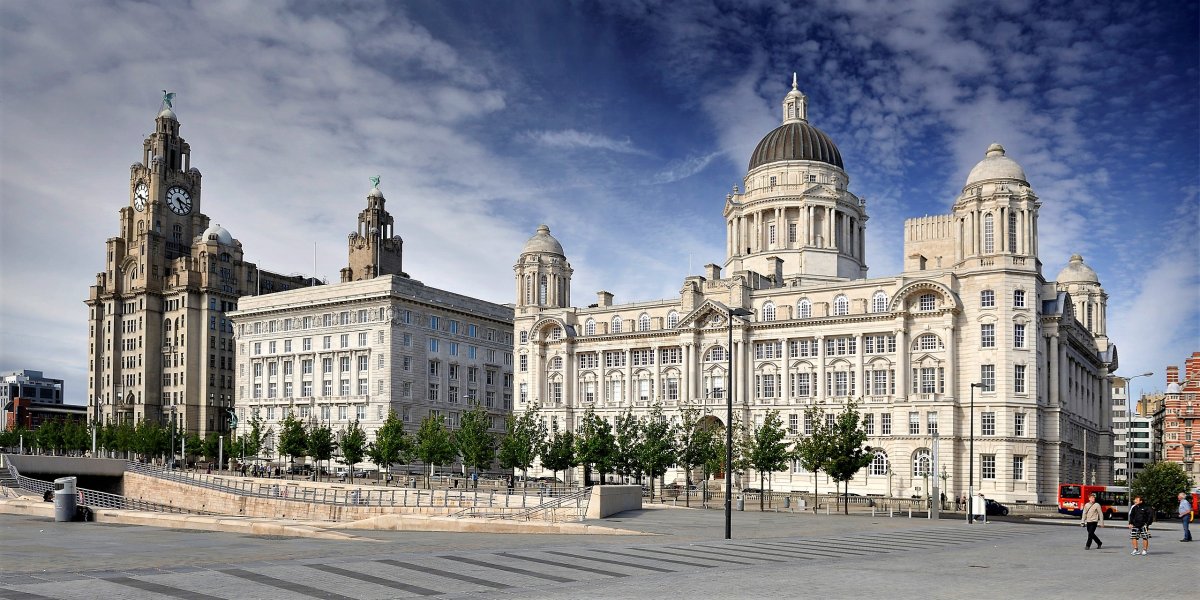
Walk west down North John Street toward the river — a 10-minute gentle descent where the Mersey suddenly appears between buildings with the Three Graces arranged across the skyline. Start at Pier Head with the Royal Liver Building and its mythical Liver Birds, find the bronze Beatles statue mid-stride along the waterfront, then stroll south to Albert Dock — a magnificently restored colonnaded Victorian warehouse complex reflected in still water. This half-mile of waterfront packs more visual drama per step than anywhere else in northern England.
Tip: The Beatles statue at Pier Head faces the river — photograph it from behind with the Mersey as backdrop, not from the front where the background is a car park. At Albert Dock, the best light hits the red-brick columns reflected in the water between 15:00 and 17:00 in spring and summer. Walk the full perimeter of the dock basin for the reflections.
Open in Google Maps →18:00
Food
From the southern end of Albert Dock, it is a 2-minute walk to The Pump House — a gastropub in a distinctive Grade II listed Victorian pump house that once powered the dock's hydraulic cranes. The beer-battered fish and chips (£15.95) uses sustainably caught cod with hand-cut chips and proper mushy peas — the definitive Liverpool comfort meal. The slow-braised lamb shoulder (£19.95) is fall-apart tender, and local craft ales are on tap.
Tip: Sit on the waterside terrace if weather allows — you will watch the light soften over the Mersey with the dock's iron columns framing the view, which is as good a farewell to Liverpool as you will find. Arrive before 18:30 to skip the post-work rush; no reservation needed for the terrace. Budget £20–30 with a pint. Avoid every other waterfront restaurant with a laminated menu — they are tourist markups with a view, and this is the only one where locals actually eat.
Open in Google Maps →Saltar al día
09:00
Landmark
Start your morning at Pier Head, arriving via the waterfront promenade from James Street station — the three grand Edwardian buildings reveal themselves one by one as you approach from the east. The Royal Liver Building, Cunard Building, and Port of Liverpool Building form the most recognizable waterfront silhouette in England, built when Liverpool was the gateway to the Atlantic. Stand at the Mersey railing and face west — on a clear morning the light bounces off the river and catches the Liver Birds in gold.
Tip: Walk to the very end of the floating jetty at the Mersey Ferry terminal for the widest-angle photo of all Three Graces with no obstructions — almost no tourists go past the ticket gates, but you can walk onto the jetty for free without boarding.
Open in Google Maps →10:15
Museum
Walk south along the waterfront promenade with the Mersey on your right, past the canal link bridge — the red-brick colonnades of Albert Dock appear ahead in about 8 minutes. This is the world's largest permanent Beatles exhibition, tracing the band from Mendips and Forthlin Road through Hamburg, the Cavern, Abbey Road, and the rooftop concert. The recreated Cavern Club stage and the white room installation for 'Imagine' are genuinely moving, even if you are not a die-hard fan.
Tip: Book the first entry slot online — the 10:00 opening is quietest and you will have the replica Cavern stage to yourself for photos. The included audio guide is narrated in the style of a radio documentary and is worth wearing both earphones for.
Open in Google Maps →12:30
Food
Step out of the Beatles Story exit and turn right along the dock edge — the tall Victorian chimney of the Pump House is visible immediately, a 2-minute walk. This former hydraulic pumping station once powered the dock cranes and now serves proper pub food in a space full of original ironwork and exposed brick. Sit upstairs by the arched windows overlooking the dock basin for the best atmosphere.
Tip: Order the traditional Scouse — Liverpool's signature lamb and root-vegetable stew served with crusty bread and beetroot (about £9). Pair it with a local craft ale from Liverpool Brewing Company. Arrive by 12:30 to grab a window table before the lunch rush hits at 13:00.
Open in Google Maps →14:00
Museum
Walk along the colonnade on the north side of the dock — Tate Liverpool is in the converted warehouse at the northwest corner, 3 minutes on foot. This is the largest gallery of modern and contemporary art outside London, housed in a beautifully adapted Jesse Hartley warehouse with the original cast-iron columns still standing. The permanent collection rotates but consistently features strong British pop art and post-war abstract work.
Tip: Head straight to the top floor and work your way down — the upper galleries have the best natural light from the skylights and the fewest visitors. The ground-floor shop has genuinely good design prints and art books that are not overpriced by museum-shop standards.
Open in Google Maps →16:00
Museum
Exit Tate Liverpool and walk north along the waterfront past the dock entrance — the striking angular form of the Museum of Liverpool sits on the quayside at Mann Island, about a 6-minute walk. This free museum tells the story of the city through the lives of its people, from the transatlantic slave trade to Merseybeat to the 1989 Hillsborough disaster. The 'Wondrous Place' music gallery and the overhead railway reconstruction are highlights you will not find anywhere else.
Tip: The third-floor People's Republic gallery covers football, music, and social history in a way that explains why Liverpool feels different from every other English city — allow at least 30 minutes there. The panoramic window on the top floor gives a framed view of Birkenhead across the river, best light around 16:30 in summer.
Open in Google Maps →19:00
Food
Walk east from Pier Head through Liverpool ONE, up the steps past Chavasse Park, and continue along Hanover Street until you reach Bold Street — about 12 minutes on foot, gently uphill. Maray is a small-plates restaurant inspired by the Marais district in Paris and the souks of Beirut, and it is where young Liverpool goes on a Friday night. The room is loud, warm, and candlelit, with an open kitchen turning out some of the best food in the city at mid-range prices.
Tip: The disco cauliflower — roasted whole with harissa and tahini (£7.50) — is the signature dish, do not skip it. Order four or five small plates between two people and add the lamb-fat flatbread. Book a table for 19:00 online; walk-ins after 20:00 often face a 40-minute wait. Avoid the cluster of Beatles-themed restaurants around Mathew Street two blocks north — they charge tourist prices for reheated food and trade entirely on proximity to the Cavern Club.
Open in Google Maps →09:00
Religious
Take the bus or walk south from the city centre along Duke Street and turn onto St James Road — the sheer scale of the cathedral does not register until you stand beneath it on St James Mount. This is the largest cathedral and religious building in Britain, designed by Giles Gilbert Scott when he was just 22, and its vast sandstone nave makes even Westminster Abbey feel modest. Climb the tower via two lifts and a glass bridge over the nave — the 360-degree panorama from the top takes in the Welsh hills, the Mersey estuary, and both Pennine edges on a clear day.
Tip: The tower experience costs £6.50 and is worth every penny — go first thing at opening when you will likely be the only person up there. Stand on the outdoor viewing platform on the river-facing side for the most dramatic angle. The Lady Chapel at the east end has the most beautiful stained glass and is often completely empty.
Open in Google Maps →11:00
Religious
Walk north along Hope Street for 12 minutes — this is one of England's finest Georgian streets, lined with terraced townhouses, and you will pass the Everyman Theatre and the Liverpool Philharmonic Hall on the way. The Metropolitan Cathedral appears at the top of the hill like a concrete crown — locals call it 'Paddy's Wigwam' — and its circular design by Frederick Gibberd is utterly unlike any other cathedral in Europe. Step inside and look up: the lantern tower pours blue, red, and yellow light through John Piper's abstract stained glass directly onto the central altar.
Tip: Visit on a sunny morning — the kaleidoscope effect of the lantern tower glass on the marble floor only happens when direct sunlight hits the windows, typically between 10:00 and 12:00. The crypt beneath the cathedral (£5) is the surviving work of Edwin Lutyens and feels like a Roman basilica — it is the hidden masterpiece most visitors walk straight past.
Open in Google Maps →12:30
Food
Walk back south on Hope Street for just 3 minutes — the ornate facade of the Philharmonic appears on your left at the corner of Hardman Street, directly opposite the Philharmonic Hall. This is not just a pub but a Grade I listed building, one of only a handful of pubs in England with that distinction, with stained glass, carved mahogany, mosaic floors, and embossed copper panels that rival any museum. Even the gentlemen's toilets are heritage-listed — ask the bar staff and they will wave anyone in for a look.
Tip: Order the steak and ale pie (about £13) — it comes in a proper shortcrust case, not a bowl with a lid. Grab a pint of Cains bitter, brewed in Liverpool. Arrive right at 12:30; by 13:00 every booth in the main bar is taken. The two small snug rooms behind the main bar are the most atmospheric seats in the building — ask if one is free.
Open in Google Maps →14:00
Museum
Walk northwest along Hardman Street past the Adelphi Hotel, then turn right onto William Brown Street — the neoclassical colonnade of the Walker appears ahead in about 10 minutes, flanked by the World Museum and the Central Library. Often called 'the National Gallery of the North,' this free gallery holds one of the finest art collections outside London, spanning medieval panel paintings to David Hockney. The Pre-Raphaelite rooms are the crown jewel — Millais, Rossetti, and Holman Hunt are all represented with major works.
Tip: Go straight to Room 7 for the Pre-Raphaelites — 'Isabella' by Millais and 'Dante's Dream' by Rossetti are the two paintings worth crossing the country for. The sculpture gallery on the ground floor is almost always empty and has a beautiful coffered ceiling. Allow 20 minutes for the contemporary art wing on the top floor.
Open in Google Maps →16:00
Landmark
Cross William Brown Street and walk south past the Steble Fountain — St George's Hall faces you directly across the plateau, a 2-minute walk. This is one of the finest neoclassical buildings in the world, built in the 1850s and combining a concert hall and law courts under a single coffered ceiling modelled on the Baths of Caracalla in Rome. Walk around the full exterior and through St John's Gardens behind it, where memorial statues and mature trees create one of the most peaceful spots in the city centre.
Tip: The Minton tile floor inside the Great Hall is one of the most elaborate in existence but is covered with a protective floor and only revealed on heritage open days — check the St George's Hall website for the next opening. The east-facing steps overlooking Lime Street are where Liverpool gathers for every major public event; stand on the top step for the best view down the full length of the plateau.
Open in Google Maps →19:00
Food
Walk south from St George's Hall through the city centre, past Clayton Square and down Hanover Street — Lunya is tucked into College Lane just off the main street, about a 10-minute walk. This Catalan deli and restaurant is a Liverpool institution run by the Kinsella family, with a ground-floor deli stacked with Ibérico hams, Manchego wheels, and imported tinned goods, and a dining room serving the best Spanish food in northwest England.
Tip: Start with pan con tomate and a board of hand-carved Ibérico Bellota ham (about £16), then share the Lunya paella for two (about £28) — it is cooked to order and takes 25 minutes, so order it early. The Catalan wine list is excellent and far better value than the cocktails. Avoid the generic chain restaurants in Liverpool ONE directly outside — they exist for convenience shoppers, not for anyone who cares about food.
Open in Google Maps →
Trip builder
Plan this trip around Liverpool
Turn this guide into a bookable rail itinerary with FlipEarth.
Keep exploring
Related cities
More in the same country
FAQ
Frequently asked questions
How many days do you need in Liverpool?
Most travelers enjoy Liverpool in 1 days, with enough time for headline sights and a slower meal or museum stop.
What's the best time to visit Liverpool?
The easiest season for most travelers is May-Sep, especially if you want good weather and manageable crowds.
What's the daily budget for Liverpool?
A practical starting point is about €60 per person per day before hotels, then adjust based on museums, dining, and transport.
What are the must-see attractions in Liverpool?
A good first shortlist for Liverpool includes Pier Head and Albert Dock.