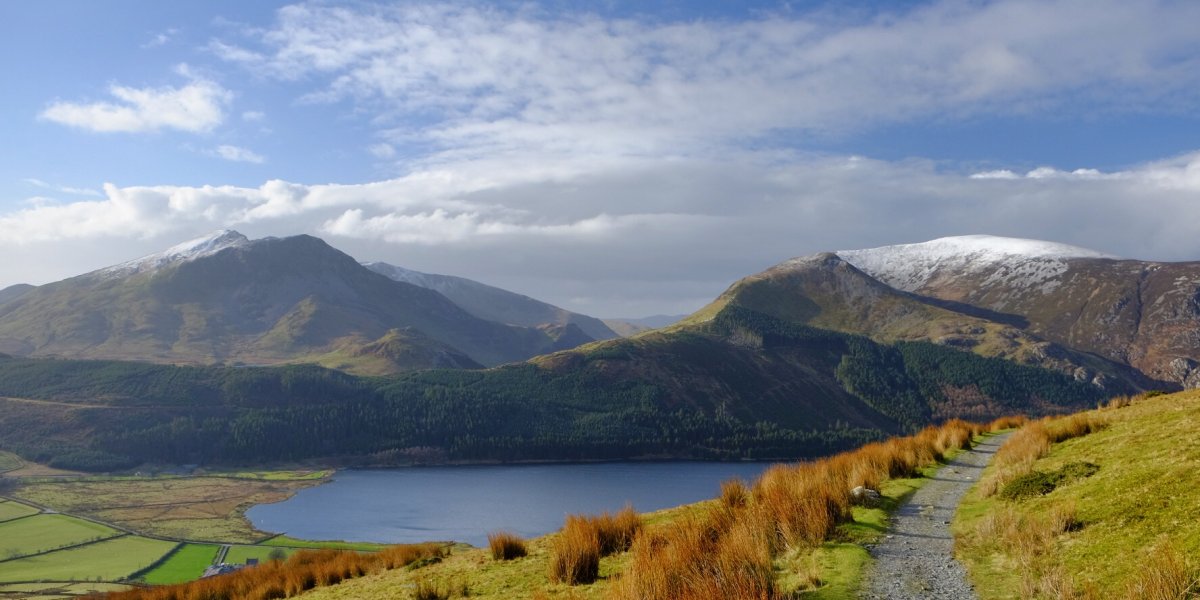
City Guide
Snowdonia
United Kingdom · Best time to visit: May-Sep.
Day-by-day plan
Choose your pace
Trip length
08:00
Park
Park at the Llanberis Lake Railway lot and follow the shore path west for 8 minutes — the Snowdon massif looms behind a glass-still lake at this hour. The 'Lonely Tree' is a wind-bent hawthorn on a small slate promontory, the single most photographed tree in Wales. Mist usually clings to the surface until just after 9am, which is exactly why we begin here and not after breakfast.
Tip: The tree sits about 700 m west of the car park; pass the small wooden footbridge and you'll see it 50 m offshore. Frame Snowdon's pyramid directly behind the trunk and shoot before 09:00 — any breeze after that ripples the reflection and the shot is gone for the day.
Open in Google Maps →09:30
Landmark
Walk 10 minutes back east along the lakeshore to the Royal Victoria car park and the Llanberis terminus of the 1896 rack-and-pinion line. The steam-era train grinds 5 miles up the flank of Yr Wyddfa to a summit station at 1,065 m — the highest point in England and Wales — and you get 30 minutes on top before it descends. On a clear day Ireland's Wicklow Mountains and the Isle of Man surface faintly to the west.
Tip: Book the 09:30 departure online at least two weeks ahead — summer walk-ups are routinely sold out before 10am. Sit on the left side ascending for cliff-edge views into the Llanberis Pass; on the way back, switch to the right for the long view down to Anglesey. The summit cafe Hafod Eryri is overpriced — eat at Pete's afterwards instead.
Open in Google Maps →12:30
Food
From the railway station it's a 3-minute walk up Llanberis High Street to a teal-painted café that has fueled Snowdon climbers since 1978. Order at the counter — service is fast — then grab a window seat to watch the steady trickle of muddy boots coming off the mountain. The 'Snowdon Special' (chips, beans, two eggs, sausage, bacon, fried bread) for around £11 is the legendary post-summit reward, and the mint tea is served in a pint glass.
Tip: Order the full £11 Snowdon Special — anything smaller and you will regret it on the quarry climb in two hours. The ground-floor window tables are the spot; the upstairs is cramped and you miss the High Street parade. Cash and card both accepted; no reservations, but turnover is fast even at peak lunch.
Open in Google Maps →13:30
Landmark
A 5-minute walk north from Pete's brings you behind the National Slate Museum (exterior only — we skip the indoor exhibits), where a zigzag path climbs straight into the abandoned Vivian and Dinorwig workings — UNESCO World Heritage since 2021. You'll pass derelict winding houses, flooded emerald-green pools in old slate pits, and the cathedral-like 'Anglesey Barracks' ruins where quarrymen lived five days a week away from home. The scale is staggering and the trails are almost entirely free of other visitors.
Tip: Push all the way up to 'Australia Level' — the highest accessible gallery, with a vertigo-inducing drop into the main crater and an eye-level view of Snowdon across Llyn Peris. Wet slate is treacherously slick, so trail shoes are mandatory and trainers will betray you. The full loop including photo stops is exactly 2 hours — don't linger longer or you lose Portmeirion's golden hour.
Open in Google Maps →17:00
Neighborhood
Drive 50 minutes south from Llanberis through the Aberglaslyn Pass — itself one of the most beautiful roads in Britain — to Sir Clough Williams-Ellis's lifelong fantasy: a Mediterranean village of pastel domes, a campanile, and Italianate piazzas tucked impossibly into a Welsh estuary. Famous as 'The Village' from the 1960s cult series The Prisoner, it is unlike anywhere else in the British Isles. The late-afternoon light is the entire point of arriving now.
Tip: Aim for the central piazza between 17:00 and 18:30 — that is when the low sun hits the pastel facades and the campanile glows amber. After the piazza, walk down the wooded path to the dog cemetery and the white pavilion overlooking the Dwyryd estuary — most day-trippers never leave the central square and miss this completely. Last entry is 17:30 in summer; ticket-holders can stay until 19:30.
Open in Google Maps →19:30
Food
Walk 5 minutes back up the Portmeirion estate drive to a Victorian castellated mansion converted into the estate's brasserie, its dining room overlooking the same Dwyryd estuary you have been watching all afternoon. Order the slow-braised Welsh lamb shank with rosemary jus (£26) and start with the Menai Strait mussels in Welsh cider and leeks (£14) — both ingredients sourced within 15 miles. The wine list leans on Welsh sparkling and Loire whites that pair properly with the seafood.
Tip: Reserve at least 48 hours ahead — the dining room only seats 60 and Portmeirion's resident guests get priority. Ask specifically for a window table on the estuary side; the sunset behind Harlech Castle across the water is the closing image of the day. Pitfall warning for Snowdonia generally: avoid the 'Mountain View' lay-by cafés and tartan-tat shops clustered around the Pen-y-Pass and Capel Curig car parks — they are inflated tourist traps with reheated food; everything genuinely good in this park is in the villages, never in the roadside pull-offs.
Open in Google Maps →Jump to day
09:00
Landmark
Start your day at the Llanberis terminus, a two-minute walk uphill from the village high street — you'll already see the rack-and-pinion locomotives hissing steam against the bracken slopes. This is the only public rack railway in the United Kingdom; from 1896 it has hauled travellers 1085 metres to the highest summit in England and Wales. The 09:00 departure is non-negotiable: by midday, cloud almost always cloaks the peak from the Irish Sea side, but the first train usually breaks above the inversion to a view stretching from Anglesey to the Wicklows.
Tip: Book the 09:00 'Traditional Diesel' service online at least two weeks ahead and ask for a right-hand seat going up — that side faces Clogwyn Du'r Arddu's black cliffs and Llyn Du'r Arddu lake, the photo every other passenger misses because they're queuing the wrong window.
Open in Google Maps →12:00
Food
Walk three minutes back down the platform path and onto Llanberis High Street — the bright blue corner facade is impossible to miss. Pete's has fed every mountaineer of consequence since 1978; Joe Brown, Chris Bonington and most of the village's slate-quarry retirees consider it the unofficial Welsh climbers' canteen. Order the Big Pete's breakfast (£11) or the homemade lamb cawl with a slab of bara brith (£9). Portions are calibrated for someone who has just climbed Tryfan, so come hungry.
Tip: The mug of tea is the size of a soup bowl — locals refill from the urn for free, but tourists almost always pay twice not knowing. Grab a window seat upstairs for the only proper view down Llyn Padarn while you eat.
Open in Google Maps →13:30
Museum
From Pete's, cross the High Street and follow the signed lakeside path east through Padarn Country Park — eight quiet minutes along the water with the Dinorwig quarry terraces rising opposite. Housed in the original 1870 Victorian workshops of the world's then-largest slate quarry, this museum is the heart of the Snowdonia Slate UNESCO World Heritage Site (inscribed 2021). The original 15-metre water wheel — the largest in mainland Britain — still turns the leather drive-belts on demand. Entry is free.
Tip: The live slate-splitting demonstration runs at 14:00 and 15:15 only — aim for 14:00 to avoid the coach groups that always cluster at the later slot. Stand close on the splitter's left side: that's the angle where you can actually see the slate plane cleave in a single tap.
Open in Google Maps →15:15
Landmark
Retrace the lakeside path for ten minutes back toward the village, then climb the wooded knoll above the Llanberis Pass — the lone round tower rising through the oaks is unmistakable. Built around 1230 by Llywelyn the Great to control the Welsh-speaking heartland of Gwynedd, this is one of the few native Welsh-built castles still standing; J.M.W. Turner painted it twice. Mid-afternoon light hits the tower from the southwest, throwing the keep into warm sandstone gold against the slate-dark mountains behind.
Tip: Skip the official car-park entrance — the unmarked footpath behind the Royal Victoria Hotel is half the distance and gives you the tower framed by oak branches, the angle Turner sketched in 1799.
Open in Google Maps →16:30
Park
From the castle, drop straight down to the shoreline and follow Lôn Las Peris west along Llyn Padarn — flat gravel underfoot, two miles of glacial lake water on your right and the entire Snowdon massif unfolding ahead. The lone twisted oak at Pen Llyn, leaning out over the water with Snowdon's pyramid behind, is the most photographed tree in Wales. By 17:00 the sun drops behind Crib Goch and back-lights the peaks; the lake goes mirror-still after the day-trippers leave.
Tip: The viral angle is from the small pebble beach 50 metres west of the lone oak, not from the official viewing platform — get low, shoot through the bottom branches, and Yr Wyddfa lines up dead-centre behind the trunk.
Open in Google Maps →19:30
Food
Ten minutes back along the lake path into the village brings you to a small white-fronted townhouse on the High Street. Run by Nerys and Danny Roberts since 1981, Y Bistro is the institution of modern Welsh cooking in Snowdonia — every politician, mountaineer and Welsh-language poet who passes through Llanberis eats here at least once. The slow-braised Welsh lamb shoulder with laverbread sauce (£26) and the local sea bass with samphire (£24) are unchanged for thirty years for good reason. Three-course dinner runs £42.
Tip: Reservations are essential and must be made at least four days ahead by telephone — they do not accept online bookings on principle. Ask for the upstairs front room; the downstairs has no view, and the upstairs has the original 1820s sash windows looking onto the lake. Avoid the row of 'mountain-themed' restaurants at the eastern end of the High Street near the railway terminus — every one of them is pitched at tour-bus turnover and serves frozen fish at twice the price.
Open in Google Maps →09:00
Neighborhood
From the visitor car park, the entry path slips through a tunnel of subtropical rhododendron before opening — without warning — onto a pastel campanile rising above the Dwyryd estuary. Sir Clough Williams-Ellis spent fifty years from 1925 piecing this Italianate fantasy together to prove that 'development could enhance natural beauty'; Patrick McGoohan filmed The Prisoner here in 1967 and the village has been a pilgrimage site ever since. At 09:00 you have the central piazza and the Bristol Colonnade essentially to yourself — the coach parties from Liverpool arrive after 11:00.
Tip: Walk the Gwyllt woodland trails first while everyone else photographs the piazza — the Chinese Lake and the dog cemetery beyond it are the parts most visitors miss entirely. By the time you loop back at 10:30, the central village is at peak light with the sun finally over the campanile, and most early-bird tourists have already drifted to the gift shop.
Open in Google Maps →12:00
Food
A five-minute uphill walk through Portmeirion's upper gate brings you to a crenellated Victorian folly castle on the headland — the brasserie occupies the original 1850 stone hall. The kitchen takes mussels from the estuary you're looking at (£14) and lamb from the farm three miles inland (£22); the bara lawr (laverbread) with cockles starter (£11) is the dish most British restaurants have stopped attempting. Two courses with a glass of Welsh wine runs around £30.
Tip: Request a table on the south-facing terrace, not in the panelled dining room — you'll eat with the entire Dwyryd estuary and Cnicht peak on the horizon. The set lunch menu is £24 for two courses but isn't advertised at the door; ask specifically when you sit down.
Open in Google Maps →14:00
Museum
A 25-minute drive northeast on the A487 lifts you into Blaenau Ffestiniog — the slate-roof town that 'roofed the 19th-century world' and gained UNESCO World Heritage status in 2021. Britain's steepest cable railway drops you 152 metres underground into Victorian caverns the size of cathedrals; your guide is invariably a former quarryman or his son. The original 1846 working faces, illuminated only by miners' lamps, show the slate-vein in its natural geometry — there is nothing else like it in Europe.
Tip: Wear a fleece even in August — the caverns hold steady at 7°C year-round and the stone seats are colder than that. Pick the 14:00 tour specifically: the 15:00 and 16:00 slots back up with school groups, and the 14:00 guide (typically Trevor, who quarried here for 41 years) is the one who'll show you the hidden 'singing slab' that rings like a bell when struck.
Open in Google Maps →16:30
Park
Ten minutes' drive west of Llechwedd, the road slips around the shoulder of Moelwyn Mawr and drops to Tanygrisiau — a black mirror of a reservoir flanked by abandoned slate-terrace tips that shimmer almost silver in afternoon sun. The narrow mountain road climbs another mile to the Llyn Stwlan dam at 510 metres; from the dam wall you look back across the entire UNESCO slate landscape with the Moelwynion ridge rising behind. By 17:00 the light goes from gold to oxidised copper on the spoil heaps — it is the most cinematic free view in north Wales.
Tip: The Stwlan dam road is a private single-track lane with no passing places for the final mile — go slow and check for descending cars at every blind corner. Walk the last 100 metres on foot from the small pull-in rather than driving to the wall itself; the angle from the path is dramatically better and you won't block other photographers.
Open in Google Maps →18:00
Neighborhood
A scenic 25-minute drive northwest through the Aberglaslyn Pass — the most photographed gorge in Wales — drops you into Beddgelert, a stone-bridge village at the confluence of two rivers where the Glaslyn rushes over boulders right beside the high street. The village name means 'Gelert's Grave', after the legendary 13th-century hound of Prince Llywelyn the Great buried in the meadow south of the bridge. Early evening, when the day-trippers have gone, the village reverts to its proper rhythm: Welsh spoken in the shops, swallows over the river, the smell of woodsmoke from the inns.
Tip: Cross the old stone bridge and follow the Glaslyn riverside footpath south for five minutes to Gelert's Grave itself — almost no tourist makes it past the bridge. From the grave you see the village from the angle every postcard uses, with Mynydd Sygyn rising behind the slate roofs.
Open in Google Maps →19:30
Food
Two minutes' walk from Gelert's Grave back across the bridge to the village square, the white-washed Tanronnen has been the village inn since 1809 and is the place farmers from the surrounding hills actually drink. The kitchen is firmly traditional — slow-cooked Welsh lamb shank with rosemary jus (£22), pan-fried local trout with brown butter (£20), and a sticky toffee pudding (£8) the village remembers older than any of the diners. Welsh ales on tap include Cwrw Llyn from up the coast.
Tip: The front bar serves the same kitchen as the dining room but with no reservation required and proper local atmosphere — locals drink at the right-hand end by the fire. Avoid the two tea-rooms on the main street through Beddgelert: both close at 17:00 and any 'evening menu' offered by their attached cafés in summer is reheated pub fare at tourist prices. Never buy anything from the lay-by 'Welsh Crafts' vans on the A498 leaving the village; the slate coasters are imported from Spain.
Open in Google Maps →Jump to day
08:30
Landmark
Start at the Llanberis station on the village's eastern edge — the rack-and-pinion locomotive has climbed this 7.5 km track since 1896, the only public mountain railway in Britain. Catch the first train of the day so the carriages clear the cloud line and the summit ridge opens out; on a clear morning you see Ireland's coast across the Irish Sea. Twenty minutes at the Hafod Eryri summit centre is enough before the 12:00 train arrives and the platform packs out with day-trippers.
Tip: Book the 09:00 first train at least two months ahead — afternoon trains often turn back below the summit in wind. If the forecast looks dicey on the morning, swap to the Llanberis Path on foot (5h return on the same gradient) and you'll still summit on your own legs.
Open in Google Maps →12:30
Food
Step off the platform and turn right onto High Street — Pete's is the green-fronted cafe two minutes' walk on. Wales' most famous climbers' cafe since 1978, serving pint-mugs of tea and the 'Big Pete' breakfast on a tin tray. Every wall is papered with mountain photos and the signatures of climbers who passed through on their way up.
Tip: Order the all-day Welsh breakfast (£10) with Glamorgan sausages — the cheese-and-leek vegetarian sausage that locals actually prefer to pork. The map library on the first floor is a working climbers' library you can borrow and read while you eat.
Open in Google Maps →14:00
Museum
Continue 800 m east along Llyn Padarn's south shore — the museum sits in the Victorian workshops of the closed Dinorwig quarry. Free entry, but the real draw is the live slate-splitting demonstration at 14:30: a master splitter halves a 2 cm block into eight roof tiles in 30 seconds, a skill that once roofed half the world. The quarrymen's terraced cottages are restored to three eras (1861, 1901, 1969) so you walk straight through a century of Welsh working-class life.
Tip: The splitting demo only runs at 11:00 and 14:30 — aim for 14:30 so the morning coach groups have moved on. The cafe by the waterwheel has the only outdoor seating with the quarry face rising right above you.
Open in Google Maps →16:30
Park
From the museum, follow the lakeshore path 1 km north — Dolbadarn Castle's lone 13th-century tower rises ahead, Llywelyn the Great's stronghold before Edward I crushed the Welsh principality. Climb the spiral stair for the view down the pass, then continue 700 m to the 'lone tree' (Y Goeden Unig) standing in the lake shallows — the most photographed tree in Wales. By 17:30 the sun drops behind Snowdon's western ridge and lights the bare branches against the lake's mirror.
Tip: Stand on the small gravel beach 20 m east of the lone tree for the angle you've seen in every guidebook — anywhere else and you'll lose Snowdon in the background. Bring a polariser if you have one; the lake reflection without it blows out in evening light.
Open in Google Maps →19:00
Food
Cross back to High Street — Peak sits five minutes' walk from the lake on the corner with Capel Coch Road. The dining room is small (28 covers), the menu changes weekly around what local farms supply that morning: Welsh black beef shin braised in Felinfoel ale (£24), Cricieth lamb rump with samphire (£26). The slate cheeseboard finishes with three Snowdonia cheeses and a glass of Penderyn single malt.
Tip: Reserve a week ahead in summer — Peak only takes one sitting at 19:00 and doesn't accept walk-ins. Pitfall: skip the 'tourist menu' boards along the lakefront — the pubs there fry the same frozen scampi at twice the price and the queue is full of coach groups who didn't book ahead.
Open in Google Maps →09:30
Museum
Drive 30 minutes south to Blaenau Ffestiniog — Llechwedd's Victorian mine entrance opens straight into the side of the mountain on the town's eastern flank. The Deep Mine Tour descends 150 m on Britain's steepest cable railway (1:1.8 gradient) into chambers the size of cathedrals, lit by carbide lamps the way 1846 miners worked them. This is one of the six inscribed sites of the UNESCO Slate Landscape of Northwest Wales (2021).
Tip: Book the 09:30 first tour — the chambers are still cool and you skip the school groups that arrive after 11:00. Wear long sleeves: the mine is 10°C year-round even in July, and the cable car descent is wet from condensation.
Open in Google Maps →12:30
Food
Drive five minutes back down into Blaenau — Cellb sits in the Victorian police station opposite the railway station, the original cells now a community bar and bistro. Lunch in the magistrates' courtroom under the judge's bench, Welsh rarebit (£9) and slow-braised beef cheek (£15) the kitchen does properly. Half the menu is in Welsh first, English second — this is one of the most deeply Welsh-speaking towns in the country.
Tip: Order the bara brith pudding with Penderyn whisky cream — Penderyn distils Wales' only single malt and the kitchen reduces it into a treacly sauce. Tip in cash if you can — it goes straight to the staff, not into a tronc.
Open in Google Maps →14:00
Landmark
Cross the station forecourt — the Ffestiniog platform is on the lower level. Opened in 1836 to haul slate down to Porthmadog harbour, this is the world's oldest narrow-gauge railway and the engines pulling you today were built before 1879. Take the 14:00 train down to Tan-y-Bwlch (35 minutes), step off for the woodland viewpoint over the Vale of Ffestiniog, and catch the 16:00 return back up to Blaenau.
Tip: Pay the +£8 first-class supplement — the observation car at the back has rear-facing windows and you watch the line curve away behind you through the slate cuttings. Bring a jacket: even in July the carriages have open windows by design, and the speed cools you fast.
Open in Google Maps →17:00
Park
From Blaenau station, the road climbs five minutes west to Tanygrisiau — a hydroelectric reservoir cupped between slate-stripped peaks with the lost village of Cwmorthin abandoned on the slope above. Walk the eastern shore for thirty minutes: by 17:30 the slate spoil heaps catch the low sun and turn deep purple, the local slate's true colour. Save another 30 minutes to wander the dam's edge if energy allows.
Tip: The 'Lost Village' walk to Cwmorthin starts from the reservoir's north end — a 25-minute climb to the ruined chapel and chapel-house, with no signage on purpose. The original 1860s roof slates still lie where they fell; leave them where they are, the rangers do walk this path.
Open in Google Maps →19:00
Food
Ten minutes' drive south of Tanygrisiau, the Grapes is a 1730 coaching inn on the old London-Holyhead road — Lloyd George and Lillie Langtry both ate at the same staging post. Welsh black beef sirloin (£28) comes with bone marrow gravy, and the daily fish landed at Aberdyfi depends on what the boat brought in. Three small dining rooms inside the original stone walls — ask for the snug at the back with the open fireplace.
Tip: Start with the Welsh cawl (£9) — slow-cooked lamb broth with leeks and root veg, the kitchen makes a fresh pot every morning. Pitfall: the bar at the front serves cheaper pub food off a separate menu — ask for the restaurant menu when you sit down, the kitchen is the same but the cuts are not.
Open in Google Maps →09:30
Landmark
Drive 30 minutes south-west from your base — arrive at Portmeirion as the gates open at 09:30 and the village is yours. Clough Williams-Ellis spent 50 years (1925-1975) building this Italianate folly on a private peninsula, salvaging columns and arches from demolished mansions across Britain. Walk the Bristol Colonnade, the Piazza, and the woodland Gwyllt path down to the white sand of Traeth y Greigddu — The Prisoner was filmed across every corner of this village in 1966-67.
Tip: Buy entry online the night before (£17) and head straight to the Pantheon dome — the photo line forms there by 11:00 and you'll have it to yourself for the first hour. Skip the gift shops in the centre square; the architectural salvage shop down by the hotel is where the real finds are.
Open in Google Maps →12:00
Food
Walk five minutes back up to the gatehouse — Castell Deudraeth is the castellated mansion just outside Portmeirion's main entrance, within the same Williams-Ellis estate. Lunch is Cardigan Bay sea bass with cockles and laverbread (£22), or the Portmeirion smoked salmon platter (£18) cured on-site. The conservatory dining room looks straight onto the Dwyryd estuary at low tide.
Tip: Reserve the noon slot specifically — the kitchen receives the tide-fresh shellfish delivery at 11:30 and the first lunch service gets first pick. Ask for the Penderyn-cured salmon, only made for this kitchen and not on the printed menu.
Open in Google Maps →14:00
Neighborhood
Drive 25 minutes north — Beddgelert sits at the meeting of three rivers under the shoulder of Moel Hebog, dark stone houses and slate roofs huddled around the bridge. Walk the riverside path 800 m south of the village to Gelert's Grave: the legendary 13th-century hound of Llywelyn the Great, wrongly killed for protecting his master's child from a wolf. The grave itself is fictional Victorian marketing — but the meadow it stands in, with Yr Aran framing the view, is the real Wales.
Tip: Stop at Glaslyn Ices on the main street (the blue-fronted shop) — the third generation of the Williams family make the ice cream in the back room every morning. The honeycomb is the local order; the vanilla uses milk from the dairy two miles up the road.
Open in Google Maps →15:30
Park
From Gelert's Grave, the Fisherman's Path continues 1.6 km south through the Pass of Aberglaslyn — voted one of the most beautiful gorges in Britain. Rock-hewn ledges, river pools beneath you, and the woodland canopy closing overhead; turn back at the Pont Aberglaslyn bridge and retrace the path. The afternoon light comes through the pines at a low angle and lights the water gold against the black slate walls.
Tip: The narrow ledge section 400 m in has metal handholds bolted into the rock — the path is safe but two-way traffic stops; let oncoming walkers through, don't try to squeeze past. Skip this in heavy rain: the ledges run with water and turn slick on slate.
Open in Google Maps →19:00
Food
Walk back into Beddgelert — Tanronnen is the white-fronted inn on the main square, run by the same family for forty years. The Welsh lamb shoulder slow-cooked for seven hours (£26) is what locals come back for, and the Snowdonia gin tonic (£8.50) uses a botanical foraged from Cwm Idwal up the road. Eat in the slate-floored front room with the wood-burning stove if it's free.
Tip: Order the Welsh rarebit starter (£8) — a 1972 recipe with Black Mountain cheddar and Felinfoel ale that no menu in Wales will print. Pitfall: avoid the 'Beddgelert Brewery' tap-room down the street that opens for coach tours — the food is microwave reheat, not made on premises like Tanronnen's, and the markup on the local ales is double.
Open in Google Maps →
Trip builder
Plan this trip around Snowdonia
Turn this guide into a bookable rail itinerary with FlipEarth.
Keep exploring
Related cities
More in the same country
FAQ
Frequently asked questions
How many days do you need in Snowdonia?
Most travelers enjoy Snowdonia in 1 days, with enough time for headline sights and a slower meal or museum stop.
What's the best time to visit Snowdonia?
The easiest season for most travelers is May-Sep, especially if you want good weather and manageable crowds.
What's the daily budget for Snowdonia?
A practical starting point is about €150 per person per day before hotels, then adjust based on museums, dining, and transport.
What are the must-see attractions in Snowdonia?
A good first shortlist for Snowdonia includes Snowdon Mountain Railway, Vivian & Dinorwig Slate Quarries.