City Guide
Bath
United Kingdom · Best time to visit: Apr-Oct.
Day-by-day plan
Choose your pace
Trip length
09:00
Landmark
From Bath Spa station, exit onto Manvers Street and walk north — in under 5 minutes the tower of Bath Abbey appears above the rooftops, pulling you into Abbey Churchyard like a golden compass needle. The honey-coloured Gothic west front catches the low morning sun at its most dramatic: 52 stone angels climbing and tumbling down Jacob's Ladder, every carved feather thrown into relief by the sidelight. Circle around to the south side on Stall Street and peer over the railing to glimpse the steaming Kings Bath below — ancient Roman water still bubbling at 46°C, open to the sky since antiquity.
Tip: Stand on the east side of the Churchyard facing west for the best full-façade photo — the morning sun backlights the tower dramatically. By 10:30 three tour buses arrive simultaneously and the square becomes a bottleneck. If you want the Abbey to yourself, this 9 a.m. window is non-negotiable.
Open in Google Maps →10:15
Landmark
Exit the Churchyard east along Orange Grove and follow Grand Parade where the view opens up over the river — a 5-minute walk with the horseshoe weir appearing before you even reach the bridge. Pulteney Bridge is one of only four bridges in the world lined with shops on both sides, designed by Robert Adam in 1774 to echo Florence's Ponte Vecchio. Cross to the east bank and descend the steps for the postcard shot: the Palladian arches reflected in the cascade below, then continue 50 metres down Great Pulteney Street for the grandest Georgian boulevard perspective in England.
Tip: The classic weir photo is taken from the bottom of the steps on the east bank, where you get the full curve of the weir and all three arches in one frame. Morning light is softer and the water calmer than afternoon. Skip the tiny shops on the bridge itself — they are overpriced tourist souvenirs selling the same fridge magnets you will find in every English city.
Open in Google Maps →12:00
Food
Walk back through the centre along Bridge Street and High Street, ducking left into narrow Queen Street — an 8-minute stroll past Georgian shop fronts at every turn. The Raven is a proper English pub with a cult following built on one thing: handmade pies baked fresh daily in a kitchen the size of a cupboard, served with creamy mash and real gravy. Grab a stool at the bar, order a local ale, and eat like a Bath local on lunch break.
Tip: Order the Steak and Ale pie (around £14) — the pastry is shatteringly flaky and the filling is rich with West Country beef. Pair it with a half-pint of Bath Ales Gem. Arrive at noon sharp; by 12:30 every table is taken and the pie board starts showing sold-out flavours. No reservations, first come first served.
Open in Google Maps →13:15
Landmark
Walk north through Queen Square — where Jane Austen once lived — and up the gentle slope of Gay Street past Georgian townhouses that grow grander with every block, a 10-minute climb. John Wood the Elder's masterpiece is three curved terraces of 33 houses forming a perfect circle, like the Colosseum turned inside out, with five enormous plane trees filtering afternoon light onto the golden stone. Stand in the centre and slowly turn — each segment uses a different classical order (Doric, Ionic, Corinthian), a detail most visitors walk straight past.
Tip: Look at the cobblestones underfoot in the centre: you will find carved acorns, a nod to the legend of King Bladud who supposedly founded Bath after his pigs were healed by the hot springs. Stand at the southern entry facing north for the most symmetrical photograph with all three terraces visible and the plane trees perfectly framed.
Open in Google Maps →14:15
Landmark
Continue west down Brock Street — a 2-minute flat walk between identical townhouses — until the street ends and the Royal Crescent unfurls in one breathtaking 150-metre arc. John Wood the Younger's 1774 masterpiece joins 30 houses behind a unified façade of 114 Ionic columns, the single most commanding sweep of Georgian architecture in Britain. Walk down the sloping lawn to the ha-ha — a hidden sunken wall that keeps cattle out without breaking the view — look back up at the crescent against the sky, then stroll through Royal Victoria Park below where locals picnic on the grass.
Tip: Do not photograph from the pavement — the classic shot is from the lower lawn looking up, with the full arc filling your frame against the sky. Walk to the far eastern end for the tightest curve and most dramatic perspective. If you finish early, the rooftop pool at Thermae Bath Spa (15-minute walk south, last entry around 17:00, approximately £40 for 2 hours) lets you soak in natural hot spring water with a panoramic view of the city — a spectacular way to fill the gap before dinner.
Open in Google Maps →19:00
Food
Stroll 3 minutes west along Marlborough Buildings, a quiet residential crescent where the evening light turns every window to amber. The Marlborough Tavern is the gastropub Bath locals would rather you did not discover — seasonal British cooking with genuine technique, real West Country ales on tap, and a sheltered garden terrace. This is where you reward yourself for a full day on your feet.
Tip: Order the slow-braised lamb shoulder (around £19) or the pan-seared duck breast (around £22) — both sourced from farms within 30 miles. Walk in before 19:00 on weekdays for a table without booking; reserve ahead on Friday and Saturday. Ask for the garden terrace if the weather is kind. Final warning: avoid the cluster of restaurants on Cheap Street and around the Abbey — they charge London prices for reheated food and survive entirely on tourist footfall. If a man is standing outside waving a menu at you, keep walking.
Open in Google Maps →Jump to day
09:00
Landmark
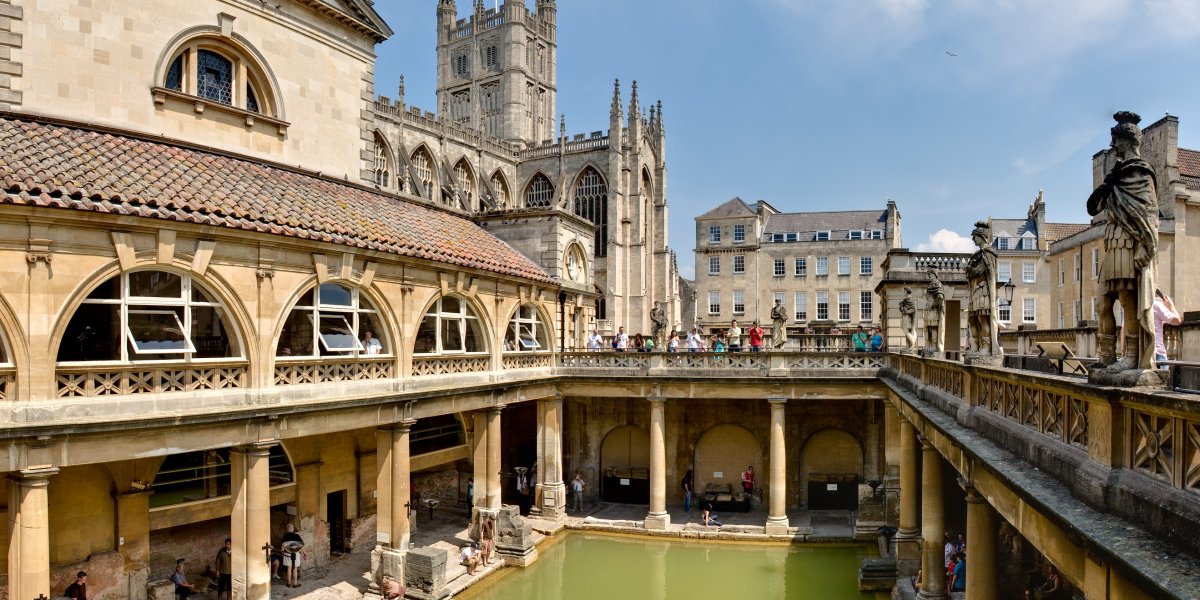
Enter from Abbey Churchyard the moment the doors open at nine — for the first thirty minutes you will have the torchlit Great Bath almost to yourself, the rising steam catching the morning light in a way that vanishes once coach groups arrive after ten. The audio guide, included with admission and narrated by Bill Bryson, is genuinely excellent; follow it through the temple pediment gallery and down to the sacred spring where 46°C water still flows exactly as it did for Roman legionaries two millennia ago.
Tip: Skip the ground-level terrace photos — head straight down to the Great Bath level where reflections on the green mineral water create the most striking shots. The best angle is from the far-left corner looking back toward the Abbey tower framed between the columns.
Open in Google Maps →10:45
Religious
Step out of the Roman Baths and the Abbey is directly in front of you — literally thirty seconds across the Churchyard. Inside, the fan-vaulted ceiling is one of England's finest, and the mid-morning light through the east window turns the nave into a lantern of pale gold. If the Tower Tour is running, take it: 212 steps up through the bell-ringing chamber onto the roof, where Bath unfolds below in a carpet of honey-coloured stone.
Tip: The Tower Tour runs every 30 minutes and costs an extra £8 — it is worth every penny. Book at the desk immediately upon entering, as morning slots fill fast. The rooftop view looking west toward the Royal Crescent is one of Bath's best-kept photo angles that most visitors never see.
Open in Google Maps →12:00
Food
Duck south through the narrow passage beside the Abbey — Sally Lunn's is two minutes away on North Parade Passage, inside one of Bath's oldest houses dating to around 1482. This is the birthplace of the famous Sally Lunn Bun, a large brioche-like bread served with savoury or sweet toppings. Order the Toasted Trencher with smoked salmon and cream cheese (£11.50) or the classic with cinnamon butter (£7.50). Budget £12–18 per person for lunch.
Tip: Arrive right at noon — by 12:30 the queue stretches onto the street. Sit downstairs in the original kitchen-level dining room for atmosphere; the upstairs room is brighter but lacks the character. The free kitchen museum in the basement shows the original medieval hearth and is worth a quick peek on your way out.
Open in Google Maps →13:00
Landmark
Walk north through Abbey Churchyard past the street musicians, then along Grand Parade — a five-minute stroll with the River Avon appearing on your right. Pulteney Bridge is one of only four bridges in the world lined with shops on both sides, modelled on Florence's Ponte Vecchio. Cross the bridge, then loop down to the riverbank on the far side for the classic view of the horseshoe weir — this is Bath's most photographed scene. Return via Parade Gardens, a manicured terrace garden above the weir where locals sit with coffee and the sound of tumbling water.
Tip: The single best photograph of Pulteney Bridge and the weir is taken from the raised terrace inside Parade Gardens, not from Grand Parade where most tourists stand. Pay the small admission, stand at the eastern railing in early afternoon when the sun is behind you and the bridge face is fully lit — no amount of jostling on the public pavement gives you this angle.
Open in Google Maps →14:15
Museum
Cross Pulteney Bridge and walk straight down Great Pulteney Street — a grand three-hundred-metre boulevard flanked by golden Georgian terraces that feels like a film set. The eight-minute stroll ends at the Holburne Museum, set at the entrance to Sydney Pleasure Gardens. The permanent collection is free and houses Gainsborough portraits, Turner watercolours, and an exquisite collection of Georgian silverware. The modern glass extension at the rear frames the gardens beautifully and catches the afternoon light.
Tip: The Gainsborough room on the first floor holds the finest works — spend your time there rather than trying to cover everything. Afterwards, wander into Sydney Gardens behind the museum, one of England's last remaining 18th-century pleasure gardens with a canal running through it. Surprisingly few tourists make it this far, so you will likely have it entirely to yourself.
Open in Google Maps →19:00
Food
Retrace your steps back across Pulteney Bridge and turn right along North Parade — a ten-minute riverside walk brings you to this restaurant hidden in a candlelit stone cellar beneath the street. Sotto Sotto is where Bath locals celebrate birthdays and anniversaries, not where tourists stumble in. The handmade pappardelle with slow-braised wild boar ragù (£18) is exceptional, and the burrata starter with heritage tomatoes (£12) is the table's guaranteed first order. Budget £35–45 per person with a glass of wine.
Tip: Reserve at least 48 hours ahead — this is Bath's hardest weekend table to secure. Request a seat in the far vaulted room for the most atmospheric candlelit setting. A word of warning: avoid the restaurants lining the north side of Abbey Churchyard and Cheap Street — they survive on tourist footfall, charge London prices, and the food is forgettable.
Open in Google Maps →09:00
Landmark
From the city centre, walk up Gay Street — a steep but beautiful five-minute climb lined with Georgian townhouses. The Circus opens before you like a secret amphitheatre: three curved terraces forming a perfect circle, designed by John Wood the Elder in 1754 as an inversion of the Roman Colosseum — columns face outward instead of inward. In the early morning light the honey stone practically glows. Study the continuous frieze running below the roofline: 525 carved emblems including serpents, nautical instruments, and Masonic symbols, no two alike.
Tip: Stand in the exact centre of The Circus and look up — the perfect circle of sky framed by the three crescents is a deliberate architectural illusion. Morning between nine and ten is best: the eastern façade catches direct sunlight while tour buses have not yet arrived. The five giant plane trees in the centre were planted in 1818 and were not part of Wood's original design.
Open in Google Maps →10:00
Museum
From The Circus, walk west along Brock Street — the Royal Crescent reveals itself with cinematic drama at the end, a sweeping arc of thirty terraced houses that is perhaps the finest piece of Georgian architecture in Britain. No. 1 is a painstakingly restored townhouse museum showing exactly how the wealthy lived in the 1770s: the kitchen with its original spit-roast mechanism, the withdrawing room with hand-blocked wallpaper, the gentleman's study furnished with authenticated period pieces down to the quill pen on the desk.
Tip: The volunteer guides in each room are retired Bath historians and love questions — ask about the painted bedroom ceiling and the sedan chair in the hallway for stories you will not find on any label. After the museum, walk out to the ha-ha wall at the front of the Crescent and look south across Royal Victoria Park — on a clear morning you can see all the way to the Mendip Hills.
Open in Google Maps →12:00
Food
Walk back along Brock Street toward The Circus — the restaurant is halfway, on your left, a two-minute stroll. This intimate, locally loved bistro occupies a Georgian townhouse and serves modern British food with Mediterranean flourishes. The pan-fried sea bass with samphire and brown shrimp butter (£19) is outstanding, and the confit duck leg with Puy lentils (£17) is a cold-weather favourite. Budget £20–28 per person for two courses.
Tip: No reservations needed for weekday lunch, but book ahead for weekends. Ask for the window table overlooking Brock Street — best natural light in the house. The prix fixe lunch menu, two courses for around £16, changes weekly and is exceptional value; always check the blackboard before ordering à la carte.
Open in Google Maps →13:15
Museum
Head south down Gay Street from The Circus — a steep, elegant street that Jane Austen herself walked daily during her years in Bath from 1801 to 1806. A five-minute downhill stroll brings you to No. 40. The exhibition explores how Bath shaped Northanger Abbey and Persuasion, both set in the city, with period rooms, letters, and a space where you can try on Regency-era costumes and bonnets for photos. The guided introduction talk, running every thirty minutes, is lively, well-researched, and sets up the entire visit.
Tip: The Regency Tea Room on the top floor serves the best scones with clotted cream in Bath — far superior to the more famous Pump Room, at half the price. If you are an Austen devotee, ask the guide about No. 25 Gay Street just up the road where Austen actually lived — there is no plaque, and most visitors walk straight past the real thing while queuing for the museum.
Open in Google Maps →14:30
Entertainment
Continue south through the city centre past Queen Square and down Stall Street — a ten-minute gentle downhill walk to Hot Bath Street. Thermae Bath Spa is Britain's only natural thermal spa, fed by the same hot springs the Romans discovered two thousand years ago. The rooftop pool is the reason you are here: you float in 33.5°C mineral-rich water while looking out over the Bath skyline, the Abbey tower rising directly ahead. In late afternoon, steam curls off the water surface as the air cools — an image you will not forget.
Tip: Book the Twilight Session online at least a week ahead — weekend afternoon slots sell out fast. Bring your own swimsuit as rentals are overpriced. Spend the first hour in the Minerva Bath and aromatic steam rooms downstairs, then save the rooftop pool for your final hour when the late-afternoon light is at its most atmospheric. Skip the expensive spa treatment packages — the standard two-hour session gives full access to everything worth experiencing.
Open in Google Maps →19:00
Food
Walk north up Barton Street and bear left onto Russel Street — an eight-minute uphill stroll through quiet residential streets lined with wisteria in spring. The Olive Tree is Bath's most acclaimed fine-dining restaurant, set in the elegant basement of a Georgian townhouse hotel. The kitchen focuses on refined modern British cooking: try the Cornish turbot with leek and truffle (£32) or the aged Hereford beef fillet with bone marrow and red wine jus (£34). Budget £50–65 per person with a glass of wine.
Tip: Book at least a week ahead and mention if it is a special occasion — the staff are exceptionally attentive. The four-course tasting menu (around £65) is the best way to experience the full range of the kitchen and is strong value for this level of cooking. A final warning for your departure tomorrow: avoid the cheap eateries clustered around Southgate Shopping Centre and Bath Spa station — they exist purely to catch departing tourists, and you will regret it after the calibre of meals you have had this weekend.
Open in Google Maps →
Trip builder
Plan this trip around Bath
Turn this guide into a bookable rail itinerary with FlipEarth.
Keep exploring
Related cities
More in the same country
FAQ
Frequently asked questions
How many days do you need in Bath?
Most travelers enjoy Bath in 1 days, with enough time for headline sights and a slower meal or museum stop.
What's the best time to visit Bath?
The easiest season for most travelers is Apr-Oct, especially if you want good weather and manageable crowds.
What's the daily budget for Bath?
A practical starting point is about €80 per person per day before hotels, then adjust based on museums, dining, and transport.
What are the must-see attractions in Bath?
A good first shortlist for Bath includes Bath Abbey, Pulteney Bridge, The Circus.