City Guide
Belfast
United Kingdom · Best time to visit: May-Sep.
Day-by-day plan
Choose your pace
Trip length
09:00
Landmark
Take the Glider G2 from the city centre to Titanic Quarter (15 min), step off and it hits you — six stories of angular aluminum facade mirroring the prows of four great liners, catching the eye from blocks away. Circle the exterior first, then walk the concrete slipways where Titanic and Olympic were built; painted keel outlines mark where their steel spines were laid in 1909. No ticket needed for the grounds — the facade and slipways are the money shot.
Tip: Be at the building by 09:00 sharp — the first tour coaches roll in at 10:30 and the slipways crowd fast. Best photo angle: the northwest corner, facing the building head-on, morning sun from the east lights the entire facade. Don't waste the slot on the pricey interior museum if your day is one-shot — the outside is the icon.
Open in Google Maps →10:45
Landmark
Cross the Lagan Weir footbridge back toward the city and follow the riverside path 10 minutes to The Big Fish, a ceramic-tiled salmon whose skin reads Belfast's whole history in fragments — Viking raids, linen mills, shipyard launches. Another 300 metres west brings you to the Albert Memorial Clock, Belfast's leaning tower, tilted 1.25 metres off vertical from sinking foundations in old Lagan mudflats. Together they're the quickest 10-minute time machine in the city.
Tip: Few visitors walk behind the clock — the Portland stone carvings on the Custom House Square side are the finest of the four faces. Between 10:45 and 11:15 the low sun hits at exactly the angle that brings the relief work out; after noon it flattens. Read three or four tiles on The Big Fish as you pass — the Spanish Armada one and the 1941 Blitz one are the most moving.
Open in Google Maps →12:00
Food
Walk 8 minutes south down Oxford Street — the red-brick Victorian market hall appears on your left. Belfast's last surviving covered market (Fri–Sun only): skip the souvenir stalls at the entrance and go straight to the back row, where Sheridan's sells a Belfast bap stuffed with beer-battered haddock and mushy peas (£8), and The Bap Barn stacks a full Ulster fry inside a soda farl (£7). Eat standing at the shared tables while a live jazz quartet plays on Sundays — this is Belfast the way Belfast eats.
Tip: Arrive between 12:00 and 12:30 — before noon the food stalls are still prepping; after 13:00 Sheridan's runs out of haddock and won't restock. If you're in town on a weekday when the market is closed, pivot to Established Coffee on Hill Street (6 minutes north) for the brisket bagel — same quality, no compromise.
Open in Google Maps →13:30
Landmark
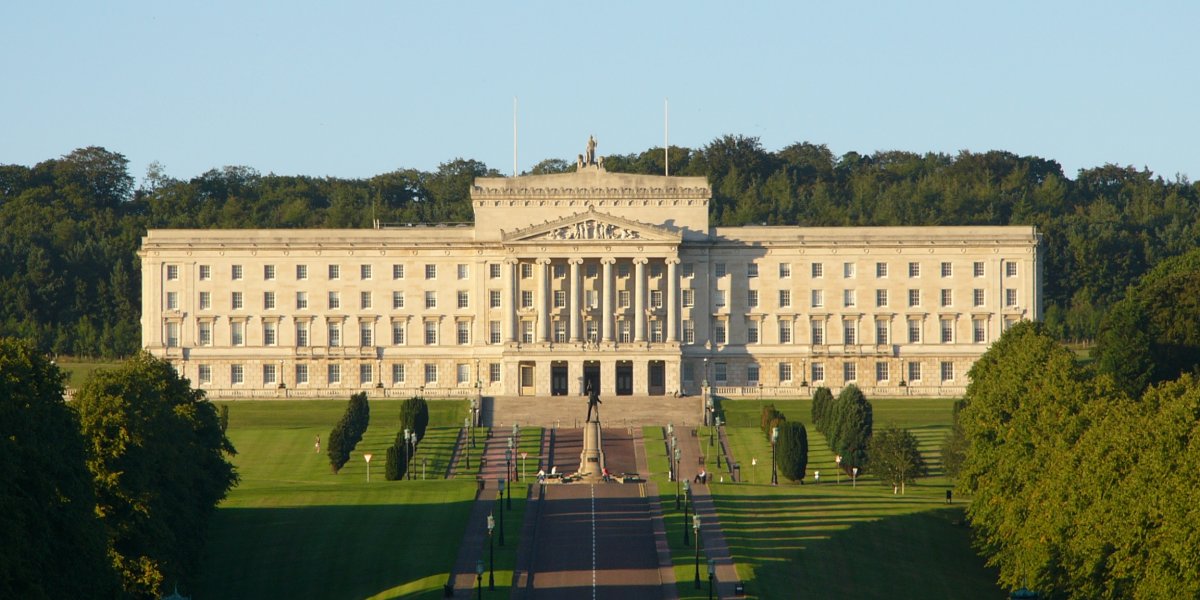
Exit the market on the Oxford Street side and walk 10 minutes west along May Street — the emerald-copper dome rises above the Donegall Square rooftops as you approach. Edwardian Baroque in Portland stone, built in 1906 on the fortunes of linen and shipbuilding. Walk the full perimeter before stepping inside: on the east lawn the Titanic Memorial Garden names every life lost in 1912 on bronze plaques arranged in a long semicircle, five years of plaques laid out in the order the bodies were recovered.
Tip: Free guided tours run at 11:00, 14:00, and 15:00 on weekdays — join the 14:00 and you'll get 45 minutes inside the Robinson & Cleaver marble staircase and the Great Hall with zero queue. The lawn is closed for concerts across most of July; if you want the classic 'full facade with me in front' shot, check the City Hall events page before visiting.
Open in Google Maps →15:30
Landmark
Walk 20 minutes south down Bedford Street into University Road — the city shifts from Victorian commerce to red-brick academe as you cross into the Queen's Quarter. The Lanyon Building fronts the main quadrangle in buttery Scrabo sandstone, Tudor Revival at its most photogenic and Belfast's single most-photographed facade. Continue 200 metres into Botanic Gardens to the 1840 Palm House, the world's oldest surviving curvilinear cast-iron glasshouse, and the sunken Tropical Ravine behind it — a jungle in a trough, dripping and warm.
Tip: Palm House closes at 17:00 sharp and the staff won't let you drift in at 16:58. Best Lanyon shot is from the centre of the main lawn at 16:30 — long afternoon light turns the sandstone the colour of warm copper. Avoid Fridays during term time: back-to-back graduation ceremonies mean gowns and tripods own the facade from 10:00 to 16:00.
Open in Google Maps →18:30
Food
From the Botanic Gardens gate, walk 20 minutes up Great Victoria Street past the Europa Hotel (once the most-bombed hotel in Europe) until the Crown's gilded tile and stained-glass facade appears on your left. Owned by the National Trust — a working Victorian gin palace preserved unchanged since 1885, right down to the mosaic floor and embossed-leather ceiling. Ten private wooden snugs line the left wall, each with its own gas lamp and a cast-iron bell that still rings to summon the barman; order a pint of Belfast's own Yardsman lager (£5.50) and the Irish stew made with Guinness and Comber potatoes (£14.95), or six Strangford Lough oysters (£14) hauled from the coast that morning.
Tip: Arrive by 18:30 to claim a snug — after 19:30 every single one is taken and you'll end up standing at the bar. The staff won't tell you, but snugs 4 and 6 still have the original 1885 match strikers on the brass plates; ring the bell to order and you'll feel like you've fallen through a trapdoor into the 19th century. TOURIST TRAP WARNING for this area: skip the chain 'Irish pubs' clustered between the Europa and the Crown — they serve keg Guinness at £7 a pint with piped-in fiddle music; the Crown itself and Robinsons next door are the only two on this block worth a penny.
Open in Google Maps →Jump to day
10:00
Museum
Arrive at the Maritime Mile where Samson & Goliath, the twin yellow cranes, rise above the old Harland & Wolff slipway. The 3,000-aluminum-panel hull-shaped building holds nine galleries charting Titanic from ink drawings in the drawing office to the silent ocean floor where she sleeps. Ride Gallery 3's Shipyard Ride first — by noon that queue is 20 minutes long.
Tip: Book the 10:00 opening slot online in advance and head straight to Gallery 3 before the cruise groups arrive. Your ticket includes SS Nomadic next door on the same day — don't discard it. Skip the overpriced rooftop café; Drawing Office Two at Titanic Hotel is 3 minutes away and serves the real food.
Open in Google Maps →12:15
Landmark
Two-minute walk across the cobbles — the last surviving White Star Line vessel waits in her restored Hamilton Dock. Built in 1911 as Titanic's tender, she ferried first-class passengers from Cherbourg harbour; every panel, handrail, and tile has been returned to that year. Step aboard and the contrast between third-class steerage forward and first-class smoking room aft tells the entire Edwardian story on one deck.
Tip: Enter via the lower deck (third-class) and work upward — the contrast between steerage and the first-class smoking room IS the story. The signature photograph is from the stern looking back at the 'NOMADIC' nameplate with the Titanic Belfast facade blurred behind.
Open in Google Maps →13:30
Food
Three-minute walk to the restored Harland & Wolff headquarters, now Titanic Hotel. Your dining room is literally the vaulted chamber where Titanic's engineers drafted her — drafting tables replaced with booths, blueprints framed on the walls, the original 64-ft arched ceiling still above your head. Beef and Guinness pie (£18) and seafood chowder with wheaten bread (£12) are what shipyard descendants still order.
Tip: Reserve the booth beside the arched north window — you dine a meter from the desk where Thomas Andrews himself sketched the ship. Avoid 13:00-14:30 on weekends when Titanic Belfast tour groups pour in; arrive by 12:45 or walk in after 14:30. Order a pint of Titanic Quarter Pale Ale — brewed 100 m away.
Open in Google Maps →15:30
Neighborhood
20-minute walk back along the Lagan Weir, passing the Big Fish sculpture clad in blue ceramic tiles printed with Belfast's history. Commercial Court is a cobbled alley strung year-round with a canopy of open umbrellas; on its walls, murals of Van Morrison, C.S. Lewis, and Seamus Heaney stare down. The Duke of York pub has anchored the street since 1750 — step inside just to see the back snug plastered in whiskey tins and old enamel signs.
Tip: Photograph Commercial Court between 15:30 and 17:00 — that is when low western light bounces under the umbrella canopy and the murals glow. Duck through Harp Bar alley beside the Duke of York; most tourists miss the hidden courtyard behind it. The Muddlers Club's unmarked door is literally through that alley — scout it now so you find it in the dark later.
Open in Google Maps →16:45
Religious
Three-minute walk north through Writers' Square onto Donegall Street. The Spire of Hope — a 40-m stainless-steel needle — pierces the Romanesque roof and lights up after dark. Inside, the Good Samaritan Window made from discarded Belfast linen, and the mosaic floor laid by two Italian sisters who lived in the crypt for seven years to complete it, reward the patient visitor.
Tip: Stand directly under the crossing and look straight up — the Spire of Hope beam descending through the roof is the cathedral's signature photograph. Entry is by donation (£5 suggested); the Titanic side chapel where shipyard owner Edward Harland lies is a detail most visitors walk past.
Open in Google Maps →19:30
Food
Four-minute walk through Commercial Court into an unmarked door halfway down Warehouse Lane. Chef Gareth McCaughey's Michelin-starred kitchen cooks Northern Irish produce as theatre — Glenarm salmon cured in seaweed (£14 starter), 40-day dry-aged Kettyle rib of beef (£36), and an eight-course tasting menu (£85) that traces the island's coastline. Reserve two weeks ahead for Saturdays, or gamble on the bar counter walk-ins from 17:30.
Tip: If you can't land a booking, the bar counter is first-come from 17:30 — you watch the open kitchen fire the same dishes. Ask the sommelier about the Bushmills Causeway Collection whiskey pour; it's not on the menu. PITFALL: Avoid the Donegall Street 'trad pubs' with 'Live Irish Music Tonight!' banners outside — they serve microwaved stew at triple price and the sessions are Spotify playlists. Duke of York, John Hewitt, and Sunflower never need to advertise.
Open in Google Maps →09:30
Neighborhood
Your black cab arrives at your hotel at 09:30 — the same London-style model that ferried residents during the Troubles when buses were burned. The two-hour route crosses the Falls Road (Republican) and Shankill Road (Loyalist), stopping at the International Wall, the Bombay Street Memorial, the Bobby Sands mural, and the Cupar Way Peace Wall where you are handed a marker to sign beneath Bill Clinton, Justin Bieber, and the Dalai Lama. Your driver almost always lived through what he describes — this is oral history, not guidebook recital.
Tip: Book Paddy Campbell's Belfast Black Cab Tours — drivers from both communities rotate, and the balance shows in the narrative. Ask to stop at the memorial garden behind Divis Tower; most tours skip it. The Peace Wall gates still close at 18:30 every night — that 'temporary' wall has stood since 1969, and the closing hour is the most honest part of the experience.
Open in Google Maps →11:45
Food
15-minute walk back from the taxi drop-off to the red-brick Victorian hall on May Street. The Saturday City Food & Craft Market is the peak — 250 stalls, live jazz on the back stage, Carlingford Lough oysters (£1 each), Moroccan lamb tagine, Yellowman honeycomb, and the Belfast Bap: a soft white bun stacked with bacon, sausage, and egg (£6). Skip the main Oxford Street queue and slip in through the East Bridge Street side door instead.
Tip: Follow the locals, not the tour guides — the Belfast Bap stall with the queue of people in work clothes is the right one. The oyster counter at the back-left corner sells Carlingford Lough natives cheaper than any Dublin restaurant. Arrive by 12:00: stalls begin packing down after 13:30, and the Moroccan tagine queue becomes the market's longest by 12:45.
Open in Google Maps →13:30
Landmark
10-minute walk west along May Street to Donegall Square. The 173-ft copper dome has oxidised emerald green above a Portland stone Baroque Revival facade from 1906, the year Victoria declared Belfast a city. The free 14:00 guided tour runs 60 minutes through the Great Hall (1941-bombed stained glass restored in 2009), the Robing Room, and the Council Chamber where Belfast voted to reject Home Rule in 1912.
Tip: Arrive at the information desk by 13:45 for the free 14:00 tour — no booking required, but groups cap at 30 and fill fast in summer. The best exterior photograph is from the south lawn with the Titanic Memorial in the foreground — stand where the garden path meets the fountain. Don't skip the 'Belfast Story' exhibition on the ground floor; 45 minutes, free, the most efficient history primer in the city.
Open in Google Maps →14:45
Landmark
Five-minute walk west across Donegall Square to Great Victoria Street. This is the only pub in the UK protected as a National Trust monument — stained glass, Italian mosaic tilework laid by Catholic-church craftsmen imported from Italy, ornate scrollwork columns, and ten private snugs each with its original bell-push for ordering. The mosaic crown embedded in the threshold is meant to be stepped on — a quiet Protestant defiance laid by Catholic builders.
Tip: Arrive at 14:45 before the 17:00 office crowd — claim Snug 6 if you can, the largest and the only one still wearing its original gunmetal match-strike. Order a pint of Hilden Belfast Blonde and a plate of native oysters (£12 for six); the oyster-and-stout pairing here is a 150-year tradition. The upstairs Dining Room is ordinary pub food at upcharge prices — stay downstairs.
Open in Google Maps →16:00
Religious
Five-minute walk south from the Crown to Alfred Street. A modest 1844 Tudor Revival exterior conceals an interior that stops breath — a fan-vaulted fibrous plaster ceiling in wedding-cake white, a Dunlewey marble altar, and an original bell once used to calibrate the sour-mash fermentation tone at Bushmills Distillery. The proximity of that distillery was once so close the church had to muffle the bell so it wouldn't disturb the brewers.
Tip: Visit between 16:00 and 17:00 — western afternoon light pours through the south window and catches the fan-vaulted ceiling directly. The signature shot is from the centre aisle looking straight up. Pick up the free bell-story pamphlet at the entrance table; the Bushmills calibration story is the most charming local detail in any Belfast church. Free entry, donations welcome.
Open in Google Maps →19:00
Food
Eight-minute walk north to 21 James Street South in the Linen Quarter. Chef Niall McKenna's dining room occupies a 19th-century linen warehouse — exposed red brick, leather banquettes, an open kitchen the length of the room. Hand-dived Mullaghmore scallops (£16 starter) and Himalayan-salt-aged Dexter ribeye (£38) are the ordered-by-everyone classics; the 3-course £32 pre-theatre menu between 17:30 and 18:45 is the local's way in.
Tip: Reserve the chef's counter directly facing the charcoal grill — you watch the fish and steak char a meter away. Sunday's £28 three-course lunch with table-side-carved Irish roast beef is the under-publicised deal. PITFALL: On the 'Golden Mile' along Great Victoria Street and Dublin Road, avoid the bars advertising 'Traditional Irish Dance Shows' — they charge £18 for reheated fish-and-chips and the 'trad sessions' are Spotify playlists. Belfast's real eating lives in Cathedral Quarter, Linen Quarter, or within the St George's Market radius — nowhere else.
Open in Google Maps →
Trip builder
Plan this trip around Belfast
Turn this guide into a bookable rail itinerary with FlipEarth.
Keep exploring
Related cities
More in the same country
FAQ
Frequently asked questions
How many days do you need in Belfast?
Most travelers enjoy Belfast in 1 days, with enough time for headline sights and a slower meal or museum stop.
What's the best time to visit Belfast?
The easiest season for most travelers is May-Sep, especially if you want good weather and manageable crowds.
What's the daily budget for Belfast?
A practical starting point is about €120 per person per day before hotels, then adjust based on museums, dining, and transport.
What are the must-see attractions in Belfast?
A good first shortlist for Belfast includes Titanic Belfast, Albert Memorial Clock & The Big Fish, Belfast City Hall.