City Guide
Galway
Ireland · Best time to visit: May-Sep.
Day-by-day plan
Choose your pace
Trip length
09:00
Landmark
Start here — Galway's central green and your compass point for the day. A Norman-era market square reborn as Kennedy Memorial Park in 1965, it holds the fourteen tribal flags of medieval Galway, the Galway Hooker sculpture saluting the fishing fleet, and the 1627 Browne Doorway hinting at the merchant families who built this city on Atlantic trade. At 9 AM the square is waking with coffee runners and dog-walkers, and the low eastern light glows on the sandstone — you have it almost to yourself.
Tip: Stand by the Quincentennial Fountain (the red steel 'sails') with your back to the Eyre Square Hotel — this angle lines up all fourteen tribal flags in a single frame. The first coach tours roll in around 10:30, so shoot now or wait until tomorrow.
Open in Google Maps →10:15
Religious
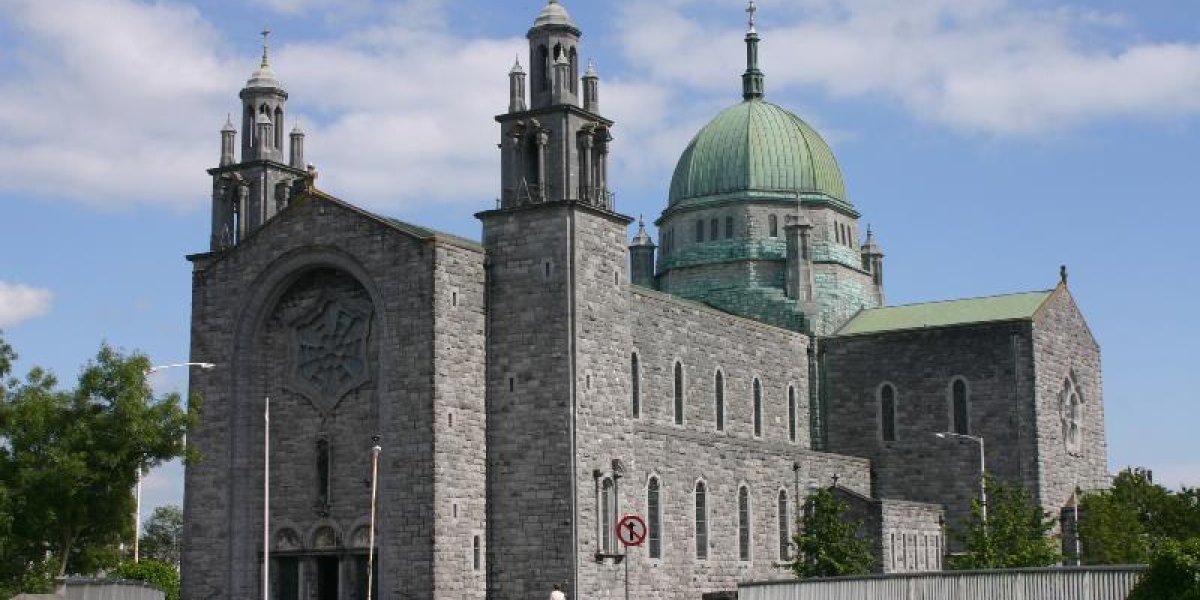
From Eyre Square's west side, walk down Williamsgate Street and cut up St. Vincent's Avenue, crossing the Salmon Weir Bridge — twelve minutes along the River Corrib where salmon still run in April and May, the green copper dome rising straight ahead. This is Ireland's last great cathedral, consecrated in 1965 and built entirely from Connemara marble quarried fifty miles west. Mid-morning light floods the octagonal dome and rose window onto the marble floor — arguably the most photogenic cathedral interior outside of Rome.
Tip: After the interior, loop around the north side to the riverbank — the cathedral's reflection in the Corrib is the shot every guidebook misses. A donation box sits by the door; €2 is customary and nobody chases you if you skip it. Avoid 10:30 Sunday if you don't intend to attend mass.
Open in Google Maps →12:00
Food
Retrace the bridge and drop down St. Nicholas Street past Lynch's 15th-century merchant castle to 22 Quay Street — ten minutes through Galway's medieval core with street musicians already tuning up outside Tigh Neachtain. McDonagh's has been frying fish from Galway Bay since 1902, and it's the one chipper every local agrees on without debate. Order the fresh cod in beer batter (€14) or the seafood chowder with warm brown soda bread (€11); figure €18-25 a head.
Tip: Arrive at 12:00 on the dot — by 12:30 the takeaway queue runs down Quay Street. Skip the takeaway counter and climb the stairs to the sit-down restaurant on the right: faster seating, a window over the medieval lane, and order the mushy peas (€3) — locals swear by them, and tartare sauce comes free.
Open in Google Maps →13:15
Neighborhood
Exit McDonagh's, turn left — Quay Street spills you in two minutes down to the Spanish Arch, a 1584 bastion of the old city wall where Spanish galleons once unloaded wine and brandy. Cross O'Brien's Bridge into the Claddagh fishing village and look back: The Long Walk's row of pastel houses along the quay is the single most-photographed image in Galway, and the afternoon sun strikes them west-southwest — exactly now. Loop back through the arch and work your way up Quay Street and Shop Street: buskers on every corner, Claddagh Ring's original 1750 shop, Lynch's Castle facade, and St. Nicholas' Collegiate Church (1320) where Columbus is said to have prayed in 1477 before sailing west.
Tip: For the iconic Long Walk shot, cross fully to the Claddagh quay side — you want the Corrib in the foreground framing the colored houses, not a tight crop from the near bank. Step into Claddagh Ring at 1 Quay Street even if you're not buying: the heritage display upstairs traces the ring's 350-year story for free and explains why the heart points in or out.
Open in Google Maps →16:45
Park
From the Claddagh, follow the coast path west past Nimmo's Pier and Grattan Beach — thirty minutes of seaside walking to the start of the Salthill Promenade. The prom runs two kilometers along Galway Bay with the blue Burren mountains rising across the water to the south, and on clear days the three Aran Islands lie low on the horizon. Walk to the Blackrock Diving Tower at the far end, kick the wall (the local tradition that marks you've done the full prom), and turn back as the golden hour ignites the bay behind you.
Tip: Aim to reach Blackrock around 17:15 — the walk back east with the setting sun at your shoulders is the whole reason we time this late. Skip the Salthill amusement arcades (tacky, overpriced, €3 for what should be free). Bring a windbreaker even in July: the prom catches the full Atlantic wind and families arrive from the beach underdressed every single day.
Open in Google Maps →19:30
Food
Walk back along Grattan Road toward the Spanish Arch — twenty-five minutes of golden-hour coastline with Galway's skyline igniting as you approach. Ard Bia tucks into an 18th-century stone customs house pressed against the arch itself, candle-lit and low-ceilinged, the kind of room that makes Galway feel like a secret the internet hasn't ruined yet. The menu changes weekly with what's landing at the docks; pan-seared hake with brown butter and seaweed (€28) and Galway Bay mussels in cider cream (€16) are the fixtures worth ordering. Budget €45-65 a head with a glass of wine.
Tip: Book online 2-3 weeks ahead — Ard Bia is Galway's hardest table and walk-ins after 19:00 almost never land. Pitfall warning: avoid any Quay Street pub with a chalkboard advertising 'traditional music sessions' and €25 fish-and-chip set menus — they're cruise-tourist traps with paid musicians and microwave kitchens. For a real trad session afterwards, walk two minutes up to Tigh Neachtain or Tig Cóilí: unscheduled, unmiked, unpaid, and played by actual locals.
Open in Google Maps →Jump to day
09:00
Religious
Start the morning walking 10 minutes north from Eyre Square along University Road — the green copper dome rises over the Corrib long before you arrive. Ireland's youngest cathedral (consecrated 1965) is a quiet Renaissance giant of cut limestone and mosaic; at 9am the east light sets the rose window alight and the only sound is the organist warming up. Don't miss the mosaic of JFK in the mortuary chapel — the one shot every returning visitor forgets to take.
Tip: Arrive by 9:15 — tour coaches queue from 10:30 and the altar light dims by 11. Use the Gaol Road side entrance (always empty); the main west door faces the wrong way for morning photography.
Open in Google Maps →10:30
Religious
Cross Salmon Weir Bridge south (watch for salmon in the Corrib below in summer) and continue 10 minutes down Shop Street into medieval Galway's cobbled core. Saint Nicholas' (1320) is where Christopher Columbus reportedly prayed before sailing west in 1477; inside, find the crusader tomb slab and the stone leper's squint. Opposite stands Lynch's Castle — Ireland's last intact 16th-century fortified townhouse — and if it's Saturday, the entire churchyard erupts into the Galway Market of oysters, boxty, and flower sellers.
Tip: If it's Saturday, hit the market between 10:45 and 11:30 — after noon the good stalls sell out. The sheepskin-hat stall on the south side is a photo trap dressed up as authentic; the real finds are the Connemara seaweed vendor and the oyster shucker by the west gate.
Open in Google Maps →12:30
Food
From the church walk 3 minutes south down Church Street onto Quay Street — you'll smell the frying batter before you see the blue shopfront. McDonagh's has set Galway's fish & chips benchmark since 1902, and the traditional cod with chips (€15.95) is filleted to order from Atlantic catch landed that morning. Grab a table on the chipper side through the left door; the restaurant side charges twice as much for the same fish.
Tip: Order cod over haddock — Galway Bay cod is local; haddock is flown in. Ask for salt and vinegar Irish-style (they'll douse it properly) and take the pea purée side — Galway locals do, tourists order mushy peas and get the same thing at twice the markup.
Open in Google Maps →14:00
Museum
Exit McDonagh's, turn left down Quay Street, then right at the Spanish Arch — the modern glass-and-stone building beside the arch is the museum, 4 minutes from your lunch table. Free across three floors, it tells Galway's 800 years in roughly 90 minutes: the medieval civic sword and great mace on floor two, the Galway Hooker sailboat suspended above the atrium, and a quietly moving exhibition on the Claddagh Ring tradition on floor three.
Tip: Take the lift straight to floor three and walk down — this reverses the tour-group flow. The rooftop terrace accessed from floor two gives the cleanest top-down shot of the Spanish Arch that no postcard seller knows about.
Open in Google Maps →16:00
Landmark
Exit the museum back through the Spanish Arch — the 1584 bastion where Galway traders once unloaded Spanish wine and salt — and turn left along the quay. The Long Walk is the row of painted red, ochre, blue, and indigo houses every Galway postcard lies about being empty; arrive by 16:30 and the low western sun hits them full-frontal while the Corrib glitters. Loop across the Wolfe Tone footbridge to Nimmo's Pier for the reverse composition with the Cathedral dome rising behind the painted roofs.
Tip: The iconic Long Walk shot is actually from Nimmo's Pier across the water, not from the arch itself — 4-minute walk across the footbridge. Time it for 17:15 in summer: the low sun saturates the paintwork for about 20 minutes before the shadow line climbs the walls.
Open in Google Maps →19:30
Food
Walk 3 minutes back across the footbridge and turn right — the candlelit stone cottage wedged against the Long Walk is Ard Bia, housed in an 18th-century former customs house. The kitchen works only west-coast Irish ingredients: Killary mussels in Connemara cider (€14) and line-caught hake with colcannon (€28) are heritage recipes reinterpreted without apology. Whitewashed walls, a turf fire, and Atlantic sea-glass light make it feel like dining inside a Seamus Heaney poem.
Tip: Reserve a week ahead for the downstairs stone-walled room with the fireplace; upstairs is blander. PITFALL for Quay Street: avoid the restaurants with chalkboard menus translated into three languages and photos of every dish — they charge €32 for microwaved chowder and frozen salmon. Any Galway local will tell you the Latin Quarter chalkboard mills are this city's single biggest tourist trap; Ard Bia, McCambridge's, and Kai are where locals actually eat.
Open in Google Maps →09:30
Landmark
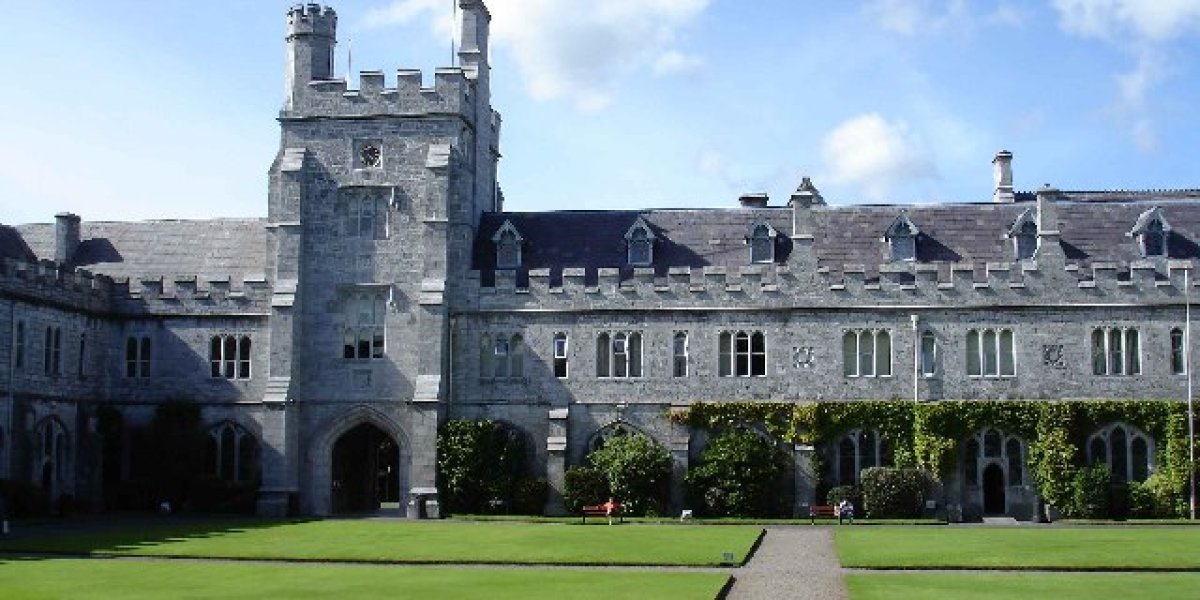
Start the day walking 15 minutes north-west from the centre along the River Corrib — cross Salmon Weir Bridge and follow University Road past the canal. The Quadrangle (1849) is the Tudor-Gothic heart of Ireland's fourth-oldest university, modelled on Christ Church Oxford in honey-coloured Galway limestone. On a Saturday morning the whole courtyard is yours: the clock tower ticks into empty air and the cloisters throw perfect dappled shadows across the stone.
Tip: Enter through the Aula Maxima arch on University Road — the side gates lead into modern faculty buildings and you'll miss the whole thing. Between 9:30 and 10:45 the east cloister gets full sun at camera height; after 11 the bell tower casts a shadow straight across the courtyard.
Open in Google Maps →11:30
Neighborhood
Walk 20 minutes south along the Corrib — through Nun's Island, over the Wolfe Tone footbridge, with the Long Walk's painted houses on your left. The Claddagh was a Gaelic-speaking fishing village that predated the city itself; though its thatched cottages were demolished in the 1930s, the basin still bobs with red-sailed Galway Hookers and the Claddagh Ring that became every Irish bride's inheritance was forged here in the 1700s. Stand on the quay looking back for the single best composition in Galway: hookers in the foreground, Long Walk across the water, Cathedral dome rising behind.
Tip: Thomas Dillon's on Quay Street genuinely is the original Claddagh ring maker (1750) and the family still runs it; skip the souvenir Claddagh rings on Shop Street — most are resin cast in Shenzhen. Walk the short spur to Nimmo's Pier for the open Bay view most visitors miss.
Open in Google Maps →13:00
Food
Walk 5 minutes north up Dominick Street into the Westend — Galway's local-only quarter of hand-painted pub signs and independent shops. John Keogh's (opened 1874) is where the city eats its Saturday lunch: the seafood chowder (€12) with a hunk of house brown bread is the benchmark every other chowder in Galway gets measured against, and the Guinness-and-oyster plate (€18) is the textbook Galway pairing. Wood floors, low ceilings, every pint pulled on a 119-second settle.
Tip: Grab the snug by the front window if you can — afternoon sun, people-watching on Dominick. Order the chowder not the seafood pie (the pie is tourist filler); one pint only at lunch because they're stronger than they pour and you've got a 3 km promenade walk ahead.
Open in Google Maps →15:00
Park
From the pub walk 5 minutes west to Father Griffin Road and grab the 15-minute #405 bus to Salthill — or walk the flat 30 minutes along the coast. The Prom is 3 km of Atlantic-facing seawall ending at Blackrock Diving Tower, an 1885 art-deco concrete stack where Galwegians have hurled themselves into the cold Atlantic for six generations. Complete the local ritual at the end: touch ('kick') the wall at Blackrock before turning back — every Galway child is raised to do it, and you'll still see old men in suits doing it on Sunday afternoons.
Tip: Walk westbound with the Bay on your right and the light in your face; the return eastbound between 17:00 and 17:45 gives you the city skyline, distant Cathedral dome, and full sunset over Galway Bay behind you. Brave a jump off Blackrock if the tide is in — there's a built-in staircase and locals swim here year-round in Speedos.
Open in Google Maps →17:30
Park
Walk or bus 25 minutes east from Salthill along Lower Salthill Road — you arrive at Galway's civic heart just as the evening light warms the Browne Doorway. JFK addressed 100,000 people here in June 1963, two months before his death; the fountain at the square's centre, stylized after the red sails of the Galway Hooker, is the shot every Galwegian considers 'home'. The 17th-century Browne Doorway on the northeast edge is the city's last surviving medieval house façade, relocated stone-by-stone in 1905.
Tip: Sit on the benches facing the fountain at 18:00 — the steel sails cast long geometric shadows toward the Browne Doorway, a composition that looks deliberately staged. Avoid the horse-and-carriage tours that stage here: €40 for a 15-minute loop past things you've already seen on foot.
Open in Google Maps →19:30
Food
Walk 8 minutes west from Eyre Square down William Street and Sea Road — Kai is the small limestone-and-glass room on the left, blackboard menus chalked every morning, no two chairs alike. New Zealand chef Jess Murphy (married into Galway) holds a Michelin Bib Gourmand for a reason: the daily-changing menu might show roast Connemara lamb with wild garlic (€34) or hand-dived Flaggy Shore scallops in brown butter (€28), every ingredient sourced within 50 km. Loud, warm, wine-list-heavy — this is where Galway's own chefs eat on their nights off.
Tip: Reserve three weeks ahead — Kai takes bookings online only and the 19:30 slot is always first to go. Order the whole-day-sourced fish special over anything printed on the menu; it's the chef's showpiece. PITFALL for Sea Road and Dominick Street: skip anywhere advertising 'Traditional Irish Night' with fiddlers and a set-price dinner — €65 of tour-bus dinner theatre. The real trad music is free at Tig Cóilí on Mainguard Street or The Crane Bar on Sea Road after 21:30, and the Guinness is €6.20, not €12.
Open in Google Maps →
Trip builder
Plan this trip around Galway
Turn this guide into a bookable rail itinerary with FlipEarth.
Keep exploring
Related cities
More in the same country
FAQ
Frequently asked questions
How many days do you need in Galway?
Most travelers enjoy Galway in 1 days, with enough time for headline sights and a slower meal or museum stop.
What's the best time to visit Galway?
The easiest season for most travelers is May-Sep, especially if you want good weather and manageable crowds.
What's the daily budget for Galway?
A practical starting point is about €110 per person per day before hotels, then adjust based on museums, dining, and transport.
What are the must-see attractions in Galway?
A good first shortlist for Galway includes Eyre Square (Kennedy Memorial Park).