City Guide
Cotswolds
United Kingdom · Best time to visit: May-Sep.
Day-by-day plan
Choose your pace
Trip length
09:00
Landmark
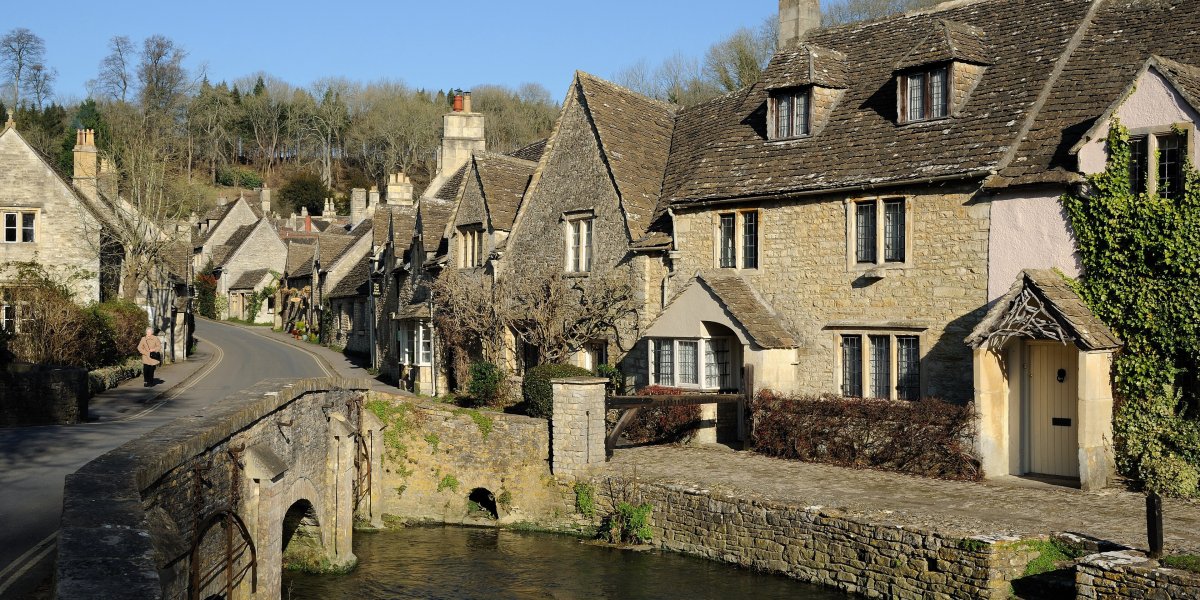
Step off the bus beside the village green and the River Windrush opens out in front of you, crossed by five low Georgian footbridges of honey-colored stone. At nine the place feels almost private — coach tours don't roll in until ten — so this is the window for the postcard shot of the bridges marching north along the green. Cross to the south bank, walk slowly upriver, and let yourself believe the 17th-century traveler who called this the Venice of the Cotswolds.
Tip: Stand on the south bank looking north for the iconic bridges-in-a-row photo — the morning sun is behind you and the water mirrors the stone. By 10:30 the green is wall-to-wall coaches; you'll be very glad you came at nine.
Open in Google Maps →11:15
Food
Two minutes back across the green onto Sherborne Street, on the corner where the locals queue. This tiny family bakery is where Bourton actually eats lunch — the cabinet is stacked with Cotswold pork-and-apple pasties (£4.50), warm sausage rolls in flaky pastry, and a treacle tart that disappears by noon. Order to go, sit on the wall by the bridge, and eat with your feet over the river before the long stretch of walking begins.
Tip: Get the pork-and-apple pasty plus a slice of treacle tart for the trail — you won't pass another bakery this good until Stow. Skip the riverfront tea rooms with the laminated picture menus; they exist for the coach trade and charge double.
Open in Google Maps →12:00
Landmark
Pick up the Warden's Way footpath at the north end of Bourton — a 25-minute meadow stroll with the River Eye on your left and the hum of the village fading behind you. The first sight of Lower Slaughter is its 19th-century Old Mill with a red-brick chimney standing in defiance of all that honey stone, the millrace still turning. The clear stream runs straight down the main street under stone footbridges every few meters; cross them slowly, the hush is the point.
Tip: The classic shot is from the second footbridge looking back at the Old Mill — the brick chimney against honey cottages is the only contrast in the village. Skip the Mill's interior museum (£3, ten minutes of millstones); the photograph is the experience here.
Open in Google Maps →13:15
Landmark
Continue north along the Warden's Way for 15 minutes — the path ducks under willows and crosses the Eye at a shallow stone ford where in summer children paddle. Upper Slaughter is barely a village: a manor, a church, a row of Saxon-era cottages, and silence. It is one of England's 'Doubly Thankful' villages, having lost no soldier in either world war — a fact you feel in the air before you read it on the plaque inside the church porch.
Tip: Stand at the ford looking back toward the cottages — the reflection in the shallow water is the photo almost nobody posts because half of them never walk this far. There is no shop, no café, no toilet here; that is by design and part of why it stays this way.
Open in Google Maps →14:30
Landmark
From Upper Slaughter the Warden's Way climbs east through sheep pastures and dry-stone walls — about 90 minutes of gentle ascent to the highest market town in the Cotswolds, sitting at 244 metres on a windy ridge. Arrive into the Market Square around 16:00 with the late sun hitting the honey stone full-on. Wander the antique-shop lanes, then circle round to the north door of St Edward's Church — the medieval doorway flanked by two ancient yew trees that have grown into the stone, widely said to be the door Tolkien saw before drawing the Doors of Durin.
Tip: Hit the yew tree door between 17:30 and 18:30 — the low west sun fires the leaves and lights the stone, and the day-trippers have left. The Battle of Stow plaque on King's Arms is worth a two-minute detour: this square saw the final battle of the English Civil War in 1646.
Open in Google Maps →19:00
Food
Three minutes off the Market Square down Digbeth Street, behind a low oak doorway you have to duck under. The Porch House claims to be the oldest inn in England — beams in the front room have been carbon-dated to 947 AD — and the bar is a low cave of woodsmoke, copper, and polished wood. Order the slow-cooked Cotswold lamb shoulder (£26) with smoked celeriac, and a pint of Hook Norton Old Hooky from the brewery just up the road. End the day in front of the inglenook fire if it's lit.
Tip: Reserve a fireside table at least three days ahead and ask specifically for the original 10th-century room — the new dining room is comfortable but soulless. Pitfall: ignore the polished gastro-pubs ringing the Market Square that quote in pounds-per-person; they live off the Mercedes coach crowd and the kitchens are half this good for double the price.
Open in Google Maps →Jump to day
09:00
Landmark
Park beside St Mary's Church and walk four minutes down Awkward Hill — the lane drops you beside the Coln River and Arlington Row appears like a postcard come to life. These 17th-century weavers' cottages, honey-coloured Cotswold stone under heavy stone-tile roofs, are arguably the most photographed row of houses in England, and the trout farm next door (founded 1902) provides a quieter riverside loop. The morning sun before 10:00 lights the cottages full-face from the south, before the first coaches arrive.
Tip: Arrive by 09:00 — the first coach tours from Oxford and Stratford pull in around 10:30 and by 11:00 there are 200 people on the small footpath. Cross the wooden footbridge to the far side of the Coln and shoot from the path: cottages on the left, willows on the right, no people in the frame.
Open in Google Maps →11:30
Neighborhood
Ten-minute drive north through narrow lanes — park beside The Old Mill, the only legal visitor parking in the village. The Eye stream runs the length of Lower Slaughter, crossed by tiny stone footbridges; there is not a single shop, sign, or modern building, just lived-in honey-stone cottages and the working 19th-century corn mill with its red-brick chimney (the only one for miles). The 11:30 sun catches the south bank cottages directly — the second footbridge from the mill gives the postcard angle.
Tip: Continue one mile along the riverside footpath to Upper Slaughter — the path is well-marked, ends at the Lords of the Manor hotel, and almost no day-trippers walk it. Total silence, two villages, both honey-stone, twenty minutes apart on foot.
Open in Google Maps →13:00
Food
Two-minute walk back across the village green to a 17th-century coaching inn with flagstone floors, a beamed snug, and an open fire that runs into May. The kitchen sources within twenty miles: order the Cotswold lamb shepherd's pie (£18) or the beer-battered Coln river trout (£19). Average £25–30 per person; walk-ins take the snug bar, the formal dining room requires booking.
Tip: Arrive by 12:45 to claim the snug bar table beside the fireplace — no reservations, first come first served, and the snug is the better experience than the dining room. The shepherd's pie is the must-order; on Sundays the £24 roast sells out by 13:30.
Open in Google Maps →14:30
Neighborhood
Five-minute drive south to the so-called 'Venice of the Cotswolds' — park at the Station Road car park at the south end and walk in along the River Windrush. The shallow river flows directly through the centre of the village, crossed by five low stone bridges built between 1654 and 1953, and the green along its banks is wider than any other Cotswold village's. Afternoon light from 14:30 hits the bench rows along the north bank dead-on — this is when the postcard shot exists.
Tip: Park at Station Road, not the central Rissington Road car park — the latter fills by noon on weekends and costs twice as much. Walk the south bank first, then cross at the war memorial bridge for the iconic frame. Skip the Model Village (£5, charm runs out in ten minutes) unless you have children.
Open in Google Maps →17:00
Landmark
Ten-minute drive north to Stow — park free in the side streets off Sheep Street, the market square charges by the hour. The square has been the heart of the Cotswold wool trade since the 11th century, but the real treasure is St Edward's Church three minutes away: the north door is flanked by two ancient yew trees that have grown into the stone arch, a scene so Tolkien-esque that he is widely believed to have based the Doors of Durin on it. Late afternoon light at 17:00 angles directly onto the door.
Tip: Walk to the church first while the light is strong, then double back to the market square for golden hour at the Market Cross. The two yew trees frame the door symmetrically — stand three metres back, centred between them, for the photo. The church interior is free and worth ten minutes for the 14th-century carved screen.
Open in Google Maps →19:30
Food
Two-minute walk from the market square to Digbeth Street — The Porch House claims to be England's oldest inn (a Saxon hall dating to AD 947), and the original bar room still has its low oak beams and witch-marks carved into the lintels. Order the 28-day aged Cotswold ribeye (£32) or the pan-roasted partridge in season (£28); average £40–50 per person with wine.
Tip: Reserve a week ahead and ask specifically for 'the Saxon room' — the original AD 947 bar at the back seats only eight and is where you want to be. Pitfall warning: Stow's market square is ringed by chocolate-box pubs charging London prices for indifferent food (skip The Talbot, the Old Stocks Inn dining room, and the Queen's Head kitchen) — The Porch House is the only one where the cooking matches the setting.
Open in Google Maps →08:30
Landmark
Park at Back Ends car park and walk three minutes to the High Street — Chipping Campden's gently curved, half-mile honey-stone street is the longest unbroken stretch of medieval architecture in the Cotswolds. The Jacobean Market Hall in the centre, built in 1627 by Sir Baptist Hicks for the butter and poultry trade, is where the 102-mile Cotswold Way long-distance path begins. Pre-09:30 light hits the limestone full-on and makes every facade glow gold before the day-trippers arrive.
Tip: Walk the full length from the 1612 Almshouses at the south end to St James' Church at the north — twenty minutes one way, no shortcut. Stop at Hart Silversmiths on Sheep Street: it is the original Guild of Handicraft workshop founded by C.R. Ashbee in 1902, still a working bench, not a tourist shop — they will let you watch the silversmiths if you ask politely.
Open in Google Maps →10:30
Landmark
Fifteen-minute drive south-west onto Beacon Hill — park in the official Broadway Tower car park and walk five minutes across the deer park to the tower itself. This folly castle (1798, designed by James Wyatt for the 6th Earl of Coventry) stands at 1,024 ft, the second-highest point in the Cotswolds, and from the rooftop you can see sixteen counties on a clear day. William Morris loved it so much he used it as a writing retreat — his preserved bedroom on the second floor is the surprise of the visit.
Tip: Climb to the open rooftop (£9, included with tower entry) — the south view down the Vale of Evesham is the best photo and pre-11:00 light is sharpest. Walk the short deer park loop trail behind the tower: about fifty fallow and red deer graze near the fence and almost every visitor misses them entirely.
Open in Google Maps →12:30
Food
Five-minute drive down the hill into Broadway village — Russell's occupies the former workshop of Gordon Russell, the Arts & Crafts furniture designer who put Broadway on the design map. The kitchen sources from the Vale of Evesham, England's asparagus capital: order the pan-roasted Cornish hake with Evesham asparagus (£24) or the slow-braised Cotswold lamb shoulder (£26). The three-course lunch set is £28 and beats two à la carte mains on price.
Tip: Take the 3-course lunch set — best value in the Cotswolds, half what dinner costs for the same kitchen. Request the front terrace overlooking Broadway High Street: Broadway's main street is wider and grander than any other Cotswold village's because it was a coaching road, and watching it from the terrace beats sitting indoors on a clear day.
Open in Google Maps →15:00
Neighborhood
Forty-five-minute drive south-west through quiet lanes to Tetbury — park free at The Chipping just off Long Street. This is the royal Cotswolds: King Charles's Highgrove estate is two miles away and the Long Street antique shops are where the royal household sources. The pillared Market House (1655) in the centre still hosts a weekly market; tucked behind it, the Chipping Steps — twenty-five wide stone steps lined with weavers' cottages — are the most coach-tour-free photo spot in the Cotswolds.
Tip: Walk Long Street and Church Street for the antique shops (Long Street Antiques and Top Banana are the two worth your time); the Chipping Steps are hidden behind the Market House and tour buses never find them. Hobbs House Bakery on Long Street supplies the royal household — grab a sourdough cheese roll (£3.50) for the road.
Open in Google Maps →17:00
Neighborhood
Thirty-minute drive south to the upper car park (postcode SN14 7HU) — the village itself is closed to visitor cars, and from the car park it is a steep five-minute walk down the hill into a settlement that has not built a new house since 1620: no overhead wires, no satellite dishes, no road markings, no shops. Used for War Horse, Stardust, and The Wolfman, and consistently voted England's prettiest village — the row of bow-window cottages along Water Lane is the iconic angle. The 17:00 light hits the cottages full-face from the stone bridge below.
Tip: Take the footpath along By Brook past the Manor House gardens — look for the small wooden gate just past the Market Cross. This 15-minute streamside loop is where the locals walk their dogs and almost no tourists find it. The classic photo angle is from the stone bridge at the bottom of Water Lane, looking back up toward the church and bow-window cottages.
Open in Google Maps →19:30
Food
One-minute walk back from the bridge to the Market Cross — The Castle Inn is a 12th-century stone-walled coaching inn directly opposite the church, the older of Castle Combe's two pubs and the one locals choose. Order the slow-braised Cotswold beef shin pie (£21) or the West Country mussels in cider (£18); average £35–45 per person with a drink.
Tip: Reserve ahead — Castle Combe has only two pubs and dinner books out by 18:00 on weekends. Pitfall warning: do not under any circumstances drive into Castle Combe village itself, even if your GPS suggests it — there is no visitor parking, residents will (politely) turn you around, and the one-way lanes make reversing a nightmare. The free upper car park is the only option, full stop.
Open in Google Maps →Jump to day
09:00
Landmark
Begin where William Morris stood in 1894 and called this 'the most beautiful village in England' — a terrace of 17th-century wool weavers' cottages mirrored in the trout-filled River Coln. Arrive by 09:00 to walk the row before the coach tours from Burford spill out around 10:30; the east-southeast morning light puts the honey-yellow stone in full glow no afternoon angle can match. Cross the small footbridge to the meadow path opposite for the image that lived inside the British passport until 2010.
Tip: Never park on the B4425 alongside the Row — you will be ticketed and locals will quietly judge you. Park free at the Bibury Trout Farm 200 m upstream and walk in via the meadow path; you arrive at Arlington Row from the unfamous angle the professional photographers actually use.
Open in Google Maps →12:30
Food
Walk 300 m back along the riverbend — The Swan sits where the Coln widens into the millpond, and in summer they set tables on the riverbank itself. The pan-fried trout (£24) is fished from the Bibury Trout Farm you just passed, genuinely the freshest trout in England, and the slow-braised Old Spot pork belly (£26) is what the kitchen quietly prefers to cook. Lunch around €35 a head; the Coln-side garden makes it feel half the price.
Tip: Reserve a riverside table at least 2 days ahead — the four tables overlooking the millpond are the only reason to choose The Swan over the Catherine Wheel pub up the road. Skip the £18 'Cotswold cream tea' set — it is a tourist menu; the trout is what the chef actually wants you to order.
Open in Google Maps →14:30
Neighborhood
A 25-minute drive east on the A40 — keep the windows down through the Windrush valley as you descend into Burford from the top of the hill. The 'gateway to the Cotswolds' has the most dramatic High Street in England: 300 m of honey-stone shopfronts sloping straight down to a medieval stone bridge over the Windrush. Walk down (never drive), drop into St John the Baptist Church at the foot, then wander Sheep Street where the genuine local antique dealers hide.
Tip: Park at the free Recreation Ground lot at the top of the High Street and walk down — driving the single-lane medieval bridge can back you up 20 minutes. The 16:00-17:30 west-facing light is photographic golden hour on the sloping High Street; the real antique shops are above the church on Sheep Street, while the tourist-trap cluster sits down by the bridge.
Open in Google Maps →17:00
Landmark
A 5-minute drive east of Burford to a place no coach tour finds. Minster Lovell Hall is a 15th-century manor ruin that collapsed into picturesque arches and a dovecote standing alone in a meadow above the Windrush — the kind of place Wordsworth would have written about. The 13th-century church beside it is fully intact; together they make the quietest 'wow' the Cotswolds give you before dinner.
Tip: Park in the village by the post-box and walk through the churchyard — no entrance fee, no ticket booth, no opening hours. The 600-year-old stone cylinder dovecote sits on the far side of the ruin past the manor's chimney remains; most visitors miss it entirely and turn back at the arches.
Open in Google Maps →19:30
Food
A 5-minute drive back into Burford — The Lamb is a 15th-century coaching inn on Sheep Street with flagstone floors, leaded windows, and a garden descending toward the river. Order the slow-roast Cotswold lamb shoulder with rosemary (£32) — it is on every menu in the region but the Lamb's is the version locals name first — and the dark chocolate fondant (£10) which has not left the menu since 1980. Two-course dinner around €55.
Tip: Reserve at least 3 days ahead and request the Inglenook Room — only 4 tables, the quietest corner on Sheep Street. Tourist trap warning: avoid the pubs clustered at the foot of the High Street near the bridge; they charge €28 for frozen fish & chips made for coach trade. The Lamb, The Bull, and The Bay Tree on Sheep Street are where Burford locals actually eat.
Open in Google Maps →09:00
Neighborhood
Begin at the very northern tip of the Cotswold Way — the 164 km long-distance footpath starts at the Market Hall, a 17th-century stone arcade donated by Sir Baptist Hicks in 1627 for selling cheese, butter, and poultry. Walk the curved honey-stone High Street to St James' Church to see the wool merchant tombs that paid for half the architecture in this region. Sheep Street, the narrow lane east, holds the Cotswold Olimpicks site — actual rural games started in 1612, older than the modern Olympics.
Tip: Arrive before 09:30 — coach tours from Stratford-upon-Avon pour in by 10:30. Park free along the High Street and walk; the best photo of the Market Hall is from the steps of the Eight Bells (south-southwest angle, morning light directly on the gables and pillar stones).
Open in Google Maps →12:30
Food
Walk 250 m south on Church Street — the 14th-century stone porch and creaking floorboards announce themselves before the menu does. Built to house the stonemasons working on St James' Church, the inn still has a priest hole in the dining room; ask the bartender to point it out. The slow-cooked Cotswold lamb shoulder (£24) and the beef-and-ale pie (£18) are the two dishes locals point first-timers to; pair with a half-pint of Hook Norton bitter brewed 30 minutes south. Lunch around €30.
Tip: No reservations for lunch — arrive at 12:15 to claim a table by the inglenook fireplace before the 13:00 rush. Skip the bread basket and save room for the sticky toffee pudding (£8.50), which the kitchen genuinely makes on the premises rather than serving the supermarket version most pubs default to.
Open in Google Maps →14:30
Neighborhood
A 12-minute drive west on the B4632 through the Vale of Evesham — keep your eyes left for first glimpses of Broadway Tower rising on the escarpment. Broadway has the widest High Street in the Cotswolds, lined with chestnut trees and tea-room awnings, and Pre-Raphaelite painters and J.M. Barrie summered here. Walk the green, drop into the Broadway Museum's Pre-Raphaelite room, then follow the lane east to St Eadburgha's, the village's lonelier 12th-century church a quiet mile out.
Tip: Park behind the Lygon Arms (free 2 hours) instead of the High Street — saves you the rotation drama. The best Broadway photograph is not on the High Street; it is looking back south from outside the Snowshill Lavender shop, with the village framed by the Cotswold escarpment rising behind.
Open in Google Maps →17:00
Landmark
A 5-minute drive up the steep Snowshill Road — the tower appears suddenly above a beech wood. Built in 1798 for Lady Coventry, who wanted to know whether her beacon could be seen from Worcester, it is the second-highest point in the Cotswolds with views over 16 counties on a clear day. William Morris used it as his country retreat; stay until 17:30 in summer for the slanting western light hitting the Vale of Evesham and the fallow deer coming closest to the fence at dusk.
Tip: Pay for the tower climb (£7) at the café counter, not the gift shop — the gift shop queue can be 20 minutes in summer. The classic 'lonely tower on the ridge' shot is from the deer-field path 100 m west of the tower itself, not from the entrance; the deer line the fence around dusk.
Open in Google Maps →19:30
Food
Drive 5 minutes back into Broadway village — Russell's sits on the High Street in what was once Sir Gordon Russell's furniture workshop. The atmosphere is honest, modern British (no white tablecloths, no fuss) and the kitchen is one of the most quietly respected in the region. The Cotswold lamb rump with wild garlic (£32) and the Old Spot pork belly (£28) come from farms within 15 miles; expect to spend around €60 for two courses.
Tip: Reserve at least 5 days ahead — they are tiny and locals know it; ask specifically for table 4 in the back room (the quietest seat in the house). Tourist trap warning: avoid the 'Old Cottage' tearooms on the High Street advertising 'authentic Cotswold cream tea' for €20 — Broadway's actual best scones are at Tisanes Tearoom on the High Street for half the price.
Open in Google Maps →09:00
Landmark
Begin at the highest point of the Cotswold ridge — eight roads converge on Stow's central market square, which once held 20,000 sheep on a single market day. The famous 'door to Mordor' — St Edward's Church north door framed by two thousand-year-old yew trees — is what most travelers come to see, and yes, Tolkien walked this churchyard. Climb to the medieval market cross, then descend the 'tures', the narrow stone alleys built to funnel sheep into the square.
Tip: Arrive at 09:00 sharp — the yew-door queue forms by 10:30 with coach tours, and the photograph needs no one else in frame; east-southeast morning light perfectly illuminates the iron studding. Park free on Maugersbury Road and walk in; the central square is paid parking enforced by camera (a €70 fine waiting if you forget).
Open in Google Maps →12:30
Food
Walk 60 m across the market square — The Porch House claims to be the oldest inn in England, with a beam dated 947 AD and witch marks scorched into the inglenook fireplace to ward off evil. The Cotswold game pie (£22) and the seasonal Stow lamb stew (£20) are what the kitchen quietly prefers to cook; the front parlour has the older feel while the back is for hotel guests. Lunch around €30.
Tip: Walk-ins are accepted, but ask specifically for front-room table 3 — directly under the 947 AD beam. Order a Hook Norton 'Hooky' bitter (£5) served in a proper handled mug. Skip the £12 ploughman's lunch — it is a tourist add-on the kitchen would rather not cook.
Open in Google Maps →14:30
Park
A 5-minute drive south on the A429 then west — park at the free Lower Slaughter village hall lot. The 'Slaughter' name (from Old English slothre, muddy place) hides one of the most untouched village pairs in England: no shops, no cafés, no tour buses — just the River Eye, a 19th-century mill wheel still turning, and stone bridges every 200 m. Walk the Warden's Way upstream to Upper Slaughter (one flat mile) — the only village in England designated 'doubly thankful' because every soldier returned from both World Wars.
Tip: Cross the river by the millpond, not the main bridge — the angle of the stone cottages reflected in the millpond is the photograph you came for, and afternoon light from 14:30 to 15:30 puts them in full sun. There are no public toilets in either Slaughter; use the Old Mill Café before you start (free with the £4 scone, which is genuinely worth ordering).
Open in Google Maps →17:00
Neighborhood
A 5-minute drive south — park at the Pay & Display behind the Cotswold Motoring Museum. Bourton is called the Venice of the Cotswolds because the River Windrush runs flat through the central green, crossed by five low stone bridges built between 1654 and 1953. Stay until 17:30 when the day-trippers leave and you will see why locals never moved away; wander Sherborne Street and Lansdowne, the back lanes most travelers never reach.
Tip: Skip Birdland and the Dragonfly Maze — both overpriced for what they are; the Model Village (£4.50, a 1937 scale replica of Bourton including a model-within-the-model) is the genuinely charming attraction. Walk south along the river past the Old Mill for a 200 m stretch where the duck-feeding crowds vanish entirely — the only quiet spot in town between 11:00 and 17:00.
Open in Google Maps →19:30
Food
Walk 200 m back across the green to The Dial House, a 17th-century coaching inn with a walled garden where dinner is served on warm evenings. The kitchen runs a 'Cotswold farm-to-table' set menu (3 courses, £55) that genuinely names each farm — venison from Sherborne Estate two valleys away, cheese from Stanway. The pan-fried fillet of Cornish hake (£32) is the dish locals quietly order.
Tip: Reserve 4-5 days ahead, especially for Friday and Saturday; request the walled garden in summer or the inglenook side of the dining room in winter. Tourist trap warning: avoid the 'fish & chips' shops on the High Street facing the green — they charge €22 for a plate that costs €13 at the Coach & Horses pub two streets back, and the fish is frozen rather than the day's catch the locals would name.
Open in Google Maps →
Trip builder
Plan this trip around Cotswolds
Turn this guide into a bookable rail itinerary with FlipEarth.
Keep exploring
Related cities
More in the same country

FAQ
Frequently asked questions
How many days do you need in Cotswolds?
Most travelers enjoy Cotswolds in 1 days, with enough time for headline sights and a slower meal or museum stop.
What's the best time to visit Cotswolds?
The easiest season for most travelers is May-Sep, especially if you want good weather and manageable crowds.
What's the daily budget for Cotswolds?
A practical starting point is about €110 per person per day before hotels, then adjust based on museums, dining, and transport.
What are the must-see attractions in Cotswolds?
A good first shortlist for Cotswolds includes Bourton-on-the-Water, Lower Slaughter, Upper Slaughter.