City Guide
Stirling
Vereinigtes Königreich · Best time to visit: May-Sep.
Day-by-day plan
Choose your pace
Reisedauer
09:00
Landmark
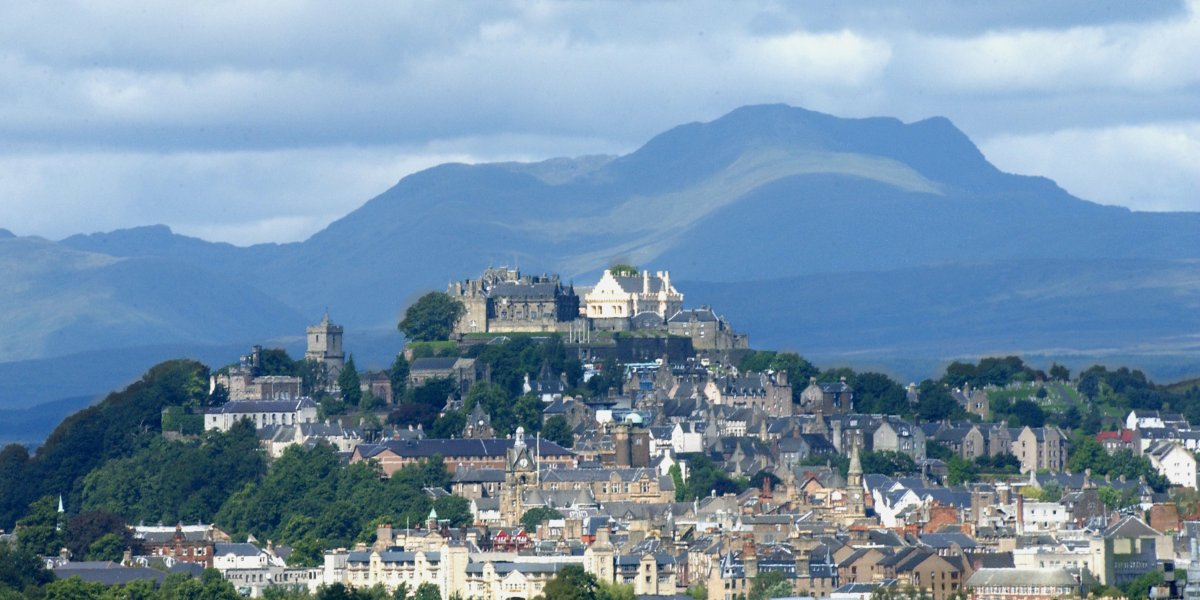
Arrive at the foot of Castle Wynd before the 09:30 ticket gates open and walk up the steep cobbled approach to the esplanade — the bagpiper hasn't started yet, the morning mist is still pooling in the Forth valley below, and you have the whole rampart terrace to yourself. From the east corner you can see Wallace Monument needling out of Abbey Craig across the meander, with the Ochil Hills behind — this single view is why kings fought for Stirling for 800 years. You are skipping the palace interior on purpose; the silhouette of the curtain wall against the Highland sky is the photograph everyone remembers.
Tip: Stand at the southeast corner of the esplanade (near the Robert the Bruce statue) at 09:15 — the rising sun lights the castle gatehouse from the left and Wallace Monument is perfectly framed between two cannon barrels in the middle distance. Skip the official castle car park; park or alight at Albert Halls and walk up — saves £4 and gives you the dramatic Castle Wynd approach.
Open in Google Maps →10:30
Religious
From the esplanade, walk three minutes down St John Street past the ochre walls of Argyll's Lodging and the roofless skeleton of Mar's Wark — the unfinished Renaissance palace abandoned in 1572. The Church of the Holy Rude is the only working church in Britain still standing where a king was crowned (the infant James VI, 1567), and its medieval oak hammer-beam roof is one of two left in Scotland. You will not go inside — instead, enter the graveyard from the Cowane's Hospital side, where Victorian merchants commissioned the eerie white-marble Star Pyramid and Martyrs' Memorial standing among lichen-stained headstones. The composition of black-stone church, white pyramid, and castle silhouette behind is unique to Stirling.
Tip: From the Holy Rude graveyard, find the wrought-iron gate on the south side and step through onto Ladies' Rock — a small grassy outcrop the queens of Scotland used to watch tournaments. This is the single best free panorama in Stirling, and 99% of tour groups walk straight past it. After, descend via Broad Street (not Spittal Street) to walk past the 17th-century Tolbooth and Mercat Cross.
Open in Google Maps →12:00
Food
Continue down Broad Street and bear right into Bow Street — five minutes from Holy Rude, you arrive at a low-doored stone house dated 1500, where Lord Darnley supposedly lodged while courting Mary Queen of Scots. The cafe occupies the original vaulted ground floor; you order at the counter and squeeze into a window seat under the rough beams. This is a deliberately quick stop — you need fuel, not ceremony, and locals come here precisely because it isn't pretending to be anything fancier than the oldest room in town serving good soup.
Tip: Order the Cullen Skink (smoked haddock chowder, £6.50) and a slice of homemade tablet for after — that is your authentic Scottish lunch in one visit. Skip the panini and the toasties; they are filler. Arrive before 12:15 — by 12:30 the courthouse staff fill every seat and you'll be standing.
Open in Google Maps →13:15
Landmark
Walk north from Bow Street down Friars Street, cross under the railway at Stirling station, then follow the riverside path through Riverside Park for fifteen minutes — the Forth flows brown and slow beside you and you can already see the four stone arches of the bridge ahead. The current 15th-century bridge replaced the wooden one downstream where William Wallace and Andrew Moray crushed the English in September 1297 — the chokepoint of the entire kingdom for centuries, narrow enough that two carts could not pass. Cross to the north bank, look back, and you'll understand in one second why every army that ever wanted to control Scotland had to take this exact spot.
Tip: The iconic shot is not from the bridge itself — drop down the muddy path to the west bank on the north side (look for the willow tree) and shoot upstream: you get all four arches reflected with Wallace Monument rising directly behind the stonework. Mid-afternoon light hits the south face of the arches perfectly. Wear waterproof shoes; the path is slick even in dry weather.
Open in Google Maps →14:45
Landmark
From the north end of the Old Bridge, follow Causewayhead Road for fifteen minutes — the 67-metre Victorian Gothic tower comes in and out of view between trees as you approach Abbey Craig. Skip the £11.50 tower interior and take the wooded zigzag path up the craig instead (twenty minutes, steep but shaded); at the summit the monument stands black against the sky and the panorama from its base is the same one Wallace saw before the battle — seven battlefields visible in one sweep, including Bannockburn, Sheriffmuir, and the bend of the Forth where the English baggage train was trapped. Walk a full slow loop around the monument; the views from the north-facing terrace toward the Highlands are softer in the late-afternoon light and almost no one bothers to walk around the back.
Tip: The shuttle bus from the visitor centre to the summit costs £2.50 and saves your knees — but the woodland path passes a hidden 19th-century stone-carved Wallace head set into the rock face about halfway up, which you'll miss on the bus. Go on foot up, take the shuttle down if your legs are gone. Avoid the visitor centre café entirely (£6 sandwiches, microwaved) — you have dinner ten minutes away.
Open in Google Maps →19:00
Food
From the foot of Abbey Craig, walk ten minutes south through quiet Causewayhead — past stone cottages, across the bypass at the pedestrian crossing — and turn into the gravel drive of a converted hill farm. The dining room is all bare stone, mismatched wooden tables, a wood-burning stove going from October, and a beer garden out back with strings of bulbs in the trees. This is where Stirling University staff and Bridge of Allan locals eat on a Friday night, which is the only recommendation that matters. After 15 km on your legs and a hill climb, you have absolutely earned this — slow-cooked lamb, a pint of Belhaven Best, and the quiet satisfaction that you walked every metre of Scotland's strategic key in a single day.
Tip: Phone ahead the same morning — 01786 473663, book a 7pm table; weekends without a booking means a 45-minute wait at the bar. Order the haggis bonbons starter (£6.95, the best version in the central belt — crispy panko shell, neeps-and-tatties dip) and the slow-cooked Scotch lamb shoulder (£21). Tourist-trap warning: avoid the tartan and shortbread shops clustered around Castle Wynd and the Tolbooth — the 'Made in Scotland' label hides Chinese-loomed acrylic; if you want a real wool scarf, House of Henderson on King Street has the genuine clan weaves at half the gift-shop markup.
Open in Google Maps →
Trip builder
Plan this trip around Stirling
Turn this guide into a bookable rail itinerary with FlipEarth.
Keep exploring
Related cities
More in the same country



FAQ
Frequently asked questions
How many days do you need in Stirling?
Most travelers enjoy Stirling in 1 days, with enough time for headline sights and a slower meal or museum stop.
What's the best time to visit Stirling?
The easiest season for most travelers is May-Sep, especially if you want good weather and manageable crowds.
What's the daily budget for Stirling?
A practical starting point is about €80 per person per day before hotels, then adjust based on museums, dining, and transport.
What are the must-see attractions in Stirling?
A good first shortlist for Stirling includes Stirling Castle Esplanade, Old Stirling Bridge, The National Wallace Monument.