City Guide
Turin
Italie · Best time to visit: Apr-Jun, Sep-Oct.
Day-by-day plan
Choose your pace
Durée du voyage
09:00
Landmark
From Porta Nuova station, walk five minutes north along Via Roma beneath the arcades — the rhythm of columns and shopfronts opens onto Turin's grandest piazza like a curtain rising. Twin baroque churches Santa Cristina and San Carlo close the southern end, and the morning sun striking the eastern facades turns the entire square into a golden salon. This is where Torinesi come for their first espresso; stand at the center and you will understand why they call it il salotto di Torino — the city's living room.
Tip: Stand at the equestrian statue of Emanuele Filiberto in the center and face south for the classic twin-churches shot — the best light is before 10:00 when the sun is still low enough to warm the eastern arcade without harsh shadows. Locals rub the horse's left front hoof for luck; the bronze is worn smooth to a shine.
Open in Google Maps →10:30
Landmark
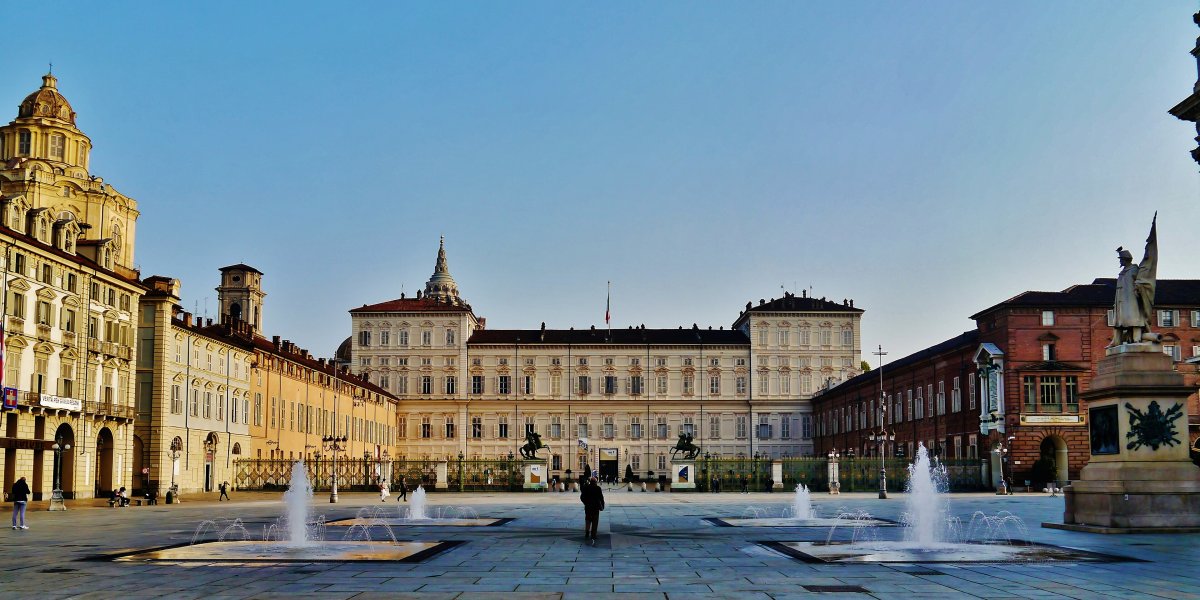
Continue north along Via Roma under the arcades for ten minutes — the covered walkway funnels you directly into Piazza Castello, the political heart of Turin since the 1500s. Palazzo Madama dominates the center: Juvarra's soaring baroque facade bolted onto a medieval castle, creating the strangest and most photogenic architectural collision in Italy. The mid-morning light falls directly on Madama's east-facing facade, and the piazza is still calm before the afternoon crowds arrive. Walk the perimeter to take in the Royal Palace gates, the dome of San Lorenzo, and the Teatro Regio.
Tip: Walk through the Palazzo Reale gates into the grand courtyard — it is free and most tourists never step past the fence. The cast-iron gate with its Medusa heads is one of Turin's most photographed details; shoot it with the palace soft-focused behind. If the Royal Gardens gate is open, peek through for the tree-lined avenue view.
Open in Google Maps →12:00
Food
Step under the arcades on the south side of Piazza Castello — Mulassano is right there, an Art Nouveau jewel box that has not changed since 1907. This is where the tramezzino was invented: soft crustless white bread with fillings that look deceptively simple but taste immaculate. Eat standing at the carved walnut counter alongside suited Torinesi on their lunch break — fast, satisfying, and utterly local.
Tip: Order the tramezzino al tonno e carciofini (tuna and artichoke, €3.50) and the tramezzino al prosciutto cotto e funghi (ham and mushroom, €3.50), plus a caffè macchiato (€1.50). Three tramezzini is the right number for lunch. Do not sit at the outdoor tables — there is a surcharge, and standing at the counter is the authentic experience.
Open in Google Maps →12:45
Landmark
Walk east along Via Po, Turin's grandest arcaded boulevard, for five minutes, then turn left into Via Montebello. The Mole Antonelliana reveals itself in a breathtaking architectural ambush at the end of the street — a 167-meter spire that was meant to be a synagogue and became the tallest unreinforced brick building in Europe. The early-afternoon sun catches the aluminium-clad spire at its brightest, making it glow white-hot against the sky while the brick base stays warm and textured.
Tip: The definitive photo is from the center of Via Montebello looking north — the Mole fills the frame perfectly between the flanking buildings. Walk around to the small garden on the east side along Via Gaudenzio Ferrari for a quieter angle with no crowds. Skip the Cinema Museum inside unless you have two hours to spare; the exterior is the real spectacle.
Open in Google Maps →14:00
Landmark
Walk southeast along Via Giulia di Barolo to the immense Piazza Vittorio Veneto — one of the largest piazzas in Europe — then cross the Po on Ponte Vittorio Emanuele I, pausing at the neoclassical Gran Madre di Dio church for a quick photo. Behind the church, a path climbs through the woods for ten steep but shaded minutes. When you emerge at the terrace of the Capuchin church, the entire city unfolds at your feet: the Mole, the domes, the grid of streets, and behind them the full white sweep of the Alps from Monviso to Mont Blanc.
Tip: Arrive by 14:30 for the best light — the afternoon sun illuminates the city face from the south-southwest while you stand in the shade of the church. On clear days the Alpine chain is razor-sharp; bring a zoom lens. The terrace in front of the church has no railings or fences blocking the view, giving you the cleanest panoramic shot in Turin.
Open in Google Maps →19:00
Food
Descend from Monte dei Cappuccini back to Piazza Vittorio Veneto — a ten-minute downhill walk along the same wooded path, with the evening light turning the Po golden below. Porto di Savona has occupied the north end of this piazza since 1863, serving the same Piedmontese dishes that sustained Risorgimento politicians. The wood-paneled dining room is unpretentious and noisy with local conversation — exactly what a final Turin meal should feel like.
Tip: Start with vitello tonnato (€14) — cold veal in tuna sauce that Piedmont does better than anywhere — then agnolotti del plin al sugo d'arrosto (€13), tiny hand-pinched pasta in roast-meat jus, with a glass of Barbera d'Asti (€6). Reserve by phone for 19:00; by 20:00 every table is taken. Avoid the restaurants with photo menus lining the south side of Piazza Vittorio — they charge double for half the flavor and exist solely for tourists crossing from Gran Madre. After dinner, walk fifteen minutes back to Porta Nuova along the illuminated Via Po and Via Roma; Turin's arcades at night are a farewell worth the detour.
Open in Google Maps →Aller au jour
09:00
Museum
Enter through the iron gates on Piazza Castello's north side — the Savoy dynasty's seat of power stands directly ahead. Arriving at opening gives you the gilded Throne Room and the breathtaking Hall of Mirrors virtually to yourself, before coach tours flood the corridors after 10:30. These royal apartments trace the family that dragged a patchwork of states into becoming Italy, and the opulence rivals anything north of Versailles.
Tip: Buy the combined ticket and head straight down to the Royal Armory on the ground floor — it opens with the palace but almost nobody goes first thing. The collection of medieval horse armor and Renaissance swords is one of Europe's finest, and you will have the vaulted halls to yourself. The Scala delle Forbici (Scissors Staircase) by Juvarra on the first floor is an architectural illusion most visitors walk past without noticing.
Open in Google Maps →11:15
Religious
Exit the Royal Museums from the rear courtyard and turn left — the Cathedral's pale Renaissance facade is barely two minutes away across the small piazza. This church guards the Shroud of Turin, Christendom's most debated relic; a high-resolution replica is always on display in a chapel left of the altar. The real showstopper is Guarini's restored Chapel of the Holy Shroud, whose spiraling hexagonal dome seems to dissolve upward into pure light.
Tip: Stand directly beneath Guarini's dome and look straight up: the layered hexagonal arches create an optical illusion of infinite height that took twenty-one years to restore after the 1997 fire. Most visitors glance up briefly and move on — spend two full minutes here and you will see one of the most ingenious domes in European architecture. Access the chapel from the Royal Museums side for the best entrance angle.
Open in Google Maps →12:15
Food
Walk five minutes northwest from the Cathedral into the narrow lanes of the Quadrilatero Romano — Turin's oldest neighborhood, where the Roman street grid is now lined with delis, wine bars, and the smell of roasting hazelnuts. Le Tre Galline has been feeding Turinese since the 1600s, and the dining room with its tiled floors and warm clatter of plates feels like eating in someone's fiercely opinionated grandmother's kitchen. This is where you meet Piemontese cuisine on its home turf.
Tip: Order the agnolotti del plin (tiny pinched pasta with roast meat filling, €12) — the test of any Piemontese kitchen. Follow it with vitello tonnato (€10): paper-thin veal under a silky, lemony tuna sauce that is nothing like the pale imitations abroad. Arrive by 12:15 and you will skip the 13:00 rush; no reservation needed for lunch, but grab a table in the back room where the regulars sit.
Open in Google Maps →13:30
Museum
From the Quadrilatero, head south to Piazza Castello and east along Via Po — the Mole Antonelliana's needle spire pulls your eye forward the entire ten-minute walk under Turin's grandest arcade. Designed in 1863 as a synagogue that grew wildly beyond its original plans, the Mole became the tallest brick structure on earth and now houses the National Museum of Cinema. Inside, exhibits spiral upward around a dizzying central void — a space so dramatic that the building itself upstages everything on screen.
Tip: Buy the combined museum-plus-elevator ticket and ride the glass panoramic elevator first — it ascends through the open center of the building to a viewing platform at 85 meters, giving you a 360-degree panorama of Turin framed by the Alps. Go up before exploring the museum: the elevator queue doubles by mid-afternoon. Inside, the Temple Hall on the ground floor — a cathedral-like space with red velvet chaise longues and film clips projected on the walls — is worth lingering in.
Open in Google Maps →16:00
Landmark
Walk ten minutes downhill from the Mole through Piazza Vittorio Veneto and across the Ponte Vittorio Emanuele I — the Po glitters below as you cross. From the bridge's far side, follow the path left and uphill through chestnut trees for a gentle twelve-minute climb to the Capuchin monastery terrace at the summit. The reward is Turin's finest panorama: the entire city grid spread beneath you, the Mole rising like an exclamation mark, and the white wall of the Alps filling the horizon.
Tip: Late afternoon light between 16:00 and 17:30 is ideal — the sun is behind you, illuminating the city facades and the snow-capped Alps beyond in warm gold. The terrace in front of the small church has no railings blocking the view, giving you the cleanest panoramic shot in Turin. Bring a wide-angle lens or use panorama mode to capture the full sweep from the Mole to Monviso.
Open in Google Maps →19:00
Food
Descend from Monte dei Cappuccini back to Piazza Vittorio Veneto — a ten-minute downhill walk as the city lights begin to flicker on across the river. Porto di Savona has anchored the north end of this piazza since 1863, making it one of Turin's oldest continuously operating restaurants. The wood-paneled dining room is warm and noisy with local conversation — exactly what a first night in Turin should feel like.
Tip: Order the bollito misto (€18) — a grand platter of seven boiled meats served with a carousel of traditional sauces including the electric-green bagnet verd. Pair it with a glass of Barbera d'Asti (€6). Reserve by phone for 19:00; terrace tables overlooking the piazza go first. Avoid the flashy restaurants lining the Murazzi embankment along the river below — they charge double for half the quality and cater almost exclusively to tourists.
Open in Google Maps →09:00
Museum
From Piazza Castello, walk one block south along Via Accademia delle Scienze — the museum's neoclassical entrance appears on your left within three minutes. This is the world's oldest Egyptian museum and the most important collection outside Cairo, with over 40,000 artifacts spanning three millennia. Arrive at opening to walk the hushed galleries in near-solitude before school groups pour in after 10:30.
Tip: Start on the top floor and work down chronologically — the route ends with the Galleria dei Re on the ground floor, where massive pharaonic statues stand in moody, Oscar-worthy lighting designed by Dante Ferretti. Do not miss the Tomb of Kha on the first floor: a complete 3,400-year-old burial with furniture, food vessels, and linen still intact. It is the single most moving artifact in the museum, and most visitors walk right past it.
Open in Google Maps →11:15
Landmark
Exit the museum and walk three minutes south along Via Accademia delle Scienze — the street opens into Piazza San Carlo like a curtain lifting on a stage. Turinese call this their salotto — their drawing room: a vast rectangle of matching baroque facades, twin churches closing the south end, and an equestrian statue of Duke Emanuele Filiberto brandishing his sword at the center. Under the arcades, historic cafés have served espresso to politicians, writers, and spies since the Risorgimento.
Tip: Stand between the twin churches (Santa Cristina and San Carlo) at the south end and photograph north — you will capture the perfect symmetry of the piazza, the statue, and Piazza Castello in the distance. For espresso, skip the pricier Caffè Torino and duck into Caffè San Carlo on the east arcade: same historic atmosphere, slightly lower prices, and better pastries.
Open in Google Maps →12:15
Food
Walk four minutes north through the arcades back toward Piazza Castello and duck into the Galleria Subalpina — a breathtaking 19th-century glass-roofed passage lined with bookshops and antique stores. Baratti & Milano sits at its heart, a confectionery and café that has been open since 1858, with carved wood, gilded mirrors, and display cases gleaming with house-made chocolates. Turin invented gianduiotto chocolate in the 1860s when cocoa was scarce and local hazelnuts saved the day, and this is the place to taste that invention at the source.
Tip: Order the vitello tonnato (€11) or a toasted tramezzino (€5) for lunch, then finish with their house-made gianduiotti (€3 each) — the hazelnut-chocolate confection Turin gave to the world. Eat standing at the counter like the Torinesi do; table service adds a surcharge. The Galleria Subalpina itself is one of Turin's most photogenic interiors — shoot the length of it from the Piazza Castello entrance for the full glass-ceiling perspective.
Open in Google Maps →14:00
Park
From the Galleria Subalpina, walk south along Via Roma under Turin's famous arcades for fifteen minutes — past Piazza San Carlo, past Porta Nuova station — until the trees of Parco del Valentino appear along the Po riverbank. The park stretches for a kilometer along the water, and tucked at its southern end is Borgo Medievale: a full-scale replica of a Piemontese medieval village built for the 1884 World Exposition, complete with drawbridge, artisan workshops, and a castle. In the afternoon light filtering through plane trees, with the Po glittering alongside, the city feels suddenly far away.
Tip: Enter Borgo Medievale through the main gate and walk to the far end where the castle (La Rocca) overlooks the river — the rooftop terrace is free and gives a beautiful view down the Po. The village itself is free to explore; only the Rocca interior charges a small fee, and it is skippable unless you love medieval craftsmanship. The riverside path just north of the Borgo is the best stretch for a quiet walk — locals jog here in the afternoon and the light on the water is gorgeous.
Open in Google Maps →16:00
Museum
Walk back north along Via Roma under the elegant porticoes — the twenty-minute stroll through Turin's main shopping street is itself a highlight, with Italian window displays and the steady rhythm of matching columns overhead. Palazzo Madama rises in the center of Piazza Castello: Juvarra's soaring baroque facade in front, raw medieval towers in back, Roman gate foundations underneath. The building is a layer cake of two thousand years of Turin history, and inside, Juvarra's monumental marble staircase alone justifies the entrance fee.
Tip: After admiring the baroque front, walk around to the back of the building — the raw medieval towers are a striking contrast that almost nobody photographs. Inside, climb Juvarra's grand staircase to the first-floor rooms for panoramic views through the tall windows over Piazza Castello. The 'artisanal truffle' shops near the piazza selling truffle oil and salt at €15–20 a jar almost all use synthetic flavoring — buy real Piemontese truffle products at a proper alimentari or Eataly Lingotto instead.
Open in Google Maps →19:00
Food
From Palazzo Madama, walk three minutes north into the Quadrilatero Romano — the evening light catches the narrow medieval lanes at their most atmospheric, with wine bars spilling chairs onto the cobblestones. Consorzio occupies a corner spot on Via Monte di Pietà, and its philosophy is simple: hyper-seasonal Piemontese ingredients served with just enough modern technique to make grandmothers suspicious. The room is small, warm, and always full of locals — this is where young Turin comes for a serious dinner without a serious bill.
Tip: Start with the carne cruda all'albese (€10) — hand-chopped raw beef dressed with lemon and olive oil, silky and nothing like ordinary tartare. Follow with tajarin al ragù (€13), impossibly thin egg noodles that are the pride of the Piemontese table. Reserve twenty-four hours ahead or arrive at 19:00 sharp — by 19:30 every table is spoken for. Resist the overpriced cocktail bars on nearby Piazza Emanuele Filiberto; a €1.50 espresso at any corner bar is the true Torinese nightcap.
Open in Google Maps →
Trip builder
Plan this trip around Turin
Turn this guide into a bookable rail itinerary with FlipEarth.
Keep exploring
Related cities
More in the same country
FAQ
Frequently asked questions
How many days do you need in Turin?
Most travelers enjoy Turin in 1 days, with enough time for headline sights and a slower meal or museum stop.
What's the best time to visit Turin?
The easiest season for most travelers is Apr-Jun, Sep-Oct, especially if you want good weather and manageable crowds.
What's the daily budget for Turin?
A practical starting point is about €55 per person per day before hotels, then adjust based on museums, dining, and transport.
What are the must-see attractions in Turin?
A good first shortlist for Turin includes Piazza San Carlo, Piazza Castello, Mole Antonelliana.