City Guide
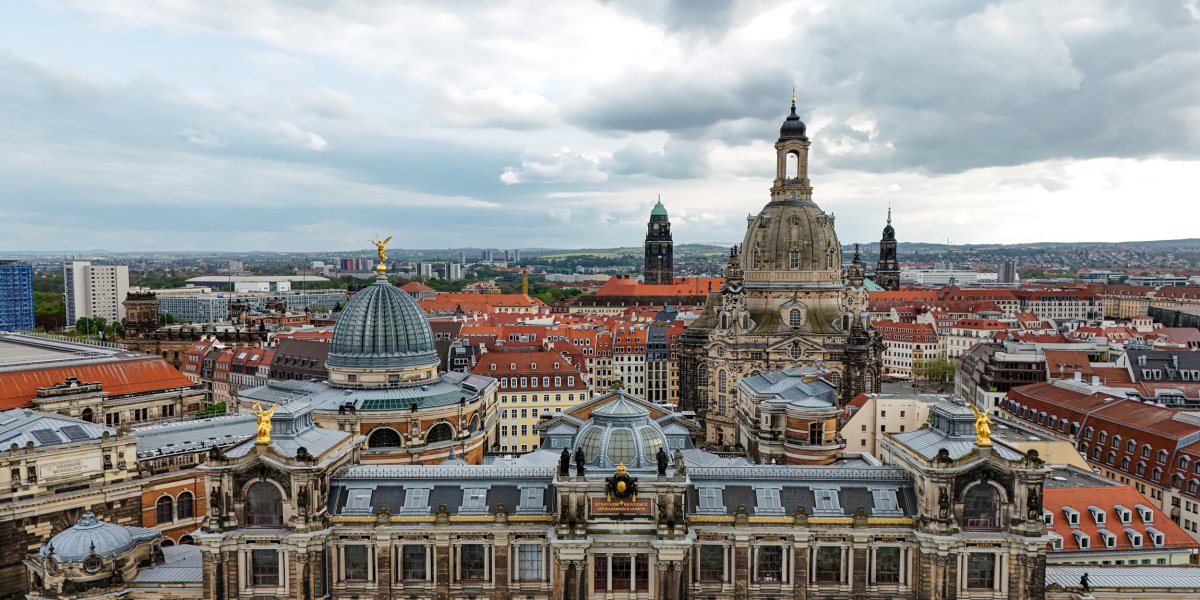
Dresden
Allemagne · Best time to visit: May-Sep.
Day-by-day plan
Choose your pace
Durée du voyage
09:00
Landmark
From Dresden Hauptbahnhof, walk 15 minutes north through Prager Straße — the shopping boulevard funnels you straight toward the Altstadt — then cut left through Postplatz to the Kronentor, the Zwinger's theatrical Crown Gate. Step through and the full baroque courtyard unfolds: symmetrical sandstone galleries, a reflective pool, and the Nymphenbad fountain grotto tucked in the far corner with stone nymphs hidden behind cascading water. Morning light pours through the eastern pavilion and turns the whole courtyard golden — by midday, tour groups fill the space, but at opening you'll have it nearly to yourself.
Tip: Enter through the Kronentor on the south side for maximum dramatic impact. After the main courtyard shot, don't miss the Nymphenbad grotto in the northwest corner — it's the Zwinger's hidden masterpiece and most visitors never find it. The courtyard is completely free; skip the museum tickets today and stay outside.
Open in Google Maps →10:45
Landmark
Exit the Zwinger through the northeast Glockenspielpavillon and cross Theaterplatz — pause here for a wide-angle shot of the Semperoper opera house with the equestrian King Johann statue in the foreground — then continue east along Augustusstraße for 5 minutes. The Fürstenzug appears on your left: a 102-meter procession of 35 Saxon rulers on horseback, composed of 23,000 hand-painted Meissen porcelain tiles. It survived the 1945 firebombing virtually intact, making it one of the few original baroque surfaces left in a city that lost almost everything.
Tip: Stand on the opposite sidewalk about two-thirds down the mural — this frames the procession's curve with a vanishing-point perspective that compresses all 35 rulers into one shot. Find August the Strong near the front (rider 31 on a rearing horse) — he built virtually every landmark you're seeing today. Mid-morning light illuminates the tiles directly with no shadow interference.
Open in Google Maps →11:45
Religious
Walk 3 minutes south through Rampische Straße and Neumarkt opens before you with the Frauenkirche rising in its massive stone bell shape. This church was a rubble pile for 50 years after the 1945 bombing; during reconstruction, workers catalogued every salvageable original stone and placed each back in its exact position — you can see them as dark patches against the new cream sandstone, a deliberate scar the city chose to keep visible. Circle the exterior from the south to read the small memorial plaques, then stand near the Martin Luther statue for the classic symmetrical frontal shot.
Tip: The southeast facade has the densest cluster of original blackened stones — stand there for a moment and you're looking at pieces that survived the firestorm. For the best exterior photo, position yourself at the Luther statue facing the main entrance: the dome centers perfectly. Skip the interior climb today — the queue averages 40 minutes and your time is better spent on the terrace.
Open in Google Maps →12:30
Food
Walk 30 seconds west across Neumarkt — the beer hall is right on the square with outdoor terraces facing the Frauenkirche. This is the fastest proper meal on the route: grab an outdoor seat, order at the table, and food arrives in under 10 minutes. The Nürnberger Rostbratwürste — six small grilled sausages with sauerkraut and bread (€11.90) — are the smart order: filling, fast, and authentic. A half-liter of Augustiner Helles (€4.80) rounds it out. You're eating lunch with the Frauenkirche as your backdrop for under fifteen euros.
Tip: Sit on the east-facing terrace for a direct Frauenkirche view. Skip the interior seating — it's loud and costs you 10 minutes finding a table. The outdoor section has noticeably faster service. Stick to sausages and beer — the full platters are slow to arrive and too heavy for an afternoon of walking.
Open in Google Maps →14:00
Landmark
Walk north from Neumarkt through Münzgasse, a narrow cobblestone restaurant lane, for 4 minutes — you'll reach the grand Freitreppe staircase leading up to Brühl's Terrace, the elevated promenade Goethe called 'The Balcony of Europe.' Walk east along the terrace with the Elbe stretching wide below, passing the Albertinum and the Academy of Fine Arts with its golden glass dome. Then descend to the Augustusbrücke and cross to the Neustadt side — pause at the bridge's midpoint for the definitive Dresden shot: the entire Altstadt skyline with Frauenkirche dome, Hofkirche spire, and Semperoper all reflected in the Elbe.
Tip: Early afternoon sun hits the Altstadt facades from the south, giving you perfectly front-lit buildings from the bridge. The midpoint of the Augustusbrücke is the single most important photo location in Dresden — don't rush past it. After crossing, the Goldener Reiter statue of August the Strong greets you on the Neustadt side — worth a quick shot before heading into the bohemian quarter.
Open in Google Maps →19:00
Food
From the Goldener Reiter, walk north up Hauptstraße then veer into the Äußere Neustadt — Dresden's bohemian soul. Spend the hours before dinner drifting through Alaunstraße, Louisenstraße, and the backstreets between them: every block reveals new street art, vintage shops, and crumbling Gründerzeit facades that somehow survived the war. Follow Böhmische Straße to Raskolnikoff, a restaurant-bar-gallery in a former 1990s squat with its original graffiti-covered facade still intact. The seasonal menu leans German-European: try the pan-seared duck breast with braised red cabbage and potato dumplings (€18.50) or the wild herb risotto (€14.50), with a glass of Müller-Thurgau from nearby Meissen (€5.50).
Tip: Arrive by 19:00 to claim a courtyard table without reserving — by 19:30 the locals take them all. The ivy-walled courtyard with mismatched furniture and candlelight is the real draw, so skip the indoor dining room. Order from the Saxon wine list rather than cocktails — the Meissen vineyards are just 25 km upriver and half the price of imports. One warning for Neustadt after dark: the bar strips along Louisenstraße attract aggressive pub-crawl promoters offering cheap shots — smile, decline, and keep walking.
Open in Google Maps →Aller au jour
09:00
Landmark
Enter through the Kronentor on the Ostra-Allee side — the full baroque courtyard unfolds like a stage set, with the Nymphenbad fountain grotto hiding stone nymphs behind cascading water in the far corner. At 09:00 you have the courtyard nearly to yourself in soft eastern light; when the Gemäldegalerie Alte Meister opens at 10:00, head straight to Room 117 for Raphael's Sistine Madonna — those two famous leaning cherubs at the bottom of the canvas have anchored this gallery's reputation for three centuries. Vermeer, Giorgione, and Cranach fill the surrounding rooms, but budget your time wisely: ninety minutes covers the highlights without exhaustion.
Tip: Use the Kronentor entrance from Ostra-Allee instead of the crowded Sophienstraße side — it perfectly frames the courtyard for your first photo and skips the tour-bus bottleneck. After the gallery, exit through the Glockenspielpavillon on the northeast side to set up your walk toward lunch. Gallery closed Mondays.
Open in Google Maps →12:00
Food
Exit the Zwinger through the Glockenspielpavillon, cross Sophienstraße, and walk five minutes past the Residenzschloss — the Frauenkirche dome appears ahead and the restaurant sits at the square's edge. This vaulted stone cellar beneath Neumarkt serves the Saxon comfort food you came to Dresden for: the Dresdner Sauerbraten in dark vinegar-raisin sauce with red cabbage and potato dumplings (€17.90) is the one dish to order, and the Dresdner Eierschecke — a three-layered cheesecake unique to this city — seals the meal (€6.50).
Tip: Arrive right at noon to beat the lunch rush and ask for a table in the inner vault — the deepest, most atmospheric section of the cellar with original stone arches. Skip the tourist set menu and order à la carte; the portions are generous and barely more expensive.
Open in Google Maps →13:30
Religious
Step outside and the Frauenkirche is already before you — less than a minute across the Neumarkt. The luminous interior was rebuilt stone by stone after the 1945 firebombing, completed in 2005 using 3,800 original pieces; look for the darker sandstone blocks scattered through the pale walls, each one recovered from the rubble and fitted back into its exact position — a deliberate scar the city chose to keep visible. The dome climb (251 steps, €8) rewards you with a 360° panorama over the Elbe, the Altstadt rooftops, and on clear days the distant sandstone cliffs of Saxon Switzerland.
Tip: Climb the dome now rather than late afternoon — after 16:00 the western sun creates blinding glare on the viewing platform. The ascending ramp passes through the dome's double-shell construction, revealing the engineering that holds it all together — it is a spectacle in its own right. The southeast exterior facade has the densest cluster of original blackened stones; pause there before entering.
Open in Google Maps →15:30
Museum
Walk three minutes west across Neumarkt toward the Residenzschloss — along Augustusstraße you pass the Fürstenzug, a 102-meter porcelain mural of 35 Saxon rulers on horseback composed of 23,000 Meissen tiles, worth a pause. Inside, Augustus the Strong's treasure chamber is staggering: the 41-carat Dresden Green Diamond — the largest natural green diamond on earth — a cherry pit carved with 185 faces visible only under magnification, and the Moor with the Emerald Cluster, a Baroque sculpture so intricate it seems impossible to have been made by human hands.
Tip: Skip the impossible-to-book Historisches Grünes Gewölbe one floor below — the Neues Grünes Gewölbe displays the same treasures behind glass with better lighting and explanatory plaques, and you can walk straight in without a timed reservation. The Dresden Green Diamond is in the final room; don't rush past the earlier cabinets or you'll burn out before reaching it. Closed Tuesdays.
Open in Google Maps →17:30
Landmark
Exit the Residenzschloss onto Schlossstraße, turn left, and climb the broad Freitreppe staircase at the end of Münzgasse — in four minutes you emerge onto the terrace with the Elbe stretching wide below. Goethe called it the Balcony of Europe, and at golden hour he was right: the setting sun turns the sandstone facades warm amber while paddle steamers glide along the river and the Neustadt skyline catches the last light across the water. Walk east along the promenade past the Academy of Fine Arts with its golden glass dome — the whole terrace is a stage for the evening sky.
Tip: Walk to the eastern end near the Albertinum for the best sunset angle — the Hofkirche spire and Semperoper dome align in a single golden frame against the evening sky. Avoid the caricature artists near the staircase who charge €30 for mediocre portraits, and skip any restaurant directly on the terrace — they are overpriced tourist traps with reheated food served to captive audiences.
Open in Google Maps →19:00
Food
Continue east along the terrace, descend the stairs near the Albertinum, and turn right onto Tzschirnerplatz — the restored Kurländer Palais is six minutes ahead. Dresden rarely gets credit for its river cuisine, but Kastenmeiers changes that: the pan-fried Zander on lentil ragout (€26) is the signature dish that regulars never stray from, and the Dresden-style bouillabaisse with Elbe fish (€19 as a starter) is worth sharing before the main course arrives.
Tip: Reserve a window table overlooking the inner courtyard at kastenmeiers.de — weekday evenings at 19:00 are manageable, but Friday and Saturday fill fast so book two days ahead. Ask the sommelier about Goldriesling from nearby Meissen — a grape variety grown almost nowhere else on earth. Steer clear of the restaurants lining Münzgasse between here and the Frauenkirche; they charge double for identical Saxon dishes reheated from a central kitchen.
Open in Google Maps →09:30
Neighborhood
Cross the Augustusbrücke from the Altstadt — pause at the bridge's midpoint for the definitive Dresden skyline photo with the Frauenkirche, Hofkirche, and Semperoper reflected in the Elbe. Walk north through Hauptstraße past the Goldener Reiter statue of August the Strong, then weave into the Äußere Neustadt's side streets to Görlitzer Straße — the passage entrance is an easy-to-miss doorway mid-block, fifteen minutes total. Five linked artistic courtyards unfold inside, each with a different theme; the Courtyard of Elements features drain pipes and funnels shaped into musical instruments that play an eerie melody when it rains.
Tip: Enter from Görlitzer Straße 21-25 and exit onto Alaunstraße to walk all five courtyards in sequence. Most visitors photograph the famous first courtyard (Elements) and turn back — push through to the fourth courtyard (Metamorphosis), which has shifting light installations and is the real hidden gem. Arrive before 10:30 to beat the walking-tour groups.
Open in Google Maps →10:30
Landmark
Exit the passage onto Alaunstraße, turn right, then left on Bautzner Straße — five minutes uphill to the ornate storefront at number 79. Every surface of this Guinness-certified 'most beautiful dairy shop in the world' is covered in hand-painted Villeroy & Boch tiles from 1891 — cherubs, floral garlands, and pastoral scenes across floor, walls, ceiling, and counter in an unbroken tapestry of neo-Renaissance excess. It is a functioning shop: the cheese counter is real, and the fresh buttermilk poured at the spot (€2.50) tastes better than it has any right to.
Tip: Arrive before 11:00 to beat the tour-bus rush that peaks around noon. Upstairs there is a small café with house-made cheese boards (€8.50) if you want a quiet sit-down. A wrapped block of Pfunds house cheese (€5) travels well and makes the best Dresden souvenir that is not made of porcelain.
Open in Google Maps →12:00
Food
Head back down Bautzner Straße to Alaunstraße and turn left — Lila Soße is at number 70, eight minutes on foot through the heart of Neustadt's café strip where every other doorway reveals a vinyl shop, a gallery, or a bar that does not open before sundown. The chalkboard menu changes daily, but expect hearty creative German food that locals queue for: pan-fried Schnitzel with wild herb salad (€12.50) or homemade pasta with roasted pumpkin and sage butter (€11.90), served in a snug room with mismatched furniture and art on every wall.
Tip: Only about 40 seats and no lunch reservations — arrive at noon sharp or face a 15-minute wait. The daily soup (€5.50) is always excellent as a starter. Pay cash; the card machine here is notoriously unreliable.
Open in Google Maps →14:00
Museum
Walk south to Albertplatz and cross the Augustusbrücke back into the Altstadt — along Augustusstraße, the Fürstenzug stretches 102 meters of Meissen porcelain tiles depicting a thousand-year procession of Saxon rulers. Turn left onto Brühl's Terrace and the Albertinum entrance appears ahead, fifteen minutes total. The Galerie Neue Meister inside picks up where yesterday's Old Masters left off: Caspar David Friedrich's brooding Saxon landscapes dominate the Romantic rooms, while Gerhard Richter — Dresden's most famous living artist — commands the contemporary wing with his haunting abstract squeegee paintings.
Tip: Head straight to the second floor for the Romantic and Impressionist rooms — the Albertinum's strongest collection and the reason to visit. The rooftop terrace café has a panoramic view over the Elbe that most visitors never discover; it is the best coffee stop in the Altstadt. Closed Mondays.
Open in Google Maps →16:00
Landmark
Exit the Albertinum and walk west along Brühl's Terrace with the Elbe glittering on your right — eight minutes brings you to Theaterplatz, where the Semperoper's neo-Renaissance facade presides over the square with the equestrian King Johann statue at its center. Twice destroyed and twice rebuilt on the exact same spot, this is one of the world's great opera houses; the 45-minute guided tour reveals a gilded auditorium with acoustics so precise that a whisper on stage reaches the back row, and the royal reception rooms where Richard Strauss premiered nine of his operas.
Tip: English tours run several times daily — book ahead at semperoper.de as groups fill within hours during peak season. But if a performance is running tonight, skip the tour entirely: balcony tickets start around €15, and seeing the hall alive with a full orchestra under full lights is incomparably more moving than seeing it empty. Check the schedule before committing to a tour.
Open in Google Maps →19:00
Food
The restaurant sits at the southern corner of Theaterplatz, literally one minute from the Semperoper's front steps — the shortest walk of your entire trip. Floor-to-ceiling windows frame the floodlit opera house and Zwinger as your dinner companions in a setting that feels like a curtain call for the weekend. The Tafelspitz — slow-boiled beef brisket with horseradish cream and root vegetables (€22.50) — is a Central European classic done right, and the Dresdner Eierschecke (€7.50) is your last chance at the city's signature three-layered cheesecake if you skipped it yesterday.
Tip: Ask for a window table on the Theaterplatz side — the floodlit Semperoper at night is a view most tourists only photograph from the sidewalk but never sit down to enjoy. Book ahead for Friday or Saturday evenings. On your walk to the station afterward, pass through the Altmarkt for a nightcap in the quiet square, but skip everything on Prager Straße — it is all chains and overpriced souvenir shops with nothing worth stopping for.
Open in Google Maps →
Trip builder
Plan this trip around Dresden
Turn this guide into a bookable rail itinerary with FlipEarth.
Keep exploring
Related cities
More in the same country
FAQ
Frequently asked questions
How many days do you need in Dresden?
Most travelers enjoy Dresden in 1 days, with enough time for headline sights and a slower meal or museum stop.
What's the best time to visit Dresden?
The easiest season for most travelers is May-Sep, especially if you want good weather and manageable crowds.
What's the daily budget for Dresden?
A practical starting point is about €60 per person per day before hotels, then adjust based on museums, dining, and transport.
What are the must-see attractions in Dresden?
A good first shortlist for Dresden includes Zwinger Palace, Fürstenzug, Brühl's Terrace.