City Guide
Antwerp
Belgium · Best time to visit: May-Sep.
Day-by-day plan
Choose your pace
Durée du voyage
09:00
Landmark
Start your Antwerp power walk inside what is often called the world's most beautiful railway station. The 1905 Beaux-Arts stone façade opens into a cathedral-scale hall of cream marble, gilded detailing, and a soaring iron-and-glass train shed designed by Louis Delacenserie. Climb to the main departure hall on the upper level for the defining shot: four platform levels cascading below you, the grand clock presiding above, and morning light pouring through the arched glass canopy.
Tip: Stand on the upper gallery at the east end of the main hall where the 09:00 sun floods through the arched windows — this vantage captures the full depth of all platform levels and the dome in a single frame. The western end is backlit at this hour and photographs flat.
Open in Google Maps →10:00
Religious
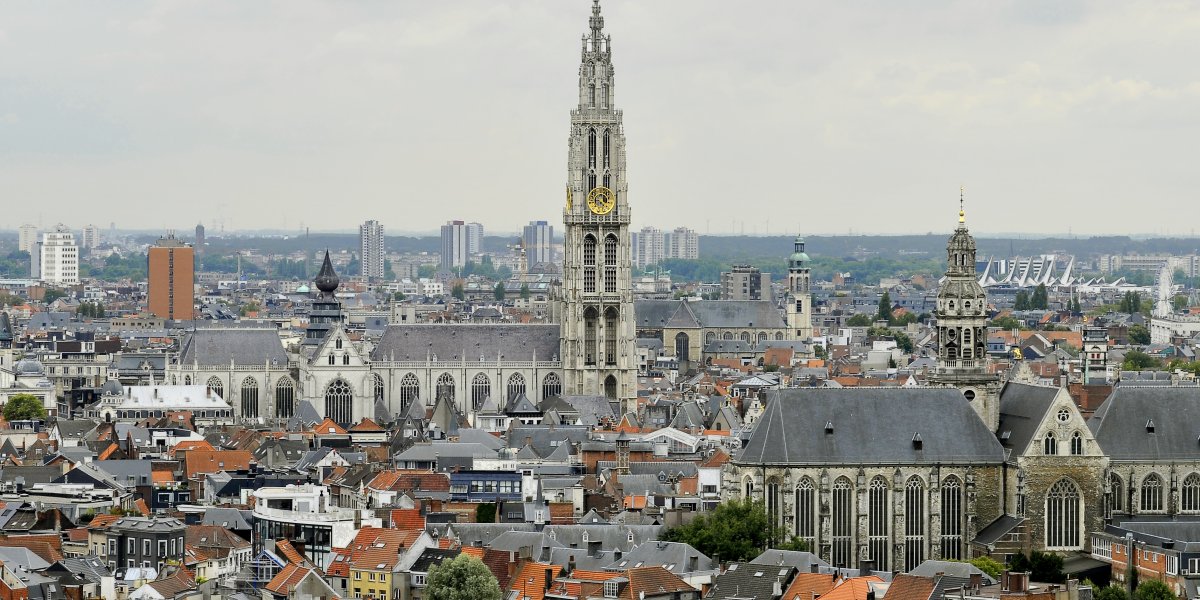
Exit the station onto Koningin Astridplein and walk west down Keyserlei, which flows into the Meir — Antwerp's grand boulevard lined with ornate Neoclassical façades and flagship stores — a pleasant 12-minute stroll. You will spot the cathedral's 123-meter North Tower, the tallest in the Low Countries, long before you arrive. Circle the building from the intimate Handschoenmarkt at the west entrance around to the open Groenplaats behind, where a bronze Rubens sits at his easel. Four of his masterpieces hang inside, but from out here the lace-like Gothic stonework silhouetted against the sky is the real canvas.
Tip: The best exterior photo is from Handschoenmarkt, the tiny cobblestone square at the cathedral's west entrance — stand near the iron well pump for a low-angle shot that captures the full tower without modern buildings intruding. At 10:00 the eastern sun illuminates the façade warmly; by afternoon it falls into shadow.
Open in Google Maps →11:00
Landmark
Walk three minutes north from the cathedral through narrow Zilversmidstraat and the square opens before you: a rectangle of ornate 16th-century guild houses, each topped with a gilded figurehead, flanking the imposing Renaissance Stadhuis. In the center stands the Brabo Fountain, depicting the Roman soldier Silvius Brabo hurling a giant's severed hand into the Scheldt — the origin myth that gave Antwerp its name (hand werpen, to throw a hand). This square is Antwerp's signature postcard, at once muscular and theatrical.
Tip: Position yourself on the west side of the square near the Brabo Fountain to frame the full sweep of guild houses behind the sculpture. At 11:00 the sun hits the eastern façades at a warm angle that turns the gilded details molten; by early afternoon the light flattens and the magic is gone.
Open in Google Maps →12:00
Food
Walk five minutes south from Grote Markt along Hoogstraat, then right into Korte Gasthuisstraat — a quiet lane where locals duck in and out of bakeries. Celebrity chef Sergio Herman took Belgium's national dish and gave it the reverence it deserves: double-fried Bintje potato frites served in a paper cone from a sleek black-and-gold counter. Crunchy exterior, cloud-soft inside, with sauces ranging from classic Flemish stoofvlees to black truffle mayonnaise. Order at the counter, eat standing at the marble ledge, and you are back on the road in twenty minutes.
Tip: Order the large cone with truffle mayonnaise (€8) — it is the signature combination. For more substance add the stoofvlees dipping pot (€4), a slow-braised Flemish beef stew that turns frites into a full meal. Skip the bottled drinks; grab a takeaway coffee from the café two doors east instead.
Open in Google Maps →13:00
Landmark
Walk north from the old city for fifteen minutes — slip through the hidden Vlaeykensgang, a medieval alley off Oude Koornmarkt that feels like a crack in time, then continue past the Baroque Sint-Pauluskerk and along the old harbor quays where red brick warehouses and rusted cranes recall Antwerp's centuries as Europe's busiest port. The MAS rises ahead: a 60-meter tower of stacked Indian red sandstone and undulating glass panels. Free exterior escalators zigzag up the building's outer walls, each floor opening onto a wider panorama. The rooftop terrace — no ticket required — delivers a full 360-degree view of the port cranes, the silver Scheldt, the cathedral spire, and the city dissolving into the Flemish plains.
Tip: Take the escalators all the way up without stopping — the lower floors tease partial views but only the rooftop delivers the full drama. Face south for the cathedral spire and city skyline, then turn north to watch container ships glide silently through Europe's second-largest port. Early afternoon light keeps the south-facing cityscape well-lit for photos.
Open in Google Maps →19:00
Food
Walk five minutes south from MAS along Godefriduskaai to this beloved brasserie in a cavernous 19th-century warehouse. Iron columns soar to the exposed timber roof and the space buzzes with Antwerp locals — architects, gallery owners, young families — not tour groups. The kitchen does confident Belgian brasserie cooking: stoofvlees arrives in a cast-iron pot with a mountain of golden frites, and the vol-au-vent — puff pastry brimming with creamy chicken, mushrooms, and a whisper of sherry — is the comfort dish every Belgian grew up craving. Pair either with a bolleke De Koninck, the city's own amber ale served in its signature stemmed goblet.
Tip: Arrive right at 19:00 to grab a table without a reservation — by 19:30 on weekends the wait stretches to 40 minutes. Order the stoofvlees (€23) or the vol-au-vent (€22) and absolutely get a bolleke De Koninck on draft (€3.50). Skip the tourist restaurants clustered around Grote Markt — they charge €30 for frozen moules and microwaved frites with laminated menus in six languages; Felix Pakhuis serves the real Antwerp at honest prices.
Open in Google Maps →Aller au jour
09:00
Landmark
Start at the heart of Antwerp while the square belongs to you alone. The Brabo fountain catches the low eastern sun, and the Renaissance City Hall — a UNESCO World Heritage monument — commands the western flank, flanked by gilded guild houses that once bankrolled the richest port in Europe. Walk the full perimeter: each guild house announces its trade through the gilded statue crowning its gable.
Tip: Stand at the southeast corner of the square facing the City Hall at 09:15 — the low sun strikes the gilded facades and the Brabo fountain simultaneously, a shot that disappears by 10:00 as shadows take over. The guild houses read best left to right: coopers, grocers, crossbowmen.
Open in Google Maps →10:00
Religious
Walk one block east from the Grote Markt through the narrow Handschoenmarkt — you'll pass the small Nello and Patrasche statue, a tribute to the Victorian novel set in Antwerp. The cathedral's 123-meter Gothic spire appears suddenly above the rooftops, the tallest in the Low Countries. Inside hang four Rubens masterpieces, including the monumental Descent from the Cross and the Raising of the Cross, positioned exactly where Rubens intended them. Enter right at opening to see these altarpieces in near-solitude.
Tip: Go directly to the right transept first — the Descent from the Cross is the painting most visitors crowd around, but at 10:00 you'll have it to yourself for five quiet minutes. Morning light through the eastern clerestory windows illuminates the central panel perfectly. Closed on Sundays until 13:00.
Open in Google Maps →12:00
Food
Exit the cathedral and walk south across Groenplaats into Korte Gasthuisstraat — five minutes of strolling past chocolate shops. This is celebrity chef Sergio Herman's shrine to the Belgian frite: hand-cut Bintje potatoes double-fried in beef tallow, served in a paper cone with house-made sauces. Order the classic cone with truffle mayonnaise (€9) and add a garnaalkroket — a shrimp croquette with a shattering golden crust and molten North Sea shrimp inside (€6). This is the most Belgian lunch possible in under 45 minutes.
Tip: The Flemish stoverij dipping sauce (€2.50) — a dark beer-braised beef gravy — is the one locals order; skip the ketchup. Eat standing at the counter like everyone else. Budget €12-18 per person. Don't be tempted by the tourist-priced waffle stands on Groenplaats — they're frozen and reheated.
Open in Google Maps →13:30
Museum
Walk east along the pedestrianized Meir — Antwerp's grand shopping boulevard lined with ornate 19th-century facades — then turn right onto Wapper. Ten minutes total. This is the palazzo Rubens designed for himself: half Flemish townhouse, half Italian courtyard villa. The baroque portico connecting the two wings — a triumphal arch dropped into the middle of a residential street — is the single most photogenic frame in the city. The studio where he painted with a team of assistants is vast and still flooded with the northern light from the oversized windows he specified.
Tip: The garden courtyard behind the portico is the money shot — photograph it from inside the studio doorway looking out, framing the arch with the garden beyond. Buy tickets online in advance; walk-up queues build after 14:00 on weekends. Closed on Mondays.
Open in Google Maps →15:30
Museum
Walk west from Rubens House through the winding old town — twelve minutes along Lange Gasthuisstraat, past the neoclassical Bourla Theater colonnade, to Vrijdagmarkt. This UNESCO World Heritage site is the only preserved Renaissance printing workshop on earth. The room of original Garamond typefaces — the oldest surviving punches in existence, still razor-sharp after 450 years — is worth the visit alone. The Plantin and Moretus families ran Europe's most influential publishing house from this building for three centuries.
Tip: Room 7 holds the Gutenberg Bible pages and the original Garamond type punches — don't rush through. The inner courtyard with its vine-covered walls is a hidden rest spot most visitors walk past entirely. Free admission on the first Wednesday of each month. Closed on Mondays.
Open in Google Maps →19:00
Food
An eight-minute walk north from Plantin-Moretus along Steenhouwersvest brings you to Graanmarkt and the neoclassical Bourla Theater. The restaurant occupies the theater's grand rotunda — a soaring domed ceiling above crisp tablecloths, with the energy of a Parisian brasserie and the warmth of a Flemish kitchen. Order the steak tartare prepared tableside (€26) or the sole meunière with brown butter (€32). The wine list leans French-Belgian with strong by-the-glass options.
Tip: Reserve one day ahead and ask for a table under the dome — the acoustics make conversation intimate despite the grand room. Budget €40-60 per person with wine. Avoid the restaurant strip along the Suikerrui near the Scheldt — those waterfront terraces charge double for half the quality and cater exclusively to tourists off the river cruise boats.
Open in Google Maps →09:00
Neighborhood
From the old town, walk north along the Scheldt river promenade past the medieval fortress Het Steen — fifteen minutes of wide-open river views with container ships drifting past at arm's length. Het Eilandje is Antwerp's reinvented port district: red-brick warehouses converted into lofts, the old Bonapartedok and Willemdok harbors now lined with houseboats and waterfront cafés. The morning light bounces off the dock water and paints the warehouse facades in warm amber.
Tip: Walk along the south quay of Bonapartedok for the best reflections in the still morning water — by afternoon the wind picks up and the mirror effect is gone. The Felix Archive building on the east quay has a free rooftop terrace that most visitors never find, worth a quick detour for a preview of the panorama you're about to see from the MAS.
Open in Google Maps →10:00
Museum
The MAS is a two-minute walk from Bonapartedok — you'll see its red sandstone tower rising above the port before you reach it. Take the external escalators up all ten floors first: each level has a covered gallery with expanding views through the undulating glass walls. The free rooftop panorama at the top is the single best viewpoint in Antwerp — the cathedral spire, the Scheldt's great curve, and the working port all in one 360-degree sweep. Then work your way down through the permanent collection, focusing on the port history floors (levels 4-6).
Tip: The rooftop boulevard is completely free — you don't need a museum ticket to ride the escalators to the top. Go straight up at 10:00 before tour groups arrive around 11:00. The northwest corner of the roof gives the best shot of the cathedral spire framed against the old town skyline. Closed on Mondays.
Open in Google Maps →12:30
Food
Exit MAS from the ground floor and walk one minute west to Godefriduskaai. Felix Pakhuis occupies a cavernous 19th-century shipping warehouse — iron columns, double-height ceilings, and a raw industrial beauty that feels effortlessly elegant. Order the Flemish stoofvlees (beer-braised beef stew with hand-cut frites, €21) or the vol-au-vent with sweetbreads and mushroom cream (€23). Pair either with a Bolleke — the De Koninck amber ale served in its signature goblet, the one beer that says Antwerp and nothing else.
Tip: Sit on the mezzanine level for the most dramatic view of the warehouse space below. Service is leisurely — flag your waiter early if you're keeping to schedule. A Bolleke is €3.50 and pairs perfectly with the stoofvlees. Budget €20-30 per person.
Open in Google Maps →14:00
Museum
From Felix Pakhuis, walk south through the city center — twenty-five minutes along Suikerrui past the Grote Markt you saw yesterday, then down the full length of Nationalestraat through Antwerp's fashion district with its avant-garde boutiques. The KMSKA reopened in 2022 after an eleven-year, €100-million renovation and is now Belgium's most architecturally stunning art museum. The collection runs from Flemish Primitives to James Ensor, but the undisputed showstoppers are the colossal Rubens canvases in the renovated upper gallery and the hushed Van Eyck and Memling rooms one floor below.
Tip: Head directly to the upper gallery's Rubens hall first — the sheer scale of the paintings needs an uncrowded room to land properly, and by 16:00 tour groups thin out in this section. The new museum design creates dramatic sightlines between floors through a central void — look up from the ground floor for the full effect. Book timed tickets online; walk-up entry is not guaranteed on weekends.
Open in Google Maps →16:30
Neighborhood
Step out of the KMSKA and you're already standing in Het Zuid — Antwerp's most effortlessly stylish neighborhood. Walk south to the Vlaamse Kaai along the old dock, now a tree-lined boulevard where gallery owners, vintage dealers, and design studios have quietly colonized every ground-floor space. Browse the contemporary galleries on Verlatstraat and the antique shops lining Kloosterstraat. The late-afternoon light along the Vlaamse Kaai is golden and cinematic — this is where Antwerp residents come to unwind, not tourists.
Tip: Kloosterstraat is the best street in the city for vintage furniture and antiques — it runs one block west of Nationalestraat and rewards slow browsing. The galleries on Verlatstraat are free to enter and genuinely world-class. For a late-afternoon pick-me-up, Caffènation on Hopland is widely considered the best specialty coffee in Antwerp.
Open in Google Maps →19:00
Food
A five-minute walk from the Vlaamse Kaai to Marnixplaats brings you to Het Zuid's most talked-about table. Fiskebar is white tile, open kitchen, and zero pretension — a raw bar crossed with a neighborhood bistro. Start with a half-dozen Zeebrugge oysters (€3.50 each), then order the whole grilled sea bass with herb butter (€28) or the classic fish stew brimming with mussels, prawns, and saffron broth (€26). The natural wine list is short, smart, and French-leaning.
Tip: Fiskebar doesn't take reservations — arrive at 18:45, fifteen minutes before the dinner rush, and you'll walk right in. By 19:30 the wait stretches to 30-40 minutes. Budget €35-55 per person with wine. Skip the cluster of overpriced Italian restaurants on the south side of Marnixplaats — locals never eat at any of them.
Open in Google Maps →
Trip builder
Plan this trip around Antwerp
Turn this guide into a bookable rail itinerary with FlipEarth.
Keep exploring
Related cities
More in the same country

FAQ
Frequently asked questions
How many days do you need in Antwerp?
Most travelers enjoy Antwerp in 1 days, with enough time for headline sights and a slower meal or museum stop.
What's the best time to visit Antwerp?
The easiest season for most travelers is May-Sep, especially if you want good weather and manageable crowds.
What's the daily budget for Antwerp?
A practical starting point is about €70 per person per day before hotels, then adjust based on museums, dining, and transport.
What are the must-see attractions in Antwerp?
A good first shortlist for Antwerp includes Antwerp Central Station, Grote Markt, MAS — Museum aan de Stroom.