City Guide
Thessaloniki
Grecia · Best time to visit: Apr-Jun, Sep-Oct.
Day-by-day plan
Choose your pace
Duración del viaje
08:30
Landmark
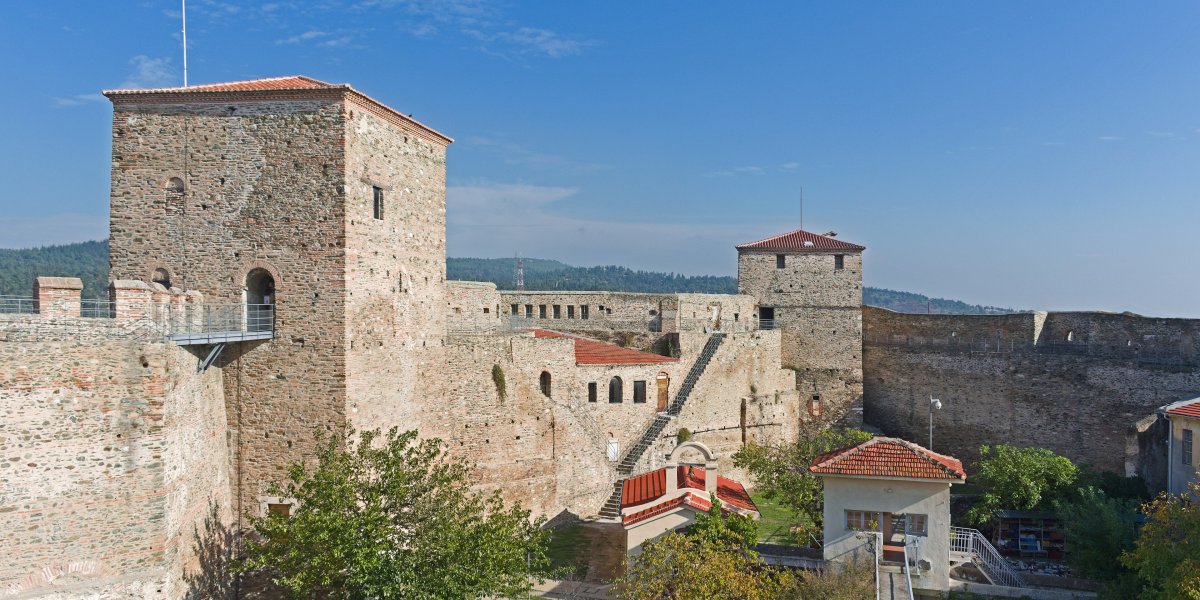
Take bus 23 from Eleftherias Square up to the Eptapyrgio stop — let the bus do the 100-metre climb that would eat the morning — then walk five minutes south-west along the ramparts to Trigoniou Tower. From its platform the whole city unfolds downhill in a single sweep: the red-tiled tangle of Ano Poli, the domed churches of the lower town, the White Tower, and the Thermaic Gulf fading into the Chalkidiki peninsula on clear mornings. This early, the whitewashed alleys are still yours; the cats haven't moved, the ovens are just firing.
Tip: Walk three minutes west along the walls to the bend above Akropoleos street — the stone parapet there frames the White Tower and the sea in one diagonal, and nobody queues for it because the guidebooks point at the tower itself. Skip the paid climb to the top; the free terrace is the better view.
Open in Google Maps →10:15
Religious
Walk downhill from Ano Poli via Kassandrou and Agia Sofia streets for twenty minutes — gravity does the work, and on the way you pass the broad domed Church of Agios Dimitrios, where the city's patron saint is entombed (a worthy five-minute exterior pause). Hagia Sophia itself is an 8th-century cross-in-square under a shallow dome, UNESCO-listed and a survivor of earthquakes, fires, and Ottoman conversion. The small palm-tree garden around it is a calm pocket right inside the city grid.
Tip: Shoot the dome from the south-west corner of the garden at 10:30 — the sun is behind you and the Byzantine brickwork takes a warm cast; from any other angle you fight glare until past noon.
Open in Google Maps →11:30
Landmark
Walk ten minutes east along Agia Sofia and Filippou streets — the Rotunda's stubby minaret (the only one still standing in central Thessaloniki) appears over the rooftops first. Built by Emperor Galerius around 306 AD as his mausoleum, then a church, then a mosque, the Rotunda is one of the oldest intact Roman buildings on earth. Two minutes downhill is the Arch of Galerius, 'Kamara,' whose four surviving piers are carved with Galerius's victories over the Persians.
Tip: Photograph the Arch from the south side around noon — the low-relief battle carvings face south and only read clearly in direct overhead light; morning or late-afternoon sun flattens the figures into stone mush. The Rotunda's interior is worth a peek only if the courtyard doors are already open; the exterior and minaret are the real picture.
Open in Google Maps →13:15
Food
From the Arch walk south-west down Dimitriou Gounari for eight minutes, crossing the Tsimiski shopping axis into the quiet Kouskoura lane. Derlicatessen is a small-plates Mediterranean joint loved by Thessaloniki's own creative crowd — order the bouyiourdi (baked feta with tomato, pepper and chilli, €9) and a portion of grilled sardines (€10), and sponge the hot pan with bread until it is shining. Budget €20-25 per person with a glass of local Xinomavro or Assyrtiko.
Tip: Walk in at 13:15 to beat the 14:00 office rush that fills the terrace; ask for 'exo' (outside) — the two pavement tables under the awning are the best seats, and on a warm day they are gone by 13:30.
Open in Google Maps →15:30
Landmark
Walk fifteen minutes east along Tsimiski, then south down Pavlou Mela to the Nikis waterfront — the tower rises dead ahead as you hit the sea. The 15th-century Ottoman cylinder, once a prison known as the 'Red Tower' for its bloodied walls, is the city's emotional signature; exterior only today. From here the Paralia promenade unfurls one long kilometre west, past the equestrian statue of Alexander the Great to Zongolopoulos's 'Umbrellas' sculpture — the city's living room, best walked slowly into the afternoon light.
Tip: Do not photograph the tower from its base — walk 200 m east along the Paralia and frame it with the sea and fishing boats together; at 16:30 the sun is behind you and the limestone glows cream, not flat white. The paid climb to the top is rarely worth the queue on a one-day pass.
Open in Google Maps →19:30
Food
Walk twenty-five minutes west along the Paralia from the White Tower — the sunset over the Thermaic Gulf behind the silhouette of Mount Olympus is the longest, slowest burn of your day — then cut inland at the old port into the cobbled lanes of Ladadika, the 19th-century olive-oil warehouse district that is now the city's dining heart. Ouzou Melathron on Karypi is the classic mezedopoleio: grilled octopus with fava purée (€15), mussels saganaki baked with ouzo and tomato (€11), and a carafe of ouzo chilled to cloud-point. Budget €30-40 per person.
Tip: Reserve the night before on Instagram DM, or arrive by 19:30 sharp — after 20:30 you will queue outside. Pitfall: avoid the restaurants on Katouni street with multilingual photo-menus propped by the door and hosts pulling you in by the elbow; the real locals eat on the perpendicular alleys (Karypi, Aigyptou) where the menus are Greek-only and the waiters never chase a tourist.
Open in Google Maps →Saltar al día
09:00
Food
Step into this 1969 family bakery before the queue forms — the men in white aprons have been pulling filo and baking cream-filled bougatsa in the same stone oven for three generations. Order one cream (krema) and one cheese (tyri), eat standing at the marble counter with a cardamom-scented Greek coffee. This is how Thessalonians have started their day for over half a century, and the krema is the single best pastry you will eat in Greece.
Tip: Ask for the bougatsa 'kopanisti' — they'll chop it with a cleaver, dust it with cinnamon and icing sugar, and hand it to you on wax paper. Order an extra sesame koulouri for the walk to Agios Dimitrios.
Open in Google Maps →10:00
Religious
Exit Bantis, turn right onto Panagias Faneromenis, then left onto Agiou Dimitriou — an 8-minute walk through the market streets to the basilica's north wall. Enter right at opening, while morning light streams through the clerestory and before the tour groups arrive — this basilica of Thessaloniki's patron saint is Greece's largest. Downstairs in the crypt, where Roman baths once stood and where the saint was martyred in AD 306, the silence is physical; the 7th-century mosaics flanking the altar — Demetrius with children, Demetrius with archbishops — are among the finest surviving anywhere in the Byzantine world.
Tip: The crypt entrance is a discreet staircase on the right-hand aisle — most day-trippers miss it entirely. Basilica entry is free; the crypt is €2 and absolutely worth it.
Open in Google Maps →12:00
Landmark
Leave Agios Dimitrios by the south door and walk 10 minutes southeast down Agiou Dimitriou and Gounari — the arch rises into view as Egnatia opens in front of you. Stand under the Arch of Galerius (AD 305) and look up: the carved panels show the Roman emperor crushing the Persians — triumphal propaganda in stone. A hundred metres north, the Rotunda rises like a red-brick drum — built as mausoleum, converted to church, then mosque (the minaret still stands — Greece's only surviving one), it now shelters the oldest Christian mosaics in the country, the 4th-century golden dome glowing with saints against vegetal scrollwork.
Tip: Enter the Rotunda near noon on a sunny day — the zenith light through the oculus hits the eastern apse mosaic and the saints truly glow. Closed Tuesdays. Ignore the souvenir stalls around the arch; everything there is mass-produced.
Open in Google Maps →13:30
Food
Walk west along Egnatia then north onto Olympou — 7 minutes past the Roman Agora, and you'll smell the patsas before you see the door. This 1938 patsatzidiko (tripe-soup house) is a Thessaloniki institution where taxi drivers, dock workers, and lawyers share the same marble tables. Order the patsas (€7, beef-tripe soup with garlic and vinegar, the local hangover cure) or, if that feels too brave, the gemista (stuffed peppers and tomatoes, €9) and kokkinisto (slow-braised beef in tomato, €11); the bread is warm, the house wine is from a barrel, and the bill will land under €18.
Tip: Arrive by 13:15 or wait — the 13:30–14:30 peak fills every seat with locals. Ask for 'psili' (fine-ground garlic) and 'xydi' (vinegar) to dress your patsas like a native.
Open in Google Maps →16:00
Landmark
Walk south down Aristotelous Square — Thessaloniki's grand boulevard — straight to the sea, then turn left along the waterfront for 10 minutes; linger a moment at Aristotelous to feel the city's architectural heart. The 15th-century Ottoman tower is Thessaloniki's logo for a reason — six circular floors spiraling upward tell the city's entire multicultural story, from Roman to Jewish to Ottoman to modern Greek. Climb to the rooftop terrace for the definitive panorama: the Thermaic Gulf sweeping southwest toward Mount Olympus, the dense city climbing the hill to Ano Poli, golden afternoon light flattening the sea into glass.
Tip: Go up first, then read the exhibits on the way down — the spiral staircase only flows one way and the view is cleanest before the sunset crowds arrive at 17:30. Free entry on the first Sunday of each month, November through March.
Open in Google Maps →20:00
Food
Walk back along the waterfront past Aristotelous, then cut one block inland to Komninon Street — 15 minutes with the sea on your left the whole way, the neon sign appearing two doors before Ladadika's main square. This is the cuisine that came to Thessaloniki with the 1922 refugees from Cappadocia, and this family has kept the recipes alive for three generations: start with pastourma (spiced air-dried beef, €9) and a meze board of Cappadocian cheeses, then share the lamb kavurma with bulgur (€16) and the soutzoukakia in cumin-tomato sauce (€13). The tsipouro comes from their own village; average bill lands at €30 per person.
Tip: Reserve by phone the day before for any evening Thursday onward — locals fill this place. Ladadika looks lively but beware the restaurants with laminated menus facing the main square: they are tourist traps with triple-priced, frozen moussaka. The real places always sit one street back.
Open in Google Maps →09:30
Religious
Take the €1.20 bus 23 from Venizelou Street up the hill (15 minutes), then a gentle 3-minute walk through whitewashed lanes brings you to a blue gate half-buried in bougainvillea. Inside is the 5th-century chapel of Osios David — barely larger than a living room, half-underground, invisible if you don't know to look. The apse mosaic of Christ as Ezekiel's vision survives from the 400s, hidden under plaster through four centuries of Ottoman rule and rediscovered only in 1921; the light is dim, the air cool, and you will almost certainly be alone with it.
Tip: The monastery opens 08:00, closes 12:00 for midday, reopens 17:00 — arrive before 11:00 to beat the Saturday tour buses. Entry is free; drop a coin in the candle box and take a beeswax taper.
Open in Google Maps →11:00
Religious
Walk north up Timotheou, then east onto Akropoleos — 8 minutes through narrow lanes where cats sleep on doorsteps and grandmothers string peppers to dry. Founded in the 1360s by monks from Mount Athos, this is the only Byzantine monastery still living inside the old walls. The main church hides 14th-century frescoes of the Transfiguration and Nativity — dense, glowing, startlingly modern — and the courtyard offers sweeping views over the entire city down to the sea, with peacocks patrolling the garden as if they own it (they do).
Tip: Ring the bell at the gate if the door looks closed — a monk will open. Women need covered shoulders and knees; wraps are offered free at the entrance. Skip the icon shop — quality is poor and prices are higher than at the Mount Athos branch downtown.
Open in Google Maps →13:00
Food
Walk 6 minutes east along Papadopoulou — the blue-shuttered corner house at the fork in the road has been pouring tsipouro since 1855. This is Thessaloniki's oldest surviving kafeneion, named after the giant plane tree that shades its terrace, where the menu is simple mageireutiko: mussels saganaki (€10), smoked-mackerel salad (€8), fava with capers (€6), tiganopsomo (fried bread with feta, €5). Order a 200ml carafe of tsipouro (€6) and a mezedes plate — about €20 per person, and every dish will taste the way your yiayia wishes she could cook.
Tip: Ask for a terrace table under the plane tree, not inside — the shade in summer and the charcoal brazier in winter are why people come. Avoid Sunday lunchtime unless you enjoy waiting: the whole neighborhood eats here.
Open in Google Maps →15:30
Landmark
Walk 10 minutes northeast up Akropoleos and Eptapyrgiou — a gentle climb, the Byzantine walls rising beside you the whole way. The 'Fortress of Seven Towers' crowns Ano Poli and served as Ottoman citadel and then — bizarrely — Greece's most notorious prison until 1989; the inner courtyard still carries the old prison wing, while the ramparts deliver the highest unobstructed view in the city. Stand on the outer walls and see the full amphitheater of Thessaloniki, walls tumbling down to the gulf, the White Tower a tiny white dot on the waterline.
Tip: Free entry. The small exhibit inside the gatehouse explains the prison years through photographs — often overlooked but sobering. Bring water; there is no café up here and the next one is a long walk down.
Open in Google Maps →17:30
Landmark
Walk 8 minutes southeast along the wall line, ramparts on your left the whole way, until the 15th-century cylindrical tower marks the northeast corner of the old city. The Trigonion platform is where locals come for sunset, and you should too — the city unfolds below in orange tiled roofs, and on clear evenings the silhouette of Mount Olympus rises out of the gulf as the sun drops behind it. This is the single postcard view of Thessaloniki; bring something to drink, sit on the wall, stay until the street lamps flicker on down the hill.
Tip: Arrive 30 minutes before sunset — in Apr-Jun that means 20:00, in autumn 18:30. The lower platform fills with phone cameras; walk 50 metres east along the wall for a cleaner frame with fewer heads in it.
Open in Google Maps →20:00
Food
Walk 6 minutes southwest down Dimitriou Poliorkitou — the lane narrows, the taverna lights glow on the stone steps. An Ano Poli ouzeri with a flowered terrace and a kitchen that treats mezedes as serious cooking: order the gavros marinato (marinated anchovies, €7), the grilled octopus (€13), and the lamb klephtiko slow-cooked in paper (€15). A 200ml tsipouro carafe is €5, the house red is a Xinomavro from Naoussa, and dinner lands around €25 per person — less if you mostly meze.
Tip: Reserve for Friday and Saturday — this is one of the few Ano Poli spots with a real view, and it fills by 20:30. Do not let the taxi drivers circling Eptapyrgiou Square steer you toward 'their cousin's taverna' — those are the neighborhood's only tourist traps, and the prices double the moment you sit down.
Open in Google Maps →Saltar al día
09:30
Landmark
Begin at Leoforos Nikis with the sea to your right and the tower rising ahead like a pale giant — this is the image on every postcard, and you are claiming it first. Climb the spiral ramp through six floors of multimedia history (Byzantine outpost, Ottoman prison, Greek symbol), then step onto the rooftop for the city's widest 360° view: the Thermaic Gulf curling west, Mount Olympus on the horizon, Ano Poli terracing behind you. Early morning is the only moment you'll have the rooftop uncrowded and the sea light still soft on the white stone.
Tip: Arrive by 09:15 for the 09:30 opening — the spiral ramp becomes shoulder-to-shoulder after 10:30 and the rooftop turns into a selfie scrum. Ask at the ticket desk for the combined Byzantine ticket (€15), which also covers the Rotunda, Agios Dimitrios crypt, and Byzantine Museum — you skip three queues this trip.
Open in Google Maps →11:15
Neighborhood
Exit the White Tower and turn right along Leoforos Nikis — the crescent waterfront is Thessaloniki's true public living room, where locals run, stroll, and lean over the railings to smoke at dusk. Ten minutes on, you reach Zongolopoulos's Umbrellas, a field of floating steel frames that has become the city's quiet signature. Another five minutes west, the promenade opens onto Aristotelous Square, a marble-floored plaza framed by Art Deco arcades and aimed straight at the sea — order a freddo espresso at a square-side café and, on clear days, watch Mount Olympus float on the horizon.
Tip: Shoot the Umbrellas from directly underneath, looking up through the frames — the postcard side-angle is over-photographed, but the understory slices the sky into geometry no one else brings home. Skip the cafés on the square itself (tourist-priced); cross one block north to the Olympos-Naoussa arcade for the same view at half the price.
Open in Google Maps →13:30
Food
From Aristotelous, walk one block north and east into the quiet side streets of Christopoulou — five minutes through the old center with shutters half-closed for siesta. Mourga is a tiny chalkboard-menu room where Thessaloniki chefs eat on their days off: the kitchen buys only what Nea Michaniona's fishing boats unloaded that morning, so the menu is rewritten fresh daily. Small plates meant for sharing — marinated anchovies, grilled whole fish, wild horta with lemon — paired with tsipouro from Tyrnavos.
Tip: Lunch is walk-in only (dinner needs reservations a week out); arrive at 13:15 sharp before the 13:30 rush and you'll snag the window table. Must-order: mussels saganaki (€14) and marinated sardines (€9). If the chalkboard shows 'gouna' (sun-dried mackerel), order it without asking — it's why the cooks come back on their days off.
Open in Google Maps →15:30
Museum
Walk south back to the waterfront and continue east past the White Tower — twenty minutes with the afternoon sun on your back and the sea breeze sharpening as the museum's modernist courtyard comes into view. Inside are the gold finds from the Macedonian aristocratic tombs at Derveni and Sindos — wreaths of gold oak leaves so fine they tremble in the air conditioning — and the Derveni Krater, the most celebrated Hellenistic bronze vessel in existence, chased with scenes of Dionysus and Ariadne. Do not miss the Derveni Papyrus upstairs, a carbonized scroll that is the oldest surviving book in Europe.
Tip: Budget 45 minutes for the gold hall alone — most visitors rush through and miss the Derveni myrtle wreath, which is the single finest piece of ancient goldsmithing you will ever see in person. Closed Tuesdays in winter; free entry first Sunday of Nov-Mar. The museum shop sells a €5 Vergina Sun replica — the best souvenir you can take home from Greece.
Open in Google Maps →20:00
Food
Taxi (€6, ten minutes) or walk 25 minutes west along the waterfront to Ladadika, the restored 19th-century oil-merchant warehouses where pedestrian lanes are strung with bulbs and every doorway opens onto tables. Full tou Meze spreads onto cobbled Katouni Street — the name means 'full of meze' and the strategy is exactly that: six or seven small plates, shared around, the evening slowing down. This is where locals eat after midnight on weekends, not the English-menu traps one lane over.
Tip: Reserve for 20:00 Friday or Saturday — walk-ins are turned away after 20:30. Order grilled sardines (€9), spetzofai (country sausage and peppers, €11), and bougiourdi (baked feta with chili, €8). Pitfall: ignore any Ladadika place with a plasticized photo menu and a host pulling tourists in from the lane — those are the traps, pricing mussels at €24 against €9 here.
Open in Google Maps →09:00
Religious
Start at Plateia Agiou Georgiou — the 4th-century Rotunda sits silent in the early morning, its massive brick dome older than Hagia Sophia in Istanbul by two centuries. Step inside the hollow cylinder and look up: fragments of gold-ground mosaics still glow on the upper drum, saints and archangels staring down from what was originally a Roman mausoleum for Emperor Galerius. Walk one block south to the Arch of Galerius (Kamara), carved with reliefs of the emperor's Persian victories — morning light rakes across the stone and makes the soldiers' faces readable.
Tip: Closed Tuesdays — do not reshuffle this day onto a Tuesday. The east-dome mosaic segments catch the best light between 09:00 and 10:00, so enter the Rotunda before walking to the Arch, not after. The Arch is open-air and free; the Galerius Palace ruins behind it on Plateia Navarinou are also free and worth 15 minutes.
Open in Google Maps →11:00
Religious
From the Rotunda, walk northwest on Dimitriou Gounari, cross the busy Egnatia, and climb gently up Agias Sofias to the massive basilica on Agiou Dimitriou Street — a 12-minute walk that lifts you from Roman ruin into the devotional heart of the city. This is Greece's largest church and the shrine of Thessaloniki's patron saint; five 5th-7th century mosaic panels survived the 1917 fire, and the one of Saint Demetrius flanked by two children is an early-Christian image you will think about long after you leave. Descend to the crypt beneath the altar, where the saint was martyred in the old Roman bathhouse — the most moving ten minutes on this itinerary.
Tip: The crypt entrance is a separate door outside at the east wall of the church — easy to miss, and the sacristans don't always point visitors to it. Cover shoulders and knees or you'll be waved out politely. Orthodox liturgies run Sundays 07:00-10:30 and on Oct 26 (the saint's feast); for silence, aim for weekday 11:00 as here.
Open in Google Maps →13:30
Food
Head north uphill from Agios Dimitrios along Agias Sofias, then fork onto the steep cobbled lane of Alexandras Papadopoulou — fifteen minutes, the gradient sharpening as wooden-balconied Ottoman-era houses start leaning over the street and cats appear on every windowsill. Tsinari has fed Ano Poli since 1850, the oldest surviving tavern in Thessaloniki, shaded by a plane tree so enormous it canopies the whole small square. The kitchen does unfussy mountain cooking: lamb kleftiko baked in paper, hand-rolled dolmadakia, whatever horta the grandmother boiled that morning.
Tip: Aim for the outdoor tables under the plane tree — the indoor dining room is fine but misses the whole point of climbing up here. Order kokoras krasatos (rooster braised in red wine, €14) and kolokithokeftedes (courgette fritters, €7). Bring cash: the card machine is officially 'broken,' unofficially unloved, and the owner's nod is quicker when you pay in notes.
Open in Google Maps →15:30
Neighborhood
From Tsinari, wander north uphill without a fixed route — Ano Poli has no grid, just follow your instinct upward through narrow streets where wooden houses lean over flowerpots and old men play backgammon on café stoops. The Upper Town is the last pocket of pre-war Thessaloniki (the 1917 fire stopped at these walls), and twenty minutes of climbing delivers you to the Byzantine ramparts and Trigonion Tower at the northeast corner — the single best panorama of the city, the gulf, and Mount Olympus floating on the far horizon. Continue west along the walls to Eptapyrgio, the Seven Towers fortress, for a quieter finish.
Tip: Position yourself at Trigonion Tower 30 minutes before sunset (18:00 winter, 20:30 summer) on the southwest corner of the walls — the low sun lights the whole city in amber and the sea turns copper, which is the image you'll send home. Carry a 1L water bottle: no shops or toilets up here. Watch your footing on the wall stones when descending — centuries of polish have made them genuinely slippery, and the rolled-ankle risk is real.
Open in Google Maps →20:30
Food
Walk twenty minutes downhill through Ano Poli's lanes back to the center — the descent is all sunset shadows and lamp-lit windows — ending on Frangini Street in the central grid. Sempriko is a small, warm-lit room of twelve tables where the chef builds the menu around what Chalkidiki farms delivered that week: this is where refined Thessaloniki eats modern Greek without tourist pricing. The wine list leans hard on small Macedonian producers you cannot buy outside Greece.
Tip: Reserve the day before — walk-ins are turned away after 21:00. Order the pork cheeks braised in Naoussa wine (€19) and the beetroot salad with walnut yogurt (€10). Skip the dessert menu entirely: walk two doors down to Terkenlis and buy the trigona panoramatos (cream-filled filo triangles, €3), a Thessaloniki-invented sweet the city still argues about who makes best.
Open in Google Maps →09:30
Neighborhood
Start on Aristotelous — walk one block north into the lanes behind Ermou Street and the city suddenly smells of olives, smoked herring, and kaseri cheese. Kapani is the raw, century-old open-air market: butchers hang whole lambs in the doorway, fishmongers shout prices across the aisle, old women elbow past with full string bags. Cross Aristotelous into the newly restored Modiano Market (reopened 2023), a covered Art Deco hall where the same tradespeople now work alongside wine bars, cheese counters, and tiny ouzo stools.
Tip: Detour two minutes north to Bougatsa Bantis (Panagias Faneromenis 33), the 1969 institution where bougatsa is still cut with scissors on marble — order the cream version (€2.50) with a Greek coffee, eat standing at the counter, and you've done the authentic Thessaloniki breakfast in 12 minutes. Markets are closed Sunday afternoon; Bantis closes when the morning tray runs out, usually by 14:00 — don't plan this past noon.
Open in Google Maps →12:00
Landmark
From Modiano, walk north across Egnatia and up Aristotelous for eight minutes — the streets climb gently and suddenly the ground drops away into a sunken rectangle of Roman marble six meters below the modern city. The Roman Forum was Thessaloniki's civic heart in the 1st-3rd centuries: you'll see the paved agora, the odeon theatre (still used for summer concerts), and the cryptoporticus — an underground arcade that once housed the city's shops and is walkable today. Midday sun fills the whole open site, which is exactly how the Romans meant it to be seen.
Tip: The archaeological site itself is free; the small on-site museum in the cryptoporticus (€4) is worth twenty minutes for the floor mosaics and a blessed break from summer heat. Shoot from the southeast corner looking northwest — the odeon columns line up with the modern city skyline, past and present in the same frame, which no guidebook tells you.
Open in Google Maps →13:30
Food
From the Forum, walk five minutes south back down Aristotelous to the covered arcade that wraps the square's east side — Ouzeri Aristotelous is tucked into a passage on the upper floor, invisible from street level, which is exactly why it has remained a local secret for forty years. The room is wood-paneled, the tablecloths starched white, and the menu has not changed since the 1980s: mezedes, grilled octopus, tsipouro in small tin carafes. This is the ouzeri lunch you read about in Greek novels.
Tip: Enter through the arcade at Aristotelous 8 and take the staircase on the right — no sign at street level, which is half the charm. Order octopus stifado (€13), taramosalata (€6), and a small carafe of tsipouro with anise (€4). Sip the tsipouro between bites as the locals do, not in one gulp — it's 42% and meant to punctuate food, not race it.
Open in Google Maps →15:30
Religious
Walk five minutes east from the ouzeri along Mitropoleos to the small square where Hagia Sophia sits at street level, hidden among plane trees — 8th century, the mother church of Thessaloniki for a thousand years, unlike its taller Istanbul namesake. The treasure is overhead: a 9th-century mosaic of the Ascension of Christ ringed by the twelve apostles and the Virgin, among the finest surviving middle-Byzantine mosaics anywhere. Afterward, stroll thirty unhurried minutes west along Tsimiski, Thessaloniki's main shopping street, for last-evening window-shopping among Greek designers (Parthenis, Zeus+Dione, Bensimon).
Tip: Entry is free but visits stop during liturgy (07:00-10:30 weekdays, longer Sundays). The dome mosaic reads best at 16:00-17:00 when afternoon light enters through the west windows and throws gold back across the whole ceiling — earlier in the day it looks flat and greenish. Tsimiski shops close at 21:00 weekdays, 18:00 Saturdays, and all day Sunday.
Open in Google Maps →20:00
Food
Walk five minutes south from Hagia Sophia to Kalapothaki Street in the center, where 7 Thalasses — 'Seven Seas' — has been Thessaloniki's most reliable seafood mezedopoleio for three decades. This is the farewell meal: the Aegean arrives on your table here, from Nea Michaniona's morning boats to Sporades octopus to wild-caught Kavala prawns. Paper tablecloths, fast service, cold tsipouro, and the twenty-year regulars still treat it as a discovery worth keeping quiet.
Tip: Reserve for 20:00 — the room is small and fills with regulars by 20:30. Order the grilled octopus (€16, charred over wood), garides saganaki (shrimp in tomato and feta, €14), and ask for 'gavros marinatos' (marinated anchovies, €7) even if they're not on the card — the kitchen always has a tray in the back. Final-day pitfall: if you have an early flight, stop at one carafe of tsipouro — Thessaloniki tsipouro is 42% and the regret at a 05:00 check-in is very real.
Open in Google Maps →
Trip builder
Plan this trip around Thessaloniki
Turn this guide into a bookable rail itinerary with FlipEarth.
Keep exploring
Related cities
More in the same country




FAQ
Frequently asked questions
How many days do you need in Thessaloniki?
Most travelers enjoy Thessaloniki in 1 days, with enough time for headline sights and a slower meal or museum stop.
What's the best time to visit Thessaloniki?
The easiest season for most travelers is Apr-Jun, Sep-Oct, especially if you want good weather and manageable crowds.
What's the daily budget for Thessaloniki?
A practical starting point is about €100 per person per day before hotels, then adjust based on museums, dining, and transport.
What are the must-see attractions in Thessaloniki?
A good first shortlist for Thessaloniki includes Byzantine Walls & Trigoniou Tower, Rotunda of Galerius & Arch of Galerius, White Tower & Paralia Waterfront.