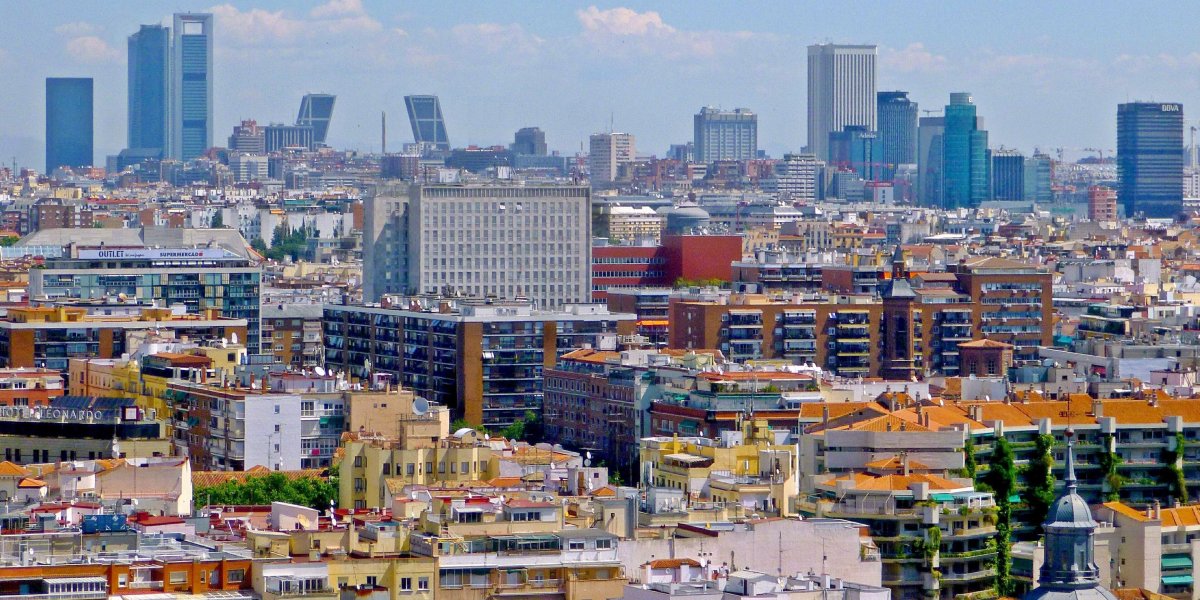
City Guide
Madrid
Spain · Best time to visit: Mar-May, Sep-Nov.
Day-by-day plan
Choose your pace
Duración del viaje
09:00
Landmark
Take Metro Line 2 or 5 to Ópera station — the Palace reveals itself the moment you turn onto Calle Bailén. The largest royal palace in Western Europe by floor area commands a limestone cliff above the Manzanares valley; stand at the Plaza de la Armería balustrade for a panorama that stretches to the Casa de Campo hills. Circle the Plaza de Oriente on the east side, where morning light rakes across the facade and the rows of royal statues cast long shadows onto the manicured hedges — this is the money shot.
Tip: Skip the interior — it saves €16 and ninety minutes of queuing. The best photo angle is from the far southwest corner of Plaza de la Armería at 09:15, when the sun hits the facade head-on with no crowds in frame. Walk through the Sabatini Gardens on the north side; they're free and almost always empty at this hour.
Open in Google Maps →10:45
Landmark
Exit the Palace courtyard from the southeast corner onto Calle Bailén, then walk downhill along Calle Mayor for ten minutes — past old haberdasheries and the scent of fresh bread from century-old bakeries — until a grand archway swallows you into the enclosed theatre of Plaza Mayor. This Habsburg-era rectangle, rebuilt three times after fire, still feels like a stage set. The ochre facades, slate spires, and 237 wrought-iron balconies frame a sky that looks impossibly blue from the cobblestones below.
Tip: Stand dead center under the equestrian statue of Philip III and shoot straight up through the four corner towers — it's the shot that makes this square look infinite. Ignore every terrace restaurant on the square itself: they charge triple for reheated food. The real eating happens sixty seconds away at the market.
Open in Google Maps →12:00
Food
Step out through the northwest arch of Plaza Mayor and cross Calle Mayor — the iron-and-glass market hall is right there, a two-minute stroll. This 1916 structure is Madrid's most elegant grazing hall: stall after stall of jamón, croquetas, oysters, and vermouth on tap. Grab a paper cone of croquetas de jamón ibérico (€4.50 for four — molten, crispy, shamefully good), then move to the olive stall for a tapa of gordal olives stuffed with anchovy (€3). Wash it down with a glass of cold vermut rojo on tap (€3.50) from the vermouth bar in the back corner.
Tip: Arriving at noon beats the 13:00 tourist crush by a full hour. Eat standing at the high tables near the windows — you'll move through faster and catch better light for photos. Skip the overpriced sushi and paella stalls near the entrance; the best vendors are deeper inside along the left wall.
Open in Google Maps →13:15
Landmark
Exit the market heading east on Calle Mayor — a six-minute flat walk past old bookshops and confiterías delivers you into the wide crescent of Sol, the literal centre of Spain. Find the bronze plaque of Kilómetro Cero embedded in the pavement in front of the old post office — every road in the country is measured from this point. Then cross to the south side for a photo with El Oso y el Madroño, the bear-and-strawberry-tree statue that has been Madrid's coat of arms since the thirteenth century.
Tip: The Km 0 plaque has a permanent selfie queue — walk past it, loop back from the east side, and you'll catch a two-second gap between groups. Look up at the clock tower on the Casa de Correos: this is the clock all of Spain watches on New Year's Eve to eat the twelve grapes. The Tío Pepe neon sign on the northeast building is the other must-get photo.
Open in Google Maps →14:30
Park
Walk east along Calle de Alcalá — Madrid's grandest boulevard — for fifteen minutes; you'll pass the Metropolis Building's winged Victory statue and the white wedding-cake facade of the Banco de España before the triumphal Puerta de Alcalá gateway appears, framing the green canopy of Retiro beyond. Enter through the gate and head south to the Grand Pond, where you can rent a rowboat (€8 for 45 minutes) and drift beneath the Monument to Alfonso XII — afternoon light turns the colonnade golden. Then walk ten minutes south through shaded paths to the Palacio de Cristal, a Victorian glass-and-iron greenhouse reflected in its own tiny lake, one of the most photogenic structures in Madrid.
Tip: Row to the far end of the Grand Pond and turn around — the Monument to Alfonso XII with the Madrid skyline behind it is the killer shot, and the afternoon sun is directly behind you. The Palacio de Cristal is free to enter as a Reina Sofía exhibition space; duck inside for sixty seconds to see sunlight scatter through the glass vault. If you still have energy afterward, wander south out of the park through the Barrio de las Letras — its streets have quotes by Cervantes inlaid in brass on the pavement.
Open in Google Maps →19:30
Food
Exit Retiro through the south gate near the Ángel Caído statue and walk south along Calle Alfonso XII, then turn left onto Calle del Doctor Castelo — an eight-minute stroll through a quiet residential neighbourhood where locals walk their dogs and kids chase each other through doorways. La Castela has been a neighbourhood institution since 1989: white-tiled walls, barrel-aged vermouth, and a glass case of pintxos that the bartender tops up every half hour. Take a table in the small dining room at the back. Order the tortilla de patatas (€11 — custardy center, caramelized edges, the benchmark version) and a media ración of croquetas de cocido madrileño (€13 — made from the city's signature chickpea stew, impossibly creamy inside). A glass of Ribera del Duero (€5) and you're out for under €35.
Tip: Arrive at 19:30 sharp — you'll have the dining room to yourself because madrileños don't eat dinner until 21:30. By 20:30 the bar is three-deep with locals and you'll wait forty minutes. Ask the waiter for the daily special chalked on the board behind the bar; it's never on the printed menu and it's always the best thing in the house. Avoid the tourist-trap restaurants along Paseo del Prado — they charge €20 for the same tortilla you'll get here for €11.
Open in Google Maps →Saltar al día
09:00
Park
The Royal Palace doesn't open until 10:00 — use this golden hour to photograph it from outside, when the limestone glows and the courtyards are deserted. The Sabatini Gardens' geometric hedgerows frame the palace's northern façade like a Baroque painting, and Plaza de Oriente across the street delivers the grandest symmetrical view in Madrid with the equestrian Felipe IV statue centered on the entrance.
Tip: Stand at the northeast corner of Plaza de Oriente at 09:15 — the morning sun hits the limestone façade directly and there are zero tour buses in frame. The Sabatini Gardens' upper terrace has a panoramic angle down onto the palace roofline that most tourists walk right past.
Open in Google Maps →10:00
Landmark
Cross the Plaza de la Armería from the gardens — the entrance is 2 minutes south. Europe's largest royal palace by floor area holds 3,418 rooms of Bourbon excess; prioritize the Throne Room with Tiepolo's ceiling fresco, the Royal Pharmacy with its 18th-century apothecary jars, and the Stradivarius quartet collection in the Music Room. Skip the temporary exhibitions — the Throne Room and Hall of Columns alone justify the ticket.
Tip: Buy tickets online the night before to skip the queue entirely. Enter through the Puerta del Príncipe on the south side — consistently shorter than the main Bailén Street gate. The palace closes on days of official state ceremonies with no advance warning; check the website that morning before walking over.
Open in Google Maps →12:00
Food
Exit the palace east and walk down Calle Mayor past the flank of Almudena Cathedral — 8 minutes to the market's wrought-iron-and-glass façade. This 1916 food hall puts Madrid's greatest hits under one roof: jamón ibérico carved to order (€5 a plate), croquetas de bacalao pulled hot from the fryer (€3.50 each), and house-poured vermouth on tap (€4). Graze standing at the counters like madrileños do — don't sit at tables. Budget: €15–22.
Tip: Arrive at noon — by 13:30 it's shoulder-to-shoulder and counter space vanishes. The stalls along the eastern wall are slightly cheaper and less mobbed. Skip the €6 sangria cups near the entrance; the vermouth and Albariño wine counters deeper inside are what locals actually drink.
Open in Google Maps →13:15
Landmark
Step out of the market's south exit and you're at the northwest corner of the square — 30 seconds away. This 17th-century Habsburg plaza is ringed by 237 balconies all painted the same russet red; walk to the center for the Felipe III equestrian statue, then look up at the Casa de la Panadería — its mythological frescoes are the most photographed wall in Madrid.
Tip: The best photo of the full plaza is from the southeast arch (Calle de Toledo entrance), looking diagonally across to the Panadería frescoes with afternoon light warming the façade. Do not eat at any restaurant under the arcade — they charge €18 for terrible paella and survive entirely on tourist foot traffic.
Open in Google Maps →15:00
Museum
Walk east from Plaza Mayor through Puerta del Sol — 15 minutes down Carrera de San Jerónimo, one of Madrid's grandest boulevards with the Parliament building at the halfway mark. Go straight to Room 12 for Velázquez's Las Meninas — the painting that breaks the fourth wall — then Room 67 for Goya's Black Paintings where Saturn Devouring His Son will stay with you for weeks. Finish with El Greco's The Nobleman with His Hand on His Chest in Room 8B.
Tip: Enter through the Puerta de los Jerónimos on the east side (Calle de Ruiz de Alarcón) — it's consistently shorter than the Goya entrance on Paseo del Prado. Free entry Mon–Sat 18:00–20:00 and Sun 17:00–19:00, but expect a 45-minute queue for free slots. The 15:00 window is the sweet spot — morning tour groups have cleared and the free-entry rush hasn't started.
Open in Google Maps →19:30
Food
Exit the Prado's north entrance and walk 5 minutes up Calle de las Huertas into Barrio de las Letras — Madrid's literary quarter where Cervantes and Lope de Vega once lived. Casa Alberto has occupied this building since 1827, the same address where Cervantes wrote part of Don Quixote. Start with their vermú de grifo (house vermouth on tap, €3.50), then order the rabo de toro estofado (braised oxtail, €18) — it falls apart at the touch of a fork. Budget: €25–35.
Tip: Arrive at 19:30 to walk straight in — by 21:00 locals fill every seat and a queue forms at the door. The ground-floor bar serves the same menu with more atmosphere than the upstairs dining room; order standing at the zinc counter like regulars do. Avoid the tourist restaurants lining the main Huertas strip — most are mediocre traps targeting the pub-crawl crowd.
Open in Google Maps →09:00
Park
Enter through the Puerta de la Independencia — the Puerta de Alcalá triumphal arch marks the gate on Plaza de la Independencia. Walk south along the Paseo de las Estatuas to the Estanque Grande and rent a rowboat (€6 for 45 minutes) — the colonnade of the Alfonso XII monument reflects perfectly in the still morning water. Then continue south to the Palacio de Cristal, an 1887 all-glass pavilion that glows like a cathedral of light when morning sun floods through its iron-ribbed dome.
Tip: Rowboats open at 10:00, but come at 09:00 for the Crystal Palace completely empty — by 11:00 there's a photo queue at its entrance. The southeast shore of the Estanque gives the best reflection shot of the Alfonso XII colonnade. If visiting May–June, detour to the Rosaleda rose garden south of the Crystal Palace: 4,000 roses in full bloom.
Open in Google Maps →11:30
Museum
Exit Retiro through the south gate onto Calle de Alfonso XII, walk past Atocha station's surreal tropical greenhouse (free to peek into through the glass) — 12 minutes to the museum. Room 206.06, second floor: Picasso's Guernica, a 3.5-by-7.8-meter anti-war scream in monochrome and the single most powerful painting in Spain. After Guernica, find Dalí's The Great Masturbator and Miró's vibrant canvases on the same floor — two floors is enough for a focused visit.
Tip: Closed every Tuesday. Use the Sabatini Building entrance on Ronda de Atocha — virtually no queue compared to the main door on Calle de Santa Isabel. Go to Guernica first: by noon, guided tour groups cluster three-deep around it and you'll be craning over heads instead of absorbing it.
Open in Google Maps →13:30
Food
Exit the museum and cross the Glorieta del Emperador Carlos V roundabout — El Brillante's terrace faces Atocha station, a 2-minute walk. Since 1961 this no-frills counter bar has served Madrid's definitive bocadillo de calamares — a fried squid sandwich on a crunchy roll (€5.50) that is as essential to this city as a slice is to New York. Pair it with a caña of draft beer (€2.80) and that's lunch. Budget: €8–12.
Tip: There are two El Brillante locations facing each other across the roundabout — the original is on the south side, closer to Atocha. Order at the bar counter, not at a table: table service adds a surcharge. If fried squid feels too adventurous, the bocadillo de lomo (grilled pork loin, €5) is the safe second choice — but you'd be wrong to skip the calamares.
Open in Google Maps →14:30
Neighborhood
Walk west from Atocha through the colorful streets of Lavapiés — murals, vintage shops, multicultural storefronts — 15 minutes uphill to La Latina. This is old working-class Madrid: medieval lanes, sun-washed plazas, and jamón legs hanging in every doorway. Walk the full length of Calle de la Cava Baja — Madrid's most concentrated tapas street — and finish at Plaza de la Paja, a hidden square with a fountain and orange trees where locals sit in the afternoon shade.
Tip: On Sundays, El Rastro flea market takes over from La Latina to Embajadores (09:00–15:00, 3,000+ stalls) — if your Day 2 is a Sunday, swap this slot to the morning and shift Retiro to the afternoon. On Cava Baja, duck into Taberna Txakolina for a €3 Basque pintxo if you need a taste between meals. Keep your phone in a front pocket on Rastro days — it's Madrid's number-one pickpocket zone.
Open in Google Maps →16:30
Landmark
Walk north from La Latina through the Royal Palace gardens district — 18 minutes uphill, pausing at the Viaducto de Segovia viewpoint for a panoramic shot of western Madrid's tiled rooftops. The Temple of Debod is a 2,200-year-old Egyptian temple donated by Egypt in 1968 and reassembled stone by stone on this hilltop in Parque del Oeste. Circle to the temple's western face for the reflecting pool — on clear evenings the Guadarrama mountains line the horizon behind the silhouette.
Tip: The temple interior is small and often closed for renovation — the hilltop viewpoint and reflecting pool are the real draw. Golden hour in spring and fall hits around 19:00–20:00, turning the sky amber behind the silhouette; stay until the light changes. This is where madrileños bring wine and guitars at dusk — it's the best free sunset in the city and the perfect last image of Madrid.
Open in Google Maps →20:00
Food
Walk east down the illuminated Gran Vía for 12 minutes — Madrid's most famous boulevard pulses with neon and evening energy — then turn onto Calle de la Reina. La Barraca has been cooking paella over wood fire in Madrid since 1935, in a dining room lined with blue-and-white azulejo tiles. Order the paella valenciana (€19/person, minimum 2 — chicken, rabbit, and bomba rice, 20-minute cook time) or the arroz negro (squid ink rice, €18/person) — order as soon as you sit. Budget: €28–38.
Tip: Reserve by phone for 20:00 — walk-ins after 21:00 face a 30-minute wait. Ask for a table near the open kitchen to watch the paella pans over the flame. Skip the 'seafood paella' — it's the tourist default and not what made this place survive 90 years; the valenciana and arroz negro are the real thing. Between Gran Vía and Sol, ignore the 'flamenco dinner show' hawkers — those packages are overpriced and the performances are underwhelming.
Open in Google Maps →Saltar al día
09:00
Religious
Begin opposite the Royal Palace at Madrid's cathedral, where the interior defies expectation — modern pop-art stained glass by Father Rupnik floods the nave with kaleidoscopic morning color. The crypt below (entrance on Calle Mayor, free) hides a forest of 400 columns with different carved capitals, a Romanesque dreamscape most visitors never discover. At nine o'clock you'll have both levels nearly to yourself.
Tip: The crypt entrance is around the corner on Calle Mayor — 90% of visitors walk right past it. Free, 15 minutes, and far more atmospheric than the cathedral above.
Open in Google Maps →10:00
Landmark
Cross the Plaza de la Armería — two minutes with the Palace growing in your vision until it fills the sky, 3,418 rooms of Bourbon ambition behind a limestone façade. At 10:00 opening you'll walk the gilded Throne Room and gaze up at Tiepolo's ceiling fresco in near silence; by 11:30, tour groups flood in. The Royal Armoury downstairs — Charles V's full ceremonial armor, swords worn in real battles — is the collection that lingers longest in memory.
Tip: Buy tickets at patrimonionacional.es to skip the line entirely. Start on the upper floor — guided groups begin at ground level, so the Throne Room will be uncrowded if you go upstairs first.
Open in Google Maps →12:30
Food
Exit the Palace toward Calle Mayor and walk 12 minutes through Madrid's oldest streets — descend the stone stairway of the Arco de Cuchilleros and find Botín at the bottom, the world's oldest restaurant since 1725, certified by Guinness. Reserve the vaulted brick cellar where Hemingway set the final scene of The Sun Also Rises. Order the cochinillo asado (roast suckling pig, ~€27) — the skin shatters like glass and the meat falls apart at the touch of a plate's edge, which is how the waiters traditionally carve it.
Tip: Reserve 2 days ahead and request the cellar room (sótano) — it's the original 18th-century vaulted kitchen. The cochinillo is the only real choice; skip the tourist set menu and order à la carte.
Open in Google Maps →14:30
Landmark
Step through the archway beside Botín and the perfect Habsburg rectangle opens up — terracotta facades, slate spires, and the Casa de la Panadería's mythological frescoes glowing across the north wall. Linger in the square, then walk east through Calle de Postas for a free 10-minute stroll to Puerta del Sol — Spain's kilometer zero, marked by a bronze plaque in the sidewalk where all roads in the country begin. Afternoon light rakes across Plaza Mayor's western face, turning the old stone to gold.
Tip: Every restaurant under the Plaza Mayor arcades charges triple for microwaved food — admire the architecture and keep walking. If your trip includes a Sunday, come back to La Latina at 9:00 for El Rastro flea market (runs until 15:00).
Open in Google Maps →20:00
Food
Walk south from Sol through Calle de Toledo into La Latina — 10 minutes downhill past wrought-iron balconies and corner taverns until you hit Cava Baja, Madrid's most famous tapas street. Casa Lucio, open since 1974, perfected the huevos rotos con jamón ibérico (broken eggs over Iberian ham, ~€19) — the runny yolk pooling into salty cured ham is Madrid on a plate. Pair it with callos a la madrileña (Madrid-style tripe stew, ~€18) if you want to eat like a true madrileño.
Tip: Reserve 3 days ahead or arrive at 20:00 sharp — the Spanish dinner wave hits at 21:30 and the wait becomes an hour. Avoid the 'free flamenco show' touts around Sol; for the real thing, book Corral de la Morería near the Palace.
Open in Google Maps →10:00
Museum
Begin at the Prado's east entrance — the Puerta de los Jerónimos, where the queue is a fraction of the main Goya door. Walk directly to Room 12: Velázquez's Las Meninas demands a slow approach from across the gallery until you're standing where the king stood, watching the painter watch you back. Then lose yourself in Goya's Black Paintings — those anguished final works painted on his own walls — and Bosch's hallucinatory Garden of Earthly Delights.
Tip: Enter via the Puerta de los Jerónimos (east side) to skip the main queue, and head to Room 12 before tour groups arrive at 11:00. The free evening hours (Mon-Sat 18:00-20:00) draw crushing crowds — paying €15 at opening is worth every cent.
Open in Google Maps →13:00
Food
Exit through the Prado's main Goya entrance and walk 3 minutes north to Plaza de Cánovas del Castillo, where Neptune's fountain marks the crossroads of Madrid's art axis. Estado Puro is Paco Roncero's creative tapas bar inside the NH Collection hotel — his tortilla de patatas (~€13) arrives barely set in the center, exactly as it should be, and the patatas bravas with spicy brava sauce (~€9) are a reinvention of Madrid's most iconic tapa. Sit at the bar counter facing the open kitchen and order four or five plates to share.
Tip: Grab a stool at the bar counter — you'll be served faster and can watch each tapa assembled. No reservation needed for the bar; the terrace overlooking Neptune fountain fills first, but the counter is the better experience.
Open in Google Maps →14:30
Park
Walk 8 minutes east from Estado Puro through the Puerta de Felipe IV into Madrid's 125-hectare green lung — the avenue leads you straight to the Crystal Palace, an iron-and-glass greenhouse from 1887 that usually holds a free art installation and glows cathedral-like in afternoon light. Then wander north to the Estanque Grande, rent a rowboat (~€6), and drift past the towering Alfonso XII monument. This is your afternoon to breathe — no agenda, just the park unfolding around you.
Tip: Head to the Crystal Palace first — afternoon sun turns the glass walls luminous. Rowboat rental at the Estanque Grande closes at dusk and the queue builds after 16:00, so go before exploring the rest of the park.
Open in Google Maps →16:30
Museum
Exit Retiro from the southwest gate onto Paseo del Prado and walk 12 minutes south toward Atocha — the museum's glass elevator towers appear on your left before you reach the station. Go straight to Room 206.06 on the second floor: Picasso's Guernica, 3.5 meters tall and 7.8 meters wide, stops every conversation in the room. Stand four meters back, dead center — the painting's horror and raw scale only register from that distance, not from the sides where most visitors cluster.
Tip: The museum is closed every Tuesday — plan around this. Free entry Mon & Wed-Sat 19:00-21:00, but the Guernica room is wall-to-wall during free hours; paying €12 at 16:30 buys you space to stand and absorb it.
Open in Google Maps →20:00
Food
Walk 8 minutes north from Reina Sofía through Calle de las Huertas — golden literary quotes embedded in the cobblestones guide you past century-old tabernas into the heart of the literary quarter. Casa Alberto has poured vermouth from the same antique brass tap since 1827, in the very building where Cervantes wrote part of Don Quixote. Start with a vermut de grifo (~€4) at the ground-floor bar, then sit down for rabo de toro (braised oxtail, ~€20) — slow-cooked until the meat surrenders to the fork.
Tip: Order the vermut de grifo from the century-old brass tap downstairs before heading up to the dining room — it's a ritual, not a drink. Pitfall: the streets between Sol and Atocha are lined with laminated photo-menu restaurants; every single one serves microwaved tourist food at double price.
Open in Google Maps →10:00
Museum
Begin your final Madrid morning at the third corner of the art triangle — the Thyssen sits on Paseo del Prado, completing a constellation no other city on earth can match. Unlike the Prado's deep Spanish canon or Reina Sofía's avant-garde shock, the Thyssen walks you through 800 years of Western art in one private collection, from medieval gold-leaf Madonnas to Hopper's lonely American diners. Start on the top floor and descend chronologically; at 10:00 opening, the upper galleries feel like a private viewing.
Tip: Start on the top floor and work down — the museum's intended narrative flow, and the medieval galleries upstairs are always the emptiest. Temporary exhibitions on the ground floor are often world-class and included in the ticket.
Open in Google Maps →12:00
Neighborhood
Exit the Thyssen and walk 5 minutes east into the literary quarter — Barrio de las Letras, where Cervantes, Lope de Vega, and Quevedo once lived, wrote, and feuded on these very streets. Look down at the cobblestones inlaid with golden-lettered quotes from Spanish literature, and find Lope de Vega's preserved house-museum at Calle de Cervantes 11 — the address itself is a 400-year-old literary joke. The quarter's narrow lanes, antique bookshops, and tiled tavern fronts feel like walking through the pages of a novel.
Tip: Casa Museo de Lope de Vega at Calle de Cervantes 11 is free (book online) and takes 30 minutes — the study where he wrote over 1,500 plays is preserved exactly as it was. The irony: Lope lived on Cervantes' street, and Cervantes on Lope's.
Open in Google Maps →13:00
Food
Walk 5 minutes west along Carrera de San Jerónimo toward Sol — at number 8, a discreet Belle Époque storefront with mirrored cabinets and a silver samovar has served Madrid's power class since 1839. This is where you try cocido madrileño, the city's signature stew served in three ceremonial courses: first the noodle broth, then the chickpeas and vegetables, then the meats (~€35). Stand at the ground-floor marble counter first and sip their legendary consommé from the samovar (~€6) — it's how madrileños have started their afternoons for nearly two centuries.
Tip: The ground-floor samovar consommé is a must even if you're having the full lunch upstairs — €6 and two minutes for a taste of 180 years of tradition. The cocido madrileño is the city's non-negotiable dish; it arrives in three courses, so come hungry.
Open in Google Maps →15:00
Neighborhood
Walk 5 minutes north through Puerta del Sol to Gran Vía — Madrid's answer to Broadway, an early-20th-century boulevard of wedding-cake facades, Art Deco cinemas, and rooftop silhouettes against the sky. Walk its length west to Plaza de España, then turn right into Malasaña — the neighborhood that birthed La Movida, Madrid's post-Franco cultural explosion. Take your time at Plaza del Dos de Mayo — vintage shops, street murals, sun-warmed café terraces — this is your free afternoon to stroll where creative Madrid feels most alive.
Tip: Look up at the Edificio Telefónica (Gran Vía 28) — Spain's first skyscraper and a Civil War landmark. In Malasaña, skip the chains on Calle de Fuencarral and duck into Calle del Espíritu Santo and Calle de la Palma for the best independent shops and cafés.
Open in Google Maps →20:00
Food
Walk 10 minutes east from Plaza del Dos de Mayo down Calle de Fuencarral to Calle de la Reina 29, where La Barraca has served Valencia's national dish to Madrid since 1935 — tiled walls, hand-painted ceramics, and the smell of saffron from the kitchen door. Order the paella valenciana (chicken and rabbit on saffron rice, ~€22 per person) or arroz negro (squid ink rice with alioli, ~€20) as your farewell to Spain. Rice takes 20 minutes to prepare, so order immediately and spend the wait with a glass of Albariño and the quiet satisfaction of a trip well spent.
Tip: Order the paella the moment you sit — rice dishes take 20 minutes and you don't want to wait hungry. Final Madrid warning: in Malasaña and Chueca, avoid any bar advertising 'bucket deals' or 'free shots' — tourist traps with watered-down drinks at triple markup.
Open in Google Maps →Saltar al día
09:00
Landmark
This 2,200-year-old Egyptian temple — a 1968 gift from Egypt for Spain's help saving the Nubian monuments — sits on Madrid's highest city-center terrace with a reflecting pool that doubles the stone in the still morning air. At nine the surrounding park belongs to joggers and you alone; from the western balustrade you get an unbroken panorama from the Royal Palace to the snow-capped Sierra de Guadarrama.
Tip: Walk to the western railing for the only angle in Madrid that frames the Royal Palace against the Guadarrama mountains — this vantage point is impossible from any other spot in the city. The temple interior is a single small chamber and skippable; the real spectacle is outside.
Open in Google Maps →10:15
Landmark
Exit the park from the southeast corner and walk downhill along Cuesta de San Vicente — the palace reveals itself gradually as you descend, an 8-minute walk. With 3,418 rooms it is the largest functioning royal palace in Europe by floor area; arriving just after opening means you will walk the Throne Room with its Tiepolo ceiling, the Hall of Mirrors, and the Royal Pharmacy nearly alone.
Tip: Enter through the Puerta del Príncipe on the south side facing the cathedral — it is far less congested than the main Bailén Street entrance. The Royal Pharmacy in the courtyard wing is included in your ticket, takes ten minutes, and feels like stepping into an 18th-century apothecary that most visitors never find.
Open in Google Maps →13:00
Food
Exit through the north gardens and walk along Calle de Bailén, then turn right on Calle de la Bola — a quiet 7-minute stroll through residential streets. This family-run tavern has cooked one dish since 1870: cocido madrileño (€23), a three-course chickpea stew served as broth with noodles, then chickpeas with cabbage, then the meats — chorizo, morcilla, and tender beef. Arrive at 13:00 sharp; by 13:30 the twelve-table dining room is full of gray-haired regulars. Closed Mondays.
Tip: Ask for a splash of fino sherry in the broth — locals do this but it never appears on any menu. Budget €25-30 per person with a drink.
Open in Google Maps →15:00
Landmark
Walk south along Calle del Arenal past the Teatro Real and through Puerta del Sol, then duck into Calle Mayor — 12 minutes total, past the iconic Tío Pepe sign and the Kilometer Zero plaque. Built in 1619 for bullfights and royal coronations, the square glows ochre in the afternoon sun; study the Casa de la Panadería's frescoed north façade, find the bronze Felipe III at center, then wander through the arched exits into the narrow streets where tabernas have poured vermouth since the 1800s.
Tip: Every café lining the square charges double for the privilege of the view — do not eat or drink here. Exit through the southwest Arco de Cuchilleros and descend the dramatic stone staircase to Calle de Cuchilleros, where authentic bars charge normal prices and your dinner awaits two steps away.
Open in Google Maps →20:00
Food
Walk through the Arco de Cuchilleros on Plaza Mayor's southwest corner and down the stone steps — Botín's entrance is right there, a 2-minute stroll. The world's oldest continuously operating restaurant since 1725: Hemingway closed The Sun Also Rises here, Goya once waited tables, and the wood-fired oven in the basement has not gone out in nearly three centuries. Order the cochinillo asado (roast suckling pig, €27.50) — the skin shatters like glass — and reserve the 20:00 seating to eat with locals rather than the tourist-packed 21:30 slot.
Tip: Request the basement cueva — the original 18th-century brick-vaulted room is the only space worth sitting in. Book at least 3 days ahead. Budget €40-55. Beware the 'Flamenco dinner show' touts near Plaza Mayor and Sol — overpriced traps with mediocre performers; for real flamenco book Corral de la Morería separately.
Open in Google Maps →10:00
Museum
Take the metro to Banco de España and walk south along the tree-lined Paseo del Prado — the museum's Jerónimos entrance appears in 5 minutes with the Neptune fountain as your landmark. Arriving as the doors unlock gives you 45 quiet minutes before tour groups flood in. Focus on three rooms: Velázquez's Las Meninas in Room 12, Goya's Black Paintings in Rooms 67-68 where Saturn Devouring His Son is unforgettable, and Bosch's Garden of Earthly Delights in Room 56A — the right panel alone demands a full 20 minutes.
Tip: Use the Jerónimos entrance on the east side — queues are half the length of the Goya entrance to the north. Buy tickets online to skip the line entirely. Free entry Mon-Sat 18:00-20:00, but the evening crowds make it not worth the savings.
Open in Google Maps →13:30
Food
Exit through the Goya door on the north side, cross the street, and walk 2 minutes to Plaza de Cánovas del Castillo beside the Neptune fountain. Chef Paco Roncero's tapas bar reimagines Spanish classics with modernist technique: the tortilla desestructurada (€14), a liquid-centered omelette served in a martini glass, is worth the visit alone, and the brioche de calamares (€12) elevates Madrid's beloved squid sandwich into something extraordinary. The terrace overlooks the fountain; no reservations at lunch, first come first served.
Tip: Arrive at 13:30 before the 14:00 rush — by 14:15 every table is taken and the wait stretches to 30 minutes. Budget €25-35 per person.
Open in Google Maps →15:00
Park
Cross Paseo del Prado south from Estado Puro and walk along the museum's flank — the Botanical Garden entrance is at the Prado's southern end, a 5-minute stroll past the Murillo Gate. After three hours standing before masterpieces, these terraced 18th-century gardens with 5,000 plant species are the perfect counterweight: in spring the rose garden is electric with color, in autumn the upper terrace turns amber. The greenhouse at the far end houses tropical orchids and carnivorous plants — a curious 15-minute detour.
Tip: Turn right after entering and take the upper terrace path first — it is shadier, draws fewer visitors, and the descending perspective through the terraces is more dramatic than climbing up.
Open in Google Maps →16:30
Park
Exit the Botanical Garden through the back gate, cross Calle de Alfonso XII, and enter Retiro through the Puerta de Murillo — you are in the park in 3 minutes. Head first to the Palacio de Cristal, an 1887 iron-and-glass pavilion rising from a small lake that hosts free contemporary art exhibitions by the Reina Sofía. Then walk north to the Estanque Grande boating lake and rent a rowboat (€8, 45 minutes) as late afternoon sun filters through the elm canopy.
Tip: The Palacio de Cristal is most magical when it rains — the sound on the glass roof is extraordinary and reflections in the surrounding pool double the effect. Avoid rowboats on weekends when queues reach 30 minutes; on weekday afternoons you walk straight on.
Open in Google Maps →20:30
Food
Exit Retiro from the Puerta del Ángel Caído on the southwest side and walk down Calle de las Huertas, where literary quotes are embedded in the pavement — a 15-minute stroll through the Barrio de las Letras. This vermutería-taverna has occupied the ground floor of the building where Cervantes wrote Part II of Don Quixote since 1827. Start with house vermouth on tap from century-old barrels (€3.50), then sit for rabo de toro braised in red wine (€19) and croquetas de jamón ibérico (€12) that shatter audibly.
Tip: Stand at the zinc bar for a vermouth and one croqueta before sitting — this is the local pre-dinner ritual. The back dining room with dark wood and tilework is where regulars sit. Budget €30-40. Avoid the restaurants on Calle de las Huertas with food photos displayed outside — they are uniformly terrible; Casa Alberto is the only door worth entering on this street.
Open in Google Maps →10:00
Museum
Take the metro to Atocha and walk south along Calle de Santa Isabel — Jean Nouvel's dramatic red metal extension marks the entrance in 5 minutes. For the first hour Room 206.06 belongs almost to you alone, and this is where Guernica lives: Picasso's 3.5-meter-tall, 7.8-meter-wide antiwar scream painted in six weeks after the 1937 bombing of a Basque town. Stand at the far end and let the full width hit you before approaching, then seek out Dalí's Great Masturbator in Room 205 and Miró's surrealist works in Room 206.03.
Tip: The museum is closed every Tuesday — plan accordingly. Free entry Mon and Wed-Sat 19:00-21:00, but the Guernica room becomes standing-room-only during free hours; paying €12 at 10:00 is worth every cent for the space to breathe.
Open in Google Maps →13:00
Food
Exit through the Nouvel building's back entrance onto Ronda de Atocha, cross into the Lavapiés neighborhood, and walk 6 minutes up Calle de la Torrecilla del Leal — the streets narrow and fill with conversations in a dozen languages. This no-frills Galician tavern is packed with construction workers and neighborhood regulars by 13:30, which tells you everything about the quality-to-price ratio. Order the pulpo a la gallega on a wooden board (Galician octopus with pimentón, €16) and pimientos de padrón (€7), paired with an Albariño from Rías Baixas (€3.50/glass).
Tip: Arrive at 13:00 sharp — the twelve-table room takes no reservations and fills within 20 minutes. If there is a wait, order a caña at the bar; tables turn fast. Budget €20-28.
Open in Google Maps →15:00
Museum
Walk north from El Sur along Calle de Lavapiés, through Plaza de Tirso de Molina, and continue up to Paseo del Prado — a 15-minute walk from one of Madrid's most multicultural streets back to the museum mile. The Thyssen completes the golden triangle with what the other two lack: Impressionists, German Expressionists, and American realism. Start on the top floor at the 13th century and walk downward through time — Dürer, Caravaggio, astonishing rooms of Monet and Renoir, ending with Hopper's Hotel Room and Lichtenstein's Woman in Bath.
Tip: Free admission on Mondays 12:00-16:00 — if your schedule allows, visit the Thyssen on Monday at noon for the full free experience. The museum is compact enough to see completely in two hours without fatigue, which is its great advantage over the Prado.
Open in Google Maps →17:30
Landmark
Exit the Thyssen and walk 3 minutes north along Paseo del Prado — the impossibly ornate Palacio de Cibeles towers over the plaza with the Cibeles fountain at its feet. Take the elevator to the 8th-floor Mirador terrace for the finest panorama in Madrid: at 17:30 the light softens and the city turns gold, with Gran Vía's skyline to the northwest, Retiro's treetops to the east, and the distant Guadarrama mountains on clear days.
Tip: Go to the southeast corner of the terrace for an unobstructed view of Retiro and the Prado — this is the angle that appears on Madrid postcards. The building's interior atrium soars six stories and the free exhibitions on floors 2-4 are worth a pause on your way up.
Open in Google Maps →20:30
Food
Walk north from CentroCentro along Calle de Alcalá, then left into the Chueca neighborhood on Calle de la Libertad — a 10-minute walk past vintage boutiques and rainbow-flagged terraces. This 1854 tavern was the haunt of Pablo Neruda and Federico García Lorca; a meticulous restoration brought back the original tilework, etched mirrors, and mahogany bar without a trace of pretension. Order the rabo de toro braised in Rioja (€19) and croquetas de cocido (€13), with a glass of Mencía from Bierzo (€5). Reserve for 20:30; the dining room seats only 30.
Tip: Request the back table by the original hand-painted tilework — the most beautiful seat in Madrid. Budget €35-45. Avoid the organized 'tapas tours' and bar crawls advertised in Chueca and Sol — they visit mediocre bars at inflated group prices, and you will eat better by walking into any unmarked door on Calle de la Libertad.
Open in Google Maps →10:30
Museum
Take the metro to Tribunal — as you emerge, Pedro de Ribera's extraordinary 1721 Baroque portal is directly in front of you, carved in churrigueresque excess that stops you mid-step. This free museum is Madrid's autobiography: scale models of the city in 1830, Goya's Allegory of the City of Madrid, and a room devoted to the underground viajes de agua water channels that explain why every fountain in the city exists where it does. Small, perfectly paced, and rarely visited.
Tip: Photograph the Baroque portal from across the street in the morning when direct sunlight hits the stone carvings — by afternoon it falls into shadow. The museum rarely has more than a handful of visitors, making it the most peaceful cultural experience in Madrid.
Open in Google Maps →12:00
Neighborhood
Exit the museum, turn right, walk 2 minutes up Calle de Fuencarral, then turn left into the narrow streets that form the heart of Malasaña. This is where Madrid's movida madrileña counterculture exploded in the 1980s after Franco died, and its rebellious DNA survives in every façade: street art murals next to century-old pharmacies, anarchist bookshops beside third-wave coffee roasters, vinyl stores with hand-lettered signs. Walk to Plaza del Dos de Mayo — where the 1808 anti-Napoleon uprising began — then zigzag through Calle del Espíritu Santo, Calle de la Palma, and Calle de Velarde.
Tip: On Calle del Espíritu Santo look up at number 17 — a tiled mural of the Virgin Mary from the 1800s hangs incongruously above a tattoo parlor. If your Day 4 falls on a Sunday, El Rastro flea market (09:00-15:00) near La Latina is a 20-minute walk south and worth rearranging your morning for.
Open in Google Maps →13:30
Food
From Plaza del Dos de Mayo walk east along Calle de San Vicente Ferrer and turn right on Calle de Colón — 4 minutes past hand-painted shopfronts and small plazas where locals sit with their dogs. This tile-fronted bar has poured vermouth from the barrel since 1892, and its tortilla española is arguably the best in Madrid: a thick, custardy disc with a trembling barely-set center that locals queue for. Order the tortilla (€8, large enough for two), salmorejo with jamón shavings (€6), and a caña of draft beer (€2.50). Standing-room at the bar is part of the charm.
Tip: The tortilla sells out by 14:30 on weekends — arrive at 13:30 to guarantee a portion. Eat at the bar; the small back dining room loses all the atmosphere. Budget €15-20.
Open in Google Maps →15:30
Shopping
Walk north on Calle de Fuencarral past Glorieta de Quevedo, then continue along Calle de Vallehermoso — a 12-minute stroll through a residential neighborhood where every block carries a different bakery scent. This renovated iron-and-glass market hall is where food-obsessed madrileños actually shop: 40 stalls of artisan Manchego aged 18 months, fresh razor clams, and olive oils pressed that season. Not a tourist food hall — this is where local chefs source ingredients and abuelas argue about tomato ripeness.
Tip: The olive oil stall near the entrance offers free tastings of Picual, Arbequina, and Hojiblanca varieties — a small bottle of Picual extra virgin (€8-12) is the most genuinely useful souvenir you will bring home from Spain. The market closes at 20:30 but stalls start packing by 19:00.
Open in Google Maps →20:00
Food
Continue north from the market along Calle de Ponzano — Madrid's most exciting food street, lined with vermuterías and wine bars spilling onto the sidewalk, a 10-minute walk of constant temptation. This former butcher shop turned restaurant serves avant-garde tapas on butcher paper under industrial lighting: the tataki de atún rojo with ponzu and sesame (€16) and the brioche de rabo de toro (€14) are non-negotiable orders. No reservations — put your name on the list at 19:45 and have a vermouth at the bar across the street while you wait.
Tip: Sit at the bar counter facing the kitchen — the chefs' choreography is part of the show. Budget €35-45. After dinner walk back down Ponzano and stop at any bar with open doors and noise for a final copa — this is how Madrid says goodbye. Avoid the 'authentic sangria bars' on Gran Vía and Sol charging triple for premade sangria; real madrileños drink tinto de verano (red wine with lemon soda, €3) at any normal bar.
Open in Google Maps →Saltar al día
09:30
Religious
Start your Madrid story at the cathedral that stares down the Royal Palace across a single plaza — sacred and secular power, face to face. The neo-Gothic interior is surprisingly airy for a building that took over a century to finish; but the real treasure is the Romanesque crypt below street level, where a 16th-century altarpiece and low stone arches create a silence the upstairs nave never achieves. Step into the crypt before the first tourist bus pulls up — you will likely have it to yourself.
Tip: Enter from the Calle de Bailén side door facing the palace to skip the main entrance crowd. The crypt (free, separate street-level entrance below the cathedral) is more atmospheric than the cathedral itself and almost nobody goes — look for the narrow door on the south side of the building.
Open in Google Maps →10:15
Landmark
Cross the Plaza de la Armería from the cathedral — the palace looms ahead with 3,418 rooms, more than Versailles. This is not a lived-in palace (the royal family resides at the Palacio de la Zarzuela outside the city), which means every room is frozen in full ceremonial splendor. Three things worth lingering over: the Throne Room's ceiling painted by Tiepolo, the Royal Pharmacy with its wall of 18th-century porcelain jars, and the Stradivarius collection in the Royal Armoury — five instruments by the master himself, still in playing condition.
Tip: Buy tickets online at least a day ahead — the ticket window queue can reach 45 minutes by 11:00. Enter through the Puerta del Príncipe on the south side. The Royal Armoury (included in the ticket) closes 30 minutes before the palace; visit it first if it is already past 10:30.
Open in Google Maps →12:30
Food
Walk east from the palace along Calle Mayor for 10 minutes, past ornate 17th-century facades — this was the ceremonial route of the Habsburg court. The wrought-iron market hall ahead has been feeding Madrileños since 1916. Graze standing at the counters: jamón ibérico de bellota hand-carved to order (€6 a plate), a glass of cold Rueda verdejo (€4), and a cone of freshly fried chopitos — baby squid, golden and salt-crusted (€5). This is lunch as locals do it: on your feet, moving between stalls, pointing at what looks good.
Tip: Go between 12:00–13:00 to beat the lunch rush. The stalls along the left wall as you enter from Plaza de San Miguel are generally better value. Skip the overpriced oyster bar near the entrance — the same quality is half the price at the croquetas stall in the back corner.
Open in Google Maps →14:00
Landmark
Step through the archway from the market and the enclosed rectangle of Plaza Mayor opens up — three stories of rust-red facades, nine entrance arches, and 237 wrought-iron balconies. This square has hosted bullfights, auto-da-fé trials, coronation feasts, and Christmas markets since 1619. Stand in the center and look up at the Casa de la Panadería's baroque frescoes — restored in 1992 with mythological figures that glow when the afternoon light hits them. The equestrian statue of Philip III at center is the only calm thing in this square's violent history.
Tip: Walk under the arches and study the square from the edges rather than sitting at the terrace cafés — they charge €6–8 for an espresso and the food is tourist-grade. Exit through the Arco de Cuchilleros on the southwest corner and descend the stone staircase — it is the most photogenic exit and leads directly to tonight's dinner street.
Open in Google Maps →20:30
Food
Descend the stone steps from Plaza Mayor's southwest corner and turn right on Calle de Cuchilleros — three minutes and you arrive at the world's oldest restaurant, operating continuously since 1725 (Guinness-certified). Hemingway set the final scene of The Sun Also Rises here. The wood-fired oven in the basement has never been extinguished in nearly 300 years. Order the cochinillo asado — roast suckling pig (€27) — the skin shatters like glass under the spoon they use to carve it tableside. Pair with a bottle of Pesquera Crianza from Ribera del Duero.
Tip: Reserve 3–5 days ahead and request the basement 'Horno' dining room with the original oven — it is the most atmospheric and fills first. Avoid the ground floor, which feels touristy. Budget €45–55 per person with wine. Warning: the restaurants lining the rest of Calle de Cuchilleros plaster their menus in English and charge €15 for microwaved paella — Botín is the only reason to eat on this street.
Open in Google Maps →10:00
Museum
Walk southeast toward the Paseo del Prado — the tree-lined boulevard that Spain's Bourbon kings modeled on the Champs-Élysées. Arrive right at 10:00 when the Jerónimos entrance opens. The Prado holds over 8,000 paintings, but you are here for three encounters: Velázquez's Las Meninas in the central gallery on the first floor — stand at the marked spot where the perspective clicks and the painting watches you back; Goya's Black Paintings in the adjoining rooms, especially the nightmarish Saturn Devouring His Son; and Bosch's The Garden of Earthly Delights on the ground floor — a triptych you could stare at for an hour and still find new horrors.
Tip: Enter through the Puerta de los Jerónimos (back entrance on Calle de Felipe IV) — it is far less crowded than the Goya entrance on Paseo del Prado. Head to the Velázquez galleries first while tour groups start from the ground floor. The free evening hours (Mon–Sat 18:00–20:00) are packed shoulder to shoulder — pay the €15 and enjoy space to breathe at 10:00.
Open in Google Maps →13:15
Food
Exit the Prado through the Goya door and walk 5 minutes west toward the Neptune Fountain — Estado Puro is tucked inside the NH Collection Madrid Suecia hotel on the right side of the boulevard. This is Paco Roncero's casual tapas lab: Michelin-starred technique at bar-counter prices. The tortilla de patatas deconstruida (€14) arrives as a broken egg yolk pooling over potato foam — theatrical but genuinely delicious. Add the gambas al ajillo in their sizzling terracotta dish (€13) and a cold glass of Albariño.
Tip: Sit at the bar counter for the full show — you will watch the kitchen plate each dish. No reservation needed for lunch if you arrive before 13:30. Budget €25–30 per person. The terrace facing the Paseo del Prado is pleasant but the bar seats are the real experience.
Open in Google Maps →15:00
Park
Walk east for 10 minutes along Calle de Felipe IV, past the Real Jardín Botánico, and enter Retiro through the Puerta de Felipe IV gate. This 125-hectare park was the Spanish monarchy's private garden until 1868. Head straight to the Estanque Grande — rent a rowing boat (€6 for 45 minutes) and drift past the colonnade of the Alfonso XII monument with the late-afternoon sun warming the stone. Afterward, walk south through the chestnut alleys to the Palacio de Cristal, an 1887 glass-and-iron pavilion set over a pond with turtles. The light inside at this hour turns the structure into a greenhouse cathedral.
Tip: The Palacio de Cristal is free and usually empty between 15:00–17:00, but often closed Mondays — check the Reina Sofía website since it operates as their exhibition space. For the rowboats, go on a weekday; weekends have 30-minute queues. The Rosaleda (rose garden) south of the lake peaks in May and October.
Open in Google Maps →20:00
Food
Exit Retiro from the Puerta de la Independencia on the west side and walk 15 minutes through the Barrio de las Letras — the neighborhood where Cervantes, Lope de Vega, and Quevedo once lived. Their quotes are inscribed in bronze on the sidewalks beneath your feet. Casa Alberto sits at Calle de las Huertas 18, pouring vermouth from a zinc tap since 1827. The rabo de toro — oxtail braised until it falls from the bone (€18) — is the dish this tavern is built around. The house vermouth on tap (€3.50) is drawn from an old ceramic barrel behind the bar.
Tip: Arrive at 20:00 — by Madrid standards this is early, so you will get a bar spot easily. Try the croquetas de jamón ibérico (€10) as a starter; they are made in-house and consistently ranked among Madrid's best. Budget €25–35 per person. Even if you think you do not like vermouth, try the house pour — it will change your mind.
Open in Google Maps →22:00
Entertainment
Walk 3 minutes from Casa Alberto along Calle de las Huertas to Calle de Echegaray — Cardamomo's red neon sign glows from number 15. This intimate tablao seats about 100 and the performers are among Madrid's best working bailaores and cantaores. Forget the tourist tablaos with buffet dinners — here you get raw, genuine duende: the guitarist's fingers blur, the dancer's heels crack the floor like gunshots, and the singer's voice splits the room open. This is not a show. It is a confession set to rhythm.
Tip: Book the 22:00 show online in advance — the late show draws more locals and the energy is different from the earlier tourist-heavy session. Sit in the first two rows for the visceral intensity, or the back row to see the full stage. One drink is included in the €45 ticket. Warning: the cocktail bars lining Calle de Echegaray outside charge €14 for a gin and tonic — walk two blocks to any corner bar on Calle de las Huertas for a €3 caña instead.
Open in Google Maps →10:00
Museum
Take the metro to Atocha or walk south along the Paseo del Prado — the museum's glass elevator towers mark the entrance on Calle de Santa Isabel. Enter at 10:00 sharp and go directly to the second floor: Picasso's Guernica fills an entire wall, 3.5 meters tall and 7.8 meters wide. Stand at the far end of the room first to absorb the scale, then walk slowly closer — the screaming horse, the fallen soldier, the lightbulb that is also an eye. This single painting justifies the museum. Afterward, explore Dalí's surrealist works and Miró's vivid abstractions on the same floor.
Tip: No photos allowed in the Guernica room — guards enforce this strictly. The room is quietest from 10:00–11:00; by noon, tour groups pack it three-deep. Closed Tuesdays. Free entry Mon and Wed–Sat 19:00–21:00, but the Guernica room is a zoo during free hours. Pay the €12 and go at opening for the experience it deserves.
Open in Google Maps →13:00
Food
Exit Reina Sofía from the Ronda de Atocha side and walk northwest for 15 minutes along Calle de Toledo — the old commercial spine of medieval Madrid, past hardware shops and bakeries that have not changed in decades — until you reach the small Plaza de la Puerta de Moros. Juana la Loca sits on the corner with a handful of outdoor tables. This is the tortilla that put Madrid's pintxo scene on the map: a thick, golden tortilla de patatas with caramelized onion (€14) that oozes slow and golden when cut open. Pair it with a plate of jamón ibérico (€16) and a glass of cold txakoli poured from height.
Tip: Arrive before 13:30 — this tiny spot has maybe 30 seats and takes no reservations for lunch. If there is a wait, put your name in and circle the plaza; they will come find you. The tortilla is cooked in batches, so ask what time the next one comes out and time your order. Budget €20–28 per person.
Open in Google Maps →14:30
Religious
Walk 5 minutes southwest from Juana la Loca down Carrera de San Francisco — the basilica's neoclassical facade appears at the end of a quiet sloping plaza. This is Madrid's most undervisited masterpiece: a circular nave crowned by a 33-meter dome, among the largest in Europe, with frescoes and chapel paintings by Goya, Zurbarán, and Bayeu. The guided tour takes you through chapels competing in marble and gilt — but the real hunt is in the first chapel on the left, where a young Goya painted himself into a crowd scene. See if you can spot him before the guide points him out.
Tip: The guided tour (€5, Spanish and English) runs every 30 minutes and is the only way to see the interior — you cannot enter independently. The 14:30 and 15:00 slots are the emptiest. Photography is permitted inside. This basilica gets a fraction of the Almudena's visitors but rewards you tenfold.
Open in Google Maps →16:00
Neighborhood
Walk 10 minutes north from the basilica along Carrera de San Francisco and turn right into the tangled medieval streets of La Latina — Madrid's oldest neighborhood. Start at Plaza de la Paja, once the city's grain market, now a quiet square shaded by orange trees. Wander through Calle de la Cava Baja, the most famous tapas street in Madrid, scouting the bars you will return to tonight. If your visit falls on a Sunday, El Rastro flea market fills the streets from La Latina metro station to Embajadores with over 3,000 stalls of antiques, leather goods, vintage posters, and secondhand treasures from 09:00 to 15:00.
Tip: El Rastro operates Sundays and public holidays only, roughly 09:00–15:00. If your Day 3 falls on a Sunday, rearrange the morning to start here at 09:30 and push Reina Sofía to the afternoon. Watch your pockets at El Rastro — it is Madrid's number-one spot for pickpockets. On non-Sunday days, the vintage shops along Calle de la Ribera de Curtidores are open daily and the neighborhood is quieter, more local, and just as rewarding.
Open in Google Maps →20:30
Food
Walk 2 minutes back along Cava Baja to number 35 — Casa Lucio has been the beating heart of La Latina dining since 1974, and Lucio Blázquez's signature dish has become a Madrid icon. The huevos rotos con jamón ibérico (€18): two perfectly fried eggs smashed over a bed of hand-cut potatoes, with slivers of the finest jamón draped on top. The yolks run into the potatoes like liquid gold. Simple and perfect. Order the chuletillas de cordero — tiny, salty lamb chops (€22) — alongside, and a bottle of Rioja Crianza.
Tip: Reserve at least 2 days ahead — this is where Spanish politicians and celebrities eat, and tables go fast. Request a ground-floor table for the energy. Budget €35–45 per person with wine. Warning: the surrounding streets of La Latina are dotted with tourist-trap bars whose hawkers stand outside waving laminated photo menus and offering 'cheap tapas combos' — if someone is aggressively beckoning you inside, walk past. The best bars on Cava Baja never need to recruit from the sidewalk.
Open in Google Maps →10:00
Entertainment
Head to the Malasaña neighborhood — the countercultural heart of Madrid since the Movida explosion of the 1980s — for a hands-on cooking class in a home-style kitchen. You will learn to build a paella from scratch: toasting the rice, layering the sofrito, and achieving the socarrat — the crispy caramelized bottom layer that separates a good paella from a great one. Then a proper tortilla española and a batch of croquetas de jamón. The class ends with everyone sitting down to eat what they cooked, paired with Spanish wines. This is the most transferable souvenir you will take home from Madrid.
Tip: Book 5–7 days in advance through Airbnb Experiences, Viator, or Devour Tours — search 'paella cooking class Madrid' for several reputable operators running morning sessions. Classes typically run 10:00–13:00 and include the meal plus wine. Look for one that starts with a market visit to select ingredients — it adds 30 minutes but doubles the experience.
Open in Google Maps →14:30
Neighborhood
Step outside into the Malasaña afternoon. This neighborhood was ground zero for the Movida Madrileña — the cultural explosion that followed Franco's death in 1975 — and it still crackles with that rebellious, creative energy. Start at Plaza del Dos de Mayo, where Madrileños died fighting Napoleon's troops in 1808; the artillery monument in the center marks the spot. Walk south along Calle del Espíritu Santo for large-scale street art murals, detour into Calle de la Palma for indie record shops and vintage clothing stores, and wind down toward Calle de Fuencarral — the border between Malasaña and Chueca, lined with local designer boutiques.
Tip: The vintage shops on Calle de Velarde and Calle del Espíritu Santo are where Madrid's young creatives actually shop — prices run 30–50% lower than the curated boutiques on Fuencarral. Look for Flamingos Vintage Kilo near Plaza del Dos de Mayo, where you pay by weight. The neighborhood comes most alive after 17:00 when the bars open their terraces and the golden light fills the narrow streets.
Open in Google Maps →17:00
Food
Walk 10 minutes southeast along Calle de Fuencarral into Chueca — Madrid's vibrant, rainbow-flagged neighborhood. Mercado de San Antón rises three stories on Calle de Augusto Figueroa: fresh produce and butchers on the ground floor, gourmet food stalls on the first floor, and a rooftop terrace with views over Chueca's jumbled roofscape on top. Graze the first-floor stalls for a late-afternoon bite: pulpo a la gallega — grilled octopus with pimentón (€8), a glass of cava (€5), and a wedge of 12-month Manchego with quince paste (€7).
Tip: The rooftop terrace is lovely at sunset but overpriced for full meals — use it for a single drink (€5–6) and the view, then eat properly elsewhere for dinner. The ground-floor market is where Chueca locals do their real grocery shopping, so the quality of ibérico cuts and artisan cheeses is genuinely excellent if you want to bring anything back to your hotel.
Open in Google Maps →21:00
Food
Walk 5 minutes south from Chueca to Calle de la Reina 29 — La Barraca has been serving what many consider Madrid's best paella since 1935. Yes, you made paella this morning, and now you will taste the benchmark that has been setting the standard for almost a century. The paella valenciana (€21 per person, minimum two) is cooked to order in a wide shallow pan — the rice is perfectly al dente, the saffron is genuine, and the socarrat crackles. The paella de marisco — loaded with prawns, clams, and mussels (€23 per person) — is equally outstanding.
Tip: Reserve for 21:00 — earlier slots attract tourists, later ones attract locals. Paella takes 25 minutes to cook to order, so tell the waiter your choice immediately upon sitting. Two people sharing one paella plus a starter is the right amount. Warning: any restaurant within three blocks of Gran Vía advertising 'paella + sangría €12' is serving microwaved rice dyed with food coloring. La Barraca is 10 minutes from Gran Vía and an entirely different universe.
Open in Google Maps →10:00
Museum
Walk to the Palacio de Villahermosa on Paseo del Prado — the Thyssen completes Madrid's Golden Triangle and is the one most travelers regret skipping. Where the Prado runs deep in Spanish masters and Reina Sofía owns the 20th century, the Thyssen spans 800 years across every major movement: van Eyck and Caravaggio on the top floor, the Impressionists in the middle, Hopper and Rothko near the bottom. Start at the top and walk down through time. The Impressionist rooms hold one of the finest collections outside Paris; Hopper's Hotel Room is as lonely as anything he ever painted.
Tip: Closed Mondays. The permanent collection alone merits a full 2 hours — skip temporary exhibitions unless the subject grabs you. The museum café in the ground-floor garden courtyard is one of the most peaceful spots on the Paseo del Prado, perfect for a cortado (€3.50) before moving on. The audio guide (€5) is excellent here — better curated than the Prado's.
Open in Google Maps →12:30
Food
Walk 15 minutes north through the elegant streets of Salamanca — past the flagship storefronts on Calle de Serrano — to Calle de Goya 5–7. Platea occupies a converted 1950s cinema: the velvet seats have been ripped out and replaced with gourmet food stalls across multiple levels, the original proscenium arch still framing the space. The architecture alone is worth the detour. Order the steak tartare prepared tableside on the upper level (€16) or the Asian dumplings at the mezzanine stall (€12), with a glass of Ribera del Duero (€6) at the central island bar while you take in the soaring ceiling.
Tip: Arrive at 12:30 for a calm lunch — by 14:00 the midday crowd fills it up. Walk the full circuit of stalls before committing to one. The cinema balcony seats on the upper level have the best atmosphere. Budget €20–28 per person. Platea is the only food hall in the Salamanca district that locals do not consider a tourist trap.
Open in Google Maps →14:00
Neighborhood
Step outside and you are in Madrid's most refined neighborhood — the Salamanca district, laid out in the 19th century as a grid of wide boulevards and ornate apartment buildings with iron balconies. Walk east along Calle de Jorge Juan, the tree-lined street where Madrid's best-dressed go to lunch and be seen. The galleries and concept stores tucked between Jorge Juan and Calle de Claudio Coello are worth browsing — this is curated Spanish design, not international chain luxury. At the eastern end of Jorge Juan, duck into the quiet Jardines del Descubrimiento for a bench under the olive trees and a moment of stillness before your final act.
Tip: Calle de Jorge Juan is where Madrid's fashion insiders actually shop — look for Loewe's flagship (a Spanish leather house since 1846), Purificación García, and several independent galleries. For a mid-afternoon pick-me-up, the pastry counter at Mallorca on Calle de Serrano 6 makes some of the city's best napolitanas de chocolate (€3). If you prefer high-street shopping, Calle de Serrano is one block west.
Open in Google Maps →18:30
Landmark
Take the metro from Serrano to Plaza de España (Line 4, three stops, 6 minutes) and walk 5 minutes west through Parque del Oeste. A 2,200-year-old Egyptian temple stands on a hilltop overlooking Madrid's western skyline — donated by Egypt in 1968 as thanks for Spain's help salvaging Nubian monuments from the Aswan Dam flooding. The temple faces due west, and at sunset the ancient sandstone glows amber against a sky that shifts from gold to rose to deep violet. The reflecting pool in front doubles the image perfectly. This is the single best sunset viewpoint in Madrid, and it costs nothing.
Tip: Arrive 30 minutes before sunset — check the exact time for your travel date. The best photo position is from the northeast corner of the reflecting pool, where you frame the temple, the water reflection, and the sky in a single shot. The interior is a single small chamber and usually has a queue; the exterior at sunset is the real spectacle. Bring a bottle of wine from a nearby shop and sit on the grass the way Madrileños do.
Open in Google Maps →20:30
Food
Walk 10 minutes east from Debod through the Jardines de Sabatini, past the illuminated north facade of the Royal Palace glowing against the night sky, to Calle de la Bola 5. La Bola has been serving one dish since 1870: cocido madrileño — the chickpea stew that is Madrid's soul food. It arrives in the traditional tres vuelcos: first the rich broth ladled as soup with thin noodles, then the chickpeas with cabbage and potato, then the meats — pork belly, chorizo, morcilla, and slow-braised beef. Each individual clay pot is cooked over charcoal for six hours. This is the way to close your Madrid story — with the city's most honest, most ancient, most deeply local dish.
Tip: The cocido madrileño is €23 per person and it is the only thing you should order — everything else on the menu is an afterthought. They make a limited number of clay pots each day, so reserve or arrive right at 20:30 to guarantee yours. Closed Sundays for dinner. Budget €28–35 per person with bread and house wine. Final warning: the restaurants ringing Plaza de España and the Gran Vía corridor are Madrid's biggest tourist traps — €15 for soggy paella, €8 for watered-down sangría. You have spent five days eating like a Madrileño. Do not break the streak on your last night.
Open in Google Maps →
Trip builder
Plan this trip around Madrid
Turn this guide into a bookable rail itinerary with FlipEarth.
Keep exploring
Related cities
Nearby cities
More in the same country
FAQ
Frequently asked questions
How many days do you need in Madrid?
Most travelers enjoy Madrid in 1 days, with enough time for headline sights and a slower meal or museum stop.
What's the best time to visit Madrid?
The easiest season for most travelers is Mar-May, Sep-Nov, especially if you want good weather and manageable crowds.
What's the daily budget for Madrid?
A practical starting point is about €65 per person per day before hotels, then adjust based on museums, dining, and transport.
What are the must-see attractions in Madrid?
A good first shortlist for Madrid includes Royal Palace of Madrid, Plaza Mayor, Puerta del Sol.