City Guide
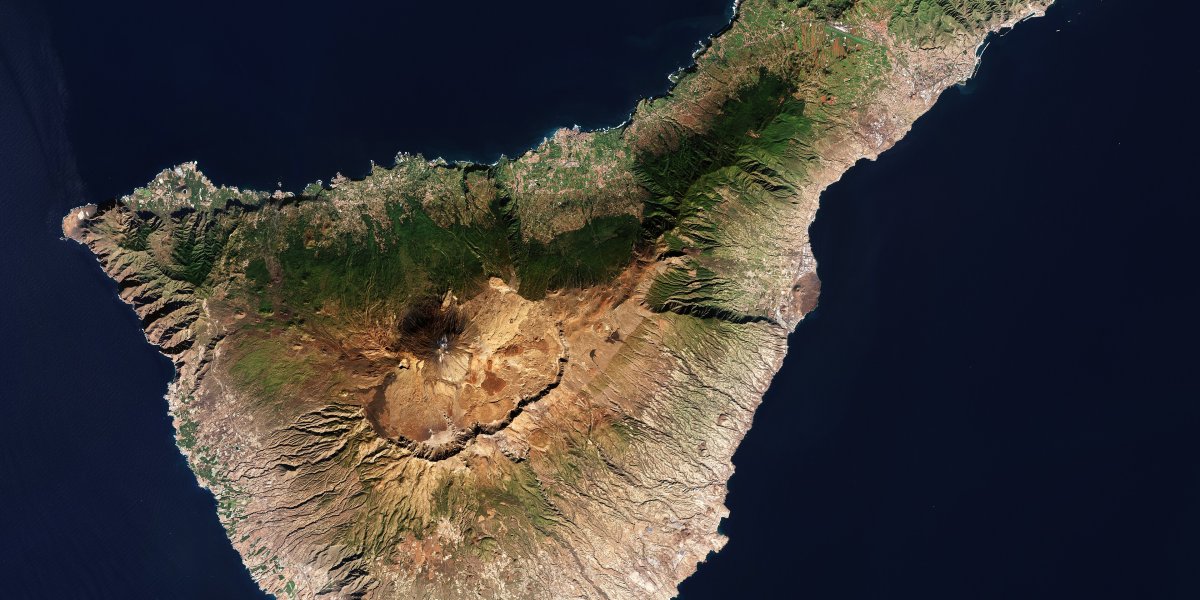
Tenerife
Spain · Best time to visit: All year.
Day-by-day plan
Choose your pace
Trip length
09:00
Landmark
Begin where the island makes its boldest statement: Santiago Calatrava's white concrete wave rearing up against the Atlantic, looking like it is about to break over the harbour. At 09:00 the cruise crowds have not arrived and the sun is still low behind your shoulder, lighting the shell from the southeast — the only hour the building photographs without harsh shadows on its concave inner surface. Walk a full loop around the base, then drop down onto the seaside promenade behind it for the postcard angle with the Atlantic as backdrop.
Tip: The viral shot is from the rocky pier on the south side, not the main plaza. Walk past the Castillo de San Juan Bautista (the small black-stone fortress next door), step onto the breakwater rocks, and shoot back toward the auditorium — the wave, the castle and the ocean line up in one frame.
Open in Google Maps →10:30
Landmark
From the Auditorio's south terrace, walk north along Avenida Marítima for about 20 minutes — you trace the working harbour with the cruise terminals on your right and palm-lined boulevards on your left, the kind of walk that tells you immediately you are on an Atlantic island, not the Spanish mainland. The plaza opens up around an enormous round saltwater lake (designed by Herzog & de Meuron) and the obelisk of the Monumento a los Caídos. Walk straight through into Plaza de la Candelaria, the older square, anchored by the marble Triunfo de la Candelaria — a Genoese sculpture from 1778 that survived the British attack Admiral Nelson lost his arm trying to win.
Tip: Walk into the BBVA bank on the west side of Plaza de la Candelaria — yes, the bank — and take the stairs to the rooftop terrace (free, weekday mornings only). It gives you the best free aerial view of the lake, the harbour and the Auditorio in one shot.
Open in Google Maps →12:00
Food
Cross Plaza de España southwest, follow Avenida Bravo Murillo for about 8 minutes, and you arrive at Santa Cruz's neo-colonial Moorish-style market — a working food hall, not a tourist showpiece. Skip the upper level (souvenirs) and go straight to the lower fish hall and the tasca stalls in the inner courtyard. This is your lunch: stand-up tapas hopping, not a sit-down meal. Order papas arrugadas con mojo rojo y verde (wrinkled potatoes with red and green Canarian sauces, around €4), a plate of carajacas (Tenerife's signature spiced liver tapa, around €6), and a glass of Listán Blanco wine from the island (around €2.50). Finish with a quesadilla herreña — a soft Canarian cheese pastry — at one of the bakery stalls.
Tip: The tasca with the longest line of office workers in suits, not the one with English-translated menus, is the right one — usually 'El Maleconero' or 'Bar el Pescador' in the central courtyard. Order at the bar standing up, pay at the end, and never sit down unless you want to be charged 30% more for table service.
Open in Google Maps →14:00
Religious
Walk east from the market down Calle de la Noria for 7 minutes — the pastel-painted balconies along this single block are the prettiest stretch of colonial Santa Cruz, a quiet preview of what awaits you in La Laguna. The church is the oldest in the city (16th century), with five naves and a Mudéjar wooden ceiling, but the real reason you came is the bell tower: climb the narrow stone spiral for the rooftop panorama over terracotta tiles, the harbour, the Auditorio's white wave to the south, and the silhouette of Mount Teide rising in the distance behind you when the haze lifts.
Tip: The tower entrance is inside the church on the left of the nave — many visitors miss it entirely. Climb just before 15:00 when the western light hits the harbour buildings and turns them gold; the angle for the 'Teide-behind-the-rooftops' shot is from the south-facing arch.
Open in Google Maps →16:00
Neighborhood
Walk 8 minutes south from the church to the Fundación tram stop and ride Tranvía Línea 1 up the hill — the 35-minute climb out of Santa Cruz with the ocean spreading wider behind you is part of the experience, not just transit. Get off at La Trinidad and walk straight into the UNESCO old town. Trace the original grid: down Calle San Agustín past the pastel-painted patrician houses with their carved Canarian-pine balconies, into Plaza del Adelantado (the colonial heart), past the Cathedral's neoclassical facade, and along Calle La Carrera — the original 1500s template later used to lay out cities across colonial Latin America. La Laguna at this hour smells of damp stone and orange blossom; bring a light layer, it is 500m higher and noticeably cooler than the coast.
Tip: Step into the courtyards. The university buildings on Calle San Agustín and Casa Lercaro both have hidden colonial patios with wooden galleries — push the heavy doors open during opening hours and walk in. This is how locals teach their grandchildren what 'Canarian colonial' actually means.
Open in Google Maps →20:00
Food
From Plaza del Adelantado, walk 10 minutes north up Calle Heraclio Sánchez to chef Jonay Hernández's intimate dining room — La Laguna's most serious kitchen, working entirely with Canarian product. This is your proper sit-down: the tasting menu (€48) reads like a love letter to the islands — Tenerife black pork pluma with mojo palmero, locally caught vieja fish with banana confit, goat cheese from the inland Anaga villages with palm honey. Pair with a glass of volcanic Listán Negro from the Tacoronte hills (€5). You leave understanding that 'Canarian food' is its own thing, not a footnote to Spanish cuisine.
Tip: Reserve at least three days ahead — the room seats around 24 and Friday/Saturday fills with islanders driving up from Santa Cruz. Final pitfall warning for La Laguna: avoid the Italian and 'tipico canario' places with photo menus and sidewalk barkers on Calle La Carrera and around the Cathedral — fixed-price tourist menus, frozen everything, double the real price. The real food scene is one block inland on Heraclio Sánchez, Tabares de Cala and Núñez de la Peña.
Open in Google Maps →Jump to day
08:30
Landmark
Catch the first cable car of the day from the 2356 m base station up to La Rambleta at 3555 m — a seven-minute ride that lifts you above the entire Atlantic horizon, with La Gomera, El Hierro and La Palma floating to the west. From La Rambleta, walk the 600 m level trail to Mirador de Pico Viejo for the most cinematic view in the Canaries: an 800 m-wide red lava crater opening straight at the ocean. Clouds typically rise around midday at 2000 m, so this early hour is the only reliable window for clean summit views.
Tip: Book BOTH the cable car ticket AND the free 'Permiso Pico del Teide' on volcanoteide.com at least four weeks ahead — without the permit you cannot walk the final 200 m to the actual summit, only La Rambleta. The 09:00 permit slot has zero queue.
Open in Google Maps →11:30
Park
Drive 8 minutes south down TF-21 from the cable car base — you cannot miss the parking, opposite the Parador. The signature 3.6 km loop wraps the most photographed rocks in Spain (Roque Cinchado used to feature on the 1000-peseta note) and turns its back wall into a 200 m vertical drop over the Llano de Ucanca plain. Hike it counter-clockwise: the back side opens up to a knockout panorama with Teide rising directly behind the spires.
Tip: Walk counter-clockwise — every coach tour goes clockwise from the Mirador de la Ruleta, so you pass them face-to-face instead of queuing behind them at the narrow rock corridor. The light hits Roque Cinchado from the front between 12:00–13:00.
Open in Google Maps →13:30
Food
Cross the road from the Roques car park — the Parador sits 200 m from the trail exit. This state-run mountain lodge is the only restaurant inside the national park, with floor-to-ceiling windows facing Teide and a kitchen that takes Canarian classics seriously. Order the conejo en salmorejo (Canarian marinated rabbit stew, 19 €) and papas arrugadas con mojo rojo (wrinkled potatoes with paprika sauce, 8 €), washed down with a glass of Listán Negro from Tacoronte.
Tip: Ask for a 'mesa con vistas al Teide' when you arrive — the south-facing windows have the volcano framed dead-centre. The lentejas de Vilaflor (12 €) come from the only legume crop in Spain grown above 1500 m and aren't on any other menu in the country.
Open in Google Maps →15:30
Landmark
Drive 5 minutes further south along TF-21 — the pull-off is on the right, signposted. This is the widest plateau of the entire caldera: a 2000 m prehistoric lakebed where the afternoon light at 15:30 throws long shadows across the petrified lava waves. Walk 5 minutes east of the parking to reach Los Azulejos, oxidised green-blue volcanic rocks that look hand-painted onto the cliff.
Tip: Don't stop at the road's edge like everyone else — the green-tinted Azulejos rocks are 400 m east on a flat dirt track, completely deserted in the afternoon. Bring water; there's zero shade up here.
Open in Google Maps →17:30
Landmark
Drive 25 minutes northwest along TF-38 toward Chío — a stunning road that crosses the lava rivers of the 1798 eruption. Samara is the postcard 'volcano-cone-with-Teide-behind' viewpoint, with three black lava cones rising from a Canarian pine forest. A level 1.5 km loop trail circles the crater itself; do it in 40 minutes for late-afternoon shadow play across the cinders.
Tip: Stay 15 minutes past sunset — Teide catches a pink alpenglow ('arrebol') reflected off the Atlantic that the sunset crowd misses by leaving early. From October to February the sun drops behind Teide; the rest of the year it sets over the pine ridge to the right.
Open in Google Maps →20:00
Food
Drive 50 minutes down TF-38 then TF-21 to the colonial town of La Orotava — descending 1700 m in elevation (chew gum for your ears). Mil Sabores is twelve tables on a cobbled lane behind the Casa de los Balcones, run by chef Juan Carlos for two decades and the cleanest Canarian-modern kitchen on the north side. Order the cherne en costra de plátano (wreckfish in plantain crust, 24 €) and the queso asado con miel de palma (grilled fresh cheese with palm honey from La Gomera, 9 €).
Tip: Reserve a day ahead via Instagram DM — they reply faster than the phone. PITFALL: do not stop at any roadside restaurant between Teide and La Orotava — the cluster around the TF-21 / TF-24 junction are 1990s tourist traps charging 18 € for frozen chicken and fries; they survive on coach lunches and serve nothing local.
Open in Google Maps →09:00
Food
Santa Cruz's main market lives inside a 1944 Moorish-revival arcade — fish on the ground floor, fruit and cheese around the central patio, coffee counters upstairs. This is where civil servants and fishmongers' wives both have breakfast, standing at the bar. Order a barraquito (layered espresso with Licor 43 and condensed milk, 2.50 €) and a bocadillo de jamón serrano with goat cheese (4.50 €) at any of the upstairs counter stalls.
Tip: Stand at the bar, never sit at the tables — tables double the price. The barraquito at Bar El Pesquero (ground floor, northwest corner of the fish hall) is the islands' template version with the perfect five layers visible through the glass.
Open in Google Maps →10:30
Landmark
Walk 12 minutes south along Avenida Marítima from the market — the white wave appears the moment you round the cruise terminal. Calatrava's 2003 concert hall cantilevers a 100 m crescent of white concrete over the Atlantic; the locals call it 'Tenerife's Sydney Opera.' Walk the perimeter clockwise to watch the form shift through six completely different silhouettes.
Tip: Stand at the seaward southeast corner around 11:00 — the arc lines up perfectly with Teide rising behind the city on a clear morning, the only spot where both icons fit one frame. The interior is closed on weekends, so the exterior IS the visit.
Open in Google Maps →12:30
Food
Walk 15 minutes north up Calle Castillo into the old town — the tasca is on Calle Clavel, a side lane behind the Iglesia de la Concepción. La Hierbita has been pouring Canarian wine since 1893 in a three-room townhouse, all dark wood and tiled floors, packed with regulars at the front bar. Order the croquetas de gofio escaldado (toasted-corn-flour croquettes, 9 €) and the carrillada de cochino negro al vino tinto (Iberian black-pig cheek in red wine, 16 €).
Tip: Arrive at 12:30 sharp or wait until 14:30 — between 13:30 and 14:15 every office on Calle Castillo crams in at once. The chalkboard 'sugerencias' are 30% cheaper than the printed menu and are the kitchen's actual daily catch.
Open in Google Maps →14:30
Religious
Walk 6 minutes from La Hierbita to Plaza Weyler and board Tram Line 1 to La Laguna (35 minutes, 1.55 € — Spain's only modern tram). UNESCO inscribed San Cristóbal de La Laguna in 1999 as Europe's first un-walled colonial town — the grid that Havana and Lima later copied. Start at the neoclassical Catedral (rebuilt 1913), then walk one block to the Iglesia de la Concepción (1502, the actual oldest church on the islands) and climb its 18 m wooden bell tower.
Tip: Pay the 2 € to climb the Concepción bell tower — most tourists skip it and miss the only aerial view of the UNESCO grid, with Anaga ridge as the backdrop. The cathedral itself is free but stripped bare inside; the bell tower is the real prize.
Open in Google Maps →16:30
Neighborhood
Walk 4 minutes north from the cathedral up Calle San Agustín — the colonial mansion stretch, closed to cars and lined with the original 17th-century Canarian pine balconies. Step into Casa Lercaro (now Museo de Historia, 5 €) for its perfectly preserved 1593 patio of dark tea-wood arcades and azulejos. Continue 200 m up to Casa Salazar, slip through the unmarked wooden door — the patio is free and almost always empty.
Tip: The wooden door of Casa de los Capitanes Generales on Calle Obispo Rey Redondo looks shut but isn't — push it. The courtyard inside is the purest Canarian pine-balcony patio in the whole town, free, and 95% of tourists walk straight past it thinking it's locked.
Open in Google Maps →19:30
Food
Walk 8 minutes south from Casa Lercaro across Plaza del Adelantado to Calle Buenaventura Bonnet. Silbo Gomero is named after the whistled language of La Gomera and serves the most ambitious modern-Canarian menu in La Laguna — 28 seats, an open kitchen, and a wine list weighted toward Valle de la Orotava reds. Order the carpaccio de pulpo con mojo verde (octopus carpaccio with green coriander sauce, 14 €) and the cochinillo confitado con miel de palma (suckling pig confit, 19 €).
Tip: Reserve at least three days ahead via TheFork — they keep zero walk-in tables and turn away tourists nightly. PITFALL: avoid the cluster of 'Canarian' restaurants on Calle Heraclio Sánchez near the tram terminus — they reel in arrivals with photo-menus and serve microwaved papas at double price; every kitchen worth eating in is on the pedestrian inner grid.
Open in Google Maps →Jump to day
09:00
Landmark
Begin at Plaza de España, where a shallow black-lava reflecting pool mirrors the white modernist tower above the old castle ruins. Walk eight minutes west down pedestrian Calle del Castillo and slip south to the 1944 neo-colonial Mercado de África — terracotta arches, hand-painted tile interiors, palm-shaded courtyards. Mornings are when the fishermen's wives still run the stalls; by noon the cruise crowds arrive and the energy turns commercial.
Tip: Climb the spiral stair inside the Mercado's central tower to the rooftop balcony — almost nobody finds it and the whole capital opens below you. Order a fresh mango juice (€3) from Frutas Hilda on the ground floor and grab a wedge of bienmesabe almond paste; both vanish by 13:00.
Open in Google Maps →11:00
Museum
Cross the Barranco de Santos footbridge — the volcanic ravine that splits the old town — straight into TEA's Herzog & de Meuron concrete monolith, two minutes from the Mercado. Triangular skylights drag the sun deep underground, and the Óscar Domínguez collection holds the world's largest set of works by Tenerife's own surrealist (André Breton called him the most important Spanish surrealist after Dalí). At 11:00 you have the galleries to yourself before the lunch crowd; the building itself is the point.
Tip: Closed Mondays. Enter from the south door (rear) — it bypasses the queue at the main entrance every time. The light tunnels on the upper landing are the most photographed corner of modern Tenerife; shoot from the second-floor balustrade looking down so the triangle aligns with the corridor's vanishing point.
Open in Google Maps →13:45
Food
Walk five minutes back across the ravine and up Calle del Clavel — pastel-fronted houses with carved tea-pine balconies. La Hierbita is a 1893 family-run tasca in a corner-yellow building where Santa Cruz lawyers bring their parents on Sundays. Order papas arrugadas con mojo rojo (€7, the salt-wrinkled potatoes the islands invented), carne fiesta (€11, pork chunks in cumin and white wine) and a glass of Listán Negro from the Tacoronte-Acentejo DO. Budget €22–28 per person; no reservation needed at 13:45, but by 14:30 there is a queue out the door.
Tip: Ask for the menú del día (€14) — three courses with wine, only chalked up in Spanish inside the back room. The included pan de calabaza (pumpkin bread) brought with the second course beats the bread basket they push first; refuse the basket and you save €3.
Open in Google Maps →15:45
Landmark
Walk fifteen minutes south down Avenida de Anaga along the harbor — past the inter-island ferry quays where ships head out to La Palma and La Gomera. The Auditorio's white concrete wave rises from the asphalt like breaking surf; Santiago Calatrava finished it in 2003 and it has been on every Spanish two-euro postcard since. Continue 200 m to Parque Marítimo César Manrique, three saltwater pools sculpted into volcanic rock by the Lanzarote artist before his death in 1992 — locals come here, not the tourist beaches.
Tip: The wave roofline only looks like a perfect cresting curl from one spot — the corner of Avenida Constitución and Avenida Marítima, looking northeast at 16:30 when raking sunlight catches the curve. Bring swimwear; Parque Marítimo charges €5, has heated pools open until 19:00, and is empty after 17:00 once the cruise ships sail.
Open in Google Maps →20:00
Food
Walk twenty minutes back along the seafront promenade or grab the free tram into the old town. Tasca El Callejón is a narrow stone-walled bar on a side alley off Calle Bethencourt Alfonso — eight tables, one chalkboard menu in Spanish only, owner Carmen running both kitchen and floor. She brings whatever came off the boat that afternoon: try chocos a la plancha (grilled cuttlefish, €13) and queso asado con miel de palma (grilled goat cheese with palm honey, €8). Reserve by phone for 20:00; by 21:00 it overflows into the alley.
Tip: Avoid the two near-identical tascas at the alley entrance — they share the El Callejón name visually but the seafood is frozen and prices double for tourists. The real one has the hand-painted wooden sign with chipped white paint and no English menu in the window. Don't sit at the front tables: swinging door draft. Ask Carmen for a corner spot in the back room.
Open in Google Maps →09:30
Landmark
Drive seventy minutes south-west from Santa Cruz on TF-24, climbing through Esperanza pine forest and over the caldera rim — when you crest the wall, Teide appears in one breath. The Roques de García is a row of jagged basalt towers rising from the lunar caldera floor, the iconic backdrop printed on the old Spanish thousand-peseta note. Walk the 3.5 km lower loop counter-clockwise past Roque Cinchado (the leaning rock) — start before 10:00 because at 11:00 four tour buses arrive and the trail clogs.
Tip: Park at the Parador lot, not the official Roques car park — same distance to the trailhead and almost always empty. Roque Cinchado frames Teide perfectly from the trail's lowest point through a natural arch in the rock; morning light comes from behind it, giving you a silhouette shot no afternoon visitor will get.
Open in Google Maps →11:30
Landmark
Drive six kilometers north to the cable car base at 2356 m. The Teleférico (€41 return) climbs 1200 m in eight minutes to La Rambleta at 3555 m, only 163 m below Spain's actual summit crater. From the upper platform three short trails fan out — Pico Viejo viewpoint (15 min west, looking onto Spain's second-highest volcano), La Fortaleza viewpoint (20 min north, the cliff that drops to La Palma and Gomera), and the crater itself (45 min, free permit required months in advance). Walk Pico Viejo at midday before La Palma disappears under afternoon cloud.
Tip: Book the 11:30 ascent online three weeks ahead — walk-up tickets exist only in low season. Drink water before going up, not after; altitude sickness hits 70% of visitors mildly. If clouds fill the caldera below (very common 11:00–13:00), don't worry — you will be standing above an ocean of cloud, which is the whole point of this volcano.
Open in Google Maps →14:30
Food
Walk three minutes back across the cable-car car park — the Parador stands alone at 2152 m, the only proper restaurant inside the national park. Floor-to-ceiling glass faces Teide's south face directly. Order puchero canario (€18, seven-vegetable, chickpea and beef stew that the chef simmers four hours) and conejo en salmorejo (€22, rabbit marinated in paprika and white wine — the Parador chain's national dish). Pair with a glass of Vijariego Blanco from the volcanic-soil vineyards just downhill.
Tip: Skip the buffet — the menú del día (€28) is the same kitchen but properly plated. After eating, walk out the rear terrace; the picnic boulders 100 m east give you Roque Cinchado from a different angle than the morning trail. The Parador is rarely full on weekdays; reservations only needed Friday to Sunday.
Open in Google Maps →16:30
Landmark
Drive fifty kilometers north down TF-21, descending from lunar plain through pine forest to a subtropical valley — your ears pop three times. La Orotava is the colonial-era sugar capital that almost nobody visits because everyone stops at Puerto de la Cruz next door, which is the gift. Park at the Liceo Taoro lot and walk down Calle Inocencio García Feo to Casa de los Balcones (€5), a 17th-century mansion whose hand-carved tea-pine balconies stretch the full façade — interior courtyard with banana trees, an embroidery workshop where women still stitch the Tenerife linen by hand. Late afternoon sun turns the pastel façades amber.
Tip: The famous Corpus Christi flower carpets (May/June) are laid on these very streets — Casa de los Balcones displays the volcanic-sand recipe year-round in the courtyard. Don't pay the €6 combined ticket to enter Casa del Turista across the street; it's a souvenir shop with one extra balcony you can photograph free from the alley behind it.
Open in Google Maps →20:00
Food
Walk four minutes downhill on Calle del Colegio — Casa Lercaro is a 16th-century merchant mansion converted into one of La Orotava's most loved restaurants, three stone courtyards under bougainvillea. The chef cooks traditional Canarian, not reinvented: order cabra guisada (slow-stewed goat, €16), almogrote gomero with bread (cured-cheese paste from La Gomera, €7) and a half-pitcher of house Tacoronte tinto. Total around €30 with wine; the lower courtyard is quieter than the front room.
Tip: Pitfall warning for the day: avoid the restaurants on Plaza de la Constitución even though the views are pretty — they cater to coach tours from Puerto de la Cruz and charge double for the same dishes. On the drive back to Santa Cruz take TF-5, not the GPS shortcut through TF-31 — that one is unlit switchbacks down a ravine and locals refuse to drive it at night.
Open in Google Maps →09:00
Religious
Begin at the church the city was founded around in 1497 — the second-oldest in the Canaries, with a Mudéjar coffered ceiling carved from Canary pine. The reason to come at 09:00 is the tower: climb the 64 stone steps to the open belfry and the entire UNESCO grid of La Laguna unfolds below — the original colonial layout that Havana, Lima and San Juan all copied. Anaga's mountains frame the north. Mountain light is sharpest before 10:00, before the trade-wind haze rises.
Tip: The tower ticket (€2) is sold separately at the side desk inside the nave, not the main entrance — most visitors miss it entirely. Wednesday mornings the bells ring the 10:00 hour; descend by 09:55 or you will be deafened. The stone stair is narrow with no handrail — not for vertigo sufferers.
Open in Google Maps →10:30
Landmark
Exit the church south down Calle Obispo Rey Redondo — the colonial 'royal road' that runs the spine of the old town. Five minutes through pastel seignorial façades brings you to Plaza del Adelantado, the original 1497 town square; the Convento de Santa Catalina on the south side has a wooden mirador where cloistered nuns once watched processions through latticework, and the granite Baroque ayuntamiento on the west dates from 1547. Walk back along Calle Carrera to Casa Salazar — the most ornate stone portal in the Canaries.
Tip: Push the wooden door of Santa Catalina if it's unlocked (free, irregular hours, usually 10:30–12:30) — the cloister is the city's secret. Look up at every façade as you walk: each carved balcony is unique, and the architectural vocabulary you are seeing was exported to every Spanish-American colonial capital. Calle San Agustín is the most film-perfect lane — used as a Havana stand-in in three Spanish period dramas.
Open in Google Maps →12:00
Museum
Two minutes west on Calle San Agustín — Casa Lercaro is a 1593 Genoese merchant house arranged around a double courtyard with a stone well. The museum traces 500 years of Canarian life: sugar-plantation tools, the Mencey kingdoms before the Spanish conquest, embroidery from a dozen villages, the wooden balconies that built the city. The basement displays real Guanche mummies and skulls — the conquest-era population were a Berber-related people whose dental DNA still shows up in modern Canarians.
Tip: Closed Mondays. The Lercaro daughter ghost story — she threw herself down the courtyard well in 1607 rather than marry her father's choice — is confirmed on the placard, not invented for tourists. The combined ticket with Museo de la Naturaleza (Santa Cruz) costs €5 and stays valid 48 hours; use it tomorrow if you're staying longer.
Open in Google Maps →13:45
Food
Walk three minutes east to Calle Bencomo. Tasca La Tata is a wood-beamed corner tasca that fills with University of La Laguna lecturers at 14:00 — the academics from the oldest university in the Canaries keep this place alive. Order croquetas de cocido (€6 for six, made from leftover Sunday stew the old-Spanish way), carne fiesta (€10, pork in cumin marinade) and queso ahumado de Arico with palm honey (€7). A half-bottle of Listán Blanco runs €11; total around €22. Walk in at 13:45 — by 14:15 there is a line. Closed Sundays.
Tip: The chalkboard 'recomendaciones' change daily — ask Pedro behind the bar what came in fresh, never order from the printed menu. Croquettes come six per plate; ask 'a la mitad' for three cocido + three pescado. Don't order the paella — they know it isn't their dish and will steer you off it if you insist on the truth.
Open in Google Maps →19:30
Food
After an unstructured afternoon strolling Calle Heraclio Sánchez and the Cathedral exterior, walk fifteen minutes north up Avenida Trinidad — pavement narrows, residential lanes, hand-lettered shopfronts. La Hoya del Camello is the older generation's favorite La Laguna address, a tile-floored dining room where mountain families bring grandparents for Sunday lunch. Order conejo al salmorejo (rabbit in paprika and white wine, €17), carajacas (sautéed liver with mojo, €11) and a jar of the house Tacoronte tinto. Total around €28; reserve for 19:30 — by 20:30 every table is taken.
Tip: Farewell pitfall warning: the 'guachinche' label has been hijacked across south Tenerife by tourist restaurants charging €40 for the same food. A real one has cardboard signs hand-written in Spanish, accepts cash or a single card terminal, serves house wine in glass jars not branded bottles, and changes its dishes weekly — La Hoya del Camello and Tasca La Tata both qualify; most places south of Adeje don't. Also: after midnight, never take a taxi from the rank outside the Cathedral without confirming the airport fixed rate (€6 within La Laguna) — drivers will sometimes claim 'el contador está roto' and charge €15.
Open in Google Maps →
Trip builder
Plan this trip around Tenerife
Turn this guide into a bookable rail itinerary with FlipEarth.
Keep exploring
Related cities
More in the same country




FAQ
Frequently asked questions
How many days do you need in Tenerife?
Most travelers enjoy Tenerife in 1 days, with enough time for headline sights and a slower meal or museum stop.
What's the best time to visit Tenerife?
The easiest season for most travelers is All year, especially if you want good weather and manageable crowds.
What's the daily budget for Tenerife?
A practical starting point is about €100 per person per day before hotels, then adjust based on museums, dining, and transport.
What are the must-see attractions in Tenerife?
A good first shortlist for Tenerife includes Auditorio de Tenerife Adán Martín, Plaza de España & Plaza de la Candelaria.