City Guide
Avila
Spain · Best time to visit: Apr-Oct.
Day-by-day plan
Choose your pace
Trip length
10:00
Landmark
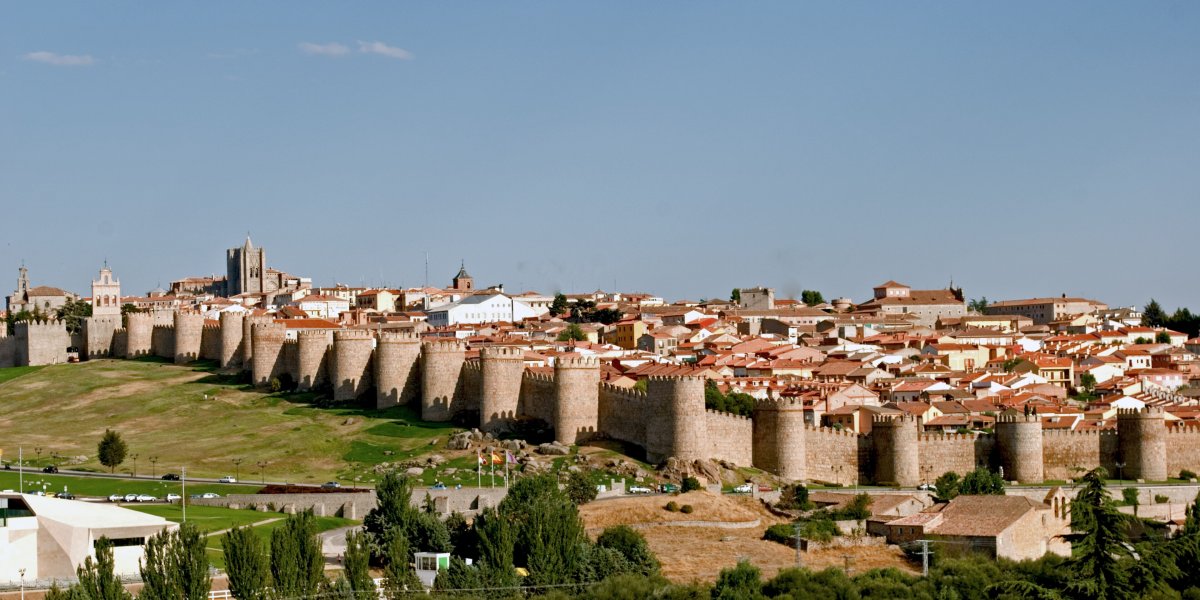
From Avila-Adolfo Suarez train station it is a flat 10-minute walk west along Avenida de Jose Antonio — the moment you crest Plaza de Santa Teresa the walls explode into view, a 2.5 km granite necklace with 88 watchtowers that has not moved since 1090. Buy your ticket at the Casa de las Carnicerias booth and climb up at Puerta del Alcazar; the wall-walk circuit takes you above rooftops, beside the cathedral's fortress-apse, and across nine medieval gates. The walls open at 10:00 sharp — be the first up so you have the high ramparts to yourself for forty minutes before the Madrid coach tours land at 11:30.
Tip: Walk the circuit counter-clockwise. The northern stretch between Puerta del Carmen and Puerta del Mariscal has the tallest watchtowers and looks straight down onto the cathedral's apse — every photographer's shot. Skip the new south-side elevator and earn the climb at Puerta del Alcazar; it sets the rhythm for the day.
Open in Google Maps →12:15
Religious
Descend the wall at Puerta del Peso de la Harina and walk 4 minutes south along Calle Cardenal Pla y Deniel — you round the corner and the cubo appears: a colossal granite apse that is literally a watchtower of the city wall. This is Spain's first Gothic cathedral (begun 1170), and the only one in Europe built into a fortification. Circle the exterior to see the red-flecked 'piedra sangrante' (bleeding stone) that gives the walls their living color, then enter the silent Plaza de la Catedral from the west for the classic façade view. Midday sun rakes the west front head-on — go now, not later, before shadow swallows the carved portal.
Tip: Walk the cubo from the OUTSIDE of the wall (Calle San Segundo side) — most visitors never do this and miss the most extraordinary view: a Gothic cathedral apse you could mistake for a castle keep. The single best photo is from the corner of Calle Tomas Luis de Victoria with the watchtower silhouetted above the chevet.
Open in Google Maps →13:15
Food
Three minutes from the cathedral, on Calle San Segundo right under the wall, sits Avila's most loved wine bar — a 14th-century stone vault hung with hundreds of bottles and run by Ismael, a former national sommelier of Spain. This is the local quick-lunch: stand at the bar, order two pinchos (try the morcilla de Avila on toast, €3.50, and the queso curado de Avila with quince, €4.50), and a glass of Ribera del Duero for €3.50. Spaniards eat tapas standing — sitting at one of the four tables adds 30% and forfeits the theater of watching Ismael pour. Total damage, including a tinto and a yema for dessert: about €15.
Tip: Arrive before 13:30 and you walk straight to the bar; after that, a queue forms along the wall and you wait twenty minutes. Ask for 'lo que esté abierto hoy' — Ismael will pour you a half-glass of whatever bottle is open. Closed Wednesdays — if it's Wednesday, walk five doors down to Hosteria Las Cancelas for the same Castilian tapas.
Open in Google Maps →14:45
Religious
Five minutes north of the wine bar — exit through Puerta de San Vicente and the basilica rises directly outside the gate, pinkish granite against the green slope. This is Spain's finest Romanesque church outside Galicia, finished around 1190, and its western portico is a sculptural masterpiece on the scale of Santiago's Portico de la Gloria — and almost no one knows about it. Afternoon sun (around 15:00) hits the west portal head-on, lighting the carved tympanum where the Apostles process in stone. Walk a slow loop around the building: the south porch has 12th-century carvings of vines and mythological beasts that you can study from inches away.
Tip: Stand at the small grass triangle 30 meters west of the portico for the photo — the basilica is framed by the city wall behind, with Puerta de San Vicente flanking it. Forget the €2.50 interior; the magic here is outdoors. Skip the cenotaph tour unless you read Spanish.
Open in Google Maps →16:00
Landmark
From the basilica, walk west down Calle Lopez Nunez to the Adaja river (12 minutes), cross the medieval Puente Romano, and climb the gentle road to a small hilltop crowned with four granite pillars and a stone cross — Los Cuatro Postes, the postcard view of Avila. Halfway across the bridge, stop: the river-level shot, with the entire walled city framed by reeds, is the photograph people travel here for. From the hilltop the city sits two kilometers away across the valley, the full 2.5 km of walls in one frame. Late afternoon sun strikes the eastern ramparts head-on and the whole citadel glows molten gold; stay through dusk and the wall floodlights snap on 30 minutes before official sunset for the regret-if-missed moment.
Tip: Frame your shot WITH one of the four pillars in the foreground — without it, the photo looks like a generic long-lens telephoto anyone could take from a coach window. Sit on the low stone bench on the southwest side of the cross and wait for the wall lights to come on; the moment they do (you'll hear a faint click) the citadel transforms. Legend says the seven-year-old Teresa was caught here trying to run away to be martyred by the Moors.
Open in Google Maps →19:00
Food
From Los Cuatro Postes, walk 10 minutes back down toward the Adaja and re-cross the Puente Romano — on the river's east bank, beside the mill race, stands a 15th-century stone watermill that has been Avila's most celebrated restaurant since 1949. The terrace looks straight across the river at the floodlit walls reflected in the millpond. Order the chuletón de Avila (€34, the bone-in T-bone of Castile's prized black cattle — easily shared between two), the judias del Barco (€13, the fat white beans that locals say justify the trip alone), and yemas de Santa Teresa for dessert. Budget €40–55 per person with wine; reserve at least a day ahead for a terrace table.
Tip: Specify 'mesa con vistas a la muralla' when reserving — the difference between river-view and the back room is the difference between dinner and an experience. One chuletón feeds two; do not order one each. Pitfall warning for the walled town itself: AVOID the menu-del-dia restaurants along Calle Vallespin and around Plaza del Mercado Chico — they sell frozen 'judias' from a tin and three-course tourist menus for €18 that locals never touch. The real Castilian kitchens are El Molino de la Losa, Hosteria Las Cancelas, and El Almacen — full stop.
Open in Google Maps →
Trip builder
Plan this trip around Avila
Turn this guide into a bookable rail itinerary with FlipEarth.
Keep exploring
Related cities
More in the same country
FAQ
Frequently asked questions
How many days do you need in Avila?
Most travelers enjoy Avila in 1 days, with enough time for headline sights and a slower meal or museum stop.
What's the best time to visit Avila?
The easiest season for most travelers is Apr-Oct, especially if you want good weather and manageable crowds.
What's the daily budget for Avila?
A practical starting point is about €80 per person per day before hotels, then adjust based on museums, dining, and transport.
What are the must-see attractions in Avila?
A good first shortlist for Avila includes Murallas de Avila (City Walls), Los Cuatro Postes.