City Guide
Tarragona
Spain · Best time to visit: May-Sep.
Day-by-day plan
Choose your pace
Trip length
09:00
Landmark
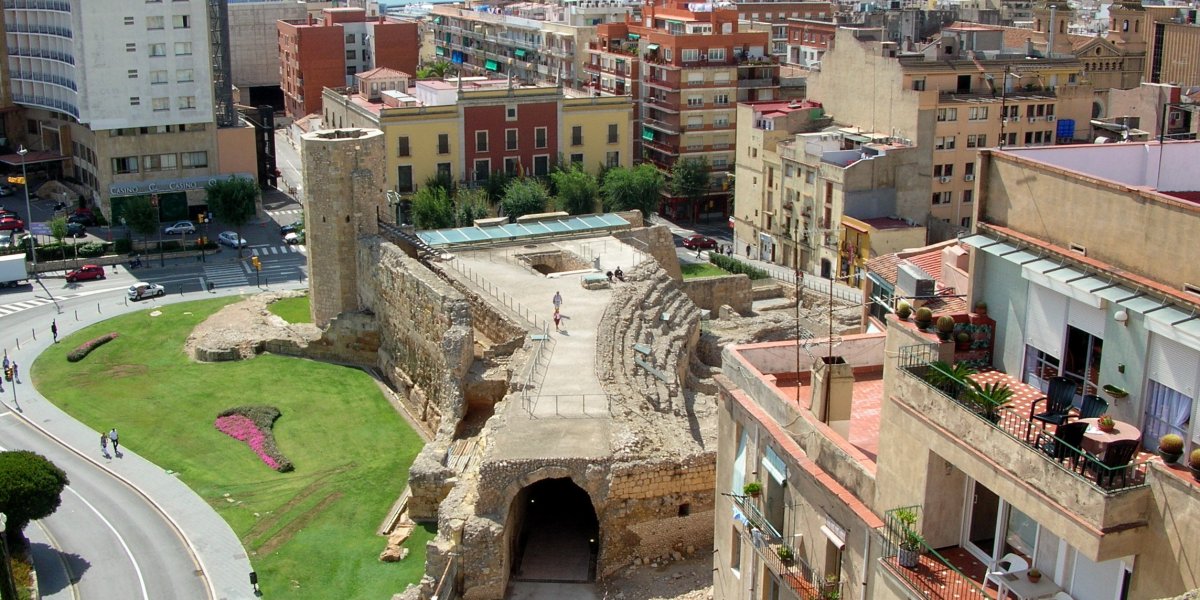
From Tarragona's train station, walk eight minutes up Carrer Vidal y Barraquer until the Mediterranean suddenly opens out below you — the amphitheatre's stone oval is cut straight into the cliff with the sea as its two-thousand-year-old backdrop. Be at the gate the moment it opens: the eastern sun rakes across the tiered seating in gold while the surf hisses below, and the arena floor is yours before the day's cruise crowd climbs up from the port. Walk down through the gladiators' tunnel, then back up to the Mirador for the single shot of stone-against-sea that defines this city.
Tip: Buy the Bitllet Conjunt (12 EUR) here at the first entrance — it covers the Amphitheatre, Roman Circus, Praetorium, Local Forum and Passeig Arqueològic, and lets you skip every later ticket queue. The most photogenic angle is actually free: from the Mirador de l'Amfiteatre on Passeig de les Palmeres just above the site, you frame the whole oval against open water with no entry needed. Avoid 10:30 onward — that's when the Costa Daurada cruise tours descend.
Open in Google Maps →10:30
Landmark
Exit the amphitheatre's upper gate and walk five minutes up Passeig de les Palmeres — palms on your right, sea cliff on your left — until the city opens out at the Balco del Mediterrani, the cast-iron railing where every Tarragoni 'touches the iron' for luck, a habit since 1889. Continue three minutes inland past Plaça de la Font's terrace umbrellas and duck into the Roman Circus — the buried chariot-racing track that still runs under the entire Part Alta. Climb the free rooftop of the Pretori tower for a single 360-degree frame of everything: amphitheatre to sea, cathedral to mountains, the whole Roman provincial capital in one turn.
Tip: The Pretori rooftop is Tarragona's best free panorama — better than the cathedral bell tower and with zero queue. Aim for 11:15-11:45 when the high sun lights both the sea side and the medieval rooftops at the same moment, giving you one photograph of both Romes (imperial below, medieval above). Five minutes is plenty in the underground vaults of the Circus — they're dark, repetitive and claustrophobic; save your legs for above ground.
Open in Google Maps →12:45
Food
Walk three minutes north along Carrer Major into the cool stone alleys of Part Alta — laundry on lines, geraniums in windows, the smell of olive oil hitting hot pans — until you reach Carrer Natzaret and El Llagut's wooden door. This is the working Tarragoni's lunch room: vaulted brick ceilings, the day's menu chalked on a slate, no English unless you ask. Order arros negre (squid-ink rice with sepia, 14 EUR à la carte) — the local version, lighter and more sea-tasting than the Valencian original — and start with esqueixada, the cold salt-cod salad with tomato and black olives (9 EUR).
Tip: Ask for 'el menú' the moment you sit down to lock in the 22 EUR set lunch (three courses, bread, water, glass of wine) — they stop serving it at 15:00 sharp, after which the à la carte side is nearly double. Sit at the bar if you want to be out in forty minutes; take a table only if you have a full hour. The pa amb tomàquet is the soul of the meal — ask for 'tomate y pan' and do the rubbing yourself, that's the Catalan way.
Open in Google Maps →14:30
Religious
From the restaurant, walk two minutes uphill through Carrer Major's last narrow stretch until the stone alley opens suddenly onto Plaça de les Cols — and the cathedral's enormous unfinished façade rises above you, the rose window glowing pink-gold in the early-afternoon light the medieval masons designed for. This is where the Roman Empire became Catalonia: the cathedral sits directly on the foundations of the Temple of Augustus, and the lower stone courses you can still touch on the south wall are Roman. Climb the wide stone staircase slowly — halfway up you'll see why an unfinished façade, frozen forever mid-Romanesque turning Gothic, is its own kind of perfect.
Tip: The cloister is the secret you actually came for — included in the 11 EUR ticket and missed by half of visitors. Find the 13th-century capital showing cats burying a rat with full funeral solemnity (south gallery, fourth column from the corner): medieval cartoon humor, world-class stone work. Skip the bell tower up-sell — you already took the better panorama from the Pretori rooftop, and the climb eats forty minutes you don't have.
Open in Google Maps →16:30
Landmark
Walk three minutes north from the cathedral through the narrow Costa del Bisbe alley, exit the medieval city through the Portal del Roser, and step suddenly into the Passeig Arqueologic — a grass-lined corridor running between the 3rd-century-BC Roman wall on your right (the oldest Roman construction outside Italy) and the 18th-century Bourbon rampart on your left. The late-afternoon sun is now low and west; the cyclopean stones turn honey-gold, your shadow leads you forward, and the whole one-kilometre loop ends at the Falsa Braga bastion looking out toward the Serra de la Mussara. This is the hour the wall was built to be seen.
Tip: At the base of the Minerva tower, find the three enormous Iberian boulders the Romans built on top of — they predate the empire, and you can press your palm against something older than Rome itself. Walk the loop counterclockwise (in at Portal del Roser, out at Portal de Sant Antoni) so the setting sun stays at your back instead of your lens. Ignore the cannon emplacements halfway through — 18th-century military filler, not why you came.
Open in Google Maps →19:30
Food
Walk five minutes back south through Part Alta's lamp-lit alleys — the medieval city in early evening is half the experience — to Carrer Coques, where AQ hides behind a discreet glass door tucked under the cathedral's east flank. Chef Quintín Quinsac runs a thirty-seat room of warm wood, white linen and unhurried service: the most precise modern Catalan cooking in the city. Order the steak tartare with smoked oil and crisp bread (22 EUR) and the slow-cooked Iberian pork cheek with romesco (24 EUR) — romesco being the almond-and-roasted-pepper sauce Tarragona invented, and you genuinely cannot eat this version of it anywhere else on earth.
Tip: Reserve at least 48 hours ahead at aqtarragona.com — there is no walk-in option, ever, and the 19:30 first seating runs calmer than the 21:30 turnover when locals arrive. The 52 EUR tasting menu is the smart play if you arrived hungry. Final Part Alta warning: avoid every prix-fixe 'menú turístico' board around Plaça del Rei, Plaça del Forum and along Carrer Major — the paella is reheated, the wine is bulk, the calçots are frozen, and you'll pay 35 EUR for what costs 12 EUR at any neighborhood spot three streets over. Tarragona's real food is always on the side streets, never on the squares.
Open in Google Maps →Jump to day
09:00
Landmark
Begin your day where Tarraco met the sea — the second-century amphitheater carved into the cliff, with the Mediterranean as its backdrop. Arrive at opening: the eastern morning sun rakes across the arena floor and lights the surviving stone seating, while the cruise-ship day-trippers haven't yet rolled in. The Visigothic basilica ruins inside mark where Christian martyrs were burned alive in AD 259 — Tarragona's ghosts are layered, not erased.
Tip: Buy the Tarraco Romà combined ticket (€15) at the entrance — it covers four Roman sites including this one, and the line moves faster than the audio-guide queue. The surviving stone seating is on the north side; sit there so the morning sun is at your back and the sea is in your frame.
Open in Google Maps →10:30
Religious
From the amphitheater, climb back up Baixada del Toro and follow Carrer dels Cavallers — eight minutes of medieval lanes ending in the cathedral's wide-open Pla de la Seu square. The cathedral sits directly on the foundations of the Temple of Augustus: a single original stone slab is still visible inside the apse. Don't miss the cloister capital known as the 'procession of the rats' — a fourteenth-century carving of rats carrying a dead cat to its grave, until the cat suddenly comes back to life.
Tip: Entry €11 inclusive of the cloister and Diocesan Museum. At 11:30 the cloister catches sunlight at a perfect 45° on the orange trees — the best photo of the trip. The rat-funeral capital is the third one on the left as you enter the cloister from inside the church.
Open in Google Maps →13:00
Food
From the cathedral, descend Carrer Major and turn into Plaça del Fòrum — three minutes downhill through what was once the entryway of the provincial forum. Bocum's outdoor tables ring a square where Romans once tried legal cases; today it's the lunch canteen for everyone who works in the old town. Order the xató (€9) — the salt-cod-and-tuna salad with romesco that Catalans argue about town by town — and the carpaccio de bacallà (€11), with a copa of local Conca de Barberà white.
Tip: Arrive by 13:00 sharp — locals start filling the square at 13:30 and you'll wait 25 minutes after that. Sit on the awning side of the square, not the sun side, to keep the romesco from sweating. The weekday menu del día (€16.50) beats à la carte for value.
Open in Google Maps →15:00
Landmark
Cross Plaça del Fòrum diagonally and follow Carrer de la Civaderia — five minutes through the medieval Jewish quarter. The Praetorium tower was, by legend, Pontius Pilate's birthplace (it wasn't, but the story stuck for 1,500 years); climb to its rooftop terrace for the city's most economical panorama — cathedral, sea, and the buried Roman circus stretched out below in a single sweep. The circus vaults underneath are pitch-dark and acoustic: clap once and a second-century echo answers.
Tip: Use the same Tarraco Romà ticket from the morning. The rooftop terrace closes 30 minutes before the building itself, so head up first and work downward. In the dark circus vaults, switch your phone to night mode — the second-century chariot ruts in the floor stones come up beautifully.
Open in Google Maps →17:00
Landmark
From the Praetorium, walk north along Carrer dels Cavallers and exit the old town through the Portal del Roser — five minutes uphill. The Passeig Arqueològic runs along the third-century-BC Roman walls — the oldest Roman walls outside Italy — set against rosebushes and Iberian fig trees, with megalithic boulders at the base from the city that stood here before Rome arrived. End at the Balcó del Mediterrani, the wrought-iron railing where Catalans 'toquen ferro' (touch iron for luck) — sunset hits the railing head-on around 19:30 in summer.
Tip: Start at the Portal del Roser end and walk clockwise toward the sea — the golden-hour light follows you and the wall photographs from inside out. The Balcó's signature 'amphitheater-from-above' shot is from the right-hand corner of the railing, not the centre — most visitors miss it by ten metres.
Open in Google Maps →20:00
Food
Descend from the Balcó along the Rambla Vella for three minutes, then cut into the lanes behind it — El Llagut hides on Carrer Natzaret in two tiny rooms with maybe eight tables each. The arròs a banda (€21) is what every Tarragoní orders for a special dinner: bomba rice cooked entirely in fish broth, served separate from the seafood that gave it its flavor. The squid-ink fideuà (€19) is the only other dish anyone here orders.
Tip: Reserve at least 48 hours ahead by phone — no walk-ins after 20:30 in season. Tell them you want arròs the moment you sit so they start the rice (25 minutes from order). Avoid the touristy seafood places along Rambla Nova one block north — same dish names, double the price, frozen squid; the giveaway is the photo menu propped on the pavement.
Open in Google Maps →09:00
Landmark
Start at Plaça Imperial Tarraco and take the L5 city bus — fifteen minutes north to the Pont del Diable stop, where a pine forest hides the aqueduct until you turn the final corner and find it suddenly there. Built under Augustus, the 217-meter, two-tier limestone bridge carried water from the Francolí for four centuries. You can walk the upper channel itself — narrow, no railing, no entry fee — and at 09:30 you'll have it to yourself before the school groups arrive.
Tip: Bus L5 leaves Plaça Imperial Tarraco every 20 minutes, €2.30 each way — pay in coins, the driver rarely breaks a €20. The postcard shot is from the lower span looking up; walk the upper channel after, on the return, when the wind has died down and your legs are warmed up.
Open in Google Maps →11:30
Landmark
Bus L5 returns you to Plaça Imperial Tarraco — walk south down Carrer de Lleida for seven minutes into the old town. The Colonial Forum was the heart of civic life for the Roman residents (the larger Provincial Forum was reserved for governors), and today it's a half-sunken square of column stumps with an Iron Age basilica ghosting through one corner. Smaller than the amphitheater but more intimate: you can sit on a 2,100-year-old curbstone and read the inscription on a statue pedestal whose statue vanished centuries ago.
Tip: Free entry on Tuesday afternoons; otherwise it's covered by the Tarraco Romà combined ticket. The site is fully open-air with no shade — be in and out before noon in summer. The basilica column at the southeast corner is the only original; the others are reconstructions, the difference visible in the colour of the limestone.
Open in Google Maps →13:00
Food
From the Forum, walk five minutes uphill into the old town along Carrer Major to Carrer Cós del Bou — Soroll's two outdoor tables are claimed first, but the marble counter inside is the better seat. Their xató (€9) — salt-cured cod and tuna with romesco — is Tarragona's answer to the salad question, and the patates braves (€7) here are widely reckoned to be the best in the province. Order a clara (beer with lemon) at the bar to drink while you wait.
Tip: No reservations at lunch, but the kitchen turns tables fast — go between 13:00 and 13:30 and you'll seat in under ten minutes. The marble counter inside is the better seat: you see the cooks build the dishes and don't have to flag a server. Don't confuse this place with the four-language tourist-menu spot on the cathedral square — different restaurant entirely.
Open in Google Maps →15:00
Landmark
From Soroll, cross Plaça del Rei and descend along Avinguda de Ramón y Cajal — fifteen minutes westward through a working neighborhood you'd otherwise never see. The Early Christian Necropolis is one of the largest in the Roman world: more than 2,000 graves layered over four centuries, with painted sarcophagi recovered intact and an open-air burial field stretching the length of the site. Early-afternoon light is flat and the cypress shadows are long — this place is meant to be felt, not photographed.
Tip: Free entry. The 'Lleó sarcophagus' inside the small museum is the showpiece — ask the guard to point it out, it's tucked behind the reception desk and unmarked. There's no café within 500m, so carry water; the open-air burial field is full sun all afternoon.
Open in Google Maps →17:00
Neighborhood
From the Necropolis, walk south down Passeig de la Independència to the port — fifteen minutes downhill into the fishermen's quarter, the only part of Tarragona that still smells of the sea. El Serrallo is brightly painted houses, nets drying on the seawall, with the fishing fleet returning to auction at the lonja around 17:00 — the daily fish auction is open to spectators from the gallery. Walk east along the harbor path to Platja del Miracle, the city beach tucked under the amphitheater cliff, and catch the late sun on the sand with the Roman walls glowing above you.
Tip: The fish auction (subasta de pescado) at Pòsit dels Pescadors starts the moment the boats land — typically 17:00 in summer, 16:00 in winter. Watch from the gallery; no photos of bidders' faces. The eastern corner of Platja del Miracle directly under the amphitheater is the calmer end — finer sand, fewer pebbles, smaller waves.
Open in Google Maps →20:00
Food
Walk back west along Carrer Trafalgar — three minutes through the Serrallo, the houses gradually shifting from sky-blue to ochre. Pòsit del Serrallo is owned by the Tarragona fishermen's guild itself: whatever was landed at the 17:00 auction is on the plate by 20:00. The arrosejat (€24) — fideuà-style noodles cooked in concentrated fish broth and finished with the day's catch — is the dish, and the gambes de Tarragona are €28 for four magnificent reds.
Tip: Reserve the day before by phone for a window table — the dining room overlooks the docked fleet. Skip the 'paella for two with sangria' deals chalked on the marina boards north of the Serrallo on Moll de Costa — those are for cruise day-trippers and bear no relation to what's on the plate inside Pòsit.
Open in Google Maps →
Trip builder
Plan this trip around Tarragona
Turn this guide into a bookable rail itinerary with FlipEarth.
Keep exploring
Related cities
More in the same country
FAQ
Frequently asked questions
How many days do you need in Tarragona?
Most travelers enjoy Tarragona in 1 days, with enough time for headline sights and a slower meal or museum stop.
What's the best time to visit Tarragona?
The easiest season for most travelers is May-Sep, especially if you want good weather and manageable crowds.
What's the daily budget for Tarragona?
A practical starting point is about €110 per person per day before hotels, then adjust based on museums, dining, and transport.
What are the must-see attractions in Tarragona?
A good first shortlist for Tarragona includes Roman Amphitheatre of Tarragona, Balco del Mediterrani and Roman Circus, Passeig Arqueologic.