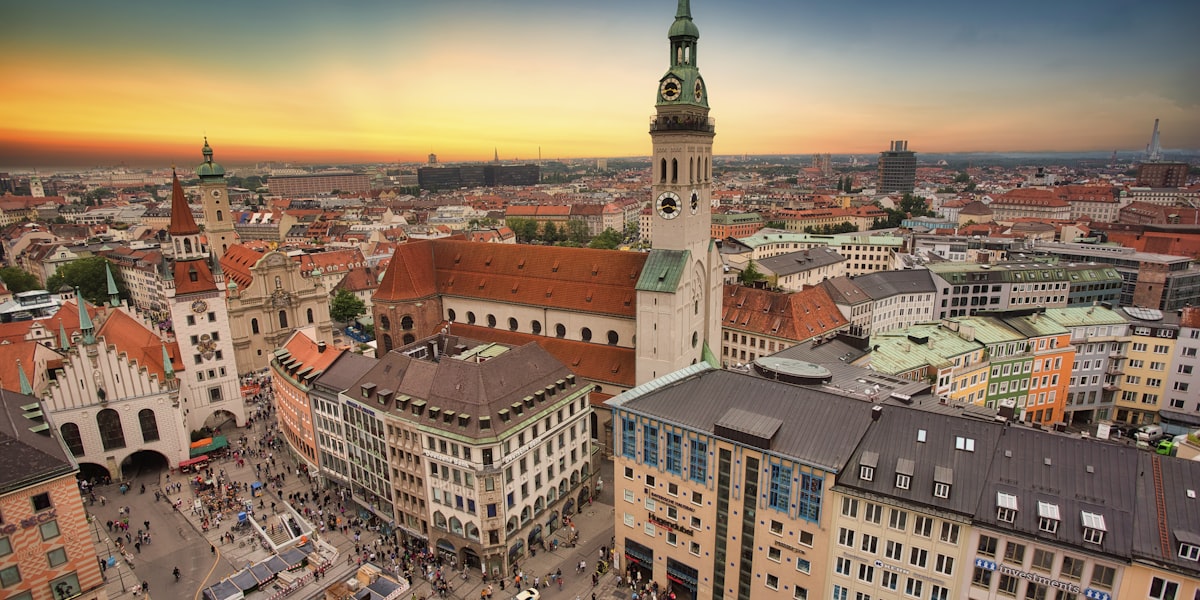
City Guide
Munich
Germany · Best time to visit: May-Sep.
Day-by-day plan
Choose your pace
Trip length
09:00
Landmark
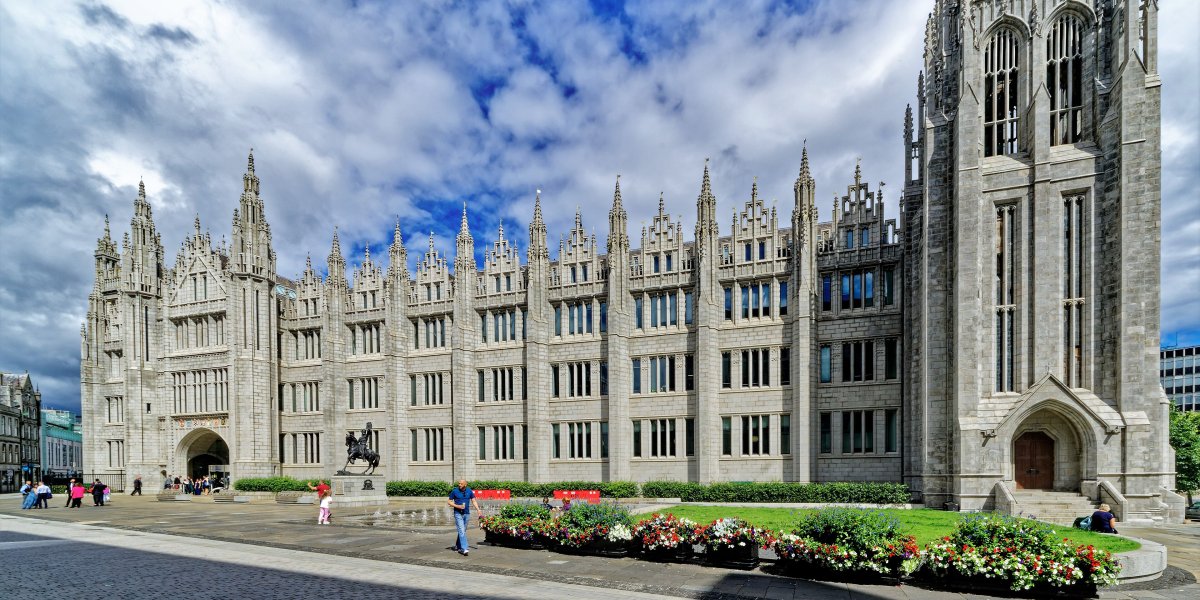
Begin at the still-quiet heart of Munich. At nine o'clock, morning light from the east rakes across the neo-Gothic facade of the Neues Rathaus, carving every gargoyle and turret into sharp relief — and you will have the square almost entirely to yourself. Walk the full 100-meter length of the facade, then step back to the golden Mariensäule column at the center of the square for the defining composition: the Virgin Mary statue in the foreground, the soaring Rathaus behind, blue Bavarian sky above. This is the image that will make people ask where you went.
Tip: Stand at the southeast corner of the square for the widest-angle shot of the full Rathaus facade. The Glockenspiel plays at 11:00 and 12:00, but from street level it is disappointingly small and nearly impossible to photograph well — take your pictures now in the golden morning light and walk on without regret.
Open in Google Maps →10:15
Religious
Exit Marienplatz westward onto Kaufingerstraße, Munich's main pedestrian artery — within three minutes, the massive red-brick towers of the Frauenkirche rise above the rooftops like two clenched fists topped with copper onion domes. These twin towers are the defining symbol of Munich's skyline; by Bavarian law, no building in the city center may be built taller. Walk the full perimeter of the church to feel the sheer scale of the late-Gothic brickwork, which is surprisingly austere and powerful compared to the ornate Rathaus you just left. The contrast between the unadorned brick walls and the playful green-copper domes on top is what makes this building unforgettable.
Tip: The best photo angle is from Weinstraße to the northeast — you can frame both towers with the narrow medieval lane in the foreground. Peek through the main entrance to spot the famous Devil's Footprint on the vestibule floor: legend says the devil stood on this mark and, seeing no windows from that angle, stomped in triumph — not realizing the columns hid every single one.
Open in Google Maps →11:15
Food
Walk southeast from the Frauenkirche through Rindermarkt — in five minutes you will emerge at the northwest corner of Munich's legendary open-air food market, running without interruption since 1807. This is not a tourist market; it is where Munich's chefs come to shop and where locals eat standing at butcher stalls. Head for any butcher counter and order a Leberkäs-Semmel — a thick slab of warm Bavarian meatloaf in a crispy Kaiser roll (€4.50) — the quintessential Munich working-class lunch, eaten with your hands. Or sit at the market's own beer garden and order a Schweinshaxe plate: half a roasted pork knuckle with crackling skin, served with potato salad (€14). Either way, grab an Augustiner Helles from the beer stand and find a sun-drenched bench among the locals.
Tip: Ignore every sit-down restaurant ringing the market perimeter — they charge double for half the quality. The standalone butcher and baker stalls clustered in the center are where locals eat. If you want Weißwurst (white veal sausage, €4.80 for a pair with pretzel and sweet mustard), order before noon — Bavarian tradition insists they must never hear the noon church bells.
Open in Google Maps →12:30
Landmark
Walk north from the Viktualienmarkt through the Altstadt pedestrian zone along Theatinerstraße — Munich's most elegant street, lined with Baroque facades and luxury storefronts — and in ten minutes it opens dramatically into Odeonsplatz. Suddenly you are standing in Italy: the butter-yellow Theatinerkirche erupts in Baroque exuberance to your right, the monumental Feldherrnhalle loggia — modeled directly on Florence's Loggia dei Lanzi — fills the square ahead, and the formal Hofgarten stretches through the arches on your left. Step through the Feldherrnhalle and turn north: ruler-straight Ludwigstraße stretches a full kilometer to the distant Siegestor triumphal arch, one of Munich's most breathtaking urban perspectives.
Tip: For the best Theatinerkirche photo, stand at the dead center of Odeonsplatz facing south — the yellow facade fills the frame perfectly against the sky. Then walk through the Feldherrnhalle arches and look north: the Ludwigstraße vista toward the Siegestor is Munich's answer to the Champs-Élysées and photographs beautifully with a long lens compressing the perspective.
Open in Google Maps →13:45
Park
Pass through the Hofgarten heading east — the Renaissance arcades and gravel paths offer a graceful transition from stone city to open parkland. In ten minutes you will hear the roar of water before you see it: the Eisbach wave, where surfers in wetsuits ride a violent standing wave erupting from beneath a stone bridge in the middle of a landlocked city. Watch from the Prinzregentenstraße bridge above for the best angle — it is mesmerizing and utterly surreal. Then cross into the English Garden, one of the world's largest urban parks, and follow the Schwabinger Bach stream northward past the serene Japanese Tea House. Climb the grassy hill to the Monopteros, a small Greek-temple rotunda that commands the single best panoramic view of the Munich skyline — Frauenkirche towers, church spires, and on clear days, the white wall of the Alps along the entire southern horizon.
Tip: The Eisbach surfers perform year-round — even in snow — and the best vantage point is the bridge on Prinzregentenstraße looking downstream. Never attempt to surf here; the wave is deceptively powerful and has killed strong swimmers. At the Monopteros, mid-afternoon light is ideal: the sun moves west and catches the Frauenkirche's copper domes in a warm glow that makes the whole skyline look gilded.
Open in Google Maps →18:00
Food
Continue north through the English Garden's wide-open meadows for fifteen minutes until the 25-meter wooden Chinese Tower appears above the chestnut canopy. Beneath it sprawls Munich's second-largest beer garden — 7,000 seats under ancient trees, with a Bavarian brass band playing from the tower balcony on summer evenings. This is not a restaurant; it is a ritual. Queue at the beer counter for a Maß of Augustiner Helles (€11.50), then at the food stall for a halbes Hendl — half a roast chicken with impossibly crisp, herb-butter-lacquered skin (€13.50). Carry everything to a communal wooden bench, sit among Lederhosen-wearing regulars and fellow travelers alike, and let the long Bavarian evening settle over you. This is the Munich that locals fiercely protect and visitors never forget.
Tip: Bring cash — most food stalls do not accept cards, though the main beer counter now does. The garden is entirely self-service: beer from the beer line, food from the food line, find your own seat. If a bench has a tablecloth on it, do not sit there — it is reserved by regulars, and this is sacred Bavarian beer garden law, enforced with stern looks. Skip the Hofbräuhaus back in the Altstadt entirely: it charges €15 or more for a Maß of unremarkable beer in a deafening hall packed wall-to-wall with tour groups. Here at the Chinese Tower you pay less for better beer, better chicken, and an atmosphere that is genuinely, irreplaceably Munich.
Open in Google Maps →Jump to day
09:00
Museum
Begin your Munich trip at the largest city palace in Germany, arriving right at the 9 a.m. opening when the grand halls are yours alone. Head straight to the Antiquarium on the ground floor — a 66-meter Renaissance barrel vault entirely covered in frescoes and grotesques, glowing in the morning light that streams through its south-facing windows. This single room, built in 1568 to house the Wittelsbach collection of antiquities, is the most spectacular secular Renaissance interior north of the Alps. The Ancestral Gallery and Imperial Hall that follow are pure Bavarian theatrical excess — gilded stucco, ceiling paintings, and crystal chandeliers competing for every inch of surface.
Tip: The museum-only ticket (€9) covers all the essential halls; the combined Museum + Treasury ticket (€13) adds the Bavarian crown jewels if you have time. Start on the ground floor and work upward — most tour groups do the reverse, so you will stay ahead of the crowds for the first hour.
Open in Google Maps →10:45
Landmark
Exit the Residenz through the south courtyard and walk five minutes down Dienerstraße, where the narrow lane squeezes between old facades before Marienplatz suddenly opens up in front of you — a dramatic reveal that never gets old. Arrive fifteen minutes before the 11:00 Glockenspiel performance: the upper tier reenacts a 1568 jousting tournament while the lower tier performs the Schäfflertanz coopers' dance, the whole show running for twelve captivating minutes with 32 life-sized figures spinning and tilting across the facade. After the show, take the elevator inside the Rathaus tower to the viewing platform for a rooftop panorama of the Altstadt — red rooftops, church spires, and on clear days the white wall of the Alps along the southern horizon.
Tip: Stand at the northwest corner of the square for an unobstructed view of both Glockenspiel tiers — the southeast side is blocked by tree canopy in summer. Head straight to the tower elevator after the show; by 11:30 the queue doubles as tour groups arrive.
Open in Google Maps →12:00
Food
Descend the steps at Marienplatz's south end and in three minutes you are standing inside Munich's legendary open-air gourmet market, running without interruption since 1807. Skip every sit-down restaurant ringing the perimeter and eat standing at the stalls like a local: a Leberkäsesemmel — a thick slab of warm Bavarian meatloaf in a crispy roll (€4.50) — from any butcher counter is the quintessential Munich lunch, eaten with your hands. Or order a pair of Weißwurst with sweet mustard and a fresh pretzel (€8–10) if you have not tried them yet. Wash it down with a Maß of whatever brewery is currently pouring at the central beer garden, which rotates between Munich's six major breweries every six weeks.
Tip: Check which flag flies above the beer garden to see whose brew you are drinking — it is the only beer garden in Munich that rotates all six. The standalone butcher stalls in the center are where locals eat; the sit-down restaurants on Frauenstraße flanking the market charge double for half the quality.
Open in Google Maps →13:30
Religious
Walk out the north gate of Viktualienmarkt and St. Peter's Church stands directly ahead — Munich's oldest parish church, standing on this spot since before the city was officially founded. The real prize is the tower: climb 299 narrow steps through a medieval spiral staircase to a cramped outdoor viewing platform that delivers the single best 360° panorama in Munich. Marienplatz's rooftops spread below you, the Frauenkirche's twin onion domes hover at eye level, and on clear days the entire Alpine chain stretches unbroken across the southern horizon — a view that makes every step worth the burning thighs.
Tip: Go immediately after lunch while tour groups have not returned yet — you will share the platform with a handful of people instead of fifty. The south-facing side delivers the Alps view; the north side looks straight down into the Rathaus courtyard you just left. The staircase has one-way sections in the narrowest parts, so there is no turning back once you start.
Open in Google Maps →14:30
Religious
Walk eight minutes west along Sendlinger Straße — one of Munich's oldest shopping streets, now a lively pedestrian zone — and look for an unremarkable doorway squeezed between apartment buildings at number 32. Step inside and the Asam brothers' private chapel, completed in 1746, explodes around you: every square centimeter of the tiny nave is covered in gold leaf, writhing Rococo stucco, and ceiling frescoes that seem to dissolve the roof into open sky. Egid Quirin Asam lived in the house next door and built a private window so he could gaze at his altar from bed — that level of obsessive artistry is visible in every detail. It is the most extravagant square footage in Munich, hidden behind the most forgettable facade.
Tip: Look for the gilded skeleton clutching an hourglass on the left wall — the church's famous memento mori and its most photographed detail. Early afternoon is ideal: west-facing windows fill the nave with warm golden light that sets the gold leaf ablaze, and most tourists walk right past the entrance without realizing what is inside.
Open in Google Maps →19:00
Food
Walk ten minutes northeast through the Altstadt along Tal, the lively street connecting Marienplatz to the medieval Isartor gate — Schneider Bräuhaus sits at number 7, operating since 1872 as the original home of Schneider Weisse, Germany's most celebrated wheat beer. The wood-paneled main hall buzzes with locals and the kitchen matches the brewery's pedigree: order the Schweinshaxe — a massive roasted pork knuckle with impossibly crisp crackling skin (€18) — or start with the Obazda Bavarian cheese spread and warm pretzels (€9) while you decide. Pair everything with a Tap 7 Original Weissbier (€5.20), the brewery's signature pour that has not changed in over a century.
Tip: The ground-floor hall fills by 19:00 on weekends — arrive at 18:45 or reserve a table on their website. Avoid any restaurant directly on Marienplatz advertising a 'Bavarian menu special' with photos outside — the food is reheated, the prices are tripled, and they survive entirely on customers who will never come back to complain.
Open in Google Maps →09:00
Museum
Take the U3 or U6 two stops from Marienplatz to Universität station, or walk twenty minutes northwest through the café-lined Schellingstraße for a pleasant stroll through the university district. Arrive at the world-class Old Masters gallery right at 9 a.m. when the vast halls are nearly empty. Head directly to Room II for Albrecht Dürer's mesmerizing 1500 Self-Portrait — the most famous painting in Germany, staring back at you with unsettling intensity — then cross to the Rubens Hall, which holds the world's largest collection of his works. The Fall of the Damned alone, a swirling vortex of falling bodies five meters tall, justifies the entire visit.
Tip: On Sundays admission drops to just €1 — if your dates are flexible, plan accordingly. The museum is closed on Mondays. Start in Room II and work clockwise through the upper floor; ninety minutes gives you a focused tour of the greatest hits without museum fatigue.
Open in Google Maps →11:00
Landmark
Walk twelve minutes southeast down Ludwigstraße from the Pinakothek — this grand boulevard was designed by Leo von Klenze to rival the Champs-Élysées, lined with university buildings and the Bavarian State Library. Odeonsplatz opens dramatically at its southern end: the monumental Feldherrnhalle loggia, modeled directly on Florence's Loggia dei Lanzi, fills the square ahead, while the butter-yellow Theatinerkirche erupts in Italian Baroque exuberance to your right. Step inside the church — free, five minutes — and look up: the pure white stucco interior and soaring dome are the finest Italian Baroque work north of the Alps, a world apart from the Rococo gold of yesterday's Asamkirche.
Tip: Stand at the south edge of the Feldherrnhalle and look north for Munich's most dramatic urban perspective: ruler-straight Ludwigstraße stretching a full kilometer to the Siegestor triumphal arch. The Theatinerkirche interior is best in late morning when sunlight pours through the dome and lights up the white stucco like snow.
Open in Google Maps →12:00
Food
Walk two minutes east from Odeonsplatz into the Hofgarten arcade — Tambosi occupies the corner building where the Renaissance garden meets the square, Munich's oldest café operating continuously since 1775. Sit on the Hofgarten terrace under the chestnut trees with the Theatinerkirche's yellow dome as your backdrop and the formal hedgerows of the Hofgarten stretching before you — this is one of the most civilized lunch settings in Munich. Order the Wiener Schnitzel (€17) or the Obazda plate with a pretzel and radish (€12), paired with a crisp Helles from the tap.
Tip: Request a table on the Hofgarten terrace side, not the Odeonsplatz pavement — it is quieter, shadier, and the garden view is incomparably better. Service can be slow at peak lunch; order your food the moment you sit down to avoid losing thirty minutes.
Open in Google Maps →13:30
Park
Walk eight minutes east through the Hofgarten, past the elegant Diana Temple rotunda, and cross Prinzregentenstraße — you will hear the roar of water before you see it. The Eisbach, a man-made river channel at the southern entrance of the English Garden, creates a permanent standing wave where Munich locals in wetsuits surf year-round, even in February snow — a sight so surreal it stops every first-time visitor in their tracks. Stand on the stone bridge for the best overhead angle as surfers carve and wipe out in the churning whitewater, or descend the grassy bank to eye level where each rider launches mere feet in front of you. It is, without exaggeration, one of the most unique urban spectacles in Europe.
Tip: Early afternoon draws the most skilled surfers — the wave is only wide enough for one rider at a time, so locals have developed an unwritten queue etiquette that is fascinating to watch. After you have had your fill, walk north along the Eisbach's east bank into the English Garden — the creek and chestnut canopy will make you forget you are in a city of 1.5 million.
Open in Google Maps →15:00
Entertainment
Follow the gravel paths fifteen minutes north through the English Garden, past sunbathers sprawled on the wide Schönfeldwiese meadow and the occasional nude sunbather — this is Munich, no one blinks — until the 25-meter wooden Chinese Tower appears above the chestnut canopy. Beneath it sprawls Munich's second-largest beer garden: 7,000 seats under ancient trees, a Bavarian brass band playing from the tower balcony on summer afternoons, and the unmistakable sound of a thousand conversations and clinking steins. Queue at the self-service counter for a Maß of Hofbräu (€11) and a Riesenbrez'n giant pretzel (€5), claim a wooden bench, and settle into the Bavarian art of Gemütlichkeit — doing absolutely nothing, beautifully.
Tip: The upper benches without tablecloths are the self-service area where beer is cheaper and you may bring your own food — the lower tables with white cloths have waiter service at higher prices. Bring cash; most food stalls still do not accept cards, though the main beer counter now does.
Open in Google Maps →19:00
Food
Walk twenty minutes south through the English Garden and Hofgarten back toward the city center to Max-Joseph-Platz — Spatenhaus sits at Residenzstraße 12, directly facing the illuminated columns of the Bavarian State Opera house. The arched windows and warm wood-paneled dining room feel like a Bavarian hunting lodge elevated to fine dining, filled with opera-goers and locals celebrating quietly — a world away from the beer-hall chaos of the tourist quarter. Order the roasted duck with braised red cabbage and a silky potato dumpling (€24) or the Kalbsschnitzel Wiener Art with parsley potatoes (€26), paired with a Spaten Optimator dark lager (€6) to close out your Munich weekend properly.
Tip: Request the upper-floor window table facing the opera house — it is the best seat in the restaurant and the perfect farewell to Munich. Do not waste your final dinner on Platzl, the square around Hofbräuhaus — the entire block is a tourist-extraction zone with tripled prices, microwaved food, and deafening noise dressed up in a Bavarian costume.
Open in Google Maps →Jump to day
09:00
Religious
Take the U3 or U6 to Marienplatz station, exit south, and the church tower is directly ahead. Munich's oldest parish church rewards early risers who climb its 306 narrow steps: the viewing platform at the top delivers the city's single greatest panorama — Marienplatz directly below, the Frauenkirche's twin domes at eye level, and on clear mornings, the entire Alpine chain glittering on the horizon. Your legs are fresh and the platform is empty at opening; this is the climb to do first.
Tip: Arrive right at 9:00 when the tower opens — by 10:30 the single-file staircase creates a 15-minute bottleneck. On the platform, face south for the Alps: the morning sun is behind you and lights up the peaks. The platform is tiny with no room for tripods, so shoot handheld and brace against the railing.
Open in Google Maps →10:15
Landmark
Descend the tower and you're already at the southern edge of Marienplatz — Munich's beating heart since 1158. Spend 30 minutes exploring the neo-Gothic Neues Rathaus up close: walk through its open courtyards for free and study the facade's carved dragons and saints. Then find your position in the square by 10:50. At exactly 11:00, the Glockenspiel's 43 bells ring and 32 life-sized figures reenact a 1568 royal jousting tournament and the Schäfflertanz barrel-makers' dance. The 12-minute performance is Munich's signature moment.
Tip: Stand at the center of the square facing north, not at the edges — you'll see all three tiers of figures clearly and avoid neck strain from steep angles. The left side of the crowd is usually thinner than the right. After the show, skip the Rathaus tower elevator (the view from Alter Peter was better) and instead walk through the Rathaus's inner courtyards, which most visitors miss entirely.
Open in Google Maps →12:00
Food
Walk south from Marienplatz past the Old Town Hall's Gothic archway — in 3 minutes you're at Viktualienmarkt, Munich's legendary open-air food market since 1807. Der Pschorr sits at the market's southwest corner with a terrace overlooking the stalls. This is old-school Bavarian tradition: Hacker-Pschorr beer tapped from wooden barrels, and a kitchen that treats pork knuckle as serious craft. Try the Schweinshaxe (crispy roasted pork knuckle, €18.90) — the skin crackles like glass — or the Obatzda with fresh pretzel (€10.50) for something lighter. Budget €20–30 per person.
Tip: Ask for a terrace table facing the market — you'll watch flower vendors and fruit sellers in full swing. Order the Hacker-Pschorr Kellerbier (unfiltered, only available here on tap, €4.90) instead of the standard Helles. No reservation needed if you arrive before 12:15; after that, expect a short wait on weekends.
Open in Google Maps →13:30
Museum
Walk north from Viktualienmarkt through the pedestrian zone — pass the Frauenkirche's twin towers on your left and continue along Weinstraße and Residenzstraße. This 12-minute walk delivers you to Max-Joseph-Platz, where the Residenz's monumental facade stretches before you. For four centuries this was the seat of Bavarian kings, and its 130 rooms make it one of Europe's largest palace museums. The Antiquarium — a 66-meter Renaissance hall with painted grotesque murals and a barrel-vaulted ceiling — is the single most breathtaking room in Munich. The Treasury next door houses crown jewels, a sapphire-studded reliquary, and goldwork spanning a millennium.
Tip: Buy the combined ticket (Residenzmuseum + Schatzkammer, €14) — the Treasury alone justifies the entry. Don't attempt all 130 rooms: focus on the Antiquarium (Rooms 1–7), the Ancestral Gallery, and the ornate Rich Rooms. Download the free 'Bayerische Schlösserverwaltung' audio guide app beforehand — it's excellent for these highlights. After the visit, walk through the archway behind the Residenz into the Hofgarten — this Italianate garden with its Diana temple is perfect for 30 minutes of decompression.
Open in Google Maps →19:00
Food
After your Hofgarten stroll, walk south along Residenzstraße for 3 minutes — Spatenhaus appears directly across from the illuminated Nationaltheater on Max-Joseph-Platz. Munich's establishment has dined here since 1896: two floors of traditional Bavarian cuisine with picture windows overlooking the opera house. Order the Münchner Schnitzel (breaded veal with warm potato salad, €26) or the Tafelspitz (slow-boiled beef with horseradish cream, €28). Budget €30–45 per person.
Tip: Reserve the upstairs Obergeschoss for a window table facing the Nationaltheater — the view of the lit opera house at dusk is one of Munich's most elegant dinner scenes. Arrive at 19:00 sharp; by 20:00 pre-opera diners fill every seat. Avoid the restaurants on nearby Platzl and the Hofbräuhaus side streets — they charge tourist premiums for mediocre food while Spatenhaus, just two blocks away, serves the real thing.
Open in Google Maps →09:00
Landmark
Take the U2 to Königsplatz station and emerge directly into Munich's most dramatic square. King Ludwig I built this neoclassical plaza in the 1830s to rival Athens: the Propyläen gate frames the western horizon, the Glyptothek and Antikensammlungen flank the lawn in Ionic and Corinthian splendor. At 9:00 the stone glows warm in the low morning light and the vast space is nearly empty — a powerful contrast to the afternoon crowds. Cross the square slowly; the proportions were designed to overwhelm on foot, not from a photograph.
Tip: Stand in the exact center of the square facing west toward the Propyläen for the most symmetrical photo — morning light behind you illuminates the columns perfectly. The Glyptothek (€6, closed Monday) houses Roman portrait busts and the Barberini Faun inside, but save your museum energy for the Pinakothek next door.
Open in Google Maps →10:00
Museum
Walk 5 minutes east along Arcisstraße from Königsplatz — the Alte Pinakothek's brick-and-stone facade appears through the linden trees. This is one of the oldest and most important art galleries on Earth, housing 700 masterworks from the 14th to the 18th century. Albrecht Dürer's unflinching 1500 Self-Portrait — arguably the most famous painting in Germany — hangs in Room 4. An entire monumental hall is devoted to Rubens, and Raphael's Canigiani Holy Family glows with a warmth no reproduction captures. Arrive when the doors open at 10:00 and you'll have the Dürer room practically to yourself.
Tip: Head straight to Room 4 (Dürer) and the upper-floor Rubens Hall first — both fill up after 11:30 with school groups. On Sundays, admission drops to just €1. Tuesdays the museum stays open until 20:00, making it a viable evening swap if you need to rearrange your schedule. Closed Mondays — plan accordingly.
Open in Google Maps →12:30
Food
Exit the Alte Pinakothek's south entrance and walk south along Barer Straße for 10 minutes, passing the Technical University's stone facade — turn right onto Brienner Straße and Café Luitpold's gold lettering appears on your left. Munich's grandest coffeehouse since 1888: soaring ceilings, marble tables, and the kind of unhurried atmosphere that turns a meal into an occasion. Try the Wiener Schnitzel with parsley potatoes (€22) or commit to the Hausgemachter Kaiserschmarrn — a caramelized shredded pancake with plum compote (€16). Budget €20–30 per person.
Tip: Sit in the main salon, not the side room, for the full grand-café experience. The Kaiserschmarrn is made fresh to order and takes 20 minutes — order it immediately upon sitting down if you want it as your main course, or you'll lose your afternoon window. This is the best Kaiserschmarrn in central Munich, and the regulars know it.
Open in Google Maps →14:00
Park
Walk east from Café Luitpold through Odeonsplatz, pass the golden Theatinerkirche facade, cut through the Hofgarten arcades, and cross Prinzregentenstraße — in 15 minutes you'll hear cheering before you see it: the Eisbach Wave, where wetsuit-clad surfers ride a standing wave in a city river. Watch from the bridge for 10 minutes, then follow the creek north into the English Garden. The path leads through open meadows where locals sunbathe to the Monopteros, a Greek temple on a hilltop with a sweeping view of the Munich skyline. Continue north 15 minutes to the Chinesischer Turm and its legendary beer garden: 7,000 seats under ancient chestnut trees, a brass band playing from the pagoda above, and the sound of 7,000 conversations merging into one.
Tip: Photograph the Eisbach surfers from the bridge on Prinzregentenstraße, shooting downstream — the green canopy behind the wave makes the best frame. Climb the Monopteros between 15:00–16:00 when the sun is behind you and the skyline is fully lit. Let your 30 minutes of free strolling happen naturally here — sit in the meadow, watch a surfer wipe out, let the park set the pace.
Open in Google Maps →19:00
Food
From the Chinesischer Turm, follow the tree-lined path north for 15 minutes — the canopy opens onto Kleinhesseloher See, a peaceful lake with rowing boats and resident swans. Seehaus sits right on the water's edge, its terrace one of the most romantic dinner settings in Munich. The kitchen focuses on refined Bavarian cuisine with seasonal produce: try the pan-seared Bavarian char with herb butter (€28) or the crispy duck leg with red cabbage and bread dumplings (€26). Budget €30–45 per person.
Tip: Reserve a terrace table facing the lake — call ahead or book online the morning of your visit. The sunset reflects off the water between 19:30–20:00 in summer, turning dinner into a golden hour event. Skip the flashy restaurant strip along Leopoldstraße in nearby Schwabing — most places there overcharge for mediocre food aimed at passing foot traffic. This lakeside spot is where locals come for a genuinely special evening.
Open in Google Maps →09:00
Museum
Take tram 17 from Karlsplatz (Stachus) to Schloss Nymphenburg — the 15-minute ride ends at one of Europe's grandest Baroque palaces. Walk along the symmetrical canal toward the main building, which stretches wider than Versailles across a reflecting pool. Inside, the Steinerner Saal overwhelms with rococo frescoes, and King Ludwig I's Gallery of Beauties displays 36 portraits of the most beautiful women of his era — from duchesses to the baker's daughter — all personally commissioned. After the main palace, head into the park to find the Amalienburg hunting lodge: its silver-and-blue Hall of Mirrors is a tiny, perfect jewel that rivals anything in France, yet barely anyone steps inside.
Tip: Buy the combined ticket (€15) — the Amalienburg alone is worth the upgrade, yet fewer than 10% of visitors enter it. Start with the main palace right at the 9:00 opening (April–October hours) and you'll have the Gallery of Beauties to yourself. The canal approach from the tram stop is the iconic photo angle — shoot from the bridge with the palace centered between the water and the sky.
Open in Google Maps →12:00
Food
Exit Nymphenburg Palace through the southern park gate and walk south along Wotanstraße through a quiet residential neighborhood — in 12 minutes you'll hear the clinking of Maßkrüge before you see Munich's largest beer garden through the chestnut canopy. Hirschgarten seats 8,000 under ancient trees, with a fenced deer enclosure right beside the tables. This is not a tourist beer garden — it's where Munich families have spent Sunday afternoons for over 200 years. Order the Steckerlfisch (whole grilled mackerel on a wooden stick, €13) from the outdoor grill and an Obatzda with pretzel (€9). Budget €12–20 per person.
Tip: In Bavarian beer gardens you're legally allowed to bring your own food — but Hirschgarten's Steckerlfisch from the grill stand is too good to skip. Order a Maß of Augustiner Helles (€11) from the self-service counter — the beer here is gravity-tapped from wooden barrels, making it the freshest Augustiner pour in Munich. Sit in the back section near the deer enclosure for more shade and fewer tour groups.
Open in Google Maps →14:30
Religious
Take tram 17 from Hirschgarten back toward the center and alight at Sendlinger Tor after 20 minutes. Walk one block north along Sendlinger Straße and you'll almost miss it: squeezed between ordinary shopfronts, the Asamkirche's narrow facade hides what may be the most spectacular Baroque interior in Germany. The Asam brothers built this as their private chapel in the 1730s, and because no patron constrained them, every creative impulse ran wild. Step inside and let your eyes adjust: the ceiling dissolves into painted heaven, gold stucco cascades from every surface, and twisted columns frame altarpieces lit by concealed windows. The entire nave is barely 8 meters wide, which makes the effect almost hallucinatory.
Tip: The church faces west, so afternoon sunlight enters through the upper windows and sets the gold leaf ablaze — visiting between 14:00–16:00 gives you the most dramatic illumination. Spend a full minute in the doorway letting your eyes adjust to the darkness; the details reveal themselves in layers. Photography is allowed but flash is not — the natural light is more beautiful anyway.
Open in Google Maps →15:30
Neighborhood
Step out of the Asamkirche and continue south along Sendlinger Straße — pass through the medieval Sendlinger Tor gate and angle left into the Gärtnerplatzviertel, Munich's most charming residential quarter. Pastel-colored Art Nouveau buildings line narrow streets filled with specialty coffee roasters, vinyl record shops, and independent bookstores. The round Gärtnerplatz theater anchors the neighborhood at its center, and on warm afternoons the surrounding lawn fills with locals reading and chatting. This is your unhurried farewell stroll — grab a coffee, browse the shops, or simply sit and watch the city go by.
Tip: Café Frischhut on Prälat-Zistl-Straße 8 (a 5-minute walk north toward Viktualienmarkt) sells Schmalznudeln — deep-fried dough pastries dusted with sugar — for about €2. Open since 1973 and beloved by locals, it's the perfect walking snack. Lines form after 16:00 on weekends, so time it right. The small shops here sell Munich-made ceramics and prints — far better souvenirs than the Hofbräuhaus keychains on Kaufingerstraße.
Open in Google Maps →19:00
Food
Walk north from Gärtnerplatz through the now-quiet Viktualienmarkt — the stalls have closed and the square feels like a different city at dusk. In 10 minutes you're back at Marienplatz. Descend the stone staircase beneath the Neues Rathaus into the Ratskeller: Munich's grand cellar restaurant since 1874, with vaulted brick ceilings, painted coats of arms, and candlelit alcoves. You're dining directly beneath the building whose Glockenspiel serenaded you on Day 1 — Munich has come full circle. Order the Münchner Sauerbraten (marinated braised beef with potato dumplings, €24) and finish with a Bayerischer Apfelstrudel with vanilla sauce (€12). Budget €25–40 per person.
Tip: Reserve for 19:00 online and request the Moriskensaal — the vaulted room to the right as you descend — for the most atmospheric farewell dinner. For your last Munich beer, order an Augustiner Edelstoff (€5.50): the premium lager that even locals consider the city's finest. A final warning: skip the Hofbräuhaus entirely. It is Munich's single most overrated experience — tour groups shoulder to shoulder, beer at inflated prices, and an atmosphere that smells like a fraternity common room. You've spent three days drinking the real Munich. Don't end on that note.
Open in Google Maps →Jump to day
09:00
Museum
Enter at Max-Joseph-Platz right at opening — the Antiquarium, the largest Renaissance hall north of the Alps, will be nearly empty, its gilded vaults glowing in the morning light. Move through the Ancestral Gallery and the ornate Cuvilliés Theatre, then finish in the Treasury where a jewel-encrusted St. George statuette steals the show. Two and a half unhurried hours here will feel like one.
Tip: Buy the combination ticket (€13) for the Museum and Treasury at the Max-Joseph-Platz entrance — the Hofgarten entrance often has a longer queue. Start with the Museum first while your legs are fresh; the Treasury is smaller and cool, the perfect finale when energy starts to dip.
Open in Google Maps →11:30
Landmark
Exit the Residenz through the south gate and walk down Residenzstraße — in eight minutes the twin towers of Frauenkirche guide you into Marienplatz. Arrive by 11:50 and look up: at noon the Glockenspiel's 32 life-sized figures reenact a royal jousting tournament and the coopers' dance. Once the last figure retreats, cross to St. Peter's Church at the southeast corner and climb 299 narrow steps for Munich's single best panorama — Frauenkirche, the Rathaus, and the distant Alps on a clear day.
Tip: Climb the Peterskirche tower immediately after the Glockenspiel ends — most people linger photographing the clock face, and you will beat them to the staircase by five minutes. The tower has no elevator and a very narrow one-way spiral; it is not suitable for claustrophobia or serious knee trouble.
Open in Google Maps →13:00
Food
Exit St. Peter's south door — the Viktualienmarkt is one minute away. Grab a Leberkäsesemmel (warm meatloaf roll, €4.50) and Obatzda (spiced cheese spread, €4) from the stalls, then claim a beer garden bench and order an Augustiner Helles from the wooden barrel (€9.50/Maß) — locals bring their own food and buy only beer here, and you should follow the tradition. Budget €12-18.
Tip: The beer garden has no reservations and fills by 12:30 on sunny days — if benches near the Maypole are taken, look along the western edge near the honey stalls, which are always the last to fill. If it rains, the covered stalls around the perimeter still serve hot food.
Open in Google Maps →14:30
Religious
Walk south from Viktualienmarkt along Rosental to Sendlinger Straße — six minutes past boutiques and bakeries to a church facade so narrow you could miss it. Step inside and the room detonates: floor-to-ceiling frescoes, twisted gold columns, and a theatrical altar lit by a hidden window so St. John Nepomuk appears to glow from within. The Asam brothers built this private chapel in 1746 — it is the most extravagant square meter of baroque art in Germany.
Tip: Free entry. The church is tiny — fifteen minutes is enough for most, but sit in a pew and let your eyes adjust to the darkness. New gilded details keep surfacing for twenty minutes, like a painting that reveals itself layer by layer.
Open in Google Maps →19:00
Food
Walk north through the pedestrian zone past Marienplatz and up Residenzstraße — twelve minutes and Max-Joseph-Platz reappears, glowing in evening light. Spatenhaus occupies the first floor facing the Bavarian State Opera, with window seats overlooking the illuminated Nationaltheater. Order the Schweinshaxe (crispy pork knuckle, €24) — its mahogany crust shatters at the touch of a fork — paired with a Spaten Helles (€5.50/half-liter). Budget €30-40.
Tip: Reserve a window table for 19:00 through their website — walk-ins after 19:30 face a twenty-minute wait on weekends. Steer clear of the restaurants clustered around Hofbräuhaus three blocks east; they survive on tourist traffic with €15 Schnitzels that taste like they came from a freezer.
Open in Google Maps →10:00
Museum
Take the U2 to Königsplatz or walk twenty minutes north from Marienplatz through the university district. The Alte Pinakothek is one of the world's great painting museums: Dürer's penetrating Self-Portrait, Rubens' wall-sized Last Judgment, and an entire room of Bruegels. The skylit top-floor galleries were engineered so morning light falls evenly across the canvases — this is the hour the paintings were meant to be seen.
Tip: On Sundays admission drops to just €1 — rearrange your itinerary if you can. The Dürer room on the upper floor gets congested by 11:30 as tour groups arrive; head there first. The museum is closed on Mondays.
Open in Google Maps →12:30
Food
Exit the museum, turn left on Barer Straße, and walk ten minutes south to Brienner Straße — Café Luitpold's entrance is at number 11, behind a small courtyard. A Munich institution since 1888 where Thomas Mann once held court, now beautifully restored with soaring ceilings and a hidden garden terrace. The lunch menu rotates weekly; their Prinzregententorte (seven thin chocolate-hazelnut layers, €6.50) is the Bavarian answer to the Sachertorte and not to be skipped. Budget €16-22.
Tip: Sit in the garden courtyard if weather permits — it is invisible from the street and blissfully quiet. The lunch rush from nearby offices peaks at 12:00; arriving at 12:30 means shorter waits and the best table selection.
Open in Google Maps →14:00
Landmark
From Café Luitpold, walk east through Odeonsplatz and the Hofgarten — its Renaissance arcades and Diana fountain make the fifteen-minute stroll a pleasure in itself. Exit the garden's east gate, cross Prinzregentenstraße at Haus der Kunst, and surfers appear on the bridge below. A standing wave in a narrow channel where wetsuited riders take turns year-round — there is nothing else like it in Europe.
Tip: Best photo light is in the afternoon when the sun is behind you, shooting northeast from the bridge railing for the perfect overhead angle. Summer weekends draw the most skilled surfers. Do not attempt to surf here unless experienced — beginners use the gentler Kleine Eisbachwelle further downstream.
Open in Google Maps →15:00
Park
From the Eisbach bridge, walk north along the stream — within three minutes the city noise vanishes and you are under old-growth canopy. Head uphill to the Monopteros, a hilltop Greek temple with the finest skyline view in the park: Frauenkirche's towers and the distant Alps above a sea of treetops. Continue north through meadows where locals lie barefoot in the grass, past the Chinese Tower's oompah band, to the Kleinhesseloher See — a willow-ringed lake where your dinner waits at the far shore.
Tip: The stretch between Monopteros and Kleinhesseloher See is the park's quietest corridor — most tourists cluster around the Chinese Tower. On warm days, locals sunbathe nude in designated FKK areas without ceremony; this is completely normal in Munich and worth knowing so it does not catch you off guard.
Open in Google Maps →19:00
Food
Your walk through the English Garden ends at the Kleinhesseloher See — the Seehaus sits on the lake's west shore with a wide terrace over the water. Order the whole roasted Bavarian trout (Forelle Müllerin, €24) or the Käsespätzle (alpine cheese noodles, €16) and watch the lake turn gold as the sun drops behind the trees. A half-liter of Paulaner Helles (€5.20), the sound of ducks, and nowhere to be. Budget €25-38.
Tip: Reserve a terrace table by phone for 19:00 — the online system often shows full while phone bookings still have gaps. On your walk back through the park, ignore the rickshaw touts near the Chinese Tower who charge €20 for a five-minute ride you can stroll in eight.
Open in Google Maps →10:00
Neighborhood
Take the 07:52 regional train from München Hauptbahnhof using a Bayern Ticket (€29 single, €39 for two — covers all regional trains and buses for the day). Two hours of rolling Bavarian farmland, then the Alps rise through the window without warning. In Füssen, stroll Reichenstraße — the pedestrian lane lined with Lüftlmalerei painted facades — and pause at the High Castle, whose massive trompe-l'oeil facade makes flat walls look three-dimensional, a medieval optical illusion that still fools the eye.
Tip: Bus 73 to the castles leaves from Füssen station every 20 minutes — check the schedule at the stop before exploring town so you can time your stroll. Buy Neuschwanstein tickets online at least two weeks in advance at the official Hohenschwangau site; same-day tickets sell out before noon in any season.
Open in Google Maps →11:30
Landmark
Take Bus 73 to the Hohenschwangau ticket center, pick up your pre-booked ticket, and follow the uphill forest path — a steady thirty-minute climb through beech trees with glimpses of white towers above. The guided tour reveals a throne room of shimmering Byzantine mosaics, an artificial grotto with a waterfall, and a singers' hall modeled on Tannhäuser. After the tour, walk ten minutes further to the Marienbrücke — a narrow iron bridge spanning the gorge behind the castle — for the photograph that put this place on every bucket list.
Tip: Your tour starts at the exact minute printed on your ticket — arrive at the castle gate five minutes early or you forfeit entry with no refund. After the tour, go directly to Marienbrücke before the next group floods the path; the walk down to the village afterward takes twenty minutes and is far easier on the knees.
Open in Google Maps →13:30
Food
Walk downhill through the forest back to Hohenschwangau village — twenty minutes of gentle descent with Alpsee glinting through the trees. Hotel Müller has anchored the village since 1886, its terrace facing the lake and the peaks beyond. Order the Allgäuer Kässpatzen (regional cheese spaetzle with crispy onions, €15) — richer and more alpine than the Munich version — or the Wiener Schnitzel (€18) with lingonberry jam. Budget €15-24.
Tip: Skip the fast-food stands at the bus stop and ticket center — they charge tourist premiums for reheated food. Hotel Müller is two minutes further and has been feeding castle visitors for over a century. Sit on the terrace for an unobstructed view of both castles framed by the Alps.
Open in Google Maps →14:30
Park
Exit the restaurant and walk two minutes south past the ticket center — Alpsee appears like a hallucination: turquoise water so clear you can count fish from the shore, ringed by forest and snow-dusted peaks. Walk the northern shore loop (thirty minutes, flat) for the best mountain reflections in the still water. In summer, locals swim from the small pebble beach near the boathouse; even in cooler months, the benches along the shore are the most peaceful seats in the Allgäu.
Tip: Leave Hohenschwangau by 15:30 to catch Bus 73 back to Füssen and the 16:05 train to Munich, arriving around 18:00 with time to rest before dinner. The Museum of the Bavarian Kings on the lakeshore is skippable unless you are deeply invested in Wittelsbach history — your hour is better spent at the water's edge.
Open in Google Maps →19:30
Food
From München Hauptbahnhof, exit the main hall and turn left on Arnulfstraße — five minutes and an unassuming archway opens into Munich's most beloved beer garden. Five thousand seats under ancient chestnut trees, strung with lights as darkness falls. Augustiner Helles, tapped from irreplaceable 200-liter wooden barrels fresh each day, is widely considered the finest beer in Munich (€9.80/Maß). Order Obatzda (€8.50) and a giant pretzel (€5) and let the Alps dissolve from your legs. Budget €18-28.
Tip: Buy your beer at the wooden-barrel stand in the self-service area — not the waitress section by the building — for the full Munich ritual. If curiosity pulls you toward Hofbräuhaus, resist: the beer is identical to what any pub serves, the crowd is pure tourist theater, and the noise makes conversation impossible. This is where Munich actually drinks.
Open in Google Maps →09:30
Neighborhood
Take the S-Bahn one stop to Rosenheimer Platz, then walk three minutes north on Kirchenstraße — the Maypole at Wiener Platz announces you have arrived. Haidhausen's village square holds a tiny daily market: a florist, a cheese stall, fruit vendors, and a wine shop serving the same neighborhood faces every morning. Buy a coffee and a Butterbreze (buttered pretzel, €2.50) from the bakery and sit on the fountain steps while the quarter wakes up around you. This is the Munich that existed before the guidebooks.
Tip: The cheese stall Thalmaier has operated here for decades — ask for a sliver of their aged Bergkäse (mountain cheese) before buying. The market runs Monday to Saturday mornings and winds down by 13:00; 09:30 catches the energy at its peak.
Open in Google Maps →10:30
Landmark
From Wiener Platz, walk west on Innere Wiener Straße toward the river — the Maximilianeum's golden facade appears above the treetops ahead, ten minutes through quiet residential streets. Home to the Bavarian Parliament, the building crowns a hill at the end of a grand boulevard framed by the Isar below. Cross Maximiliansbrücke for the postcard shot, then descend the stone steps to the re-wilded Isar bank — gravel beaches, fast-moving water, and Munich's best-kept urban escape.
Tip: Shoot from the bridge's west side around 10:30 when the sun hits the Maximilianeum facade head-on — this is the best light angle all day. The Isar bank paths are unpaved and uneven, so wear proper walking shoes. In summer, locals swim in calm pools near the bank; the mid-river current is strong, so only wade where others are wading.
Open in Google Maps →12:30
Food
Continue south along the Isar bank for fifteen minutes past kayakers and sunbathers, then climb the steps at Mariahilfplatz and walk two blocks east on Lilienstraße — the vine-covered facade and wrought-iron sign mark the spot. This 200-year-old inn is Munich's temple of the Knödel: the Spinatknödel with brown butter and Parmesan (€14) and the Semmelknödel with wild mushroom ragout (€13) are airy, herb-bright pillows that have nothing in common with the leaden dumplings of tourist restaurants. Budget €14-22.
Tip: Knödel are served in limited batches and the popular varieties sell out by 13:00 — arrive at 12:30 or risk eating your second choice. Reservations are essential on weekends but unnecessary for weekday lunch. Ask for the main Gaststube, not the back room, for the full dark-wood atmosphere.
Open in Google Maps →14:30
Neighborhood
Walk east from the restaurant on Lilienstraße, then turn left onto Wörthstraße — within three blocks the neighborhood transforms into Art Nouveau facades, bay windows, and streets named after French cities. Bordeauxplatz is a long plane-tree-shaded rectangle that feels more Provençal than Bavarian; on warm afternoons locals read on benches in the dappled light. Wander south to Pariser Platz, then drift through the side streets where tiny galleries and independent shops hide in ground-floor apartments.
Tip: Put away the map and follow whichever street looks inviting — this neighborhood rewards aimlessness. The small coffee roaster Vits der Kaffee on Wörthstraße makes one of Munich's best flat whites if you need a late-afternoon revival.
Open in Google Maps →19:00
Food
From Bordeauxplatz, walk south through Haidhausen's residential streets toward the Nockherberg hill — fifteen minutes past stucco houses and hidden gardens. The original Paulaner brewery restaurant sits atop the hill where monks first brewed their Salvator doppelbock in 1634, with a west-facing terrace that commands sweeping views over Munich's rooftops. Order the Schweinebraten (slow-roasted pork with crackling and potato dumplings, €19) and a Paulaner Original Münchner Hell (€5.20) drawn from the copper tanks beneath your feet. Budget €22-35.
Tip: Reserve a terrace table for sunset — the west-facing terrace turns gold from 18:30 in summer. Ask your server for a tasting of the Salvator doppelbock (€6), the double-strength Lenten beer the monks brewed to survive fasting — it is the drink that made Paulaner famous, and the perfect farewell toast to Munich.
Open in Google Maps →
Trip builder
Plan this trip around Munich
Turn this guide into a bookable rail itinerary with FlipEarth.
Keep exploring
Related cities
Nearby cities
More in the same country
FAQ
Frequently asked questions
How many days do you need in Munich?
Most travelers enjoy Munich in 1 days, with enough time for headline sights and a slower meal or museum stop.
What's the best time to visit Munich?
The easiest season for most travelers is May-Sep, especially if you want good weather and manageable crowds.
What's the daily budget for Munich?
A practical starting point is about €80 per person per day before hotels, then adjust based on museums, dining, and transport.
What are the must-see attractions in Munich?
A good first shortlist for Munich includes Marienplatz & Neues Rathaus, Odeonsplatz & Feldherrnhalle.