City Guide
Kotor
Montenegro · Best time to visit: May-Jun, Sep-Oct.
Day-by-day plan
Choose your pace
Trip length
08:00
Landmark
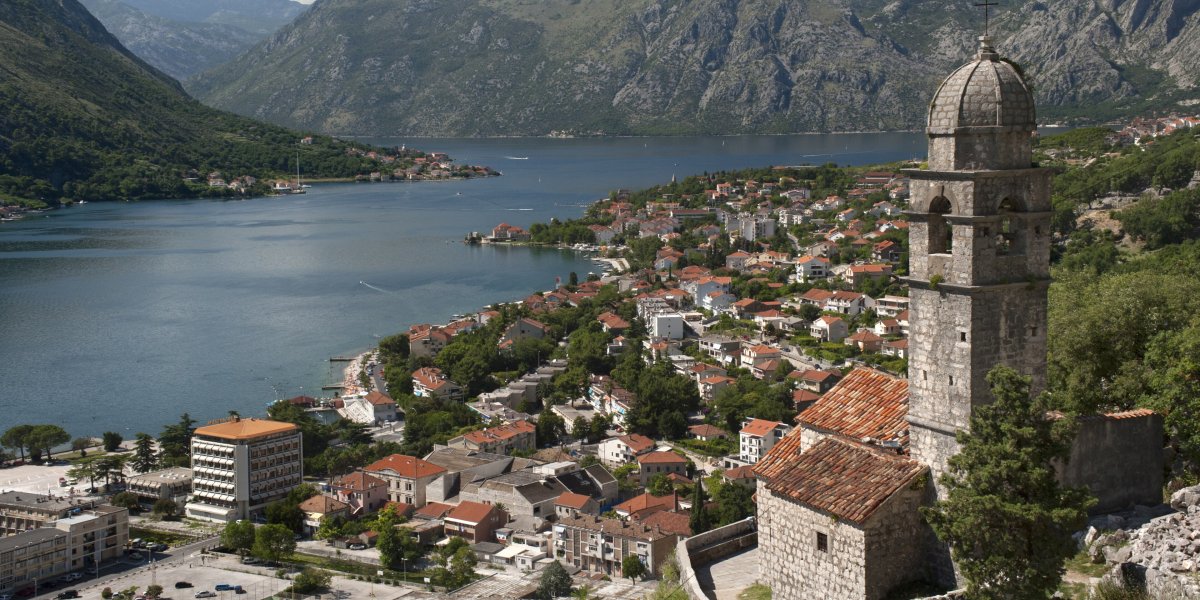
Enter the Old Town through the arched Sea Gate, cross the Square of Arms past the clock tower, and follow the narrowing stone lanes north for ten minutes to the fortress ticket booth. From here, 1,350 medieval steps zigzag up 280 meters of sheer cliff — each switchback reveals a wider sweep of the fjord-like bay, the terracotta rooftops, and the Adriatic glinting beyond. At the summit, the ruined fortress walls frame a panorama that justifies every burning muscle in your legs.
Tip: Arrive before 08:30 to beat cruise ship passengers who flood the stairs after 09:00 — the Church of Our Lady of Remedy at the one-third mark has the single best photo angle of the bay, and there is no water for sale anywhere on the trail, so bring a full liter.
Open in Google Maps →10:30
Neighborhood
Descend the fortress steps and turn right into the shaded northern alleys — a four-minute walk past ancient doorways and cats dozing on stone ledges. Two medieval churches stand face to face across worn flagstones: the tiny 12th-century Church of St. Luke and the imposing Serbian Orthodox Church of St. Nicholas with its richly decorated entrance. This is old Kotor distilled — no souvenir shops, no restaurant terraces, just cats, stone, and eight centuries of silence.
Tip: Stand at the southeast corner of the square for the composition with both church facades — mid-morning light illuminates St. Nicholas while St. Luke's stays in atmospheric shadow, and this is the only hour when that contrast works for photography.
Open in Google Maps →12:00
Food
From St. Luke's Square, walk two minutes north through the lanes toward the fortress base — the konoba sits in a stone courtyard just off the path. A local favorite tucked beneath the fortress walls, this stone-walled konoba serves the dish you came to Montenegro for: Njeguški steak, veal stuffed with mountain-smoked prosciutto and cheese from the village of Njeguši (€12), or a ćevapi plate with kajmak cream and warm lepinja bread (€8). Draft Nikšićko beer is €3.
Tip: Arrive at noon sharp before the cruise-ship lunch rush hits at 12:30, and ask for the interior courtyard table — it is shaded, five degrees cooler than the street-facing seats, and you will be in and out in thirty minutes.
Open in Google Maps →13:00
Religious
Walk south from the konoba along the main stone artery for four minutes — the twin Romanesque bell towers appear above the rooftops before you reach the square. Kotor's defining landmark since 1166, the cathedral anchors the square named for the city's patron saint, its facade rebuilt after the devastating 1667 earthquake in a style that feels more Lombard Italian than Balkan. Early afternoon light strikes the west-facing stone directly, and the mountain cliff looming behind the towers creates the layered composition that defines Kotor.
Tip: Step to the far side of Trg Sv. Tripuna and shoot upward to include the raw mountain cliff behind the bell towers — this layered frame of Romanesque stone against sheer geology is Kotor's single most iconic image.
Open in Google Maps →14:00
Landmark
Exit through the Sea Gate, turn left, and follow the waterfront promenade south toward the fishing village of Muo — two flat, easy kilometers along the glittering shoreline. As you walk, the Old Town walls and San Giovanni fortress rise behind you in an ever-improving composition that most visitors never see because they never leave the gates. Muo itself is a quiet hamlet of stone houses and moored fishing boats with a small locals-only beach where you can cool your feet in the Adriatic.
Tip: The single best photograph of Kotor is taken from the Muo waterfront, 100 meters past the village church — the entire walled town with the fortress above frames perfectly against the mountain. Bring water and a hat; the first kilometer has zero shade.
Open in Google Maps →19:00
Food
Walk back along the promenade to Kotor — twenty unhurried minutes with the sunset light warming the old town walls ahead of you. Galion sits on a stone terrace where the fortifications meet the bay, fishing boats rocking meters from your table. Order the black risotto with cuttlefish ink (€16), rich and briny with a dramatic purple-black color, then the grilled whole orada sea bream (€20) pulled from the bay that morning, with a half-liter of Montenegrin Vranac red (€8).
Tip: Reserve by phone for a waterfront terrace table facing the walls — walk-ins after 19:30 get seated inside. Skip the tourist restaurants clustered inside the Sea Gate entirely: they charge €18 for frozen fish and reheated pasta, while Galion serves the morning catch for the same price.
Open in Google Maps →Jump to day
08:00
Landmark
Enter the old town through the Sea Gate, cross the Square of Arms, and follow signs past St. Mary's Church to the fortress trail — you'll see the ancient walls climbing the mountainside ahead. The 1,350 steps wind through crumbling fortifications and wild fig trees, each switchback revealing a wider slice of the bay below. Starting at 08:00 means you'll have the narrow path almost entirely to yourself — cruise ship passengers don't reach the trailhead until after 10:00, and the morning air is still cool enough to make the climb comfortable.
Tip: The Church of Our Lady of Remedy at step 470 is where most people pause and turn back — but the terrace behind the church offers a framed bay view that rivals the summit. Bring 1L of water; there is nowhere to buy it on the trail. Descend via the same path — the Ladder of Cattaro trail on the north side is poorly marked and slippery.
Open in Google Maps →11:00
Religious
Descend from the fortress trail back into the old town — a 10-minute downhill walk that drops you into the quiet alleys behind the cathedral. Kotor's masterpiece since 1166, this Romanesque cathedral survived earthquakes that flattened the rest of the town. The treasury upstairs holds gold reliquaries and silverwork from medieval Montenegrin craftsmen, and the balcony between the twin bell towers offers a rooftop view most visitors never find. By 11:00 the interior is naturally lit through the rose window without harsh midday glare.
Tip: Climb to the balcony between the bell towers for an elevated, perfectly framed view of St. Tryphon Square below. The 14th-century frescoes on the upper nave walls are easy to miss if you don't look up past the columns.
Open in Google Maps →12:30
Food
Exit the cathedral, turn left, and walk two minutes through the narrow alley — you'll hear clattering plates before you see the sign. This tiny stone-walled konoba serves the kind of Montenegrin home cooking that old town restaurants charge triple for. The Njeguški steak (€12) — pork stuffed with local prosciutto and cheese from the mountain village of Njeguši — is the dish this country is proudest of. The black risotto with squid ink (€10) is rich and silky. Budget €15–20 per person including a house wine.
Tip: Arrive by 12:15 — there are only about eight tables and no reservations. Check the daily specials handwritten on the board behind the bar; those are what the kitchen is most excited about that day.
Open in Google Maps →14:00
Museum
Walk three minutes south through the alleys — the museum is in the 18th-century Grgurina Palace, identifiable by its grand stone doorframe. Boka Bay once rivaled Venice as an Adriatic naval power, and this museum tells that story through navigational instruments, ship models, and Venetian-era battle maps. The air-conditioned rooms are a welcome recovery after the morning's fortress climb. The first floor's collection of original Venetian charts of the bay is worth lingering over — they show a coastline essentially unchanged in 400 years.
Tip: Head straight upstairs to Room 3 on the first floor — the original Venetian maps of Boka Bay are the museum's real treasure. The ground floor corridor is mostly gift shop; save it for the way out.
Open in Google Maps →16:00
Neighborhood
Exit the museum and walk five minutes north through progressively quieter alleys — the tourist density drops noticeably past the churches. St. Luke's Square is an intimate piazza flanked by two churches: the 12th-century Church of Saint Luke and the grander Orthodox Church of Saint Nicholas. This is Kotor's quiet heart, where cats sprawl on warm stone and locals sit on doorsteps. The late afternoon light slants through the alley openings and warms the limestone façades — the best hour to photograph the old town's textures without harsh shadows.
Tip: Step inside the Church of Saint Luke — it has both a Catholic and an Orthodox altar, one of the only churches in Europe with this dual arrangement. Most visitors walk past without entering.
Open in Google Maps →19:30
Food
Walk out through the Sea Gate and turn left along the waterfront — a five-minute stroll past the marina brings you to Galion's terrace perched directly over the water. This is Kotor's definitive seafood dinner, where the grilled catch of the day (€18–22) is simply prepared and served with a view of the illuminated old town walls rising into darkness. The seafood risotto (€14) is excellent. Budget €25–35 per person. Reserve the far terrace table for the unobstructed view — the fortress lights switch on at sunset, and the reflection in the bay is the image you'll remember longest.
Tip: Reserve at least a day ahead and request the far-end terrace table for the full illuminated-walls view. Pitfall warning: avoid the cluster of restaurants directly inside the Sea Gate on the Square of Arms — they charge double for generic pasta and target cruise ship visitors who won't return to complain.
Open in Google Maps →09:00
Neighborhood
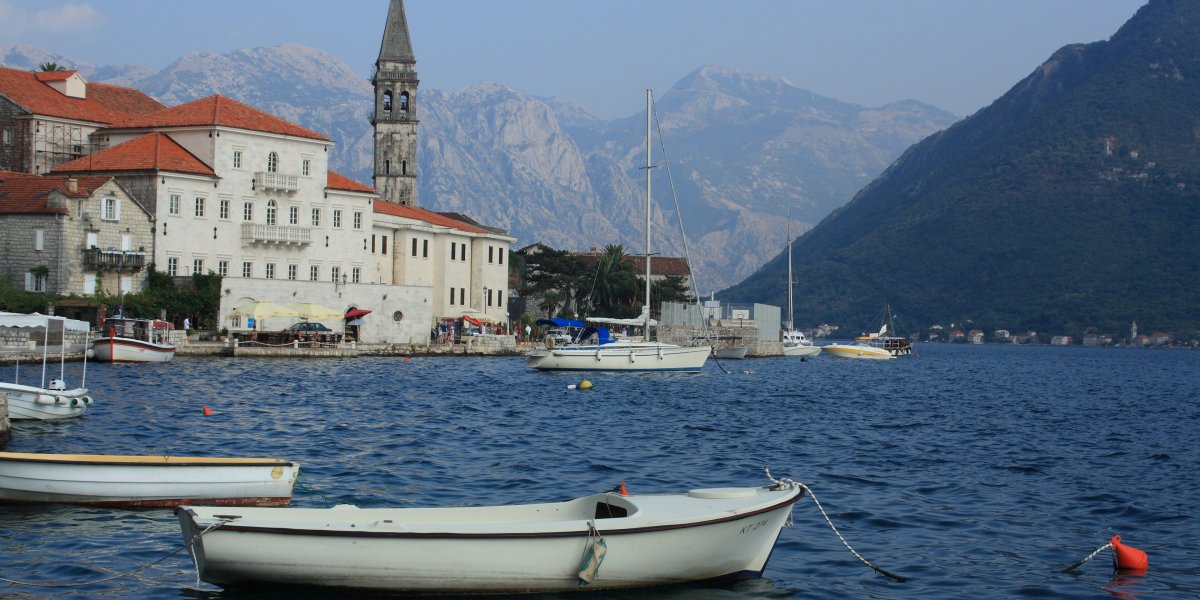
Take the Blue Line bus from Kotor bus station (€2, 20 minutes) — the ride itself is spectacular, hugging the bay with mountains dropping straight into the water. Perast is a single-street baroque village that once commanded more ships than towns ten times its size. Walk the full 300-meter waterfront past crumbling Venetian palazzi, counting the 16 that remain. The morning light hits the façades from the east, making the honey-colored stone glow against the dark bay water. At the western end, you'll find the best angle for the classic photo: Our Lady of the Rocks with the cypress-covered St. George Island behind it.
Tip: The bus drops you at the main road above the town — take the stone steps down toward the waterfront. Walk all the way to the western end past the collapsed palazzo before photographing the islands; the framing is dramatically better from there than from the main boat landing.
Open in Google Maps →10:30
Religious
Walk back to the small boat landing at the center of Perast's waterfront — boatmen run the five-minute crossing every 15–20 minutes (€5 round trip). This artificial island was built over centuries by sailors who dropped a stone into the bay each time they returned safely from a voyage. The church holds 68 paintings by Tripo Kokolja and a collection of silver votive tablets — each one a sailor's promise kept. At 10:30 the island is still relatively peaceful; by noon, day-trippers from Dubrovnik arrive in waves.
Tip: Sit in the bow of the boat on the way out for an unobstructed photo of the island church with mountains behind. Inside, find Jacinta Kunić-Mijović's embroidery — she worked on it for 25 years, reportedly weaving her own hair into the fabric as her eyesight failed.
Open in Google Maps →12:00
Food
The boat drops you back at Perast's waterfront — walk three minutes east along the promenade to this stone-terrace restaurant sitting directly over the water. The squid and mussels come from the bay you're staring at. The buzara mussels (€9) — simmered in white wine, garlic, and breadcrumbs — are the essential Boka Bay dish. The grilled squid (€10) is char-lined and tender. Budget €15–20 per person. Eating seafood this fresh, this close to the water, with this view, is the kind of moment that makes a trip.
Tip: Ask for the lower stone terrace directly over the water. Order the buzara — the mussels are pulled from the bay that morning. Ignore the pizza section of the menu; this kitchen's soul is entirely in its seafood.
Open in Google Maps →13:30
Museum
Walk two minutes west along the waterfront to Bujović Palace, the grandest of Perast's Venetian mansions, now housing the town museum. The collection is compact but vivid — model ships, Venetian-era portraits, and weapons that tell the story of when this village of 400 people defeated the Ottoman fleet. The rooftop terrace is the real prize: the highest open viewpoint in Perast, giving you an elevated panorama of both islands and the full sweep of the inner bay.
Tip: Go straight to the rooftop terrace before exploring the galleries — the early afternoon light is ideal for photos looking south across the bay. The model ships on the second floor are the highlight; don't linger too long on the ground floor pottery.
Open in Google Maps →15:30
Neighborhood
Take the bus back to Kotor (20 minutes) — you'll arrive just as the cruise ship passengers are clearing out and the old town exhales. Walk south from the bus station along the waterfront promenade past the marina, where the late afternoon light paints the mountain walls above the old town in warm amber. This is Kotor's golden hour: the bay goes still, the fortress walls glow against the darkening sky, and the waterfront cafés fill with locals instead of tourists. The classic postcard shot — the old town walls zigzagging up the mountain, reflected in calm water — is only possible at this hour.
Tip: After 17:00, cruise passengers vanish and locals reclaim the waterfront. Walk past the marina to the southern end for the postcard shot: walls climbing the mountain, reflected in still bay water. Stop at any waterfront café for a €2 Nikšićko beer — Montenegro's local brew, best cold with this view.
Open in Google Maps →19:00
Food
Walk back through the Sea Gate and five minutes into the old town — Bastion is tucked into the medieval walls near the River Gate, its dining room built into 600-year-old stone. This is Kotor's most refined kitchen, where Montenegrin traditions meet modern technique. The lamb peka (€18) — slow-roasted under a metal bell with potatoes and herbs — is the country's greatest comfort dish, but it must be ordered 2 hours ahead, so call when you leave Perast. The truffle risotto (€15) is indulgent. Budget €30–40 per person. A farewell dinner that earns its place in memory.
Tip: Call ahead at 17:00 to pre-order the lamb peka — it needs 2 hours under the bell. Ask for the corner table in the stone-walled alcove for the most atmospheric seat. Pitfall warning: street vendors near the Sea Gate sell 'homemade' rakija at tourist markup — buy a bottle at any minimarket outside the walls for €5 instead.
Open in Google Maps →
Trip builder
Plan this trip around Kotor
Turn this guide into a bookable rail itinerary with FlipEarth.
Keep exploring
Related cities
More in the same country
FAQ
Frequently asked questions
How many days do you need in Kotor?
Most travelers enjoy Kotor in 1 days, with enough time for headline sights and a slower meal or museum stop.
What's the best time to visit Kotor?
The easiest season for most travelers is May-Jun, Sep-Oct, especially if you want good weather and manageable crowds.
What's the daily budget for Kotor?
A practical starting point is about €60 per person per day before hotels, then adjust based on museums, dining, and transport.
What are the must-see attractions in Kotor?
A good first shortlist for Kotor includes Fortress of San Giovanni, Bay of Kotor Promenade to Muo.