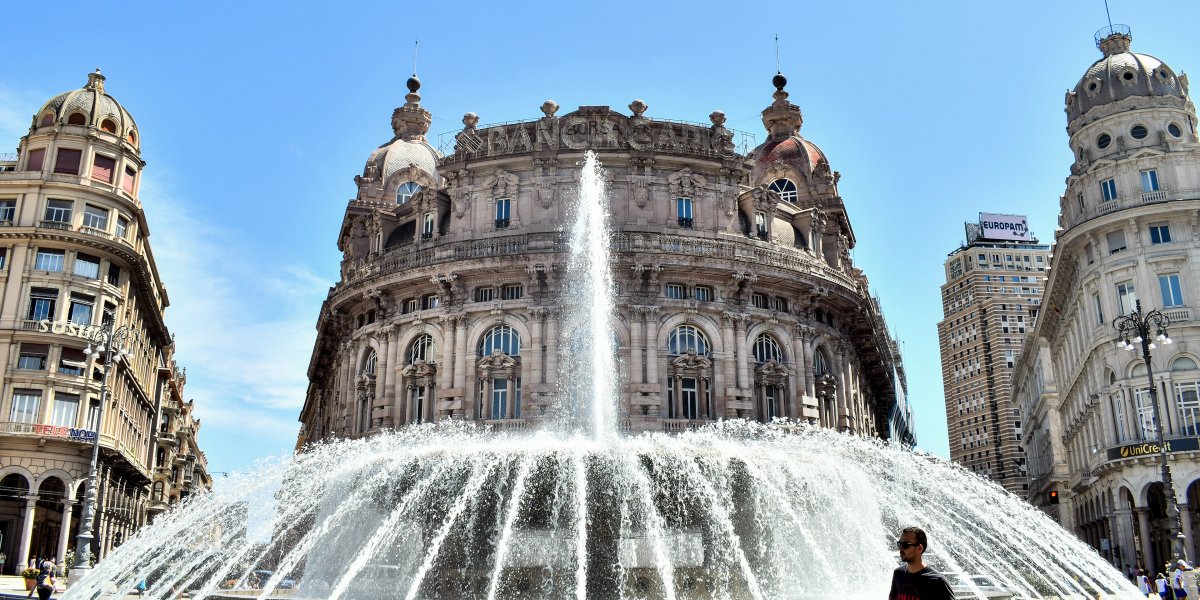
City Guide
Genoa
Italy · Best time to visit: Apr-Jun, Sep-Oct.
Day-by-day plan
Choose your pace
Trip length
09:00
Landmark
From Genova Piazza Principe station, walk 12 minutes east along Via Balbi past the Royal Palace facade, then turn right at Piazza della Zecca and continue to Piazza Portello. Take the Art Nouveau Ascensore Castelletto — a 30-second elevator ride — up to the terrace that gave Genoa its nickname La Superba. The entire city cascades below: terracotta rooftops tumbling toward the crescent harbor, the Lanterna lighthouse on the headland, and the Ligurian Sea dissolving into morning haze. Stendhal stood here and went quiet. At 9 AM with empty railings, you will too.
Tip: Stand at the far-left end of the railing for the cleanest shot of the harbor with the Lanterna lighthouse in frame. The elevator runs from 06:40; arriving at 09:00 means you share the terrace with two dog-walkers, not forty tourists.
Open in Google Maps →10:15
Landmark
Ride the elevator back down to Piazza Portello and walk one block east — Via Garibaldi opens before you like a Renaissance stage set. This 250-meter UNESCO street is the most concentrated display of aristocratic wealth in Europe: Palazzo Rosso, Palazzo Bianco, and Palazzo Doria-Tursi stand shoulder to shoulder, their facades layered with marble portals, frescoed loggias, and secret hanging gardens visible through iron gates. You don't need to step inside — the exteriors alone tell the story of Genoese bankers who financed the Spanish Crown and built themselves a street to prove it.
Tip: Photograph from the eastern entrance looking west: the palace facades compress into a dramatic corridor that fills any lens. Morning light from behind you illuminates the stonework perfectly before 11 AM. Peek through the gate of Palazzo Doria-Tursi at number 9 for a glimpse of the courtyard garden — free and entirely overlooked.
Open in Google Maps →11:30
Food
From the eastern end of Via Garibaldi, walk south through Piazza Fontane Marose and plunge into the narrow caruggi — 7 minutes through medieval lanes where laundry hangs between buildings five stories up brings you to Via San Giorgio. Antica Sciamadda has been frying Genovese street food behind the same marble counter since 1880. Order the farinata genovese (€3.50, a paper-thin chickpea flatbread with a shatteringly crisp edge) and a slice of torta pasqualina (€3.50, spinach and egg pie in impossibly thin pastry layers). Eat standing at the counter elbow-to-elbow with port workers on their break.
Tip: The fresh farinata batch comes out of the wood oven around 11:30 — time your arrival to get it still crackling. By 12:30 the queue stretches onto the street. Skip the focaccia here; it is good but not their star. Budget: €7-10 for a filling lunch.
Open in Google Maps →12:15
Neighborhood
Step out of Sciamadda and you are already inside Europe's largest surviving medieval old town. Walk east along Via San Giorgio to the twin-towered Porta Soprana gate, where a small stone house in its shadow is the childhood home of Christopher Columbus. Then zigzag northwest through the caruggi — alleys so narrow you can touch both walls — past the magnificent black-and-white striped facade of the Cattedrale di San Lorenzo, through Piazza delle Erbe where university students crowd the tables, and down toward the waterfront via the ancient Sottoripa arcade. These lanes have been trading, arguing, and cooking since the 12th century, and they still feel more alive than any museum.
Tip: The best photo of San Lorenzo Cathedral is from the base of the steps on Piazza San Lorenzo — the full striped facade fills the frame without wide-angle distortion. Stick to the main arteries (Via San Luca, Via del Campo, Via di Canneto il Lungo) which are bustling and well-trafficked. The tiny alleys branching off are atmospheric but can be deserted — keep valuables in front pockets.
Open in Google Maps →14:30
Landmark
The Sottoripa arcade deposits you at Piazza Caricamento, and suddenly the sky cracks open over Renzo Piano's reinvented waterfront. Walk along the promenade past the Bigo crane sculpture and the Biosfera glass sphere glinting in the afternoon sun, with the Aquarium's blue hull dominating the dock ahead. The old cotton warehouses now house cultural spaces, but the real pleasure is walking the full length of the stone pier — Molo Vecchio — where fishermen mend nets twenty meters from superyachts. At the pier's end, turn around: the entire pastel-colored old town rises behind the harbor like a painted amphitheater.
Tip: Walk all the way to the tip of Molo Vecchio for the panoramic money shot — the curve of colorful houses above the harbor is the postcard image of Genoa. Afternoon light between 14:00-16:00 turns the facades gold. Skip the Aquarium unless you have children; the exterior is more photogenic than the interior justifies the €28 ticket and 2-hour queue.
Open in Google Maps →19:00
Food
From the Porto Antico promenade, walk 3 minutes into the lanes behind Piazza Caricamento — Vico Palla is a quiet alley one block from the waterfront. This wood-paneled osteria has fed dockworkers for generations and now feeds everyone who knows to look for it. Order the trofie al pesto genovese (€12, hand-twisted pasta in the basil sauce born in this city — bright, garlicky, with a punch of Pecorino) followed by the fritto misto di mare (€16, a golden heap of baby squid, anchovies, and shrimp fried so light they barely touch the plate). Pair with a cold Vermentino from the Cinque Terre hills.
Tip: Arrive at 19:00 sharp — by 19:45 every table is taken and they do not take reservations. Sit outside in the alley if weather allows; the indoor room is cozy but tight. Budget €25-35 per person with wine. Avoid the tourist-trap restaurants with laminated photo menus lining the Sottoripa arcade — they charge double for reheated frozen seafood and target cruise-ship passengers who won't be back to complain.
Open in Google Maps →Jump to day
09:00
Religious
From Piazza De Ferrari, walk two minutes west — the black-and-white striped facade appears suddenly above the rooftops like a wave frozen in stone. Step inside at opening when the nave is empty and morning light floods through the rose window. In the crypt, the Museo del Tesoro holds the Sacro Catino, a first-century Roman glass dish long venerated as the Holy Grail.
Tip: Visit the treasury museum in the crypt first — it sometimes closes early on afternoons. The best photograph of the facade is from the bottom of Piazza San Lorenzo looking straight up the steps, where the stripes fill the entire frame with no modern distractions.
Open in Google Maps →10:15
Landmark
Exit the cathedral, turn left through Piazza De Ferrari, and walk three minutes southeast on Via Dante — the twin towers of the 12th-century gate rise above the medieval roofline. These massive gates once marked the edge of fortified Genoa; in their shadow sits Christopher Columbus's reconstructed childhood home, a three-room stone house that makes the ambition of its former resident feel almost absurd. Walk through the small garden between the gate and the house, where old Genoa suddenly feels intimate and human-scaled.
Tip: Columbus's house is tiny — the exterior and garden tell the whole story in five minutes. The real reward is standing between the medieval towers and looking back into the caruggi, imagining the young Columbus walking these same alleys toward the harbor that would launch his obsession.
Open in Google Maps →12:00
Food
From Porta Soprana, wander west through the caruggi — Genoa's medieval labyrinth, the largest in Europe — ducking under stone arches along Via di Ravecca and Via dei Giustiniani until the scent of chickpea flour frying pulls you into Sa Pesta. This standing-room-only hole-in-the-wall has served farinata — a thin, crisp chickpea pancake baked in a copper tray — since the 1800s. Order the farinata (€3.50) and a thick slice of focaccia genovese glistening with olive oil (€3); your entire lunch is under €10.
Tip: Arrive right at noon before the lunch rush turns this tiny shop into a scrum. Point at what you want — the staff move fast and expect decisiveness. If the torta di ceci is on the counter, take it without asking questions.
Open in Google Maps →13:00
Museum
Continue west through the narrowing caruggi until you emerge at the waterfront, then follow the Porto Antico promenade past Renzo Piano's sail-like structures — the Galata's red 16th-century arsenal building appears in eight minutes. The largest maritime museum in the Mediterranean tells the story of Genoa's obsession with the sea through a full-scale 17th-century galley replica and an unexpectedly moving emigration wing recreating the steamship cabins of millions who departed this port for the Americas. Allow 1.5 hours for a brisk but complete tour.
Tip: Buy tickets online to skip the counter queue. The rooftop terrace is included in your ticket and gives one of the best views of the Porto Antico — save it for the end. The submarine Nazario Sauro moored outside is a separate ticket; skip it if pressed for time.
Open in Google Maps →15:00
Landmark
Exit the Galata and walk five minutes east along the waterfront as Renzo Piano's redesigned Porto Antico unfolds — old cranes repurposed as sculptures, the glass Biosfera hovering over the water, restaurant terraces catching the afternoon breeze. Ride the Bigo panoramic lift 40 meters above the harbor for a slow, rotating 360-degree view of the medieval rooftops, the hills of Castelletto, and the Ligurian coast fading into haze. Then step inside the Biosfera, Piano's glass sphere housing a tropical micro-jungle suspended over the sea.
Tip: Ride the Bigo between 15:00 and 16:00 — the sun is angled enough to add depth to the rooftop panorama without washing out the view. The Acquario di Genova is next door and excellent, but it demands at least 2.5 hours — save it for a return trip unless traveling with children.
Open in Google Maps →19:00
Food
Walk northeast from the Porto Antico through Via di Sottoripa — the medieval spice-trading arcade — and take the golden-hour light through the caruggi slowly before climbing narrow Vico Testadoro to one of Genoa's most beloved institutions. There is no printed menu — the day's offerings are scrawled on a chalkboard, and you eat elbow-to-elbow with professors and dockworkers at communal tables covered in paper. Order the trofie al pesto genovese (€7, the pesto that ruins all other pesto for you) and the pansotti con salsa di noci (€7, handmade ravioli in crushed-walnut cream); a full meal with wine runs roughly €15.
Tip: Arrive at 19:00 sharp — by 19:30 you will queue. No reservations, no credit cards, no English menu, and none of that matters. Avoid the restaurants along Via di Sottoripa with laminated photo menus and touts standing outside — they charge triple for half the flavor and exist solely for cruise-ship passengers.
Open in Google Maps →09:00
Landmark
From Piazza De Ferrari, walk ten minutes northwest along Via Garibaldi to Piazza Portello, step into the tiny Art Nouveau public lift, and in sixty seconds the doors open 60 meters above the city. The entire old town spreads below — terracotta rooftops crowded together like tiles in a mosaic, the dome of San Lorenzo, the cranes of the working port, the Ligurian Sea dissolving into morning haze. The 19th-century promenade wraps around the hillside under wisteria, with benches perfectly placed for staring at a city that has looked this way for five hundred years.
Tip: Come at 09:00 for the softest light and an empty terrace — by 10:30 tour groups arrive. Stand at the eastern end of the promenade for the most complete panorama; the western end gives a closer view of the Porto Antico. The café at the top serves decent espresso with the best office view in Italy.
Open in Google Maps →10:30
Museum
Take the lift back down to Piazza Portello — you are already at the western end of Via Garibaldi, the 16th-century street designed to prove to visiting royalty that Genoa's bankers were richer than any king. Behind the red facade that gives it its name, Palazzo Rosso holds Van Dyck portraits, Veronese altarpieces, and Guercino's biblical scenes in rooms still decorated with original 17th-century frescoes. The top-floor terrace offers a rooftop panorama of the palace courtyards and the ridge of the most beautiful street in Genoa.
Tip: The combined ticket (€9) covers Palazzo Rosso, Palazzo Bianco, and Palazzo Doria-Tursi — all three on the same street. If you only have time for one, choose Rosso for the art and the terrace. All Strada Nuova museums are closed on Mondays.
Open in Google Maps →12:30
Food
Exit Palazzo Rosso, walk east to the end of Via Garibaldi at Piazza delle Fontane Marose, then turn south into the caruggi — seven minutes down Via San Giorgio where the smoky aroma of wood-fired ovens pulls you to the right. Sciamadda means 'blaze' in Genoese dialect, named for the heat from ovens that have been firing here for over a century. Order the torta di verdure (savory vegetable pie with an impossibly thin crust, €3.50) and panissa (fried chickpea polenta, golden and crisp, €3) — eat standing at the counter like every Genoese who grew up here.
Tip: If the torta pasqualina — artichoke and egg pie — is on the counter, take it without hesitation; it is seasonal and runs out fast. There are only a handful of seats; most locals eat standing and are gone in ten minutes.
Open in Google Maps →13:30
Religious
Walk northwest through the caruggi via Via della Maddalena for ten minutes until you emerge into Piazza della Nunziata, where the plain stone facade reveals nothing of what waits inside. Step through the door and the contrast hits like a thunderclap — a ceiling ablaze with Giovanni Carlone's frescoes, columns sheathed in polychrome marble, and gilded stucco cascading from every surface. Genoa's merchant aristocracy poured fortunes into this single nave to rival Rome, and they succeeded.
Tip: Stand in the center of the nave and look straight up — the barrel-vault ceiling was designed to overwhelm from this exact position. The church is free, uncrowded, and overlooked by every guidebook, which makes it one of the greatest surprises in the city.
Open in Google Maps →14:30
Museum
Exit the basilica and turn right onto Via Balbi — Genoa's other great palace street — and in two minutes the entrance to Palazzo Reale appears, marked by its tall garden wall. The Hall of Mirrors rivals Versailles at a fraction of the scale; Van Dyck portraits hang in their original commissioned positions on the very walls they were painted for. The hanging garden, suspended between the palace and the sea on terraces of bougainvillea and palm fronds, is the most romantic viewpoint in Genoa.
Tip: Closed on Mondays. Ask at the entrance if the hanging garden is open — it sometimes closes for maintenance, and missing it would halve the experience. The afternoon light in the Hall of Mirrors is at its best after 15:00, when the sun hits the wall of windows.
Open in Google Maps →19:00
Food
Walk east from Palazzo Reale along Via Balbi, through Piazza De Ferrari where the bronze fountain catches the evening light, and down Via XX Settembre — Genoa's grand boulevard of arcades — for a farewell stroll of fifteen minutes. Since 1939 this has been where Genoa shows visiting dignitaries what Ligurian cuisine can be at its finest — Sinatra and two popes ate at these tables. Order the minestrone alla genovese served cold with a swirl of pesto (€14) and the corzetti stampati, coin-shaped pasta pressed with medieval family crests in a marjoram-pine nut sauce (€18); dinner with a bottle of Pigato runs about €45.
Tip: Reserve for 19:00 — walk-ins often wait thirty minutes. Ask for the quieter back room with original wood paneling. On your walk here, ignore the restaurants around Piazza De Ferrari with photo menus and touts outside — they charge €18 for microwaved pesto and exist for cruise-ship overflow.
Open in Google Maps →
Trip builder
Plan this trip around Genoa
Turn this guide into a bookable rail itinerary with FlipEarth.
Keep exploring
Related cities
More in the same country
FAQ
Frequently asked questions
How many days do you need in Genoa?
Most travelers enjoy Genoa in 1 days, with enough time for headline sights and a slower meal or museum stop.
What's the best time to visit Genoa?
The easiest season for most travelers is Apr-Jun, Sep-Oct, especially if you want good weather and manageable crowds.
What's the daily budget for Genoa?
A practical starting point is about €60 per person per day before hotels, then adjust based on museums, dining, and transport.
What are the must-see attractions in Genoa?
A good first shortlist for Genoa includes Spianata Castelletto, Via Garibaldi (Strada Nuove), Porto Antico.