City Guide
Cagliari
Italy · Best time to visit: May-Oct.
Day-by-day plan
Choose your pace
Trip length
09:00
Landmark
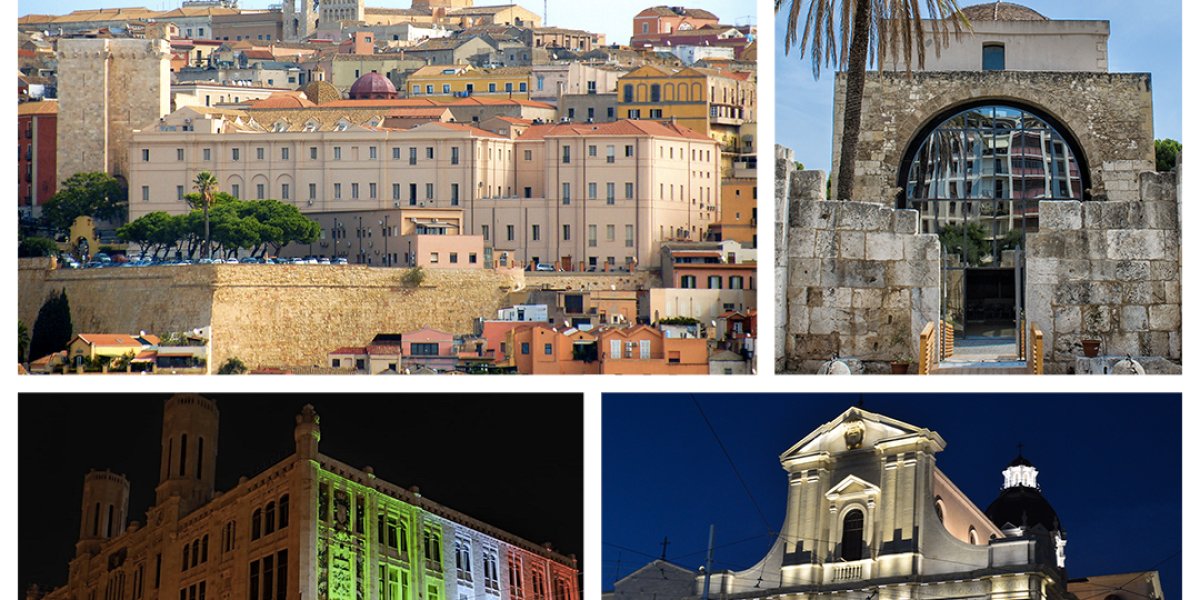
Cagliari makes its first impression best from this neoclassical white-limestone terrace fused onto the old Spanish ramparts. By 09:30 the morning haze burns off the Gulf of Angels and the city's whole geography spreads out in one frame — pink salt pans west, terracotta roofs cascading below, and the seven-kilometre crescent of Poetto on the horizon. Stand under the central arch and you understand why every Cagliaritano begins a tour here.
Tip: Skip the grand staircase on Piazza Costituzione and enter from the Giardini Pubblici side — a quiet ramp pops you straight onto the terrace with zero climb and zero queue. Shoot the eastern parapet first while the sun is still behind you, then frame the Umberto I covered loggia for the postcard arch shot. The terrace cafe charges €4 for an espresso — wait and have one for €1.20 down in the Marina later.
Open in Google Maps →10:00
Religious
Walk west along Via Università for 4 minutes — the buff-coloured 14th-century citadel walls rise on your left, jasmine spilling from walled gardens — and Piazza Palazzo opens suddenly with the cathedral's white Romanesque-Pisan façade dead ahead. The front was rebuilt in the 1930s to its medieval design and looks best in this late-morning side light, with the ochre Palazzo Regio next door framing the composition. Inside (3 minutes if you're curious) sits Guglielmo's 1162 pulpit, the oldest in Sardinia.
Tip: Stand at the corner of Via Lamarmora with your back to Palazzo Civico — from here the cathedral, the bell tower, and the regal palazzo line up in a single frame, and the tour groups never shoot from this angle (they cluster on the steps). The cathedral closes for siesta at 12:30 sharp; you have a ten-minute window if you want the pulpit peek, then move on.
Open in Google Maps →10:45
Landmark
Walk three minutes west along Via Università and the limestone watchtower rises at the citadel's edge, its small carved elephant still wedged into the south-east face since 1307. The Aragonese-Pisan tower was the gate that controlled all of Castello; climbing the open wooden staircase to the top puts you eye-level with the cathedral dome and the cruise ships docked in the port below, a higher vantage than Bastione on the opposite axis.
Tip: The carved stone elephant is on the south-east face about 10m up — easy to miss because you arrive from the north side; circle around before you climb. Cruise groups arrive in waves around 11:15, so go up at 10:45 and you'll have the open top to yourself. Skip the combined Torre San Pancrazio ticket — the views overlap and you've already done the panorama at Bastione.
Open in Google Maps →12:15
Food
Descend the Scalette Santa Chiara for 7 minutes — a stone staircase that drops you straight out of Castello into Piazza Yenne and the Marina district. Turn into Via Napoli and Su Cumbidu's open door spills the smell of slow-cooked sausage ragù onto the pavement. This is the city's working trattoria — bare wood tables, Sardinian grandmothers in the kitchen, and a menu of fregola, malloreddus and porceddu that hasn't needed changing in decades.
Tip: Order the malloreddus alla campidanese (€8 — Sardinian gnocchetti in saffron-tinted sausage ragù, the island's defining pasta) and a quarter-litre of cannonau (€3). Add a slice of seadas with honey for dessert (€4) if you have room. They don't take lunch reservations, but arrive at 12:15 sharp and you'll be seated immediately; show up at 13:15 and the wait stretches past 30 minutes.
Open in Google Maps →14:00
Park
Walk 10 minutes east along Via Roma's columned waterfront to the Marina Piccola bus stop, then ride the PF bus (€1.30, 15 minutes) to Poetto's western end at the foot of Sella del Diavolo — the dragon-shaped headland that gives the gulf its silhouette. From the base, the full seven-kilometre arc of pale-gold sand and translucent shallows rolls out in one direction; the unsigned summit path climbs gently in the other. The water stays bath-warm into October — wade in to your knees even if you didn't pack a suit.
Tip: Climb Sella del Diavolo from the Marina Piccola side — look for the dirt path behind the harbour office (no sign, that's the point). The 25-minute ascent is rocky but easy, and most tourists never realise it's walkable, so the summit benches are almost always empty. Shoot south for the wild headland coves, north for the city silhouette over the salt lagoons in golden hour. Skip the central kiosk sun-beds at €25 a pair — the public sand 100m either side of any kiosk is free and the same fine grain.
Open in Google Maps →19:30
Food
A five-minute stroll back along Lungomare Marina Piccola as the gulf turns gunmetal blue under the marina lights — fishing boats clinking, the limestone face of Sella del Diavolo glowing pink behind you. L'Approdo's wooden deck juts out over the harbour itself; the kitchen runs on what came off the day's boats, and the menu rotates with the catch.
Tip: Order the fregola con arselle (€18 — saffron pasta-pearls with Sardinian clams, the dish of the island) and the bottarga grattata di muggine starter (€12 — cured mullet roe shaved over carasau crackers); that combination separates a local meal from a tourist plate. Reserve a deck table 24 hours ahead — the indoor room is fine but you're paying for that water-edge view. Pitfall: avoid the brightly-lit cocktail kiosks at Poetto's central section (Stops 6–8) — they push €15 spritzes with stale prosecco and harass solo diners; the real aperitivo scene is all on this quieter western Marina Piccola side.
Open in Google Maps →Jump to day
09:00
Landmark
Start at Piazza Costituzione and ride the panoramic elevator inside the bastion straight up to the white limestone terrace — three minutes saves you a hot uphill climb. From the Umberto I terrace, the entire Marina, the salt lagoons, and the cobalt Gulf of Angels unfurl below; morning sun comes in from your left and lights the pastel facades of the old town. Tour groups don't arrive before 10:30, so for the first hour the terrace is essentially yours.
Tip: Walk to the back of the terrace and find the lower covered walkway (Passeggiata Coperta) — almost no one knows it exists, and you get a quiet stone arcade framing the gulf with no railings in the shot.
Open in Google Maps →10:30
Landmark
Exit the bastion through Piazza Indipendenza and walk five minutes uphill along Via Università — the medieval gates of Castello close in around you. The Tower of the Elephant (1307) is one of two surviving Pisan defensive towers; climb the wooden inner staircase through four open levels for terracotta rooftops, the cathedral dome, and limestone walls dropping straight to the harbor. Late morning the light is still soft enough to photograph through the open arches without burning out the sky.
Tip: Look at the small carved stone elephant just above the street-level gate before you climb — it's the original 14th-century piece from which the tower takes its name. Most visitors walk past and never see it.
Open in Google Maps →12:30
Food
Walk three minutes south from the tower along Via Lamarmora to a corner trattoria where Castello residents and city-hall workers queue at noon. Order the malloreddus alla campidanese (Sardinian gnocchetti with sausage ragù and saffron, around €11) — it is the dish of southern Sardinia, and Sa Piola does it without showing off. Close with a half-portion of seadas (fried sheep's cheese pastry drizzled with bitter honey, €6) and a glass of Cannonau.
Tip: They don't take reservations for lunch and seats fill by 12:45 — arrive at 12:30 sharp and ask for the tiny back saletta; it's quieter than the front and the waiters get to you faster.
Open in Google Maps →14:00
Museum
Climb Via Università five minutes further north from lunch into the Cittadella dei Musei, the museum complex crowning Castello. The reason you came has its own room: the Giants of Mont'e Prama — 3,000-year-old Bronze Age stone warriors with eyes carved as two concentric circles, found broken in a single Sardinian field in 1974, unlike any sculpture in their Mediterranean era. Move down to the lower floor afterwards for the Nuragic bronze figurines — pocket-sized sailors and praying women from a civilization that left no writing.
Tip: Buy the combined Castello pass at the entrance (€15) instead of the single ticket — it also covers Torre San Pancrazio and saves the queue at the cathedral treasury later. Skip the audio guide; the English wall texts are excellent.
Open in Google Maps →16:30
Religious
Walk five minutes back south down Via Martini to Piazza Palazzo. The 1930s neo-Romanesque facade is unconvincing — go straight inside, where the interior is darker, older, and astonishing: a baroque marble explosion of polychrome inlay, with two original 12th-century Pisan pulpits flanking the apse, carved by Guglielmo for the Duomo of Pisa and gifted to Cagliari in 1312. Descend to the crypt (Santuario dei Martiri) for 600 carved niches in walls that stay cold even in August; late afternoon, the western light catches the rose window and the nave glows.
Tip: The right-hand pulpit was originally a single piece — the Pisans cut it in half to fit on either side of the altar. Look for the seams running through the carved figures; it's a 700-year-old repair you can still trace with a finger.
Open in Google Maps →19:30
Food
Leave Castello through the Bastione, take the Scalette Santa Chiara down into the Marina district — eight minutes of descending lanes that smell of basil and frying oil. Lillicu has been open since 1938: white marble tables, paper tablecloths, communal benches, and the most uncompromising fresh fish in Cagliari. Order spaghetti ai ricci di mare (sea urchin, €18, seasonal) or fregola con arselle (Sardinian toasted pasta with baby clams, €14), then a whole grilled orata picked at the morning market — around €25 per fish.
Tip: Reserve by phone at least a day ahead (they don't take online bookings) and ask for one of the four small wall tables — the long communal one is fun but loud. Avoid the photo-menu restaurants along Via Sardegna with translated boards in five languages; they are the Marina's only real tourist trap — overpriced frozen fish, microwaved fregola, and they live off port arrivals.
Open in Google Maps →09:00
Landmark
Begin the day at the western edge of the old town, a 15-minute walk from the Marina along Via Sant'Ignazio. The 2nd-century amphitheatre was carved partly out of living limestone, sloping down a hillside above what was once the Mediterranean shore; today it is half-ruined but still entirely legible — you can see where the gladiators entered and how the seats curved. At 9:00 the stone is cool, the cavea is empty, and the low Sardinian sun cuts a striped shadow across the tiers that you will not get any other hour.
Tip: There is zero shade once you step onto the arena floor and summer visits past 11:00 are brutal — be at the gate at 9:00 sharp with a hat and water. The site reopened for full access in 2024; ignore older travel blogs that still say it's closed for restoration.
Open in Google Maps →10:30
Park
Walk three minutes downhill from the amphitheatre — the botanical garden's main gate is on Via Sant'Ignazio da Laconi, behind a high stone wall you can't miss. Founded in 1866 on a former Roman quarry, the garden re-uses the ancient water cisterns as sunken pools for papyrus and water lilies, and shades you under fig and ficus trees a century and a half old. After the bare heat of the amphitheatre, the gravel paths feel like stepping into a different climate.
Tip: At the back of the garden there's a hidden Roman cistern (Vasca del Pozzo San Faustino) — go down the small staircase signposted in the southern section. Inside it's 25°C in any season, the air is wet, and most tour groups never find it.
Open in Google Maps →12:30
Food
Eight-minute walk east along Via Azuni back into Stampace. Cucina.eat is half cookware shop, half trattoria — communal wooden tables planted in the middle of a working kitchen-supply store, menu chalked daily on a board. Order the catch-of-the-day crudo (raw tuna or amberjack with bottarga shavings, around €16) and the panada di anguille (Sardinian eel pie, €12 — a Cagliari specialty almost no other restaurant in town still makes).
Tip: They do one lunch service only, 12:30-14:30, and the chef hand-rolls the day's malloreddus each morning — walk in by 12:45 latest or it'll be sold out. House Vermentino by the glass €5; order it instead of bottled water.
Open in Google Maps →14:30
Park
Five-minute walk to Piazza Yenne, then the PF or PQ city bus from the main rank — 15 minutes, €1.50, departures every 10 minutes in summer. Get off at the Ottavo Fermata (8th stop), the heart of Marina di Poetto: the whitest sand, the rented loungers, and the Sella del Diavolo headland rising like a sleeping lion at the western end. Mid-afternoon the water turns the famous turquoise and stays knee-deep twenty meters out — perfect for the long shoreline walk toward Sella del Diavolo.
Tip: Rent your lounger and umbrella (€15-20 for two, half-day) from a kiosk past the 4th stop — the further east of the bus stop you go, the cheaper, and the free public sand starting there is just as clean as the paid sections.
Open in Google Maps →17:30
Park
From Poetto, walk ten minutes north across the strip to the eastern entrance of Molentargius on Via La Palma. This was Cagliari's industrial salt pan until the 1980s; now it's an EU-protected wetland where about 10,000 pink flamingos live inside the city limits — rent a bike at the gate (€5 for two hours) and ride the flat dykes between the ponds. As the sun lowers behind the salt the birds turn brick-pink and let you cycle within 30 meters before they bother to glance up.
Tip: The densest flock is at Bellarosa Maggiore pond — at the first fork inside the park, go right, not left. From late August through October you can also see this year's chicks among the adults; spray for mosquitoes before you go in, they appear the moment the sun drops.
Open in Google Maps →20:00
Food
Bus back from Poetto to the city center (PF or PQ, 15 minutes) and walk two minutes east on Viale Regina Margherita. Luigi is from Carloforte, the small island off Sardinia's southwest where the entire economy revolves around tuna — his restaurant is the best tuna kitchen on the island. Order the tasting (5 cuts, €38 — raw, seared, belly, jowl, heart), then close with spaghetti alla bottarga (€18); the room is modern, white, and quiet, designed for a slow meal at the end of a hard day.
Tip: Reserve the day before by phone and ask for sala sopra — the upstairs gourmet room is calmer than the downstairs bistro. Skip the lamb-with-peas 'Sardinian tourist menu'; you came here for the tuna. The actual food trap of this neighborhood is the Via Roma waterfront facing the cruise port — plastic display cases of 'fresh fish of the day,' frozen and overpriced, aimed at one-day visitors disembarking from the ferry.
Open in Google Maps →
Trip builder
Plan this trip around Cagliari
Turn this guide into a bookable rail itinerary with FlipEarth.
Keep exploring
Related cities
More in the same country
FAQ
Frequently asked questions
How many days do you need in Cagliari?
Most travelers enjoy Cagliari in 1 days, with enough time for headline sights and a slower meal or museum stop.
What's the best time to visit Cagliari?
The easiest season for most travelers is May-Oct, especially if you want good weather and manageable crowds.
What's the daily budget for Cagliari?
A practical starting point is about €110 per person per day before hotels, then adjust based on museums, dining, and transport.
What are the must-see attractions in Cagliari?
A good first shortlist for Cagliari includes Bastione di Saint Remy, Torre dell'Elefante.