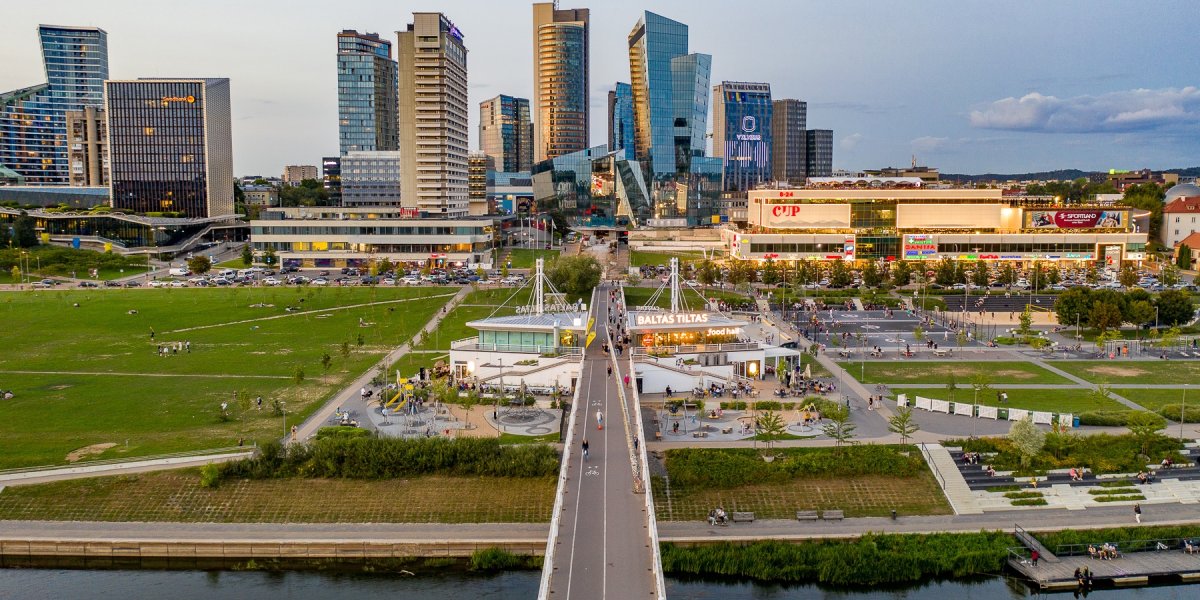
City Guide
Vilnius
Litauen · Best time to visit: May-Sep.
Day-by-day plan
Choose your pace
Reisedauer
09:00
Religious
Begin at the south threshold of the old town — the only surviving original gate of the nine that once ringed Vilnius, and the ceremonial doorway every pilgrim crossed for four centuries. At street level you only see a stone arch; the secret is a small unmarked door on the right labeled 'Koplyčia' — climb the narrow wooden stair and you stand face-to-face with the Black Madonna of the Gate of Dawn, one of the most venerated icons in Catholic Europe. At 9:00 the morning mass has just ended and the marble chapel is nearly empty, lit by a single shaft of east light; by 11:00 the Polish pilgrim buses arrive and the tiny upstairs space becomes humid and pressed.
Tip: Ninety percent of tourists walk under the arch, photograph the façade, and leave thinking they have 'seen' the Gate of Dawn — they never realize the actual sacred space is upstairs. The entrance is free, shoulders must be covered, and silent phone photos from the back pews are tolerated though never advertised. Step outside afterward and look UP at the chapel's south-facing wall — the golden rays radiating from Mary's crown are visible from the street only before 10:00, when the low sun strikes the gilt directly.
Open in Google Maps →09:45
Neighborhood
Step straight through the gate's arch — Aušros Vartų becomes Didžioji and then Pilies, a single amber-cobbled spine that threads the entire UNESCO old town from south to north. In the next kilometer you pass St. Teresa's Church, the theatrical courtyard-within-a-courtyard of the Basilian Gate, Town Hall Square with its creamy Neoclassical stage-set, Adam Mickiewicz's house, and the flamboyant red-brick miracle of St. Anne's Church — the façade Napoleon supposedly wanted to carry back to Paris in the palm of his hand. The street finally spills into Cathedral Square, where the white Neoclassical cathedral and its detached belfry stand beneath green Gediminas Hill like a postcard come alive.
Tip: Photograph the street southward — back toward the Gate — before 10:30, when the low east sun lights the pastel façades from the left and turns the cobbles honey-gold. Do not enter St. Anne's Church: the 33-shade Gothic brickwork IS the masterpiece; the interior is a modest 19th-century rework. On Cathedral Square, find the small terracotta 'Stebuklas' (Miracle) tile embedded in the pavement between the cathedral and the belfry — it marks the starting point of the 1989 Baltic Chain human line to Tallinn; local superstition says you get a wish if you spin a full 360° on it.
Open in Google Maps →12:00
Food
From Cathedral Square walk one block south and turn right onto Šv. Ignoto — three minutes brings you to a narrow corner smokehouse that is the fastest, most honest Lithuanian meal in the old town. Order at the counter: the slow-smoked pork-neck sandwich on dark rye with house mustard and pickled cabbage (€7), and a bowl of šaltibarščiai — the electric-pink cold beet-and-kefir soup every Lithuanian grandmother claims to make best (€5). Grab a spot at the long wooden communal bench, add a glass of gira (fermented rye kvass, €2) for the full sensory download, and be out in under an hour with room in the stomach for a hill climb.
Tip: Arrive at 12:00 sharp — by 12:30 the line spills onto Šv. Ignoto and you lose 25 minutes. The šaltibarščiai arrives with a side plate holding one hot boiled potato: this is not a kitchen mistake, the cold soup and hot potato together is the Baltic tradition — eat them in alternating bites. Skip the kepta duona (deep-fried garlic rye) no matter how tempting the smell is — delicious, but it sits heavy and you have 300 steps of hill waiting at 13:00.
Open in Google Maps →13:00
Landmark
Walk east on Šv. Ignoto back to Universiteto, up to Cathedral Square, and the green hill rises directly behind the white belfry with a red-brick tower at its crown. Take the cobbled footpath that switchbacks up the east flank (skip the funicular — chronically broken and €2 to save a ten-minute walk) and in fifteen minutes you stand beside Gediminas' Tower, the silhouette of Vilnius since the 14th century. Do not pay to enter the small museum inside; instead continue east along the wooded ridge path for another fifteen minutes to Hill of Three Crosses, where the white trinity of crosses looks back across the Vilnia valley to the tower and the entire Baroque old town laid beneath you — the single greatest panoramic view in Lithuania, and it is free.
Tip: The iconic 'Vilnius panorama' photograph you have seen online is taken from Hill of Three Crosses, NOT from Gediminas' Tower itself — the tower IS the subject of the photo. Aim to arrive at Three Crosses by 14:00: the sun is already southwest and lights the cathedral, tower, and red rooftops from your left, while tour groups do not reach the ridge until after 15:00. Bring a bottle of water — there is no shop on either hilltop. Descend via the east stairway (signed 'Kalnų parkas → Užupis') which drops you directly into the river valley and points you toward the footbridge — do NOT backtrack to Cathedral Square.
Open in Google Maps →15:00
Neighborhood
The east stairway from Three Crosses lands you beside the Vilnia river; a short footbridge crosses the water and the moment your foot touches the far bank you are officially inside the self-declared Republic of Užupis, an artists' enclave that declared independence on April Fool's Day 1997 and still maintains its own constitution, president, flag, and 12-soldier army. Wander without a map: find the Constitution of Užupis mounted in 30-plus languages along a single wall on Paupio street, the bronze Angel of Užupis blowing his trumpet from a column at the main square, the riverside 'Tibet Square' with its Dalai Lama plaque, and the wooden Užupis swing hanging directly over the river. Sit with a coffee on the river-level terrace of Kavinė Užupio — the deck hangs over the Vilnia — and watch locals paint, busk, and in July actually swim beneath the bridges.
Tip: The single must-read is the Constitution of Užupis on Paupio street — read at least the English version, it is a genius piece of absurdist manifesto ('Everyone has the right to be happy. Everyone has the right to be unhappy.'). The Angel photographs best from the south side at 16:30 when the late sun strikes his golden trumpet full-face. For a 90-second detour almost no visitor makes: walk up Malūnų street to the small glass-enclosed Užupis Pieta tucked into a wall — a Lithuanian artist's 2020 pandemic response, unmarked on any map and unsigned from the street.
Open in Google Maps →19:00
Food
Walk three minutes uphill on Užupio street to where it curves above the neighborhood, and a wooden gate opens onto Tores' terrace — the highest wooden deck in Užupis, with an uninterrupted panoramic view straight across the river to the cathedral, St. Anne's spires, and Gediminas' Tower standing in line. Order the house cepelinai (potato dumplings stuffed with smoked pork, topped with sour cream and bacon, €14) to share as a starter, followed by the wood-grilled zander with beetroot and horseradish cream (€22), and a glass of midus — Lithuanian honey wine (€8). From 20:30 onward in summer the setting sun hits the old-town skyline from behind your shoulder and turns the entire Baroque quarter amber-pink; you will understand in one sitting why locals call Užupis simply 'the other side.'
Tip: Reserve 48 hours ahead and specifically request 'lauko terasa' (outdoor terrace) — the indoor dining room has no view and staff will seat you there by default if you do not ask. In May–August sunset hits the skyline between 20:45 and 21:30, so a 19:00 seating lets you linger through dessert as the light turns. TOURIST TRAP WARNING for Užupis: at the 'Border of Užupis' gates near Malūnų bridge, unofficial vendors offer to stamp your passport for €3 — this is a scam; the real Republic of Užupis stamp is given free at the Užupis Art Incubator reception (Užupio g. 2) if you simply ask. Also avoid the three restaurants on Užupio street itself flying 'Welcome Tourists' flags with large English menus — prices run double the Vilnius norm and all three kitchens are sourced from the same central caterer.
Open in Google Maps →Zu Tag springen
09:00
Landmark
Begin at the very heart of the city. At this hour the white Neoclassical facade of Vilnius Cathedral glows in soft eastern light and the square is nearly empty — the first tour coaches arrive after 10:00. Step inside and find the St. Casimir Chapel on the right: marble, silver reliquaries and Baroque frescoes that most visitors walk straight past. Outside, spot the small 'stebuklas' (miracle) tile at the foot of the Bell Tower, stand on it, turn 360° clockwise and make a wish — a local tradition that marks the spot where the human chain of 1989 ended.
Tip: The St. Casimir Chapel closes 12:00–13:00 daily for private prayer, so morning is the only way to see the silver altar up close. Photograph the Cathedral from the north-west corner of the square — that angle catches the bell tower, the facade and Gediminas Hill in one frame.
Open in Google Maps →10:30
Landmark
Exit the square from the rear of the Cathedral and follow the stone path east through Kalnai Park for 5 minutes; then climb the cobbled ramp up Castle Hill — 15 minutes of gentle switchbacks past morning joggers. Save your legs for the first city view, not the funicular. The last curve opens suddenly onto the red-brick 14th-century tower, and from the top you see the whole UNESCO Old Town spread below you: terracotta roofs, dozens of church spires, the Neris bending around the north, the Three Crosses on the opposite ridge. This is the single sightline of Vilnius you will remember longest.
Tip: Walk up rather than take the funicular (€2) — the eastern path is where early-risers go and the first full panorama arrives unexpectedly. The tower opens at 10:00; arriving by 10:30 beats the 11:30 coach wave by a full hour. Best photo angle is from the small wooden platform on the south-west side of the tower, not from the flag.
Open in Google Maps →13:00
Food
Descend the hill, cross Cathedral Square and head south into Pilies Street — 10 minutes, downhill, through the Old Town's main artery. Forto Dvaras is the most honest Lithuanian kitchen on Pilies: grandmothers in the open kitchen still hand-shape every cepelinas. Order the classic cepelinai with pork and cracklings (€8.50) and šaltibarščiai, the electric-pink cold beetroot soup that tastes like Lithuania in a bowl (€5.50), paired with a half-litre of Švyturys lager. Budget €12–18. Portions are enormous; two dishes between two people is enough.
Tip: Ask to sit upstairs in the brick-vaulted cellar — calmer, cooler and cheaper-feeling than the crowded ground floor. Skip the 'traditional sampler plate'; ordering two classics separately costs a third less and you get twice the food.
Open in Google Maps →14:30
Landmark
Two minutes west from the restaurant on Šv. Jono street stands the main gate of one of Northern Europe's oldest universities, founded in 1579. Its thirteen interconnected courtyards are a living archive of Gothic, Renaissance and Baroque — the Great Courtyard's yellow arcades glow gold in the afternoon sun. Climb the Bell Tower of St. John's Church for the highest point inside the Old Town itself, a view different from Gediminas: closer, more intimate, rooftops at eye level. Don't skip the Littera bookstore tucked in the Sarbievijaus courtyard — its 17th-century frescoed ceiling is the most beautiful hidden room in Vilnius.
Tip: Buy the combined ticket at the main gate — €6 covers the courtyards and the Bell Tower. Entrance to Littera bookstore is free but you must pass through the Sarbievijaus courtyard; ask the guard for the map — he'll point you to two frescoed rooms tourists always miss.
Open in Google Maps →16:30
Religious
From the university, walk 12 minutes south down Pilies onto Didžioji and then Aušros Vartų — the medieval spine of the Old Town, ending at the only surviving city gate of the original nine. Above the arch, in a small upstairs chapel, hangs one of Europe's most venerated icons — the Madonna of Vilnius, for whom pilgrims walk from Warsaw. Enter through St. Teresa's Church on the right and climb the wooden staircase inside to reach the chapel itself, where the gilded silver riza glows in the late-afternoon light that slants through the western window at exactly this hour.
Tip: Come after 16:00 — the Polish pilgrim coaches leave by then and the slanting sun lights the silver icon through the single chapel window. Women traditionally cover their heads inside the chapel; men remove hats. On the souvenir gauntlet leading up to the gate, 90% of the 'Baltic amber' is resin imports from China — real amber is warm in the palm, floats in salt water, and smells of pine when rubbed.
Open in Google Maps →19:30
Food
Walk 10 minutes back north along Aušros Vartų, pass the Town Hall and turn left onto Stiklių — a narrow stone lane lit by hanging lanterns. Lokys has occupied these 15th-century merchant-house cellars since 1972 and is Vilnius's oldest and most storied kitchen. Game is the specialty: wild boar loin with cranberry sauce (€22), smoked beaver stew served in dark rye (€18 — yes, beaver, this is one of the few restaurants in Europe legally serving it), or roast venison medallions with juniper (€26). Three vaulted stone levels descend underground — ask for the lowest. Budget €45–60 with Lithuanian mead or wine.
Tip: Reserve online at least a day ahead for any weekend evening — the deepest cellar holds only six tables and they book first. Pitfall warning for the Old Town after dark: costumed 'monks' circulating on Pilies and Didžioji after 19:00 are paid touts for a tourist-trap imitation 'medieval tavern' — ignore them. 'Traditional Lithuanian' menus posted in four languages outside cafes around Town Hall Square serve microwaved cepelinai at double the price; real Lithuanian cooking lives in reservation-only rooms, not on picture menus.
Open in Google Maps →09:30
Religious
Walk east along Maironio street to the edge of the Old Town where St. Anne's stands like a hand-carved piece of red coral — 33 different kinds of brick shaped into Flamboyant Gothic pinnacles and vertical flame-tongues. Legend holds that Napoleon, passing through in 1812, said he wished he could carry it back to Paris in the palm of his hand. Step behind St. Anne's to the larger, older Bernardine Church — inside are rare pre-Reformation frescoes that spent 300 years hidden under plaster and were only rediscovered in the 1980s. At 09:30 the morning sun hits the red facade almost head-on; this is the one hour when St. Anne's burns deepest in photographs.
Tip: Photograph St. Anne's from the small corner at Maironio & Bernardinų streets — not the tourist angle across the street, which flattens the facade. Bernardine Church is closed on Mondays; on Sunday mornings the 10:00 mass fills it with organ music, which is a beautiful accidental soundtrack if you time your visit to 09:30-09:55.
Open in Google Maps →11:00
Neighborhood
Three minutes east across the tiny Užupis Bridge — you cross a narrow branch of the Vilnia river, and on the far side a small sign announces you are leaving Lithuania and entering the Republic of Užupis. This bohemian quarter of 7,000 residents declared independence on April 1st, 1997, wrote its own constitution (posted in 30+ languages on a mirrored wall of Paupio street), appointed a president, an army of eleven and an ambassador to every country willing to receive one. Read the English version slowly: 'Everyone has the right to love,' 'A dog has the right to be a dog,' 'No one has the right to violence.' Find the bronze Angel of Užupis at the central square, the Frank Zappa bust behind the galleries, and the riverside 'Tibet Square' with prayer flags. Ring the bell of any open studio — most artists will show you their work.
Tip: The Alternative Art Incubator (Užupio g. 2) has a free rotating exhibition and the most patient artist-in-residence in the city — if you enter before noon you'll likely be the only visitor. Skip the 'Love Lock Bridge' photos — all the locks were removed in 2022 and the chain is now empty.
Open in Google Maps →13:00
Food
Follow the wooden deck along the Vilnia river 4 minutes upstream to Užupio g. 2. In summer the terrace hangs directly over the water and residents bring books and swing their feet off the planks. The cooking is honest and rooted: pan-seared Neman pike with dill butter (€14), potato pancakes with smoked salmon and sour cream (€9.50), or the zeppelin-sized dumpling of the day. Budget €18–25 with a local beer. This is where Užupis eats lunch — not a concept, a canteen with a view.
Tip: If the terrace is full at 13:00, the downstairs cellar room with the open fireplace is where the regulars eat in cooler weather — atmospheric and quieter. No reservations are taken; arrive before 12:45 or after 14:30. Ask the bathroom attendant for the 'Užupis entry visa' — a hand-stamped paper passport, free and the best souvenir in the district.
Open in Google Maps →15:30
Landmark
Cross back over Užupis Bridge, enter Bernardine Garden, and follow the uphill path to the north-east for about 20 minutes. The climb through Kalnai Park is gentle but steady — it wakes the legs after lunch. The summit is a green ridge topped with three stark white concrete crosses and the single best panorama in Vilnius: you see the entire UNESCO Old Town below and Gediminas Tower rising across the valley — a view you cannot get from Gediminas itself. The original crosses were blown up by Stalin's engineers in 1950 and the current monument was rebuilt in one night by volunteers on the first free day of May 1989.
Tip: Ascend from the east (Bernardine Garden path) and descend on the west trail toward Gediminas — you'll loop rather than retrace, and the descending view frames the Cathedral in the distance. If you can stretch the day to 20:30 in summer, this is also Vilnius's single best sunset spot — the light falls across the Old Town roofs from your right and reddens the Tower.
Open in Google Maps →17:30
Neighborhood
Descend from Three Crosses on the western trail, cross Cathedral Square, and walk 8 minutes south into Literatų gatvė — a quiet 200-metre alley where local artists have installed tributes to more than 200 Lithuanian writers on a single stone wall. Each plaque is handmade and entirely different: ceramic, etched metal, painted wood, paper sealed under glass. Read the first plaque closely (Adam Mickiewicz, in Polish and Lithuanian — the exile who wrote 'Lithuania, my homeland' from Paris), and the rest of the wall starts to make sense. At 17:30 the low sun catches the metal plaques at exactly the angle that makes them legible.
Tip: Keistoteka, the tiny second-hand bookstore at Literatų g. 5, stocks Lithuanian poetry translated into English — it is the only physical bookstore in Vilnius that carries this, and it closes at 18:00 on weekdays. A €4 slim volume of Tomas Venclova is the best literary souvenir you will find in the city.
Open in Google Maps →19:30
Food
Three minutes south from Literatų onto Šv. Jono street. Ertlio Namas — 'Ertlis' House' — is a 14-seat restaurant where chef Liutauras Čeprackas works from 17th–19th-century Lithuanian manor cookbooks, reconstructing dishes no other kitchen makes. Grand Duke dumplings stuffed with lamb and caraway (€18), smoked Baltic sprats layered into warm fermented rye (€14), buckwheat mousse with sea buckthorn and honey (€9). There is no conventional menu — the seasonal set changes monthly and each course arrives with a card explaining its historical source. Budget €50–70. This is Vilnius's most quietly serious kitchen.
Tip: Reserve at least 3 days ahead — only 14 seats with two sittings per evening (18:30 and 20:30), and weekends book out a week in advance. Pitfall warning for Old Town restaurants: avoid any eatery around Vokiečių, Pilies or Town Hall Square advertising 'traditional Lithuanian cuisine' in four-language menus with photographs of the food — these are almost uniformly tourist traps serving reheated cepelinai at €18+ with aggressive service charges added quietly to the bill. Also beware the 'amber spa' and 'amber massage' signs clustered near Pilies — none of the amber is real, and the 'traditional Baltic treatment' has no historical basis.
Open in Google Maps →
Trip builder
Plan this trip around Vilnius
Turn this guide into a bookable rail itinerary with FlipEarth.
Keep exploring
Related cities
More in the same country
FAQ
Frequently asked questions
How many days do you need in Vilnius?
Most travelers enjoy Vilnius in 1 days, with enough time for headline sights and a slower meal or museum stop.
What's the best time to visit Vilnius?
The easiest season for most travelers is May-Sep, especially if you want good weather and manageable crowds.
What's the daily budget for Vilnius?
A practical starting point is about €65 per person per day before hotels, then adjust based on museums, dining, and transport.
What are the must-see attractions in Vilnius?
A good first shortlist for Vilnius includes Gediminas' Tower & Hill of Three Crosses.