City Guide
Vigo
Spanien · Best time to visit: May-Sep.
Day-by-day plan
Choose your pace
Reisedauer
09:00
Landmark
Walk: a 15-minute climb from the city center up Rúa Pi y Margall, winding past azalea-lined paths and granite outcrops to the city's birthplace. At 147m the 17th-century fortress walls crown the hill where Vigo began, and from the western parapet the entire Cíes Islands archipelago floats on the Atlantic horizon. Morning light pours in from the east, the cruise ships are still docked, and you have the panoramic terrace to yourself before the tour buses arrive at 11.
Tip: Enter from the Pi y Margall side rather than Avenida Castelao — the stairs are shorter and land you directly at the best western viewpoint. The Cíes are only visible on clear mornings before 11am; by midday Atlantic haze rolls in and they vanish.
Open in Google Maps →11:00
Neighborhood
Walk: descend the hill northward via Rúa do Cesteiros, threading 15 minutes downhill through quiet residential lanes where granite façades lean toward each other. The labyrinth opens onto the arcaded Praza da Constitución — the elegant living room of Vigo's old town, framed by iron balconies and stone arches. The square is at its best mid-morning, when sunlight catches the wrought iron and locals settle in at the café terraces for their second coffee.
Tip: Rúa dos Cesteiros itself is the most photogenic lane — basketmakers have worked here for centuries. Stand at the lower end and shoot uphill: laundry-hung balconies above, granite cobbles below, and a slice of the old town descending into frame.
Open in Google Maps →12:30
Food
Walk: two minutes south through the arches of Praza da Constitución and you arrive at the most Galician scene in Spain. A row of ostreiras (oyster women) shucks live oysters at granite slabs they have manned for generations — €12 cash buys a dozen, which you carry into Mercado da Pedra next door to pair with a €2.50 glass of cold Albariño at the marble counter. Standing, no ceremony, briny shells from the ria you saw from the hilltop an hour ago — this is the meal Vigo was built around.
Tip: All ostreiras source from the same morning boats — pick the stall with the longest local queue, not the prettiest display. Never order red wine with these; only Albariño from a Rías Baixas cellar. Pay in cash; cards are refused. Total for a dozen plus wine: under €18.
Open in Google Maps →14:30
Religious
Walk: a 300m stroll southwest along Rúa Real, and the twin granite bell towers of Vigo's co-cathedral rise at the end of the lane. The neoclassical façade is a 19th-century rebuild after the British bombardment of 1719 — undistinguished inside, but the plaza in front is a cool, quiet pocket after the buzz of the oyster street. The south face catches superb afternoon light around 2-3pm.
Tip: Skip the interior — it adds nothing. Walk around to Rúa do Pracer on the south side: bell towers framed by the medieval lane with washing lines overhead is the photo every local photographer takes. Hit it between 2-3pm when western light gilds the granite.
Open in Google Maps →15:45
Landmark
Walk: five minutes downhill via Rúa do Areal brings you to A Laxe, Vigo's working port and ferry terminal for the Cíes. From here follow Beiramar northwest along the marina, past the cruise terminal, the colorful trawlers, and the open-air fish auction at O Berbés. The ria faces due west, and around 8pm the sun sets directly over the Cíes Islands on the horizon — the single most cinematic view in the city, and the moment that justifies coming to Vigo at all.
Tip: Best sunset spot is the small concrete pier past the marina at the western end of Beiramar (42.2400, -8.7290) — no tourists, locals walking dogs, and the Cíes sit perfectly inside the V-shaped mouth of the ria. Bring a layer; the Atlantic wind picks up sharply at 7pm. Pitfall warning: never eat at the multilingual-menu restaurants facing the cruise terminal at A Laxe — they charge €40 for frozen mariscos and exist solely to target one-day visitors exactly like you.
Open in Google Maps →20:00
Food
Walk: 5 minutes back along Rúa Montero Ríos from the sunset pier to the elegant glass façade of Maruja Limón, where chef Rafa Centeno turns the day's catch into refined modern Galician cooking that earned Vigo its first Michelin star. Order the merluza de pincho with cocochas (€28) and the rabas de pulpo with smoked paprika foam (€22), or surrender to the tasting menu (€75) for the full arc. The marina-facing dining room seats only thirty — reserve at least three days ahead, or you will not get in.
Tip: If fully booked, walk 100m to Casa Marco for traditional preparations of the same fish at half the price. Always close with tarta de Santiago — almond cake drizzled with Galician honey and dusted with the cross of St. James, the only correct way to end a Galician meal.
Open in Google Maps →Zu Tag springen
09:15
Landmark
From the city center, walk 10 minutes down Rúa do Príncipe toward the water — the white terminal sits where the old town meets the ría. The first Naviera Mar de Ons ferry of the day leaves at 09:15, a 45-minute crossing that doubles as your first sight of the islands rising from the Atlantic. Boarding early matters: the national park caps daily visitors, and the front upper deck on the starboard side gives you the cleanest approach view as the white crescent of Rodas appears.
Tip: Book the ferry AND the free park permit (autorizacionillasatlanticas.xunta.gal) the night before — without the permit they will not let you board, and in July-August both sell out 3-4 days ahead. Sit on the right side going out, left side coming back, for the lighthouse view.
Open in Google Maps →10:30
Park
Step off the wooden pier and the 1.2 km arc opens immediately to your right — chalk-white sand, translucent jade water, dunes spiked with sea grass. The Guardian once called it the world's best beach and the description is not exaggerated. Walk it now while the morning sun is still soft and the second ferry hasn't yet docked; by noon every meter of sand near the entrance is occupied.
Tip: Walk to the far north tip where Rodas meets the freshwater lagoon — the water is glass-still on the lagoon side and you can wade across the sandbar that connects Monte Agudo to the southern island. This is the photo every postcard sells but almost no one walks to.
Open in Google Maps →11:30
Landmark
From the south end of Rodas, the signposted Ruta do Faro climbs through eucalyptus and pine for 90 minutes, gaining 175 meters before the white lighthouse appears against the open Atlantic. Do the climb now, before the sun is overhead — every meter of this trail is exposed once you leave the trees. The summit looks directly out to nothing: next stop America. Pedra da Campá, the halfway viewpoint, is where you stop and understand why Galicia calls these islands the gods' archipelago.
Tip: Carry at least 1L of water per person — there is nothing to drink past the trailhead. The genuine best photo is not from the lighthouse platform but from the granite outcrop 80 meters before it, where you can frame the whitewashed tower against the cliffs of Monteagudo behind.
Open in Google Maps →14:00
Food
Descend the lighthouse trail back to the campsite — 45 minutes downhill — and the only proper restaurant on the islands sits beside the entrance. It is run by the concessionaire of the campsite and serves what the day boats bring in: pulpo á feira (€18, octopus dusted with paprika on a wooden plate), grilled merluza (hake, €20), and a sharp Albariño from Cambados for €4 a glass. Sit on the terrace facing the pine forest, not the indoor canteen.
Tip: Arrive at 14:00 sharp — the second ferry passengers flood the place at 13:30 and again at 15:00, but the gap at 14:00 is your window for a terrace table without a 30-minute wait. Order the pulpo á feira and skip the paella (it is reheated).
Open in Google Maps →15:30
Landmark
From the restaurant, take the northern path past the freshwater lagoon and follow signs to Alto do Príncipe — a 25-minute walk to the islands' second-highest viewpoint, where you see the entire archipelago laid out and the open ocean on one side, the ría on the other. Drop down to Praia de Figueiras below, the clothing-optional beach almost no day-tripper finds. This is the afternoon's prize: copper-gold light off the cliffs of San Martiño, and you may have the sand to yourselves before catching the 18:30 return ferry.
Tip: Allow a full 30 minutes to walk back to the Rodas pier from Figueiras — missing the last ferry means a night on the island with no accommodation available outside the campsite. The 18:30 boat is calmer than the 20:00 one and you'll catch sunset from the deck on the return.
Open in Google Maps →20:30
Food
Exit the ferry terminal and walk 5 minutes up Rúa de Eduardo Iglesias — Bitadorna sits in a narrow stone facade two blocks from the marina, run by the same Galician family for three decades. After a day of Atlantic light and walking, you want what they do best: percebes (gooseneck barnacles, ~€40 a serving, eaten with your hands), arroz con bogavante (lobster rice, €35 per person, the rice cooked dark in lobster stock). The dining room is small, wood-beamed, and the wine list is 90% Rías Baixas.
Tip: Phone to reserve from the ferry on the way back — walk-ins at 20:30 wait 20-30 minutes. Pitfall: every restaurant within 100 meters of the Estación Marítima with a picture menu in three languages and a hawker outside is a tourist trap serving frozen seafood at twice the price — Bitadorna does not need a hawker.
Open in Google Maps →09:30
Religious
From hotels around Rúa do Príncipe, walk downhill toward the port for 8 minutes — the neoclassical facade rises at the foot of the old town where the slope meets the harbor. Arrive at opening when the morning light still slants in through the high windows and the only sound is the bell ringer. The right-hand side chapel holds the Cristo da Victoria, the city's patron — every Vigués bows to him on the way past, and on the first Monday of August half the city queues through these doors.
Tip: Entry is free; photography is allowed except during the 11:00 mass. The Cristo's wooden carving is from the 16th century — stand at the rail directly in front of it (not the side benches) for the angle the locals use when they cross themselves.
Open in Google Maps →10:30
Neighborhood
Exit the cathedral and turn right uphill — the granite alleys of the Casco Vello begin immediately. Wander Praza da Constitución with its tiled cafés, then Rúa dos Cesteiros where the last basket weavers of Vigo still work in doorways, ending at Praza de Almeida above the port. Late morning is the right moment: the night-bar smell has faded, terraces are filling with neighborhood pensioners ordering vermouth, and the cobblestones catch the high sun without the lunch-rush noise.
Tip: Rúa dos Cesteiros, number 32 — Manuel is the last full-time basket weaver in the city, working at his open doorway. He'll let you photograph him if you buy something small (€8-15 for a willow bread basket). Skip the souvenir shops on Rúa Real; they sell Asturian goods labeled as Galician.
Open in Google Maps →13:00
Food
From Praza da Constitución, descend Rúa Real for 5 minutes toward the port — the smell of seawater tells you you've arrived before the sign does. The ostreras (oyster women) sit at granite slabs on Rúa Pescadería, shucking a dozen oysters in front of you for €12, the shells still cold from the morning's catch in the ría. Take the plate two doors down to Bar Liñares, order a glass of Albariño (€2.50) and a plate of grilled sardines (€8 in season), and eat standing at the counter.
Tip: Choose Mariluz at the corner stall (third from the cathedral end) — she shucks the fastest and throws in two extra. Pair the oysters with the house Albariño, not the cava the menus push. The ostreras do not accept tips in cash — buy them a coffee from Bar Liñares instead, that is the local code.
Open in Google Maps →15:30
Museum
Walk up Rúa do Príncipe — the city's pedestrian spine — for 8 minutes back toward the cathedral neighborhood; MARCO occupies the 19th-century former provincial prison, its cellblock layout preserved exactly. Afternoon is the right slot: outside is hot and quiet (siesta hours), and the cool stone galleries are the cheapest air conditioning in Vigo. Galicia's best contemporary art collection rotates through cells that still carry prisoner graffiti scratched into the second-floor doorframes.
Tip: Entry is free. Go straight to the second floor first — the original cellblock structure is the masterpiece, more than any single installation. Look for the scratched dates on the doorframe of cell 24; the prison closed in 1990 and the museum kept them.
Open in Google Maps →17:30
Park
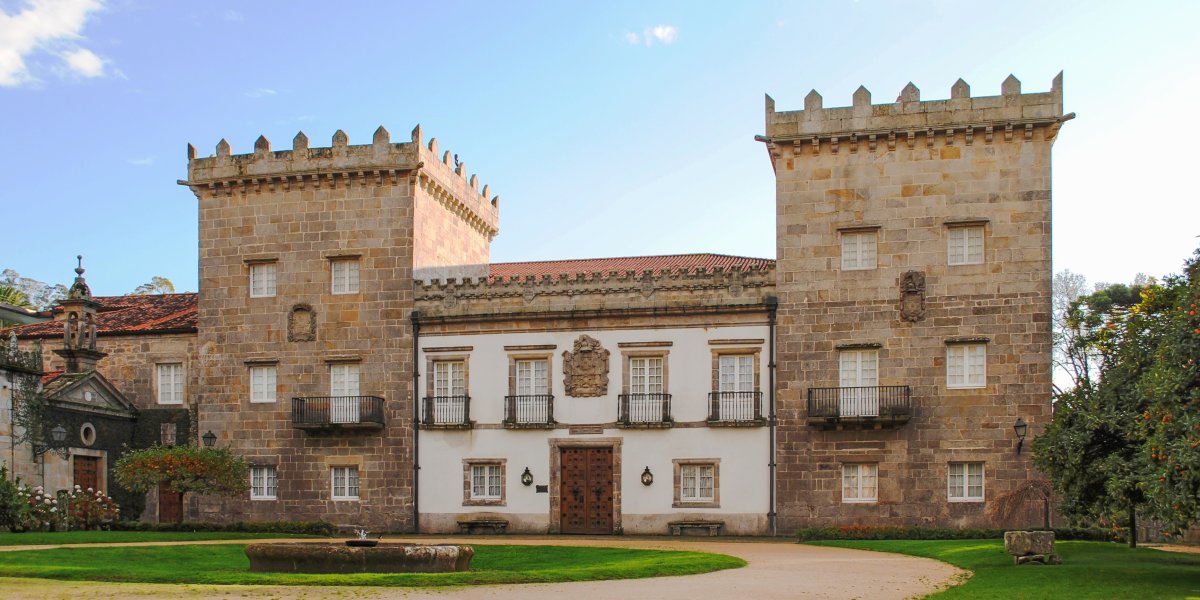
From MARCO, walk west up Rúa Pi y Margall — a steady 12-minute climb past the Pazo de Quiñones — to the hilltop fortress that gave the city its skyline. The summit holds the ruins of a 2,000-year-old Celtic castro, ringed by 17th-century walls that once guarded Vigo against English raids, and the 360° view sweeps from the working port to the Cíes Islands on the horizon. The sun sets directly behind the islands, and the ría glows copper for the 20 minutes before dusk — this is the city's only natural-light photograph that does not look like a postcard.
Tip: The granite bench just south of the south fortress wall faces the Cíes head-on — arrive 20 minutes before sunset to claim it. Skip the cafeteria at the summit (overpriced, lukewarm) and bring the bottle of Albariño you didn't finish at lunch.
Open in Google Maps →20:30
Food
Walk down Rúa Pi y Margall back toward the marina — 10 minutes, all downhill — to chef Rafa Centeno's one-Michelin-star kitchen on Rúa de Montero Ríos. This is modern Galician at its best: a tasting menu of seven courses (€95) built around what the morning's lonja delivered, with a memorable scarlet shrimp tartare and a turbot roasted on the bone that arrives whole to the table. Reservations are essential — the dining room seats 24 and the windows face the masts of the marina.
Tip: Reserve at least 4-5 days ahead (marujalimon.com) — Saturday nights fill 2 weeks out. Ask for the Albariño pairing (€45 extra) over the broader Spanish flight; the local wines are the point. Pitfall warning for the evening: the seafood shacks along Rúa Pescadería close by 17:00 — anyone offering 'fresh oysters' on that street after 21:00 is selling reheated frozen stock to tourists who don't know the cycle.
Open in Google Maps →
Trip builder
Plan this trip around Vigo
Turn this guide into a bookable rail itinerary with FlipEarth.
Keep exploring
Related cities
More in the same country
FAQ
Frequently asked questions
How many days do you need in Vigo?
Most travelers enjoy Vigo in 1 days, with enough time for headline sights and a slower meal or museum stop.
What's the best time to visit Vigo?
The easiest season for most travelers is May-Sep, especially if you want good weather and manageable crowds.
What's the daily budget for Vigo?
A practical starting point is about €110 per person per day before hotels, then adjust based on museums, dining, and transport.
What are the must-see attractions in Vigo?
A good first shortlist for Vigo includes Monte do Castro, A Laxe & Beiramar Waterfront.