City Guide
Treviso
Italien · Best time to visit: Apr-Oct.
Day-by-day plan
Choose your pace
Reisedauer
09:00
Landmark
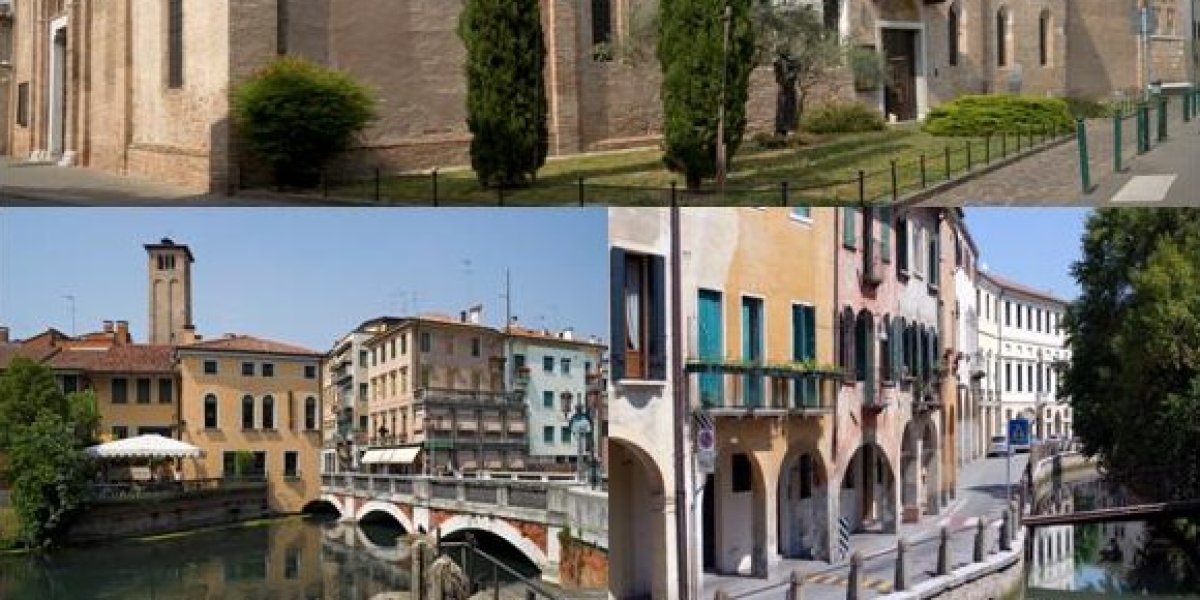
From Treviso Centrale station, walk north up Borgo Cavour — a chestnut-shaded avenue lined with Venetian palazzi that locals call the city's grandest entrance — for about 15 minutes until the white Istrian-stone gate rises ahead, the winged Lion of St. Mark still keeping watch above the arch. At 09:00 the eastern sun strikes the façade head-on, tour buses haven't unloaded yet, and the moat below holds a glassy mirror reflection of the entire gate. Climb the short ramparts walk beside it for Treviso's only elevated view over the red-tiled rooftops before the day's heat starts to shimmer.
Tip: The plaque to Caterina Cornaro — last Queen of Cyprus, born in Treviso in 1454 — is on the inner side of the arch and almost everyone walks past it. For the postcard shot, stand on the north side of the moat (outside the gate) where the water reflection is unbroken; from the inside the parked cars ruin the frame.
Open in Google Maps →10:30
Neighborhood
Re-enter the city through Porta San Tomaso and walk south down Via San Tomaso for about 8 minutes, then turn left at the canal sign for Vicolo Buranelli — a single ivy-draped alley where the Cagnan branch of the Sile slips between pastel houses and the city's surviving wooden water-wheels still creak. Continue another 3 minutes south to the Pescheria, Treviso's centuries-old fish market built on its own tiny island in the middle of the canal — at this hour the stalls are still active, vendors are calling, and morning light slants low enough to light up both banks. This is the single most-photographed corner of the city and Italians come from Venice just to shoot it.
Tip: Cross the small footbridge onto the Pescheria island and shoot back south — you get fish stalls in the foreground and two arched stone bridges receding behind. The market is closed Sunday and Monday; on those days come for the architecture but skip the early hour, as mid-morning sun on the empty stone slabs is still beautiful and far less crowded.
Open in Google Maps →12:30
Food
From the Pescheria bridge, walk south along the canal for 3 minutes and duck into Vicolo Broli — a sliver of an alley one block off Calmaggiore — and you'll find Dai Naneti, a doorway-wide bacaro with no tables, just a marble counter and locals standing out in the lane with a glass of wine. This is how the Veneto eats a quick lunch: order an ombra (small glass) of Raboso for around €1.50 and a tray of cicchetti — the baccalà mantecato on grilled polenta and the sopressa-with-radicchio crostini run about €1.80 each. Take your plate out to the cobbles, lean against the stone wall like everyone else, and you're done in 40 minutes.
Tip: The lardo-with-honey crostino is the one regulars order first and it sells out by 13:00 — ask for 'lardo con miele' the moment you walk in. They take cards now but cash moves the queue twice as fast. Closed Sundays and most public holidays.
Open in Google Maps →14:00
Landmark
Step out of Dai Naneti, walk 2 minutes east on Calmaggiore, and the square opens up to your right — anchored by the Palazzo dei Trecento with its tall brick arches and swallow-tailed Ghibelline merlons that mark Treviso's centuries under the Scaligeri before Venice annexed the city in 1339. At 14:00 the lunch crowd has thinned, the colonnades are in shadow while the brick façade glows in full sun, and the chess-game old men have not yet claimed the benches. Walk one block north to the 13th-century Loggia dei Cavalieri — a rare open-air gathering hall for Treviso's medieval nobility, with traces of original frescoes still visible under the arches.
Tip: Look closely at the Palazzo dei Trecento's eastern wall — the lighter, mismatched brickwork is a postwar reconstruction after an Allied bombing on Good Friday 1944 flattened a third of the building; the locals rebuilt it stone by stone using prewar photographs. For photos, the southeast corner of the Loggia frames both arcades in a single shot.
Open in Google Maps →16:00
Landmark
Leave Piazza dei Signori through the western archway onto Via Calmaggiore — the porticoed Roman-era spine of the city — and walk it slowly: in the late-afternoon golden hour every Istrian-stone column lights up amber and the locals' passeggiata fills the colonnade. Two minutes in, duck right into Vicolo Podestà to find the Fontana delle Tette — a 16th-century fountain shaped like a bare-breasted woman that once ran with white wine on the right side and red on the left whenever a new podestà was elected (the original is preserved nearby behind glass; this is the working replica, but the story is the city's favorite). Continue west to the Duomo di Treviso, with its seven low domes and Neoclassical portico catching the last hard sun — exteriors only, as the cathedral interior darkens fast after 16:30.
Tip: The Fontana delle Tette is small and easy to miss — it sits inside an iron grille on the wall of Palazzo Zignoli, not out in a square. For the Duomo's best exterior frame, stand on the wide front steps and shoot back across Piazza Duomo at 17:00 sharp; the western sun catches the columns and the bronze doors in the same beat of light.
Open in Google Maps →19:30
Food
From the Duomo, walk back east along Calmaggiore for 5 minutes and turn right into Piazza Ancilotto — Le Beccherie is the elegant green-shuttered restaurant on the corner, the kitchen where in 1972 chef Roberto Linguanotto and owner Ada Campeol first served the dessert that would be christened tiramisù and put on a printed menu. Order a proper Veneto dinner: start with bigoli in salsa (around €16, thick hand-pulled spaghetti in slow-cooked anchovy-onion sauce) and, in season (Nov–Mar), the grilled radicchio tardivo di Treviso, then end — non-negotiable — with the original tiramisù (about €9), served as it was invented: only savoiardi, mascarpone, espresso, and cocoa, no liqueur and no chocolate shavings. Expect around €55 a head with wine; reserve a day ahead online or by phone, especially Friday and Saturday.
Tip: Ask the host to point out the framed black-and-white photo of Ada Campeol near the bar — it's the only signage acknowledging the room you're sitting in is where the recipe was born. Pitfall warning: ignore the dozens of cafés along Calmaggiore advertising 'original tiramisù' in laminated menus — most use packet mascarpone and charge €8 for supermarket-grade portions; the genuine article is served here, and only here.
Open in Google Maps →
Trip builder
Plan this trip around Treviso
Turn this guide into a bookable rail itinerary with FlipEarth.
Keep exploring
Related cities
More in the same country
FAQ
Frequently asked questions
How many days do you need in Treviso?
Most travelers enjoy Treviso in 1 days, with enough time for headline sights and a slower meal or museum stop.
What's the best time to visit Treviso?
The easiest season for most travelers is Apr-Oct, especially if you want good weather and manageable crowds.
What's the daily budget for Treviso?
A practical starting point is about €110 per person per day before hotels, then adjust based on museums, dining, and transport.
What are the must-see attractions in Treviso?
A good first shortlist for Treviso includes Porta San Tomaso, Piazza dei Signori & Palazzo dei Trecento, Calmaggiore, Fontana delle Tette & Duomo di Treviso.