City Guide
Sofia
Bulgarien · Best time to visit: May-Sep.
Day-by-day plan
Choose your pace
Reisedauer
09:00
Religious
Begin at 09:00 when the rising sun strikes the 45-meter central gold dome from the east and the whole neo-Byzantine crown literally glows — by 11:00 the façade is already in shadow. Walk the plaza clockwise to catch all five domes, then cross to tiny St. Sofia Church directly behind (6th century, the city's namesake, with the Monument to the Unknown Warrior burning at its northern wall), and finish two blocks west at the Russian Church of St. Nicholas, whose emerald-and-gold onion domes are Sofia's second most-photographed façade. Exteriors and plaza only — the morning light is the point.
Tip: Shoot from the southeast corner of the plaza around 09:15 — low sun lights the main façade and the apse in one frame. Tour buses start rolling in at 09:45, so the first 45 minutes are effectively yours alone. Skip the ladies selling lace shawls on the steps; identical ones are half the price at Central Market Hall later.
Open in Google Maps →11:00
Landmark
Walk west along Tsar Osvoboditel Boulevard — 10 minutes on a chestnut-shaded avenue past the Parliament, the Russian Liberators Monument and the National Assembly, a stretch that feels like Vienna crossed with Moscow. The Largo itself is Sofia's socialist stage set: three monumental buildings (the Presidency, Council of Ministers, and former Party House) framing a plaza where 4th-century Roman streets run beneath glass underfoot. Catch the Changing of the Guard at the Presidency on the hour, then slip through its archway into a hidden courtyard to find St. George Rotunda — red Roman brick from the reign of Constantine, Sofia's oldest standing building, still hugged on three sides by state ministries.
Tip: For the guard change, stand at the southwest corner facing the Presidency entrance — you get both sentries plus the Serdica ruins in the same frame. The 11:00 ceremony is the least crowded of the day; by 13:00 a full school-trip semicircle blocks every angle. Don't miss the free Serdica metro underpass beside the Largo: the preserved Roman decumanus is one of the best-kept archaeological secrets in Europe.
Open in Google Maps →12:30
Food
Exit the rotunda courtyard north, cut through the Serdica underpass and emerge onto Maria Luiza Boulevard — the yellow-brick clock tower of Tsentralni Hali rises 300 meters ahead. Built in 1911 and restored in the 90s, it is Sofia's most beautiful food shelter: iron trusses, delicatessens on the ground floor, quick-food counters on the mezzanine. Go straight upstairs and eat standing at the counter like office workers on lunch break — a hot banitsa (flaky cheese pastry, 3 лв / 1.5€) with a glass of ayran, then two kebapche (grilled minced-meat fingers, 4 лв / 2€ each) and a shopska salad. Budget 8€ total.
Tip: The busiest stall is the best — look for the counter with a queue of men in shirts (usually the banitsa stand near the escalator). Avoid any counter displaying a printed English menu with prices in euros; those are 2× tourist markups sitting 10 meters from the real ones. Pay in leva, not euros — the euro exchange rate at the market is criminal.
Open in Google Maps →14:00
Neighborhood
Exit the market's south doors and cross Maria Luiza — within 200 meters you stand at a plaza where a mosque, a synagogue, a cathedral and a sunken medieval chapel are visible from a single spot, a religious density unmatched anywhere in Europe. Start at Banya Bashi Mosque (1576, Sofia's only active Ottoman mosque, red-brick minaret), walk south past the open-air mineral water fountains where locals fill bottles from 42°C thermal springs, continue to Sveta Nedelya Cathedral (site of the 1925 bombing that nearly killed Tsar Boris III), and finish at tiny Sveta Petka Samardzhiyska — a 14th-century chapel sunk three meters below street level because Ottoman law forbade churches rising higher than a man on horseback.
Tip: The mineral taps in front of the Regional History Museum are drinkable and famous — bring an empty bottle. The water is slightly sulfurous and warm; Sofians swear it clears everything from kidneys to hangovers. Ignore anyone soliciting a 'donation' near Sveta Petka — entry is free, and the stone stairs down to the sunken nave are the photograph you want.
Open in Google Maps →15:30
Neighborhood
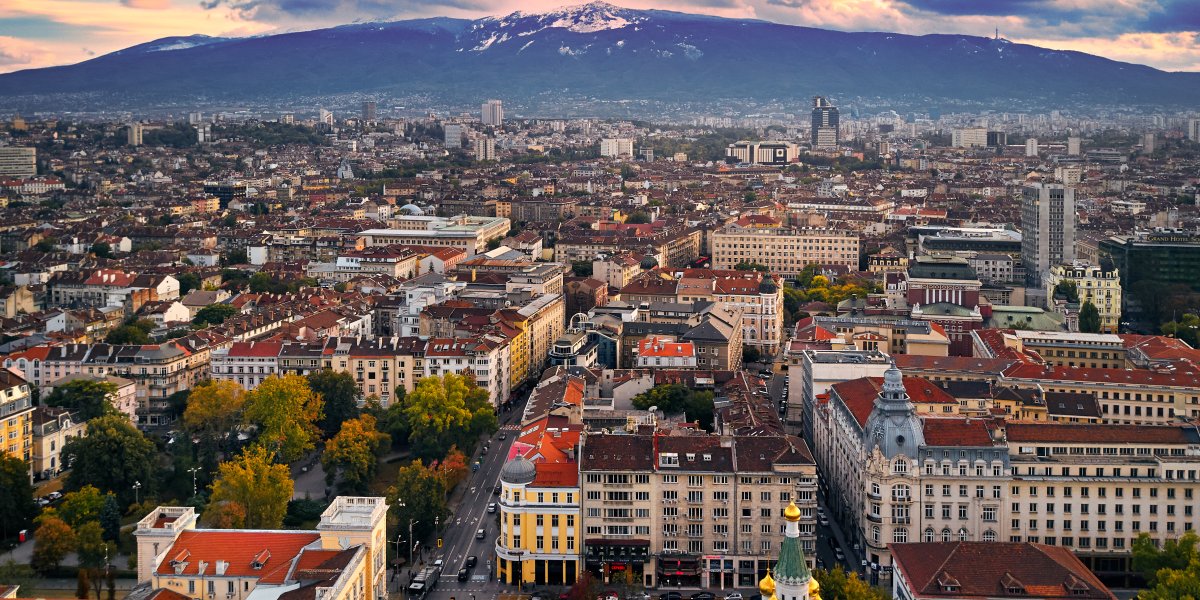
From Sveta Nedelya Square, walk south onto Vitosha Boulevard — the city's 1-kilometer pedestrian spine opens up with the 2290-meter silhouette of Vitosha Mountain rising directly ahead like a painted backdrop. Walk the full length to the NDK (National Palace of Culture) with its fountains and reflecting pool, pausing around the halfway point at a third-wave café terrace for a 3€ flat white. By 18:00 the mountain turns violet in the setting sun and the after-work crowd fills the boulevard — this is Sofia's living room, and the only moment the city truly performs for itself rather than for visitors.
Tip: The boulevard's postcard shot is from the pedestrian crossing at Patriarch Evtimiy Square, looking south — Vitosha fills the frame perfectly between the Art Nouveau buildings. Sunset shoots best from the NDK fountain plinth at the far end around 19:15 in summer. Photograph before you sit at any café terrace; coffee there is 2× what a two-street detour west will cost.
Open in Google Maps →19:30
Food
Double back up Vitosha Boulevard 400 meters — Shtastlivetza ('the Lucky One') sits on the corner, a two-story yellow house with wrought-iron balconies and a summer terrace that spills onto the pedestrian street. Three floors of dark-wood interiors and the most serious kitchen treating Bulgarian classics with real respect. Order a shopska salad (5 лв / 2.5€, the national tomato-cucumber-feta), a clay-pot kavarma (12 лв / 6€, slow-cooked pork with mushrooms and peppers under a bread crust), and a glass of Melnik 55 red from the country's southwest. Finish with pumpkin banitsa and a homemade rose-petal rakia — often on the house. Budget 25€ with wine.
Tip: Reserve for 19:30 the same morning via their website or phone; after 20:00 the wait hits 45 minutes in summer. Ask for the covered terrace, not the basement. **Sofia trap warning**: anywhere on or near Vitosha Boulevard advertising a 'Bulgarian folk show + dinner' for a flat 40€+, or with a costumed host physically pulling you in from the street, is a clip joint — the food is reheated and the 'show' is a 10-minute loop. Real Bulgarian food costs 20-25€ per person with wine; anywhere quoting in euros only is not where Sofians eat.
Open in Google Maps →Zu Tag springen
09:00
Religious
This is your starting point — step onto the cobbled square just after nine, when the five gilded domes catch the morning sun and the tour buses haven't yet arrived. Built 1882-1912 as Bulgaria's thanks to Russian soldiers who died liberating the country from the Ottomans, it holds 10,000 worshippers under a green-copper dome taller than anything else on the skyline. Slip in quietly, let your eyes adjust to the candlelit gloom, then descend to the crypt — the country's finest collection of Orthodox icons lives below, almost always empty of visitors.
Tip: Ignore the men near the doors offering 'official' photography for 6 BGN — photos inside the nave are actually free. Pay the 6 BGN for the crypt icon museum via the separate side-door entrance on the north wall; the 16th-century icons from the Bansko School hang in the back-left room and you'll have them entirely to yourself before 10:30.
Open in Google Maps →10:45
Religious
Walk 150 metres west across the same square — the squat red-brick basilica that gave the capital its name sits opposite the cathedral, looking almost humble by comparison. Pause at the eternal flame and the tomb of the unknown warrior just outside; the worn stone has been touched by every Bulgarian child on their first school trip to Sofia. Inside, a stairway drops you into a 4th-century Roman necropolis beneath the floor — mosaic-tiled tombs, still-visible fresco fragments, and the unmistakable damp silence of somewhere very old.
Tip: The necropolis ticket (6 BGN) is rarely bought — most tourists don't realise there's a world beneath the church. Go straight to the mosaic floor directly under the altar; the pale yellow geometric pattern is the best-preserved late-Roman floor in the Balkans. Climbing the bell tower is a waste of the fee — the view is obscured by trees.
Open in Google Maps →12:15
Food
Cut south through the Doctors' Garden and onto the cobbled back-streets — a 12-minute stroll past yellow 1930s townhouses delivers you to Solunska Street. Moma occupies a restored old Sofia house with a small interior courtyard; this is where young professionals drag their parents on weekends to prove that Bulgarian food is more than kebapche. Order the shopska salad (9 BGN) as a matter of principle, then the kavarma — a sizzling clay pot of pork, peppers and onions slow-baked until the edges caramelise (19 BGN). Pair it with a glass of Mavrud, the deep-red native grape grown only in Thrace.
Tip: Ask to sit in the back courtyard — it's a hidden patio under a grapevine trellis that no walk-in tourist ever finds. Do NOT order from the bread basket (4 BGN of sliced white) — instead ask for parlenka, the house-made flatbread brushed with butter and sirene cheese, a whole round for the same price. No reservation needed before 12:30; after that expect a 20-minute wait.
Open in Google Maps →14:00
Landmark
Eight-minute walk north up Lege Street to Nezavisimost Square — the heart of the Roman city of Serdica lies exposed beneath your feet, a sunken open-air museum of basalt streets, shopfronts and a 4th-century basilica that Constantine himself walked. Descend the stairs, trace the decumanus, then follow the signs into the courtyard of the Presidential residence next door. Tucked between Soviet-era government blocks stands the Rotunda of Saint George — a perfectly round 4th-century brick church, Sofia's oldest surviving building, with three layers of frescoes uncovered beneath the plaster. Enter freely; a single candle burns inside.
Tip: The open-air Serdica ruins on Nezavisimost Square are completely free and give the best photos — the paid metro-level extension adds only more mosaics. The Rotunda is inside the Presidential complex courtyard and intimidating-looking guards flank the entrance, but the church is public and always open — walk through with confidence, no bag check, no ticket. Changing of the presidential guard happens on the hour; linger for the 15:00 ceremony.
Open in Google Maps →16:30
Landmark
Exit the Rotunda courtyard eastward and cut across the pedestrian zone — five minutes delivers you to the butter-yellow Viennese-baroque facade of the National Theatre, built 1904-1907 and named for Bulgaria's greatest novelist. The fountains in front catch the late-afternoon light; the City Garden behind them is where Sofia comes to breathe — grandfathers hunched over chess boards, students sprawled on benches, an accordion player who has been on the same corner for thirty years. Skip the ticketed tour; the real experience is on this bench, with a takeaway espresso from the kiosk, watching the city reset itself for the evening.
Tip: The best photograph of the theatre is from the southwest corner by the ornamental fountain — at 17:30 the raking sun picks out the column drums and sculpted tympanum in gold. The chess tables run on tiny stakes (2 BGN) — watch, never photograph a player without asking, and never try to join unless you're confident; these are retired national-level players and they will humiliate you in four moves.
Open in Google Maps →19:30
Food
A 5-minute taxi ride (around 8 BGN on the meter) takes you north to Kozloduy Street — the walk is fine in daylight but not worth it at night. Hadjidraganovite Izbi occupies a cavernous brick-vaulted cellar dressed like a 19th-century Bulgarian tavern, and despite appearances is where Sofian families celebrate birthdays, not a tourist trap. Order the kapama — layered pork, chicken, sausage and sauerkraut slow-cooked sealed in a clay pot for four hours (26 BGN) — and the grilled lamb chops marinated in savoury and thyme (28 BGN). House rakia comes in a carafe of ice-chilled copper; sip it, don't shoot it, and eat salad between sips as the locals do.
Tip: Reservation absolutely essential Friday and Saturday — call +359 2 930 1382 or use their website, same-day often full. Avoid the 'traditional folk restaurants' clustered along Vitosha Boulevard with laminated English menus and photos of dancers outside — they inflate bills 30-40% and substitute imported pork for the Bulgarian black pig you came for. Airport taxi scam: only use OK Supertrans (yellow), Yellow Taxi, or the TaxiMe app — drivers who approach you in the terminal quoting flat fares charge triple; insist 'na taksimetar, molya' (on the meter, please).
Open in Google Maps →09:30
Religious
Short taxi (15 minutes, around 12 BGN) south-west to the leafy foothills of Vitosha Mountain — the driver drops you at a wooden gate set among walnut trees and you walk the last hundred metres through pine-scented shade. Boyana is tiny — three rooms totalling no larger than a Paris studio apartment — but the frescoes painted inside in 1259 by an anonymous master predate the Italian Renaissance by fifty years and contain the most lifelike portrait faces in medieval European art. UNESCO admits only eight visitors at a time for exactly ten minutes; take the 9:30 first slot and you'll have the full ten almost alone with the donor portraits of Desislava and Kaloyan.
Tip: Book the 9:30 slot online at boyanachurch.org two days in advance — walk-in tickets in peak season (June-September) mean 3-4 hour waits and frequently selling out for the day. Bring a light jacket: the church is kept at 17°C year-round to preserve the frescoes, and in July the 20-degree drop at the doorway is a shock. Photography is strictly forbidden inside and guards are vigilant — don't even attempt it.
Open in Google Maps →11:00
Museum
Four-minute uphill walk from the Boyana gate — follow the pine-lined path and the signs appear. The museum occupies Residence Boyana, a former palace of the communist politburo, and houses Bulgaria's greatest treasures under chandeliers meant for party apparatchiks. Skip the ground-floor prehistory rooms on first pass and head directly to the Thracian gold: the Panagyurishte treasure — nine solid-gold ceremonial vessels from the 4th century BC shaped like stag heads and amazons — sits in its own darkened room, lit only by pinpoint spots that make the metal glow as though on fire. This is the gold that inspired the myth of King Midas.
Tip: Head straight to Hall 4 (Thracian Gold, second floor) the moment you enter — tour groups flood it from 11:30 onward and the room holds perhaps fifteen people comfortably. The Panagyurishte rhytons are on the left wall under individual spotlights; walk anticlockwise so you see them in the sequence they were used at a ritual feast. The café on the ground floor is poor value — eat lunch back in the city.
Open in Google Maps →13:30
Food
Taxi back to the city centre (20 minutes, around 12 BGN) — ask for Vitosha 27. Shtastliveca's flagship sits on the pedestrianised Vitosha Boulevard with a wide terrace facing the boulevard and Mount Vitosha filling the horizon behind. This is Sofia's most successful Bulgarian-grill chain and despite being a chain the Vitosha branch still cooks with skill; locals eat here on work lunches. Order the Sach — a sizzling iron skillet of mixed grilled pork, chicken, mushrooms and yellow cheese (24 BGN) — and a hot banitsa with cheese and spinach (8 BGN). Ayran, the salty yoghurt drink, cuts the grill smoke perfectly.
Tip: Ask specifically for the 'business lunch' card — not advertised, changes daily, soup plus main for 15 BGN until 16:00. Take a terrace table on the boulevard side; the interior gets loud with groups and you'll miss Vitosha in the distance. Bulgarians nod for NO and shake their head for YES — the waiters are used to foreigners but it still causes confusion when ordering; use words, not gestures.
Open in Google Maps →15:30
Neighborhood
Stroll north up Vitosha Boulevard from the restaurant — fully pedestrianised, café terraces on both sides, boutiques in restored Habsburg-era buildings, and the white peak of Vitosha Mountain framed behind you every time you turn. Ten minutes delivers you to Sveta Nedelya Cathedral, the domed Orthodox church at the boulevard's head. This church was bombed in 1925 during communist assassination attempts on the tsar — 150 died, the tsar survived, and the dome you see today was rebuilt in the 1930s. Inside: a single massive iconostasis, the scent of beeswax, old women kissing icons, and absolute silence.
Tip: Walk the full length of Vitosha Boulevard from south to north — this way the mountain is always in view over your shoulder and the golden-hour light on the cathedral dome awaits you at the end. Inside Sveta Nedelya photography is officially forbidden; locals ignore the signs with phones but the guards enforce it during weddings and services. The 'rose oil' sellers on the boulevard are a scam — authentic Bulgarian rose attar never sells from a folding table, and the tiny vials are almost always synthetic.
Open in Google Maps →17:30
Park
Return south down Vitosha Boulevard toward the vast slab of the National Palace of Culture (NDK) — a 15-minute walk brings the mid-century concrete monolith into view, fronted by a dramatic fountain plaza and flanked by socialist-era sculptures. The fountains fire up at dusk and Sofia's office workers, skateboarding teenagers and pram-pushing parents all converge. Walk behind NDK into the South Park — a wide green wedge running south toward the mountain — and find a bench facing Vitosha. This is the sunset the entire city shares: the pink granite summit of Cherni Vrah slowly going rose-gold, then violet, above the suburbs.
Tip: Enter South Park from the east side (Bulgaria Boulevard) rather than walking straight through NDK — you'll get a clean frame of the mountain between two lines of cypress trees, the best sunset photo in Sofia. The NDK fountain lights switch on at civil twilight — around 20:45 in July, 18:30 in October. The stalls around the plaza selling 'antique' Soviet medals, hats and lighters are all modern factory reproductions from Plovdiv; amusing souvenirs but don't pay more than 15 BGN for any of it.
Open in Google Maps →19:45
Food
Eight-minute walk east from NDK via Han Asparuh Street — the restaurant occupies a restored old Sofia house with a walled garden hung with grapevines, set back from the street behind a wooden gate you might almost miss. 'Monastery Kitchen' serves dishes reconstructed from the recipe books of Bulgarian Orthodox monasteries, and the menu — 150+ items thick — reads like an anthropology thesis. Order the monastery-style rabbit stewed with onions and juniper in a clay pot (28 BGN), the slow-braised pork neck with leeks and prunes (26 BGN), and the house-baked dark bread brought warm. Finish with a glass of honey-and-walnut rakia; the monks knew what they were doing.
Tip: Reservation essential — call +359 2 980 3883 at least a day ahead; the garden tables go first. If asked, choose the garden even in October (outdoor heaters; indoor is beautiful but louder). Pitfall to avoid on your way back: 'taxi' drivers loitering outside popular restaurants who offer flat fares of 30-40 BGN for a 10 BGN ride — walk one block toward the main street and flag a moving yellow taxi with a working meter, or order via the TaxiMe or Yellow apps. Never use a taxi with a handwritten price card in the windscreen.
Open in Google Maps →
Trip builder
Plan this trip around Sofia
Turn this guide into a bookable rail itinerary with FlipEarth.
Keep exploring
Related cities
More in the same country
FAQ
Frequently asked questions
How many days do you need in Sofia?
Most travelers enjoy Sofia in 1 days, with enough time for headline sights and a slower meal or museum stop.
What's the best time to visit Sofia?
The easiest season for most travelers is May-Sep, especially if you want good weather and manageable crowds.
What's the daily budget for Sofia?
A practical starting point is about €65 per person per day before hotels, then adjust based on museums, dining, and transport.
What are the must-see attractions in Sofia?
A good first shortlist for Sofia includes The Largo and St. George Rotunda.