City Guide
Sirmione
Italien · Best time to visit: May-Sep.
Day-by-day plan
Choose your pace
Reisedauer
09:00
Landmark
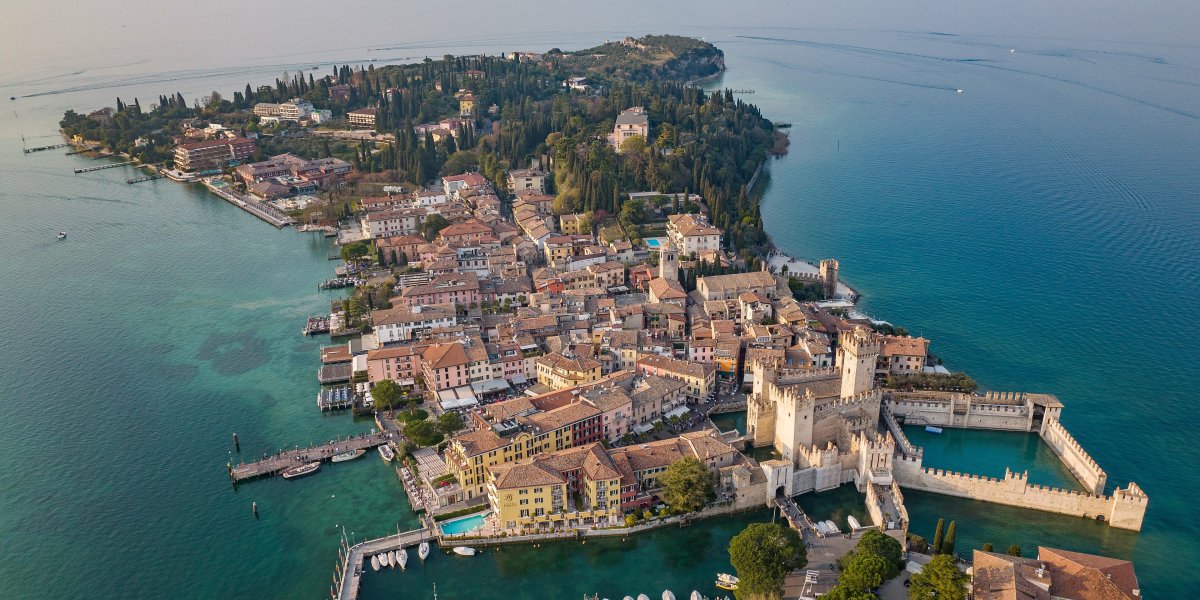
From the mainland parking and bus drop-off, follow the pedestrian road straight onto the peninsula — the castle appears suddenly, ringed by its own moat, the only gateway into the old town. Arriving by 09:00 means the tour buses from Verona haven't unloaded yet and the drawbridge is yours for clean photographs. This 13th-century Scaligero fortress is one of the few moated castles in Europe still surrounded by water on every side, with merlon-toothed walls rising straight out of the lake.
Tip: Skip climbing the tower (€8, narrow stairs, 30-minute queue by 10:00). The iconic shot is from the small wooden footbridge on the right side of the main entrance, looking back across the moat — early light hits the merlons head-on between 09:00 and 09:30, after which the sun goes behind the keep.
Open in Google Maps →10:00
Religious
Cross through the castle gate onto Via Vittorio Emanuele, the cobbled spine of the old town — lemon-yellow facades, gelato windows, and Piazza Carducci open up after 5 minutes. From the square climb gently up Via San Pietro for another 10 minutes; the trees thin and the small 8th-century Romanesque church of San Pietro in Mavino appears on the highest point of the peninsula, its 12th-century frescoes still visible inside and olive groves rolling off in every direction.
Tip: The stone bench under the cypress on the church's north side is the only spot in Sirmione where you can frame the lake without a single roof in view. Mid-morning the sun is behind you and the water glows blue-green — try the same angle at noon and the glare ruins it.
Open in Google Maps →12:30
Food
Walk back down Via San Pietro to Piazza Carducci — 8 minutes, all downhill, lake glimpses through the alleys on the right. This is the only café in the square shaded by century-old plane trees, run by the same family since the 1950s and the place locals actually use for a fast workday lunch. Order at the counter to skip the wait: the tagliere di lago (€14, smoked lake trout, sardine in saor, Bagòss cheese) plus a glass of Lugana white from the surrounding hills (€5).
Tip: Eat standing at the bar, not on the terrace — the same panino al lago drops from €12 outside to €7 at the counter, and you'll be out the door in 30 minutes. Ask specifically for the Lugana from Tenuta Roveglia; it's grown on the slopes you just walked down from the church.
Open in Google Maps →14:00
Landmark
From Piazza Carducci continue north on Via Catullo — the road narrows, the houses end, and an olive-shaded lane runs the final 800 metres to the tip of the peninsula. The 'Grotte' aren't grottoes at all but the sprawling 1st-century ruins of the largest Roman villa in northern Italy, perched on a cliff above the lake with views opening in three directions. Two hours lets you wind through the cryptoporticus, the Great Hall, and the olive grove where the foundations dissolve into the rocks above the water.
Tip: Enter and immediately bear left toward the 'Aula a tre Pilastri' terrace — most visitors loop right and bunch up around the central hall. The northern overlook gives you the cliff-edge view across the bay toward Salò, and at 14:00 the afternoon sun lights the limestone face perfectly for photos. Wear shoes with grip; the ruined paths are uneven Roman stone.
Open in Google Maps →16:30
Park
Exit the Grotte through the side gate marked 'Spiaggia' and descend a short flight of stone steps for 3 minutes — you arrive on a vast platform of flat white limestone slabs sloping into turquoise water. This is Jamaica Beach, the lake's most photographed swimming spot, formed where the Roman villa's foundations meet the shore. The water is startlingly clear, the stone stays warm into the evening, and the Alps frame the far horizon.
Tip: Crowds peak 14:00–16:00; by 16:30 the day-trippers have left for their buses and the late light turns the water gold — that's the swimming window. Walk 50 metres past the small sand patch nearest the path onto the flat rocks: seating is free, footing is dry, and the rental loungers' touts (€15/hour) don't bother you out there.
Open in Google Maps →19:30
Food
Walk back south along the Lungolago della Lupa, the west-side promenade — 25 minutes of unbroken lake views as the sun drops behind the Brescia hills, ending just below the castle walls. La Speranzina occupies a 16th-century villa with a terrace cantilevered over the water; candlelit railing tables sit six metres from the lapping waves. Order the spaghetto al limone di Sirmione (€26, made with citrus grown 200 metres up the road) and the lake-perch fillets with capers and almonds (€32).
Tip: Reserve at least 48 hours ahead by phone and ask specifically for 'la terrazza sul lago' — the indoor dining room is elegant but you came for the water. Pitfall warning: the strip of restaurants along Via Piana north of the castle parade laminated photo menus in eight languages — these are the textbook Garda traps with frozen risotto and €18 cover charges. The real spots have paper menus, a Lugana list longer than the pasta list, and Italians at the bar.
Open in Google Maps →
Trip builder
Plan this trip around Sirmione
Turn this guide into a bookable rail itinerary with FlipEarth.
Keep exploring
Related cities
More in the same country
FAQ
Frequently asked questions
How many days do you need in Sirmione?
Most travelers enjoy Sirmione in 1 days, with enough time for headline sights and a slower meal or museum stop.
What's the best time to visit Sirmione?
The easiest season for most travelers is May-Sep, especially if you want good weather and manageable crowds.
What's the daily budget for Sirmione?
A practical starting point is about €110 per person per day before hotels, then adjust based on museums, dining, and transport.
What are the must-see attractions in Sirmione?
A good first shortlist for Sirmione includes Castello Scaligero, Grotte di Catullo.