City Guide
Reykjavik
Island · Best time to visit: Jun-Aug midnight sun; Sep-Mar Northern Lights.
Day-by-day plan
Choose your pace
Reisedauer
09:00
Landmark
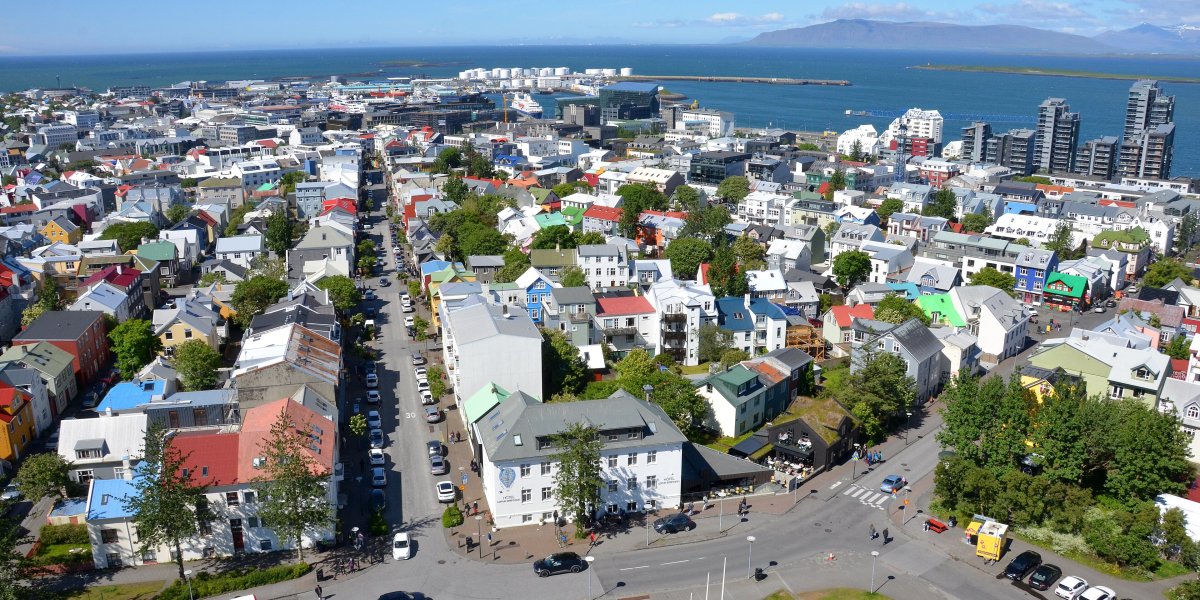
Start at the church whose concrete-basalt spire dominates every Reykjavik postcard — a ten-minute uphill walk from most downtown hotels along Skolavordustigur. Buy a tower ticket the moment the elevator opens at nine; the 74-metre belfry unveils the whole city as a carpet of coloured tin rooftops tumbling down to steel-blue Faxafloi Bay, with snow-streaked Mount Esja floating across the water. The facade, inspired by Iceland's columnar basalt cliffs, is a piece of the country's landscape translated into architecture — understand this at first light and the whole day makes sense.
Tip: Tower tickets (around 1500 ISK) are sold at a separate desk inside the right-hand vestibule — the first elevator at 09:00 has zero queue, but by 10:30 cruise-ship groups swell the wait to 30+ minutes. Skip the nave itself unless an organ recital is scheduled; the exterior and the view from the top are the point.
Open in Google Maps →10:45
Neighborhood
Exit the church and walk back down Skolavordustigur — the rainbow-painted street that runs like a landing strip from Hallgrimskirkja's steps into the old town. Stop at the first corner and turn around: you are now standing in the most-photographed shot in Iceland, the spire framed by painted stripes. Continue west onto Laugavegur, Reykjavik's main shopping street lined with hand-knit lopapeysa sweaters, design boutiques and volcanic-rock jewellery, then drop south to Tjornin, the small downtown pond ringed by brightly coloured wooden houses and watched over by the glass-and-basalt City Hall. In winter the pond freezes solid; in summer it fills with whooper swans and eider ducks.
Tip: Stand at the junction of Skolavordustigur and Frakkastigur for the cleanest rainbow-to-church photo — morning backlight silhouettes the spire against a clear sky, and this is the single block painted most recently so the colours are brightest. The stripes are permanent since 2019 but retouched in early summer, so autumn visitors see slightly faded pigment.
Open in Google Maps →12:30
Food
Walk ten minutes north from Tjornin along Posthusstraeti to the little red hot-dog shack beside the old harbour — a corrugated-metal booth that has served since 1937 and was crowned the best hot dog in Europe by Bill Clinton in 2004. The lamb-blend pylsa is Iceland's national street food: order 'eina med ollu' (one with everything) and you'll get sweet brown mustard (pylsusinnep), ketchup, remoulade, raw white onion and crispy fried onion, all for around 650 ISK. It is the one sit-down-free meal in Reykjavik that won't destroy your budget.
Tip: Say 'eina med ollu' (AYN-a meth ULT-loo) — it means 'one with everything' and is the only correct order; asking in English for 'a hot dog' gets you a naked bun. Card works but cash is faster during lunch rush. Eat standing at the window ledge rather than walking — the remoulade drips, and the harbour gulls know it.
Open in Google Maps →13:15
Landmark
A three-minute walk east along the harbour brings you to Harpa, the honeycomb-glass concert hall by Olafur Eliasson and Henning Larsen that replaced a rusting shipyard in 2011. Walk inside — the lobby is free and always open — and look up: thousands of dichroic hexagonal panels catch the Icelandic light and throw coloured diamonds across the black basalt floor. Take the escalators to the upper balconies for a framed view of Faxafloi Bay through the glass geometry, then step outside along the south wall where the facade mirrors the harbour in midday light.
Tip: Skip the ground-floor gift shop and ride the escalator to the 4th-floor balcony — almost nobody goes up there and you get the cleanest shot of the hexagons backlit by the sea. Don't pay for the 45-minute guided architecture tour for a quick stop: the public spaces reveal the same facade for free.
Open in Google Maps →14:30
Landmark
From Harpa, follow the Saebraut seafront path east for eight minutes to Solfar (Sun Voyager), Jon Gunnar Arnason's mirror-steel ship-skeleton sculpture pointing across the bay toward the open North Atlantic — often read as a Viking longship, though the artist called it 'a dream boat and an ode to the sun.' Then keep walking. The paved coastal path continues east past the white Hofdi House (where Reagan and Gorbachev effectively ended the Cold War in 1986) and onward under Mount Esja's shadow into Laugarnes, with gulls, sea spray and almost no tourists the further you go. Turn back whenever your legs decide — this long afternoon stretch is where Reykjavik finally feels like an Arctic capital rather than a compact tourist grid.
Tip: Shoot Sun Voyager from the south-east side with Mount Esja centred in the background — the afternoon sun behind you turns the polished steel into a mirror of sea and sky. Don't book the whale-watching boats touted by hawkers around Harpa: the real departures leave from the Old Harbour pier a kilometre west, cost 12,000+ ISK, and in mid-summer mostly return without sightings.
Open in Google Maps →19:00
Food
Walk west along the waterfront past the Old Harbour into Grandi, the converted fishing-warehouse district now full of breweries and design studios, and arrive at Matur og Drykkur ('Food and Drink') on the ground floor of the old Saga Museum building — the definitive reinterpretation of Icelandic cuisine by chef Gisli Matthias Audunsson. Order the slow-baked cod head (around 4900 ISK / €34), a dish rescued from fisherman's leftovers and plated with brown butter and chickpea puree, and the birch-and-juniper-glazed Icelandic lamb shoulder (around 7200 ISK / €50). Budget €65–85 per person before drinks; the Icelandic craft-beer list is worth the splurge.
Tip: Reserve two weeks ahead via their website or Resy — walk-ins after 18:30 are turned away every night in summer. The cod head sounds alarming but is the most-ordered dish for a reason: ask for the cheeks first, they are the tenderest morsels. Beware the 'whale, puffin and shark' tasting platters advertised at the Laugavegur steakhouses downtown — they exist purely for cruise passengers, cost triple what Matur og Drykkur charges, and contribute to the collapse of Atlantic puffin colonies; this restaurant pointedly omits puffin from its menu, which is one more reason to eat here.
Open in Google Maps →Zu Tag springen
09:00
Religious
Start your trip at the city's defining silhouette — a basalt-column concrete church that took 41 years to build and looms over every Reykjavik postcard. At 09:00 the doors have just opened and the nave is empty, so the lift to the 74-metre tower runs without a queue. From the top you see the whole peninsula: cobalt roofs, the North Atlantic, and Mount Esja across the fjord — the single best panorama in Iceland's capital.
Tip: Buy the tower ticket online the night before and arrive right at 09:00 — by 10:30 the cruise-ship groups arrive and the lift queue clogs the nave. From the viewing platform face north-east: the painted tin roofs of Laugavegur line up perfectly against Mount Esja, which is the shot that ends up on every Iceland mood board.
Open in Google Maps →11:00
Landmark
From the church steps, walk straight down Skolavordustigur — Reykjavik's painted rainbow street lined with Icelandic wool shops and design studios — for 12 minutes until you hit the harbour promenade, then turn east along the water. The stainless-steel skeletal longship pointing north is Jon Gunnar Arnason's 1990 ode to exploration. Late morning gives you Mount Esja glowing across the Faxafloi fjord directly behind the bow, and the sun finally comes around low from the south.
Tip: Shoot from the south-east corner with the hull silhouetted against Mount Esja; crouch low so the ship appears to sail off the stone plinth into the sea. Midday the light is at your back and the stainless steel reads silver, not grey — the same frame at 15:00 is backlit and washes out.
Open in Google Maps →12:30
Food
Follow the seaside path west for 10 minutes, rounding the honeycomb glass of Harpa, until you reach a tiny red kiosk at Tryggvagata that has been grilling hot dogs since 1937 — Bill Clinton stood in this same queue. The 'pylsa' is part lamb, dressed with sweet brown mustard, remoulade, raw and crispy onions. This is the one affordable meal you'll eat in Iceland and somehow the most memorable.
Tip: Order 'eina med ollu' (one with everything) in Icelandic — the cashier grins. Two hot dogs fill a grown adult; Bill Clinton famously asked for his plain and Icelanders have been quietly mocking him for 20 years. Eat standing at the blue counter so you don't miss the queue photo op under the neon sign.
Open in Google Maps →14:00
Landmark
Double back 3 minutes along the quay — the honeycomb glass facade is right there on the harbour edge. Olafur Eliasson designed the 714 basalt-inspired glass modules so that afternoon sun refracts into amber hexagons across the interior floors. Entry is free. Take the staircase, not the lift, to level 4 to watch the light pattern crawl across the lobby as you climb.
Tip: Level 4 between 14:30 and 15:30 is when the low winter sun throws the most dramatic hexagonal shadows onto the black polished floor — that's the viral reflection shot. The building is free to wander, so skip the paid guided tour; the architecture speaks for itself.
Open in Google Maps →15:30
Museum
Keep walking west along the old harbour for 20 minutes past ochre fishing trawlers, the ice-cream queue at Valdis, and the Grandi pier street-art walls. Europe's largest whale exhibition hangs 23 life-size models in a blacked-out warehouse, including a 25-metre blue whale you can walk under. The scale hits differently than any aquarium — these are the mammals you're hoping to see on a Faxafloi tour, and here they hover silently above your head.
Tip: Pick up the free audio guide at reception — without it you're just looking at plastic whales. Stand directly under the blue whale's belly and look up for the perspective shot; the floor is intentionally mirrored here. Skip the overpriced gift-shop puffin plush — Icelandic wool shops on Skolavordustigur sell the real thing for less.
Open in Google Maps →19:30
Food
Catch a 5-minute taxi or walk 25 minutes back along the harbour path — the route glows pink on clear evenings as the low sun skims the fjord. This basement restaurant on Laekjargata is where Icelanders actually splurge: the kitchen smokes and grills local ingredients over birch and lava stone. Order the langoustine soup (ISK 4,900 / ~€33) and the grilled Icelandic lamb rack with skyr glaze (ISK 7,900 / ~€53). Budget around €80-100 per person with wine.
Tip: Book 48 hours ahead for the 19:30 seating and ask for the banquette by the brick wall, not the centre tables — service is warmer. PITFALL: avoid the 'puffin and whale tasting menus' advertised on Laugavegur street — most are frozen imports at triple price, and several hunt-free restaurants publicly refuse to serve whale at all. Also dodge restaurants showing photos of food in the window — that's the tell for tourist traps here.
Open in Google Maps →08:30
Park
Pick up your rental or tour pickup at 07:30 for a 45-minute drive east out of the city through treeless lava fields. Thingvellir is where the Eurasian and North American tectonic plates visibly split apart, and where the world's first parliament convened in 930 AD — geology and civilisation collided here. The Almannagja rift path walks you along the North American plate wall with the rift valley spread below. At 08:30 the morning mist still hangs between the cliffs and the tour buses don't arrive until 10:00.
Tip: Park at P1 (the upper visitor-centre lot, ISK 1,000) and walk the rift down — doing it uphill in reverse exhausts your legs before the rest of the day. Skip the crowded Oxararfoss waterfall viewpoint; the silent stretch 200 m north along the rift has glassy water reflections and almost nobody in frame.
Open in Google Maps →11:00
Landmark
A scenic 50-minute drive east past Laugarvatn lake brings you to the original Geysir — the word all other geysers on Earth are named after. The old 'Great Geysir' barely erupts anymore, but its neighbour Strokkur blasts a 20-30 metre column of boiling water every 6-8 minutes with absolute reliability. The whole field hisses, steams and smells of sulphur; the ground itself is warm through your shoes.
Tip: Stand on the north side of Strokkur with the sun behind you — the white plume reads bright against the dark lava hillside and catches any rainbow in the spray. Watch the turquoise dome of water swell at the vent just before eruption; that's your 1-second warning to hit record. Stay behind the rope: runoff puddles nearby are 80-100°C.
Open in Google Maps →12:30
Food
15-minute drive south through the Reykholt valley — greenhouses glow white against the black volcanic soil. This family-run farm grows tomatoes year-round inside geothermal greenhouses and serves lunch at long tables among the vines, with imported bumblebees pollinating above your head. The signature meal is an unlimited tomato-soup buffet with fresh sourdough, cucumber-basil butter, and their own tomato schnapps. It is the single most photographed lunch in Iceland, and it earns the hype.
Tip: Book online the day before — walk-ins are routinely turned away and the 12:30 slot is the quietest before the coach tours roll in at 13:00. The unlimited soup with bread costs ISK 3,590 (~€24); order the Bloody Mary made from their own tomatoes (ISK 2,200) as your one splurge. Request a table by the south greenhouse wall for the green-vines-everywhere photo.
Open in Google Maps →14:30
Landmark
25-minute drive back north on Route 35 — you'll hear the roar before you see anything. Iceland's 'Golden Falls' drop 32 metres in two stages at right angles into a 2.5-km canyon, and in 1907 a farmer's daughter named Sigridur walked barefoot to Reykjavik to stop it being dammed for hydroelectric power. In mid-afternoon the low sun aligns with the mist and a double rainbow arcs across the lower tier — the exact reason every Iceland ad film comes here.
Tip: Take the lower path down to the wet ledge that juts over the canyon — you will get soaked, but the rainbow only resolves into a full arc from that platform between 14:00 and 16:00 when the sun is south-west. Put your phone in a clear zip-lock bag; the spray kills portrait mode. The upper car-park viewpoint is drier but the photo is flat.
Open in Google Maps →17:30
Entertainment
A 2-hour drive south-west across the Reykjanes peninsula's moonscape — the last 30 minutes cross fields of black jagged lava that look Martian, often pink-lit by sunset. The Blue Lagoon's milky azure water is geothermal runoff from the Svartsengi power plant, 38°C year-round, naturally rich in silica and algae that coat your skin. Floating here with steam rising around you and a silica mask on your face is Iceland's definitive sensory memory.
Tip: Book the 17:30 Comfort entry at least 10 days ahead — same-day tickets are gone by breakfast and the 'Premium' tier only adds a bathrobe you don't need. Before entering the water, smear conditioner through your hair at the showers (free) or silica dries it into straw for three days. Face west from the far pool at 19:00 in winter — you're floating while the sky goes apricot.
Open in Google Maps →20:30
Food
Walk 2 minutes from your lagoon locker through the changing rooms — the restaurant is literally carved into the black lava wall that forms one side of the Blue Lagoon complex, so one side of the dining room is raw basalt. The kitchen runs a serious tasting-menu-grade operation: char-grilled Icelandic lamb, seared arctic char, langoustine, and birch-smoked butter. Mains ISK 8,500-11,000 (~€60-75); the 3-course menu is ISK 14,900 (~€100). A perfect slow final meal before you drive back to Reykjavik or straight to Keflavik airport 20 minutes away.
Tip: Reserve this when you book the lagoon ticket on the same confirmation — same-day tables vanish by noon. Order the pan-seared arctic char with birch-smoked butter (ISK 6,800) over the lamb — it's the dish Icelanders book for. PITFALL: the gift-shop silica mud masks at the exit cost 4x the supermarket price; skip them and pick up Blue Lagoon skincare or local skyr-based Sóley Organics at Hagkaup or Keflavik duty-free. Also don't buy 'Icelandic' lava-rock jewellery from the airport kiosks — most is imported basalt sold at a 500% markup.
Open in Google Maps →Zu Tag springen
09:00
Religious
Start the trip at 9:00 sharp — doors open as the organist tunes for morning prayers and cruise groups don't arrive until 10:30. Morning light pours through the east windows onto the 15-meter basalt-column pipe organ, carved to echo the cooling lava formations at Svartifoss. Ride the elevator straight to the 74-meter tower — the rooftop view over Reykjavik's rainbow-colored tin roofs and Mount Esja is what every photographer comes for.
Tip: The tower ticket counter is left of the altar and has no queue; everyone else lines up at the main door. Sunday 11:00 service closes the nave — arrive before 10:30 or wait until 12:15. Shoot the rainbow street (Skólavörðustígur) from the tower facing south-west, not from street level.
Open in Google Maps →11:30
Food
Walk north down Skólavörðustígur for 10 minutes — this is the rainbow-painted street from every Reykjavik postcard, so shoot it now before the midday sun washes the colors flat. Messinn's downtown branch specializes in single cast-iron pans of fresh catch: Arctic char roasted with honey-almonds and potatoes (€34), or pan-fried cod in butter-caper sauce (€32). The dining room smells of browned butter from the moment you sit down.
Tip: Arrive at 11:30 sharp, before the noon office crowd — after 12:15 the wait is 30 minutes. The 'Fish of the Day' pan is a two-person portion (€45) despite being listed as single; split one and order a skyr dessert (€7). Tap water here is glacial and free — bottled water in Iceland is a tourist tax.
Open in Google Maps →13:30
Landmark
Walk 8 minutes north along Lækjargata — Harpa's faceted glass honeycomb appears like a black diamond dropped on the waterfront. Wander the lobby to watch colored glass shatter daylight onto dark marble floors, then ride the staircase to the 4th-floor viewpoint. The building's Olafur Eliasson-designed facade is the best piece of architecture in Iceland, and afternoon is when the east panels catch gold reflections bouncing off the sea.
Tip: The daily 15:30 guided tour (€25) is worth it only for classical-music lovers — the lobby alone delivers 90% of the experience for free. Go upstairs: the 4th-floor viewing bench is almost always empty while tourists cluster near the gift shop. Photograph the facade from outside at 16:30 when the east glass turns molten gold.
Open in Google Maps →15:30
Landmark
Exit Harpa east along the Sæbraut seaside promenade — 7-minute walk with the open North Atlantic on your left and Mount Esja rising across the bay. Sun Voyager (Sólfar) is a steel Viking-ship skeleton by Jón Gunnar Árnason; at 15:30 the low sun backlights the ribs so they seem to glow. Afterward, turn inland to Laugavegur, the main shopping street, for 30 minutes of free wandering — ceramic studios, wool shops, design boutiques, and the smell of cardamom buns from Brauð & Co.
Tip: Frame Sun Voyager from the north-west so Mount Esja sits centered behind the sculpture — that is the postcard composition, and nobody else stands there. Skip the tourist-sweater shops on the west end of Laugavegur; walk east to Rammagerðin for a genuine hand-knit lopapeysa. Stop at Brauð & Co on Frakkastígur — their cardamom bun (€5) is the single best bakery item in Iceland.
Open in Google Maps →19:00
Food
Walk 10 minutes south-west down Bankastræti to Lækjargata 2a. Grillmarkadurinn ('The Grill Market') sources directly from named Icelandic farmers — lamb back from Skeiða-Gnúpverjahreppur, Arctic char from Breiðdalsvík, langoustine from Höfn. The flame-lit basement dining room is the moodiest in town, all volcanic stone walls and hanging copper pots. Order the 'Icelandic Gourmet Feast' — seven small plates of lamb carpaccio, scallops, char, langoustine, and lamb loin (€95).
Tip: Book at least a week ahead, request a window seat over Lækjargata. Split one Gourmet Feast between two people with an extra side; it's plenty. PITFALL WARNING: Avoid any restaurant on Laugavegur advertising 'Viking Platter' or puffin/whale/shark — these are tourist traps charging €55 for microwaved novelty. If a menu board shows more than four languages, keep walking.
Open in Google Maps →08:30
Park
Leave Reykjavik at 07:30 by rental car or pre-booked Golden Circle tour — the first coach groups arrive at 10:00 and swarm the Almannagjá rift. Drive straight to the P5 Hakið lot and walk the rift downhill: on your left is the North American tectonic plate, on your right the Eurasian — they pull apart 2 cm every year, and you're walking through the gap. At the bottom sits the Lögberg 'Law Rock', where the Icelandic parliament first met in 930 AD, making this the oldest functioning assembly site on Earth.
Tip: Ignore signs for P1 — it fills by 10:00 and forces you to climb back uphill. P5 Hakið lets you walk the rift downhill in the photogenic direction. Öxarárfoss waterfall is a 5-minute detour at the far end of the rift; go there, then catch the shuttle bus (€5) back up to P5 instead of climbing.
Open in Google Maps →12:00
Food
Drive 45 minutes east on Route 37 — you'll skirt Laugarvatn lake and pass Icelandic horses grazing along wire fences. Efstidalur II is a fourth-generation working dairy farm where floor-to-ceiling windows in the upstairs restaurant overlook the barn below, so you watch the cows while you eat. Order the lamb soup (kjötsúpa, €19) with lamb that grazed outside last summer, then walk next door to the farm ice-cream window for a vanilla cone (€4) made from milk drawn that morning.
Tip: Order food at the restaurant counter first (15-minute wait), then step out to the ice-cream window before the noon tour bus lands. The chocolate-dip cone is the local order. Skip Friðheimar tomato greenhouse if anyone recommends it — the tomato-soup-with-crowds experience is Instagram bait and the queue swallows an hour.
Open in Google Maps →14:00
Landmark
10-minute drive east from the farm, following the sulfur smell. This is the site that gave every geyser on Earth its name — the Great Geysir itself is dormant, but Strokkur beside it erupts every 5 to 8 minutes, shooting 20-30 meters into the air. Stand 15 meters to the north so the wind carries the steam plume toward your camera. Watch the glassy blue dome: when it goes perfectly clear, you have two seconds before eruption.
Tip: Film Strokkur in slow-motion on your phone — the eruption is so fast that normal video misses the dome collapse. Between eruptions, walk 5 minutes uphill to the Haukadalur viewpoint for a top-down shot. Skip the Geysir Center gift shop; their coffee is €8 and the soup is boiled into submission.
Open in Google Maps →15:30
Landmark
12-minute drive east. Gullfoss ('Golden Falls') drops 32 meters in two staggered tiers into a moss-green canyon carved out of the last ice age. 15:30 to 16:30 is the rainbow window: afternoon sun hits the spray at the exact angle to paint an arc across the lower cascade. Walk the lower path down to the upper tier's rocky edge — you feel the thunder through the ground and the spray hits your face.
Tip: Take the lower stairs directly onto the upper-tier edge — the fenced overlook above is where tour buses park and everyone crowds. Bring a waterproof layer; the spray soaks anyone within 10 meters. Look for Sigríður Tómasdóttir's memorial plaque — she saved Gullfoss from being dammed in 1907 by threatening to throw herself in.
Open in Google Maps →19:30
Food
Drive 1.5 hours back to Reykjavik. Kol sits on Skólavörðustígur, 5 minutes downhill from Hallgrimskirkja — park and walk, it's easier than finding a spot near the restaurant. Order the charcoal-grilled Arctic char with cauliflower purée (€38) and the birch-smoked lamb loin (€44). The binchotan grill is the heart of the place; the 6-seat chef's counter watches it directly.
Tip: Book the 6-seat chef's counter one week ahead — direct view of the grill, no reservations needed more than 48h out for regular tables. PITFALL WARNING: Skip the Gullfoss Café on the return drive (€25 for a tourist-pour of lamb soup). And avoid any Reykjavik restaurant with 'Viking' in the name or a horned-helmet logo — they are legally required to deliver kitsch, not food.
Open in Google Maps →08:00
Entertainment
Book the 08:00 opening slot and catch the 07:00 BSÍ shuttle (€28, 45 minutes) — the 09:00 and later slots stack up with passengers off overnight Keflavik flights, and your photos will be full of strangers. The lagoon's milky silica water sits at 38-40°C between fields of jagged black lava, and first light turns the steam pink. Do the free white silica face mask at the swim-up bar first (10 minutes on skin), rinse under the artificial waterfall, then claim your included drink.
Tip: The 08:00 slot is the only time you will be alone in your photos. Tie your hair up and apply the provided conditioner BEFORE entering — silica binds to hair and feels like straw for days if you don't. The on-site Lava Restaurant is overpriced and slow; eat lunch back in Reykjavik.
Open in Google Maps →12:30
Food
The 12:00 shuttle drops you at BSÍ at 12:45. Walk 12 minutes north to the Old Harbour, or grab a taxi (€8). Sægreifinn is the red-and-blue wooden shack on Geirsgata — once run by a literal sea baron, still serving the best lobster soup in Iceland. The humarsúpa (€18) is chunks of langoustine in a creamy tomato-brandy broth, served in a chipped enamel bowl at communal wooden picnic tables. You smell the harbour boats behind you as you eat.
Tip: Order the lobster soup only — the grilled fish skewers are €25 and underwhelming. Arrive at 14:00 instead of 12:30 to walk straight in; peak queue is 12:30-13:30 with cruise-ship foot traffic. Sit outside on the harbour benches if weather permits — there are only 4 of them.
Open in Google Maps →14:30
Museum
15-minute taxi from the Old Harbour (€12), or a 25-minute walk uphill through the Öskjuhlíð forest path past wartime bunkers. Perlan is the glass dome on the city's highest hill, built on top of six giant hot-water storage tanks. Inside, the Ice Cave is a real -10°C tunnel carved into 350-meter-long blue glacier ice, the only one of its kind in Iceland outside Vatnajökull. Upstairs, the 360° observation deck gives the only sweep where you see Reykjavik's rainbow roofs, Mount Esja, and the open Atlantic in one turn of the head.
Tip: They provide parkas for the Ice Cave but not gloves — bring your own or you'll pull your hands into your sleeves. Time the observation deck for 16:30-17:00 when the eastern mountains catch the low sun and the city roofs turn saturated. Skip the planetarium show unless you're with kids — it's aimed at eight-year-olds.
Open in Google Maps →16:45
Neighborhood
Walk 20 minutes downhill from Perlan through the residential streets of Hlíðar — quiet tin-roofed houses each painted a different color, the kind of neighborhood that never makes the guidebooks. You emerge onto Laugavegur, the main shopping street. Give yourself 30 minutes of free wandering among ceramic studios, wool shops, design boutiques, and second-hand Icelandic book stores. The smell of smoked lamb and cardamom buns leaks out of doorways.
Tip: A real hand-knit Icelandic lopapeysa is €180-250 and carries a 'Hand-knitted in Iceland' label sewn inside the collar. Anything at €80 is a machine-made Chinese import — they sell those at the west end of Laugavegur. Rammagerðin (Skólavörðustígur 12) and The Handknitting Association of Iceland (Skólavörðustígur 19) are the two honest sellers.
Open in Google Maps →19:30
Food
Walk 8 minutes east on Laugavegur to number 59. Dill was Iceland's first Michelin-starred restaurant and sits in a narrow townhouse dining room with only 18 seats, all facing an open kitchen. The 7-course New Nordic tasting menu (€130) rotates weekly but always features moss-smoked lamb, cultured skyr, and dulse-seaweed sourdough. The optional wine pairing (€85) leans toward natural wines and Icelandic brennivín. This is the meal you'll be thinking about on the flight home.
Tip: Book 4-6 weeks ahead via their website; phone reservations are not accepted. If Dill is full, sister restaurant Mat Bar on Hverfisgata is the same culinary team with walk-ins. PITFALL WARNING: Avoid any menu that headlines 'Taste of Iceland' with puffin, minke whale, or hákarl (fermented shark) — those are tourist traps charging €55 for gimmicks. Real Icelanders don't eat hákarl; it's strictly a once-a-year Þorrablót festival dare.
Open in Google Maps →
Trip builder
Plan this trip around Reykjavik
Turn this guide into a bookable rail itinerary with FlipEarth.
Keep exploring
Related cities
More in the same country
FAQ
Frequently asked questions
How many days do you need in Reykjavik?
Most travelers enjoy Reykjavik in 1 days, with enough time for headline sights and a slower meal or museum stop.
What's the best time to visit Reykjavik?
The easiest season for most travelers is Jun-Aug midnight sun; Sep-Mar Northern Lights, especially if you want good weather and manageable crowds.
What's the daily budget for Reykjavik?
A practical starting point is about €150 per person per day before hotels, then adjust based on museums, dining, and transport.
What are the must-see attractions in Reykjavik?
A good first shortlist for Reykjavik includes Hallgrimskirkja, Harpa Concert Hall, Sun Voyager & Saebraut Coastal Walk.