City Guide
Ravenna
Italien · Best time to visit: Apr-Jun, Sep-Oct.
Day-by-day plan
Choose your pace
Reisedauer
09:00
Religious
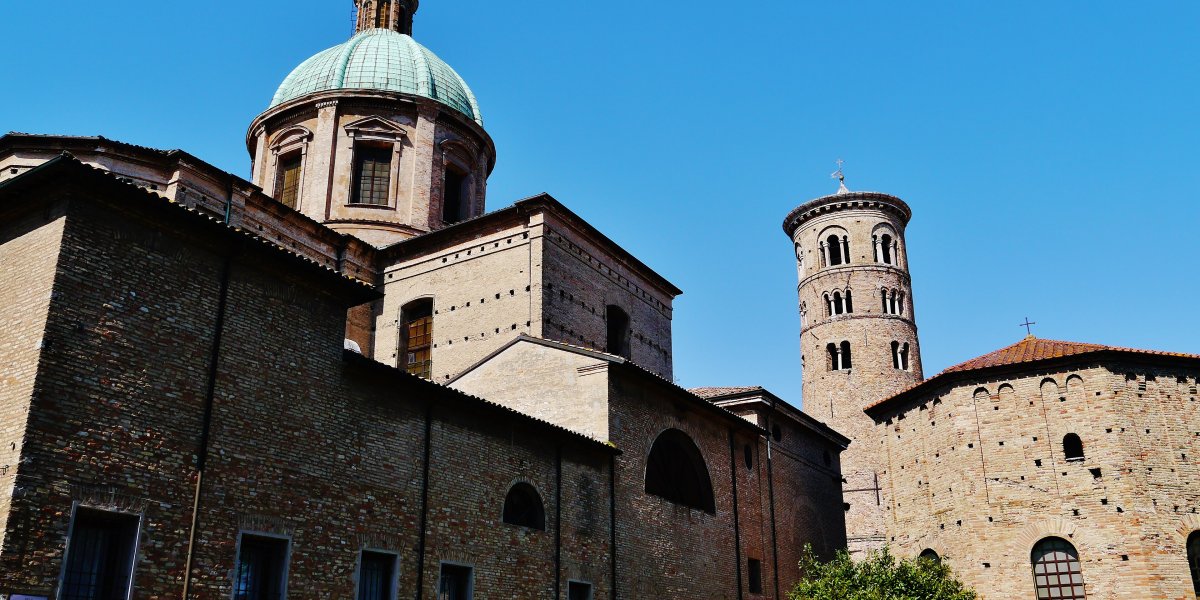
From Ravenna station, walk southeast along Viale Farini then right onto Via Salara — a quiet 10-minute stroll past residential blocks that give no hint of what's ahead. Step inside this 6th-century octagonal basilica and let your eyes climb: every surface erupts in gold, green, and azure mosaic. The twin panels of Emperor Justinian and Empress Theodora face each other across the apse — among the most reproduced images in art history, and nothing prepares you for seeing them at full scale, their eyes tracking you across the room.
Tip: Arrive right at the 9:00 opening — by 10am tour buses from Bologna and Rimini flood the apse. Buy the €12.50 Biglietto Cumulativo at the ticket office here; it covers every UNESCO site on today's route. Stand directly below the central dome and shoot upward for the best photo of the mosaic ceiling. Morning light through the east-facing clerestory windows makes the gold tesserae ignite.
Open in Google Maps →10:15
Religious
Step out of San Vitale's main door and cross the garden to the left — the mausoleum is a humble brick box 50 meters away, and the contrast between its plain exterior and what waits inside is one of Ravenna's great revelations. Duck through the low doorway into the oldest complete mosaic cycle in Ravenna: a deep cobalt-blue ceiling scattered with 570 gold stars swirling around a central cross. The tiny space holds only 15 people, and in the hush, with the stars overhead, it feels less like a building and more like standing inside a jewel box.
Tip: Your eyes need a full 30 seconds to adjust to the dim interior — resist the urge to check your phone. As your pupils dilate, the gold stars emerge one by one from the dark blue field. No flash; the mosaic reads best in natural dimness. The €2 supplement applies from March through mid-June on top of your combo ticket. Coming directly from San Vitale at 10:15, you'll walk right in; by 11:00 the queue stretches outside.
Open in Google Maps →11:00
Landmark
Walk south from the San Vitale complex through Piazza del Popolo — Ravenna's wide, elegant main square lined with Venetian-style arcades where locals linger over espresso — then continue east along Via Corrado Ricci, about 12 minutes total. At the end of a quiet lane marked 'Zona del Silenzio,' a small neoclassical temple holds a perpetually burning oil lamp. Dante Alighieri died in exile here in 1321, and despite centuries of Florentine demands to reclaim his bones, Ravenna never gave him back. This is where the man who wrote the Divine Comedy rests — Italy's greatest poet, buried in a city that isn't Florence.
Tip: The olive oil in the hanging bronze lamp is donated by Florence every September — a perpetual act of penance for exiling their greatest poet. Before you leave, peer through the side window of the adjacent Basilica di San Francesco: its 10th-century crypt is submerged in groundwater, with goldfish swimming over ancient floor mosaics. Free, surreal, and takes 30 seconds.
Open in Google Maps →12:00
Food
Walk back 2 minutes west along Via Corrado Ricci — Ca' de Vèn occupies a 15th-century palazzo with original frescoed ceilings and barrel-vaulted rooms that feel like a Renaissance wine cellar. This is Ravenna's most beloved enoteca, and locals come for one thing: piadina romagnola, the paper-thin unleavened flatbread that is Romagna's edible identity. Order the piadina con squacquerone e rucola — warm, crackly bread stuffed with impossibly soft fresh cheese and peppery wild rocket — and a glass of Sangiovese di Romagna. This is not just lunch. This is a religious experience with carbs.
Tip: Order the piadina con squacquerone e rucola (€5–7) and a glass of local Sangiovese (€3–4). Budget €10–14 per person. Sit in the frescoed back room, not the front bar — the Renaissance ceiling paintings alone are worth the detour. No reservation needed at lunch; the line moves fast. If you want something heartier, the crescione (folded piadina stuffed with greens and cheese, €6–8) is equally addictive.
Open in Google Maps →14:00
Religious
From Ca' de Vèn, walk south along Via Cavour then left onto Via di Roma — about 10 minutes through Ravenna's main commercial street, past the covered market and local shops. Built by Ostrogoth King Theodoric in the early 6th century, this basilica hides its treasure in plain sight: two continuous mosaic processions run the entire length of the nave. On the left, 26 male martyrs march from Ravenna's ancient port toward Christ. On the right, 22 virgins walk from Theodoric's palace toward the Madonna. The gold background glows in the afternoon light, and the sheer scale — over 40 meters of unbroken mosaic narrative on each side — is staggering.
Tip: Stand at the very back of the nave and look toward the altar: the processions appear to converge in the distance, an optical effect the 6th-century mosaicists engineered deliberately. Early afternoon sun hits the south-facing clerestory windows and makes the gold backgrounds pulse. Covered by your morning combo ticket. Warning: the restaurants clustering along Via di Roma near this basilica are tourist traps with laminated menus in six languages and microwaved lasagna — walk past every single one.
Open in Google Maps →19:00
Food
Walk northwest along Via di Roma back toward Piazza del Popolo as the evening passeggiata begins and Ravenna's families spill onto the streets for their nightly promenade — about 10 minutes to Via Ponte Marino, just off the main square. This family-run trattoria has fed locals for decades with handmade Romagnolo pasta and slow-braised meats. The dining room is no-frills, the portions are enormous, and every table around you will be speaking Italian. This is your proper farewell to Ravenna — wine by the carafe, pasta rolled that morning, and the satisfied exhaustion of a day spent inside Byzantium's last masterpieces.
Tip: Start with cappelletti in brodo (tiny stuffed pasta bobbing in golden broth, €10–12) — Romagna's answer to tortellini, and locals will fight you if you call it the same thing. Follow with tagliatelle al ragù (€11–13), the real Bolognese that has nothing to do with the red sauce you know. Budget €25–35 per person with a half-carafe of Sangiovese. Walk-ins before 19:30 usually get a table; after that, expect a wait. The restaurant is a 5-minute walk from the station — perfectly timed if you're catching an evening train.
Open in Google Maps →
Trip builder
Plan this trip around Ravenna
Turn this guide into a bookable rail itinerary with FlipEarth.
Keep exploring
Related cities
More in the same country
FAQ
Frequently asked questions
How many days do you need in Ravenna?
Most travelers enjoy Ravenna in 1 days, with enough time for headline sights and a slower meal or museum stop.
What's the best time to visit Ravenna?
The easiest season for most travelers is Apr-Jun, Sep-Oct, especially if you want good weather and manageable crowds.
What's the daily budget for Ravenna?
A practical starting point is about €75 per person per day before hotels, then adjust based on museums, dining, and transport.
What are the must-see attractions in Ravenna?
A good first shortlist for Ravenna includes Tomb of Dante.