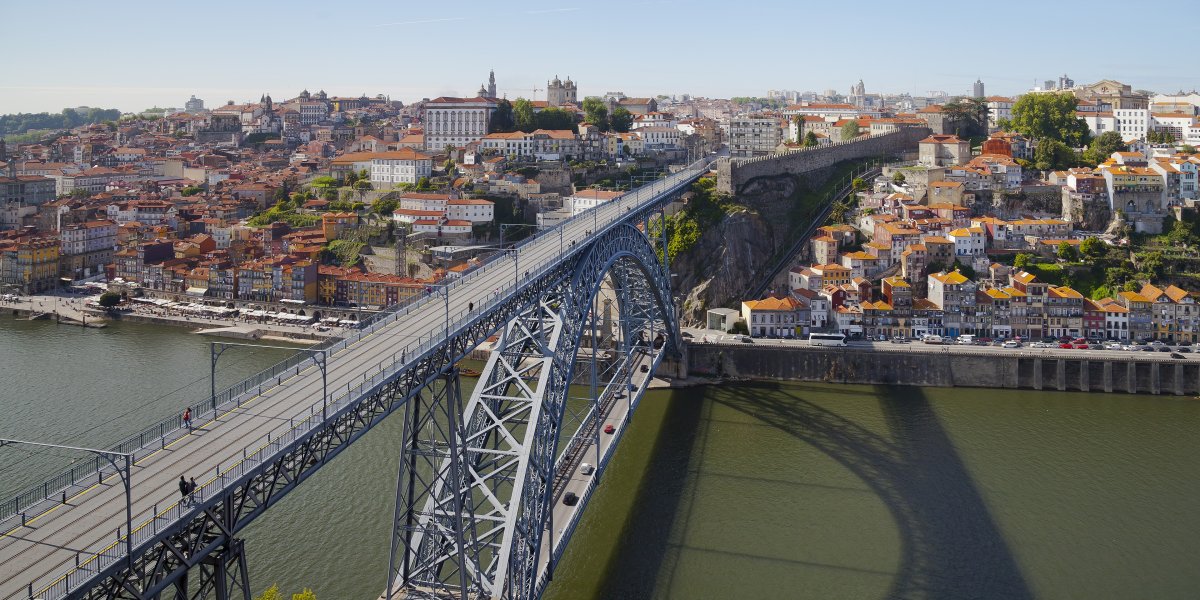
City Guide
Porto
Portugal · Best time to visit: May-Sep.
Day-by-day plan
Choose your pace
Reisedauer
09:00
Landmark
Start your day at Porto's defining silhouette — the 75-meter Baroque bell tower that has oriented the city since 1763. Climb all 240 narrow stone steps to a 360-degree panorama: terracotta rooftops cascading downhill to the Douro, the iron arc of Dom Luís I Bridge, and the port wine lodges of Gaia gleaming across the water. Arrive right at opening and you will have the spiral staircase nearly to yourself.
Tip: The staircase is one-way up with a separate one-way down, so there are no bottlenecks. Shoot your panorama facing south toward the river — morning light is behind you and the Douro glows. Buy your ticket online the night before to skip the ground-floor kiosk queue.
Open in Google Maps →10:45
Landmark
Walk east along Rua dos Clérigos, which funnels gently downhill past blue-tiled shopfronts and sidewalk florists — an 8-minute stroll that already feels like a museum without walls. Step inside the grand vestibule and you are surrounded by over 20,000 hand-painted azulejo tiles installed over eleven years by artist Jorge Colaço, depicting medieval battles, royal processions, and scenes of everyday Portuguese life. This is a working railway station, not a museum — no ticket, no queue, no time limit.
Tip: Stand dead center and photograph the north wall — the Battle of Valdevez panel — around 10:45 when light from the high windows rakes across the glazed surface at a low angle, making the blue tiles appear almost three-dimensional. The south wall's scenes of rural harvests and ox-carts are less photographed but arguably more beautiful.
Open in Google Maps →12:00
Food
Exit São Bento from the south entrance, cross the road, and turn right onto Rua das Flores — a pedestrianized lane of street art, wrought-iron balconies, and the smell of roasting chestnuts. Five minutes downhill, Brasão is a high-ceilinged cervejaria where Porto's legendary Francesinha is built with layers of cured ham, linguiça, and steak, then submerged in a molten tomato-beer sauce that the kitchen guards like a state secret. This is the dish Porto argues about, and Brasão's version is the one that ends the argument.
Tip: Order the Francesinha Especial with egg on top (€14.50) — the runny yolk into the sauce is non-negotiable — and a cold draft Super Bock (€2.50). Arrive right at noon; by 12:20 the line spills onto the street and the wait jumps to 30 minutes. Skip side dishes — the Francesinha is a demolition-scale meal on its own.
Open in Google Maps →13:30
Neighborhood
Continue south on Rua das Flores as it narrows, steepens, and ducks under laundry lines until the Douro River flashes between the buildings — a 10-minute descent that rewards you with Porto's UNESCO-listed waterfront in one dramatic reveal. Walk the full length of Cais da Ribeira where medieval houses in faded ochre, blue, and terracotta lean over the quayside, street musicians play fado under the stone arches, and rabelo boats rock gently at their moorings. Sit on the granite steps at the water's edge, order nothing, and let the scene settle — this is the Porto that every photograph tries and fails to capture.
Tip: Walk to the eastern end of the quay near the bridge for the classic shot: stacked colorful houses with rabelo boats in the foreground. Early afternoon sun hits the facades head-on — this is when the colors are at their most saturated. The riverside restaurants under the arches are tourist traps charging €20 for reheated bacalhau; if you need coffee, duck one block inland to any unmarked café where espresso is still €0.70.
Open in Google Maps →16:00
Landmark
From the eastern end of the Ribeira quay, follow the steep staircase signed 'Tabuleiro Superior' up to the bridge's upper deck — a sharp 5-minute climb that earns you the most exhilarating walk in Porto. Cross the 172-meter iron span 60 meters above the Douro with the full city skyline on your left and the river traffic shrunk to toy-boat scale below. On the Gaia side, step into Jardim do Morro for the reverse panorama — this hillside garden is where locals gather with cheap wine to watch golden-hour light turn the Ribeira into a painting.
Tip: Always take the upper deck, never the lower — same bridge, entirely different experience. After crossing, grab a bottle of Vinho Verde from the Jardim do Morro kiosk (€3) and stay for golden hour; the warm side-light on the Ribeira tiles between 17:00 and 18:30 is the single best photo opportunity of the entire trip.
Open in Google Maps →19:00
Food
From Jardim do Morro, walk 10 minutes downhill along Rua do Agro past the stone walls of Porto's most legendary port wine lodges — you will catch the sweet scent of oak barrels through open cellar doors. Vinum sits inside Graham's Port Lodge with a candlelit terrace that looks directly across the Douro to the illuminated Ribeira skyline. The kitchen pairs Portuguese tradition with modern restraint: polvo à lagareiro arrives with a crackling skin you can hear before you taste, and the tawny port reduction on the secretos de porco preto is a quiet reminder that you are dining in the world capital of fortified wine.
Tip: Reserve 2-3 days ahead and specifically request a terrace table — indoor seats have no river view at all. Order the polvo à lagareiro (€22) and close with a 20-year tawny port (€8 per glass) instead of dessert. Avoid the waterfront restaurants along Cais de Gaia below — they charge tourist prices for microwaved fish with a view; Vinum, five minutes uphill, is where Gaia locals actually celebrate.
Open in Google Maps →Zu Tag springen
09:00
Landmark
Begin at Porto's vertical icon — a 12-minute uphill walk from most Baixa hotels along Rua dos Clérigos. Climb the 225 narrow steps of this baroque bell tower at opening and the spiral staircase is yours alone. From 76 metres up, the 360° panorama — terracotta rooftops cascading to the Douro, the iron arc of Dom Luís I Bridge, the Gaia port lodges — is the definitive first impression of this city.
Tip: The tower opens at 9:00; arrive five minutes early and you'll be in the first group up the staircase. The northeast-facing windows catch the best morning light for photographing the river and the bridge together. Skip the museum exhibition below — the view from the top is the only thing worth your time here.
Open in Google Maps →10:45
Landmark
Exit Clérigos and walk 100 metres north on Rua das Carmelitas — the neo-Gothic stone façade appears on your left. Inside, the crimson carved-wood staircase is what draws the crowds, but look up: the stained-glass ceiling filtering light across three floors is the real masterpiece. Buy a book to redeem your €8 entry voucher and leave with a souvenir that has actual soul.
Tip: The €8 entry voucher is deducted from any book purchase — a Portuguese edition of Pessoa or Saramago makes an excellent souvenir. At 10:30 the queue is manageable; by noon it circles the block. Photograph the staircase from the first-floor balcony looking down — that is the angle that works.
Open in Google Maps →12:00
Food
Walk east for 10 minutes through Praça de Lisboa and along the grand Avenida dos Aliados before turning onto Rua de Passos Manuel. Order the Francesinha Especial (€12–14) at this legendary institution open since 1959: layers of cured ham, sausage, and steak sealed in melted cheese, drowned in spicy beer-and-tomato sauce, crowned with a fried egg and ringed by fries. One sandwich is a full meal — pair it with a draft Super Bock and don't plan to eat again for four hours.
Tip: Arrive at 12:00 sharp — by 12:30 the queue spills onto the pavement. Order the Especial, not the regular: more layers of meat, only €2 more. Ask for the sauce 'picante' if you want heat.
Open in Google Maps →14:00
Religious
Walk south for 12 minutes along Rua de 31 de Janeiro — the buildings grow older as you descend toward the city's medieval core, and the Cathedral's granite towers appear above the rooftops. The Romanesque nave is austere and powerful, but the Gothic cloister is where Porto reveals itself: walls of 18th-century blue-and-white azulejos dappled with afternoon light filtering through the arches. From the upper terrace, an unframed view of the Douro and the bridge awaits — one that hasn't made it onto any postcard.
Tip: The €3 cloister ticket is worth every cent — the upper terrace has a secret eastward view of the Douro that almost nobody photographs. The cathedral nave is free. Skip the treasury museum; the cloister walls are better art.
Open in Google Maps →15:30
Neighborhood
Walk downhill from the Cathedral through the Bairro da Sé — five minutes of narrow lanes, crumbling façades, and laundry strung between windows — and you emerge on Porto's UNESCO-listed waterfront. The Douro opens before you, Dom Luís I Bridge frames the scene to the east, and rabelo boats bob along the quay while the Gaia port lodges catch the afternoon light. Walk the full length of the promenade and find a bench facing the river — this is the postcard, and you are sitting inside it.
Tip: Walk to the western end of the quay past the Cubo da Ribeira for quieter photos and fewer crowds. The colourful Ribeira houses actually photograph best from the Gaia side — you'll be there tomorrow morning.
Open in Google Maps →19:00
Food
Walk 5 minutes inland from the quay through Rua da Alfândega to the Palácio das Artes on Largo de São Domingos, where chef Rui Paula runs one of Porto's most celebrated kitchens. Try the Bacalhau confitado com migas (confit cod with breadcrumb crust, €24) or the Arroz de carabineiro (scarlet shrimp rice for two, €28) — both are signatures that showcase the Douro's produce at its finest. The vaulted stone dining room feels like eating inside a gallery, and the Douro red wine list gives you reason to linger.
Tip: Reserve at least 24 hours ahead, especially weekends — ask for the window table overlooking the square. The Douro reds by the glass (€8–12) are superb; try a Niepoort Vertente. Budget €40–55 per person with wine. Walking back through Ribeira at night, ignore any restaurant with a laminated picture menu and a tout at the door — they exist solely for tourists who won't return.
Open in Google Maps →09:00
Landmark
Cross the upper deck of Ponte de Dom Luís I from the Porto side — the iron lattice, the Douro 60 metres below, the wind snapping at your jacket — and at the Gaia end, climb the short path to the circular terrace of the Serra do Pilar monastery. This is THE viewpoint: the entire Ribeira waterfront, the Cathedral perched above, the bridge arcing below, the river bending west toward the Atlantic. Morning sun strikes the Porto façades head-on, and on a weekday you may have the terrace entirely to yourself.
Tip: The viewpoint terrace is free and open around the clock. Face east for photos — morning light illuminates the Ribeira façades directly with warm golden tones. The monastery interior opens sporadically for military-guided tours; the terrace alone justifies the walk.
Open in Google Maps →10:15
Entertainment
Walk west along the Gaia hilltop for 12 minutes, passing the signs for Taylor's and Croft before reaching Graham's — identifiable by its elegant terrace and unobstructed river panorama. The guided tour descends into cool, barrel-lined cellars where port ages in oak casks the size of small rooms, and the tasting that follows — a 10-year tawny, a Late Bottled Vintage, a white port — is the reason you crossed the river. Linger on the terrace afterward; the view north across the Douro to the Ribeira is among Porto's finest.
Tip: Book the Standard Visit and Tasting (€15) online at least a day ahead — walk-ins routinely wait 90 minutes. The terrace opens before tours begin; arrive early to claim a table before the groups fill it. If you love aged tawny, upgrade to the premium tasting for a 20-year and 30-year pour (€25).
Open in Google Maps →12:15
Landmark
Walk back east to the bridge and cross the lower deck this time — at river level, boats drifting past, the iron structure soaring above you — then climb 5 minutes from the Porto riverbank to the city's most unexpected gallery. The entrance hall of São Bento station is covered in 20,000 hand-painted azulejo tiles depicting medieval battles, royal processions, and scenes of rural Portuguese life, installed by artist Jorge Colaço over eleven years. Each of the four walls tells a different chapter of the country's history — stand in the centre, turn slowly, and read Portugal like a storybook.
Tip: The best panels are on the north wall: the arrival of King João I in Porto and the Battle of Ceuta — study the brushwork up close. Between 12:00 and 14:00 the hall is calm enough to appreciate the detail without being jostled by commuter traffic.
Open in Google Maps →12:45
Food
Walk north from São Bento through Rua de Sá da Bandeira for 8 minutes to the lively Praça dos Poveiros — Casa Guedes is the no-frills corner café that has perfected exactly one thing. Order the sandes de pernil: slow-roasted pork leg pulled from the bone, stuffed into a crusty bread roll, topped with a thick slice of melting Serra cheese, and paired with a cold glass of Vinho Verde (€2). The entire meal — one of Porto's most essential local bites — costs under €8.
Tip: Order at the counter and pay first, then grab an outdoor table on the square. The sandwich (€5–6) is enormous — one is enough. Say 'com queijo da serra' for the cheese topping; they add a thick slice that melts over the hot pork. The queue moves fast; don't be put off by the crowd.
Open in Google Maps →14:00
Shopping
Walk 3 minutes east from Praça dos Poveiros to Porto's grand market, which reopened in 2022 after a meticulous restoration of its two-storey Art Deco ironwork. Upstairs is the soul of the building: fishmongers calling out their catch, flower sellers arranging hydrangeas, grandmothers presiding over tables of cured sausages and stacked bacalhau — this is not a tourist food hall, it is where Porto shops. The ground floor has a cluster of modern food stalls for a late espresso and pastel de nata before you wander out.
Tip: On the upper floor, find the queijaria near the northeast corner and ask to sample amanteigado — a creamy mountain cheese from Trás-os-Montes you won't find outside northern Portugal. The market closes at 20:00 on weekdays but stalls start winding down by 17:00; early afternoon has the best energy.
Open in Google Maps →19:00
Food
Walk south from Bolhão for 10 minutes along Rua de Fernandes Tomás, then turn onto Rua da Madeira — Tapabento is halfway down on the right, recognizable by the small crowd hovering at the door. This petisco bar is where Porto's chefs eat on their nights off: the Polvo à lagareiro (roast octopus with smashed potatoes, €18) and Arroz de gambas (shrimp rice for two, €16) change with the market but never disappoint. Portions are generous and made for sharing — order three dishes between two, a carafe of Douro tinto, and let this farewell meal linger.
Tip: No reservations — arrive at 18:45, fifteen minutes before the dinner rush, and you'll be seated immediately. By 19:30 the wait stretches past 40 minutes. Sit at the bar counter if solo; the chef plates dishes right in front of you. Budget €30–40 per person with wine. Avoid the 'port wine tasting' shops on surrounding streets — most sell overpriced low-grade blends to tourists; you've already had the real thing at Graham's.
Open in Google Maps →Zu Tag springen
09:00
Landmark
Enter through the main doors and stop. Twenty thousand hand-painted azulejo tiles by Jorge Colaço blanket every wall of the main hall — battle scenes, royal processions, and the history of Portuguese transport rendered in blue and white. At 9 AM the morning sun streams through the east-facing windows and strikes the tiles at an angle that makes the figures glow, and the hall is yours alone before tour groups arrive.
Tip: Stand dead center of the hall facing the main entrance for the symmetrical wide shot — this is the angle that makes the front pages. The north wall panels depicting the Battle of Valdevez have the most dramatic composition; the south wall's rural harvest scenes photograph better because they catch the morning light directly.
Open in Google Maps →10:00
Religious
Exit São Bento from the main doors and walk uphill on Calçada de Vandoma — seven steep minutes past fruit vendors and old men on doorsteps, with the fortress walls of the cathedral growing above you. This 12th-century Romanesque church is Porto's oldest building; the main nave is austere, but the Gothic cloister wrapped floor to ceiling in 18th-century blue-and-white azulejo tiles is staggering. The terrace beside the cloister gives you the first commanding view of Ribeira's terracotta rooftops cascading down to the Douro.
Tip: Head straight to the cloister (€3, left entrance) — the nave takes ten minutes at most. In the far corner a narrow granite staircase leads to the upper gallery where you can press close to the tiles and look out over the rooftops. This upper level is missed by 80% of visitors.
Open in Google Maps →12:00
Food
Walk downhill from the cathedral through Rua da Bainharia and Rua dos Mercadores — six minutes of Porto's oldest medieval streets, where buildings lean toward each other and laundry hangs between windows. This stone-walled tavern changes its chalkboard menu daily depending on what came in from the market that morning. The cooking is honest, unfussy, and rooted in the Douro Valley tradition.
Tip: Only 28 seats — arrive by noon sharp or expect a 20-minute wait. Order the bacalhau à Taberna (salt cod baked with olive oil and potatoes, ~€14) or the secretos de porco preto (Iberian pork secretos, ~€15). A glass of Douro red adds €4. Budget €18–25 per person.
Open in Google Maps →13:30
Landmark
Step out of the restaurant and you are on the Ribeira waterfront — UNESCO World Heritage and the image that sells a thousand plane tickets. Walk east along the quay past the candy-colored facades and rabelo boats, then climb the stone stairs to the upper deck of Dom Luís I Bridge, sixty meters above the river. Stop halfway across: both banks of the Douro frame perfectly, with the Gaia wine cellars on one side and Ribeira's cascade of rooftops on the other. Allow thirty minutes of free strolling along the quay afterward — find a bench on the river wall and watch the light shift.
Tip: The afternoon sun between 14:00 and 16:00 lights the Ribeira facades from across the river — this is the golden window for photography. Walk to the exact center of the upper bridge deck for the symmetrical two-bank shot. Always take the upper deck; the lower deck is for cars and has no view.
Open in Google Maps →19:30
Food
Walk back from the quay and up Rua das Flores — ten minutes along Porto's most beautiful pedestrian street, where every doorway is trimmed in azulejos and independent shops have replaced the old hardware stores. Cantina 32 occupies a converted warehouse at number 32, with exposed stone walls and a menu that takes traditional Portuguese ingredients and strips away everything unnecessary. It is packed with young locals on weeknights.
Tip: Reserve online for 19:30 — walk-ins after 20:00 face a 40-minute wait. Order the roasted octopus with sweet potato purée (~€16) and the pica-pau (sautéed beef tips with pickles, ~€13). Budget €25–32 per person with wine. Warning: avoid the restaurants directly on the Ribeira waterfront with laminated photo menus and barkers out front — they charge double for mediocre food. Rua das Flores, one block up the hill, is where locals actually eat.
Open in Google Maps →09:30
Landmark
Take metro line D from São Bento to Jardim do Morro — a three-minute ride across the river, then two minutes uphill on foot. The circular Renaissance monastery perched on the Gaia cliff edge delivers what is unanimously the greatest panoramic view of Porto: the full sweep of the historic center, the river bending below, and Dom Luís I Bridge framed like a postcard at your feet. At 9:30 the light comes from behind you, illuminating the Porto side perfectly.
Tip: The circular cloister inside (€4) is architecturally unique in Portugal, but if short on time the free exterior terrace already gives you the million-dollar view. The monastery is managed by the Portuguese military and keeps slightly irregular hours — confirm opening at the gate. Sunrise here is extraordinary if you are an early riser.
Open in Google Maps →10:30
Entertainment
Walk downhill from Serra do Pilar along Rua do Choupelo — eight minutes through residential Gaia, past old ladies tending geraniums on wrought-iron balconies. Taylor's has made port since 1692 and their lodge is the most atmospheric on the hill: cool stone cellars stacked with blackened oak barrels, the scent of decades of aged tawny heavy in the air. The guided tour covers the full process from Douro grape to glass, ending with a tasting of white port, ruby, and 10-year tawny.
Tip: Book the Premium Tasting tour online (~€20) — it includes three ports instead of two and access to a terrace with river views. The 10:30 slot has the smallest groups. Do not buy bottles in the gift shop at retail markup — note what you liked and buy it at Garrafeira do Carmo back in Porto for 30% less.
Open in Google Maps →12:45
Food
Walk five minutes west along Rua do Agro to Graham's lodge, perched higher on the hill. Their restaurant Vinum occupies a glass-walled terrace cantilevered over the Douro with the entire Porto skyline spread before you — arguably the most scenic lunch seat in the city. The kitchen treats local ingredients with respect and knows that the view is half the meal.
Tip: Reserve a window table for 12:45 via their website — these sell out days in advance. Order the bacalhau assado com broa (roast cod with cornbread crust, ~€22) or the secretos de porco bísaro (pork with chestnut purée, ~€19). A glass of Graham's 10-year tawny (~€6) is obligatory with this view. Budget €30–40 per person.
Open in Google Maps →14:30
Park
Walk ten minutes back east and downhill from Graham's to Jardim do Morro, a shaded garden at the Gaia end of the upper bridge deck with a postcard view of Porto across the gorge. Sit for twenty minutes and let lunch settle, then board the Teleférico de Gaia cable car for a five-minute glide down to the riverside. At the bottom, stroll west along the Gaia waterfront cais past the rabelo boats and port lodge signs reflected in the water — this is your thirty minutes of free wandering with no agenda.
Tip: Take the cable car downhill only (€8 one way, runs every 10 minutes) — the walk up is brutal in afternoon heat, but the glide down gives you an aerial view of the lodges and river. The afternoon light between 15:00 and 16:30 turns the Porto skyline gold; locals call this the hora dourada on the Gaia side.
Open in Google Maps →19:30
Food
Cross back to Porto via the lower deck of Dom Luís I Bridge — a flat twelve-minute walk at river level with iron lattice arching overhead — then walk uphill to the narrow Travessa dos Congregados near Praça de Almeida Garrett. This tiny tile-clad tasca has fed Porto since 1985 with no-nonsense petiscos and a handwritten wine list. Office workers, taxi drivers, and professors crowd the shared tables — there is no better proof a place is good.
Tip: No reservations — arrive at 19:30 when dinner service opens to grab a table. Order the rojões à moda do Porto (braised pork with cumin and white wine, ~€10) and the moelas (spiced chicken gizzards, ~€7) — these two dishes are the soul of Porto bar food. A half-bottle of vinho verde costs €5. Budget €15–22 per person. Warning: the restaurants along the Gaia waterfront near lodge entrances display port-and-food 'combos' at inflated tourist prices — the locals cross the bridge and eat here instead.
Open in Google Maps →09:00
Landmark
From Praça da Liberdade walk west along Rua dos Clérigos — five minutes gently uphill past pastry shops pulling trays of natas from the oven. The baroque tower designed by Nicolau Nasoni in 1763 is Porto's most recognizable silhouette. Climb the 240 narrow granite steps and the entire city unfolds: the river, the bridges, the Atlantic glittering on the horizon. At 9 AM you share the viewing platform with a handful of people instead of the midday crush of fifty.
Tip: Buy timed-entry tickets online the day before to skip the street-level queue entirely. At opening time the spiral staircase is uncrowded and you can ascend freely. Look west from the top: on a clear morning you can see the Atlantic past the Foz district. The church below the tower is free and worth five minutes for the gilded baroque interior.
Open in Google Maps →10:45
Landmark
Walk one block north from Clérigos along Rua das Carmelitas — two minutes, passing the magnificent azulejo side wall of Igreja do Carmo (pause for a photo). Livraria Lello, opened in 1906, is regularly called the most beautiful bookshop in the world: a neo-Gothic facade gives way to a crimson interior where a carved wooden staircase spirals upward beneath a stained-glass ceiling. Whether or not it inspired Hogwarts, the craftsmanship is undeniable.
Tip: You must buy a voucher online in advance (€8, redeemable against any book purchase) — book the earliest available slot, as by 11 AM the shop is shoulder-to-shoulder. Walk straight to the top of the staircase and shoot downward for the iconic red-and-wood spiral shot. The English-language section on the upper balcony has beautiful editions of Fernando Pessoa and José Saramago.
Open in Google Maps →12:00
Food
Walk east from Lello along Rua das Carmelitas, cut through Praça dos Leões and down Rua de Passos Manuel — twelve minutes through Porto's commercial heart where shoe shops and old pharmacies sit beside modern coffee roasters. Café Santiago is a no-frills diner that has served what many consider the definitive francesinha since the 1950s. The sandwich — layers of ham, linguiça, fresh sausage, and steak entombed in melted cheese and drenched in a secret beer-and-tomato sauce — is absurd, magnificent, and the one dish you cannot leave Porto without eating.
Tip: Order the Francesinha Especial com ovo e batata frita (~€13) — the egg on top is non-negotiable, and so are the fries swimming in the sauce. Pair with a Super Bock draft (~€2). Arrive by noon; by 12:30 the queue stretches out the door. Do not order anything else — the francesinha is the only reason this place exists and they have perfected exactly one thing. Budget €13–17 per person.
Open in Google Maps →13:30
Shopping
Walk two blocks north on Rua de Passos Manuel to the grand iron-and-stone entrance — three minutes. Bolhão Market, reopened in 2022 after a meticulous restoration, is Porto's beating heart: two floors of fishmongers shouting prices, grandmothers selling herbs from their gardens, towers of bacalhau, wheels of Serra cheese, and buckets of olives. The upper floor houses food stalls and a terrace with a bird's-eye view of the market floor below. This is your thirty minutes of free strolling — taste, wander, and let Porto's real daily life wash over you.
Tip: The ground floor is the authentic market — fishmongers, butchers, flower sellers who have held their stalls for decades. If you want to bring something home, buy vacuum-packed presunto or a small bottle of olive oil from a ground-floor vendor — half the price of the airport shops and twice the quality. Grab a pastel de nata and a bica (espresso) from Bolhão Craft upstairs as your farewell Porto coffee.
Open in Google Maps →19:00
Food
Walk south from Bolhão down Rua de Santa Catarina — Porto's liveliest pedestrian shopping street — past the art nouveau facade of Majestic Café (peek inside but do not pay €8 for a coffee), then turn right toward Largo de São Domingos. DOP, by Michelin-recognized chef Rui Paula, occupies a graceful stone room inside the Palácio das Artes. The menu reimagines Northern Portuguese cooking with precision and restraint — the right farewell to a city that takes its food as seriously as its port.
Tip: Reserve two days ahead for 19:00. Order the polvo grelhado com arroz de feijão (grilled octopus with bean rice, ~€24) and finish with leite-creme queimado (burnt custard, ~€8) — both signatures. Budget €40–55 per person with wine. Warning: the souvenir shops along Rua de Santa Catarina near Bolhão sell 'artisanal' cork products and ceramic roosters at three times the price of Mercado do Bolhão or the smaller shops on Rua das Flores — buy your gifts there instead.
Open in Google Maps →
Trip builder
Plan this trip around Porto
Turn this guide into a bookable rail itinerary with FlipEarth.
Keep exploring
Related cities
Nearby cities
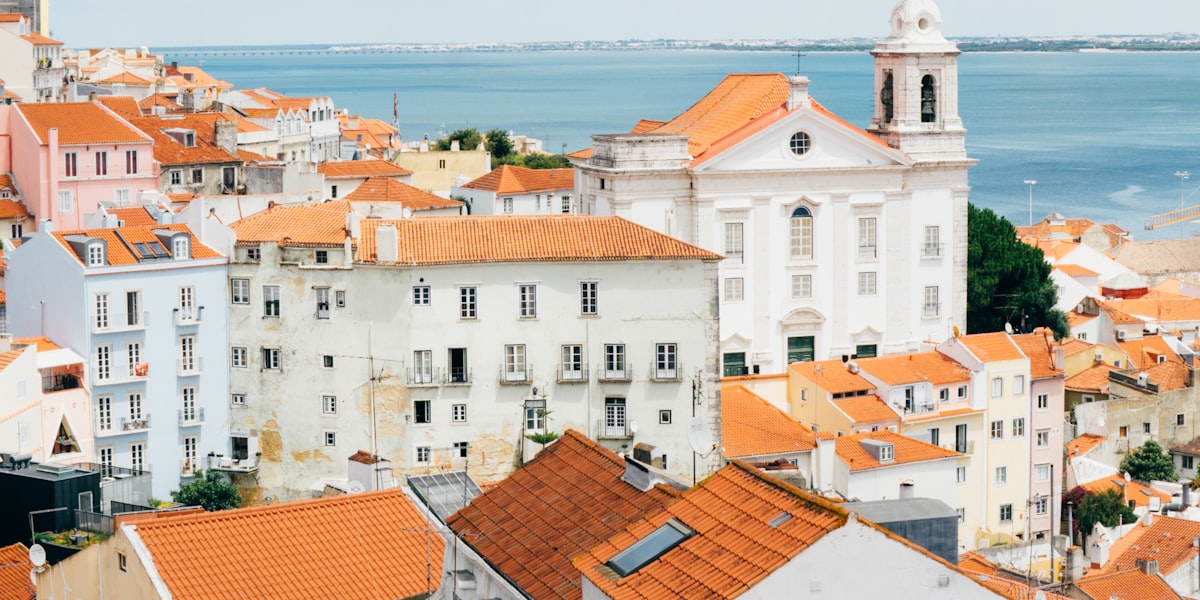
More in the same country
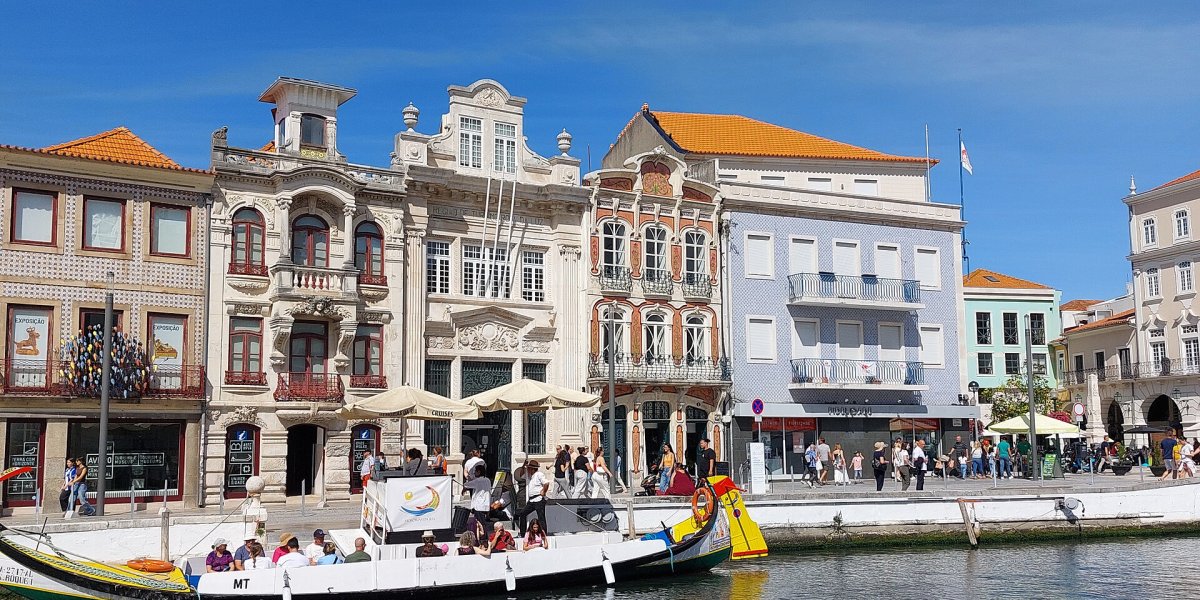
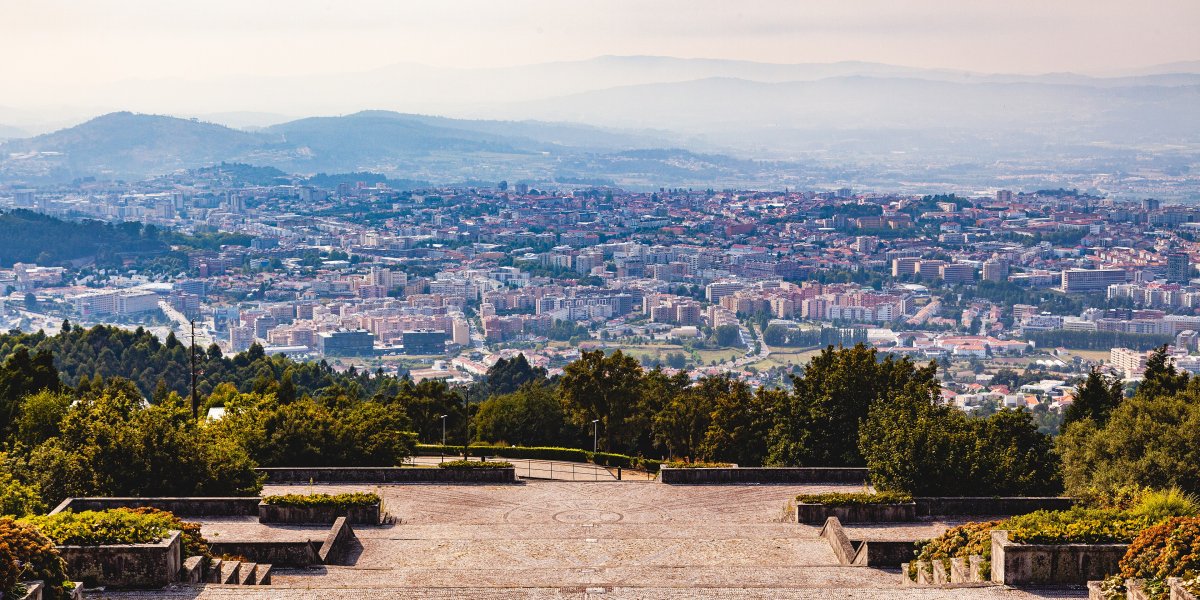
FAQ
Frequently asked questions
How many days do you need in Porto?
Most travelers enjoy Porto in 1 days, with enough time for headline sights and a slower meal or museum stop.
What's the best time to visit Porto?
The easiest season for most travelers is May-Sep, especially if you want good weather and manageable crowds.
What's the daily budget for Porto?
A practical starting point is about €80 per person per day before hotels, then adjust based on museums, dining, and transport.
What are the must-see attractions in Porto?
A good first shortlist for Porto includes Torre dos Clérigos, São Bento Railway Station, Ponte Dom Luís I.