City Guide
Orleans
Frankreich · Best time to visit: Apr-Oct.
Day-by-day plan
Choose your pace
Reisedauer
09:30
Landmark
From Orléans train station, walk south down Rue de la République for eight minutes — the broad axis ends abruptly on Joan's silhouette: four and a half metres of bronze on a granite plinth, café terraces just opening their parasols around her. This is the city's compass: every street you'll walk today radiates from this square. Start here, lap the square once, and let the scale of the gesture sink in — the statue went up in 1855, but the woman it honours rode through this very spot in 1429.
Tip: Joan's horse faces east, so shoot from the southwest corner around 09:30 — the warm side-light catches her armour and the gilded scrollwork on the plinth. Sit at Café du Martroi for an espresso (2.50€); it's the only terrace that frames her against the 18th-century Chancellerie façade.
Open in Google Maps →10:30
Religious
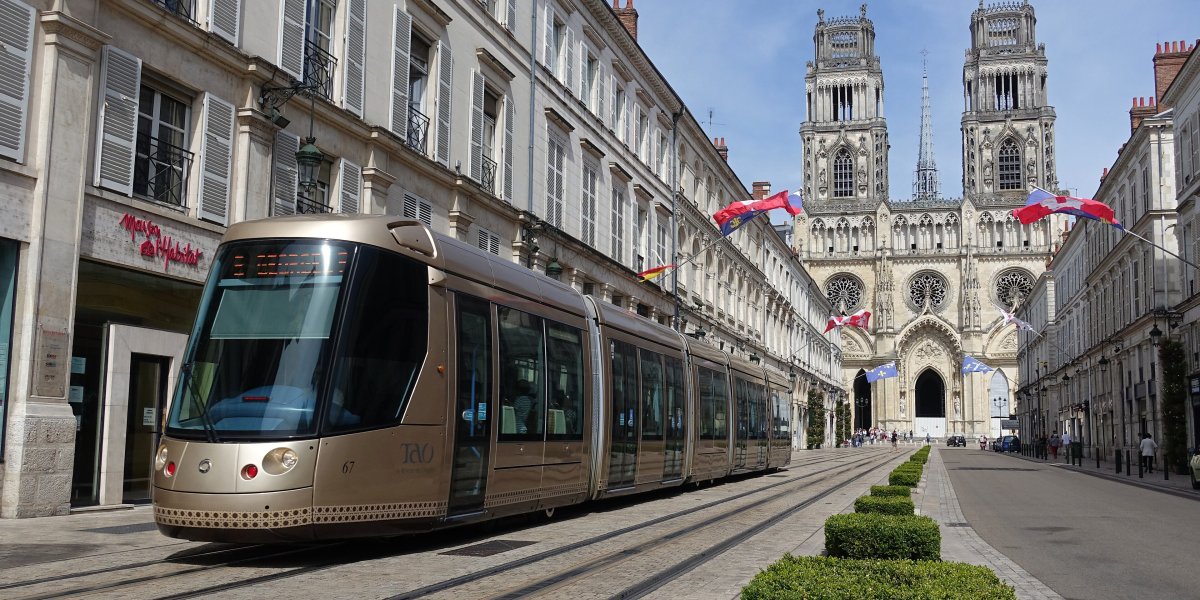
Exit the square heading east on Rue Jeanne d'Arc — five minutes along one of the most theatrical urban vistas in France: the late-Gothic west front framed dead-centre by Haussmann façades, growing larger with every step. The cathedral is eight centuries in the making, burned and rebuilt across the wars of religion, the spires finally finished in 1829 — which is why they still look razor-sharp. Skip the interior today; instead, circle all the way around to the apse, where the flying buttresses arch over a half-empty garden almost no tourist sees.
Tip: Stop on the central traffic island halfway down Rue Jeanne d'Arc for THE photo — the cathedral fills the frame edge to edge. Afterwards, slip into the free Hôtel Groslot garden two doors west: the Renaissance brick façade and rose parterre are the morning's quiet surprise.
Open in Google Maps →12:15
Food
Cut south through Rue Sainte-Catherine — six minutes of pedestrian alley lined with timber-framed houses and the city's oldest apothecary shops — until the covered market opens onto Place du Châtelet. Walk the perimeter once before committing: the charcuterie counter has slices of pâté en croûte (around 5€), the cheese stall a wedge of Crottin de Chavignol from villages eighty kilometres south (3€), and the central wine bar pours Loire Sauvignon by the glass (4€). Eat standing at one of the counter shelves; you'll be done in forty minutes and still hungry for the afternoon.
Tip: Eat at the standing counters inside, never the outdoor terraces ringing the square — same food at nearly half the price. The market closes at 14:00 sharp, so don't arrive after 13:15 or stalls start packing up and choice collapses.
Open in Google Maps →13:30
Neighborhood
Walk west from the market along Rue Royale for four minutes past 18th-century arcades until Place du Général de Gaulle opens on your right. The half-timbered façade is a 1960s reconstruction — the original was bombed in June 1940 — but the position is exact: this is where Joan slept the night before leading the assault that broke the English siege. After photographing it, double back east into Rue de Bourgogne, the longest medieval street in Orléans, and walk all 1.2 kilometres of it to the Saint-Aignan collegiate church — antique dealers, leather workshops, carved corner-posts above your head the whole way.
Tip: Shoot the Maison from the southwest corner of the square — the full gable fits in the frame and you avoid the parked cars. On Rue de Bourgogne, look up at numbers 235, 209 and 174: the oldest carved corner-posts in the city sit two metres above eye level, and almost no one sees them.
Open in Google Maps →15:30
Landmark
From Saint-Aignan, descend south on Rue de la Poterne — five minutes downhill and the Loire opens before you, 250 metres wide and sand-banked, the broadest river you've crossed in France. Walk Pont George V (the oldest bridge in the city, 1751) to the south bank, head east along the Levée du Roi past Pont Joffre, then loop back across the river and walk the entire Quai du Châtelet promenade west to Pont de l'Europe. Five kilometres of riverbank, no traffic, the cathedral spires hovering above the rooftops the whole way back. This is the walk that turns a checklist day into a memory.
Tip: From the south bank, walk seven hundred metres east along the Levée — at the second bench, the postcard skyline (cathedral, spires, medieval rooftops, Loire mirror) lines up perfectly. Golden hour is 17:30 in summer, 16:30 in spring. Skip the floating guinguette bars moored along the Quai — overpriced cocktails poured weak for tour buses.
Open in Google Maps →19:30
Food
From the riverbank, climb back north on Rue Sainte-Catherine — seven minutes through lamp-lit alleys to one of Orléans' last 15th-century timber-framed houses still standing on its original beams. Push the wooden door at 25 Rue Étienne Dolet and you're inside a 25-seat dining room, single sitting per service, with a kitchen that sends out classic Loire cuisine and nothing else. Order the sandre au beurre blanc (pike-perch in Loire white-butter sauce, around 22€) — the fish was probably swimming past Pont George V yesterday — or the andouillette à la moutarde d'Orléans (19€), a tripe sausage in mustard milled two hundred metres from the restaurant. Budget 40-50€ with a glass of Touraine.
Tip: Reserve at least 24 hours ahead — twenty-five seats, one sitting starting at 19:30; arrive at 19:15 to claim the corner table by the fireplace. PITFALL: avoid the chalkboard 'tourist menus' on Place du Martroi and Rue Royale with photo-illustrated dishes and English-only staff — they cater to coach groups, not locals. Real Orléans dining hides in the back streets: Rue Étienne Dolet, Rue Sainte-Catherine, the eastern end of Rue de Bourgogne.
Open in Google Maps →
Trip builder
Plan this trip around Orleans
Turn this guide into a bookable rail itinerary with FlipEarth.
Keep exploring
Related cities
More in the same country

FAQ
Frequently asked questions
How many days do you need in Orleans?
Most travelers enjoy Orleans in 1 days, with enough time for headline sights and a slower meal or museum stop.
What's the best time to visit Orleans?
The easiest season for most travelers is Apr-Oct, especially if you want good weather and manageable crowds.
What's the daily budget for Orleans?
A practical starting point is about €85 per person per day before hotels, then adjust based on museums, dining, and transport.
What are the must-see attractions in Orleans?
A good first shortlist for Orleans includes Place du Martroi, Pont George V & Quai du Châtelet.