City Guide
Nazaré
Portugal · Best time to visit: Oct-Feb.
Day-by-day plan
Choose your pace
Reisedauer
09:00
Landmark
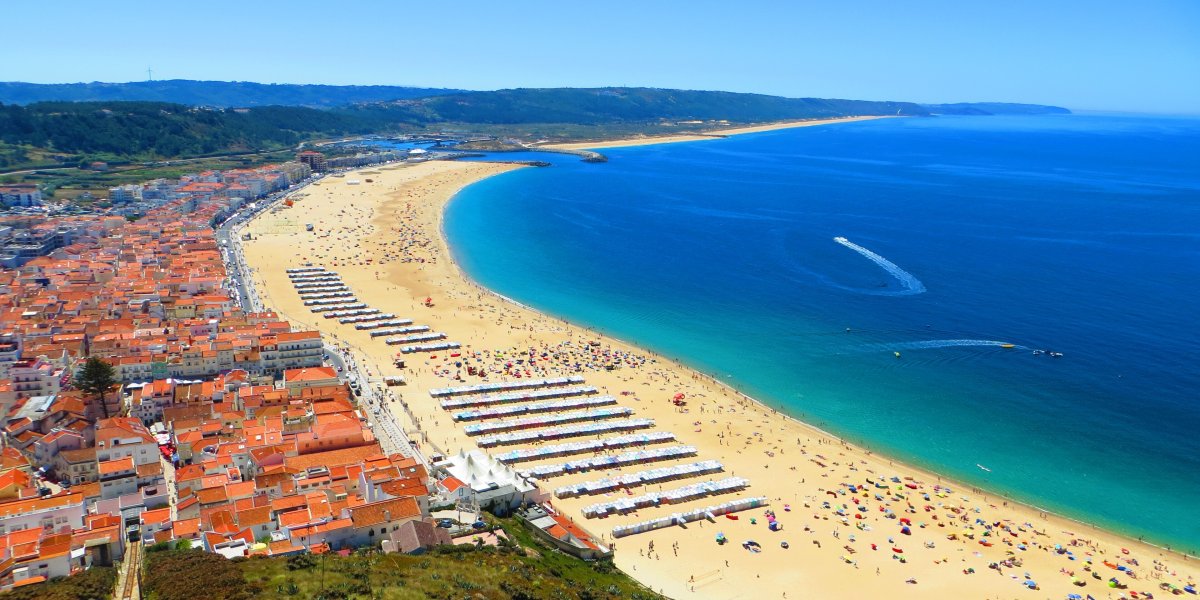
Begin at the south end of the long crescent beach on Avenida da República, where the painted fishing skiffs sit pulled up on the sand and wooden racks lined with split, salted fish (peixe seco) catch the morning sun — a 500-year-old preservation tradition still tended to by the fishermen's widows. Walk slowly the full length of the boardwalk; the cliffs of Sítio rise to the north and the Atlantic stretches flat to the horizon. This is the slow Nazaré that exists for only two hours before the day-trip buses arrive.
Tip: Aim for the northern third of the beach around 09:30, when the widows — many still wearing the traditional seven petticoats (one for each day of the week, said to bring prosperity) — finish arranging the stockfish on the racks. By 11:00 they cover the racks against the strengthening sun and the photo is gone. Stand on the sand side, not the boardwalk side, to keep the cliffs of Sítio in the background of the frame.
Open in Google Maps →11:00
Landmark
From the beach, walk five minutes north along Rua Sub-Vila to the lower funicular station on Rua do Elevador. The wooden cable car has been climbing this 318-meter cliff face since 1889; the three-minute ride hauls you up 110 vertical meters that would otherwise be a brutal stair-climb. Step out and turn left fifty meters to Miradouro do Suberco — the entire crescent of Praia da Nazaré opens beneath you, orange roofs, painted boats, the Atlantic running flat to America.
Tip: Walk to the right end of the railing where the cliff curves inward — that's the postcard angle that gets the full crescent of beach and the old town's orange roofs in one frame. Late-morning light puts the sun behind you for clean shots without lens flare. Buy a round-trip funicular ticket at the booth (€2.40 single / €3.60 round) — you'll want it again at day's end and the machine queue at the lower station gets long.
Open in Google Maps →12:30
Food
Exit the miradouro inland one block to Sítio's main square (Largo Nossa Senhora da Nazaré). Tucked under the arcade is A Celeste, a four-decade-old tasca where the fishermen's families eat — short menu, paper tablecloths, the catch chalked on a board in Portuguese only. Grab a sidewalk table if one is free; the view sweeps right to the church facade.
Tip: Order the caldeirada de peixe (€11) — the local fisherman's stew of monkfish, hake, and potatoes in a smoky tomato broth, eaten with crusty pão alentejano. Skip the meat options entirely; this kitchen lives on the morning boats. Arrive by 12:30 to beat the 13:00 surge from the Lisbon tour buses; cash gets faster service than card.
Open in Google Maps →13:30
Religious
Cross the square diagonally to the white-and-blue baroque sanctuary, the spiritual heart of Sítio since 1377. Step inside briefly for the small dark Madonna — said to have been carved by Joseph and brought here by a monk fleeing Visigothic Spain in the 8th century. Then walk eighty meters to the tiny cliff-edge chapel behind it, the Ermida da Memória, where blue-and-white azulejo panels paint the founding legend frame by frame: the moor-hunting knight whose horse halted at the cliff edge mid-deer-chase, saved by the Virgin's hand.
Tip: Almost every visitor stops at the main church and misses the Ermida da Memória — the small white chapel eighty meters closer to the cliff. The 18th-century azulejos inside tell the founding legend in pictures; ten minutes there gives the whole town meaning. Bring a €0.50 coin for the candle locals light by the altar, and step out the back door to see the cliff-edge marker where the knight's horse supposedly stopped.
Open in Google Maps →14:30
Landmark
Leave the chapel and pick up the cliff-top promenade heading west — fifteen minutes along a paved path with the Atlantic crashing on rocks a hundred meters below and the white lighthouse standing against the sky ahead. The 16th-century Forte de São Miguel Arcanjo houses the Farol da Nazaré and a small surf-history room; climb to the fort roof for the unobstructed view down onto Praia do Norte, where the underwater Nazaré Canyon focuses Atlantic swell into the waves Garrett McNamara rode at 24 meters in 2011 and that still draw the world's best tow-in surfers each winter. Stay through sunset; the sun drops into the ocean directly behind the lighthouse.
Tip: From October through February, check magicseaweed.com the morning of your visit — on red-alert swell days you can watch tow-in teams ride 15–25 m waves from this very cliff, jet-skis whining below you. Climb to the fort roof (€1 extra) for the unblocked angle. Sunset is on the western wall, but the lighthouse beam only starts sweeping thirty minutes later — wait for the first sweep; it's the day's grand finale. Bring a windbreaker even in summer: the Atlantic wind here is twenty degrees colder than the beach.
Open in Google Maps →19:30
Food
Walk back along the cliff promenade to Sítio square — fifteen minutes, the lighthouse beam sweeping behind you, the lights of the lower town beginning to twinkle a hundred meters below. Maria do Mar sits at the cliff edge by the upper funicular, glass-walled on the seaward side; ask for the balcony if one is open. The menu reads like a fisherman's wish list: arroz de marisco, cataplana, grilled robalo over coals.
Tip: Order the arroz de marisco for two (€38) — saffron-yellow seafood rice with prawns, clams, and monkfish tail, brought to the table in a cataplana copper pot and finished tableside. Walk past in the afternoon and book the balcony table by hand (Portuguese coastal places often ignore phone calls); walk-ins after 20:30 risk a forty-minute wait. PITFALL — on the way home, ignore every restaurant along Praia da Nazaré's boardwalk with menu boards in five languages and waiters waving you in: they serve frozen fish at €40 a plate, and the locals would never eat there. Skip swordfish anywhere in town — it's trucked frozen from the Algarve.
Open in Google Maps →
Trip builder
Plan this trip around Nazaré
Turn this guide into a bookable rail itinerary with FlipEarth.
Keep exploring
Related cities
More in the same country
FAQ
Frequently asked questions
How many days do you need in Nazaré?
Most travelers enjoy Nazaré in 1 days, with enough time for headline sights and a slower meal or museum stop.
What's the best time to visit Nazaré?
The easiest season for most travelers is Oct-Feb, especially if you want good weather and manageable crowds.
What's the daily budget for Nazaré?
A practical starting point is about €85 per person per day before hotels, then adjust based on museums, dining, and transport.
What are the must-see attractions in Nazaré?
A good first shortlist for Nazaré includes Praia da Nazaré (Beach & Stockfish Drying Racks), Ascensor da Nazaré & Miradouro do Suberco, Forte de São Miguel Arcanjo & Praia do Norte (The Big-Wave Cliff).