City Guide
Milan
Italy · Best time to visit: Apr-Jun, Sep-Oct.
Day-by-day plan
Choose your pace
Reisedauer
09:00
Landmark
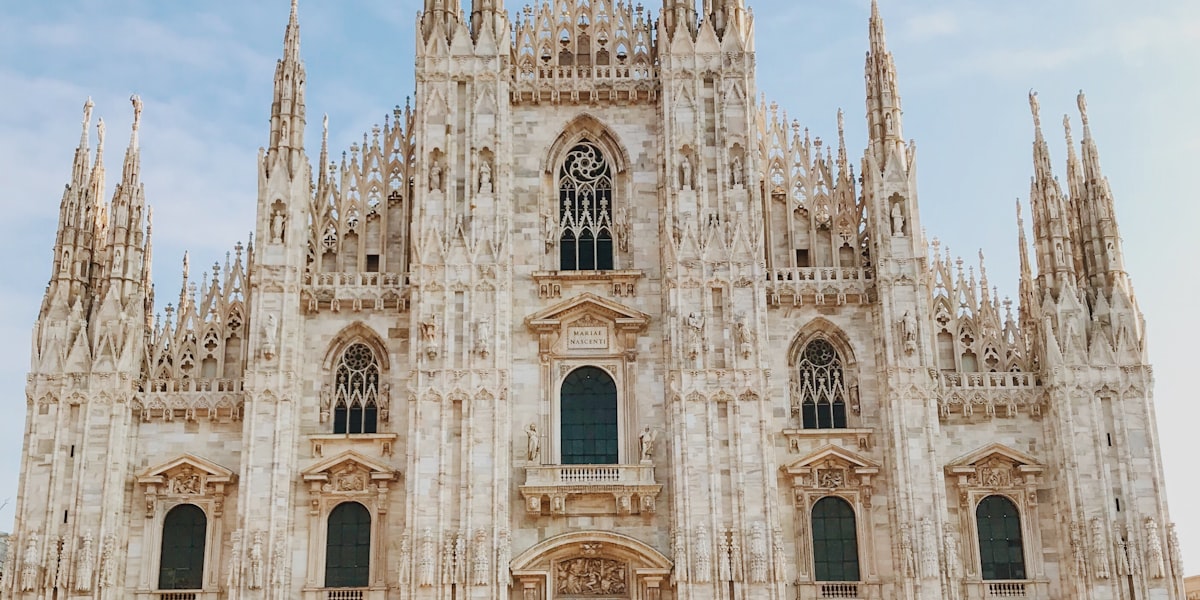
Piazza del Duomo is nearly empty at nine — a rare window to stand alone before the cathedral's 3,400 statues and 135 Gothic spires without a single tour group in your frame. Walk the full perimeter starting from the south side: the east apse, rarely photographed, is arguably more intricate than the famous west facade. Morning sidelight catches the Candoglia marble and turns it pale gold — by noon, flat overhead sun and dense crowds will steal the magic entirely.
Tip: Stand at the center of the piazza near the equestrian statue of Vittorio Emanuele II and shoot upward with a wide-angle lens — the spires fill the entire frame. Skip the rooftop terrace queue if it's already 30 people deep; the free rooftop food hall at La Rinascente department store across the square gives you nearly the same angle of the spires with zero wait.
Open in Google Maps →10:30
Landmark
Exit the Duomo piazza from the north side — the Galleria's triumphal entrance arch is directly ahead, a 30-second walk. Step under Italy's oldest active shopping arcade and look straight up: the iron-and-glass dome, completed in 1877, soars 47 meters and looks its absolute best right now, when mid-morning sun streams through the oculus and spotlights the mosaic floor below. Walk the full cruciform length slowly; the floor mosaics depict the coats of arms of Milan, Rome, Florence, and Turin.
Tip: Find the bull in the Turin coat-of-arms mosaic at the central octagon — locals spin their heel three times on its anatomy for good luck. Do it now before the queue forms by midday. Skip Caffè Biffi and Savini inside the Galleria for coffee: you pay triple for the address and get forgettable espresso.
Open in Google Maps →12:00
Food
Exit the Galleria from the south end back toward the Duomo, then turn right onto Via Santa Radegonda — Luini is a 2-minute walk on the left, identifiable by the permanent queue snaking out the door. This family institution has been frying panzerotti since 1888. Order the classic panzerotto fritto with tomato and mozzarella (€3) — the dough is shatteringly crisp outside, molten inside. Eat standing on the sidewalk like a true Milanese office worker on lunch break.
Tip: The queue looks intimidating but moves in under 10 minutes — they run a tight operation. Always order the fritto version, never al forno: the fried one is what earned them a century of loyalty. Grab two — one classic tomato-mozzarella, one with ham — because you will regret ordering only one. They close when the dough runs out, usually by 15:00.
Open in Google Maps →13:00
Landmark
Walk northwest from Luini along Via Dante, Milan's grand pedestrianized boulevard — the 12-minute stroll is lined with gelaterias and bookshops, and the castle's massive red-brick tower grows larger with every block until it fills your entire field of view. The Sforza Castle, seat of Milan's Renaissance rulers and later fortified by Leonardo da Vinci himself, has a fortress exterior that photographs beautifully from the Piazza Castello fountain. Walk through the main gate into the vast free-entry courtyards, where the sheer scale of ducal power becomes visceral.
Tip: The best photograph is from Largo Cairoli facing northwest, where the reconstructed Torre del Filarete is framed symmetrically by the fountain jets with early-afternoon light behind you. Walk through to the rear Corte Ducale courtyard — most tourists stop at the front gate, so the back courtyards are nearly empty and far more atmospheric.
Open in Google Maps →15:00
Neighborhood
Exit the Castello from the east gate and walk 8 minutes along Via Pontaccio into Brera — you will feel the shift immediately, from fortress grandeur to intimate cobblestone lanes lined with art galleries and shuttered balconies trailing ivy. This is Milan's bohemian quarter, where painters and poets gathered for centuries and still do. Wander Via Brera and Via Fiori Chiari, admire the Pinacoteca di Brera's elegant Baroque courtyard through the gate, then claim a sidewalk table as golden-hour light filters between the ochre buildings and settle in for aperitivo.
Tip: Jamaica Bar on Via Brera 32 has been the neighborhood's living room since 1911 — Hemingway drank here. Order a Negroni at the zinc bar (€9) for the most authentically Milanese aperitivo hour. Avoid the restaurants with laminated photo menus lining Via Fiori Chiari's main stretch — they charge tourist prices for frozen pasta reheated in a microwave. Walk one block deeper into the side streets for where locals actually eat.
Open in Google Maps →19:00
Food
Walk north from Brera for 15 minutes through Porta Nuova — Milan's striking modern district where the Bosco Verticale towers rise covered in 20,000 trees, a jaw-dropping contrast to medieval Brera you just left. Ratanà occupies a beautifully restored 1930s railway workers' clubhouse with exposed brick arches and a hidden garden courtyard. The kitchen champions nearly forgotten Milanese recipes: start with mondeghili, traditional Milanese fried meatballs that have vanished from most menus (€14), then order the risotto alla milanese mantecato al midollo — saffron rice finished with ossobuco bone marrow instead of butter (€18). Budget €45-50 with a glass of Lombardy wine.
Tip: Reserve by phone at least 2 days ahead — they do not seat unreserved walk-ins after 19:30, and the garden fills first. A warning for this neighborhood: the restaurants clustered along the nearby Corso Como pedestrian strip survive entirely on foot traffic, charging €18 for forgettable carbonara with no shame — if Ratanà is full, walk deeper into Via de Castillia or Via Valtellina for honest neighborhood trattorias, and never default to Corso Como.
Open in Google Maps →Zu Tag springen
09:00
Landmark
Start your Milan story on the rooftop of the cathedral that took six centuries to build. Take the elevator to the terraces at opening — at 9 AM you'll wander among 3,400 marble statues and 135 spires with almost no one around, and on a clear morning the Alps float on the northern horizon. After descending, step inside to see the largest stained-glass windows in Italy, glowing in the low eastern light.
Tip: Buy the elevator terrace ticket online the day before — the stair option saves a few euros but burns 250 steps of energy you'll need later. The Duomo Museum across the piazza is underwhelming for a 2-day trip; skip it.
Open in Google Maps →11:15
Landmark
Exit the Duomo from the main façade and turn left — the triumphal arch entrance to the Galleria is directly on the north side of the piazza, two minutes on foot. This 1877 iron-and-glass arcade is Italy's oldest shopping gallery, and the late-morning sun flooding through the glass dome creates perfect photo conditions before the midday crowds arrive. Find the Torino bull mosaic on the octagon floor and spin your heel on it — every Milanese has done it at least once.
Tip: Stand in the exact center of the octagon and shoot straight up for the iconic dome photograph. The Prada store on the left as you enter is the original 1913 flagship — the world's oldest Prada, worth a glance through the windows even if you won't buy.
Open in Google Maps →12:15
Food
Exit the Galleria through the north arch toward La Scala and turn right onto Via Santa Radegonda — Luini is 50 meters ahead on the left, recognizable by the queue of office workers snaking out the door. Since 1888 this family shop has served panzerotti, golden fried dough pockets stuffed with molten mozzarella and tomato (€3.50 each). Order two, eat them standing on the pavement like every Milanese does at lunch, and budget about €5-8 total.
Tip: Arrive right at 12:15 to beat the office-worker rush that peaks at 12:45. The panzerotto fritto con mozzarella e pomodoro is the only order that matters — other fillings exist but the classic is why the queue exists.
Open in Google Maps →13:30
Museum
Walk south from Luini down Via Spadari — Milan's legendary street of delis and cheese shops — and turn left on Via Cantù to reach Piazza Pio XI, an 8-minute stroll that smells extraordinary. This intimate 1618 museum holds what the bigger galleries don't: pages from Leonardo's Codex Atlanticus, Caravaggio's revolutionary Basket of Fruit, and Raphael's preparatory cartoon for The School of Athens. The post-lunch hour is the quietest slot of the day.
Tip: Room 7 has Caravaggio's Basket of Fruit in a small, easily missed corner — many visitors walk right past Italy's first true still life. The Leonardo Codex Atlanticus pages on display rotate regularly, so what you see is genuinely unique to your visit.
Open in Google Maps →15:30
Shopping
From the Ambrosiana, walk north through Piazza del Duomo and continue up Via Manzoni for 15 minutes — the golden rectangle of Via Montenapoleone, Via della Spiga, Via Sant'Andrea, and Corso Venezia unfolds around you. This is the birthplace of Italian fashion, where Armani, Versace, and Valentino anchor their flagships on streets that feel more like open-air museums of design. Late afternoon is when the quarter comes alive, as Milanese professionals drift through after work.
Tip: Via della Spiga is pedestrianized and far more photogenic than Via Montenapoleone. Duck into the courtyard of Palazzo Morando at Via Sant'Andrea 6 — it's a free fashion and costume museum that most visitors walk right past, with exhibits on Milan's style history from the 1700s.
Open in Google Maps →19:00
Food
Walk south through Via Manzoni, cut west past the Duomo along Via Torino, and turn right onto Via Santa Marta — the green awning appears in about 15 minutes, a pleasant evening passeggiata through the historic center. Since 1933, three generations of the same family have served definitive Milanese classics at checkered-tablecloth tables packed with locals who've been coming for decades. Order the risotto alla milanese with saffron and bone marrow (€16) and the cotoletta alla milanese, pounded thin and fried to a golden shatter (€22). Budget €35-45 per person with wine.
Tip: Reserve by phone for 19:00 — walk-ins after 20:00 face a 40-minute wait. Ask for a table in the back room, which is quieter and more atmospheric. Avoid every restaurant lining the Piazza del Duomo — they charge triple for half the quality, and that is Milan's single biggest dining trap.
Open in Google Maps →09:00
Religious
Take the M1 metro from Duomo to Cadorna and walk 5 minutes south along Via Carducci, or enjoy a 20-minute morning walk west along Corso Magenta, one of Milan's most elegant residential streets. Leonardo da Vinci's Last Supper lives in the refectory of this Renaissance church, and your 9 AM entry slot means soft, uncrowded morning light on the painting — you have exactly 15 minutes inside, and every second is worth it. Spend the remaining time in the church itself; Bramante's tribune and the quiet cloister are magnificent and free.
Tip: Tickets sell out 2-3 months in advance on the official site (cenacolovinciano.org) — this is the one booking you must make before your trip. If sold out, call the booking line on Monday mornings when cancellations are released.
Open in Google Maps →10:30
Landmark
Exit the church and walk east along Corso Magenta for 10 minutes — the massive red-brick fortress of the Sforza dynasty rises ahead, anchoring the street. Built in the 15th century and now one of Europe's largest citadels, the castle holds Michelangelo's final sculpture, the Pietà Rondanini — an unfinished, emotionally raw work that stops visitors mid-stride. Cross through the grand courtyard to the Museum of Ancient Art entrance on the ground floor.
Tip: Go directly to the Pietà Rondanini in its dedicated hall — it is the single most powerful artwork in Milan and the one thing that will stay with you longest. The castle courtyard and exterior are free; the €5 museum ticket covers all collections inside.
Open in Google Maps →12:30
Food
Exit the Castello from the rear gate into Parco Sempione and cross the park diagonally past the Arco della Pace — a 15-minute walk under chestnut trees that opens onto Via San Marco. This 50-year-old closet-sized trattoria seats barely 20 people and serves whatever the owner cooked that morning: think hand-rolled pasta with seasonal vegetables, veal in white wine, or stuffed peppers. Mains run €12-15; the daily handwritten menu on the wall is the only menu. Budget €15-18 per person.
Tip: Arrive at 12:30 sharp — by 13:00 every seat is taken by neighborhood regulars and there is no waiting area. There's no sign visible from the street; look for the steamed-up windows at number 24.
Open in Google Maps →14:00
Museum
Walk south from Latteria San Marco along Via San Marco and turn left onto Via Brera — the gallery entrance is 5 minutes away, through a courtyard guarded by a bronze Napoleon. Brera is Milan's answer to the Uffizi but mercifully uncrowded, and the early afternoon slot means most tour groups have already left. Mantegna's Dead Christ — with its radical foreshortened perspective — and Raphael's Marriage of the Virgin are here, each worth the visit alone.
Tip: Start in Room 6 (Mantegna's Dead Christ) — the foreshortened perspective is something no photograph can replicate, and you'll want to see it before fatigue sets in. The courtyard behind the museum hides the Orto Botanico di Brera, a free botanical garden that almost no visitor knows about.
Open in Google Maps →16:00
Neighborhood
Step out of the Pinacoteca and you're already in the cobblestone heart of Brera — no walking required. Via Fiori Chiari and Via Madonnina are lined with independent art galleries, antique bookshops, and aperitivo bars that come alive in the late-afternoon golden light filtering between the old buildings. This is the Milan that fashion tourists never find — a village inside a metropolis where painters still rent studios above the shops and every corner café has a story.
Tip: Via Fiori Chiari 21 has the best cluster of small free galleries — walk in and browse. For your aperitivo, grab an outdoor table at Bar Jamaica on Via Brera 32, the legendary café where Milanese artists and writers have gathered since 1920. Aperitivo hour (17:00-19:00) at most Brera bars comes with free snacks.
Open in Google Maps →19:30
Food
Walk north along Via Solferino past design showrooms and independent bookshops — the trattoria's carved wooden doorway on Via Pasubio appears in 8 minutes. Since 1880 this wood-paneled institution with white-jacketed waiters has been serving the kind of Milanese cooking that modern restaurants try to imitate but never quite match. Start with the mondeghili, Milan's own saffron-laced meatballs (€14), then order the ossobuco con gremolata (€24) — cross-cut veal shank braised until it surrenders to a spoon. Budget €40-50 per person with wine.
Tip: Reserve for 19:30 — the local dinner crowd fills it by 20:15. If the waiter offers the bollito misto cart, say yes without hesitating — they wheel an antique trolley of slow-boiled meats to your table, a vanishing Milanese ritual you won't find at any modern restaurant. Skip the tourist restaurants on the Navigli canals for dinner; they're overpriced and mediocre compared to anything in this neighborhood.
Open in Google Maps →Zu Tag springen
09:00
Landmark
The cathedral fills your entire vision as you emerge from the Duomo metro — 135 marble spires against the morning sky. Take the stairs to the rooftop terraces from the north side of the cathedral; at this hour you will share the forest of Gothic pinnacles with only a handful of visitors. Below, the stained glass catches the early eastern light at its most luminous, turning the nave into a quiet kaleidoscope.
Tip: Buy the combined ticket (cathedral + rooftop stairs) online the day before to skip the queue. The northeast corner of the rooftop gives the best photo angle — on a clear morning you can frame the golden Madonnina with the Alps behind her.
Open in Google Maps →11:15
Landmark
Exit the Duomo from the north doors and cross the piazza — the grand iron-and-glass arcade is a 30-second walk ahead. Before the luxury shoppers arrive, look up: the octagonal glass dome and mosaic floors deserve more attention than any storefront. Find the Taurus mosaic in the central crossing and spin your heel on the bull — the tradition promises a return to Milan.
Tip: Stand in the exact center beneath the glass dome and look straight up — the morning light pours through the eastern panes and illuminates the frescoed lunettes. By afternoon they fall into shadow and the shot is gone.
Open in Google Maps →12:15
Food
Walk south from the Galleria along Via Torino for two minutes, then turn right onto Via Santa Marta — the green awning is halfway down the block. Operating since 1933, this is where Milanese office workers still eat their cotoletta, not tourists. The risotto alla milanese (€16) is pure saffron gold; the cotoletta alla milanese (€22) is pounded thin, butter-fried, and hangs off the plate.
Tip: Arrive by 12:15 — by 12:45 every table is taken and there is no reservation system for lunch. Order the cotoletta with a side of insalata russa for the full old-Milan experience.
Open in Google Maps →14:00
Museum
Walk back north through the Galleria and emerge into Piazza della Scala — the neoclassical theater faces you, plain from outside but legendary within. The museum's collection of Verdi manuscripts, original set designs, and Toscanini's baton traces two centuries of operatic triumph. If the main hall is not in rehearsal, you will be allowed to peer inside from a box seat — one of Milan's great unexpected thrills.
Tip: Enter through the museum entrance on Largo Ghiringhelli at the left side of the building, not the main theater doors. Visit the box-seat viewpoint first — access closes without warning when rehearsals begin, and missing it would be a genuine loss.
Open in Google Maps →19:30
Food
The Arengario building sits on the south side of Piazza del Duomo — enter from Via Marconi and take the elevator to the restaurant floor, where the terrace puts you eye-level with the cathedral facade at sunset. The menu is refined Italian without pretension: vitello tonnato (€18) to start, then risotto with ossobuco jus (€24). The Duomo lit gold against the darkening sky is your dessert.
Tip: Reserve the terrace 3–4 days ahead by phone and request the left side for an unobstructed Duomo view. Avoid the restaurants lining the north side of Piazza del Duomo — they charge €25 for mediocre pasta and assume you are passing through.
Open in Google Maps →08:15
Religious
Take the metro to Cadorna and walk southwest along Corso Magenta for seven minutes — the red-brick Renaissance church appears on your left behind a quiet courtyard. You enter in groups of 25 for exactly 15 minutes with Leonardo's Last Supper, and those minutes are reverential, not rushed — watch how the painted perspective extends the refectory as if the apostles are dining at the far wall. This is one of the few artworks in the world that genuinely silences a room.
Tip: Tickets sell out two to three months ahead — book at the official Cenacolo Vinciano website the moment reservations open. If sold out, check for cancellations at 07:00 the day before. The 08:15 slot has the softest light through the refectory windows.
Open in Google Maps →09:30
Museum
Walk northeast along Via Meravigli for twelve minutes through a quiet residential stretch until the massive red-brick fortress fills the end of Via Dante. Head directly to the Museum of Ancient Art on the ground floor and follow the galleries to the final room: Michelangelo's Pietà Rondanini, his last unfinished sculpture, displayed alone in a vaulted hall. The rest of the castle collections reward a wander, but Michelangelo's farewell is what you came for.
Tip: Go straight to the Pietà Rondanini in the Ospedale Spagnolo hall before tour groups arrive at 10:30. The full castle museum ticket is only €5 and covers every collection inside — extraordinary value for what you get.
Open in Google Maps →12:00
Food
Exit Castello from the north gate into Parco Sempione, bear right past the Arena Civica, and leave the park onto Viale Pasubio — the trattoria is fifty meters ahead under a dark awning. Since 1880, this dining room has served the same Milanese classics on white tablecloths to a room of regulars. The ossobuco con risotto giallo (€24) is the definitive version — the marrow spoon arrives without asking — and the mondeghili fritti (€12) are the appetizer no one regrets.
Tip: Arrive at noon sharp — the dining room fills by 12:30 with local businesspeople who eat here weekly. Ask for a table in the back room with the original wood paneling for the most atmospheric seating.
Open in Google Maps →14:30
Park
Walk back into the park from Viale Pasubio and follow the tree-lined paths southwest toward the Arco della Pace, Napoleon's triumphal arch gleaming white at the end of a straight promenade. This is Milan's living room — families with strollers, students on blankets, runners circling the pond. Reach the arch, turn around, and see Castello Sforzesco perfectly framed through the avenue of trees — the best free view in Milan.
Tip: The Arco della Pace faces northwest — on a clear afternoon the late sun hits the marble reliefs between 15:00 and 16:00 for the most photogenic shot. The south-facing benches near the pond are the sunniest spot to rest your feet.
Open in Google Maps →19:00
Food
Walk east from the park through Via Solferino, the quieter northern extension of Brera where independent bookshops and design studios line the street — Dry Milano is at number 33. This is where Milan's design crowd comes for the best pizza in the city: the margherita with fiordilatte (€12) has a perfectly charred, pillowy crust, and their signature Negroni Dry (€12) is the cocktail to pair it with. The room is loud, warm, and exactly right for your second night.
Tip: Arrive at 19:00 when doors open to grab a table without waiting — by 20:00 the queue stretches onto the sidewalk. Skip the restaurants on Corso Como despite its trendy reputation; most are overpriced and underwhelming since it became a tourist nightlife strip.
Open in Google Maps →09:00
Museum
From the Lanza metro exit, walk east along Via Pontaccio for three minutes and turn left into Via Brera — the 17th-century palazzo is on your right, with a bronze Napoleon in the courtyard. Upstairs, find Mantegna's Dead Christ in Room VI — a painting so radically foreshortened it still startles after 500 years — then Raphael's Marriage of the Virgin and Hayez's The Kiss, the most romantic painting in Italy. This is not a blockbuster museum; it is a quiet, deeply rewarding one.
Tip: Closed on Mondays. The first Sunday of each month is free but crowds double — avoid it. Rooms V through IX hold the Venetian and Lombard Renaissance masterpieces; spend most of your time there and move quickly through the later galleries.
Open in Google Maps →11:15
Neighborhood
Step out of the Pinacoteca and you are already in it — Via Brera is Milan's most photogenic street, lined with independent galleries, vintage shops, and ivy-covered facades. Walk south to Via Fiori Chiari for the antique dealers and artisan studios, then duck into the Orto Botanico di Brera (free, hidden behind the Pinacoteca at Via Fratelli Gabba 10) for ten minutes of green silence. This is the Milan that Milanese actually love.
Tip: The Orto Botanico entrance is unmarked and easy to miss — look for a small green sign at Via Fratelli Gabba 10. It closes at 16:00 in winter and 18:00 in summer, so a morning visit ensures you get in.
Open in Google Maps →12:30
Food
Walk north from Via Brera along Via Solferino for five minutes, then turn right onto Via San Marco — the restaurant is at number 24, behind a small doorway and lace curtains with no sign outside. This 20-seat room has served home-style Milanese cooking since the 1960s, and the regulars guard their tables like heirlooms. The menu changes daily: expect a primo like pasta e fagioli (€12) and a secondo like vitello in umido (€14) — there is no printed menu, just trust.
Tip: No reservations, no credit cards, no menu posted outside. Arrive at 12:30 and wait by the door — the signora seats you when a table opens. Point at what the next table is eating if unsure.
Open in Google Maps →14:30
Shopping
Walk south from Via San Marco through Via Manzoni for ten minutes — you pass from Brera's artsy bohemia into the polished geometry of Milan's fashion district. Via della Spiga, the pedestrian-only street running parallel to Via Montenapoleone, is the more intimate and photogenic of the two. Even if you buy nothing, the window displays are curated like exhibitions, and the Liberty-style facades and hidden courtyards reward anyone who looks up and wanders in.
Tip: Walk Via della Spiga first — it is pedestrian-only and far less crowded than Via Montenapoleone. The courtyard at Via della Spiga 26, often left open, hides a garden that most visitors walk right past.
Open in Google Maps →19:00
Food
Walk one block south to Via Santo Spirito 10 — a carved stone doorway opens into a candlelit courtyard that feels centuries removed from the shopping strip outside. Il Salumaio has been the fashion world's unofficial canteen since 1957: editors, buyers, and tailors all eat here. Start with the vitello tonnato (€18), then the tagliata di manzo con rucola (€28) — and order the house tiramisù (€10) because this is your last Milan dinner.
Tip: Reserve for 19:00 — courtyard tables fill by 19:30, and the courtyard is the entire point. Avoid the Via Montenapoleone restaurants without courtyard seating — most are overpriced tourist traps coasting on the address.
Open in Google Maps →Zu Tag springen
09:00
Landmark
Emerge from the Duomo metro and the cathedral fills your entire field of vision — 135 marble spires rising against the morning sky like a stone forest. Buy the stairs ticket at the north entrance and climb 250 steps to the rooftop terraces; at nine o'clock you share the pinnacles and flying buttresses with a handful of early risers, and on clear mornings the Alps float on the horizon behind the golden Madonnina. Come back down and step inside — the eastern stained glass catches the morning sun at its most luminous, turning the nave into a cathedral of colored light.
Tip: Take the stairs, not the elevator — the staircase exits onto the quieter east terrace with better photo angles and no queue. The elevator terrace gets congested by 10:30. Buy the combined ticket (cathedral + terraces) online the day before to skip the ground-floor queue entirely.
Open in Google Maps →12:00
Food
Exit the Duomo from the south doors, walk two minutes along Via Torino, and turn right onto Via Santa Marta — the green awning is halfway down the block. This family-run trattoria has served working Milan since 1933: white tablecloths, no-nonsense waiters, regulars at every table who order without looking at the menu. The risotto alla milanese (€16) is pure saffron and bone-marrow gold; the cotoletta alla milanese (€22) is pounded thin, fried in clarified butter, and hangs off the plate like a golden continent.
Tip: Arrive by noon — by 12:30 every table is taken and there is no reservation system for lunch. Order the cotoletta and risotto as separate courses like the regulars do, not as a combo. Budget €30-40 per person with a carafe of house white.
Open in Google Maps →14:00
Landmark
Walk back to Piazza del Duomo — the Galleria's triumphal arch entrance faces you from the north side, a 30-second walk. Step under Italy's oldest active shopping arcade and look straight up: the iron-and-glass dome completed in 1877 soars 47 meters, and at two in the afternoon the sun pours through the western panes and spotlights the mosaic floors below. Walk the full cruciform slowly, pausing at the central octagon where four mosaic roundels represent the cities of unified Italy. Before you leave, stop at Camparino in Galleria — the original Campari bar since 1867 — for an espresso at the marble counter.
Tip: Find the bull in the Turin coat-of-arms mosaic at the central crossing — locals spin their heel on the bull's anatomy for good luck. The real photo opportunity is standing directly under the dome at 2 PM when the light is strongest. Camparino's espresso (€1.50 at the bar) is excellent; their €14 cocktails at a table are not worth it.
Open in Google Maps →15:30
Museum
Exit the Galleria from the north end into Piazza della Scala, walk past La Scala opera house, and continue north along Via Brera — a cobblestoned street lined with galleries and art-supply shops where the air shifts from commerce to culture. The Pinacoteca is through a courtyard guarded by a bronze Napoleon. Upstairs, go directly to Room VI: Mantegna's Dead Christ, foreshortened so radically that it still startles after 500 years, is the single most powerful painting in Milan. Then find Raphael's Marriage of the Virgin, Caravaggio's Supper at Emmaus, and Hayez's The Kiss — four centuries of genius under afternoon skylights.
Tip: Closed Mondays. Start in Room VI with Mantegna — stand at the foot of the canvas and look down the body to understand why it changed art history. Thursday evenings the museum stays open until 22:15 with almost no visitors. The first Sunday of each month is free but double the crowds — avoid it.
Open in Google Maps →19:30
Food
Walk north from Brera along Via Solferino — one of Milan's most elegant streets, lined with design studios and aperitivo bars — and continue onto Viale Pasubio. The trattoria is on the right behind a dark wooden door. Since 1880, this dining room of brass coat hooks, yellow walls, and handwritten specials has fed Milan's old guard. Order the mondeghili fritti (fried meatballs, €14) to start, then the ossobuco con risotto giallo (€26) — the marrow spoon arrives without asking, because here everyone orders the same thing.
Tip: Reserve for 19:30 — by 20:00 every table is claimed by regulars who have eaten here for decades. Ask for the back room with original 19th-century wood paneling. Budget €40-55 with wine. Avoid the bars and restaurants on nearby Corso Como — it looks trendy but charges tourist prices for forgettable cocktails and reheated pasta.
Open in Google Maps →09:15
Religious
Take Metro M1 to Cadorna and walk southwest along Corso Magenta — a boulevard of aristocratic palazzi — for seven minutes until the red-brick Renaissance church appears on your left behind a quiet courtyard. Your 09:15 timed entry admits you to the refectory for exactly 15 minutes with Leonardo's Last Supper. Use the first five minutes standing in the center, letting your eyes adjust to the mural's faded palette. Then move right: notice how every apostle's hand tells a different emotional story, and how the painted perspective extends the room as if the table continues beyond the wall. After, explore the church's cloister — a tranquil garden courtyard that most visitors walk past without knowing it exists.
Tip: Tickets sell out 2-3 months ahead — book at the official Cenacolo Vinciano website the moment reservations open. If sold out, check for cancellations at 07:00 the day before. The 09:15 slot has softer light through the refectory windows than later slots and the first wave of tour groups hasn't arrived. Late arrivals forfeit their entry.
Open in Google Maps →11:00
Museum
Exit the church and walk east along Corso Magenta past aristocratic facades, through Largo Cairoli — the massive red-brick towers of the Sforza Castle grow larger with each block until they fill the sky. Enter through the Filarete Tower into the vast Piazza d'Armi, then head directly to the Museum of Ancient Art on the ground floor. Follow the galleries to the final room: Michelangelo's Pietà Rondanini, his last unfinished sculpture, worked on six days before his death, displayed alone in a vaulted hall. The rawness of the unfinished marble — two overlapping figures emerging from the stone — is more moving than any polished masterpiece.
Tip: The combined museum ticket (€5) covers every collection inside the castle — extraordinary value. Go straight to the Pietà Rondanini before tour groups arrive at 11:30. The courtyard is free and the best photograph is from the inner bridge looking back at the Filarete Tower.
Open in Google Maps →13:30
Food
Exit the Castello from the south gate, walk along Via Dante for four minutes toward the Duomo, then turn right onto Via Brisa — look for an iron gate set into a stone wall. Behind it hides one of Milan's most beautiful secrets: a garden restaurant built on the ruins of Emperor Maximian's 3rd-century palace. In spring and summer, lunch is served under wisteria and the remains of Roman walls are visible beneath your feet. The saffron risotto with bone marrow (€18) is silky and intense; the vitello tonnato (€16) is summer on a plate. The garden absorbs every decibel of street noise — you'll forget you're in a city of 1.4 million.
Tip: Ask for a garden table when you reserve — the interior is fine, but the courtyard is the entire reason to come here. Book the day before; the garden seats only 30 and word has spread. Budget €30-40 per person with house wine.
Open in Google Maps →15:30
Park
Walk back to the Castello and pass through the rear archway into Parco Sempione — Milan's great green lung unfolds behind the fortress like a hidden chapter. Follow the gravel paths southwest through plane trees and past the Biblioteca del Parco (stop for an espresso at the kiosk) toward the Arco della Pace, Napoleon's triumphal arch gleaming white at the far end of a straight promenade. In the mid-afternoon light, the marble reliefs glow warm and the park stretches out behind you in long tree-shadows. Turn around for the view: Castello Sforzesco framed through the avenue of trees — the best free panorama in Milan.
Tip: The Arco della Pace faces northwest — between 15:00 and 16:00 the late sun hits the marble reliefs at the most photogenic angle. Shoot from about 50 meters away on the central path with the arch framed by the tree canopy. The south-facing benches near the pond are the sunniest spot to rest.
Open in Google Maps →19:30
Food
From the Arco della Pace, exit the park from the northeast path and walk through the Porta Nuova district — Milan's glass-and-steel skyline rises around you, and the tree-covered Bosco Verticale towers appear like vertical forests in the city. Continue along Via Ceresio to Via Gaetano de Castillia. Ratanà occupies a restored 1903 railway workers' clubhouse with exposed brick arches and a hidden garden terrace facing the Bosco Verticale at sunset. The kitchen revives forgotten Milanese recipes: mondeghili di pesce (fish meatballs, €16) to start, then the signature risotto al salto (€18) — a crispy fried risotto cake with a molten saffron heart.
Tip: Book a terrace table facing east — you'll watch the sunset reflect off the Bosco Verticale towers, and the golden light on exposed brick makes this the most photogenic dinner in the city. The cotoletta here is non-traditional (lighter, crispier) and divides opinion — purists should skip it. Budget €40-50 with wine.
Open in Google Maps →09:30
Landmark
Catch the 08:20 Trenitalia regional train from Milano Centrale toward Tirano — one hour later you step off at Varenna-Esino, and the air changes to lake water, cypress, and warm stone. Descend the steep signed path through olive groves to the lakeshore (10 minutes downhill, the lake appearing between the trees) and turn left along the waterfront promenade to Villa Monastero. This 14th-century monastery turned villa stretches along 2 km of botanical gardens dropping to the water's edge — citrus trees, agaves, wisteria pergolas, and stone balustrades that frame Bellagio across the lake. In the morning, the light on the water is silver and the gardens are yours alone.
Tip: The garden walk is linear — start from the entrance and walk south along the lake. The best photograph is from the stone balustrade at the halfway mark, where the lake narrows and three shores are visible at once. Return train ticket from Milano Centrale is approximately €26; buy it at the station or on the Trenitalia app before boarding.
Open in Google Maps →12:00
Food
From Villa Monastero, walk south along Varenna's waterfront promenade to the ferry pier — ten minutes past pastel houses reflected in the water. Take the car ferry to Bellagio (15-minute crossing, approximately €5; stand on the upper deck for panoramic views of the lake splitting into its famous Y-shape). From Bellagio's landing, walk up the stepped Salita Serbelloni into the old town — Bilacus is on your left in a vaulted stone cellar. The menu is lake cuisine at its purest: start with missoltini (sun-dried lake shad on grilled polenta, €12) — a Como tradition you won't find anywhere else — then the risotto al pesce persico (perch risotto, €16). Ask for the local white from the Lario hills — it's not on the menu but they'll pour it.
Tip: Arrive by noon — the six tables inside fill by 12:30 and there's no reservation for lunch. Budget €25-35 per person. The missoltini is not pretty to look at but it's the one dish that exists only here — order it.
Open in Google Maps →14:00
Neighborhood
Step out of the restaurant and continue up Salita Serbelloni — the stepped alley narrows and the lake flashes blue between ochre buildings. Follow the alleys uphill to Punta Spartivento, the tip of the promontory where Lake Como splits into its Y-shape: the Lecco branch to your left, the Como branch to your right, mountains on every horizon. It's the single most photographed view on the lake, and in the early afternoon with the sun behind you, both branches glow turquoise. Wind back down through the cobbled lanes, pausing at the Romanesque Basilica di San Giacomo — step inside for the unexpected 12th-century apse mosaic.
Tip: Punta Spartivento has a small park with benches overlooking the junction of the two lake branches — linger here, the view at 2 PM has the best light. Skip the waterfront gelato shops (tourist markup); the alimentari on Salita Serbelloni sells better gelato for half the price.
Open in Google Maps →15:30
Park
From the old town, walk south along the lake road Via Lungolario Manzoni — the garden walls appear on your right after five minutes, and the entrance is through an iron gate flanked by cypress trees. Villa Melzi's gardens are Italian Romantic landscape design at its peak: Japanese maples, Egyptian sculptures, a Moorish pavilion, and a lakeside promenade where every bench faces a different mountain. In mid-afternoon the light filters through the canopy and the water turns from silver to deep blue. This is the contemplative close to your day on Como — a place to sit and let beauty accumulate slowly before the ferry back.
Tip: The most photogenic spot is the small stone dock at the south end of the gardens, where a staircase descends to the water and you can frame Varenna across the lake. Garden closes at 18:30 (last entry 18:00). Take the 17:00 ferry from Bellagio to Varenna (15 minutes), then the 17:37 train back to Milano Centrale — you'll arrive by 18:40.
Open in Google Maps →20:00
Food
From Milano Centrale, take Metro M2 (green line) to Porta Genova (20 minutes), exit and walk south on Via Tortona — a former industrial district now colonized by design studios — then turn right on Via Meda. The restaurant's unmarked wooden door is halfway down the block. Inside, a converted 1920s sawmill: you dine at one of two long communal tables beneath industrial steel beams and hundreds of suspended lightbulbs, the effect somewhere between a cathedral and a warehouse party. The burrata with anchovies and crispy artichoke (€18) is a perfect starter; the slow-cooked veal cheek with saffron polenta (€28) is worth every hour you spent on the train today.
Tip: Reserve for 20:00 — the second seating is less hectic and the atmosphere peaks with candlelight. Request a seat near the center of the communal table for the best atmosphere. Budget €50-65 with wine. The neighborhood around Via Meda is quiet at night — walk back to Via Tortona for a taxi or take the metro from Porta Genova (last train around midnight).
Open in Google Maps →10:00
Landmark
Take tram 3 from the Duomo south to Corso di Porta Ticinese, or walk fifteen minutes down Via Torino — the sixteen Corinthian columns appear on your left, standing in a row like sentries from another age. These 3rd-century Roman columns, once part of Emperor Maximian's imperial palace, are Milan's oldest visible monument and most visitors rush past them toward the Navigli canals without stopping. In the morning the low eastern sun hits the columns and the piazza belongs to university students and pigeons. Behind them, the Basilica di San Lorenzo Maggiore holds the Cappella di Sant'Aquilino — a 4th-century chapel with original gold mosaics that rival Ravenna's.
Tip: Pay the €2 entry to the Cappella di Sant'Aquilino inside the basilica — the 4th-century gold mosaics are among the oldest Christian artworks in northern Italy and almost nobody knows they're here. The octagonal floor plan of San Lorenzo directly influenced the design of the Duomo centuries later.
Open in Google Maps →11:30
Religious
Continue south along Corso di Porta Ticinese — Milan's most bohemian street, lined with vintage shops and independent galleries — for eight minutes until the Romanesque bell tower of Sant'Eustorgio appears at the end of the road. This 4th-century basilica once held the relics of the Three Magi before Frederick Barbarossa carried them to Cologne in 1164. But the real treasure hides behind the main altar: the Portinari Chapel (1462), a Renaissance jewel commissioned by a Medici banker and frescoed by Vincenzo Foppa with luminous scenes of St. Peter Martyr that anticipate Leonardo. You will likely have this chapel entirely to yourself — it is the finest early Renaissance space in Milan, and almost no one knows to look for it.
Tip: The chapel ticket (€6) is sold at a poorly signed desk to the left of the main altar — most visitors miss it entirely. The main church is free and has a fascinating underground crypt with Roman sarcophagi. This is the single most underrated sight in Milan.
Open in Google Maps →13:30
Food
Exit the basilica and walk west across Parco delle Basiliche — a small green space where Milanese come to read under the trees — then cross to Alzaia Naviglio Grande. El Brellin sits on the exact spot where Milanese women washed laundry in the canal until the 1950s; the original stone washbasins are preserved in the courtyard where you'll eat. The kitchen is Lombard to the bone: the risotto con luganega (sausage risotto, €15) is rich and honest, and the mondeghili alla milanese (fried meatballs, €12) are the ones your Milanese grandmother would have made if you'd had one. In warm months, tables line the canal and the only sound is water lapping against stone.
Tip: Request the courtyard tables overlooking the old washbasins — inside is darker and half the charm. Arrive by 13:00 on weekdays; no reservations for lunch. Budget €25-35 per person with house red.
Open in Google Maps →15:30
Neighborhood
Step out of the restaurant and you're on the canal towpath. Turn left and walk west along Alzaia Naviglio Grande — the oldest of Milan's navigli, built in 1177 to carry marble for the Duomo from Lake Maggiore. In the afternoon the water turns gold and the pastel houses cast long reflections. Duck into Vicolo dei Lavandai — a tiny alley with the last public laundry troughs, preserved under a wooden roof. Continue past the courtyards of Via Corsico, where artisan workshops (bookbinders, ceramicists, luthiers) still operate behind heavy wooden doors. The afternoon Navigli is quiet, local, and nothing like the crowded aperitivo scene that takes over at nightfall.
Tip: The most photographed angle is from Ponte dello Scodellino looking west along the canal between 15:00 and 16:00 when the light is warmest. On the last Sunday of each month, the canal hosts the Mercatone dell'Antiquariato — a sprawling antique market worth timing your trip around.
Open in Google Maps →19:00
Food
Head east along the canal towpath, cross to the south bank at the first bridge, and continue along Ripa di Porta Ticinese — the restaurant's door is just past the iron bridge (pont de ferr in Milanese dialect). This intimate canal-side room of exposed brick and candlelight has earned its reputation as one of Milan's most soulful kitchens. Start with the legendary polenta soufflé with Gorgonzola (€16), then the slow-braised lamb shank with Barbera reduction (€26). The wine list is built on small northern Italian producers the sommelier knows by name. This is the dinner to close your Milan story — local, unhurried, and impossible to forget.
Tip: Reserve 3-4 days ahead and request the canal-side window table. The tasting menu (€55) is four courses of the kitchen's best and worth it if you can't decide. Budget €45-60 with wine. One farewell warning: the 'rose sellers' along the Navigli at night can be persistent — a polite 'no grazie' is sufficient. Skip the English-menu restaurants directly on the canal for dinner; walk one block back to Via Vigevano for where locals actually eat (though tonight, you're already in the right place).
Open in Google Maps →
Trip builder
Plan this trip around Milan
Turn this guide into a bookable rail itinerary with FlipEarth.
Keep exploring
Related cities
Nearby cities
More in the same country
FAQ
Frequently asked questions
How many days do you need in Milan?
Most travelers enjoy Milan in 1 days, with enough time for headline sights and a slower meal or museum stop.
What's the best time to visit Milan?
The easiest season for most travelers is Apr-Jun, Sep-Oct, especially if you want good weather and manageable crowds.
What's the daily budget for Milan?
A practical starting point is about €70 per person per day before hotels, then adjust based on museums, dining, and transport.
What are the must-see attractions in Milan?
A good first shortlist for Milan includes Duomo di Milano, Galleria Vittorio Emanuele II, Castello Sforzesco.