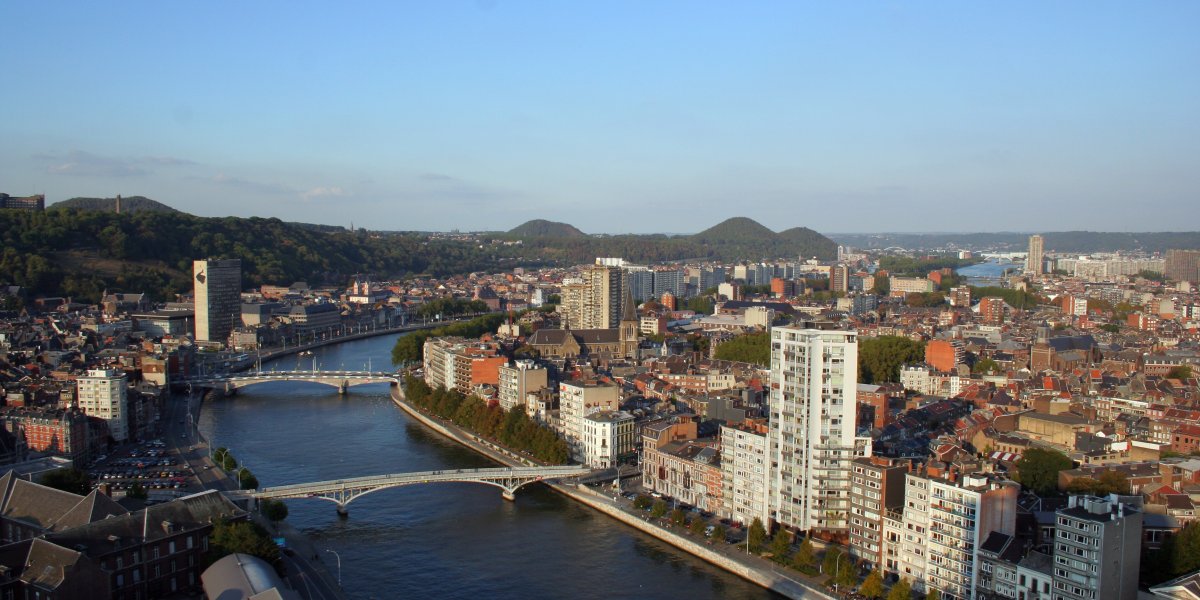
City Guide
Liege
Belgien · Best time to visit: May-Sep.
Day-by-day plan
Choose your pace
Reisedauer
09:00
Landmark
Step out of the main hall and circle to the city side — Calatrava's white-steel wave stretches 200 metres wide with no facade and no doors, only a translucent canopy ribbing the morning light into stripes across the platforms. At 09:00 the rush-hour commuters are gone, so you can stand under the cathedral of glass nearly alone. Walk back inside, ride the gentle ramps up to the mezzanine for the symmetrical view down the tracks, then exit through the rear onto Place des Guillemins for the postcard angle.
Tip: The clean exterior shot is from the steps of the Tour Paradis (the green skyscraper) across Boulevard Emile de Laveleye — the canopy fills the frame perfectly between the plane trees. Drop your bag in the platform-level lockers (around 4.50 EUR for a small one) so you can walk the city unencumbered.
Open in Google Maps →10:15
Landmark
Cross Pont de Fragnee and follow Quai sur Meuse north along the river — 35 minutes of easy riverbank walking with the Meuse on your right and the Outremeuse district drifting past on the far bank, the route delivering you straight into the city's empty heart. Place Saint-Lambert feels strangely incomplete because it is: the cathedral that gave the square its name was torn down brick by brick by Liege revolutionaries in 1794 and never rebuilt. Slip through the gate of the Palais des Princes-Eveques into the first courtyard — sixty stone columns, every grotesque carved face different from the next.
Tip: The Palais courtyard is free and open weekdays during business hours (closed weekends and after 16:30) — push through to the second, older courtyard if the inner door is open. Then walk one block east to Place du Marche for the Perron fountain, Liege's symbol of civic liberty since 1697 — the Liegeois will tell you their freedom predates the French Revolution by a thousand years.
Open in Google Maps →12:15
Food
Walk three minutes south down Rue de la Cathedrale — Pollux is at number 9, a chrome-and-formica snack counter that has been feeding Liegeois office workers since 1953. Order at the counter, stand at the chest-high bar table, eat fast. This is lunch the way Liege actually eats it — no menu translation, no Instagram, just the chef's wife sliding plates across vinyl.
Tip: Order the 'Americain prepare' (raw steak with capers and onions on a fresh baguette, ~8 EUR) — yes, raw beef at lunch is normal here and the bread is baked that morning. If raw meat is a step too far, get the 'boulet-frites sandwich' (Liegeois meatball with frites stuffed inside a baguette, ~9 EUR). Skip 12:30-13:00 when the offices flood in; arrive at 12:15 sharp or come back at 13:30.
Open in Google Maps →13:30
Landmark
Head north up En Feronstree, Liege's medieval shopping spine — antique dealers, the smell of warm waffle irons, and the occasional shop selling nothing but Peket. Eight minutes later Saint-Barthelemy's twin Romanesque towers rise on your right, blackened sandstone from the 11th century; another two minutes and the deep red Mosan-Renaissance facade of the Musee Curtius hits the riverbank. We are not paying to go in — the exteriors are the point, and the angle from the river side is the one no guidebook bothers to mention.
Tip: The defining Curtius shot is from the embankment promenade on Quai de Maestricht between the building and the Meuse — afternoon light around 14:00-15:00 saturates the red brick into something close to oxblood. Saint-Barthelemy's famous bronze baptismal font (one of the seven wonders of Belgium) is locked inside behind a 5 EUR ticket, but we agreed: exteriors only — and the twin towers from Place Saint-Barthelemy are the more memorable image anyway.
Open in Google Maps →15:30
Landmark
From Saint-Barthelemy, walk five minutes north on Rue Hors-Chateau — the staircase appears suddenly between two narrow brick houses, then vanishes straight up the cliff face. 374 steps at a 30 percent gradient, no switchbacks, no benches. Built in 1881 so the citadel garrison could reach the city without crossing the brothel district below. The Liegeois do it in eight minutes, tourists in fifteen; at the top the whole city tilts open — terracotta rooftops, the Meuse looping south, Saint-Paul's spire pinning the horizon.
Tip: Climb between 15:30 and 17:00 — the late-afternoon sun catches the rooftops at the angle that turns them coppery for the panoramic photo at the summit. Do not descend the same way: at the top, follow the brown 'Coteaux de la Citadelle' signs left along the old vineyard terraces — the loop drops you through Impasse des Ursulines back into the old town with zero backtracking, and the upper-terrace viewpoints are quieter than the staircase itself.
Open in Google Maps →19:00
Food
Come off the Coteaux loop and walk south along Quai sur Meuse for ten minutes — Lequet sits at number 17, a 1942 boulets shrine with red-and-white checked cloths, wood panels stained dark by eighty years of beef-fat fumes, and a clientele that skews three generations deep. This is where Liegeois bring their grandparents for the only dish that matters here. Sit at a window table, order without opening the menu, and let the waiter pour the Peket.
Tip: Order 'boulets a la liegeoise sauce lapin' (around 18 EUR) — the dark fruity sauce made with sirop de Liege (apple-and-pear molasses cooked down for hours), not the tomato 'sauce chasseur' version that exists for tourists. Finish with a shot of Peket Hasselt (juniper liqueur, ~4 EUR), thrown back in one. **Pitfall warning:** the bistros ringing Place du Marche (As Ouhes, the Perron-facing terraces) charge 25-30 EUR for tourist-grade boulets with frozen frites and bottled sauce — Lequet on the Quai is the only one worth the calories. Reserve by phone same-day by 16:00; Saturday nights book out.
Open in Google Maps →Zu Tag springen
09:00
Landmark
The 374-step staircase carved straight into the hillside is Liege's badge of honor — built in 1881 so soldiers could reach the citadel without winding through the rebellious old streets. Climb at 9:00 while the stone is still cool and the morning sun lights the slate rooftops below in soft gold. From the top, the view sweeps across the entire grey-blue city to the Meuse bend — the postcard locals love most.
Tip: Every 50 steps, turn around — the view changes character: at step 100 you are above the chimneys, at step 250 the cathedral spire pokes into the frame, at the top the whole river bend opens. Bring water; there is no shop until you reach the Coteaux above. The handrail on the right is the cleaner side.
Open in Google Maps →10:30
Park
From the top of the staircase, follow the gravel path left through the old orchard gate — a 5-minute walk along the hillside where medieval monks once kept their kitchen gardens. These terraced green belts are now a tangled belvedere of fruit trees, hidden chapels and crumbling ramparts, threaded by 'impasses' — narrow stone alleys that drop you back down into the Hors-Chateau quarter without ever crossing a real road.
Tip: Take the descent via Impasse des Ursulines (signposted from the Citadelle hospital car park) — it ends inside a quiet courtyard most tourists never find, framed by ivy and a single Romanesque archway. Wear shoes with grip; the cobbles are uneven and shaded patches stay wet into noon.
Open in Google Maps →12:30
Food
Walk south along Rue Hors-Chateau into Place du Marche — 8 minutes past medieval facades and the bronze Perron column rising in the square. As Ouhes has fed Liegeois the city's national dish — boulets sauce lapin (meatballs in a dark sirop-de-Liege gravy with hand-cut frites, €18) — since 1812. Dark wood, tiled floor, the same waiters who will mock-frown if you order them 'medium-rare'.
Tip: Order boulets sauce lapin, not the carbonnade — this is the Liegeois flag dish and As Ouhes does it better than anyone in town. Pair with a Trappist Rochefort 10 (€5). Skip dessert; save room for peket tomorrow. Lunch budget €25-35; cash preferred for the bar.
Open in Google Maps →14:00
Landmark
Step straight out the restaurant door — you are already there. Place du Marche is the political heart of Liege: the 17th-century Town Hall, the bronze fountain crowned by Le Perron (the city's symbol of communal liberty since 1313), and a ring of cafe terraces where locals nurse afternoon beers. Sit for half an hour and watch the city breathe; the square is at its best after lunch, when sunlight angles into the Town Hall facade.
Tip: The Perron is no decoration — it has been smashed, replaced, paraded, and was even kidnapped by Charles the Bold in 1467 as punishment for the city. Read the plaque on the Town Hall side; this is the only city symbol in Belgium that doubled as a political weapon. Best photo angle: from the cafe terraces on the east side at 14:30, when the sun lights the bronze head-on.
Open in Google Maps →15:30
Religious
Walk north from Place du Marche along Rue Leopold for 6 minutes — you cross the small Place Saint-Barthelemy and meet the squat twin-tower Romanesque facade. Inside is one of the Seven Wonders of Belgium: the Renier de Huy baptismal font, cast in bronze around 1118, depicting John the Baptist with such anatomical precision it looks Renaissance — except it predates the Renaissance by three hundred years.
Tip: Come at 15:30 when afternoon light slants through the south windows directly onto the font — the bronze figures glow as if just poured. Entry €2, cash only. Walk around the font slowly: the twelve oxen at the base each have different expressions; most visitors never look down.
Open in Google Maps →19:30
Food
From Saint-Barthelemy, walk 8 minutes down Rue Hors-Chateau onto Rue de la Goffe — the lit windows of Le Bistrot d'en Face face the quayside. This is where Liegeois who care about food go on weekends: French-Belgian bistro classics (filet pur sauce maitrank €26, escaveche de poisson €22), a 200-bottle wine list, a zinc bar that hums by 20:00. In summer the riverside tables catch the sunset reflection off the Meuse.
Tip: Reserve 24 hours ahead — the twelve tables fill by 19:30 on weekends. Ask for a window seat; the lit-up Pont des Arches across the river is the best evening view in the old town. Pitfall warning: avoid the 'Belgian restaurants' along Rue Saint-Paul one block north — multilingual menus, frozen mussels at €28, microwave boulets. If a place displays photos of the food outside, walk past it.
Open in Google Maps →09:00
Shopping
Belgium's largest open-air market — and one of Europe's oldest, running since 1561 — stretches two kilometres along Quai de la Batte every Sunday morning. Arrive at 9:00 when produce stalls are freshly piled and Liegeoise grandmothers are already arguing over the price of asparagus. Live chickens, hand-cut charcuterie, vinyl records, antique knives, and at the far end the famed gaufres de Liege — caramelised waffles with chunks of pearl sugar, €2 each, eat them walking.
Tip: Start from the Pont des Arches end and walk north — the food vendors are in the first 500 m, the bric-a-brac in the second half. Buy a gaufre from the stall with the longest queue (look for the cast-iron press, not the electric one). Skip the 'Belgian chocolate' stalls — they ship in from Brussels and are double the supermarket price.
Open in Google Maps →10:30
Museum
Walk 3 minutes from the market — the russet-red Mosan brick palace facing the river is the Curtius, a 1610 arms-dealer's mansion now housing four collections under one roof. Skip the weapons floor unless you collect firearms; the must-see is the Mosan medieval art gallery upstairs — ivory crucifixes, gold reliquaries, and the famed Evangeliaire de Notger from the 11th century, illuminated by a single shaft of skylight.
Tip: Enter via the river-facing courtyard, not the street entrance — the courtyard is the most photographed angle of the Curtius and is missed by visitors who come straight off the market. The Notger evangeliary sits at the far end of the second floor in a glass case alone; most tourists turn back at the silverware room. Download the free audio guide app before going in; wifi inside is patchy.
Open in Google Maps →13:00
Food
Walk 5 minutes south through Rue Hors-Chateau into the narrow Rue de l'Epee — Maison du Peket is tucked into a 17th-century townhouse with low beams and stone walls. Peket (Walloon juniper liqueur) is the house specialty: 240 flavours line the bar from traditional juniper to chocolate-chili. Order the platter of three pekets (€8) with a plate of boudin noir and Herve cheese (€16). Old wood, low ceiling, locals at every table — Wallonia distilled.
Tip: Order peket 'au genievre' (juniper) first — the original, knife-edge clear and the only one a local would drink straight. Resist the bright fruit flavours; they are sugar bombs aimed at coach tours. Pair the Herve cheese (a stinky raw-milk cow cheese) with peket 'pomme' — the only fruit one worth trying. Lunch budget €25-30.
Open in Google Maps →15:00
Landmark
Take tram Line 1 from Place Saint-Lambert (10 minutes, €2.10) — Santiago Calatrava's 2009 masterpiece does not reveal itself until you step out under the canopy. A 200-metre glass-and-steel arch curves into a wave; the platforms feel like standing inside a whale skeleton. Walk to the far southern end and turn around: from there the entire vault frames the old town in the distance. No tickets needed; the public concourse is free to wander.
Tip: Best photo angle is from the parking terrace on the east side — climb the stairs above the tram stop for the full curve in one frame. Visit at 15:00-16:00, when slanted sun cuts golden lines through the white ribs; avoid sunset itself, when glare turns the glass opaque on camera. Bring a wide lens or shoot from the very back of the platforms.
Open in Google Maps →16:30
Museum
Walk 15 minutes back north along the Meuse on the left bank — through Parc de la Boverie where Liegeois jog and lovers picnic on summer afternoons. The 1905 Beaux-Arts palace at the park's northern tip houses the city's fine art museum: Ingres, Gauguin, Magritte, and a single magnetic Picasso ('La Famille Soler', 1903). The collection is deliberately small — you can linger over every room without museum fatigue.
Tip: Closes 18:00 sharp — be inside by 16:30. The Picasso is on the upper floor at the very end; most tourists miss it after the Magritte room. Sunday entry is €5 (€9 weekdays — plan accordingly). Before leaving, walk to the southern tip of the park: the Calatrava station glowing across the river at dusk is the most underrated photo in Liege.
Open in Google Maps →19:30
Food
Walk 20 minutes north along Quai sur Meuse — the evening river light is the trip's best, with the Coteaux silhouetted on your right and the church spires lit in amber. Amon Nanesse, on a Place du Marche side street, is the institution for traditional Liegeois cuisine: lapin a la liegeoise (rabbit slow-braised in dark beer and prunes, €24) and salade liegeoise (warm potato, green beans, lardons, vinegar, €14). Walls hung with sepia photos of old Liege, the carbonnade simmering since lunch.
Tip: Reserve for any table after 19:00 on weekends — the dining room only seats 30. The lapin a la liegeoise appears only when fresh rabbit is delivered, so call ahead to confirm. Pair with a Saison Dupont (€6); the bartender will sneer if you ask for a Heineken. Pitfall warning: the Le Carre nightlife district two blocks away is fine for a post-dinner beer but the food there is universally bad — multilingual menus on Rue Pont d'Avroy and Rue Saint-Gilles are coach-tour traps with frozen frites and microwaved boulets. Stick to streets where the menu is only in French.
Open in Google Maps →
Trip builder
Plan this trip around Liege
Turn this guide into a bookable rail itinerary with FlipEarth.
Keep exploring
Related cities
More in the same country
FAQ
Frequently asked questions
How many days do you need in Liege?
Most travelers enjoy Liege in 1 days, with enough time for headline sights and a slower meal or museum stop.
What's the best time to visit Liege?
The easiest season for most travelers is May-Sep, especially if you want good weather and manageable crowds.
What's the daily budget for Liege?
A practical starting point is about €80 per person per day before hotels, then adjust based on museums, dining, and transport.
What are the must-see attractions in Liege?
A good first shortlist for Liege includes Liege-Guillemins Railway Station, Place Saint-Lambert and Palais des Princes-Eveques, Curtius Quarter and Eglise Saint-Barthelemy.