City Guide
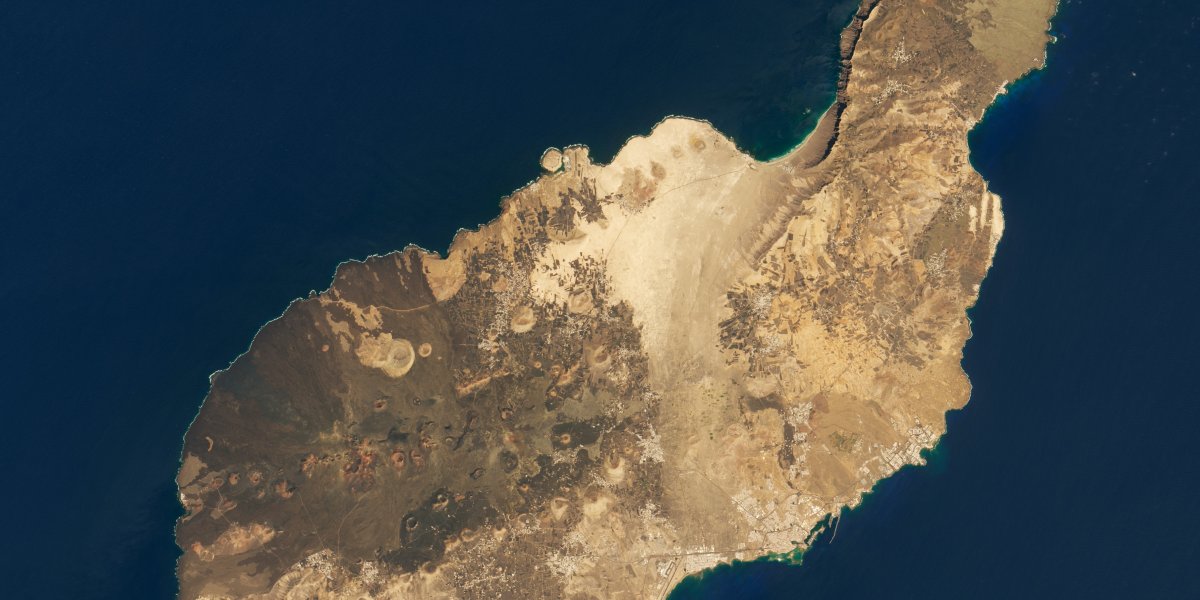
Lanzarote
Spanien · Best time to visit: All year.
Day-by-day plan
Choose your pace
Reisedauer
09:00
Landmark
Start at the seafront on Avenida la Marina and cross the small stone causeway onto the islet — the granite-ball drawbridge (Puente de las Bolas) is your gateway. This honey-walled 16th-century watchpost guarded Arrecife against Barbary pirates and now sits low against three sides of cobalt Atlantic. Walk the seaward rampart all the way around the outside; you don't need to go inside.
Tip: At 09:00 the eastern wall takes direct sun and the bridge is empty; by 11:00 a cruise group from Puerto de los Mármoles arrives. Stand at the northeast corner of the islet looking back at the city — that's the angle every postcard uses, with the white skyline floating above black volcanic rock.
Open in Google Maps →11:00
Neighborhood
Cross back over the drawbridge and walk two blocks inland — three minutes — until the pedestrian street opens at Plaza de las Palmas. This is Arrecife's working spine: two-story whitewashed cubes with green or blue wooden shutters (the color code César Manrique pressed into law in the 1960s), locals on errands, terrace tables filling for the second coffee. Drift north past Plaza San Roque toward the lagoon.
Tip: Detour two blocks west to Mercadillo La Recova (closed Sundays) — the toy-sized arcaded market where fishermen lay out the morning catch. The cherne (Atlantic wreckfish) you see on ice here is what every serious restaurant in town will be cooking tonight; spotting it now tells you to order it at dinner.
Open in Google Maps →13:00
Food
Walk three blocks north along Calle León y Castillo until the street meets the Charco bridge — five minutes — and Naia's blue awnings appear on your left, right on the lagoon. Pull up at the bar (the trick for a fast lunch) and order three tapas: papas arrugadas con mojo (€7), carpaccio de cherne marinado en mojo verde (€16), and croquetas de gofio (€9). Budget €25-30 with a glass of local Malvasía. You're sitting on the most photographed water in Arrecife while you eat.
Tip: Skip the dining room and ask for the bar (la barra) — same kitchen, half the wait, you'll be out in 45 minutes. The carpaccio is the dish to fixate on: thin Atlantic wreckfish cured in green mojo cilantro, the single most Lanzarote-tasting bite in town. Don't fill up on the bread; the potatoes are the vehicle the meal is built around.
Open in Google Maps →14:30
Landmark
Step straight out of Naia onto the promenade ringing the lagoon and make a clockwise loop on foot. The Charco is a tidal saltwater pond circled by perfect Manrique-code architecture — whitewashed cubes with green shutters, fishing skiffs half-grounded on the silty floor, mirror reflections at high tide. At the north end, duck into the small Iglesia de San Ginés (built 1574, Arrecife's oldest standing building); the black volcanic-stone interior and simple timber ceiling take five minutes.
Tip: Walk the northeast side of the lagoon between 16:00 and 17:00 — that's when the late sun lights the white-and-green facades head-on and the water sits glass-flat at slack tide. The southwest side is in shadow then; if you've got morning hours another day, save that arc for then. Check the tide before you go: at dead-low the boats sit on mud and the reflections vanish.
Open in Google Maps →17:30
Landmark
From the northeast corner of the Charco, follow Avenida Olof Palme along the new Marina Lanzarote — twenty-five minutes on a wide palm-shaded paseo with yachts on your right and the open Atlantic beyond. The black basalt castle appears on the headland above the commercial harbor. This is César Manrique's 1976 intervention: he restored the 18th-century cliff fortress and carved a modern art museum into its base — black stone walls, white plaster tunnels, a full glass wall facing the port. You're here for the exterior and the rampart view.
Tip: Walk down the spiral stair to the cantilevered glass-walled museum café (free to enter for a coffee, no ticket needed) — that glass wall facing the harbor IS Manrique's signature gesture, and it's the one piece of his interior architecture you can see without paying the MIAC entry. Stand on the western rampart for sunset; the eastern one faces away from the light.
Open in Google Maps →20:00
Food
Leave the castle by the south footpath, descend through the marina boardwalk to the inland edge — eight minutes — and Lilium is the glass-walled cube with the black awning. Chef Orlando Ortega cooks the most serious modern Canarian on the island: caldo de cherne with sweet potato (€18), presa ibérica with mojo rojo (€26), or the seven-course tasting menu (€65, with paired Malvasías €95). Reserve the window for 20:00 to watch the marina lights come on as you eat. Budget €55-75.
Tip: Book at least 48 hours ahead through Lilium's website — walk-ins are turned away nightly, and the prime window tables go first. Pitfall warning: avoid every restaurant clustered around the cruise dock at Puerto de los Mármoles with photos of paella on a laminated menu — paella is mainland Spanish, not Canarian, and those are tourist traps charging triple. Real Lanzarote is what Lilium is doing: Atlantic fish, volcanic-soil potatoes, dry Malvasía.
Open in Google Maps →Zu Tag springen
09:00
Park
Set out from Puerto del Carmen by 08:15 — the LZ-2 climbs gently inland as the resort coast disappears and the lunar plateau opens out, mountains turning rust-red at dawn. Arriving at opening beats the coach armada by an hour; you catch the geothermal demos — water poured into a 6m hole erupts as a geyser, brushwood ignites in seconds from the heat in the ground — before any queue forms. The included Ruta de los Volcanes coach loop winds through craters and lava fields César Manrique himself helped lay out in 1968.
Tip: Reserve the timed entry online the night before — walk-ins after 10:30 routinely queue 90 minutes. Sit on the right side of the coach for the deepest crater views; the left side faces flat lava plains.
Open in Google Maps →11:30
Landmark
20-minute drive south from Timanfaya; park at the upper viewpoint and walk the 5-minute cliff path down for the postcard frame. A jade-green lagoon sits trapped inside a half-eroded crater, separated from the Atlantic by a strip of black volcanic sand — the green is from algae thriving in the brine. Late morning light makes the colour vibrate against the rust-and-black cliff; by noon the sun goes overhead and the contrast flattens.
Tip: Skip the descent to lagoon level — it's roped off and you can't get close; the upper mirador gives the better photograph. Bring sunglasses, the black-sand glare burns the eyes at midday.
Open in Google Maps →13:00
Food
Walk 5 minutes back up to El Golfo village — a single line of whitewashed restaurants facing the open Atlantic. The day's catch comes off the boats at the door; order the arroz caldoso de bogavante (lobster soupy rice, €28) or the vieja a la espalda (parrotfish butterflied on the plancha, €19), both with papas arrugadas con mojo. The terrace sits four metres above breaking waves — order a Malvasía white from the next-day's destination.
Tip: Arrive at 13:00 sharp — by 13:30 the bus tours fill every seafront table. Ask for 'la terraza, segunda fila' — the front row catches spray when the wind is up.
Open in Google Maps →15:00
Landmark
10-minute drive south on the coastal LZ-703 — pull off at the unmarked lay-by; you'll hear the blowholes before you see them. Lava cliffs are hollowed into chambers where the Atlantic punches up through vertical shafts with a roar; afternoon swell is bigger and the spray catches the lowering sun. A 15-minute loop on basalt walkways threads through three caves where you watch the ocean breathe.
Tip: Time the visit for a windy afternoon — the bigger the swell, the more dramatic the geysers. Free, no entrance, and almost empty after 16:00 once the coach tours head back to the resorts.
Open in Google Maps →17:00
Landmark
20-minute drive inland through Yaiza — round the bend at Uga and the lunar valley suddenly opens, every slope dotted with hand-built black crescent walls. The most surreal vineyard on Earth: each vine grows alone in a pit dug into volcanic ash, sheltered from the trade winds by a low semicircle of lava stone (zoco). Bodega La Geria offers a three-wine flight for €9 — the dry Malvasía Volcánica grows nowhere else on the planet.
Tip: Climb the small mirador behind the tasting room for the wide shot of vine pits running to the horizon — at 18:30 the low sun turns the black ash to bronze. Buy the Malvasía Seca, not the sweet one; the dry version is the local benchmark.
Open in Google Maps →20:00
Food
5-minute drive into the village of Yaiza — La Era hides on Calle el Barranco behind a low whitewashed wall, a 17th-century farmhouse with palm-shaded patios. César Manrique helped restore the place in 1970 and ate here every week; the cabrito al horno (slow-roasted kid goat, €24) and the puchero canario (mountain stew, €18) are the menu's backbone. Lava-stone floors, an internal courtyard of bougainvillea, and waiters who've worked the room for thirty years.
Tip: Book 48 hours ahead and ask for 'el patio' — by 20:00 the courtyard is full. Pitfall warning: avoid every restaurant lining the LZ-2 between Tinajo and the resort coast — the €35 'menú turístico' signs feed reheated tourist food at triple the price; in Yaiza village you pay half and eat what the island actually eats.
Open in Google Maps →10:00
Park
Drive 25 minutes north to Guatiza; the village fields are still terraced with cochineal cactus from the 19th-century dye trade, and the garden hides inside an old ash quarry on the village edge. César Manrique's final work, completed in 1990: 4,500 cacti of 450 species terraced down a black volcanic amphitheatre, crowned with a restored gofio windmill on the rim. Morning light rakes long shadows across the spines — by noon the contrast flattens.
Tip: Climb the spiral staircase to the windmill for the wide overhead shot every photographer wants. Manrique's metal cactus sculpture stands at the gate — most visitors march straight past it; pause for that frame too.
Open in Google Maps →12:00
Landmark
15-minute drive north along the malpaís lava field — pull off at the basalt arch and walk three minutes down a stone path into a cleft in the rock. A 1 km section of a lava tube formed when the Corona volcano erupted 5,000 years ago, lit since 1964 by artist Jesús Soto with hidden lamps that make the basalt breathe. A single optical illusion near the end stops every visitor in their tracks — don't read about it, just walk in cold.
Tip: The 10:00 and 12:00 tours run with 15 people; the 14:00 onward swells to 40. Wear closed shoes — the floor is wet basalt and the ceiling drops to 1.6m in three places. Don't sit at the back of the group, the guide's voice doesn't carry.
Open in Google Maps →13:45
Food
7-minute drive south back to Arrieta — the blue-and-white house at the end of Avenida Marítima sits with its feet directly in the sand. A family-run seafood spot where the menu changes with whatever the morning's boats landed: order the sama a la plancha (grilled red bream, €22) and the lapas al ajillo (limpets in garlic, €11), the latter a Canarian rite you won't find on mainland Spain. Tables sit two metres from the surf.
Tip: No reservations — arrive at 13:30 to lock down a beach-front table before the Jameos crowd lands. Cash preferred. Skip the paella, it's not their dish; order whatever's coming off the plancha.
Open in Google Maps →15:30
Landmark
20-minute drive up the LZ-201 to the island's northern tip; the road climbs to 475m above the Atlantic and the entrance is hidden behind a low whitewashed wall — Manrique designed it so you see nothing from outside, the reveal happens once you step in. Inside, two enormous panoramic windows frame La Graciosa island floating in the Río strait below. The angle of approach is half the genius — it's the moment that converts most visitors into Manrique fans for life.
Tip: Step out onto the lower terrace below the café — most visitors miss it entirely; from there La Graciosa fills the frame without the window mullions. By 16:30 the low sun backlights the island's volcanoes — that's the photograph.
Open in Google Maps →17:15
Landmark
18-minute drive south back along the cliffs — Jameos sits in the same Corona lava tube as Cueva de los Verdes, two openings into the same underworld. César Manrique transformed it in 1968 into a subterranean garden, white-rimmed pool, and concert auditorium — the project that defined the entire Lanzarote aesthetic. The pool is home to tiny blind albino crabs (Munidopsis polymorpha) found nowhere else on Earth.
Tip: Walk to the upper terrace café for the iconic top-down shot of the white pool against black lava — this is the image postcards have sold since 1970. Order a barraquito (Canarian layered coffee with condensed milk and Licor 43, €3.50) at the bar.
Open in Google Maps →20:00
Food
30-minute drive south to Arrecife; Lilium overlooks the Charco de San Ginés tidal lagoon, a 2-minute walk from the marina parking. Chef Orlando Ortega's modern Canarian kitchen is the island's most awarded address, and the menu is built strictly on Lanzarote produce. The pulpo a la brasa con mojo verde (charred octopus, €24) and the cherne en costra de gofio (wreckfish in toasted-grain crust, €26) are the dishes locals come back for.
Tip: Reserve 3-4 days ahead and ask for a lagoon-side table — it's the upscale dinner that fills every night of the week. Pitfall warning: the cluster of 'Canarian buffet €15' signs along Calle Real near the marina are tourist traps — they reheat frozen octopus and pour sangria from cartons; the Charco de San Ginés side is where actual Arrecife eats.
Open in Google Maps →
Trip builder
Plan this trip around Lanzarote
Turn this guide into a bookable rail itinerary with FlipEarth.
Keep exploring
Related cities
More in the same country




FAQ
Frequently asked questions
How many days do you need in Lanzarote?
Most travelers enjoy Lanzarote in 1 days, with enough time for headline sights and a slower meal or museum stop.
What's the best time to visit Lanzarote?
The easiest season for most travelers is All year, especially if you want good weather and manageable crowds.
What's the daily budget for Lanzarote?
A practical starting point is about €120 per person per day before hotels, then adjust based on museums, dining, and transport.
What are the must-see attractions in Lanzarote?
A good first shortlist for Lanzarote includes Castillo de San Gabriel & Puente de las Bolas, Charco de San Ginés & Iglesia de San Ginés, Castillo de San José (MIAC) Cliffside.