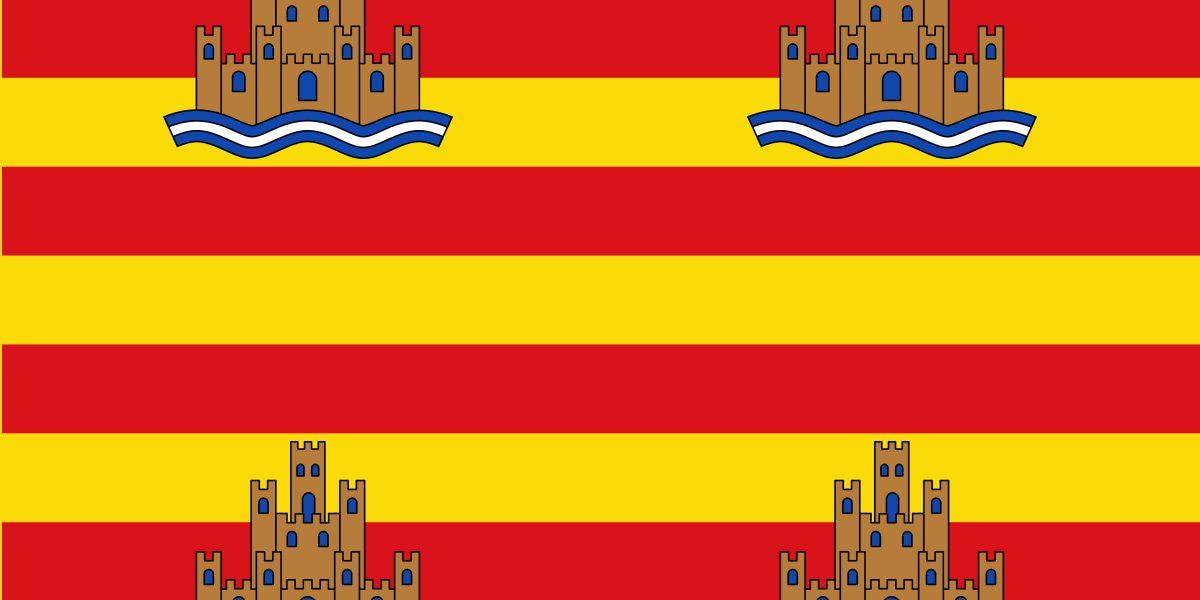
City Guide
Ibiza
Spanien · Best time to visit: May-Oct.
Day-by-day plan
Choose your pace
Reisedauer
09:00
Landmark
From the port quay, walk five minutes uphill to the drawbridge gate — two headless Roman statues flank the entrance, lifted from the original 1st-century forum buried beneath your feet. Climb the cobbled ramp to Bastió de Santa Llúcia, the highest of seven Renaissance bastions encircling the old town, where the harbor unfurls below in three shades of blue and the salt flats shimmer far to the south.
Tip: Arrive at 09:00 sharp — the white limestone walls glow soft gold before the sun hardens at 11, and cruise-ship tour groups don't reach the upper bastions until late morning. For the postcard shot, walk to Bastió de Sant Bernat on the south rampart; from there the cathedral rises directly behind you in the frame, with the open Mediterranean filling the rest.
Open in Google Maps →11:00
Religious
Continue uphill along Carrer Major for eight minutes — the lane narrows, whitewashed houses lean in, bougainvillea spills over wrought-iron balconies. The plaza at the summit opens to a full 360-degree sweep: the salt pans of Ses Salines to the south, the long silhouette of Formentera floating on the horizon, the Castell d'Eivissa to your right, and the cathedral's austere 14th-century tower set hard against the sea.
Tip: Skip the modest interior — the magic is outside, and entry steals 30 minutes from your day. Stand at the small stone balcony immediately left of the cathedral entrance: from there the white belltower, the medieval Castell, and the open Mediterranean align in one frame. By 12:30 the sun is directly overhead and shadows flatten the textures — capture it now while the light still rakes the stone.
Open in Google Maps →13:00
Food
Descend Dalt Vila through Plaça de Vila, exit beneath the Portal de ses Taules, and walk five minutes to Plaça de la Constitució — this is where locals fuel up between errands, not where tourists linger over photo menus. The terrace under the plane trees faces the old market stalls, but the marble counter inside is where regulars cluster for a quick, honest bite before getting back to work.
Tip: Order the ensaimada filled with sobrasada (€4.50) — a flaky spiral pastry stuffed with Ibiza's spicy cured sausage, a Balearic specialty you cannot get on the Spanish mainland — and pair it with a café bombón (€2.80). Eat standing at the counter, not the terrace; turnover is twice as fast inside and you'll be back on the route in thirty minutes instead of sixty.
Open in Google Maps →14:30
Neighborhood
Three minutes west of the café, the neoclassical arches of the 1873 fish market still mark the threshold between the old town and the modern grid. From there, stroll the leafy Passeig de Vara de Rey — Ibiza's belle-époque promenade, lined with pastel modernist townhouses, the kind of independent ceramic studios and second-hand bookshops that get priced out of every other Mediterranean port, and the cafés where retired fishermen still play dominoes at 4 p.m.
Tip: The hand-painted 'VIVA IBIZA' mural on Carrer Antoni Mar (one block north of the market) is the island's most-photographed wall — at 14:30 the light hits it flat and even. After 16:00 a hard diagonal shadow cuts the design in half. Walk Vara de Rey on the shaded north side; the south pavement bakes and offers nothing extra.
Open in Google Maps →16:00
Park
From Vara de Rey, follow Passeig Marítim east along the harbor — a 35-minute waterfront walk past Marina Botafoch's lined-up white superyachts, every one of them larger than your hotel. As you round the headland, the entire walled city reveals itself behind you, miniature and gold-tinged in the lowering sun. The walk ends at Talamanca, a flat 900-metre crescent of fine sand where the water stays shallow enough to wade out fifty metres before it reaches your waist.
Tip: Enter the water at the western end closest to Marina Botafoch — the sand stays softest there and the seabed is pure sand all the way out, with no rocks or seagrass patches. Skip the chiringuito sun-loungers (€25 per half-day per person); locals lay their towels under the pine grove behind the eastern promenade where the shade is free, the breeze cuts the heat, and you watch Dalt Vila change color as the sun drops.
Open in Google Maps →20:00
Food
A twelve-minute walk around the rocky headland from Talamanca, Sa Punta sits on a low point directly opposite Dalt Vila, separated from the walled city by two hundred metres of dark water. As you take your seat the floodlights along the ramparts flicker on, and for the rest of the evening you eat with the medieval skyline glowing gold across the bay — the single best dinner view on the island, and the reason Ibizan families book the terrace months ahead for anniversaries and saints' days.
Tip: Reserve three days ahead for a 20:30 table and specify 'vista al castillo' — the four front-row terrace tables are otherwise impossible to secure. Must-orders: gambas rojas a la plancha (€32) — Mediterranean red prawns charred on the plancha and eaten with your fingers — and the lubina a la sal for two (€56 total), a whole sea bream baked in a salt crust that the waiter cracks open tableside. Pitfall warning: do NOT eat along Carrer del Bisbe Cardona in the old port — those terraces use photo menus, charge €40 for frozen paella, and quietly add an €8 'pan y servicio' charge no one warned you about. Sa Punta is one of the rare places that delivers both the view and the kitchen.
Open in Google Maps →Zu Tag springen
09:30
Landmark
Start at Passeig de Vara de Rey and walk three minutes east, crossing the small drawbridge over the dry moat — the great 16th-century stone gate opens in front of you, flanked by two headless Roman statues pulled from the island's soil. Climb the ramp on the right of the arch (most tourists take the central stairs and miss this) and walk along Baluard de Sant Joan and Baluard de Sant Pere, Renaissance bastions so completely preserved they earned UNESCO status. From up here you look down at the fishing fleet, the marina, and the salt flats glinting twelve kilometers away.
Tip: Be at the gate by 09:30. The white limestone reflects fierce midday glare and the only shade is under the arch itself — by 11:00 the walls bake. Take the right-hand ramp, not the staircase; it leads directly onto the wall walk that the day-tour groups never find.
Open in Google Maps →11:00
Religious
From Baluard de Sant Joan, follow the narrow whitewashed Carrer Major uphill for about ten minutes — past the old Jesuit church and the tiny Plaça de la Vila lined with bougainvillea. The 13th-century Gothic cathedral stands on the foundations of a Moorish mosque, which itself replaced a Roman temple to Mercury; three civilizations stacked on a single rock. Step inside for the cool nave, then walk fifty steps to the adjacent Bastió de Sant Jaume terrace — the most photographed view in the Balearics.
Tip: At 11:30 the sun sits behind you on the bastion — your camera catches both the red rooftops below and the deep turquoise port with no backlight. If you're short on time, skip the cathedral's interior (small and plain) and head straight to the terrace; that's where Ibiza shows itself.
Open in Google Maps →13:00
Food
Walk down through Dalt Vila's gates and exit onto Passeig de Vara de Rey — eight minutes of stepped streets, bougainvillea spilling over walls, and a final glimpse of the port through the last archway. Can Alfredo has been serving the same ibicenco classics since 1934, in a wood-paneled dining room that hasn't changed since the Franco era. Order the sofrit pagès — slow-cooked lamb, chicken and potatoes braised in their own juices (€22) — and, if it's on the day's catch, the bullit de peix, a fisherman's stew of grouper in saffron broth (€38 per person).
Tip: Reserve at least a day ahead — twelve tables and locals fill them. Skip Saturday lunch (90-minute waits); Wednesday or Friday at 13:00 you walk straight in. The sofrit pagès is the single dish to order — most tourists pick paella and leave disappointed. Average bill €40-50 per person.
Open in Google Maps →15:30
Museum
From Vara de Rey retrace the path up through Portal de ses Taules — five minutes uphill in the heaviest heat of the day. MACE sits inside the old powder magazine at the gate's right side, half-buried in the city wall itself. The contemporary collection is small but sharp (Erwin Bechtold, Antonio Saura, Barceló prints), and the real prize is the basement archaeological floor: a glass walkway built over Punic defensive ditches and Phoenician amphorae uncovered during the museum's 2012 renovation. The thick stone holds 22°C even in August.
Tip: Closed Mondays. Entry €6 and worth it for the basement alone — the glass floor lets you look straight down at a 4th-century BC defensive ditch. The cathedral above tells the medieval story; this tells the older one. Plan around the closing day or you'll arrive to a locked door.
Open in Google Maps →17:30
Neighborhood
Leave MACE and descend the cobbled Carrer de Santa Llúcia for ten minutes — you'll emerge into Sa Penya, the old fishermen's quarter where each whitewashed house is barely two meters wide and the lanes seem carved out rather than built. The streets funnel down to the marina, lined with adlib boutiques (Ibiza's signature white linen invented here in 1971) and family-run leather workshops. End at the port quay around 18:30, when the superyachts switch on their deck lights and crews start hosing decks for evening guests.
Tip: The adlib shops on Carrer de la Mare de Déu — Veronica Sanchez, the Charo Ruiz outlet — close at 21:00 and the prices halve in late September. Skip the marina cafés (€6 for an espresso); sit instead on the public benches at the salt-water pool on the quay's eastern end for the same view, free.
Open in Google Maps →20:30
Food
Walk five minutes back up Carrer de Pere Sala from the port — a quiet, lantern-lit lane tucked just outside the Dalt Vila walls. La Brasa hides behind a 200-year-old pine in a stone-walled courtyard, all candlelight and low conversation. The signature is whole turbot grilled over olive wood (€42 for two) and lamb chops with rosemary from the chef's own herb garden (€28). The wine list leans local — ask for Can Rich Negre, a Balearic red almost impossible to find off the island.
Tip: Pitfall warning — avoid the restaurants strung directly along the marina with English-only menus, plastic photo boards, and €25 mojitos; the food is freezer-to-plate and the markup brutal. La Brasa is five minutes inland and a different planet. Reserve a courtyard table, not the indoor room — staff will steer foreigners inside; ask specifically for 'fuera, en el patio.' Average bill €60-70 per person.
Open in Google Maps →09:00
Landmark
Drive 25 minutes from Ibiza Town across the pine-covered interior — past the sleepy village of Sant Mateu and the carob groves of Santa Agnès — until the road ends in a small parking lot above the cove. A five-minute path down through Aleppo pines and you arrive at a half-moon bay where the cliffs are red sandstone and the water that impossible Aegean blue. Walk the rocky goat-path north for another five minutes to Cala Saladeta — wilder, no chiringuito, half the people.
Tip: Be in the parking lot by 09:30. It fills by 11:00 in July and August, after which local police turn cars away — there is no overflow. The flat sandstone shelf twenty meters offshore is the best snorkeling on this side of the island; bring a mask. Skip the wooden boathouse restaurant at the cove: €30 paella out of a frozen bag.
Open in Google Maps →11:30
Landmark
Drive 20 minutes south along the coast road — the route hugs the cliffs, passes Punta Galera, and drops you into Cala Comte's upper parking lot. Walk the wooden boardwalk down for three minutes and four interconnected beaches open in front of you, separated by low rocks, with the green Conillera islets sitting offshore like stepping stones. The water here is so clear that boats appear to be floating in air rather than on it.
Tip: The leftmost beach, Cala Escondida, is reached only by a short rocky scramble around the headland and stays empty even on August Sundays. Don't bother fighting for sand by noon — lay your towel on the flat sandstone slabs above the waterline; they stay private all day and the water is the same.
Open in Google Maps →13:30
Food
Climb the wooden steps back up from Cala Comte for three minutes — Sunset Ashram sits at the very lip of the cliff, a bamboo-and-driftwood terrace with the Conillera islets directly below your plate. The kitchen leans Mediterranean-Asian: yellow Thai curry with island prawns (€26), burrata with roasted figs and aged balsamic (€18). Cocktails arrive in coconut shells; the playlist is low-volume house, the same DJ rotation since 2003.
Tip: Book online a week ahead in high season — walk-ins wait two hours and most are turned away. Ask explicitly for a table on the front terrace, not the back garden; the view is the entire reason for being here. Lunch service ends at 16:00 sharp, no extensions. Average bill €45-55 per person.
Open in Google Maps →16:00
Landmark
Drive 25 minutes south along the cliff road — past Cala Vadella, Cala Carbó, and a final hairpin descent — to the Cala d'Hort viewpoint. Park at a small dirt clearing on the right and walk fifty meters to the cliff edge. Rising 380 meters straight out of the sea is Es Vedrà, a sheer limestone monolith with no soil, no road, no buildings — Homer's siren-rock, sailors say its iron content scrambles compasses. At 16:00 the entire western face is in full afternoon light.
Tip: The official Mirador d'Es Vedrà car park is small and clogged with tour buses. Drive instead 800 meters further south to a smaller pull-out signposted for Torre des Savinar — a 15-minute path takes you up to an 18th-century watchtower with no fence, no crowd, and the highest unobstructed view of the rock on the entire island.
Open in Google Maps →18:30
Entertainment
Drive 30 minutes north to Sant Antoni de Portmany and park in the underground garage below Carrer Vara de Rey. Walk five minutes west along the bay promenade — past the white-painted egg statue (a monument to Columbus, the island's most contested local legend) and the marina — to Café del Mar, the bar that literally invented the chillout-music genre in 1980. The terrace faces due west, low cushions stepped down to the waterline, every cushion a postcard frame. Order a Mojito Royal (€14) and watch the resident DJ time the music to the sun's last fifteen minutes.
Tip: In May-Oct sunset falls between 20:30 and 21:15 — arrive 90 minutes before to claim a cushion at the seawall. Café Mambo, three doors down, has the louder party crowd; Café del Mar is quieter and more iconic. Don't eat here — overpriced and average; save your appetite for dinner.
Open in Google Maps →21:30
Food
Walk five minutes inland from the seafront, away from the bright strip and into the old quarter of Sant Antoni — Carrer del Cap Nonó is a narrow lane that feels half a century older than the bay. Es Ventall has been the local benchmark for ibicenco cuisine for 30 years: a stone-walled dining room and a garden under fig trees lit by paper lanterns. Order the rice with red prawns and sea anemones (€32 for two) and the slow-roasted lamb shoulder with carob (€26). The wife runs the floor; the husband still cooks every service.
Tip: Pitfall warning — avoid the West End street just one block north (Carrer Santa Agnès): a strip of British party bars with €5 shots, blaring speakers, and pickpockets working the queues, nothing of Ibiza in it. Reserve Es Ventall three days ahead and request a garden table, not the indoor dining room; staff seat foreigners inside by default. Average bill €55-65 per person.
Open in Google Maps →
Trip builder
Plan this trip around Ibiza
Turn this guide into a bookable rail itinerary with FlipEarth.
Keep exploring
Related cities
More in the same country
FAQ
Frequently asked questions
How many days do you need in Ibiza?
Most travelers enjoy Ibiza in 1 days, with enough time for headline sights and a slower meal or museum stop.
What's the best time to visit Ibiza?
The easiest season for most travelers is May-Oct, especially if you want good weather and manageable crowds.
What's the daily budget for Ibiza?
A practical starting point is about €115 per person per day before hotels, then adjust based on museums, dining, and transport.
What are the must-see attractions in Ibiza?
A good first shortlist for Ibiza includes Portal de ses Taules & Dalt Vila Ramparts.