City Guide
Tubingen
Germany · Best time to visit: Apr-Oct.
Day-by-day plan
Choose your pace
Trip length
09:00
Landmark
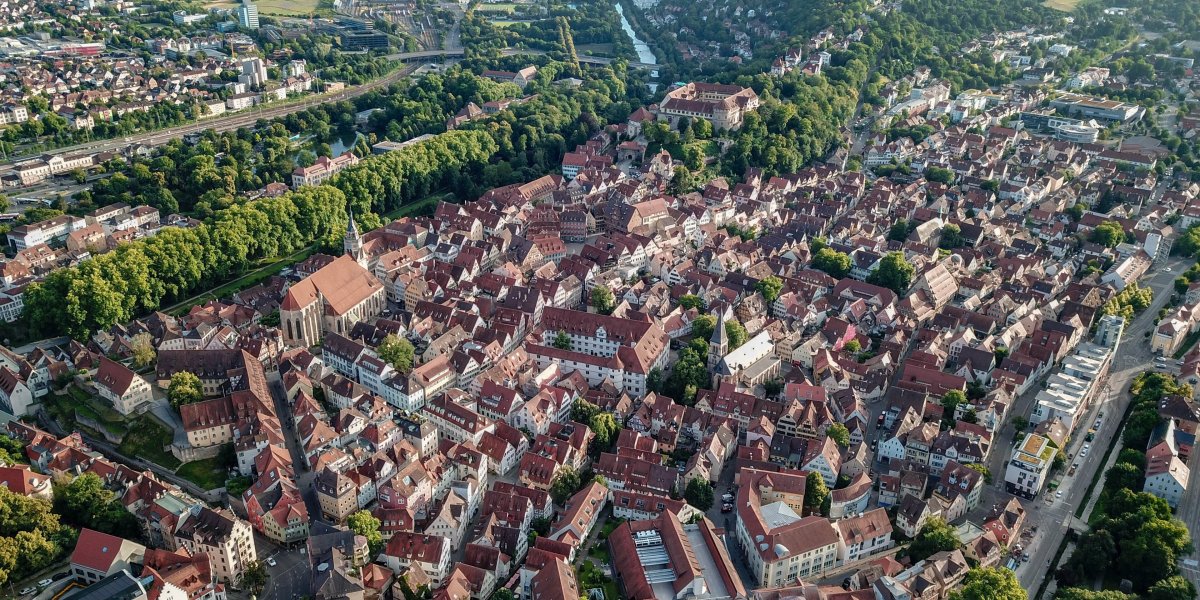
Exit Tubingen Hauptbahnhof and walk north for six minutes across Eberhardsbrucke — pause at the midpoint, because what is in front of you is the single most photographed scene in Swabia. Pastel houses spill down to the river, the yellow Holderlinturm where the mad poet spent his last 36 years rises from the water's edge, and the Platanenallee island stretches westward under plane trees planted in 1828. Cross onto the island, walk its full length, then loop back along the north bank to stand directly beneath the tower.
Tip: The postcard angle is from the third lamppost on Eberhardsbrucke counting from the south end, framed looking west-northwest. Between 09:00 and 10:00 in summer the sun lights the pastel facades head-on while the Neckar is still glassy — by 11:00 the punting boats kick up ripples and the magic is gone.
Open in Google Maps →11:00
Landmark
From the foot of the Holderlinturm, climb Bursagasse and then Burgsteige — a steep cobblestone lane lined with crooked 15th-century timber houses that locals quietly consider the prettiest street in Germany. Twelve uphill minutes bring you through the Renaissance gate into the castle courtyard, where the walls still bear the 1606 Latin inscription Hohentubingen has worn for four centuries. Skip the museum interior on a day trip — the prize is the rampart terrace behind the main building.
Tip: Walk through the inner courtyard and exit via the small archway in the back-left corner — that drops you onto the rampart terrace where you see the whole Neckar bend, the red rooftops of the Altstadt, and the Schwabische Alb on the horizon. Free, almost always empty. Bring water — there is no shop on the hill.
Open in Google Maps →12:45
Food
Descend Burgsteige back into the Altstadt and turn right onto Hafengasse — eight downhill minutes on cobblestone, so wear proper shoes. Maultaschenmanufaktur is a tiny counter-only shop dedicated to one thing: Maultaschen, the Swabian pillow-shaped ravioli locals call Herrgottsb'scheisserle — 'God-deceivers' — invented by monks who wanted to eat meat during Lent by hiding it inside dough. The kitchen folds them fresh every morning.
Tip: Order Klassische Maultaschen in Bruhe (EUR 9) for the original broth version, or Maultaschen gerostet mit Ei (EUR 11) — pan-fried with scrambled egg, the way every Swabian grandmother makes them on Monday. Arrive 12:30 sharp or after 13:30; the queue of Eberhard Karls Universitat students forms 12:45-13:15 and can swallow twenty minutes.
Open in Google Maps →13:45
Landmark
Two minutes up Hafengasse spills you directly onto Marktplatz, Tubingen's beating heart. The painted Rathaus dominates the north side — its 1435 facade was repainted in 1876 with allegorical figures of Justice, Wisdom, and Agriculture, and its astronomical clock still tracks the moon's phase. Walk one block north up Stiftsstrasse to glance at the Stiftskirche, the late-Gothic collegiate church where Melanchthon preached and Eduard Morike lies buried.
Tip: The Rathaus facade faces almost due south — afternoon light between 14:00 and 16:00 hits it dead-on with no shadow. Frame your shot from the southwest corner of the square next to Cafe Pfuller, with the Neptune fountain in the foreground. On Mondays, Wednesdays, and Fridays the produce market wraps by 12:30 — Friday is loudest and most local.
Open in Google Maps →15:30
Entertainment
Walk south down Neckargasse for four minutes — Tubingen's prettiest pedestrian lane, all timber-framed houses and ivy — until it spills onto the river. The Stocherkahn is a long flat-bottomed punt steered by a single pole, a tradition unique to Tubingen since 1845 and worked by university students earning beer money. The 60-minute loop slides under Eberhardsbrucke, past the pastel facades, around the tip of Platanenallee island and back — exactly as the late-afternoon sun turns the houses gold.
Tip: Public boats leave from the kiosk on the south bank just east of Eberhardsbrucke — EUR 15 per person, no reservation, last departure around 17:00 in summer. Sit on the boat's right side facing forward; that puts the pastel Neckarfront on your photographic side for the entire outbound leg. Tip the punter EUR 1-2 if their commentary is good.
Open in Google Maps →18:30
Food
Cross back to the south bank — three flat minutes east along Gartenstrasse from the Stocherkahn kiosk. Neckarmuller is Tubingen's beloved riverside brewery: a sprawling beer-garden terrace built directly over the water, a copper-kettle brewhouse glowing behind glass, and the kind of Swabian menu locals have trusted for thirty years. In summer every Tubinger ends a long day here.
Tip: Order Schwabischer Zwiebelrostbraten (EUR 23, beef under a crown of crisp fried onions, bedded on Spatzle) and Kasespatzle (EUR 14, hand-scraped egg noodles baked with three cheeses), washed down with their own naturtrub Pils (EUR 4.50, brewed twenty metres from your table). Reserve online for the terrace or arrive 18:00 sharp — by 18:45 in summer there is a 40-minute wait. Pitfall warning: the 'romantic Stocherkahnfahrt with candle-lit dinner' packages hawked along the riverside (EUR 80-120) are catered boxed meals on a stationary boat with nothing to do with the real punting tradition — do the punt at 15:30 and dinner here separately; better food, better experience, half the price.
Open in Google Maps →
Trip builder
Plan this trip around Tubingen
Turn this guide into a bookable rail itinerary with FlipEarth.
Keep exploring
Related cities
More in the same country
FAQ
Frequently asked questions
How many days do you need in Tubingen?
Most travelers enjoy Tubingen in 1 days, with enough time for headline sights and a slower meal or museum stop.
What's the best time to visit Tubingen?
The easiest season for most travelers is Apr-Oct, especially if you want good weather and manageable crowds.
What's the daily budget for Tubingen?
A practical starting point is about €85 per person per day before hotels, then adjust based on museums, dining, and transport.
What are the must-see attractions in Tubingen?
A good first shortlist for Tubingen includes Neckarfront & Holderlinturm, Schloss Hohentubingen, Marktplatz & Rathaus.