City Guide
Trondheim
Norway · Best time to visit: May-Sep.
Day-by-day plan
Choose your pace
Trip length
09:00
Religious
Begin where Norwegian kings have been crowned for nine centuries — the world's northernmost medieval Gothic cathedral, raised over the grave of Saint Olav. At 09:00 the tour coaches have not yet arrived, morning sun rakes across the east apse from behind, and the sculpture-covered west facade sits in soft shade — ideal for reading its 96 kings, saints, and biblical figures without glare. Walk the full perimeter to also take in the free ruins and stone walls of the adjoining Archbishop's Palace (Erkebispegården).
Tip: Stand on the south side of Bispegata, across from the main portal — it is the only angle where both transepts and the central spire fit in one frame. The oldest stonework is the 12th-century Romanesque octagon around the apse; the Gothic nave is a 19th-century reconstruction after centuries of fires. Look along the north wall for the clear seam where medieval meets Victorian.
Open in Google Maps →11:00
Landmark
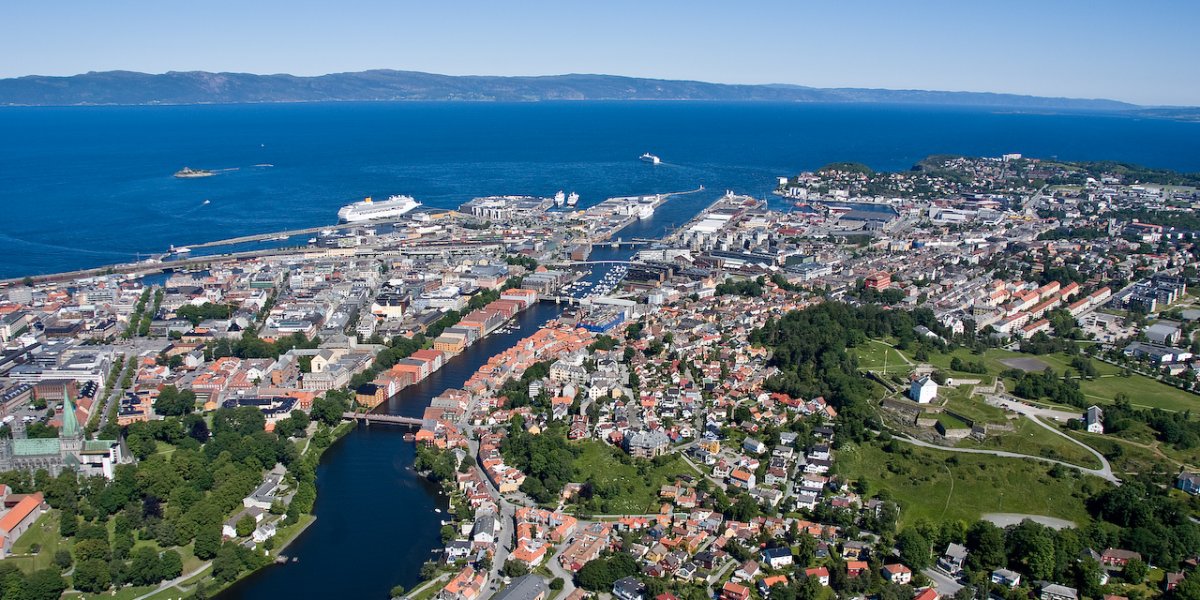
Leave the cathedral heading east on Kongsgårdsgata, cross the red wrought-iron portal of Gamle Bybro (save the proper photo for later), then climb Brubakken up through Bakklandet — a 15-minute uphill burn that is unavoidable, which is exactly why we do it now while your legs are fresh. The reward is a star-shaped 1680s citadel on Trondheim's highest green hill, built to stop the Swedes and now the city's free panoramic lookout. From the ramparts you see the cathedral spire, the horseshoe bend of the Nidelva hugging downtown, and — on a clear day — the Trondheimsfjord opening north toward the Atlantic. The grounds are free; skip the small paid museum.
Tip: Walk past the main flagpole viewpoint to the southwest corner of the outer rampart — it is the only spot where Nidaros's central spire lines up perfectly behind the colored rooftops of Bakklandet for a single-frame 'everything' shot. Midday light around 11:30 is crisper than the low midsummer evening sun, despite what the guidebooks say.
Open in Google Maps →13:00
Food
Descend Brubakken back toward the river — 12 minutes downhill, follow the smell of waffles. The restaurant sits in a yellow 1791 coaching inn at the foot of the hill, the oldest standing house in Bakklandet, its floors slanting and its walls crammed with black-and-white harbor photos. Order the fiskesuppe (creamy fish soup, ~195 NOK / 18 EUR) with a slice of fresh brown bread and a half-pint of Dahls, the Trondheim brew. This is the rare place where tourists and Trøndelag grandmothers eat the same thing at neighboring tables.
Tip: Arrive by 12:45 — they do not take lunch reservations and the small dining rooms fill by 13:15. If the queue is long, order the fish soup to go in a paper cup (10 kr cheaper) and eat it on the wooden bench directly across the lane facing the Nidelva.
Open in Google Maps →14:15
Neighborhood
Step out of Skydsstation, turn right — 30 seconds to the bridge. A crossing has stood here since 1681; the current red wrought-iron 'Portal of Happiness' (Lykkens Portal) dates to 1861 and is painted the exact oxblood of the warehouses downriver. Walk the bridge once, then drop down to Nedre Bakklandet and stroll east along the waterline beneath the leaning wooden houses — ochre, mustard, oxblood, sea-green — all propped on 18th-century timber pilings. The tall stilted merchant warehouses on the opposite bank are what you will walk under next; from this side is the angle every postcard is made from.
Tip: The wooden bench on the east-bank promenade halfway between the bridge and Nygata is where locals propose — afternoon sun lights both the river surface and the west-bank warehouses from this exact spot. Walk two blocks deeper into Bakklandet for a cardamom bun (skillingsboller) at any neighborhood bakery for ~35 kr rather than the kiosks at the bridge foot that charge tourists 75 kr for the identical pastry.
Open in Google Maps →16:00
Neighborhood
Cross Gamle Bybro west back into downtown and turn right onto Kjøpmannsgata — you are now walking directly beneath the stilted warehouses you just photographed from across the river. A continuous row of 18th-century wooden merchant buildings on massive pilings, painted yellow, ochre, and deep red, leaning over the Nidelva since the great fires of the 1700s rebuilt the town. Walk the full length north to Ravnkloa fish market at the harbor, then drop down to the river's edge for the reverse angle — late-afternoon sun ignites the east-facing wooden facades from about 16:30 onward in summer.
Tip: From the Ravnkloa end, cross Fjordgata to the small wooden staircase at the rear of the warehouse row — it drops you to a hidden river platform where the warehouses reflect in still water, a frame most visitors never find. Avoid the horse-and-carriage rides along Fjordgata (350 kr for 15 minutes of downtown traffic) and the 'Viking-themed' tourist restaurants with horn-helmeted mannequins outside on Nordre gate — they charge 400 kr for reheated meatballs. The real warehouses have no costume gimmicks and no laminated photo menus.
Open in Google Maps →19:00
Food
You are already on the block. Havfruen occupies one of the oldest river-facing warehouses at Kjøpmannsgata 7, its 18th-century beams blackened by three centuries of herring smoke. Enter through the small wooden door on the river side for the best first-impression view. The kitchen is Trondheim's most serious seafood address — fjord-caught cod, Atlantic halibut, and Arctic king crab paired with Trøndelag butter and root vegetables. The 3-course set menu runs 695 NOK (~65 EUR); the 'Hav & Land' (sea and land) tasting with the day's catch alongside Dovre mountain lamb is around 850 NOK.
Tip: Reserve at least 48 hours ahead and explicitly request a Nidelva-side window table — the 19:00 seating in summer catches the sun hitting the Bakklandet houses across the water through the glass, the single best view in any Trondheim restaurant. Final pitfall warning for the whole Kjøpmannsgata / Solsiden strip after dark: several newer bars aggressively pull tourists in with English-only 'Viking beer + platter' signs — drinks run 140 kr and up for local pilsner that costs half as much anywhere Trondheimers actually drink.
Open in Google Maps →Jump to day
09:00
Religious
Start at the south transept entrance on Bispegata — the cathedral opens at 09:00 and for the first forty minutes you have Scandinavia's greatest Gothic facade almost to yourself. Built over the grave of St. Olav, this is where every Norwegian king since the 12th century has been crowned, and the stone saints crawling up the west front come alive as the morning sun rakes across them. The rose window above the nave glows deepest ruby between 10:30 and 11:00, when the light finally clears the eastern rooftops.
Tip: Buy the combination ticket at the south entrance — it covers cathedral, Archbishop's Palace, and the Norwegian Crown Jewels and skips the central queue. If you want to climb the tower, the first slot is 09:30 and must be booked online the night before; it is the only rooftop view of medieval Trondheim and sells out by 10:00 in summer.
Open in Google Maps →11:15
Museum
Exit the cathedral's south door and the palace is thirty steps across the cobbled courtyard — you are already inside Northern Europe's oldest secular building. The basement archaeology hall, built directly over excavated 12th-century workshops where the archbishop minted his own coins, is the highlight; upstairs a separate vault holds Norway's actual Crown Jewels, the only royal regalia you can see in person anywhere in Scandinavia. Arriving before noon means no tour buses and the cool stone air is welcome after the cathedral.
Tip: Walk past the dull upstairs armory and go straight down the stone staircase to the archaeology gallery — that is what the ticket is actually worth. The Crown Jewels vault is open only 11:00-15:00 and capacity is twelve people at a time, so slot in just after 11:30 when the morning queue has cleared.
Open in Google Maps →13:00
Food
Cross the Gamle Bybro on foot — eight minutes, with the pastel warehouses of Bakklandet leaning over the Nidelva to your right — then turn into Øvre Bakklandet where the yellow 1791 coaching inn is the oldest restaurant on the street. The low-ceilinged wooden parlour has award-winning fiskesuppe, house-smoked bacalao, and homemade raspberry lemonade that arrives in jam jars. Locals treat this as their canteen, so arriving at 13:00 sharp gets you a window table before the 13:20 rush.
Tip: Order the fiskesuppe (creamy fish and root vegetable soup, ~195 NOK) with a side of flatbrød — it has won Norway's best soup award three times and is the one non-negotiable dish here. Cash-paying locals sit in the front room; credit-card tourists are seated in the annex out back, so say 'I'd like the old room please' when you walk in.
Open in Google Maps →14:30
Neighborhood
Step out of the inn and walk south along Øvre Bakklandet — no map needed, just follow the river. The entire street is a preserved 18th-century workers' quarter of ochre, mustard and coral wooden houses tilting over their own reflections, and afternoon light from the west turns the whole row into a stained-glass postcard. End the loop at the red-gated Old Town Bridge, whose 'Portal of Happiness' carvings are the single most photographed frame in all of Trondheim.
Tip: The postcard shot is not from the bridge itself but from the southeast corner of the Bakklandet riverbank, fifty meters downstream — aim the camera back upstream and the bridge's red gate frames the colored warehouses perfectly. Do not waste 85 NOK on the hand-cranked Trampe bike lift nearby; it is closed most afternoons and the climb is gentler than Google suggests.
Open in Google Maps →16:00
Landmark
From the east end of Gamle Bybro, walk straight up Bakke Alle for fifteen minutes — the cobblestones turn to a steep gravel path lined with 17th-century officers' cottages. The white star-fort on top saved Trondheim from Swedish invasion in 1718 and today its ramparts are a free public park with the only full panorama of the city: fjord to the north, cathedral spire due west, the Trollheimen peaks rolling south. Coming up at 16:00 rather than noon means the west-facing rooftops are already bathed in warm light, and in summer the sun does not set until 23:00 so you will not be racing it.
Tip: Enter through the main south gate but walk around to the southwest rampart behind the flagpole — it perfectly centers Nidaros Cathedral between two fjord inlets, a framing the official viewing platform misses entirely. The white tower interior is free and often empty; the brick cellar below once held the Norwegian resistance in WWII, with bullet marks still visible on the execution wall.
Open in Google Maps →19:30
Food
Walk back down the hill, re-cross Gamle Bybro, and it is another seven minutes south along the river to Bispegata — Sellanraa is the glass-fronted bistro opposite the cathedral's east end. Half literary café and half modern Trøndelag kitchen, it serves regional lamb from Oppdal, cod from Frøya, and a reindeer tartare that tastes of juniper smoke. The candlelit tables with cathedral views fill first, so a reservation is essential.
Tip: Ask specifically for the 'Fra Trøndelag' three-course menu (~550 NOK) — it changes weekly, always features one hyperlocal ingredient, and is a third cheaper than ordering à la carte. PITFALL: the cluster of English-only restaurants along the main Bakklandet pedestrian street charge 400-500 NOK for identical dishes and rely entirely on cruise-ship traffic — one block back from the river is always half the price and twice the food.
Open in Google Maps →10:00
Landmark
From Torvet square, walk one block north up Munkegata — the 140-room Stiftsgården appears on your left, painted Norwegian yellow and wider than any house in Scandinavia has any right to be. Built in 1774 by a wealthy widow as a private mansion, it is now the king's official Trondheim residence and Europe's largest surviving wooden palace; the state rooms still wear their original hand-printed wallpapers and stove-tiles. Tours run on the hour in summer and the 10:00 English slot is always the emptiest.
Tip: Arrive at 09:50 to buy tickets — the ticket kiosk opens exactly ten minutes before each tour and the 10:00 group is capped at twenty people. Skip the garden behind (it is free and nothing special); the real prize is the second-floor ballroom where the royal family still hosts state dinners every June.
Open in Google Maps →11:30
Museum
Walk ten minutes north down Munkegata, cross the Bakke Bru footbridge over the harbor, and the glowing red LED cube on the quay is Rockheim — Norway's only museum dedicated to its own pop and rock history. Built inside a converted 1920s grain silo, the permanent exhibition is a hands-on tour from 1950s Trondheim dance halls through A-ha to the black metal underground, with a karaoke booth that records you singing onto a vinyl souvenir. The 11th-floor panorama of the harbor and fjord is free with any ticket.
Tip: Take the elevator straight to the top floor and work your way down — the chronological exhibit actually reads from top to bottom and the signage assumes this, despite what the ground-floor greeter tells you. The 'sing your own A-ha' booth on floor 8 is free and records a three-track vinyl they will email you; queue forms after 13:00 so hit it before lunch.
Open in Google Maps →13:15
Food
Retrace your steps across Bakke Bru, then walk three minutes west along the canal — the squat red-painted shed at the end of Munkegata is Ravnkloa, Trondheim's working fish market since 1898. Order at the counter inside: steamed shrimp sold by the 100g, house-made fiskekaker (fish cakes) on rye, creamy fiskesuppe, and fresh crab claws in summer. Eat at the outdoor harbor benches — the Munkholmen ferry pier is the same dock, fifty meters away, which is exactly why this is today's lunch.
Tip: The fiskekake sandwich on fresh rye (around 90 NOK) is the Trondheim workers' lunch and you order it at the counter inside, not from the takeaway window outside (same food, 30% more). Ask for a paper cone of 'ferske reker' (fresh steamed shrimp) by weight — 200 grams with lemon and mayo is the correct portion for one person.
Open in Google Maps →14:30
Landmark
The ferry leaves from the end of the same pier you just ate on — a ten-minute open-deck crossing past the inner harbor breakwater to a small green island crowned with stone ramparts. Munkholmen has been an execution ground, a Benedictine monastery, a Napoleonic prison and a Nazi anti-aircraft battery, and the English-language tour at 15:00 walks you through all four in forty minutes. After the tour, the west-facing swimming rocks warm up by mid-afternoon and the little café sells one of the cheapest coffees in Norway.
Tip: Ferries run mid-May through early September on the hour from 10:00; buy the round-trip ticket (~120 NOK) directly on the boat with card. Take the 14:30 sailing so you arrive in time for the 15:00 English monastery tour — it is included in the entry fee but most tourists miss it and just swim. Catch the 17:00 ferry back, not the 16:00, so you can walk the perimeter path once with no crowds.
Open in Google Maps →17:30
Neighborhood
From the Ravnkloa dock, walk east along the canal for twelve minutes — past moored sailboats and converted shipyard warehouses — to Solsiden, the former 19th-century dockyards reborn as Trondheim's waterfront quarter. Cross the wooden Nedre Elvehavn footbridge at the top of the canal for the postcard view: former shipbuilding dry-docks on your left, glass condos catching late sun on your right, small boats slipping past underneath. This is the hour when locals finish work and gather at the quayside bars — the 'sunny side' of the river earned its name from the west-facing evening light.
Tip: Stand on the south end of the Nedre Elvehavn footbridge around 18:30 — the newer glass condos on the east bank reflect the low sun straight back across the water in a way the ground-level viewpoints cannot catch. Skip the first three restaurant terraces directly on the walking street; they are open-air tourist traps with 20% price markups for the view you just got for free.
Open in Google Maps →19:30
Food
Walk five minutes south along the canal to Kjøpmannsgata 7, where a restored 18th-century warehouse leans directly over the water — Havfruen, 'The Mermaid,' has been Trondheim's serious seafood restaurant for more than thirty years. The menu is chalked onto the entrance door each morning based on what the boats brought in at dawn: turbot from Hitra, langoustines from the Trondheimsfjord, scallops hand-dived off Frøya. A canalside window table on a bright northern evening is the single most memorable dinner seat in the city.
Tip: Ask for the 'Havets Symfoni' five-course tasting (~895 NOK) — it is built around whatever came off the morning boats and is the only way to see the full kitchen. Reserve a canalside window three days ahead by phone and specifically request 'vannside' (water side); the interior tables, though the same price, face a dull stone wall. PITFALL: the cluster of identical-looking seafood places on the opposite Solsiden bank with laminated photo menus serve frozen-defrosted fish at premium prices — locals always eat on the Havfruen side of the canal, never across it.
Open in Google Maps →
Trip builder
Plan this trip around Trondheim
Turn this guide into a bookable rail itinerary with FlipEarth.
Keep exploring
Related cities
More in the same country
FAQ
Frequently asked questions
How many days do you need in Trondheim?
Most travelers enjoy Trondheim in 1 days, with enough time for headline sights and a slower meal or museum stop.
What's the best time to visit Trondheim?
The easiest season for most travelers is May-Sep, especially if you want good weather and manageable crowds.
What's the daily budget for Trondheim?
A practical starting point is about €125 per person per day before hotels, then adjust based on museums, dining, and transport.
What are the must-see attractions in Trondheim?
A good first shortlist for Trondheim includes Kristiansten Fortress.