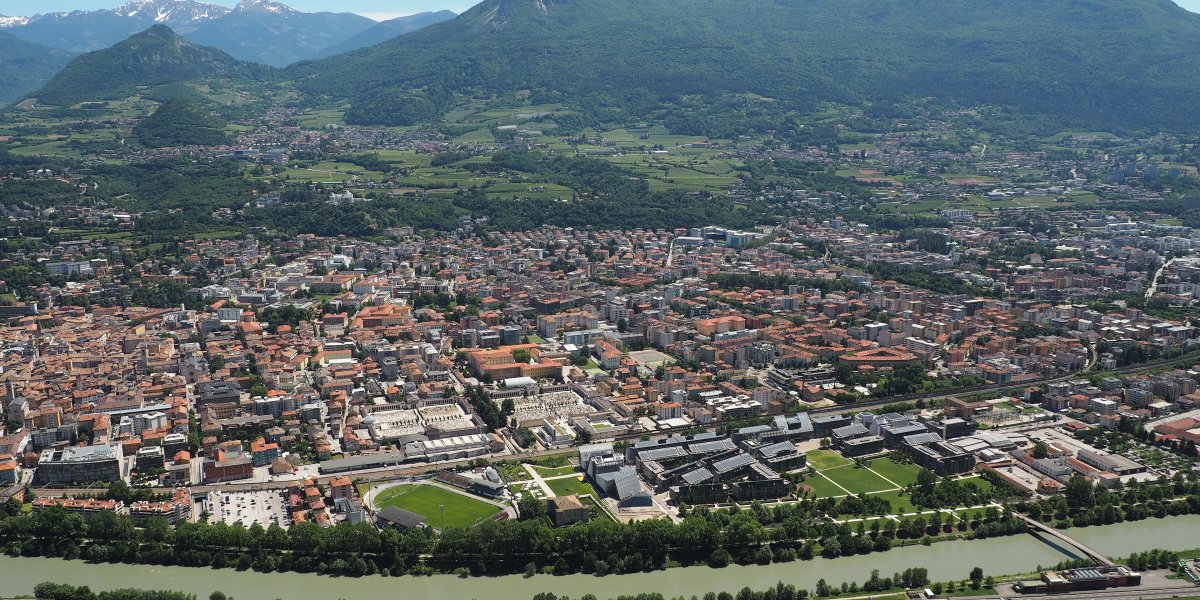
City Guide
Trento
Italy · Best time to visit: May-Sep.
Day-by-day plan
Choose your pace
Trip length
09:00
Landmark
Italy's largest medieval-Renaissance fortress complex north of Rome, stitched together from a Romanesque keep, a Gothic Castelvecchio, and a Renaissance Magno Palazzo behind crenellated walls. Skip the interior ticket — circle the south moat path and step into the Cortile dei Leoni, where the painted Magno Palazzo façade catches raking morning sun that flattens to shadow by noon. The Torre Aquila with its famous Cycle of the Months fresco is sealed inside, but the tower's painted exterior reads cleanest from Via Suffragio before 10:00.
Tip: The Cortile dei Leoni is open and ticket-free during museum hours — walk through the main gate, photograph, exit. Best angle on Torre Aquila is from the south moat path before 10:00, while eastern light still rakes across the painted clock face and the loggia frescoes.
Open in Google Maps →10:45
Landmark
Exit the castle's south gate and walk straight down Via Belenzani — Trento's most photogenic street, where Renaissance palazzi wear frescoed façades whose pigments only sing in late-morning light. The street empties into Piazza Duomo, anchored by the Romanesque Cathedral of San Vigilio framing the Fontana del Nettuno, the city's iconic centerpiece since 1769. Climb the cathedral steps for the wide composition every Trento postcard tries to imitate.
Tip: Photograph the Fontana del Nettuno from the piazza's southwest corner at 11:15 — the cathedral's twin rose windows align behind Neptune's trident, a composition you cannot get from any other vantage. Step inside the cathedral for free and look down: the excavated Paleo-Christian basilica is visible through glass panels in the nave floor.
Open in Google Maps →12:30
Food
Step off Piazza Duomo's west edge onto Via Oss Mazzurana — Birreria Forst sits behind a discreet sign with locals already filling the wood-paneled hall by 12:30. This is the Trentino-Tirolean plate Italy doesn't admit it loves: order canederli in brodo (bread dumplings in broth, €9) and a half-liter of Forst Kronen on tap (€4) for an Alpine lunch served in fifteen minutes. The polenta concia with melted mountain cheese (€11) is the upgrade if canederli won't fill you.
Tip: Walk in before 12:30 to grab a table without waiting; by 13:00 the locals' lunch rush fills every chair. Pay at the counter on the way out — Italian table service ends at the cash register here, no separate bill brought to the table.
Open in Google Maps →14:00
Park
Walk west out of the old town along Via Verdi, cross the Adige on Ponte San Lorenzo, and pick up the wooded switchback path up Doss Trento — a 200-meter limestone hill that delivers the panorama no museum can. At the summit, the austere white-marble Cesare Battisti Mausoleum honors the Trentino patriot executed by Austria in 1916, but the real prize is the 360° view: the entire old town tiled below, the Adige snaking south, and the Paganella and Vigolana ridges of the Dolomites ringing the horizon. Afternoon sun lights the mountains where morning would silhouette them.
Tip: Take the unpaved path that starts behind the Mausoleum bus stop, not the road — it's 25 minutes up entirely in cool forest. Skip the small Alpini military museum at the summit; you came for the view, which peaks from the rim circling clockwise around the mausoleum at 15:00 when the Brenta peaks emerge from afternoon haze.
Open in Google Maps →16:30
Museum
Descend Doss Trento on the south path toward the river and walk fifteen minutes along the west bank to Le Albere — Renzo Piano's residential quarter built on the former Michelin factory, anchored by MUSE. The museum is a glass-and-steel ridgeline that consciously mirrors the Dolomite silhouette behind it, set above a long reflecting pool that doubles the building at golden hour. Skip the ticket — the architecture is the point, and at 17:30 the low sun ignites the cantilevered roof while the pool turns to liquid metal.
Tip: Stand at the south end of the reflecting pool facing north at 17:30 — you'll catch the full mirrored building with the actual Dolomite ridges rising directly behind it. Walk through the Le Albere ground-floor arcades afterward; the residential blocks were panned by locals but the public passages are the district's quiet highlight.
Open in Google Maps →19:30
Food
Walk back across Ponte San Lorenzo into the old town and turn onto Via Don Arcangelo Rizzi — Osteria a Le Due Spade has served in this 16th-century stube since 1545, the same year the Council of Trent first convened blocks away. The kitchen does the canonical Trentino dishes elevated: strangolapreti (spinach-ricotta dumplings in brown butter and sage, €18), capriolo in salmì (slow-braised venison with yellow polenta, €28), and a list of 80+ Trentodoc sparkling wines to close a power-walk day. The carved-wood room seats only thirty — reservations are mandatory.
Tip: Reserve 48 hours ahead through Le Due Spade's website; weekend walk-ins are turned away. Order the Ferrari Riserva Lunelli Trentodoc by the glass (€14) — the sparkling wine poured at Italian state dinners. On your walk back, avoid the picture-menu trattorias lining the south edge of Piazza Duomo: they charge €25 for reheated lasagna to bus-tour traffic, and the real Trentino kitchens always sit one block off the square.
Open in Google Maps →Jump to day
09:00
Religious
Begin at the very heart of the Council of Trent — this Romanesque-Gothic cathedral is where the 1545-1563 sessions were sealed and modern Catholic doctrine redrawn. Look up at the unfinished pink-Trentino-marble facade glowing in the morning sun, then step inside for the 13th-century crypt below and the Madonna degli Annegati altar. Outside, the Neptune Fountain bubbles on Piazza Duomo framed by the frescoed Cazuffi-Rella houses — Trento's first-photo shot.
Tip: Arrive by 9:00 to have the nave to yourself — by 10:30 tour groups flood the side chapels. Look for the small door at the right transept that leads down to the crypt; most tourists walk straight past it.
Open in Google Maps →10:15
Museum
Walk eight minutes north up Via Belenzani — Renaissance frescoes line the palazzi the whole way like an outdoor gallery. Buonconsiglio was the seat of Trento's prince-bishops for five centuries: fortress, palace, prison and now a museum of paintings, weapons and Roman finds spread across three connected wings. The unmissable highlight is Torre Aquila and its Cycle of the Months frescoes (c. 1400) — one of the finest secular medieval fresco cycles surviving in Europe.
Tip: Torre Aquila requires a separate timed slot — book it at the ticket desk the moment you arrive, then explore the main wings while you wait. The frescoes are dimly lit to protect the pigments; let your eyes adjust for two full minutes before judging them. Closed Mondays.
Open in Google Maps →13:00
Food
Walk eight minutes south from the castle back into the old town — Piazzetta Bruno Lunelli hides this stone-vaulted 16th-century cellar where chef Sabina Apolloni cooks the most refined Trentino home cooking in town. Order canederli al formaggio (€13) — bread dumplings melted in butter and sage — or strangolapreti, the spinach gnocchi locals swear by (€12). Budget €25-30 with a glass of Trentodoc sparkling.
Tip: Only 30 covers and locals fill them — reserve a day ahead or arrive at 12:30 sharp before the office lunch crowd. Skip the heavy meat secondi and save room for the warm apple strudel with cinnamon cream.
Open in Google Maps →14:45
Neighborhood
Three minutes west of the osteria you're back on Via Belenzani — Trento's open-air Renaissance gallery. The frescoed facades of Palazzo Geremia, Palazzo Quetta-Alberti-Colico and Casa Cazuffi-Rella turn the whole street into a painted theatre of myth and virtue from the 15th-16th centuries. The lane ends at Piazza Duomo, framing the cathedral and Neptune Fountain from a brand-new angle.
Tip: Afternoon light between 15:00-16:00 hits Palazzo Geremia's facade at exactly the right angle — morning shadows kill the frescoes. Train your eyes upward at Palazzo Quetta-Alberti-Colico's mythological scenes near the cornice; 90% of visitors never look above ground level.
Open in Google Maps →16:00
Museum
Two minutes east from the foot of Via Belenzani, a glass pavilion on Piazza Cesare Battisti marks the descent into Roman Tridentum, 2000 years beneath the modern street. The SASS preserves an entire city block in situ: paved Roman streets, a tower gate, mosaic floors and house foundations under glass walkways. It's the time capsule most weekend visitors miss entirely and the perfect cool-down before dinner.
Tip: Ask at the ticket desk for the Buonconsiglio combined ticket (€15 total) if you haven't yet — same-day validity. The underground sits at a steady 13°C even in August, so keep a layer at hand; you'll feel it within minutes of descending.
Open in Google Maps →19:30
Food
Step out of SASS and you're sixty seconds from dinner — Scrigno del Duomo sits inside a frescoed 13th-century palazzo directly on Piazza Duomo. Downstairs is a casual wine cellar with charcuterie boards and Trentino wines by the glass; upstairs chef Filippo Ranzo serves a refined Adige-river-trout and Vezzena-cheese tasting menu (€60). Either floor is the real deal — reserve a window seat upstairs for cathedral views as the lights come on.
Tip: Beware the pizza-and-pasta tourist traps on Piazza Duomo with laminated picture menus, hawkers outside in English, and waiters chasing you in — Scrigno is unmistakable with a proper sommelier and an Italian-only chalkboard. If you see five flag stickers on the door, walk away.
Open in Google Maps →09:00
Park
Cross the Adige river west on Ponte San Lorenzo and follow the cypress-and-rosemary path uphill — ten minutes of climbing puts you on the limestone bluff that has watched over the city for 3000 years. At the summit the circular columned Mausoleum of Cesare Battisti commands a 360° view: Trento spread below to the east, the Bondone massif rising west, and on a clear morning the snow-capped Brenta Dolomites floating in the distance. This is also where Roman Tridentum first took root.
Tip: Climb in the morning — eastern light lifts the city below and the Brenta peaks stay cloud-free before noon, while afternoon haze flattens everything. The Alpine Troops Museum on the hill is skippable unless you're a military history buff; the view is the entire point and it's free.
Open in Google Maps →11:00
Museum
Walk down Doss Trento's south path and twelve minutes through the Le Albere district to Renzo Piano's most playful building — MUSE rose in 2013 on the footprint of the old Michelin factory. The roofs angle like Alpine peaks and a glass void in the center lets you see all five floors at once, the architecture echoing the geology outside. Inside, take the elevator straight to the top and descend through time — glaciers, dinosaurs, biodiversity, sustainability — the curatorial flow is intentional and brilliant.
Tip: Start at the top floor (Alpine glaciers and Dolomites geology) and walk downward — it mirrors altitude from peaks to plains and saves the kid-magnet tropical greenhouse for last. The rooftop terrace is free even without a museum ticket and is where to get the iconic photo of the building's serrated roofline against the mountains.
Open in Google Maps →13:30
Food
Exit MUSE north and follow Via Roberto da Sanseverino eight minutes to Piazza Fiera, where this 19th-century beer hall opens behind massive wooden doors. The vaulted dining room and shaded back garden serve generous Trentino-Tyrolean plates: canederli in brodo (€11), gulasch alla trentina with polenta (€16) and a wood-fired pizza menu locals come for. The house-brewed Pedavena beer on tap (€5) is the natural pairing.
Tip: The shaded back garden in summer is the prize — Italian families know to march straight through the front dining room to claim it. Arrive by 13:15 to grab a table before the lunch rush; lunch isn't reservable so timing is everything.
Open in Google Maps →15:30
Neighborhood
Backtrack south five minutes into Le Albere proper — Renzo Piano's residential district laid out around water canals, ornamental gardens and three glass-and-larch apartment blocks that mirror MUSE's geometry across the green. At its center sits Palazzo delle Albere, a 16th-century Madruzzo family fortified villa preserved as a deliberate contrast to the modernity around it. The MART-managed palazzo hosts rotating contemporary art exhibitions in its frescoed halls.
Tip: Walk the reflecting pools and side gardens at the rear where almost no visitors go — the angles between Piano's modern timber and the medieval palazzo make Trento's most striking architecture photos. Palazzo delle Albere is closed Mondays; if shut, the gardens alone justify the detour.
Open in Google Maps →17:00
Entertainment
Walk eighteen minutes north along the riverside Lungadige Monte Grappa to the cable car's lower station — the funivia has been swinging up to Sardagna village since 1958. The four-minute ride (€3 round trip) lifts you 600 meters over the Adige valley to a small terrace by Sardagna church with a bird's-eye view of the entire historic center. Stop at Trattoria Sardagna for a sunset spritz before riding back down.
Tip: Time your ascent for about 60 minutes before sunset — the light strikes Doss Trento and the cathedral from the west and turns the whole valley gold for fifteen unforgettable minutes. Check the kiosk for the day's last descent (usually 22:00 in summer) and don't dawdle past it; there is no taxi back from Sardagna at night.
Open in Google Maps →20:00
Food
Walk twelve minutes south back into the old town to Via Don Arcangelo Rizzi, a narrow lane behind the cathedral where this 1545 stube hides — the very year the Council of Trent began. The wood-paneled room seats only 20 and chef Stefano Trapani delivers a Michelin-starred Trentino tasting menu (€85) of venison, Garda lake fish and Vezzena cheese, with a shorter four-course option at €60. Wine pairings lean Trentodoc sparklings and dark Teroldego from the nearby Rotaliana plain.
Tip: Reserve at least 48 hours ahead — even a Tuesday fills. Trento's biggest pitfall: shiny 'ristorante-pizzeria' spots on Via Belenzani with chalkboards in five languages and €20 carbonara — Le Due Spade has no printed English menu and that's the unmistakable sign of the real thing.
Open in Google Maps →
Trip builder
Plan this trip around Trento
Turn this guide into a bookable rail itinerary with FlipEarth.
Keep exploring
Related cities
More in the same country
FAQ
Frequently asked questions
How many days do you need in Trento?
Most travelers enjoy Trento in 1 days, with enough time for headline sights and a slower meal or museum stop.
What's the best time to visit Trento?
The easiest season for most travelers is May-Sep, especially if you want good weather and manageable crowds.
What's the daily budget for Trento?
A practical starting point is about €90 per person per day before hotels, then adjust based on museums, dining, and transport.
What are the must-see attractions in Trento?
A good first shortlist for Trento includes Castello del Buonconsiglio (Exterior & Courtyards), Piazza Duomo & Via Belenzani.