City Guide
Tavira
Portugal · Best time to visit: Apr-Oct.
Day-by-day plan
Choose your pace
Trip length
09:00
Landmark
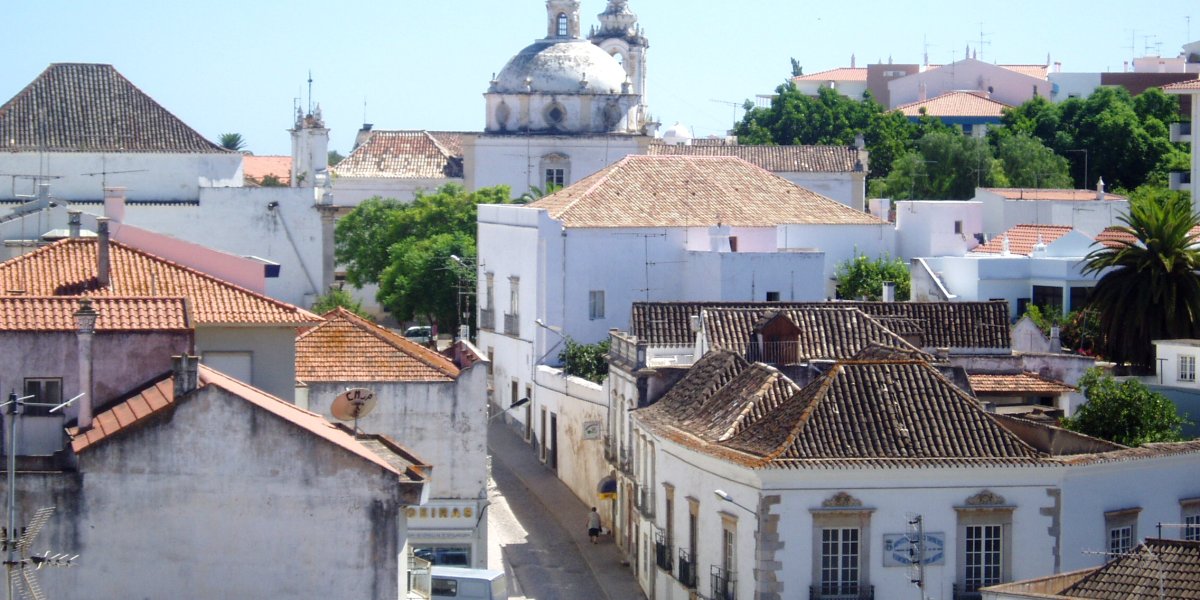
Start at the highest point of the old town — a five-minute climb from the train station up the cobbled Calçada da Galeria. The eleventh-century Moorish citadel is now an open ruin wrapped in bougainvillea and jacarandas, with a free terrace overlooking the white rooftops and ochre tiles of Tavira spilling down to the river. The morning sun strikes the citadel walls from the east, and the town glows from above before the heat builds.
Tip: Climb the small wooden staircase at the northwest corner of the gardens — most visitors miss it but it is the highest viewpoint and the only one that frames Santa Maria church, the four-eaves rooftops and the Gilão river in one shot. Arrive at 09:00 sharp; by 10:30 a coach group from Faro fills the small terrace.
Open in Google Maps →10:30
Landmark
Exit the castle gate and walk downhill for five minutes through the steep lanes of Santa Maria — every doorway is azulejos and faded blue trim. The seven-arch stone bridge spans the Gilão (locals still call it Roman, though it was rebuilt in the seventeenth century) and the orange-tree promenades on either bank lead you into Praça da República, Tavira's marble-paved heart. Cross slowly, then drop down to the south bank for the angle every postcard is taken from.
Tip: The best frame is not on the bridge but from the small jetty thirty metres downstream on the south bank — it lines up the seven arches with the white belltower of Santiago church behind. Skip the cafés on the praça (tourist pricing, mediocre coffee) and walk one block back to the bench beside the old market hall for the same view with a €1 bica.
Open in Google Maps →12:30
Food
Walk three minutes north of the bridge along Rua Jacques Pessoa — a narrow tiled lane where laundry strings cross above the doorways. Anazu is the unfussy counter-bakery where bank workers, fishermen and grandmothers all queue at noon for the same thing: hot pernil sandwiches and pastel de nata straight out of the oven. Order at the till, grab a marble-top stool, eat fast.
Tip: Order the sande de pernil (slow-roast pork-leg roll with mustard, €4.50) and one pastel de nata still warm (€1.20) — that is what every local in the queue is ordering. Arrive before 12:45 or wait until 13:30; the fifteen minutes in between is the lunch rush and the counter staff stop smiling.
Open in Google Maps →14:00
Park
From the praça follow the river east along the south-bank promenade — a flat thirty-minute walk past the old covered market and the riverside palms, then out into the open salt-pan landscape east of town. Square evaporation pools the colour of pink champagne stretch toward the Ria Formosa lagoon, and from February to October flocks of greater flamingos forage in the shallowest pans. There are no fences, no entry fee and no English signs — walk the raised earth dikes between the pools and you have the place to yourself.
Tip: The flamingos cluster at the southern pans closest to the lagoon channel — head for the second wooden viewing platform east of the Quatro Águas road, where they feed at low tide with their heads underwater. Wear closed shoes; the salt-crust paths look like sand but slice through thin sandals within an hour.
Open in Google Maps →16:30
Neighborhood
Continue east along the salt-pan track for fifteen minutes to the small ferry pier at Quatro Águas, where the Gilão widens into the Ria Formosa and the open boats to Tavira Island shuttle back and forth. This is where the day slows: one wooden jetty, a strip of stone pines, fishermen mending nets on the slipway, and the long flat view across the marshes toward the barrier island. Sit on the pier as the sun drops behind the salt pans and lights the whole lagoon copper.
Tip: The 18:30 ferry returning from Tavira Island brings a wave of sunburnt beachgoers — wait for it to clear before walking onto the pier if you want the empty-jetty photograph with the sun setting over the salt pans behind. The light flattens fast after 19:15, so frame the shot before then.
Open in Google Maps →19:30
Food
Walk a hundred metres back from the pier — the restaurant is the long single-storey building set hard against the lagoon, with terrace tables almost over the water. It has been here since the 1980s, run by the same family, the last seafood house before the boats leave for the island. The kitchen does one thing supremely well: shellfish pulled from this lagoon that morning.
Tip: Order the arroz de lingueirão (razor-clam rice, €22 for two) with a half-bottle of Algarve white — this is the dish the restaurant is built on and what every neighbouring table will be sharing. Reserve by phone the day before; in summer the terrace fills by 19:30 and walk-ins are seated indoors. Pitfall: the waterfront restaurants directly under the Ponte Romana in the old town charge nearly double for the same seafood — the food worth crossing Portugal for is here at Quatro Águas, not on the postcard riverbank.
Open in Google Maps →Jump to day
09:00
Landmark
From Praça da República walk five minutes uphill on Rua da Liberdade — cobbled lanes lined with azulejo-tiled facades climb gently to the castle gate. Arrive right at opening: the bougainvillea-draped courtyards are empty, the morning light rakes across the Moorish ramparts, and you can climb the walls before the day-trip coaches roll in from Faro at eleven. From the southwest tower the whole town unfolds beneath you — terracotta rooftops cascading down to the Gilão River and the Atlantic shimmering beyond.
Tip: Enter through the small garden gate on the south side, not the marked main entrance — it opens five minutes earlier and the queue is half as long. The clean rooftop shot is from the second crenellation east of the tower, framing the Santa Maria belltower against the river bend.
Open in Google Maps →10:30
Religious
Step out of the castle gate and walk thirty seconds west — Santa Maria stands directly opposite, its Gothic doorway facing the old fortress walls. Built atop the city's original mosque after the 1242 reconquest, the church holds the tomb of Dom Paio Peres Correia, the knight who took Tavira from the Moors, alongside seven of his companions. Visit now before the midday heat empties the cool stone of its scent, and look up: the gilded baroque retable behind the altar burns brightest under the eastern late-morning sun.
Tip: Skip the audio guide — the free printed leaflet at the entrance covers everything that matters. The much-photographed wonky 13th-century clock tower is best framed from the southeast corner of the church plaza, where no parked cars enter the shot.
Open in Google Maps →12:00
Museum
Walk one minute downhill from Santa Maria — the old water tower hides just past the city archive, marked only by a small iron door. Inside Portugal's only camera obscura, a rooftop periscope projects a live moving panorama of the city onto a curved white dish in a darkened room: people crossing the bridge, gulls wheeling over the salt pans, washing flapping on rooftops. Midday is the perfect slot — the overhead sun gives the sharpest, most saturated image, and the half-hour English demo runs on the hour.
Tip: Demos start every 30 minutes and the room only fits twelve people — secure the 12:00 slot rather than risking 12:30. Sit on the side of the dish closest to the door for the clearest projection of the bridge and salt-pan segments.
Open in Google Maps →13:00
Food
From the tower walk two minutes east — Veneza sits on a quiet pedestrian lane just below the church hill, its hand-painted sign easy to miss. This is a true Tavirense family room, three generations deep, where the daily lunch menu is chalked on a board and locals fill the eight tables by half past one. Order the pataniscas de bacalhau (golden cod-and-onion fritters, €8) and the carne de porco à alentejana (pork cubes with clams and crispy potatoes, €16); a glass of Algarve white from Quinta dos Vales runs €3.50.
Tip: Arrive by 13:00 sharp — there is no reservation system and locals fill it by 13:30. Always ask for the prato do dia (daily special, €12) — it is whatever the morning market delivered, never on the printed menu, and always the best plate in the room.
Open in Google Maps →15:30
Landmark
From Veneza walk one minute down to the Gilão riverfront — the seven-arched bridge appears straight ahead, its stone glowing honey-gold in the slanting afternoon light. Despite the name it is actually a medieval rebuild on Roman foundations, the most photographed corner of the entire Algarve. Cross slowly, loop right through Praça da República, then detour two minutes inland to the Manueline portal of Igreja da Misericórdia (the 16th-century Renaissance gem most visitors walk past) before drifting back to the riverside cafés as the swallows come out.
Tip: For the postcard shot, stand on the east bank at the Jardim do Coreto end and shoot west around 16:30 — the arches reflect cleanly in the river and the houses behind glow amber. Grab a warm pastel de nata from Padaria Tavirense (€1.20) on the east bank to eat on the bridge wall.
Open in Google Maps →19:30
Food
Five minutes from the bridge, walk south along the east bank then turn left onto Rua Capitão Mor — the wooden door of Zé Manel is unmarked except for a hand-written menu taped to the window. This is Tavira's most beloved tasca, run by the same family for over thirty years; the cataplana de marisco (copper-pan seafood stew for two, €38) and the arroz de polvo (octopus rice for one, €17) are why locals book a week ahead. Sit at the back near the open kitchen — half the pleasure is watching the cataplana lid lifted at your neighbor's table, the steam rising perfumed with white wine and coriander.
Tip: Reserve by phone (no online booking) at least 48 hours ahead — walk-ins after 20:00 are essentially impossible May to September. Pitfall warning: avoid the bridge-front terraces flashing laminated paella photos — these are tourist traps charging €25 for microwaved seafood; the real Tavira eats inland on Rua Capitão Mor and Rua dos Pelames.
Open in Google Maps →09:00
Park
From the old town head east along the Gilão's south bank — a flat 25-minute walk on the marsh causeway brings you to the wooden boardwalk (Passadiço das Salinas) that cuts through the working salt pans. Come now: between 9 and 10:30 the flamingos are still feeding in the rose-tinted shallow ponds, and the low morning sun lights them sideways for the only good photograph of the day. The pyramids of hand-harvested fleur de sel glitter against the marsh — these are the salt flats that supply Michelin kitchens across Portugal and beyond.
Tip: Wear closed shoes — the boardwalk is often wet and the dried salt crusts are razor-sharp underfoot. The best flamingo viewing platform is the third wooden hide on the south loop; bring binoculars or zoom in with your phone, since flamingos stay 80–100m from the path no matter how still you stand.
Open in Google Maps →11:00
Neighborhood
Walk five minutes south from the salt pans to the Quatro Águas ferry pier — the small flat-bottomed boats run continuously and the crossing takes eight minutes across the Ria Formosa lagoon. The barrier island is eleven kilometers long and almost entirely empty: turn left after the pier, walk through the umbrella pines, and within ten minutes you'll be on a wide blonde beach where the Atlantic rolls in clean and the only sound is the wind. Stay until the water draws you in — June through September the sea hovers around 22°C, easily the warmest of mainland Portugal.
Tip: Buy a round-trip ticket at the green kiosk (€4) — the same boats serve as return; keep the stub or you pay again. Walk fifteen minutes east from the pier past the last beach bar to escape the lounger zone — the sand becomes wild and shell-strewn and you'll often have a hundred-meter stretch entirely to yourself.
Open in Google Maps →13:30
Food
From the beach walk five minutes back toward the pier — Beira Mar sits just beyond the dunes, a wooden shack with a vine-shaded terrace that has been here longer than the boardwalk in front of it. This is the island's local kitchen, not a tourist diner: order the sardinhas assadas (six grilled sardines on a wood board, €11) and the salada de polvo (cold octopus salad with red onion, parsley, and Tavira olive oil, €9). A glass of vinho verde costs €3 and the bread comes warm with house chouriço butter — refuse it and you've missed the point of the meal.
Tip: Sardines are priced per piece — six is the right order for one person, twelve for two; anything less and the cook visibly sighs. Sit on the left side of the terrace under the vines for shade and a sliver of lagoon view; the right side gets blasted by the afternoon sun.
Open in Google Maps →15:30
Neighborhood
Catch the 15:00 ferry back to Quatro Águas (eight minutes), then take a five-euro taxi or the eastbound Próximo bus 583 to Cabanas — fifteen minutes drops you in a whitewashed fishing village stretched along its own lagoon. Walk the wooden promenade end to end (twelve minutes), where mooring ropes are still coiled by hand and the salt-bleached blue boats are working, not decorative. Afternoon is the right slot — the lunch crowd has cleared, the working boats return from the second tide, and the late sun warms the lagoon to copper.
Tip: The prettiest stretch is the eastern third of the boardwalk where the blue fishing boats rest moored two-deep — best around 16:30 when fishermen unload the day's haul. Catch the 17:00 bus back (€2.30 cash from the driver) to be in Tavira by 17:30.
Open in Google Maps →18:00
Neighborhood
Step off the bus at Praça da República and walk one minute north along the west bank — the iron-and-glass market hall sits right on the Gilão. By day it is Tavira's fish market; by 18:00 it transforms into a relaxed cluster of riverside cafés where locals gather for a sunset beer (€2) and a plate of conservas (tinned sardines on toast with olive tapenade, €6). Sit at the wooden bar facing the bridge — golden hour hits the seven Roman arches around 19:00 and you'll watch the swallows wheel above the water as the warm yellow lights flicker on along the east bank.
Tip: Order the Algarve gin and tonic with fresh rosemary at the bar called 'Tertúlia' — €6, mixed with Sharish gin from the Alentejo. Skip any tinned-fish flight priced over €15 — those are repackaged supermarket tins for tourists; the under-€8 conservas plates use the genuine local Conserveira do Sul label.
Open in Google Maps →19:30
Food
From the Mercado walk three minutes south along the east bank — Aquasul hides behind a low blue door on Rua Augusto Sancha, a tiny six-table room run by a former Lisbon chef who returned home. The kitchen does Italian-Algarvian crossover better than any place in town: the gnocchi de polvo (handmade gnocchi with slow-braised octopus ragu, €19) and the tagliatelle al tartufo nero (€21) are the standout plates. The wine list is small but every bottle is hand-picked from southern Portuguese estates — ask the host Pedro for the off-menu Foral de Albufeira white (€28).
Tip: Reserve at least three days ahead by email — six tables fill solid all summer and they refuse walk-ins after 19:45. Pitfall warning: do not let any tout outside the bridge-front cafés guide you to a 'special seafood place' — the genuine local restaurants never have street promoters, and the spots that do are charging triple for frozen imported fish.
Open in Google Maps →
Trip builder
Plan this trip around Tavira
Turn this guide into a bookable rail itinerary with FlipEarth.
Keep exploring
Related cities
More in the same country
FAQ
Frequently asked questions
How many days do you need in Tavira?
Most travelers enjoy Tavira in 1 days, with enough time for headline sights and a slower meal or museum stop.
What's the best time to visit Tavira?
The easiest season for most travelers is Apr-Oct, especially if you want good weather and manageable crowds.
What's the daily budget for Tavira?
A practical starting point is about €75 per person per day before hotels, then adjust based on museums, dining, and transport.
What are the must-see attractions in Tavira?
A good first shortlist for Tavira includes Castelo de Tavira, Ponte Romana de Tavira.