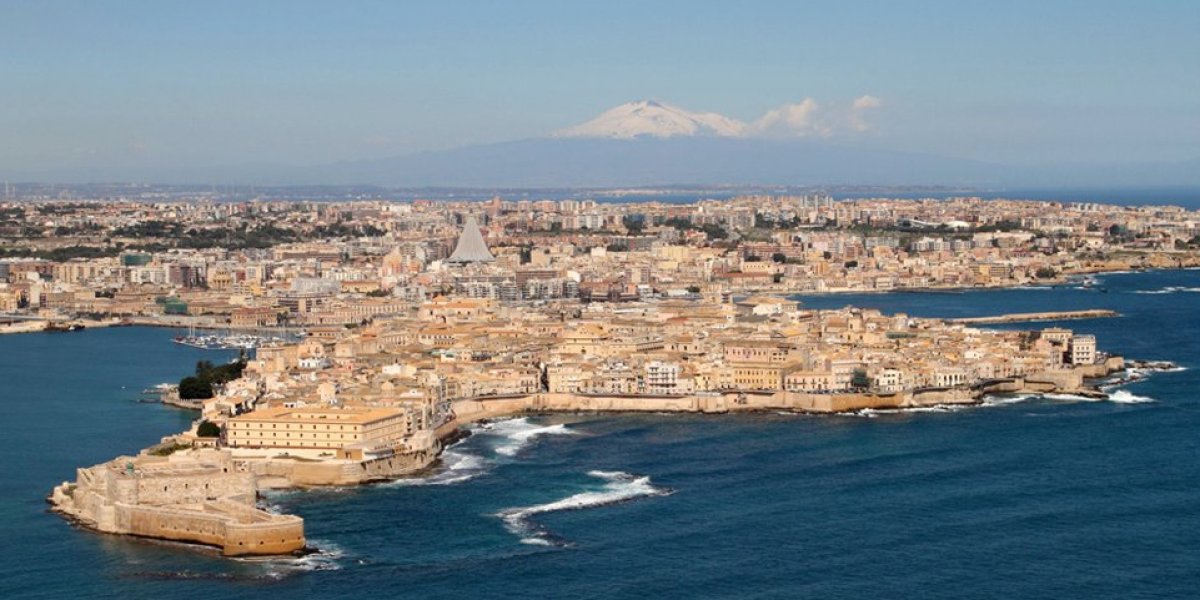
City Guide
Syracuse
Italy · Best time to visit: Apr-Oct.
Day-by-day plan
Choose your pace
Trip length
08:30
Landmark
Start at the park gate the moment it opens — the Sicilian sun turns brutal by 11, and the 16,000-seat Greek Theater carved straight into the limestone is best seen while the air is still cool and the buses haven't arrived. Climb to the top row first: from there you frame the white tiers descending toward the Mediterranean, the same view that captivated audiences 2,500 years ago, and the spot where Aeschylus premiered plays. Walk down to the Ear of Dionysius cave next door before leaving — clap once inside, the echo is the only reason to stop.
Tip: Arrive at 08:30 opening — by 10:00 three coach loads will be ahead of you. From mid-May to early July, modern wooden seating is installed over the stone for the summer Greek drama festival, hiding the original tiers; if your trip falls in that window and you want to see bare limestone, visit Neapolis before May 10 or after the last week of August.
Open in Google Maps →11:00
Neighborhood
Walk south down Corso Gelone for about 35 minutes, cross Ponte Umbertino, and the smell of the market — sea, lemon, oregano — hits you before you see it. This is one of Italy's most theatrical markets: red prawns from Mazara still twitching on ice, swordfish heads displayed like sculpture, stallholders shouting in dialect no Italian dictionary covers. You're not here to buy ingredients; you're here to watch a Sicily that hasn't bothered to perform for tourists. Wander to the far end of Via Trento where the fishmongers are densest.
Tip: Walk all the way to the back — the front stalls now sell magnets. The real action is on Via Trento and Via De Benedictis, where vendors will hand you a slice of raw red prawn or a marinated anchovy to taste, gratis. Skip any stall with a printed English sign; that's the markup tier.
Open in Google Maps →12:00
Food
Twenty steps from the fish stalls, on the corner of Via Emanuele de Benedictis, a man named Andrea Borderi has been building the most operatic sandwiches in Italy for thirty years. Order one panino (€10-12) — say nothing, point at nothing, just let him construct it: his own ricotta still warm, smoked tuna, sundried tomato, capers, pistachio cream, basil, a drizzle of olive oil he'll narrate to you. Pair with a glass of house Nero d'Avola (€3). Eat standing at the wooden bench outside, which is the only correct posture.
Tip: Be in line by 12:00 — by 12:45 the wait is 45 minutes and by 13:30 they're sold out. Order at the inside counter (where Andrea performs), not at the takeaway window outside; the counter sandwich is twice as good for the same price. Cash only, no reservations, closed Sundays.
Open in Google Maps →14:00
Religious
Stroll five minutes south down Via Roma — narrow, shaded, lined with peeling palazzi — and emerge into a piazza that opens like a stage set: oval, blindingly white, framed by baroque facades. The Duomo on your left is the most extraordinary building in Sicily — a 5th-century BC Doric Temple of Athena that the Byzantines walled in, the Arabs converted to a mosque, the Normans Christianized, and the baroque masons fronted with a flourish after the 1693 earthquake. The original temple columns still rise from inside the church walls, visible from outside on the left flank along Via Minerva.
Tip: Walk down Via Minerva on the left side of the cathedral — the ancient Doric columns are embedded in the exterior wall, almost touchable, and most tourists miss this entirely. The piazza is blinding at midday; the best photographer's spot is the shaded steps of Santa Lucia alla Badia opposite the Duomo, where you can frame the whole facade without squinting.
Open in Google Maps →16:00
Landmark
Exit the piazza heading west toward the sea — three minutes downhill and you reach the Fountain of Arethusa, a freshwater spring that bubbles up beside the Mediterranean with papyrus growing in it (the only papyrus growing wild in Europe), tied to the myth of the nymph who fled here from Greece. Don't stop long; continue along Lungomare Alfeo, the seafront promenade, for ten minutes to the southern tip of the island where Castello Maniace stands on its limestone outcrop. Walk past the castle gate to the very last rocks — this is where you watch the light turn the city gold from across the bay.
Tip: The cafes ringing the Fountain of Arethusa charge €6 for a coffee — walk five minutes further along the Lungomare for a €1.50 espresso at any back-street bar. Sunset is on the western side facing Marina, so position yourself on the rocks just south of Castello Maniace 30 minutes before sundown; in June this means around 20:15, in October around 18:00.
Open in Google Maps →19:30
Food
Walk back north along Via Salomone for eight minutes to a tiny lane just behind the Duomo where twenty-five seats and a chalkboard menu wait for you. This is the address Sicilians give Sicilians: hand-rolled pasta made that morning, no shortcuts, no English menu. Order the ravioli di ricotta al ragù di maiale nero (€14) — pillows of sheep's ricotta with black-pig ragu — and the tagliatelle with prawns, pistachio and lemon zest (€16). Finish with cannolo filled to order (€5). House wine €4 a glass and surprisingly fine.
Tip: Reserve at noon for the 19:30 first seating — by 20:30 walk-ins are turned away. Pitfall warning for Ortigia: avoid every restaurant directly on Piazza Duomo or along Via Cavour with six-language menus and laminated photos of pasta — those are €25 microwaved tourist traps. The local rule: chalkboard menu, Italian only, no photos = dinner. Also watch your bag in the narrow alleys after dark — Vespa snatchings happen occasionally near Largo XXV Luglio.
Open in Google Maps →Jump to day
09:00
Shopping
Cross Ponte Umbertino onto Ortigia at 09:00 and the columns of Tempio di Apollo greet you on the left — pause two minutes here for the warm morning light on Sicily's oldest Doric temple, then turn into Via Emanuele de Benedictis where the market erupts in color. Swordfish hang like bicycles, fishmongers shout in dialect, and bins of capers from Salina, blood oranges, ricotta salata and tuna bottarga fill the air with brine. This is the only hour the market still belongs to locals before the cruise-ship crowds discover it at 11:00.
Tip: Arrive before 10:00 — the morning fish is gone by 11:00 and stalls start packing up by noon. Skip the giant queue at Caseificio Borderi (Instagram-famous, 40-minute wait for a sandwich) and walk thirty steps further to Fratelli Burgio's counter for a swordfish involtino and a glass of Etna Bianco standing up (€8). Cash only at most stalls; the ATM at the corner of Via Trento charges €5 commission — withdraw before crossing the bridge.
Open in Google Maps →11:00
Religious
Leave the market south along Via Roma, ducking under washing lines and past Baroque palazzi for 5 minutes — the alley spills you into Piazza del Duomo, Italy's most theatrical square, paved in white limestone that almost hurts the eyes at midday. The cathedral is a 5th-century BC Greek temple to Athena, still standing, its massive Doric columns visible inside the church walls — the only place in the Mediterranean where you can touch a working sanctuary and a pagan temple in the same step. Cross the piazza to Chiesa di Santa Lucia alla Badia, which holds Caravaggio's last completed canvas, The Burial of Saint Lucy.
Tip: Pay the €2 Duomo entry and walk slowly along the left aisle — Athena's 2,500-year-old columns are embedded in the wall at eye level, with chisel marks still visible from when Byzantines hacked windows between them. Visit the Caravaggio at Santa Lucia alla Badia between 11:30 and 13:00: the painting is brutally underlit at other hours, but at midday the sun angles through the rose window directly onto the canvas. Free entry, but staff close the doors for cleaning 13:00-15:30 — don't arrive at 12:55.
Open in Google Maps →12:30
Food
Retrace 3 minutes north up Via Roma back to Piazza Cesare Battisti — the deli's outdoor tables sit just off the market's edge, perfectly placed for the lull as stalls close at noon and the air finally cools under the awnings. Order one large tagliere misto di mare e terra (mixed land-and-sea board, €22): swordfish involtini, marinated anchovies, sun-dried tomatoes, caciocavallo, capers, Pachino tomatoes and tuna bottarga — every ingredient walks here from the market across the street. Pair with a glass of Etna Bianco (€6) and watch the market wind down around you.
Tip: Order the single large tagliere to share rather than separate plates — same food, half the price, twice the variety. Their tuna bottarga is the must-try; ask for it grated over warm bread with olive oil and a squeeze of lemon. No reservations and tables turn quickly, but if all outdoor seats are taken at 12:30, put your name in and walk the seawall for 15 minutes — by 12:45 the locals heading back to office finish and tables free up.
Open in Google Maps →15:30
Landmark
After the siesta lull — embrace it, every shop closes 14:00-16:30 — walk south down Via Picherali, hugging the Ortigia seawall as it curves west; within 7 minutes the open Ionian appears below you and freshwater papyrus rises from a sunken pool beside the sea. This is the only place in Europe where wild papyrus grows, fed by a freshwater spring that bubbles up two meters from saltwater; Greek myth says the nymph Aretusa, fleeing the river god Alpheus, was transformed into this fountain. Ducks paddle among the reeds while waves crash on the wall beside you — the contrast is uncanny.
Tip: Stand at the upper railing and look straight down at 16:00 — the slanting afternoon sun catches the papyrus and turns the water emerald; the same view at noon is flat grey. Walk one block further west to Lungomare di Levante for the city's best skyline photo of Ortigia, with the harbor stretching south all the way to Castello Maniace. The leather-bracelet hawkers around the fountain will quote €3 and charge €15 once it's on your wrist — a firm 'no grazie' without eye contact is the only thing that works.
Open in Google Maps →16:45
Landmark
Continue south along the seawall for 6 minutes — passing the breezy Belvedere San Giacomo terrace — until Ortigia narrows to a fortified point and the bronze doors of the 13th-century Castello block the sky. Inside, Frederick II's vast hypostyle hall has columns thinner than a forearm holding up an arched ceiling larger than a tennis court — medieval engineering at its most audacious, hammered by Ionian waves on three sides. Climb the western ramparts at 18:00 for unobstructed views as the sun drops behind the Iblei mountains and the harbor turns molten gold.
Tip: Confirm the day's hours before walking down: summer (Apr-Oct) the castle opens 08:30-18:30 daily, but on Sundays it sometimes closes at 13:30 — if your Day 1 is a Sunday, swap this with Mercato and visit at 11:00 instead. Steady your phone on the western rampart wall for the 18:00-18:25 golden hour (timing shifts ±30 min by month). Last entry 17:30 — buy the €8 ticket the moment you arrive, then explore. Avoid the cafés just outside the castle gate; they charge €6 for granita that costs €2.50 in Ortigia center.
Open in Google Maps →20:00
Food
Walk back north along Via San Martino for 8 minutes through Ortigia's quietest residential lanes — laundry strung between balconies, kids playing in the late dusk — until you reach Via delle Maestranze, the spine of the island's evening passeggiata. Don Camillo is a hushed, vaulted-cellar restaurant where chef Giovanni Guarneri serves the most refined Sicilian seafood on the island; the signature spaghetti ai ricci di mare (sea urchin pasta, €28) is a single act of theater — warm strands tossed at the table with raw urchin roe — and the tasting menu (€85) walks you from raw red prawns of Mazara to almond semifreddo. The wine list deep-dives Etna and Vittoria.
Tip: Reserve at least 48 hours ahead — only 14 tables and locals book holidays here; ask for table 4 in the back vaulted room (quieter, away from the kitchen). If sea urchins are out of season (avoid May-September only — wait, they're in season May-Sept; out of season Oct-Apr) order the ravioli di cernia al limone instead — the chef himself recommends it. Pitfall warning: avoid the restaurants clustered around Fontana di Aretusa with menus in eight languages and 'fresh fish €25' on a chalkboard — these are uniformly tourist traps using frozen catch; the real Ortigia tables are tucked one block inland on Via Maestranza and Via Cavour.
Open in Google Maps →09:00
Landmark
From Ortigia, take a 20-minute walk up Corso Gelone or a 5-minute bus to Viale Paradiso — arrive at 09:00 to enter ahead of the cruise-ship coaches that unload at 10:30. The 16,000-seat Greek Theater is carved directly into limestone, where Aeschylus premiered The Persians in 472 BC and where Greek tragedies still play under the stars every summer. Beyond it gapes the Ear of Dionysius — a cathedral-shaped cave with an 8-second echo that the tyrant supposedly used to eavesdrop on prisoners — then the largest Roman amphitheater in Sicily, where gladiators died in front of 15,000 spectators.
Tip: Buy the combined ticket (€17) that bundles Museo Paolo Orsi at the booth — saves €4 versus separate tickets. Go counterclockwise: Greek Theater first (empty at 09:00, jammed by 11:00), then descend into the Latomie del Paradiso quarries where 7,000 Athenian prisoners died after the failed siege of 413 BC — the silence among the fig trees is the eeriest moment in Syracuse. Bring a 1-liter water bottle and a wide-brim hat; there is almost no shade and the limestone reflects heat brutally from May onward.
Open in Google Maps →12:30
Food
Exit Neapolis at the Viale Augusto gate and walk east for 4 minutes onto a quiet residential corner — exactly the contrast you want after the hot ruins. This is a no-frills family trattoria where Syracusans eat lunch when they don't want to see tourists; the pasta alla Norma (€11) — fried eggplant, ricotta salata, fresh tomato, basil — is the platonic ideal of Sicily's most famous dish. The daily fish couscous (€16) channels the Trapani-meets-North-Africa half of the island, and the house Nero d'Avola comes in a clay carafe at €6 a half-liter.
Tip: Skip every ristorante lining Viale Paradiso right outside the park gates — laminated multilingual menus and triple prices, kitchens cooking from frozen. Order the pasta alla Norma and a half-liter of house wine (€14 total) and you'll eat better than 90% of visitors to Syracuse that day. Last seating at 14:00 sharp, kitchen closes 14:30 — arrive by 13:30 to avoid a stressed waiter.
Open in Google Maps →14:30
Religious
Walk east along Viale Teocrito for 12 minutes — passing the columns of the Ginnasio Romano and the broad Foro Siracusano — until you reach the gated complex of San Giovanni. The 14:30 tour is the very first slot after the lunch break and the smallest group of the day. Beneath this ruined Norman basilica spreads Sicily's largest early-Christian catacomb: 20,000 burial niches carved into a 4th-century quarried limestone matrix, organized along radial corridors with vaulted rotondas where families gathered for funeral feasts, surrounded by faded frescoes of doves and peacocks — early symbols of resurrection.
Tip: Guided tour only (€8, ~50 minutes); confirm Italian or English at the ticket window before paying — Italian-only tours run when English groups are too small. Bring a light layer: it is a constant 16°C below ground year-round, and goose-bump cold after a hot afternoon. The above-ground basilica ruins are skippable, but don't let the guide rush you past the crypt of San Marciano at the very end of the tour — it's where Sicily's first bishop was martyred in AD 254 and most groups breeze through in 30 seconds.
Open in Google Maps →15:45
Museum
Cross the small park behind the Catacombe — 90 seconds on foot — and you reach the back entrance of Paolo Orsi, Sicily's greatest archaeological museum. Six radiating wings cover 16,000 years from Neolithic Pantalica through Greek colonies to imperial Rome, but the headliner is the Venus Anadyomene (the Landolina Venus) — a 2nd-century AD marble of Aphrodite rising from the sea that Henry James called the most beautiful statue in the world. Don't miss the original sarcophagus of Adelfia, lifted directly from the catacombs you just walked through.
Tip: Already paid via the combined Neapolis ticket — show the same stub at the desk. Go straight to Sector C, Room 19 to see the Landolina Venus before the tour groups arrive at 16:30; the room is small and crowds ruin the contemplative effect the curators designed for. Skip Sectors B (prehistory) and F (numismatics) unless archaeology is your life — Sectors A (Greek colonies) and D (Syracuse city) are the essential narrative. The audio guide is mediocre; grab the free paper sector map at the desk instead.
Open in Google Maps →18:15
Landmark
Walk south down Corso Gelone for 18 minutes — Syracuse's mainland shopping spine, slowly transitioning from modern blocks to honeyed limestone as you cross Ponte Umbertino back onto Ortigia. The temple appears immediately on your right, glowing in the last horizontal light of the day. This is the oldest Doric temple in the Western world (early 6th century BC) — older than the Parthenon by more than a century — and its two surviving columns and altar are scarred by 2,700 years of conversion: Byzantine church, Arab mosque, Norman church, Spanish barracks, finally laid bare by a 1938 demolition.
Tip: Photograph the temple from the southeast corner of Largo XXV Luglio between 18:30 and 19:00 — that single angle puts the surviving columns against the warm Baroque facades behind, with no traffic in frame. It is an open-air ruin, free of charge. Combine with an aperitivo (€8 spritz) at Bar Apollo on the piazza's southwest corner — order a Spritz Campari instead of Aperol; locals consider Aperol the tourist version, and Campari is the bartender's own drink.
Open in Google Maps →20:00
Food
Walk one block south from Tempio di Apollo into the narrow Via Cavour — Ortigia's living evening spine — for 3 minutes; Sicilia in Tavola sits halfway down behind a small wooden sign with a window onto the open pasta counter. Every shape is rolled by hand at the bench you can watch from your table — busiate, pici, ravioli, pappardelle — and the ravioli al pesce spada e menta (swordfish-mint ravioli, €16) is the dish that built the restaurant's reputation across Italy. The pappardelle al ragù di cinghiale dei Nebrodi (wild boar from the Nebrodi mountains, €15) is the other order to fight your dining partner for.
Tip: Only 22 seats — book online 3-4 days ahead, or arrive at 19:30 to put your name down for the 21:00 second seating (more relaxed and less rushed). Skip antipasti: bread basket is generous and pasta portions are huge. End with a glass of moscato di Pantelleria (€7) instead of dessert — the swordfish-mint ravioli is delicate enough that anything sweeter than that would erase the memory. Pitfall warning: avoid the touts on Lungomare di Levante and Foro Italico who hand out menus on the street — these are nearly always tourist-trap kitchens charging Milan prices for frozen catch; every restaurant worth eating at in Ortigia is tucked one block inland and does not chase customers.
Open in Google Maps →
Trip builder
Plan this trip around Syracuse
Turn this guide into a bookable rail itinerary with FlipEarth.
Keep exploring
Related cities
More in the same country
FAQ
Frequently asked questions
How many days do you need in Syracuse?
Most travelers enjoy Syracuse in 1 days, with enough time for headline sights and a slower meal or museum stop.
What's the best time to visit Syracuse?
The easiest season for most travelers is Apr-Oct, especially if you want good weather and manageable crowds.
What's the daily budget for Syracuse?
A practical starting point is about €90 per person per day before hotels, then adjust based on museums, dining, and transport.
What are the must-see attractions in Syracuse?
A good first shortlist for Syracuse includes Neapolis Archaeological Park (Greek Theater), Fountain of Arethusa & Castello Maniace.