City Guide
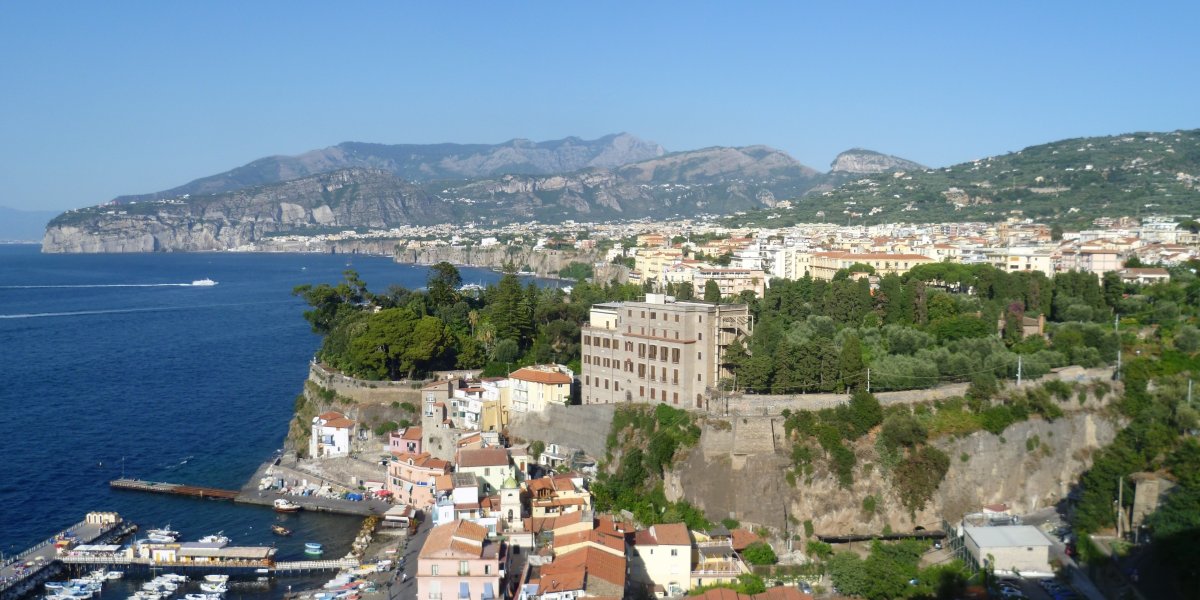
Sorrento
Italy · Best time to visit: Apr-Oct.
Day-by-day plan
Choose your pace
Trip length
09:00
Landmark
From Piazza Tasso, walk 90 seconds east along Via Fuorimura and lean on the iron railing — a 60-meter-deep ravine opens beneath you, with a ruined 13th-century flour mill at the bottom, swallowed by ferns and tropical greenery. This is Sorrento's strangest sight: a forgotten valley sealed off when the square above it was built in 1866, now a self-contained tropical microclimate visible only from the rim. Morning sidelight cuts across the chasm and lights the mill's stone arch — by afternoon the ravine falls into deep shadow.
Tip: The cleanest shot is from the southwest corner of the railing, where Via Fuorimura meets Piazza Tasso — frame the mill between the two tall palms. Skip the paid 'Vallone viewpoint' a shopkeeper may try to sell you down the street; the public railing is the better angle and free.
Open in Google Maps →09:30
Neighborhood
Turn your back to the ravine and cross Piazza Tasso west into Via San Cesareo — the spice-and-lemon scent hits immediately. Wander the lattice of pedestrian alleys: the 15th-century Sedile Dominova loggia with its frescoed dome (still a fishermen's social club today), the Duomo's striking inlaid wooden doors, Sant'Antonino Basilica's whalebone votives, and the painted ceramic-tile street signs that locals still hand-make. Loop back via Corso Italia past the lemon-grove courtyard of I Giardini di Cataldo. Three hours sounds long for a small old town — it isn't; this is where Sorrento's life happens.
Tip: I Giardini di Cataldo (Corso Italia 267) is a working family-owned lemon grove behind a small shop — walk through to the back garden for a free limoncello tasting under the trees. It's the real thing; skip the dozens of identical 'limoncello tasting' shopfronts on Via San Cesareo that sell industrial product at tourist markup.
Open in Google Maps →12:30
Food
Two minutes north on Corso Italia from the Duomo, the wood beams and hanging hams of Da Franco appear on your left — a 65-year-old institution where Sorrentine families have lunched between errands since 1965. Forget pretty pizza; this is rustic Campanian pizza on a wooden board, eaten elbow-to-elbow at communal tables. The pizza margherita with mozzarella di bufala (€9) and the calzone fritto with ricotta (€10) are the moves; pair with a half-liter of the house red (€6). Cash-friendly, no-frills, and the entire dining room is locals on their lunch break — which is the whole point.
Tip: Arrive by 12:30 sharp — by 13:15 there is a queue out the door for every weekday lunch. No reservations; head for the counter stools at the back if all tables are taken (faster service, same kitchen). Order the calzone fritto even if you think you're not hungry — it's a Sorrento thing.
Open in Google Maps →13:45
Park
Walk 4 minutes west on Via San Francesco; a small unmarked stone door on your right opens into the 14th-century Chiostro di San Francesco — a hushed cloister of interlaced Saracen arches drowning in bougainvillea, used as a wedding chapel by local couples (and free to enter). Step out the back and you're already at the gates of Villa Comunale, Sorrento's cliff-edge garden. The view explodes: Mount Vesuvius rises straight ahead across the Bay of Naples, Capri sits on the western horizon, and 50 meters straight down is the Marina Grande fishing harbor — your next stop. Early afternoon light is direct on Vesuvius from this angle; by sunset Vesuvius silhouettes black against the sky, so this is the right hour to actually see the volcano's profile.
Tip: Walk to the far western end of Villa Comunale (past the bandstand) — there's a small lookout platform that almost no one finds. From there the Marina Grande fishing boats below frame Vesuvius perfectly. Skip the €1.10 cliff elevator at the garden's exit; the historic stone staircase Scalinata Marina Grande next to it descends through a 16th-century gate and a tunnel and is part of the experience.
Open in Google Maps →15:00
Neighborhood
From the staircase exit you walk straight into the 17th-century stone arch of Porta della Marina Grande and a different town: tight cobbled lanes, painted fishing boats pulled onto the slipway, nets drying in the sun, and old women selling lemons from doorsteps. This is Sorrento's original village — predating the cliff-top town above by centuries, still inhabited by the same fishing families. Walk the small crescent of pebble beach to the western breakwater (best Capri view), back along the harbor past the moored gozzi boats, then settle at one of the seaside bars with a glass of Falanghina white wine and watch the sun arc toward Capri. Late afternoon light turns the painted hulls amber.
Tip: The wooden dock at the western end (in front of Bagni Sant'Anna) is open to the public for swimming — locals jump in for a late-afternoon dip well into October. Bring a quick-dry towel if it's warm; the water is cleaner than Marina Piccola because there's no ferry traffic.
Open in Google Maps →19:30
Food
You've already arrived — the trattoria is the unassuming building at the inner curve of the Marina Grande harbor, a 2-minute walk from the swimming dock. Family-run since 1947 by the same Sorrentine fishing family, with paper placemats, plastic chairs, and a small outdoor terrace where the bay water laps 3 meters from your feet as the sun drops behind Capri. This is what every Marina Grande restaurant photographed for Instagram is trying to imitate. Order the gnocchi alla sorrentina (€11 — the dish was invented in this town, this is the canonical version), the spaghetti alle vongole veraci with that morning's clams (€14), and grilled local pezzogna sea bream (€19). House Falanghina by the carafe (€10/half-liter).
Tip: No reservations — arrive at 19:15 to claim a terrace table for sunset (around 20:15 in summer). Cash strongly preferred. **Pitfall warning:** every restaurant clustered around Piazza Tasso and along Via San Cesareo with a multilingual photo-menu and a host on the street is a tourist trap — expect frozen seafood, 40% markup, and 18% service quietly added. Sorrento's real seafood is eaten at Marina Grande, where the boats are tied up 20 meters from the kitchen. If Da Emilia is full, the next door Trattoria Sant'Anna and Bagni Delfino are run by the same fishing community and equally honest.
Open in Google Maps →Jump to day
09:00
Neighborhood
Begin at Piazza Tasso, Sorrento's social heart for two centuries — oleander-shaded, with a sudden 50-meter cliff drop on its north side. Plunge into the Centro Storico's narrow lanes — Via San Cesareo and Via Pietà — past the 16th-century Sedile Dominova loggia (where noble families once met in the open air) and the Duomo's painted wood ceiling. The town wakes around 9:30; the first hour belongs to you and the bakers.
Tip: Take an espresso standing at the bar at Bar Ercolano on the piazza — €1.20 standing, €4.50 if you sit on the terrace, same coffee. Walk the loop counter-clockwise so you finish facing the cliff edge at the north railing — the framed view of the harbor and Vesuvius is the postcard everyone reaches for.
Open in Google Maps →10:30
Religious
Walk five minutes west on Via San Francesco; the entrance is an unmarked stone archway, easy to miss. Step inside and the city's noise drops to nothing: 14th-century pointed arches draped in bougainvillea, jasmine in the air, a square of sky overhead. It is the most photographed spot in Sorrento that almost no one visits before 11.
Tip: Frame your photo through the second arch from the right — morning sun backlights the carved capitals. Climb to the upper terrace through the modern art gallery (also free) for a balcony view over Villa Comunale and the bay. Slip €1 into the candle box; that's the local etiquette and it's why the place stays open.
Open in Google Maps →12:00
Food
Three minutes east through Vico I Fuoro, a narrow lane that smells of grilled meat by noon. Inn Bufalito is a Slow Food Presidium devoted to water buffalo — mozzarella made that morning, ricotta, smoked scamorza, even buffalo carpaccio. Order the tasting board (€18) and the buffalo-ragù paccheri (€16) with a glass of cold Campanian Falanghina (€5).
Tip: Walk in at exactly 12:00 — they open then and you can grab the corner table without a reservation. After 12:30 you wait. Skip the limoncello digestif; you'll have a far better one tomorrow at Cataldo.
Open in Google Maps →14:00
Park
Two minutes west of the restaurant, push through the iron gate into Sorrento's clifftop public garden. The terrace at the far end gives you the photo every traveler wants: Vesuvius framed by parasol pines, Marina Grande's red-roofed houses tucked 50 meters below. Walk the perimeter slowly — the benches are angled for the view, not for chatting.
Tip: Stand at the eastern railing (left as you enter) — the ferns drop into the frame and you get the harbor and Vesuvius in one shot. The municipal elevator beside the gate descends 50 m to Marina Piccola for €1.10, useful if you're saving knees, but the cliff stairway in the next stop is the more atmospheric way down.
Open in Google Maps →15:00
Neighborhood
Take the old fishermen's stairway from Via Marina Grande — switchbacks through bougainvillea-draped houses, ten minutes down. Marina Grande is the original village that predates Sorrento itself: a hundred meters of wooden fishing boats, peeling pastel facades, a small pebble beach where nonni still mend nets between palms. Rent a sun lounger at Bagni Salvatore (€15), swim in water clear enough to see your toes, then linger for golden hour.
Tip: Stay through golden hour — from 18:00 the cliff face above turns coral pink and Vesuvius lights up across the bay. Avoid the loungers on the touristy left side as you arrive; the local platform on the right (toward Bagni Delfino) costs less and looks straight at the volcano.
Open in Google Maps →19:30
Food
Twenty steps from the beach, Bagni Delfino is built on wooden stilts directly over the water — you eat with the waves under your feet and the sun setting between Procida and Ischia. Order the spaghetti alle vongole (€22) and the catch-of-the-day grilled whole (€10 per 100 g, choose your fish from the iced tray). Run by the Esposito brothers since 1965; their grandfather was the marina's last sailmaker.
Tip: Reserve the day before for a 19:30 outdoor table — call +39 081 878 2038 — anything later and you lose the sunset. Skip the lemon soufflé (overhyped) and end with the homemade fig-and-walnut gelato. Walk back up via the Villa Comunale elevator (€1.10, last departure 23:30). One Sorrento warning: avoid the seafront restaurants on Via Marina Grande's tourist strip — they have menus in seven languages and serve frozen calamari at twice the price.
Open in Google Maps →09:00
Landmark
Set out from Piazza Tasso along Via Capo — a 30-minute coastal footpath above the cliffs, or take the SITA bus toward Sant'Agata and step off at 'Capo' (€1.30, 8 minutes). At an unmarked sign for 'Villa Pollio Felice,' a stony track drops through olive groves to a Roman patrician villa's ruins and the Queen Joanna's Bath — an oval natural pool linked to the open sea through a ten-meter rock arch. Roman emperors swam here; so can you.
Tip: Arrive by 09:00 to swim alone — by 11:00 day-trippers from Naples flood in. Wear sturdy sandals (the path is loose stone) and bring a litre of water; nothing is sold on site. At low tide you can wade through the rock arch; at high tide it's a 3-meter underwater swim — locals say morning has the calmer water.
Open in Google Maps →12:00
Food
Catch the SITA bus back into Sorrento (15 min) and walk three minutes east on Corso Italia. Da Franco has fired pizzas in a wood oven since 1955 — paper-tableclothed, no menu in English, locals queuing at the counter for slabs of focaccia. Order the capricciosa (€8) or the salsiccia e friarielli with sausage and bitter greens (€9), and the house lemonade pressed from local Sfusato fruit (€3).
Tip: Take the long communal table inside the back room; the touts on the street don't know about it and there's almost always a free spot. Cash preferred (card minimum €15). Skip dessert — you're saving room for lemon liqueur in 30 minutes.
Open in Google Maps →13:30
Landmark
Walk three minutes south to Via Fuorimura; the railing on the western side opens onto a vertiginous green canyon. At its bottom — invisible from any other angle — sit the moss-covered ruins of a 13th-century flour mill, abandoned in 1866 when the construction of Piazza Tasso sealed off the canyon's airflow. The microclimate went mad with ferns and ivy: a forgotten world swallowed by the city.
Tip: Best photographed between 13:00 and 15:00 when sunlight reaches the canyon floor and turns the moss neon-green. The viewpoint is small and unsignposted; the railing next to the green street sign 'Vallone dei Mulini' is the right spot. Free, no descent allowed — the canyon is fenced off, ignore anyone offering paid 'access.'
Open in Google Maps →14:30
Food
Walk five minutes south through Corso Italia to a green wooden gate marked 'Giardini di Cataldo.' Inside, hidden mid-town, is a working two-acre Sfusato lemon grove, family-owned for five generations. Stroll under the pergola of trellised lemons (some weighing 500 g — Sorrento's protected DOP variety), watch limoncello being bottled in the small still-room, then sit for a free tasting of classic limoncello, creamy crema di limone, and the bittersweet lemon-leaf 'finocchietto.'
Tip: Buy the 50 cl bottle of finocchietto (€12) — easier to fit in a suitcase than the 100 cl, and lemon-leaf liqueur is the one tourists never know to take home. The granita di limone (€3) made from grove fruit is the best in town; ask 'senza zucchero' if you want the actual lemon to come through.
Open in Google Maps →16:00
Museum
Two minutes east on Via San Nicola, the inlaid-wood museum sits in a pale-pink 18th-century palazzo, easy to miss. Sorrento's intarsia tradition — geometric scenes built from slivers of olive, walnut, and lemon wood — became famous in the 1800s; the museum traces it from Roman mosaics up to a reconstructed artisan's bench on the top floor. Quiet, air-conditioned, the perfect 4 pm reset.
Tip: Skip the museum gift shop and walk five minutes to Stinga Tarsia at Via Luigi de Maio 16 — the Stinga family still makes museum-quality boxes by hand, and a small inlaid coaster set is €25 versus €60 in the souvenir strip. The museum closes 18:00 sharp; arrive by 17:30 to see the upper rooms unhurried.
Open in Google Maps →19:30
Food
A two-minute walk north on Corso Italia ends at a cast-iron gate — push it open and step into a Victorian greenhouse hidden inside a city block. O' Parrucchiano has served meals under its lemon and orange trees since 1868; cannelloni was reportedly invented in this kitchen in 1907. Order the namesake cannelloni 'alla Parrucchiano' (€14), the linguine al limone (€16) finished with fruit from the trees overhead, and a candied-citron baba (€8) to close.
Tip: Reserve a table in the 'Giardino' room — not the front dining hall — by calling +39 081 878 1321; ask specifically for one under the lemon trees and the staff will smile because that's what locals always request. One Sorrento warning: wave away the 'guides' and 'taxi-tour' touts on Corso Italia after dinner — every Capri ferry, Pompeii minivan, or Amalfi tour they pitch costs 30-50% less booked at the official ferry kiosk on Marina Piccola or at the train station counter.
Open in Google Maps →
Trip builder
Plan this trip around Sorrento
Turn this guide into a bookable rail itinerary with FlipEarth.
Keep exploring
Related cities
More in the same country



FAQ
Frequently asked questions
How many days do you need in Sorrento?
Most travelers enjoy Sorrento in 1 days, with enough time for headline sights and a slower meal or museum stop.
What's the best time to visit Sorrento?
The easiest season for most travelers is Apr-Oct, especially if you want good weather and manageable crowds.
What's the daily budget for Sorrento?
A practical starting point is about €120 per person per day before hotels, then adjust based on museums, dining, and transport.
What are the must-see attractions in Sorrento?
A good first shortlist for Sorrento includes Vallone dei Mulini Overlook.