City Guide
Skagen
Denmark · Best time to visit: Jun-Aug.
Day-by-day plan
Choose your pace
Trip length
09:00
Religious
From Skagen Station, take the local bus three stops toward Hulsig or walk 35 minutes southwest along Gl. Landevej through pine-scented heath. The whitewashed tower of the medieval St. Laurentii parish rises from the dunes like a half-erased memory — the village was abandoned in 1795 after a century of losing ground to drifting sand, and only the tower was spared as a navigation mark. At 09:00 the light slants through the pines low and silver, the path is yours, and the chill of the morning makes the story land harder than any guidebook can.
Tip: Climb the tower (DKK 20, cash only) for the view down onto the buried nave, but the unforgettable shot is from the wooden boardwalk 80 m north, framing the tower against the dune ridge with the morning sun behind your right shoulder. Approach from the south footpath rather than the official car park entrance — it's free and far prettier.
Open in Google Maps →10:30
Neighborhood
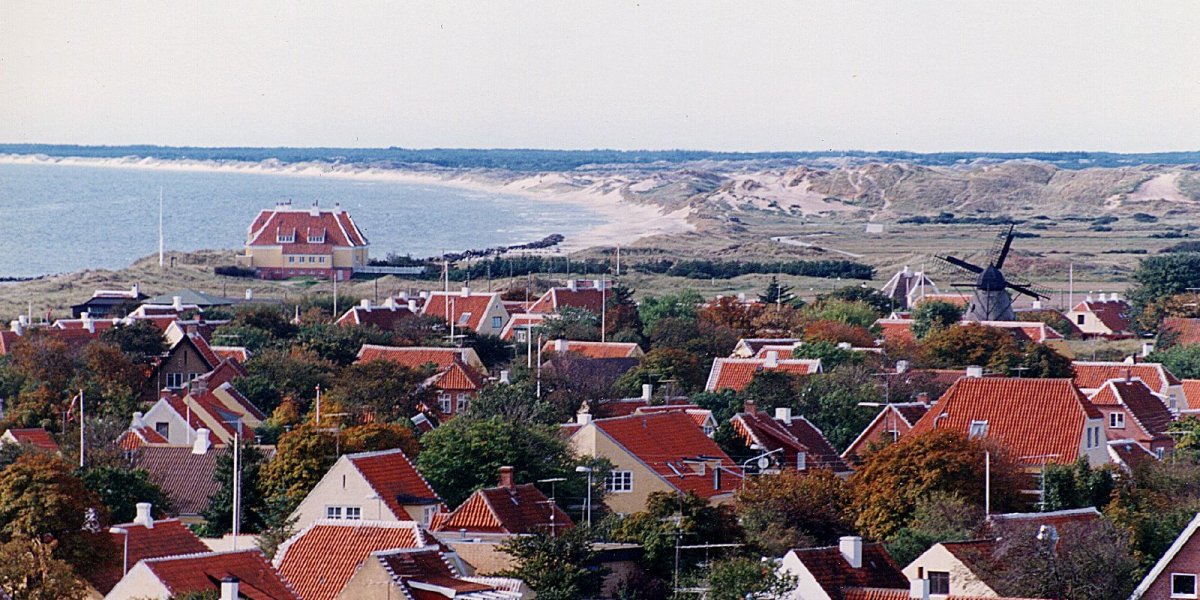
Walk 35 minutes back northeast along Gl. Landevej into town, then turn onto Sct. Laurentii Vej — the cobbled spine of Skagen's old quarter, lined with the butter-yellow walls, red-tiled roofs, and bright white woodwork that Anna and Michael Ancher and the Skagen Painters fell in love with in the 1880s. Loop through Vesterbyvej, pass the rust-red facade of Skagens Museum (admire from outside; the harbor calls), and finish at the small bench-lined square by Skagen Church. This is not a sight you 'do' — you slow down and let the palette work on you.
Tip: The single most photographed corner in northern Jutland is Vesterbyvej 14-18 — the narrow lane of yellow facades looking toward the church spire. Shoot it before 11:30 while the south-facing sun is still raking across the walls; by midday the light flattens and the magic dies. The yellow is officially called 'Skagensgul' — buy a tin of it at the hardware store on Sct. Laurentii Vej as the most authentic souvenir in Denmark.
Open in Google Maps →12:30
Food
Five-minute walk south through the harbor — follow the column of beech smoke and the candy-striped chimney to Skagen Fiskerirøgeri, the working smokehouse where Skagen's fleet has cured its catch since 1907. You order at the counter, grab a beer, and eat on long communal benches outside with seagulls overhead and a view of the bobbing trawlers unloading the morning's plaice. No waiters, no reservations, just the best smoked fish on the Jutland coast served by people whose fathers smoked fish in the same chimney.
Tip: Order the smoked salmon and herring plate (DKK 95) and add the warm smoked mackerel straight from the oven (DKK 75, point at it through the smoke chamber glass). Skip the fish-and-chips — that's tourist food; the møke makrel sandwich on dark rye with raw onion is what the fishermen actually eat. Budget DKK 120-180 (€16-24). Arrive by 12:15 to beat the 12:45 tour-bus surge.
Open in Google Maps →14:00
Landmark
From the harbor walk 40 minutes northeast along Fyrvej through the dune scrub — the road quiets, the sky widens, and the slate-grey tower of Det Grå Fyr rises at the end of it like a full stop. Built in 1858 by Niels Sigfred Nebelong and still the second-tallest lighthouse in Denmark, it now doubles as the Center for Migratory Birds because Grenen funnels half of Scandinavia's birdlife into this single bottleneck of land. The walk itself is the point: marram grass shimmering in the wind, terns overhead, the smell of salt sharpening with every step toward the tip.
Tip: Don't pay the DKK 75 climb fee — the view from the dune base behind the lighthouse is already vast, and you'll get a better, wilder panorama in 25 minutes from Grenen itself. The hero photograph of the tower is from 200 m south on Fyrvej, framing the slate cylinder against the white dune line; shoot at 14:00-14:30 with the sun coming over your right shoulder.
Open in Google Maps →16:00
Landmark
Continue 20 minutes north on the wooden boardwalk past the lighthouse and the rusting World War II bunkers, then drop onto the beach for the final kilometer to the tip. Grenen is the literal end of Denmark — a curving sandbar where the Skagerrak (North Sea) and the Kattegat (Baltic) collide in a visible line of churning whitewater you can stand in with one foot in each sea. Late afternoon light turns the sand pink and the colliding waves silver; gulls hang motionless on the wind. This is the moment that justifies the whole trip — and the reason every Dane goes once in their life.
Tip: Walk out, ride back: the Sandormen tractor bus (DKK 50 one-way from the tip to the car park, runs every 30 minutes until 18:00 in summer) saves your legs for dinner. Stand in the colliding seas only at the exact tip and only if the surf is moderate — the currents where the two seas meet are genuinely dangerous, several swimmers drown here each summer, do not wade past your knees and never turn your back on the water. Sunset here in June is at 22:00, so don't wait for it — Pakhuset is calling.
Open in Google Maps →19:30
Food
Sandormen back to the Grenen car park, then a 7-minute taxi or the 99 bus south to the harbor (DKK 24). Pakhuset Skagen is the unmissable yellow-and-white timber warehouse standing alone on the pier — a 200-year-old salt store turned into Skagen's grown-up seafood dining room. Upstairs is the white-tablecloth restaurant, downstairs is the more relaxed bistro; either way you're eating what the boats unloaded this morning, with the harbor lights flickering on the water through the warehouse windows and the day's salt still on your skin.
Tip: Reserve a window table upstairs at least three days ahead in summer (pakhuset-skagen.dk). Order the Skagen Toast (DKK 165 — house-cooked shrimp, dill, and lumpfish roe on toasted brioche, the dish this town gave its name to in Danish cuisine) and the pan-fried plaice with brown butter and capers (DKK 295). PITFALL: do not be tempted by the three identical-looking 'fish restaurants' with laminated photo menus immediately east of Pakhuset on Havnevagtvej — they serve frozen Asian-farmed pangasius at Copenhagen prices to cruise day-trippers. Pakhuset is the only restaurant on this pier that the local fishermen themselves book for their own anniversaries.
Open in Google Maps →Jump to day
10:00
Museum
From central Skagen, walk five minutes east along Brøndumsvej, past low yellow garden walls and the back of Brøndums Hotel, to the museum's doors just as they open. This is where Skagen's whole identity began — P.S. Krøyer's beach scenes, Anna Ancher's interiors, Michael Ancher's fishermen, all under skylights that catch the same northern light the painters chased. Ninety minutes upstairs is enough; the front rooms are the heart.
Tip: Walk straight to the room holding Krøyer's 'Hip Hip Hurra!' — the artists toasting around Brøndums' summer table — before 11:30, when the first coach group from Aalborg lands and the painting becomes a wall of phone screens.
Open in Google Maps →11:50
Museum
Cross Brøndumsvej and follow the hedged garden path 200 metres north — the green-trimmed gate of a yellow timber cottage marks Michael and Anna Ancher's actual home. Inside, the easels still stand, the palettes are still loaded, the walls are hung with paintings they made of each other. After the framed museum, this is the moment Skagen clicks into focus.
Tip: Stand at Anna's narrow upstairs studio window for thirty seconds — the cold, even north light pouring through it is exactly why she chose this house, and you can feel the painting decision before reading any wall text.
Open in Google Maps →13:00
Food
Walk south down Sct. Laurentii Vej for ten minutes — past pastel shopfronts, over the rail tracks — and down to the red-painted smokehouse with three tall chimneys above the fish-market quay. Pick smoked mackerel or a stjerneskud (fried plaice on rye with shrimp and caviar, DKK 145 / €19), grab a Skagen beer, and eat outside on long communal benches with gulls circling overhead. Budget €18-22 per person.
Tip: The queue wraps the building between 13:00 and 13:30 sharp — arrive at 12:55 or after 13:35; order at the inside counter, then send one person out to hold a bench under the awning before the food is ready.
Open in Google Maps →14:30
Museum
Walk inland on Sct. Laurentii Vej for eight minutes, then right onto Hans Baghs Vej — the poet's small white-trimmed house sits behind a low garden wall. Holger Drachmann was Skagen's bohemian conscience, and his house is exactly the cluttered, ship-cabin world you'd expect: sea poems hanging beside his own paintings, the bedroom where he died staring out at the dunes. Forty-five minutes is the right dose.
Tip: The rose garden behind the house is free to wander even when busloads queue at the front door — slip around the right-hand path for ten quiet minutes, which is honestly the better way to feel Drachmann's Skagen than touring the rooms.
Open in Google Maps →15:45
Neighborhood
From Drachmanns Hus head east three blocks along Vesterbyvej — the whole street is a single colour, butter-yellow walls under blood-red tiles with white trim, every house a variation on the Skagen formula. This is the painters' quarter where Krøyer, the Anchers, and Drachmann all lived within five minutes of each other; end at Brøndums Hotel's back garden, where the long table from 'Hip Hip Hurra!' was set summer after summer for thirty years.
Tip: Skagen's yellow has an official name — 'Skagen gult', a specific ochre fixed by local tradition — and the best stretch for photographs is Vestre Strandvej between 16:30 and 17:30, when low west sun saturates the walls; shoot a whole row with a wide lens, not single houses.
Open in Google Maps →19:00
Food
Walk fifteen minutes south back to the harbour as the streets quiet; Pakhuset occupies a two-storey wooden warehouse on the quay, with herring weights still hanging from the eaves. Upstairs are white tablecloths and serious plates — turbot from the day boats, langoustines from the morning's catch, poached cod with mustard sauce at €34; three courses run €70-95. Book by mid-afternoon for a window table over the boats.
Tip: Pitfall: the harbour terraces flanking Pakhuset trade on the view alone — wooden signboards outside, 'fresh fish €38', frozen plates inside; stick to Pakhuset, Skagen Fiskerestaurant, or De 2 Have, and walk past anywhere with a host pulling tourists off the quay.
Open in Google Maps →09:00
Landmark
Bike or drive 3 km north-east on Fyrvej to the Grenen car park, then walk the last kilometre across the sandbar — the dunes thinning to bare sand under your feet — to the tip of Denmark. Here you stand with one foot in the Skagerrak and one in the Kattegat, watching the two seas collide in a white, churning line that moves with the tide. At 09:00 the raking light is low along the dunes and only a handful of others are on the spit; by 11:00 the Sandormen tractor disgorges the day's crowds.
Tip: Walk out on the firm Kattegat (east) side — the west side is softer underfoot — and the photo isn't from the actual tip but from a small rise 20 metres back, where the collision line is visible cleanly against the morning light.
Open in Google Maps →11:00
Landmark
Walk back along the access track 15 minutes (1.2 km) to the tall grey-painted lighthouse rising above the heath. Climb the 210 steps to the lantern room for the only view in Skagen that shows the entire geography at once — Grenen curving away to the north, the Skagerrak open to the north-west, the heath stretching south to Råbjerg. The ground floor's Centre for Migrating Birds explains why this single point sits on one of Europe's biggest flyways.
Tip: Climb before 11:30 — the platform around the lantern is barely a metre wide and three coach groups arrive almost simultaneously around noon; from the top, look north-west to spot the actual sand collision line you walked past, invisible at ground level.
Open in Google Maps →12:45
Food
Drive or bike 4 km south-west back into town to Kirkevej, a red-brick brewhouse with copper kettles visible through the windows. Skagen Bryghus brews on site and pairs its own beers with proper smørrebrød — the stjerneskud (DKK 145 / €19) is two pieces of fried plaice on rye with shrimp, asparagus and lumpfish caviar, a meal in itself with a Skagen Pale Ale. Lunch budget €18-25; quick, local, exactly the fuel you need for the dunes.
Tip: Skip the printed lunch menu and ask for 'dagens fiskefrikadelle' — the day's fishcake on rugbrød — when Råbjerg Mile is on your afternoon; it's denser, sits lighter, and won't slow you down in soft sand.
Open in Google Maps →14:15
Religious
Drive 4 km south-west on Gammel Kirkevej; park at the small lot and walk a sandy path west through pine scrub for 600 metres. The lone whitewashed tower rises out of the dunes ahead like a shipwreck — all that remains of Skt. Laurentii Kirke after the moving sand buried the nave in the late 1700s. The interior is open in summer, and the climb gives you the surrounding dune field for context.
Tip: Walk a hundred metres south of the tower into the rough grass — the sand layer is thinnest there, and you can still see the foundation stones of the buried nave poking through, the church's full outline visible only if you know to look down.
Open in Google Maps →15:45
Park
Drive 12 km further south-west on Kandestedvej to the Råbjerg Mile car park, then take the wooden boardwalk through the heather — and the whole horizon ahead turns to sand. This is northern Europe's largest migrating dune: 40 metres high, a kilometre square, walking 15 metres east every year. The ripple textures and sand-rim light are at their best between 16:00 and 17:00, when low sun rakes across the western face.
Tip: Climb up the western slope (firm, packed) and descend the eastern face (soft, fast, knee-deep) — never the reverse; empty your shoes before getting back in the car, because Råbjerg sand finds every crevice and is still in your bag a week later.
Open in Google Maps →19:00
Food
Drive 10 km north-west to Højen — locally called Gammel Skagen, the old fishing settlement on the cliff above the Skagerrak — and Ruth's Hotel, a long white building set back from the dune road. Ruth's Gastronomic does a five-course tasting (€95-120) built almost entirely on what came in on Skagen's day boats — turbot, monkfish, lumpfish caviar in season; the Brasserie side runs the same kitchen as a three-course at €55-65. After dinner, walk five minutes west to Solnedgangsstranden for the 22:00 summer sunset over the North Sea.
Tip: Pitfall: the Gammel Skagen beachfront has two or three terrace bars trading on the sunset crowd with tired pizza and €9 beers — don't drift in on the way back from the sand; book Ruth's by lunchtime, or arrive at the Brasserie at 18:30 to beat the 19:30 wave.
Open in Google Maps →
Trip builder
Plan this trip around Skagen
Turn this guide into a bookable rail itinerary with FlipEarth.
Keep exploring
Related cities
More in the same country
FAQ
Frequently asked questions
How many days do you need in Skagen?
Most travelers enjoy Skagen in 1 days, with enough time for headline sights and a slower meal or museum stop.
What's the best time to visit Skagen?
The easiest season for most travelers is Jun-Aug, especially if you want good weather and manageable crowds.
What's the daily budget for Skagen?
A practical starting point is about €120 per person per day before hotels, then adjust based on museums, dining, and transport.
What are the must-see attractions in Skagen?
A good first shortlist for Skagen includes Skagen Grey Lighthouse (Det Grå Fyr), Grenen — The Tip of Denmark.