City Guide
Pau
France · Best time to visit: Apr-Oct.
Day-by-day plan
Choose your pace
Trip length
09:00
Landmark
From the train station forecourt, look up to spot a small red carriage clinging to the cliff face — that is France's oldest funicular, opened in 1908. The 36-metre ascent takes 90 seconds and is completely free, depositing you steps from the Boulevard des Pyrénées. Locals still use it as a daily commute, which is half the charm; you slide up alongside students with backpacks and grandmothers with baguettes.
Tip: No ticket needed — just step on; cars run every 3 minutes from 06:45 to 21:00 weekdays. Stand on the right-hand side facing uphill for the parting view back over the rail yard and the Gave de Pau river.
Open in Google Maps →09:30
Landmark
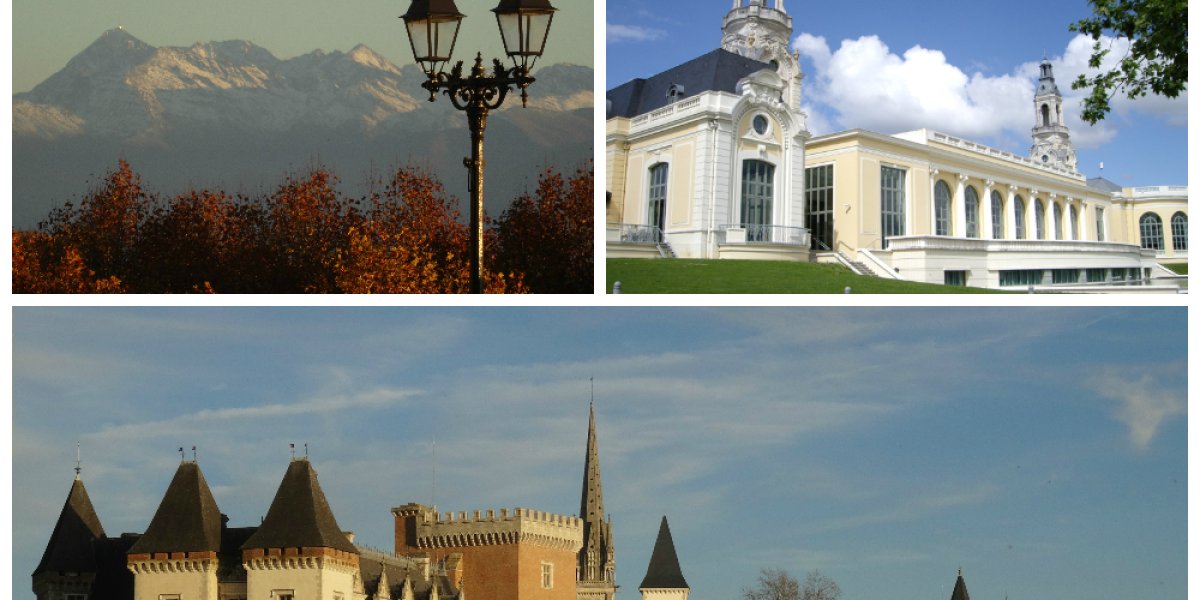
Step out of the funicular's upper station, turn right, and the entire Pyrenees range unfolds before you across the valley. Walk slowly west along the kilometre-long terrace — laid out by Napoleon, dressed in palms and balustrades by 19th-century English aristocrats wintering here for the air. Pass Place Royale's bronze statue of Henri IV in armour and the cast-iron orientation table that names every peak from Pic du Midi de Bigorre to Pic d'Anie.
Tip: The orientation table opposite Place Royale is the only spot where every peak is labelled by name. The Pyrenees are visible roughly 100 days a year and are almost always clearest before 11:00 — by 15:00 atmospheric haze typically swallows the range completely, which is exactly why this view belongs at the start of your day.
Open in Google Maps →11:00
Landmark
Continue west along the boulevard for eight minutes — Pyrenees on your left, plane trees overhead — until the château's pale stone bulk closes the view. This Renaissance fortress birthed Henri IV in 1553, and his famous tortoise-shell cradle still sits in an upstairs room (we're staying outside today). Cross the moat bridge into the public inner courtyard, then loop around to the south terrace where the keep, the medieval ramparts, and the snow-capped Pic du Midi stack into a single frame.
Tip: The small public terrace below the donjon — reached through the wrought-iron gate beside the ticket office, free of charge — is where every postcard of Pau is shot, with the tower framing the mountain in one perfect vertical. Statue of Henri IV as a baby sits in the entrance courtyard; rub his foot for luck like the locals do.
Open in Google Maps →12:30
Food
Leave the château by Rue du Château, head east through the medieval old town's main pedestrian spine for four minutes, then turn north into Rue de la République. The 2019 rebuild of Pau's covered market is a glass-and-steel hall over a ring of producer counters — the city's everyday lunch room, faster than any restaurant and twice as good. Order at the counter, eat standing or grab a high stool.
Tip: Ignore the upstairs sit-down restaurants — overpriced for what they serve. On the ground floor go to 'Maison Montauzer' for a duck-confit sandwich (€8) and a slice of jambon noir de Bigorre, or 'Chez Manu' for a plate of Pyrenees charcuterie (€12). Pair with a glass of dry Jurançon white (€4). Closed Sunday afternoon and all day Monday.
Open in Google Maps →14:00
Neighborhood
Leave the market by its south door and descend the stone staircase off Rue René-Fournets — within thirty seconds you drop ten metres into the Hédas, a sunken medieval valley running below the modern city. This was the tanners' and weavers' quarter for six centuries, abandoned in the 20th, and reborn after a 2017 restoration that planted hanging gardens between the old bridges. Walk the length of the canal, climb up Rue des Cordeliers, then loop back through Rue du Hédas — the contrast between half-timbered façades and brutalist concrete planters is the single most photogenic stretch in Pau.
Tip: Stand on the north side of the Pont du Hédas and shoot south down the canal — late-afternoon light hits the half-timbered facades around 16:30 in summer, the only hour they glow gold. The blunt-edged graffiti on some walls is a commissioned street-art project, not vandalism — read the small bronze plaques to identify the artists.
Open in Google Maps →19:30
Food
Climb out of the Hédas via Rue des Cordeliers, two minutes north to Rue Gachet — a quiet single-block street one parallel back from Place Royale. Le Berry has been Pau's working brasserie since 1934: red banquettes, white tablecloths, hand-written daily menu, and a clientele split evenly between rugby fans, courthouse lawyers and locals on their fortieth visit. This is what every Béarnais grandmother thinks restaurants should taste like.
Tip: Reserve by phone at least a day ahead (+33 5 59 27 42 95) — walk-ins rarely get a table after 19:45. Order the confit de canard maison (€19) or, if it's on the slate, the garbure béarnaise (€12, a cabbage-and-duck soup eaten with the spoon-standing-up rule); finish with a glass of Jurançon moelleux. Pitfall warning: do not eat at the terraced brasseries directly on Place Royale facing the Pyrenees — they bait day-trippers with English menus and panoramic seating, then charge 40% more for reheated dishes. Pau's real food sits exactly one block back from that view.
Open in Google Maps →
Trip builder
Plan this trip around Pau
Turn this guide into a bookable rail itinerary with FlipEarth.
Keep exploring
Related cities
More in the same country

FAQ
Frequently asked questions
How many days do you need in Pau?
Most travelers enjoy Pau in 1 days, with enough time for headline sights and a slower meal or museum stop.
What's the best time to visit Pau?
The easiest season for most travelers is Apr-Oct, especially if you want good weather and manageable crowds.
What's the daily budget for Pau?
A practical starting point is about €120 per person per day before hotels, then adjust based on museums, dining, and transport.
What are the must-see attractions in Pau?
A good first shortlist for Pau includes Funiculaire de Pau, Boulevard des Pyrénées, Chateau de Pau.