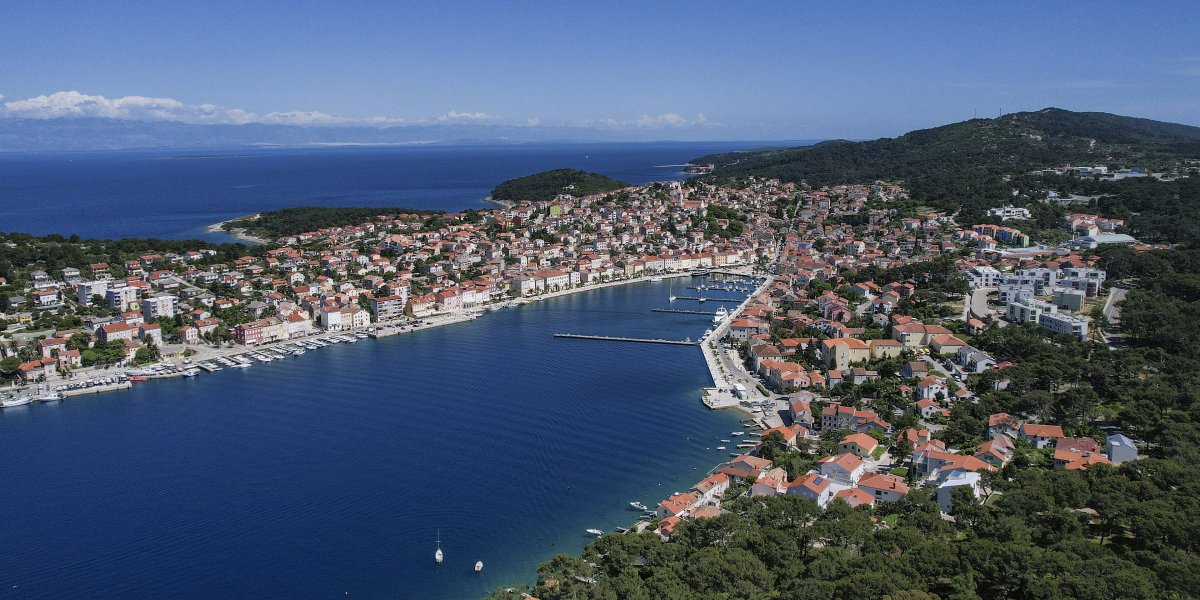
City Guide
Mali Losinj
Croatia · Best time to visit: May-Sep.
Day-by-day plan
Choose your pace
Trip length
09:00
Landmark
Begin at the head of the harbor where the pastel facades of the Captains' Promenade curve around the inlet — at 9 a.m. the eastern sun hits the western row of buildings full-on, turning the apricot and ochre walls into a postcard while the cafés are still setting up chairs. Walk the full length, from the fish market end to the marina end, reading the bronze plaques set into the stone honoring the 19th-century sea captains who made this tiny island one of the largest merchant fleets in the Adriatic. The water is glass-flat before the first catamaran pulls in around 10.
Tip: Stand on the small stone jetty in front of the green harbormaster's office for the iconic shot — you get the whole curve of pastel houses framed by masts, and the morning light is behind you so colors pop. By 11 a.m. moored sailboats block this exact angle.
Open in Google Maps →10:15
Park
From the marina end of the Riva, head two blocks inland up Bukovica street — a five-minute climb past stone houses with bougainvillea spilling over the walls. This walled garden holds more than 250 of the aromatic herbs that earned Losinj its 19th-century reputation as an Imperial health resort: immortelle, sage, myrtle, rosemary, lemon balm. Mid-morning is when the heat starts releasing the oils, so the air itself becomes the exhibit — rub the leaves they invite you to touch and your fingers will smell like the island for the rest of the day. The small shop at the exit blends the same plants into oils and soaps that are genuinely made on premises, not imported and relabeled.
Tip: Ask the staff for a 'mirisni štapić' — the test paper strips they keep behind the counter — and dab the immortelle oil onto one to take with you. It's the scent that defines the island and a single drop lasts for days; the full bottles in the gift shop run €25+, but the paper sample is free with a polite smile.
Open in Google Maps →12:15
Food
Walk back down to the harbor and along the eastern quay — a brisk eight minutes downhill, with views of the masts dropping into frame as you descend. This is the locals' fast-casual stop on the Riva: open-fronted, breeze through the bar, paper-wrapped food meant to be eaten on the seawall opposite. Order the tuna burger (€9) made with fresh Adriatic loin seared rare, or the fried calamari roll (€8) with house tartar. Skip the seated table service inside; tell them 'za van' (to go), grab a Karlovačko beer, and sit on the stone bollards across the road watching the ferries unload.
Tip: Order at the bar counter inside, not from the chalkboard table out front — the table is for sit-down service which adds 15 minutes. The to-go window typically has food in your hand in under 8 minutes, which is the point on a tight day.
Open in Google Maps →13:30
Neighborhood
From the harbor head southwest on the Cikat promenade — a flat 20-minute walk through the pine forest along the water, passing the wooden boatyard where they still hand-build traditional pasaras. Cikat is the green soul of the island: a horseshoe bay rimmed with 19th-century Habsburg-era villas tucked into Aleppo pines, where the Imperial family used to send patients to breathe the resinous air. Follow the shoreline path counter-clockwise around the bay, past the tiny Chapel of the Annunciation perched on the rocks, and continue out to the cape — the water turns turquoise in the afternoon sun and the pine canopy keeps the path shaded even at peak heat.
Tip: The Chapel of the Annunciation (Kapela Navještenja) on the small headland is the photograph everyone is after — frame it from the south side rock platform so the chapel sits against open sea, not against the hotels behind it. Around 14:30 the sun is high enough to light both the white facade and the turquoise water below.
Open in Google Maps →16:00
Landmark
Cut back across the Cikat peninsula to pick up the Lungomare — a 4-km paved-and-pebble path that hugs the eastern coast all the way to Veli Losinj. This is the walk that defines the island: shaded by pines, scented by immortelle, the sea visible on your right the entire way, with stone benches every 200 meters carved with the names of the families who donated them. You'll pass coves where locals swim off flat rocks, the small bays of Suncana Uvala and Krivica, and the path ends as you round the headland into Veli Losinj — a smaller, more saturated version of Mali Losinj, all rust-red and mustard-yellow houses cascading down to a horseshoe harbor. Walk the curve of the quay, then climb the steps behind the harbor to the Venetian-era Uskok Tower for the late-afternoon sun on the bay below.
Tip: Time the arrival at the Uskok Tower (Kula) for around 18:30 — the sun drops behind the western hill and lights the harbor from the side, turning every painted facade saturated for about 25 minutes. Photograph the harbor from the tower terrace, then come back down for dinner.
Open in Google Maps →19:30
Food
Five minutes down from the tower, right on the Veli Losinj waterfront with tables literally one meter from the moored boats. This is where the island's restaurant talent quietly congregates — small kitchen, daily-changing chalkboard, everything from the morning's catch off the boats you can see from your seat. Order the whole grilled dentex (zubatac, €40-55 per kilo, sold whole — they'll fillet it tableside) and start with the octopus carpaccio (€16) drizzled with island olive oil and the same immortelle you smelled this morning. Pair with a glass of crisp Malvazija Istarska (€6) — the local Istrian white that cuts through the olive oil perfectly.
Tip: Reserve before you leave Mali Losinj in the morning (+385 51 236 008) — Mol has maybe 14 outdoor tables and no walk-ins after 19:00 in summer. Critical pitfall to avoid on the way back: do NOT take the harbor 'tourist taxi boats' offering a 'fast return to Mali Losinj' — they charge €40+ per person; the public bus from the stop above the harbor runs every 30 minutes until 22:30 for €2.50 and takes 12 minutes.
Open in Google Maps →Jump to day
09:00
Landmark
Start at the southern curve of the harbor where the morning ferries unload — early light turns the pastel facades of the 19th-century sea-captain houses honey-gold, and fishermen are still selling the night's catch from the small stone tables along the quay. Walk slowly: every third building once belonged to a Lošinj captain who circled the globe under sail, and the brass plaques read like a maritime registry of the Adriatic. Stop where the harbor narrows — the salmon-pink palace at no. 13 is where you're heading next.
Tip: The fish auction at Mali Lošinj Ribarnica (inner harbor) runs 07:00–11:00; arrive before 09:00 and you'll catch the boats off-loading tuna and dentex straight to the local restaurants — a photo moment that vanishes once the heat hits.
Open in Google Maps →10:00
Museum
Five-minute walk back along the Riva to no. 13 — a salmon-pink palace retrofitted into one of Europe's quietest museums. Enter at 10:00 sharp and you'll have the dark, gallery-by-gallery descent almost entirely to yourself before noon cruise visitors arrive. The 2,000-year-old Greek bronze, pulled from these waters in 1999 after seventeen centuries on the seabed, is one of only seven such athletes still in existence — here he stands alone in a black-walled room with theatrical lighting, exactly as the curator intended.
Tip: Don't skip the upper-floor video of divers raising the statue from 45 m below — it's only 8 minutes long but genuinely moving, and most visitors march straight past it to the gift shop.
Open in Google Maps →12:00
Food
Three doors west along the Riva — Bora Bar sits with a handful of shaded outside tables facing the boats. This is where the local sailing crowd eats lunch, not the bus-tour cafes one block back: order the tuna tartare with capers and island olive oil (€16) and the grilled octopus with warm potato salad (€19), share a glass of Istrian Malvazija (€5). Budget €25–35 per person.
Tip: Arrive by 12:00 sharp or the shaded outside tables are gone — they don't take lunch reservations. If full, the bar stools facing the harbor have the same menu and never wait more than 5 minutes.
Open in Google Maps →14:00
Park
Cross the small bridge by the harbor's head and follow Priko street uphill for 12 minutes — you'll smell the garden before you see it. The Miomirisni Otok Lošinj displays 250 of the island's 1,200 aromatic and medicinal species; guides press myrtle, immortelle, and Dalmatian sage into your palm so you carry the island's scents on your hands for the rest of the day. Visit in early afternoon when the herbs are at peak essential-oil concentration in the heat.
Tip: Buy a single small bottle of the wild immortelle oil at the on-site shop — same producer that supplies the island spa hotels at three times the price: €15 here, €45 in any mainland pharmacy.
Open in Google Maps →15:30
Neighborhood
Walk 15 minutes downhill from the garden, the path opening through pines until the sea appears below — you arrive at Čikat, the Habsburg-era spa retreat hidden inside a 250-hectare pine reserve. Follow the lungomare past the Belle Époque villas (each a former summer house of a Viennese banker), the small chapel of St. Martin, and onward to Sunčana Uvala (Sunny Bay) — afternoon sun filters green through the Aleppo pines, and the rocky inlets between are where locals swim. End at the southern point as the light goes amber over the open Adriatic.
Tip: The flat rock platforms at Veli Žal (about 1 km past the chapel of St. Martin) are the locals' swim spot — calmer water than the pebble at Sunčana Uvala, and no sun-bed fees. The water stays 22–24°C through September.
Open in Google Maps →19:30
Food
Eight-minute walk back along Čikat's promenade to a 1912 stone villa now operating as Boutique Hotel Alhambra — Restaurant Alfred Keller is on the seaward terrace, the island's most thoughtful kitchen. Order the local Lošinj scampi carpaccio with island olive oil (€32) and the lamb from neighbouring Cres (€38); the seven-course tasting menu is €95. Reserve at least three days ahead and arrive at 19:30 to catch the last colors over the bay.
Tip: Avoid the beach-club restaurants along Čikat's main promenade — their €25 prawn plates use Asian-import shrimp despite the Adriatic photos on the menu. The Čikat rule: if a restaurant has its own logo on the parasols and sun-beds, you're paying for marketing, not fish — walk one block back into the pines and prices halve.
Open in Google Maps →09:00
Museum
Take the local bus (line 12, 15 minutes) or drive 7 km east along the coastal road to Veli Lošinj — the Marine Education Centre sits on the harbor's southern arm in a converted stone fish-shed. The Blue World Institute has tracked the resident bottlenose dolphin population here since 1987; the interactive exhibits name each of the 200+ individual dolphins by their unique dorsal-fin pattern. Arrive at opening — the space is small and fills up once the morning tour boats return at 11:00.
Tip: Ask the desk about the "Adopt a Dolphin" volunteer briefing — usually 16:00 in summer — where researchers share that day's at-sea sightings; it's free with admission and worth circling back for if you have time before dinner.
Open in Google Maps →10:45
Landmark
Five-minute walk north along the harbor — the squat round Venetian tower rises behind the parish church, the lower stones still showing the 1455 build. Constructed against Uskok pirate raids and now housing a four-floor maritime museum, climb the narrow internal stairs to the rooftop terrace for an unbroken 360° view over the painted village, Rovenska's stone breakwater, and out to the Kvarner archipelago. Mid-morning light hits the eastern facade — photograph it from the harbor below before you climb in.
Tip: The third-floor model of the 1860s Lošinj barque "Splendido" is the museum's best object — built by the captain's own descendants from the original shipyard plans, and most visitors walk straight past it on the way to the roof.
Open in Google Maps →12:30
Food
Two-minute walk back down to the harbor — Bocca Vera sits one row behind the waterfront with a vine-shaded terrace, the Veli Lošinj harbor's most consistent kitchen. Skip the pizza everyone orders and ask for the šurlice with shrimp and tomato (€18, the local handmade pasta found only on Kvarner islands) and the grilled adriatic squid (€16); the house Žlahtina is €4.50 a glass. Budget €20–28.
Tip: Šurlice are wrapped by hand around a thin metal rod — ask to see the bowl of fresh pasta near the kitchen entrance before ordering; if it's empty, the pasta is yesterday's and you should switch to the gnocchi instead.
Open in Google Maps →14:15
Religious
One-minute walk uphill to the parish church beside the Tower — push open the heavy wooden door into the cool stone interior. Above the right-side altar hangs the famous 16th-century icon "Madonna Angiolina," brought from Crete by a Lošinj sea captain in 1539 and credited by islanders with halting the 1623 plague. Mid-afternoon is when the sun falls through the western rose window and the gold of the icon's halo catches fire — sit ten minutes and watch the light shift across the painted ceiling.
Tip: Drop €2 in the box and light a candle on the right-hand stand — this is the only church on the island where islanders still tie a personal ribbon to the rail beneath the icon, the colors marking life events (white for a wedding, red for a child born, blue for a sailor home safe). Look closely at the rail before you leave.
Open in Google Maps →15:15
Neighborhood
From the church, take the seafront path south for 12 minutes around the headland — Rovenska opens below you as a horseshoe of ochre and pink fishermen's houses around a perfect stone harbor. Walk the curve of the breakwater commissioned by Emperor Franz Joseph in 1856; the lighthouse-keeper's house at the tip stands abandoned but photogenic against open water. Locals dive from the inner wall and sun on the flat stones — bring a towel, the afternoon water is warmest and the bay is at its most painterly with turquoise water against the ochre walls.
Tip: The small stone steps at the southern inner corner of the breakwater (look for the blue mooring ring) drop straight into 3 m of clear water — the locals' favorite swim entry, and the only spot in Rovenska without sea urchins on the bottom.
Open in Google Maps →19:00
Food
Five-minute walk to the elbow of the breakwater — Sirius sits with its terrace built into the harbor wall, every table looking west across Rovenska Bay. Order the whole grilled dentex or local škarpina (€8 per 100 g — they bring the iced fish to the table; point at the one you want) and the homemade ravioli with goat cheese and wild sage (€19); half a litre of house Pošip is €12. Time arrival for 19:00 — the sun sets over the breakwater between 19:45 and 20:15 in summer, and the harbor turns gold.
Tip: Reserve a terrace table by phone the day before — they don't take walk-ins on summer weekends, and the inside dining room loses the entire sunset. The pitfall in Veli Lošinj: the line of cafes on the main village harbor charge €5 for bottled water and €8 for tourist-grade Aperol spritz with discount prosecco; in Rovenska, Sirius and the small kiosk at the breakwater base are the only honest options on the bay.
Open in Google Maps →
Trip builder
Plan this trip around Mali Losinj
Turn this guide into a bookable rail itinerary with FlipEarth.
Keep exploring
Related cities
More in the same country
FAQ
Frequently asked questions
How many days do you need in Mali Losinj?
Most travelers enjoy Mali Losinj in 1 days, with enough time for headline sights and a slower meal or museum stop.
What's the best time to visit Mali Losinj?
The easiest season for most travelers is May-Sep, especially if you want good weather and manageable crowds.
What's the daily budget for Mali Losinj?
A practical starting point is about €120 per person per day before hotels, then adjust based on museums, dining, and transport.
What are the must-see attractions in Mali Losinj?
A good first shortlist for Mali Losinj includes Riva Losinjskih Kapetana, Lungomare Coastal Path to Veli Losinj.