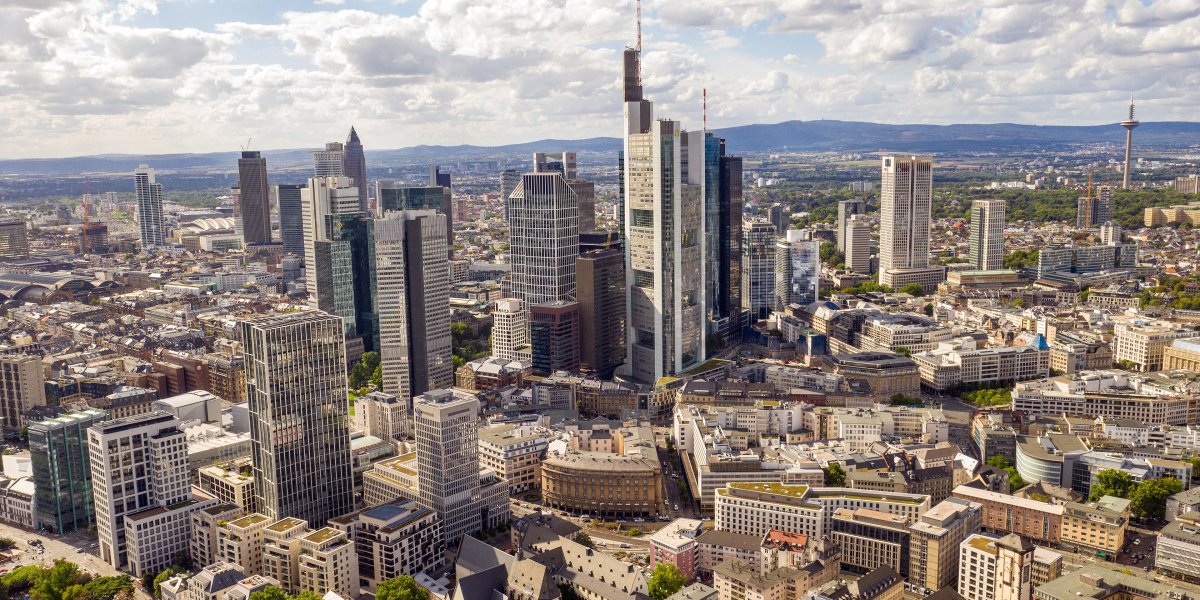
City Guide
Frankfurt
Germany · Best time to visit: May-Sep.
Day-by-day plan
Choose your pace
Trip length
09:00
Landmark
Exit Alte Oper U-Bahn station directly onto Opernplatz — the neoclassical sandstone facade rises dramatically with its Pegasus-drawn chariot catching the east-facing morning sun. Destroyed in 1944 and rebuilt only after an 1980s civic campaign, it is now one of Europe's most distinguished concert halls. Walk up the steps, read the inscription 'Dem Wahren, Schönen, Guten' (To the True, Beautiful, and Good), then circle around the back for your first glimpse of the financial skyline through Taunusanlage park.
Tip: Stand at the fountain in the square's center at 9:15 — this is the 90-minute window when the rising sun strikes the Pegasus chariot head-on before clearing the roof and throwing the sculpture into silhouette after 11:00. The square is also empty before 10, so you get the full facade without crossing tour groups in the frame.
Open in Google Maps →10:00
Landmark
Cross Opernplatz south onto Neue Mainzer Straße — in 7 minutes the glass column of Main Tower rises on your left, Germany's only publicly accessible skyscraper observation deck. A 55-second high-speed elevator delivers you to an open-air rooftop at 200 meters where the Main curves south, the Altstadt becomes a terracotta island far below, and the Taunus ridgeline cuts the northern horizon. This is the view every travel feature uses to describe Frankfurt, and it is as good as advertised.
Tip: Walk immediately to the southeast corner of the roof terrace — this is the only angle that frames the Altstadt, the Main river, and Eiserner Steg together; every other corner shows only concrete and highways. Queues are under 10 minutes before 11:00; avoid after 16:00 when happy-hour crowds heading to the 53rd-floor bar stack the line past 40 minutes.
Open in Google Maps →12:00
Food
Head east along Junghofstraße for 10 minutes, passing the old European Central Bank building and Hauptwache's 18th-century guardhouse, to the modest entrance of Kleinmarkthalle on Hasengasse. Inside: 150 stalls of cheesemongers, butchers, wine bars, and standing lunch counters where Frankfurt's office workers and grandmothers actually eat. Order Grüne Soße with boiled potatoes and egg (€9.50) at Schreiber Heyne, Handkäs mit Musik (sour-milk cheese with raw onion and vinegar, €6.50), and a Bratwurst from the butcher's counter (€4.50) — then stand at one of the tall tables in the central aisle where the crowd is densest and the food turnover is fastest.
Tip: Order Grüne Soße here rather than at any Römerberg restaurant — the tourist version there costs €22 and uses dried herb mix, while Schreiber's €9.50 plate uses the seven fresh herbs (parsley, chives, chervil, sorrel, cress, borage, burnet) the recipe actually demands. Frankfurters can tell in one bite. Arrive by 12:15; by 12:45 the bank-office rush turns Schreiber's counter into a three-deep queue.
Open in Google Maps →13:30
Landmark
Exit Kleinmarkthalle south onto Berliner Straße and walk 5 minutes past Paulskirche — where Germany's first democratic parliament sat in 1848 — to where Römerberg square opens in front of you. The medieval heart of Frankfurt: the Römer (three stepped gables of the city hall), the Ostzeile (six reconstructed half-timbered houses across the square), the Gothic spire of Kaiserdom where Holy Roman Emperors were crowned from 1562 to 1792, and the freshly rebuilt Neue Altstadt alleyways between them. Walk the full perimeter, then cut through Krönungsweg (the Coronation Route) to Hühnermarkt courtyard and the gingerbread facade of Goldene Waage.
Tip: Shoot from the Gerechtigkeitsbrunnen (Fountain of Justice) in the square's center looking east toward the Ostzeile — it is the only angle framing all six half-timbered gables with the Kaiserdom spire rising behind them. The Ostzeile faces west, so direct afternoon sun from 14:00 to 16:30 lights the ochre facades at their warmest. Climb the Kaiserdom tower (328 steps, €3) for the single best rooftop view of the Altstadt outside Main Tower itself.
Open in Google Maps →16:00
Neighborhood
Leave Römerberg out the south side, cross Mainkai, and directly ahead is Eiserner Steg — a pedestrian iron truss bridge from 1869 spanning the Main in a single elegant arc. Halfway across, turn around: the skyline rises like a second Manhattan, love-locks crusting the railings, river barges sliding below. On the south bank, walk west along Museumsufer — a tree-lined promenade passing twelve museums in two kilometers (Städel, Liebieghaus, Deutsches Filmmuseum) — to frame the postcard skyline angle from Holbeinsteg.
Tip: Walk past Eiserner Steg to Holbeinsteg (the next bridge west, white suspension cables) — it is quieter, the cables make a cleaner foreground for the skyline reflection, and the composition puts the towers dead center. Golden hour on the north-facing skyline runs 17:00–18:30 in summer (16:00–17:30 in shoulder season); Eiserner Steg itself becomes a selfie gridlock after 17:30.
Open in Google Maps →19:00
Food
Return east along the south-bank promenade, cross into Sachsenhausen at Dreikönigsstraße, and in 10 minutes you reach Schweizer Straße 71 — a two-story half-timbered building with a hand-painted sign that has barely changed since 1931. Frankfurt's oldest continuously operating Apfelwein tavern, still pressing its own cider from Hessian orchards, with wooden benches on cobbled floors, Bembel (cobalt-gray stoneware cider jugs) landing on every table, and strangers sharing communal seats. Order Frankfurter Schnitzel mit Grüner Soße (€18.90), Rippchen mit Kraut (brined pork chop with sauerkraut and mash, €15.80), and a Bembel of Haus-Apfelwein (0.5L, €7.80) — or ask for it Sauergespritzt (cut with sparkling water, €4.20 per glass), which is how Frankfurters actually drink it.
Tip: Avoid the Apfelwein taverns on Kleine Rittergasse and Große Rittergasse in the so-called 'Apfelweinviertel' tourist core — menus in five languages, hosts flagging you from doorways, prices 40% above Wagner's, and Apfelwein served in plastic cups (always a tourist-trap signal). Adolf Wagner and Zum Gemalten Haus (Schweizer Straße 67, two doors down) are where actual Frankfurters drink — neither ever solicits on the sidewalk. Walk in by 19:00 sharp; after 19:45 the wait for a communal bench stretches past 45 minutes, and no reservations are taken for small parties.
Open in Google Maps →Jump to day
09:00
Landmark
Start in the heart of old Frankfurt, where the reconstructed half-timbered gables of the Römer rise around the Gerechtigkeitsbrunnen fountain. Come at nine, a full hour before the first tour buses arrive — you will have the square to yourself, and the morning sun hits the stepped eastern gables dead-on for the iconic postcard shot. Step into the inner courtyard of the Römer town hall and out again to feel the full medieval sweep before the crowds ruin the silence.
Tip: Stand with your back to the Alte Nikolaikirche and frame the three Samstagsberg houses — Zum Großen Engel, Zum Goldenen Greifen, Zum Schwarzen Stern — in a single shot. This is the only angle that catches all three without scaffolding or the clock tower in the way.
Open in Google Maps →10:15
Religious
Walk two minutes east out of Römerberg past the red stone facade of the Schirn Kunsthalle — the Kaiserdom's 95-meter red sandstone tower fills the sky in front of you. This is where ten Holy Roman Emperors were crowned between 1562 and 1792; beat the 11:00 tour groups and climb the 328 steps of the tower now, while your legs are fresh. The view over the Altstadt rooftops to the glass skyline is the single best panorama in central Frankfurt.
Tip: Tower tickets (€3, cash only) are sold at the small door on the tower's south side, not at the main cathedral entrance — easy to miss. The stairs are a narrow one-way spiral; going before 11:00 avoids the inevitable two-way traffic jam halfway up.
Open in Google Maps →12:00
Food
Wind back west through the cobblestone lanes of the Altstadt, five minutes to Weißadlergasse, where Klosterhof occupies a 14th-century monastery courtyard. Order the Frankfurter Grüne Soße — the city's signature cold herb sauce over boiled potatoes and hard-boiled eggs (€13.50) — with a glass of local Ebbelwei cider. The vaulted cellar and ivy-wrapped courtyard are the antidote to the tourist-trap cafés two streets over on the Römerberg.
Tip: Ask for the Grüne Soße mit Rindfleisch (with boiled beef, €18.50) — this is how Frankfurter factory workers ate it for 200 years. Budget €18-25 per person with one cider; no reservation needed before 12:15, but every outdoor courtyard seat is gone by 12:45 on weekends.
Open in Google Maps →13:30
Museum
A three-minute walk west along Weißadlergasse into Großer Hirschgraben — the pale yellow four-story townhouse where Johann Wolfgang von Goethe was born in 1749. Arrive right after lunch, when the morning German school groups have cleared; the restored Biedermeier rooms, the library where the 24-year-old Goethe wrote The Sorrows of Young Werther, and the astronomical clock on the second floor feel like stepping back 250 years. Skip the audioguide and walk top-down: the attic puppet theater — Goethe's childhood stage — is the most surprising room in the house.
Tip: Don't leave without seeing Tischbein's Goethe in the Roman Campagna in the adjoining Goethe Museum (same ticket) — this is one of the most reproduced paintings in German history, and the original hangs quietly in room 6. Closed Mondays in winter; open daily April-September.
Open in Google Maps →16:00
Landmark
Exit the Goethehaus and walk ten minutes west along Rossmarkt into the glass canyon of Neue Mainzer Straße — you arrive at the foot of the 200-meter Main Tower, the only skyscraper in Germany with a public observation deck. Go up at four, not sunset: you beat the evening queue, catch the golden hour beginning on the Kaiserdom and the Main river below, and avoid the chilling wind that whips the open roof after 18:00. This is the view that explains why locals call Frankfurt 'Mainhattan' without irony.
Tip: The elevator stops at floor 54 (indoor) but the real shot is one concrete staircase up to the outdoor deck — face south-east to stack the Kaiserdom, Römerberg, and the Main river inside a frame of skyscrapers. Security is airport-style; large bags get turned away, so leave them at the hotel.
Open in Google Maps →19:00
Food
Walk fifteen minutes back east along Berliner Straße to Saalgasse, a narrow lane tucked behind the cathedral. Zum Storch am Dom has been a Wirtshaus since 1704 — low wooden beams, pewter Bembel pitchers on the shelves, the smell of slow-roasted pork in the stairwell. Order the Schweinshaxe (crackling pork knuckle with sauerkraut and bread dumpling, €23.50) and a Binding Pils, then finish with warm Apfelstrudel; this is the Altstadt dinner that blogs miss because they all crowd into the tavern streets across the river.
Tip: Reserve ahead and ask for 'draußen am Dom' — the small terrace facing the cathedral. On warm evenings the Kaiserdom's sandstone glows pink around 20:30 as you eat. Pitfall warning: the 'Altstadt' restaurants on Römerberg itself charge 40% more for the same dishes and serve factory-frozen Schnitzel — always walk at least one street away from the square before sitting down.
Open in Google Maps →10:00
Museum
Cross the Main to the south bank, where twelve museums line the Schaumainkai — the Museumsufer, unique in Europe. The Städel opens at ten sharp; be first through the door and head straight down to the Gegenwartskunst underground gallery, a daylit white cube that fills by noon. Its upper floors hold Vermeer's The Geographer, Botticelli's Idealized Portrait of a Lady, and the world's best Max Beckmann collection — three hours would not be enough; two hours, moving quickly, gets you the essentials.
Tip: Download the free Städel app before arriving — wall text is deliberately minimal and the app unlocks audio for the highlights. Combined ticket with the Liebieghaus next door is €22 instead of €28 bought separately; ask for the Kombiticket at the counter. Closed Mondays.
Open in Google Maps →12:30
Food
Exit the Städel through the garden door — Holbein's sits in the museum's own glass-and-concrete pavilion, thirty seconds away. Locals come here for the Mittagstisch, a changing daily menu of modern German cooking: typically Wiener Schnitzel with warm potato salad (€23) or a seasonal herb risotto with Rheingau white wine (€19). The Michael Bedner pavilion over a sunken courtyard means you are eating inside a piece of architecture that belongs in its own gallery.
Tip: Order a glass of the house Riesling from the Rheingau, 20 minutes north of Frankfurt — two euros cheaper here than the same bottle across the river. Skip dessert: we are heading to Apfelwein tonight and the Apfelkuchen at Adolf Wagner is the one worth saving room for.
Open in Google Maps →14:15
Museum
Two minutes west along Schaumainkai, past the Städel garden gate — the Liebieghaus is a neo-Renaissance villa holding 5,000 years of sculpture, from Egyptian scribes through Riemenschneider altarpieces to Baroque marble. It is often nearly empty even on weekends because the Städel next door absorbs all the attention; that silence is its gift — you can stand alone with a 14th-century wooden Madonna for ten minutes without anyone else in the room. The walled garden courtyard behind the villa, with ancient Roman busts set among clipped hedges, is the best-kept secret of the Museumsufer.
Tip: The garden is accessible for free from the riverside gate even without a museum ticket — worth ten minutes on its own for the Athena Lemnia bronze cast under the plane tree. Don't skip the Egyptian rooms on the ground floor; the painted wooden servants from Middle Kingdom tombs are the quiet masterpiece of the house.
Open in Google Maps →15:45
Landmark
Walk east along the Museumsufer promenade — ten minutes of plane trees, book vendors, and river breeze, with the skyline growing on your left. The Eiserner Steg, Frankfurt's 1869 iron pedestrian bridge, carries the best head-on view of the Altstadt: the Kaiserdom tower, the Römer gables, and five glass skyscrapers all stacked inside a single frame. Four o'clock light puts the sun behind you for a perfectly lit panorama — the shot every Frankfurt guidebook uses on its cover.
Tip: Cross to the north bank, then stop in the middle of the bridge on your way back — the reverse view of Sachsenhausen with the Main Tower rising behind is the one most visitors miss. Ignore the padlocks on the railing: they are not a Frankfurt tradition, the city cuts them off every six months, so yours is wasted.
Open in Google Maps →17:00
Neighborhood
Walk back south over the bridge and turn left into Alt-Sachsenhausen — five minutes and you are in a different century. The cobbled lanes of Paradiesgasse, Klappergasse, and Textorstraße are lined with half-timbered taverns still pressing their own apple wine, 17th-century artisan residences that somehow survived the 1944 bombing, and carved wooden signs naming each building's original trade. Wander without a map; every corner has a bronze plaque with the street's story.
Tip: The Frankensteiner Platz fountain is the neighborhood's living room — sit here for ten minutes and watch Sachsenhausen arrive home from work. Avoid the neon-lit 'Apfelwein-Express' tourist tram parked on Schweizer Platz; it is a full-price pastiche, and the real Ebbelwei taverns are three streets east on Schweizer Straße.
Open in Google Maps →19:00
Food
A five-minute walk south to Schweizer Straße 71 — Apfelwein Wagner, opened in 1931 and still run by the Wagner family. Long communal oak tables, grey-blue Bembel pitchers sweating beads of cider, regulars with their own named stoneware mugs hanging on the wall: at seven in the evening, locals still outnumber tourists. Order the Hausplatte (Frankfurter Rippchen, Kassler, bratwurst, sauerkraut, mashed potato, €18.50) and a 1.2-liter Bembel of apple wine for the table (€13).
Tip: The standard cider arrives sauergespritzt (cut with sparkling mineral water); ask for it pur to taste the full farm-fermented bite locals actually drink. Finish with the warm Apfelkuchen with vanilla sauce (€6.50) — house-baked, gone by 21:30. Pitfall warning: the taverns on Große Rittergasse with English menus outside and touts waving you in are tourist traps at twice the price — Wagner, Fichtekränzi, and Atschel are the three places every Frankfurter trusts.
Open in Google Maps →Jump to day
09:00
Landmark
Step out of U-Bahn Dom/Römer and the half-timbered Ostzeile catches soft east light before the day-trip buses arrive. Walk the square's perimeter for the Justice Fountain shot, then slip into the tiny Alte Nikolaikirche for a minute of quiet before it fills. By 10:30 the coaches roll in — you'll be glad you came first.
Tip: Stand at the northeast corner by the tram tracks for the canonical Ostzeile photograph — no tourists in the frame if you shoot before 09:30. The Justice Fountain's back is prettier than its front; walk around it.
Open in Google Maps →11:00
Religious
Cross the square diagonally east — a 3-minute walk past the Schirn art hall brings you to the red-sandstone cathedral. Climb the 328-step tower first (the queue doubles after noon): the balcony gives you Frankfurt's only rooftop frame where medieval spires and glass skyscrapers share one view. Then come down into the nave where ten Holy Roman Emperors were crowned.
Tip: Buy the tower ticket from the vending machine inside the south entrance, not from the staffed desk — the desk line adds 20 minutes on busy days. The tower is closed Monday mornings for cleaning; the nave stays open.
Open in Google Maps →13:00
Food
Two minutes back toward the square — the restaurant tucks into a corner at Römerberg 27, next to St. Paul's Church. Order the Frankfurter Schnitzel with Grüne Soße (€18) — the seven-herb green sauce is the canonical city lunch, and every Frankfurt household argues over which recipe is truest. Rippchen mit Sauerkraut (€16) is the second-favorite; budget €20–28.
Tip: Skip the English menu — ask the waiter for 'das hessische Mittagsmenü' and you get the daily set the regulars order. Grüne Soße is only served April–October when the seven fresh herbs are in season.
Open in Google Maps →15:30
Landmark
After lunch drift west via Neue Kräme through Paulsplatz and Hauptwache — a 20-minute stroll with a coffee stop at Wacker's Kaffee on Kornmarkt, where Frankfurt bankers have bought beans since 1914. The 200-meter Main Tower is Germany's only skyscraper with a public deck, and 15:30 hits the sweet spot between midday haze and the 17:00 office-exit wave. On clear days the Taunus hills line the northern horizon and the Main bends silver through the whole city below.
Tip: Walk the deck anti-clockwise starting from the southeast — the ECB tower aligns with the Main's bend for the one photograph impossible from street level. Bring a light jacket even in July; 200m up it is always windy.
Open in Google Maps →19:30
Food
Walk back east along Kaiserstraße for 12 minutes — the dining room opens onto Braubachstraße 18 at the edge of the Altstadt. Their Handkäse-style croquettes (€14) and slow-braised ox cheek (€32) reinvent Hessian classics without ever feeling fussy, and the wine list leans on small Rheingau growers. Mains €26–36; reserve a day ahead by phone.
Tip: Avoid the overpriced 'medieval' taverns on Braubachstraße that print menus in six languages — locals never eat there and a Rippchen costs €24 versus €16 at the real places two blocks west. Margarete has no six-language menu, which is how you know.
Open in Google Maps →10:00
Museum
Walk south across Untermainbrücke and turn east along Schaumainkai — the Museumsufer promenade opens up with the skyline receding behind you as you approach. Be at Städel's door at 10:00 sharp (closed Mondays): the top-floor 19th-century galleries holding Tischbein's iconic Goethe in the Roman Campagna empty out by 10:30 when the school groups arrive. Save the Monet Breakfast and the underground contemporary wing for your second hour.
Tip: Book tickets online the night before — the 10:00 summer queue runs 45 minutes while pre-booked holders use a separate entrance. Head to the second floor first and work backwards; the basement contemporary hall is packed by noon.
Open in Google Maps →12:45
Food
Exit the museum's east wing and the restaurant's garden pavilion sits directly behind it — a one-minute walk across the courtyard. The €24 two-course lunch menu uses Hessian-countryside ingredients and the open kitchen lets you watch the Städel staff eat beside you. Signature is the seasonal Wiener Schnitzel vom Kalb (€28) with warm potato salad.
Tip: The lunch menu is half the price of dinner but runs out of the same kitchen — almost nobody books this. Request 'im Wintergarten' for the glass-walled section where light pours from the south-facing garden.
Open in Google Maps →14:30
Museum
Walk 300 meters west along Schaumainkai through the chestnut allée — the 1896 neo-gothic villa sits behind an iron gate, easy to miss from the street. Inside is one of Europe's great sculpture collections spanning 5,000 years, but the real treasure is the small Egyptian room on the ground floor, where afternoon light through the south windows hits the limestone reliefs at precisely the right angle. End in the garden café before the 18:00 close.
Tip: The audio guide is free with entry — pick it up at reception, never online. Sunday morning 10:00–11:30 draws about 40% of weekday foot traffic and the terrace opens onto the walled garden.
Open in Google Maps →17:00
Landmark
Walk east along Schaumainkai for 15 minutes, passing the Deutsches Filmmuseum and Museum Angewandte Kunst without stopping — the promenade is the point, not another interior. Stand at the pedestrian bridge's midpoint around 18:00 in summer: golden hour turns the ECB tower copper and the love-locks glint against dark water. The skyline photograph is better from the south bank looking back, so walk the span twice.
Tip: Walk fully onto the bridge, then walk off and double back — the best composition is shot from the south-bank riverbank 30 meters downstream, not from the bridge itself. Avoid the bike lane between 17:30 and 18:30 when commuters cross at speed.
Open in Google Maps →19:30
Food
Cross Eiserner Steg to the north bank and turn west along Mainkai — the restaurant terrace is five minutes downstream, just before Untermainbrücke. Riverside tables face the Sachsenhausen skyline you just photographed; order the lamb rump with saffron risotto (€34) and stay on the deck after sunset. Mains €26–38.
Tip: The ice-cream vendors on the Eiserner Steg approaches charge €6 per scoop, and the padlock hawkers sell aluminum that breaks within a week — locals walk 200m to Eis Christina in Sachsenhausen (€2.50 per scoop) and buy real brass padlocks from the hardware shop on Schweizer Straße.
Open in Google Maps →10:00
Religious
Cross to Sachsenhausen via the narrow Untermainbrücke — the slender neo-gothic spire of the Three Kings' rises as you approach the south bank. At 10:00 the morning service has ended and the nave is empty: late-gothic vaults and 19th-century stained glass catch filtered light off the river. Walk out along Schaumainkai's eastern stretch afterwards toward Affentorplatz — cobblestones, horse chestnuts, no tour groups this far east.
Tip: The small south portal opens 10:00–12:00 only on non-service days — the printed schedule is posted by the main entrance. The photogenic exterior view is actually from the opposite bank 50m east of Untermainbrücke, not from in front of the church.
Open in Google Maps →12:30
Food
Walk four blocks south through Affentorplatz to Schweizer Straße 71 — an 8-minute stroll on cobblestone, past wine houses waking for the lunch shift. Adolf Wagner has poured Apfelwein since 1931, and you want the Handkäse mit Musik (€8, marinated sour-milk cheese with onion and vinegar), the Grüne Soße with boiled eggs and potatoes (€13.50), and a ribbed-glass 'Geripptes' of cider. Arrive before 12:45 to skip the regulars' queue at the long communal tables.
Tip: If straight Apfelwein is too tart at noon ask for a 'Sauergespritzter' — cider mixed with mineral water, which is how half the regulars drink it. Pay in cash; the card reader has been 'broken' for years and nobody minds.
Open in Google Maps →14:30
Neighborhood
Walk back north from the tavern along Paradiesgasse for 5 minutes — the cobblestone alleys of old Sachsenhausen unfold around you. Klappergasse, Kleine Rittergasse, and Große Rittergasse form a three-block web of 17th-century Apfelwein houses, graffitied murals, and fountains that run with cider during the August festival. No map needed: follow the chimney smoke, and budget a 30-minute coffee stop at Café Lokalbahnhof where older regulars gather at the window seats.
Tip: Look for the old 'Gebück' gate markers carved into doorframes on Paradiesgasse — they once marked the border between Sachsenhausen and Frankfurt when the two were separate towns, and every guidebook misses them.
Open in Google Maps →17:00
Landmark
Walk north for 8 minutes through Fahrgasse — the street runs straight to the Alte Brücke, Frankfurt's oldest river crossing and the one most visitors overlook in favor of Eiserner Steg. Stand at the third arch from the south around 18:30 in summer: low sun lights the Römer towers and the whole skyline behind them in amber, and the empty span gives you a clean foreground. By the time Eiserner Steg's crowd forms 400 meters downstream, you already have the photograph.
Tip: Shoot from the second step up at the south-bank landing, not from the bridge itself — the arch becomes a framing device that Eiserner Steg photos can never replicate.
Open in Google Maps →19:30
Food
Walk southwest from the bridge through Sachsenhausen's quiet residential streets for 8 minutes — the restaurant occupies a wood-paneled Gründerzeit villa at the north end of Schweizer Straße. Lohninger's Wiener Schnitzel vom Kalb (€38) is widely considered the best in Frankfurt, and their Tafelspitz with apple-horseradish (€34) closes the trip on a quiet, elevated note. Mains €30–44; the garden terrace in summer is worth the extra effort.
Tip: Tonight skip the tourist-heavy Apfelwein taverns at the north end of Schweizer Straße near the bridge — menus in English and prices 30–50% above the real places mean the regulars have moved on. Lohninger is where Sachsenhausen natives take their parents; book a week ahead and request the 'Wintergarten' in cooler months.
Open in Google Maps →Jump to day
09:00
Landmark
Begin where Frankfurt began. Arrive before the day-trip coaches roll in — the half-timbered facades of the Ostzeile catch a soft golden light against an empty square, and the Gerechtigkeitsbrunnen fountain is yours alone for photos. Step inside the Römer's Kaisersaal if it is open; the portraits of Holy Roman Emperors hung in sequence are worth the small admission.
Tip: Stand with your back to the Alte Nikolaikirche and shoot southeast — you will catch all three Ostzeile gables and the Römer balcony in one frame, with no tram wires in the shot. By 11:00 a tour group will be parked precisely where you are standing.
Open in Google Maps →11:00
Religious
Cross the Kaiserstraße pedestrian zone and walk two minutes east — the red sandstone tower appears above the medieval rooftops. This is the Wahlkapelle where German emperors were elected for three centuries, and the coronation route from here back to the Römer is still marked in the pavement. Climb the 328 steps of the tower for a skyline view framed through Gothic stone — a composition you cannot get anywhere else in Germany.
Tip: The tower climb is cash only — carry coins. The spiral staircase is single-file and narrow, so go before noon when it is quietest; after 13:00 expect 20-minute waits at each passing point, and on rainy days the upper platform closes without warning.
Open in Google Maps →13:00
Food
Walk three minutes north through the alley at Hasengasse — Frankfurt's indoor market hides behind an unremarkable brick facade. Sixty stalls sell everything from Hessian Handkäse to fresh oysters; pick up a Frankfurter Rindswurst at Fleisch Schreiber (8 euros with mustard and brötchen) and a glass of Rheingau Riesling at the upstairs wine bar. This is where office workers and grandmothers eat side by side — there are no tourist menus and no English-language placards.
Tip: Climb to the upstairs wine-bar balcony overlooking the hall — most visitors never find the stairs, tucked behind the flower stall at the east side. Skip the first sausage counter at the entrance; Fleisch Schreiber in the far corner and Metzgerei Seckbach across from it are where the queues form around 12:30.
Open in Google Maps →16:00
Landmark
Walk 12 minutes west along Große Eschenheimer Straße — the skyscrapers close in overhead, a streetscape no other German city has. The Main Tower's 200-meter observation deck is the only public skyscraper viewpoint in Frankfurt. Time your arrival for the late-afternoon sun: the low light turns the ECB tower bronze, and in the hour before sunset you can watch the office windows switch on one tower at a time.
Tip: The street-level queue often looks long but moves fast — two high-speed elevators run in parallel. Stand at the northeast corner of the open-air deck for the classic 'Mainhattan' shot with the river curving south through the towers; the southwest corner catches the Taunus hills on clear days.
Open in Google Maps →19:30
Food
Walk ten minutes east back toward the Altstadt — you pass the Paulskirche along the way. Hidden on tiny Sandgasse, Zum Standesämtchen serves Frankfurt's definitive Grüne Soße (seven-herb green sauce with boiled egg and potatoes, 14 euros) and Rippchen mit Kraut (smoked pork chop with sauerkraut, 16 euros). The dining room is wood-paneled, the servers are regulars-for-life, and the wine list leans into local Rheingau — trust the house recommendation.
Tip: PITFALL WARNING — the restaurants directly on Römerberg square carry English 'tourist menu' boards and charge 30% more for half the quality. Stay one block back on Sandgasse, Weißadlergasse or Braubachstraße and you will eat twice as well for less. Reserve Zum Standesämtchen by phone a day ahead; they seat forty and are full by 20:00 every night of the week.
Open in Google Maps →10:00
Museum
Arrive at the 10:00 opening — the main hall stays empty for the first 45 minutes while tour groups are still in the Altstadt. The Städel holds 700 years of European painting, from Cranach's Venus to Vermeer's Geographer to Kirchner's screaming Berlin streets. Head straight to the modern basement — Beckmann's self-portraits and Richter's candles are the soul of this museum, and they sit below most visitors' radar for the first hour.
Tip: Skip the 12-euro audio guide — the wall labels are excellent in English. Download the free Städel Digital Collection app instead and zoom into Van Eyck's Lucca Madonna brushwork on your own phone. Thursday evenings the museum stays open until 21:00, a quiet window almost no tour schedule uses.
Open in Google Maps →13:30
Food
Walk out the Städel's south exit and you are already there — the restaurant shares a courtyard with the museum. Holbein's serves proper Frankfurt bistro cooking inside a glass pavilion that looks into the sculpture garden — saddle of lamb (26 euros) and the house Flammkuchen (14 euros) are the order, with a glass of Rheingau Riesling at 7 euros to finish. The atmosphere is museum-director's-lunch rather than tourist-café.
Tip: The terrace tables overlooking the garden are not available online — they are held for walk-ins only. Arrive at 13:15, after the 12:30 office rush but before the late lunchers, and you will walk straight to the best table outside.
Open in Google Maps →15:30
Museum
Walk three minutes west along the Schaumainkai — the turreted villa set back among the palms is the Liebieghaus. Frankfurt's sculpture collection lives inside a 19th-century industrialist's mansion, and 5,000 years of statues are arranged across wood-paneled rooms that still feel lived-in rather than curated. Egyptian cat goddesses stand beside Medieval Madonnas; the Renaissance galleries upstairs have the city's quietest view of the Main.
Tip: The second-floor balcony overlooking the river is framed by the villa's garden palms — it is the sculpture photographer's secret and almost no one climbs the narrow stair to reach it. A combined ticket with the Städel costs 24 euros (saving 2 euros) if you buy it at the first museum.
Open in Google Maps →18:00
Landmark
Walk ten minutes east along the south bank — the Mainufer is a grass promenade busy with joggers, skaters and families rather than tourists. Cross the Eiserner Steg, the pedestrian iron bridge strung with thousands of padlocks, and the full Frankfurt skyline fills the frame. Linger at the middle of the bridge around 18:30; that is when the office lights begin flickering on across the ECB and Commerzbank towers, tower by tower.
Tip: The west-facing side of the bridge gives the skyline in golden light; the east-facing side gives you the Altstadt's red roofs and Dom spire. Shoot both — you have about five minutes between them before the sun drops behind the Main Tower.
Open in Google Maps →20:00
Food
Walk seven minutes south into Sachsenhausen — the cobbled Schweizer Straße leads you past cider signs on every corner. Apfelwein Wagner is the oldest and most loved of them: a Bembel (grey-and-blue earthenware jug) of cider is 9 euros for four glasses and comes with Handkäs mit Musik (cheese cured in onion-vinegar, 7 euros) and Schnitzel mit Grüne Soße (16 euros). Sit at a long wooden bench with strangers — sharing the Bembel with the next table over is the point.
Tip: PITFALL WARNING — nearly every lane in Sachsenhausen has a 'Traditional Apfelwein House' sign; many are tourist traps with Disney-style interiors and 30-euro schnitzels. Stick to the original four within 200 meters of each other — Wagner, Dauth-Schneider, Atschel and Zum Gemalten Haus. If the straight cider tastes too sharp, order it 'sauer gespritzt' (half sparkling water) — that is how locals drink it.
Open in Google Maps →09:00
Park
Arrive at the 09:00 opening — the Victorian Palmenhaus is empty and silent, with only the dripping of the morning misting system. Frankfurt's botanical garden has two great hothouses: the tropical Palmenhaus with its century-old Chilean wine palm, and the Tropicarium with cloud forest, mangrove and desert rooms linked underground. Follow the pond loop clockwise for the camellia garden, which is at its best in April and May.
Tip: The Rose Garden at the northeast corner is missed by most visitors because the printed map does not emphasize it — in June it is the best photo spot in Frankfurt. Bring a thermos of coffee; the benches behind the pond fountain are the morning regulars' reading spot.
Open in Google Maps →12:30
Food
Walk 15 minutes east along Bockenheimer Landstraße — you pass the Gründerzeit villas where Frankfurt's old banking families still live. Café Laumer has been the Westend's coffeehouse since 1919 — Adorno and Horkheimer wrote the Dialectic of Enlightenment at these tables. Order the open sandwich with smoked salmon (12 euros) and a slice of Frankfurter Kranz (6 euros, the city's signature buttercream-and-brittle cake). The front garden shaded by chestnut trees is where you want to sit.
Tip: The eight terrace tables are first-come, no reservations — arrive at 12:15 (before the Westend lunch crowd) to secure one. On the way out, buy a box of their homemade Florentiner at the cake counter; they travel well and are the classiest edible souvenir in Frankfurt.
Open in Google Maps →14:30
Museum
Walk 12 minutes southeast — you will pass the Alte Oper on the way, which you return to afterward. Goethe's birthplace has been rebuilt to the last detail (the 1755 original was lost in 1944) and furnished with objects the Goethe family actually owned. The puppet theatre in his childhood room, the astronomy instruments in his father's study, and the writing desk where the first draft of Werther was finished — each room is a working reconstruction of a 1750 Frankfurt patrician household.
Tip: The combined ticket with the German Romantic Museum next door is 10 euros versus 7 for Goethe House alone — the Romantic wing opened in 2021, is brilliantly designed, and is always half-empty. The free English audio guide is at the ticket desk but is not offered unless you ask for it.
Open in Google Maps →17:00
Landmark
Walk five minutes north to the Opernplatz — the Alte Oper rises at the top of the square. The 1880 opera house was bombed to a shell and reopened in 1981 as Frankfurt's concert hall; even without a performance, the square's fountain, lime trees and café terraces are the city's best loafing spot. Walk east down the Große Bockenheimer Straße — locals call it the Freßgass (Glutton's Alley) — a 400-meter parade of cheese shops, wine bars and chocolate counters.
Tip: Bitter & Zart on the Freßgass is where Frankfurters buy chocolate — their single-origin tablets come in illustrated wrappers and are the city's best edible souvenir. Time your Freßgass walk for a Wednesday lunchtime if you can — the weekly Apfelwein-and-sausage market sets up on Opernplatz.
Open in Google Maps →19:30
Food
Walk eight minutes west into the quiet Westend — Liebigstraße is a leafy residential street and Erno's is the corner with the tiny red awning. Forty seats, white tablecloths, and a French kitchen running since 1971 — the turbot with beurre blanc (48 euros) and the pigeon with foie gras (42 euros) are the institution of Frankfurt fine dining. The owner knows every regular by name and the card changes every week.
Tip: PITFALL WARNING — the glossy steak-and-sushi places clustered on Kaiserhofstraße and Goethestraße charge 40 euros for chain-quality meals because Instagram lighting draws tourists there. Erno's holds one Michelin star, serves proper French classics, and costs roughly the same. Reserve three days ahead; telephoning works far better than the online form and lets you ask about the tasting menu.
Open in Google Maps →10:00
Neighborhood
Take the U4 three stops from Konstablerwache to Bornheim Mitte — eight minutes underground, then you surface into a village. Berger Straße runs for two kilometers of independent bookshops, natural-wine bars, secondhand record stores and a Saturday farmers' market on Bornheim-Mitte square. Walk north from the U-Bahn to the clock tower, pick up an Apfelwein-glazed pretzel at Zeit für Brot (3 euros), and drift from shop to shop without a map.
Tip: Wednesday and Saturday mornings the farmers' market is at full strength until 14:00 — the Hessian apple-farmer's stall at the Bornheim-Mitte corner sells twelve varieties of eating apples you have never heard of. Do not bring a car; parking on Berger Straße is a two-hour circus even on weekdays.
Open in Google Maps →12:30
Food
Walk five minutes south — Eckhaus sits on the corner where Bornheimer Landstraße meets Habsburgerallee. A neighborhood Wirtshaus since the 1970s, paneled in dark oak, with a chalkboard of the day's dishes — Schweinebraten with bread dumplings (16 euros), Zwiebelrostbraten (19 euros), and Handkäs mit Musik (7 euros). A small carafe of Rheingau house Riesling is 8 euros, and the regulars order the Tagesgericht lunch special at 12 euros.
Tip: Ask specifically for the Tagesgericht — it is printed on a small slip given only to regulars and is always the best-cooked, cheapest plate of the day (11-13 euros). Saturday lunch it sells out by 13:30, so do not dawdle through the market.
Open in Google Maps →14:30
Park
Walk ten minutes northwest — the streets narrow, then open onto a 14-hectare city park that almost no tourist finds. Families with dogs, retired men at boule, teenagers with bluetooth speakers, cherry trees in April and chestnuts in October. The low hilltop at the park's west edge is the sunset spot Frankfurters keep to themselves — the full skyline framed by trees, with the Main Tower blinking in the distance.
Tip: The kiosk at the south entrance pours cold Binding beer for 3 euros and grills a Fleischwurst sandwich for 4 — take both onto the lawn. Weekend afternoons an ice-cream cart parks by the fountain; their mango sorbet is worth the walk across the park.
Open in Google Maps →17:00
Food
Walk 12 minutes southwest along Lenaustraße — you are in Nordend now, a quieter pocket of stucco townhouses and indie shops. Café Größenwahn has been Frankfurt's bohemian living room since 1983 — poets, university professors and weekly book clubs all claim the same tables. Order a Milchkaffee served in a bowl (4.50 euros) and the fresh-baked Apfelkuchen (5 euros); the late-afternoon light through the bay window is the best reading light in the city.
Tip: Their bookshelves are a free informal lending library — leave one, take one. The back garden opens May through September and is the neighborhood's summer secret; walk through the kitchen corridor to find it, staff will wave you past.
Open in Google Maps →19:30
Food
Walk 15 minutes northeast along Berger Straße to where the buildings turn stone and the street slows — Zur Sonne has poured Apfelwein since 1768 in the same rooms. A Bembel of cider (9 euros for four glasses), Handkäs (7 euros), Rippchen with sauerkraut (15 euros), Grüne Soße with boiled egg (14 euros) — the menu has not needed to change in a century. The courtyard under the old chestnut tree opens in warm months; the oak-paneled Stube stays lit year-round.
Tip: PITFALL WARNING — the Instagram-trending 'cider bars' that have opened along Berger Straße in the last three years sell 14-euro 'artisan cider cocktails' to tourists who think they are drinking Apfelwein. Zur Sonne is the actual thing, and a shared Bembel for four people costs less than one of those cocktails. Sit in the garden if it is warm and share the jug — ordering cider by the single glass is considered the mark of a first-timer.
Open in Google Maps →
Trip builder
Plan this trip around Frankfurt
Turn this guide into a bookable rail itinerary with FlipEarth.
Keep exploring
Related cities
More in the same country
FAQ
Frequently asked questions
How many days do you need in Frankfurt?
Most travelers enjoy Frankfurt in 1 days, with enough time for headline sights and a slower meal or museum stop.
What's the best time to visit Frankfurt?
The easiest season for most travelers is May-Sep, especially if you want good weather and manageable crowds.
What's the daily budget for Frankfurt?
A practical starting point is about €85 per person per day before hotels, then adjust based on museums, dining, and transport.
What are the must-see attractions in Frankfurt?
A good first shortlist for Frankfurt includes Alte Oper & Opernplatz, Main Tower Observation Deck, Römerberg & Altstadt.