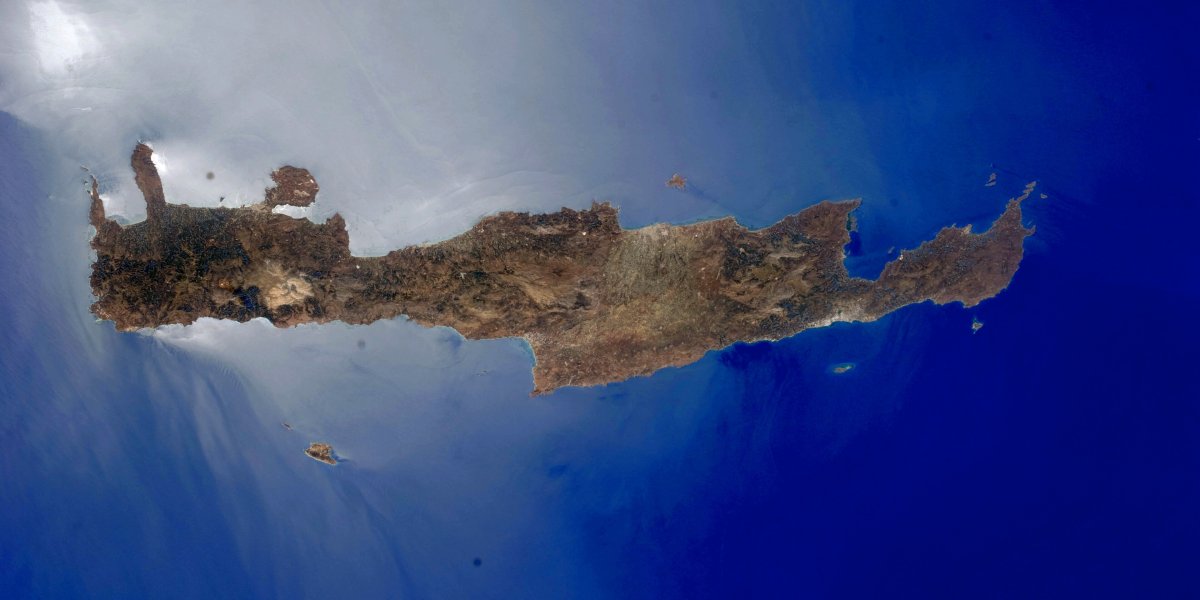
City Guide
Crete
Greece · Best time to visit: Apr-Oct.
Day-by-day plan
Choose your pace
Trip length
09:00
Landmark
From Chania's Old Town — a 15-minute taxi from the airport drops you at the south gate on Tzanakaki Street. The 1913 cross-shaped covered market, modeled after Marseille's fish hall, is where Cretans have traded mountain herbs, raw-milk graviera, and thyme honey for over a century. Walk the vaulted stone corridors as vendors set up — light cuts through the cruciform roof, and the building itself is more photogenic than most museums on this island.
Tip: Enter from the south gate for the dramatic full-length corridor reveal. The southeast wing vendors sell small bags of dried dittany of Crete (dictamus) for €3 — the island's signature herb, almost weightless, and the best souvenir you'll carry home.
Open in Google Maps →10:30
Neighborhood
Exit the market's north gate and walk five minutes through narrow lanes — the air shifts from spices to jasmine and drying laundry overhead. Splantzia is the quietest corner of Chania's Old Town, centered on Plateia 1821, a tiny square named for a Cretan uprising where Ottoman forces hanged rebels from the plane tree that still stands at its heart. The minaret beside the Church of Agios Nikolaos — a mosque converted to a church, topped with both a cross and the ghost of a crescent — is one of the last Ottoman remnants in town.
Tip: Photograph the minaret from the northeast corner of Plateia 1821 with the cafe tables in the foreground — this is the shot that looks like a film still. The square is nearly empty before 11:00; by noon it fills with tour groups, and the magic is gone.
Open in Google Maps →11:30
Landmark
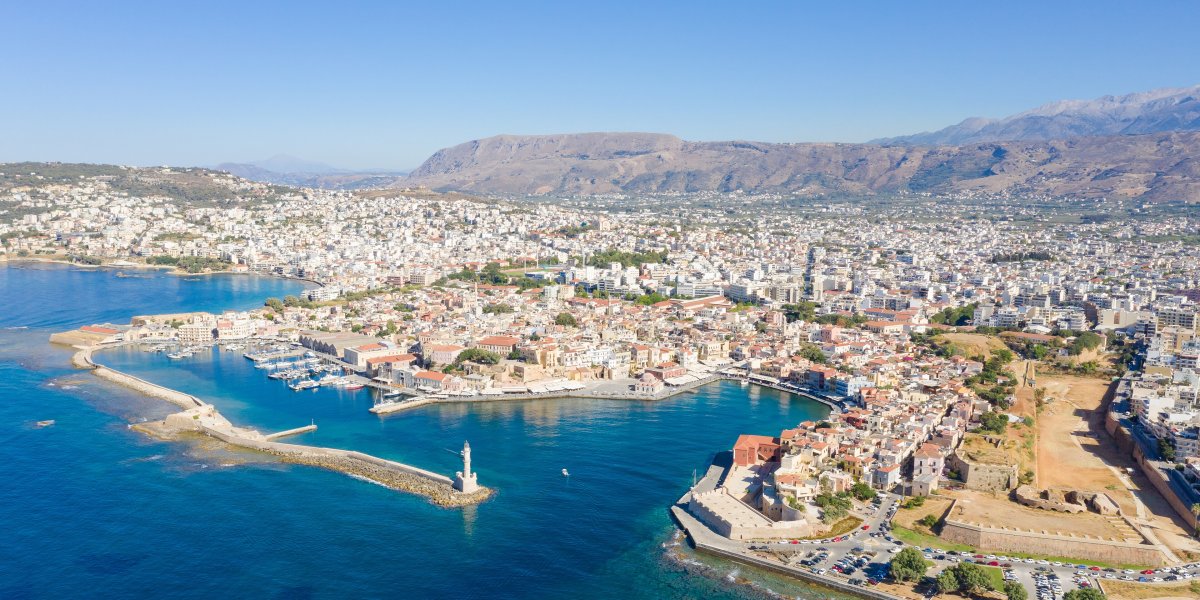
Walk west from Splantzia for eight minutes, past leather workshops on Skridlof Street, and the Old Town suddenly opens to the sea. The Venetian Harbor is a perfect crescent of pastel buildings reflected in turquoise water, with the domed Mosque of the Janissaries anchoring the east end and a stone lighthouse glinting at the far tip of the breakwater. Walk the full arc of the waterfront slowly — every thirty meters, the composition shifts into a different postcard.
Tip: Stand at the east end near the Mosque of the Janissaries for the classic wide-angle harbor panorama — at 11:30 the sun is behind you and the pastel façades across the water glow in full saturated color. Skip every waterfront restaurant on this strip without exception; they survive on location, not food.
Open in Google Maps →12:30
Food
Duck one street behind the waterfront onto Sarpaki — two minutes from the harbor but a different world of taxi drivers and market workers. This tiny fried-fish taverna has a short menu and a shorter wait: the fish was swimming this morning. Order the mixed small-fish plate (€8) and a horiatiki salad (€5), eat fast with your hands, and get back to walking.
Tip: Ask for 'mikra psaria' (small fish) — fried whole, head and all, eaten like chips with a squeeze of lemon. Add a glass of house white for €3. Your total should land around €12–15; if the bill creeps above €20, you've accidentally wandered back into tourist territory.
Open in Google Maps →14:30
Landmark
Walk west along the harbor for ten minutes, past the Firkas Fortress walls — where the Greek flag was first raised on Crete in 1913 — and step onto the stone breakwater extending into open sea. The 1.4-kilometer walk to the lighthouse is one of Europe's finest short strolls: the sea opens on both sides, the old town shrinks behind you, and the only sound is waves breaking on rock. The lighthouse itself is Egyptian-style, rebuilt in the 1830s during Egyptian rule over Crete — it looks like it belongs on the Nile, not the Aegean.
Tip: Time your return walk for 16:00–16:30: walking back toward the harbor with the old town glowing in warm afternoon light ahead of you is the single best view in all of Chania. The breakwater has no shade and no railing — wear sturdy shoes and bring water. Do not attempt this walk in strong north winds; the waves crash over the stones.
Open in Google Maps →19:00
Food
Walk back along the harbor and turn south onto Zambeliou Street — ten minutes from the breakwater entrance. Tamam occupies a converted 15th-century Turkish bathhouse where you can still see the domed ceiling and stone arches above your table. The kitchen bridges Cretan and Ottoman traditions: smoked apaki pork, slow-cooked lamb with wild stamnagathi greens, and boureki — Chania's own zucchini-potato pie that exists nowhere else in Greece.
Tip: Order the boureki (€9) — it is unique to Chania and this version is definitive. Reserve by phone for 19:00 to avoid the 20:00 crush; average dinner with wine runs €22–28. On your walk down Zambeliou, touts will try to steer you into other restaurants with 'special menus' and 'free dessert' — they earn a commission, and every one of those places is worse than where you're already headed.
Open in Google Maps →Jump to day
09:00
Landmark
Take the number 2 bus from Heraklion's Lions Square or a taxi — the 20-minute ride south through olive groves and low hills sets the mood. This is the oldest palace complex in Europe, seat of the Minoan civilization and mythical home of the Minotaur's labyrinth. Walk the Throne Room, the Grand Staircase, and the crimson-columned Central Court — the restored frescoes of bull-leapers and dolphins bring 3,700-year-old life sharply into focus, and you realize this place was a thriving city a full millennium before Athens existed.
Tip: The site opens at 08:00 in summer — arriving by 09:00 still puts you ahead of the cruise-ship crowds that flood in after 10:00. Enter through the south entrance and head straight to the Throne Room before tour groups arrive. Buy the €20 combined ticket here (covers both the palace and the Archaeological Museum back in town, saving €7). The site has almost no shade, so bring water and a hat. Skip the freelance 'guides' who approach in the parking lot; the official audio guide (€5) at the ticket booth is better.
Open in Google Maps →11:30
Museum
Take the number 2 bus back to the city center or a taxi — 20 minutes brings you to Eleftherias Square, where the museum sits. This is the world's finest collection of Minoan artifacts, and seeing it after walking through Knossos makes every piece click into place. The Phaistos Disc, the Snake Goddess figurines, and the original Bull-Leaping Fresco are all here. Room by room, you're walking through four thousand years of a civilization that predated classical Greece by over a millennium.
Tip: If you bought the combined ticket at Knossos, walk straight past the ticket line — it saves both money and a 15-minute queue. Head directly to Rooms III–IV on the ground floor for the finest Minoan masterpieces; these two rooms alone justify the visit. The museum café on the top floor has a quiet terrace overlooking the city — a good spot to decompress before lunch.
Open in Google Maps →13:15
Food
Exit the museum, cross Eleftherias Square, and walk southwest along Dikeosinis Street — a pleasant 7-minute stroll past neoclassical buildings and small squares brings you to Kapetan Charalampi Street. Peskesi occupies a restored Venetian-era stone house and serves dishes reconstructed from ancient Cretan recipes using ingredients sourced entirely from their own farm. The menu reads like an archaeology dig of Cretan cuisine, and every plate arrives looking like it was styled for a food magazine.
Tip: Order the dakos (barley rusk topped with grated tomato and aged xinomyzithra cheese, ~€9) — this is the single dish that defines Crete — and the antikristo lamb slow-roasted over wood fire (~€18). Add a glass of local Vidiano white wine (~€6). Budget €25–30 per person. Arrive by 13:00 to grab a courtyard table without a reservation; by 13:30 the courtyard is full and you'll be seated inside.
Open in Google Maps →14:30
Landmark
Walk north from Peskesi along 25th of August Street — Heraklion's grandest avenue, flanked by the Venetian Loggia, the Church of Agios Titos, and arcaded stone buildings. In 10 minutes you reach the old harbor, where the massive Koules fortress guards the entrance like a stone fist. Rebuilt by Venice in the 16th century, this sea fortress withstood the 21-year Ottoman Siege of Candia — one of the longest in history. Climb to the rooftop for sweeping views across the harbor and out to the open Aegean.
Tip: Afternoon light hits the fortress walls beautifully from the west — shoot from the eastern breakwater walkway for the best angle with the harbor, fishing boats, and fortress all in frame. The rooftop is breezy even on the hottest days. The atmospheric ground-floor vaulted halls occasionally host art exhibitions and concerts in summer — check the poster at the entrance.
Open in Google Maps →16:00
Neighborhood
Walk back south along 25th of August Street for 8 minutes, turning right into the pedestrian zone that opens into Plateia Venizelou — Lions Square. The Morosini Fountain, carved with lions and mythological sea creatures in 1628, anchors the square where Herakliotes have gathered for four centuries. From here, wander without a map: duck into the Basilica of St. Mark (now an exhibition gallery), pass the Bembo Fountain down Kornarou Square, and browse the open-air stalls along 1866 Street. This old town pulses with a lived-in energy that cruise passengers docking for six hours never discover.
Tip: Grab a freddo espresso at one of the tiny cafés flanking the fountain and people-watch as the late-afternoon light turns the stone buildings golden. The pedestrian alleys south of the square toward Kornarou Square are where locals actually shop — far less touristy than the waterfront. For edible souvenirs, the shops along 1866 Street sell local olive oil and thyme honey at half the price of anything near the port.
Open in Google Maps →19:00
Food
From Lions Square, walk 3 minutes east along the pedestrian streets to Georgiadi Street. Erganos is a beloved Heraklion institution serving traditional Cretan home cooking in a stone-walled dining room lined with wooden barrels and old photographs. The menu is handwritten, the raki arrives complimentary, and the atmosphere is pure unpolished Crete — the antidote to every waterfront tourist restaurant.
Tip: Order the boureki (layered potato, zucchini, and mizithra cheese pie baked in olive oil, ~€9) and the apaki (smoked pork loin cured with Cretan herbs, ~€10) — both are island staples done better here than almost anywhere. Budget €25–35 with house wine and complimentary raki. After dinner, pick up your rental car and drive the E75 motorway west to Chania — 2.5 hours on a well-lit highway, arriving around 22:00 to check in. Avoid the seafood restaurants along Heraklion's waterfront strip — they charge triple for frozen fish targeting cruise passengers.
Open in Google Maps →09:00
Landmark
Start your morning at the eastern edge of the Venetian Harbor and step onto the ancient stone breakwater that curves 1.5 kilometers into the sea. The air smells of salt and the only company is fishermen casting lines off the rocks. At the tip stands the Egyptian Lighthouse, built in the 1830s in a Moorish-Egyptian style unique in all of Greece. The walk out and back is meditative, with the entire harbor panorama unfolding behind you — Chania's pastel Venetian facades, the dome of the Mosque of the Janissaries, and the snow-capped White Mountains beyond.
Tip: Go early — by 10:30 the breakwater bakes in full sun with zero shade. Morning light illuminates Chania's waterfront facades from the east, making this the single best photo angle of the entire harbor. Wear sturdy shoes; the stone surface is uneven and slippery near the waterline. The lighthouse is not open to enter, but the walk itself is the point — it's the most peaceful 30 minutes you'll spend on Crete.
Open in Google Maps →10:30
Shopping
Walk back along the breakwater and south through the narrow harbor-side streets for 10 minutes until you reach the grand cross-shaped covered market at the edge of the old town. Modeled after the Marseille fish market and built in 1913, this cruciform hall buzzes with vendors selling Cretan mountain herbs, local graviera cheese, raw thyme honey, smoked sausages, and glistening fish on ice. It's a sensory immersion into the food culture of an island that considers itself the birthplace of the Mediterranean diet.
Tip: The stalls at the center crossroads are priced for tourists — walk deeper into the arms of the cross where locals shop for better prices and more interesting finds. Buy a bag of dried Cretan dittany (~€4), a wild herb that grows only on Cretan cliff faces and makes an extraordinary herbal tea. The cheese vendor in the southwest arm sells aged xinomyzithra that they'll vacuum-seal for travel — one of the best edible souvenirs you can bring home.
Open in Google Maps →12:00
Food
Exit the market's north gate and walk 5 minutes downhill through Skridlof Street — the old leather-goods lane — then turn right on Daskalogiannis Street. To Maridaki is a no-frills seafood spot where Chania locals come for the freshest catch of the day, fried or grilled and served with nothing but lemon and olive oil. There are no harbor views, no tablecloths, and no pretension — just superb fish at honest prices.
Tip: Order the fried calamari (~€10) and the grilled sardines (~€8) — both caught that morning from boats visible in the harbor. Add a plate of horta (boiled wild greens with lemon and oil, ~€5) on the side. Budget €18–25 per person. The waterfront restaurants along the harbor promenade charge €20+ for the same calamari with a view surcharge and inferior quality — this place is two streets back and twice as good.
Open in Google Maps →13:30
Neighborhood
Walk 3 minutes west from the restaurant toward the harbor and turn into the first narrow alley heading south — you're entering Topanas, the old Venetian aristocratic quarter. Crumbling stone mansions with wooden balconies, bougainvillea-draped doorways, and cats asleep on Ottoman-era steps line streets so narrow two people can barely pass. Wander without a map: find the Etz Hayyim Synagogue (one of the oldest in Greece, free entry), the Renieri Gate, and the tiny art galleries tucked into former Venetian storerooms. This is the Chania that existed long before the postcards.
Tip: Topanas is best in early afternoon when the high walls shade the alleys and light filters through overhead grapevines. The streets around Zambeliou and Theotokopoulou are the most photogenic — look for blue-shuttered houses with wrought-iron balconies. The Etz Hayyim Synagogue on Parodos Kondilaki is a moving, contemplative space with a peaceful garden — visit respectfully and leave a small donation.
Open in Google Maps →15:30
Landmark
From Topanas, walk 5 minutes north through the alleys to the harbor's western edge, where the Firkas Fortress commands the entrance. This is where the Greek flag was first raised over Crete in 1913, marking the island's union with Greece after centuries of foreign rule. Climb to the ramparts for a panorama of the entire harbor — the lighthouse you walked to this morning, the Mosque of the Janissaries on the waterfront, and the White Mountains catching afternoon light in the distance. Then descend and stroll the harbor promenade eastward as golden hour begins: the pastel Venetian buildings glow amber, the water turns mirror-still, and you understand why Chania is called the most beautiful city in Greece.
Tip: The fortress ramparts face east, so golden-hour light falls from behind you — ideal for photographing the harbor and lighthouse with warm, even frontlighting. The Maritime Museum of Crete inside the fortress (€4) is small but worth a quick loop if Crete's seafaring history interests you. After descending, grab a chair at any waterfront café and order a glass of Cretan rosé — this is the moment to sit still and let the harbor do the work.
Open in Google Maps →19:00
Food
Walk 5 minutes east along the harbor promenade and turn into Zambeliou Street — Tamam sits inside a converted 15th-century Ottoman bathhouse, with arched stone ceilings, candlelight, and a menu that braids Cretan tradition with Middle Eastern flavors inherited from the island's layered history. Venetian walls, Ottoman architecture, Greek soul — this dinner ties Crete's story together on a single plate.
Tip: Call ahead and ask for a table under the main dome — it's the most atmospheric seat in Chania. Order the lamb with artichokes in avgolemono sauce (~€16) and the baked feta with tomato and peppers (~€9). Budget €28–35 per person with wine. Final warning: avoid the restaurant touts along the harbor who wave laminated menus at passersby — any place that needs to physically pull you in isn't worth entering. Tamam has never had to.
Open in Google Maps →Jump to day
08:30
Landmark
Take bus #2 from Heraklion's Lions Square — a 20-minute ride through olive groves south of the city. Arrive right at opening to walk the royal quarters, the Throne Room, and the Grand Staircase before the first tour buses flood in at 10:00. This is not just a ruin — it is the oldest city in Europe, seat of King Minos and the legend of the Minotaur's labyrinth. Stand at the restored North Entrance and imagine merchant ships arriving at the Minoan port below four millennia ago.
Tip: Enter from the less crowded west court side rather than following the main group through the south entrance. Buy the €20 combo ticket here — it covers the Archaeological Museum in town and saves €7. Bring your own water; the kiosk inside charges triple. A freelance guide at the gate costs around €50 for a private tour and is vastly better than the audio guide.
Open in Google Maps →12:00
Food
Take bus #2 back to Heraklion center and walk two blocks south from Lions Square into a quiet courtyard on Kapetan Charalampi Street. Peskesi is the restaurant that put ancient Cretan cuisine back on the map — every recipe is sourced from monastery manuscripts dating to the 17th century. The dining room is a restored stone townhouse with low lighting, copper pots on the walls, and the scent of slow-roasted herbs drifting from the kitchen.
Tip: Order the lamb with stamnagathi — wild mountain greens foraged from the White Mountains (€16) — and the antikristo slow-roasted goat (€18). The house wine is from their own vineyard in Archanes and costs just €5 a glass. Arrive at noon sharp; by 12:30 every table is taken and they do not take reservations for lunch.
Open in Google Maps →13:30
Museum
Walk five minutes north from the restaurant through the narrow lanes behind the Bembo Fountain — you will pass the old Turkish sebil on your right before emerging on Xanthoudidou Street. This museum holds the greatest collection of Minoan art in the world, and seeing it after Knossos makes every artifact click into place. The Snake Goddess figurine, the Phaistos Disc, the Bull-Leaping Fresco — each one sat inside the palace you walked through this morning.
Tip: Your combo ticket from Knossos covers entry here. Head straight to Room IV for the Phaistos Disc and Room VI for the frescoes before the post-lunch crowd arrives around 14:30. The ground floor Minoan rooms are the must-see — the upper floor Roman collection is skippable if energy is low. Closed on Mondays; check seasonal hours before planning your day.
Open in Google Maps →16:00
Landmark
Exit the museum and walk north along 25th of August Street — Heraklion's grandest boulevard, lined with Venetian-era buildings and the Basilica of St. Mark — straight down to the old harbor in ten minutes. The 16th-century Koules fortress guards the harbor mouth exactly as it did when Venice ruled Crete for four centuries. Climb to the rooftop at this hour and the late afternoon light turns the Venetian arsenals across the water to gold. After the fortress, stroll the harbor mole and find a bench facing west — this is your 30 minutes of unhurried Cretan time.
Tip: The rooftop at 16:30 gives you the best light for photos looking west along the harbor wall toward the arsenals. Skip the dim interior exhibits — the views are the entire point. After the fortress, walk back along the harbor wall to the Venetian Arsenals; their stone arches framing the sea make a far better photo than the fortress itself.
Open in Google Maps →19:30
Food
Walk ten minutes south from the harbor back through Lions Square and into the side streets near the Loggia — Erganos sits in a covered stone courtyard strung with grapevines. This family-run taverna has been feeding Herakliots for generations and the kitchen still runs on grandmother's recipes. The courtyard fills with locals after 20:00 and the atmosphere shifts from quiet restaurant to neighborhood gathering.
Tip: Order the boureki — Heraklion's signature zucchini and potato pie baked with myzithra cheese (€9) — and the chochlioi boubouristi, Crete's famous fried snails with rosemary and vinegar (€10). Budget €20-25 per person with local bulk wine. Avoid the restaurants ringing Lions Square entirely — they charge double for half the quality and serve frozen ingredients to tourists who do not know better.
Open in Google Maps →09:00
Landmark
Take the early KTEL bus from Heraklion to Chania (2.5 hours, departs 06:30 — sleep on the bus). Start at the eastern breakwater near the Venetian Arsenals and walk the full crescent of the harbor in the soft morning light, when pastel façades reflect on still water and fishermen mend nets on the quay. Continue along the outer sea wall to the Egyptian Lighthouse at the tip of the breakwater — the iconic 16th-century sentinel that appears on every postcard of Crete. The walk out to the lighthouse and back is the single most beautiful 40 minutes you will spend on this island.
Tip: Walk the harbor counterclockwise — start from the eastern Arsenali side, not the lighthouse side. This puts the morning sun behind you for photos of the pastel buildings. The lighthouse walk has no shade and heats up fast, so the 09:00 hour is the only comfortable time. Peek inside the Venetian Arsenals along the east wall — the massive stone shipyards are free to enter and wildly photogenic.
Open in Google Maps →11:00
Shopping
Walk south from the harbor up Halidon Street — the old town's main artery — for five minutes until the enormous cross-shaped market hall appears on your right. Built in 1913 and modeled on the Marseille fish market, this is where Chaniots have bought their cheese, herbs, and honey for over a century. The smell of dried oregano and warm rusks hits you at the door. Walk the full cruciform interior — the cheese vendors in the north wing will hand you samples of graviera aged in mountain caves without you asking.
Tip: Buy a bag of dried Cretan mountain tea — malotira, €3 — and a jar of thyme honey from the Lefka Ori mountains (€8). These are the two best edible souvenirs from Crete and cost half what the airport charges. Ask the cheese vendors for aged graviera from Anogia — it is sharper and more complex than the coastal varieties and virtually unknown outside the island.
Open in Google Maps →12:30
Food
Exit the market's west side and walk three minutes through Zampeliou Street — one of the old town's most atmospheric lanes, with laundry lines overhead and cats asleep in doorways. Tamam occupies a converted 15th-century Turkish bathhouse with original stone arches and an intimate interior that feels candlelit even at midday. The menu blends Cretan and Ottoman traditions in a way that captures Chania's layered history on a single plate.
Tip: Order the spicy lamb with yogurt and eggplant (€14) and the baked feta with tomato and peppers (€9). Sit in the back room under the original hamam dome — it is the most atmospheric seat in Chania. Arrive by 12:30; by 13:00 the queue stretches into the street and they do not take reservations.
Open in Google Maps →14:00
Neighborhood
Step out of Tamam and you are already in the Topanas quarter — the old Venetian aristocratic district that is now Chania's most beautiful residential neighborhood. Wander west through Angelou and Theotokopoulou streets where every door is painted a different shade of blue and bougainvillea cascades from stone balconies. Halfway through, find the Etz Hayyim Synagogue — the only surviving synagogue in Crete, painstakingly restored after the war. Its tiny courtyard garden is one of the most peaceful corners of the old town. End at the Schiavo Bastion for sweeping views of the harbor from above.
Tip: Theotokopoulou Street between 14:00 and 15:00 has the best light for photos — the sun angles between the buildings and hits the colored doors perfectly. The synagogue is free but closed Saturdays; leave a small donation. Use this neighborhood for your 30 minutes of free strolling — get deliberately lost in the alleys east of Angelou Street and let the old town reveal itself.
Open in Google Maps →19:00
Food
Walk east along the harbor front past the mosque and around to the quieter eastern arm of the port — Thalassino Ageri sits where the Venetian harbor meets the open sea, with tables right on the water's edge. The owner selects fish from the morning boats personally and the menu changes daily based on the catch. At this hour the sunset paints the lighthouse amber across the water and the entire harbor becomes a sheet of gold beneath your table.
Tip: Ask for the table at the water's edge facing west — it is the best sunset dinner seat in Crete. Order whatever fish is freshest (priced by the kilo, typically €45-55/kg — a portion runs €20-25) and the Cretan seafood risotto (€16). Reserve by phone before 17:00 for a harbor-side table. Avoid the row of identical restaurants in the middle curve of the harbor — they serve frozen fish at the same prices and exist solely for tourists who do not know the difference.
Open in Google Maps →09:00
Landmark
Drive east from Chania to Rethymno — one hour along the coastal highway with the White Mountains falling into the sea on your left. The Fortezza sits on Paleokastro hill above the old town; walk up through the main gate right at opening when you will have the massive Venetian star-shaped citadel nearly to yourself. The ramparts offer a full 360-degree panorama: the Cretan Sea to the north, snow-capped Mount Ida — birthplace of Zeus — to the south. At the center, the Ibrahim Han Mosque with its enormous dome is the most striking Ottoman structure on the island.
Tip: Enter through the main east gate and walk counterclockwise along the ramparts — the north wall gives you an unobstructed view of the sea and the old harbor directly below. At 09:30 the light on the mosque dome is perfect for photos from the northwest bastion. The small archaeological display inside the mosque is underwhelming — spend your time on the walls instead.
Open in Google Maps →11:00
Neighborhood
Descend from the Fortezza through the Porta Guora — the only surviving Venetian gate — and enter the old town at its highest point. Walk south along Ethnikis Antistaseos Street through the heart of a neighborhood where Venetian mansions and Ottoman minarets stand side by side on the same block. Find the Rimondi Fountain in the small square — water still flows from the three lion-head spouts exactly as it has since 1626. Continue through Petychaki Street where woodcarvers and silversmiths still work in doorways no wider than your arm span.
Tip: The Nerantzes Mosque on Vernardou Street — now a concert hall — has a minaret you can sometimes climb for the best rooftop view in Rethymno; ask at the door if it is open. The narrow lanes between Arabatzoglou and Radamanthyos streets are the most photogenic in the old town; late morning light creates perfect shadow patterns on the Venetian stonework.
Open in Google Maps →12:30
Food
Walk three minutes east from the Rimondi Fountain through the old town lanes to one of the most beautiful restaurant courtyards in Greece. Avli occupies a restored Venetian manor house with lemon trees, stone arches, and a fountain trickling quietly in the center. The kitchen elevates traditional Cretan cooking with produce from their own farm in the Amari Valley — this is the restaurant that appears on every serious list of the best dining in Greece and has earned it.
Tip: Order the slow-cooked lamb shank with rosemary and thyme honey (€19) and the Cretan cheese selection plate with their own aged graviera (€12). Sit in the inner courtyard under the lemon tree — the front terrace is louder and less atmospheric. Budget €28-35 per person with wine. Reserve online the day before; walk-ins at lunch rarely get the courtyard table.
Open in Google Maps →14:00
Landmark
Walk downhill five minutes from Avli through the old town's narrowest lanes to the tiny Venetian harbor — a miniature version of Chania's, with fishing boats painted in turquoise and vermilion rocking gently in the swell. The 13th-century lighthouse at the end of the breakwater is postcard-perfect against the afternoon sea. From here, stroll east along the long beach promenade — the sand stretches for 12 kilometers, but even a 20-minute walk along the first stretch with the Fortezza rising behind you and the Cretan Sea beside you is the perfect decompression before leaving this island.
Tip: The small harbor glows brightest between 14:00 and 15:00 when the high sun turns the shallow water electric turquoise. Grab a freddo espresso (€3) from the tiny café at the base of the breakwater, sit on the harbor wall, and do nothing. This is your 30 minutes of unhurried Cretan time — no agenda, no next stop, just the sound of water against old stone.
Open in Google Maps →19:00
Food
Walk west along the waterfront promenade for ten minutes, past the Fortezza headland where the cliff drops straight to the sea, to where the restaurant perches on the rocks at the water's edge. Prima Plora is where Rethymniots celebrate special occasions — the terrace extends over the waves and at sunset the entire western sky ignites while the sea below your table turns molten. This is the kind of last dinner in Crete you will think about on the plane home.
Tip: Reserve a sea-edge table for 19:00 — sunset hits around 20:00 in summer and you want to be settled with wine in hand before it begins. Order the grilled octopus with fava (€14) and the fresh fish of the day (€18-22). Budget €28-35 per person. For tomorrow's departure: Rethymno is one hour to Chania airport and 1.5 hours to Heraklion airport — set your alarm accordingly and take the coastal road for one last look at the sea.
Open in Google Maps →
Trip builder
Plan this trip around Crete
Turn this guide into a bookable rail itinerary with FlipEarth.
Keep exploring
Related cities
More in the same country
FAQ
Frequently asked questions
How many days do you need in Crete?
Most travelers enjoy Crete in 1 days, with enough time for headline sights and a slower meal or museum stop.
What's the best time to visit Crete?
The easiest season for most travelers is Apr-Oct, especially if you want good weather and manageable crowds.
What's the daily budget for Crete?
A practical starting point is about €65 per person per day before hotels, then adjust based on museums, dining, and transport.
What are the must-see attractions in Crete?
A good first shortlist for Crete includes Chania Municipal Market (Agora), Venetian Harbor of Chania, Venetian Lighthouse of Chania.