City Guide
Chartres
France · Best time to visit: Apr-Oct.
Day-by-day plan
Choose your pace
Trip length
09:00
Religious
From the Gare SNCF, walk 12 minutes north up Rue Jehan de Beauce — the twin spires lift above the rooftops the moment you turn the first corner. Step inside the second the doors open at 8:30 and the nave is still empty: morning sun fires through the south rose, and the cobalt panel of Notre-Dame de la Belle Verrière in the south ambulatory glows the deep 'Chartres blue' that no photograph captures. Walk the floor labyrinth if it's a Friday, then circle outside to the Royal Portal on the west façade — the most lyrical Romanesque sculpture in Europe.
Tip: Head straight to the south ambulatory chapel for Notre-Dame de la Belle Verrière before the 10:00 tour buses arrive — that single window is what you came for. The labyrinth is uncovered only on Fridays; every other day chairs cover it. Skip the crypt tour and the tower climb: with one day, the floor-level windows are what makes Chartres Chartres.
Open in Google Maps →11:15
Neighborhood
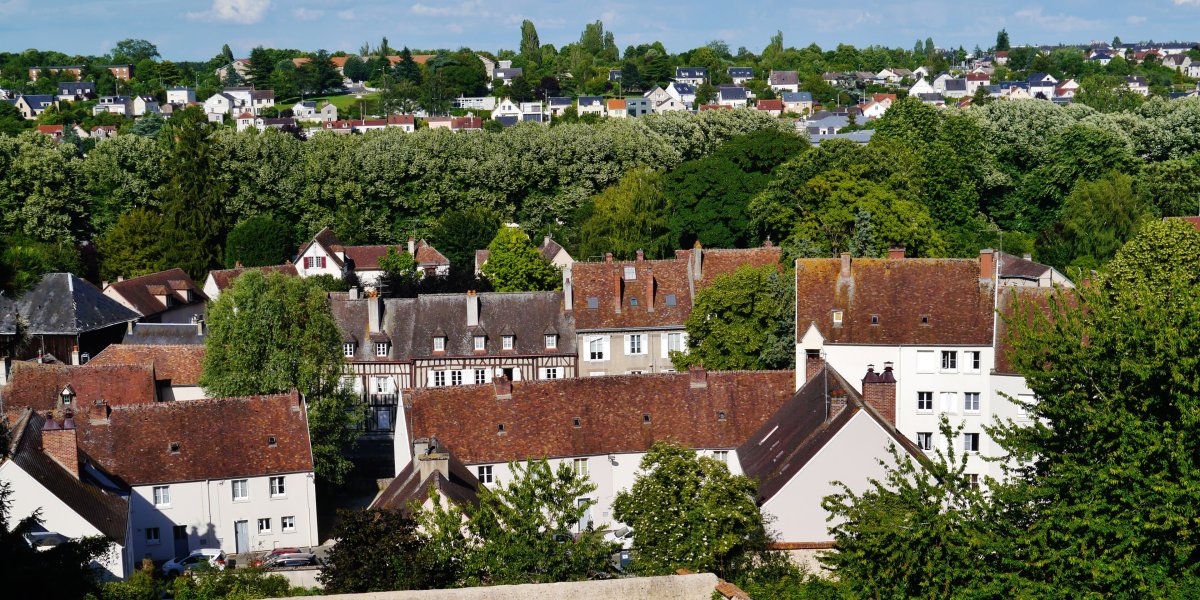
Exit the cathedral's south transept and walk 3 minutes down Rue du Cheval Blanc into the upper old town. Rue des Changes and Rue de la Poissonnerie are lined with 16th-century half-timbered houses; the Maison du Saumon — carved with a leaping salmon and a wild man — is the photogenic showpiece. Wind down through Place Billard (the Saturday market square) and find the tucked-away Escalier de la Reine Berthe, a Renaissance turret staircase that tourists almost never photograph.
Tip: Maison du Saumon faces east — shoot it between 11:00 and 12:30 before the carved façade falls into deep shadow for the rest of the day. The narrow lane Tertre du Bourg-aux-Moines, two steps behind it, is the quietest cobblestone alley in Chartres and shows up on no Google Maps tourist layer.
Open in Google Maps →12:45
Food
Two minutes south along Rue des Changes brings you to La Picoterie, a tiny family-run crêperie that has fed Chartres locals for two decades — a dozen wood tables, a hand-painted slate menu, the smell of buckwheat batter the moment you push the door. Order the galette complète with farm egg and Chartres ham (€11) and the salted-butter caramel buckwheat crêpe (€7), washed down with a bowl of dry Breton cider. Quick, hot, honest.
Tip: Push the door at 12:25 sharp — the dozen tables fill by 12:45 with the préfecture lunch crowd and they don't take reservations for service. Ask if the dame de Chartres galette (creamed leeks, goat cheese, walnuts) is on the day's slate; it's an off-menu specialty the family makes when leeks are good at the market.
Open in Google Maps →14:00
Neighborhood
From La Picoterie, walk 6 minutes east down Rue de la Tonnellerie — the lane steepens and the houses get older as you descend into the Basse-Ville, the medieval craftsmen's quarter that hugs the Eure River. Cross the 13th-century Pont Bouju where dyers once rinsed wool, follow the riverside path north past the wooden lavoirs (washhouses), and look up at every bend: each one frames the cathedral's twin spires from a different angle. This is the Chartres of postcards and Corot paintings.
Tip: The Lavoir de la Foulerie, just north of Pont Bouju, is the most photographed washhouse — shoot it from the east bank between 14:00 and 16:00 when sun hits the timber frame and the still water mirrors it perfectly. Walk slowly: this is the only stretch of the day where you'll have the city almost to yourself, because tour groups never come down here.
Open in Google Maps →16:45
Landmark
Walk 4 minutes south along the east bank, then start up the stepped Tertre Saint-Nicolas — a steep cobbled ramp that climbs out of the river valley back into the upper town. Stop on the third landing from the bottom: this is the single best view in Chartres. The whole cathedral fills the sky above the slate roofs, and in late afternoon the limestone glows honey-gold against the descending sun.
Tip: Time your arrival 30–60 minutes before sunset (April/Oct ≈ 18:00–19:30; May–Sept ≈ 19:30–21:00). Stand on the third landing from the bottom — that's where local photographers wait because the angle isolates the two mismatched spires (one Romanesque, one Flamboyant Gothic) cleanly against the sky. If it's a Chartres en Lumières evening (April–October, after dark), come back here after dinner: this is the only spot where you see the cathedral and the lit-up Pont Bouju in one frame.
Open in Google Maps →19:00
Food
From the top of the Tertre, walk 8 minutes west through Place de la Cathédrale to Place Jean Moulin. Le Tripot is the Chartrains' favorite bistro — a single intimate dining room, a chalkboard menu rewritten every morning, an open kitchen at the back. Order the maison foie gras with fig chutney (€16) and the slow-braised veal cheek with carrot purée (€26), then finish with their warm chocolate moelleux and vanilla ice cream (€10); budget €45–55 with a glass of Loire white.
Tip: Reserve two days ahead by phone — there are only 22 seats and they fill nightly with regulars. If you're solo, ask for a stool at the small bar facing the kitchen pass; you'll see every plate go out. Avoid the restaurants right on Cloître Notre-Dame and Place de la Cathédrale: they run €25 set menus aimed at coach tours, with reheated food and a terrace surcharge that quietly adds 30% to the bill — every Chartrain rolls their eyes at them.
Open in Google Maps →
Trip builder
Plan this trip around Chartres
Turn this guide into a bookable rail itinerary with FlipEarth.
Keep exploring
Related cities
More in the same country
FAQ
Frequently asked questions
How many days do you need in Chartres?
Most travelers enjoy Chartres in 1 days, with enough time for headline sights and a slower meal or museum stop.
What's the best time to visit Chartres?
The easiest season for most travelers is Apr-Oct, especially if you want good weather and manageable crowds.
What's the daily budget for Chartres?
A practical starting point is about €80 per person per day before hotels, then adjust based on museums, dining, and transport.
What are the must-see attractions in Chartres?
A good first shortlist for Chartres includes Tertre Saint-Nicolas Viewpoint.