City Guide
Caen
France · Best time to visit: May-Sep.
Day-by-day plan
Choose your pace
Trip length
09:00
Religious
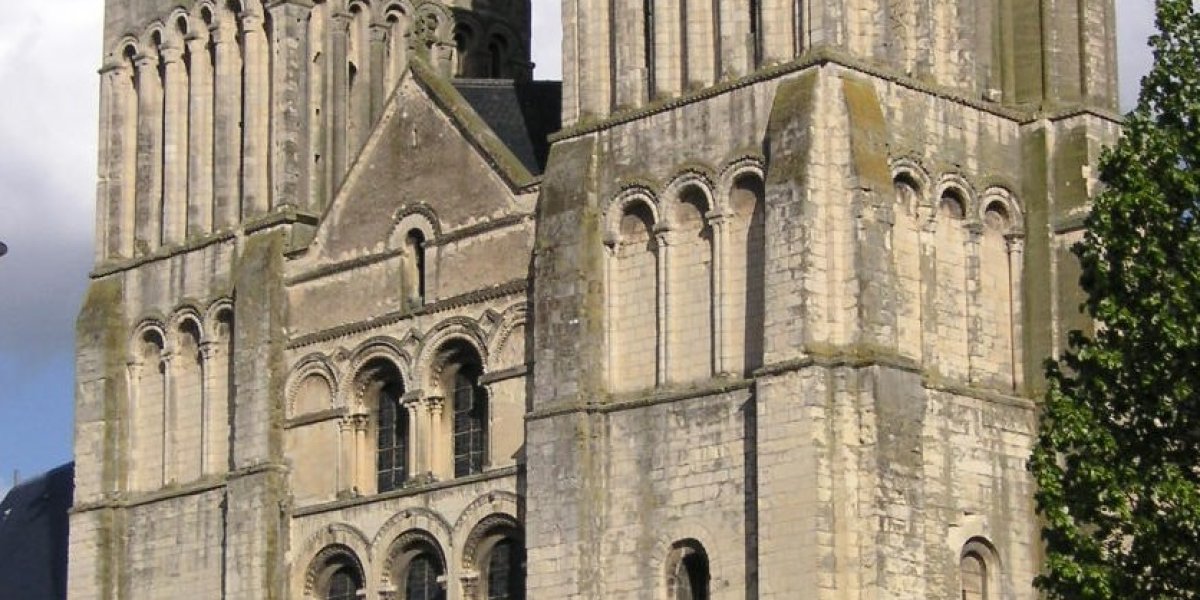
William the Conqueror's penance for marrying his cousin Matilda — a Romanesque abbey founded in 1063, twin Caen-limestone towers rising over a quiet esplanade. Inside the Saint-Étienne church (free), walk to the choir for the single stone slab marking William's tomb: Huguenots scattered his bones in 1562, the Revolution finished the job, and only a thigh-bone was ever found. The abbey survived 1944 because terrified citizens sheltered inside under enormous red crosses painted on the lawn.
Tip: Arrive at the 09:00 opening — you'll have the choir to yourself for ten minutes before the first coach groups land. After the church, slip into the cloister through the small door left of the choir (free, it's technically the side of city hall) — the perfect 18th-century arcade most visitors never realize is there.
Open in Google Maps →11:15
Landmark
Leave the Esplanade heading east, walk Rue Saint-Pierre through the rebuilt pedestrian heart of Caen — 18 minutes past a handful of surviving half-timbered houses on Rue Froide; the grey curtain wall rears up on your left as you reach Place Saint-Pierre. One of medieval Europe's largest fortresses, built by William around 1060 as the seat of Norman power. The 1.2-km rampart circuit is free and almost empty: deep moats, the roofless Salle de l'Échiquier where Norman dukes held court, and a southeast terrace looking straight down on Saint-Pierre's flamboyant spire. Skip the two interior museums today — the ramparts themselves are the point.
Tip: Walk the ramparts counterclockwise from the Porte Saint-Pierre. The southeast terrace at midday gives even, shadow-free light on Saint-Pierre below — the postcard shot of Caen, with the castle wall as foreground. Skip the snack stand just inside the gate (€8 microwaved sandwiches).
Open in Google Maps →13:00
Food
Café Mancel sits inside the castle grounds, behind the Musée des Beaux-Arts — 2 minutes from the southeast terrace, through the rose garden. Stéphane Carbone's bistro with the ramparts on one side and the garden on the other. The €22 lunch formule — a single plat plus dessert — rotates weekly: usually one Norman fish (turbot in cider beurre blanc) and one Norman meat (pork belly with Pays d'Auge apples). Brisk service: you'll be standing at Saint-Pierre's door by 14:00.
Tip: Phone the day before to reserve a terrace table — the indoor room misses the point of eating inside a castle. Ask for the teurgoule if it's on the dessert list: cinnamon rice baked six hours, a Norman dessert almost no foreigner ever orders, €6.
Open in Google Maps →14:15
Religious
Exit the castle through the main Porte Saint-Pierre gate — the church stands directly opposite, 60 seconds across the cobbled square. Late-Gothic flamboyant fronting Place Saint-Pierre, with a Renaissance chevet so densely carved it looks like stone lace. The 78-m spire crashed through the nave on July 7, 1944, when a Royal Navy shell struck the belfry; what stands today is a meticulous 1957 reconstruction, stone-for-stone. The interior is free and open — but the magic is the carved exterior.
Tip: Walk a slow counterclockwise lap of the apse — the north-facing Renaissance panels (acrobats, satyrs, mythical beasts) catch side light around 14:30 in summer and are the most photographed stonework in Caen. The 'Bayeux Tapestry reproductions' sold from kiosks on Place Saint-Pierre are all printed in Italy — skip them entirely.
Open in Google Maps →15:30
Religious
From Saint-Pierre, walk Rue de Bras east, cross the small bridge at Bassin Saint-Pierre for a look at the marina, then climb Rue des Chanoines — 18 minutes of gentle grade, the pale Sainte-Trinité facade appearing at the top of the hill. Matilda's answer to her husband's abbey — founded the same year, 1063, also in penance for their cousin-marriage. Sainte-Trinité (free) shelters her tomb intact: a black Tournai marble slab in front of the high altar, untouched while William's bones were scattered four centuries later. The 11th-century crypt below, with its forest of squat columns, has been in continuous use for 960 years.
Tip: Take the unmarked staircase right of the choir down into the crypt — signage is poor, you simply walk in. The cloister (enter through the regional council building on the right) empties out after 16:00 and is the most peaceful spot in the city. Avoid the cafés along Rue des Chanoines on the descent — every menu is priced for tourists who never come back.
Open in Google Maps →19:00
Food
Walk Rue des Chanoines back down to Quai Vendeuvre, then cut west through Place Saint-Pierre under the floodlit castle walls — 20 minutes, the right evening stroll to close the day. Anthony Caillot's one-Michelin-star kitchen and the most considered Norman cooking in Caen: Bayeux scallops in saffron broth (€32 à la carte), Vire andouille reimagined as ravioli, Calvados-glazed pigeon. The €68 four-course discovery menu is the right call — 28-seat room, exposed-stone walls, no rush, English-fluent service.
Tip: Reserve at least 48 hours ahead through their website — the kitchen closes some Mondays and the small room fills fast. Pay the €12 cheese-course supplement for true Camembert de Normandie AOP from Isigny, almost extinct outside Norman dinner tables. Pitfall: avoid the laminated-menu brasseries along Rue Saint-Pierre between the church and the train station — five-language menus, frozen scallops, €30 to be disappointed.
Open in Google Maps →Jump to day
09:00
Museum
Begin the day at 09:00 sharp when the Memorial opens — the descending spiral into the darkened 'Failure of Peace' gallery hits hardest in an empty room, before the coach groups arrive at 10:30. France's most ambitious WWII museum sequences you chronologically from the rise of Nazism to D-Day to the Cold War; spend the bulk of your time in the Battle of Normandy wing on the lower floor.
Tip: Book the combined 'Mémorial + Half-Day D-Day Minibus' ticket online two weeks ahead (~€89) — the guides are former French military and the schedule slots the beaches in optimal light order. The south entrance on Esplanade Eisenhower has no queue at 08:45; the main north entrance lines up by 09:15.
Open in Google Maps →11:30
Food
Two-minute walk through the Memorial's glass atrium into Café Mémo, the on-site restaurant overlooking the Gardens of Remembrance. Practical fuel before the beaches: the Norman buffet (cider-braised pork, mussels in cream, regional cheeses) is a step above standard museum food, and the kitchen rotates a daily plat régional.
Tip: Order the andouille de Vire plate (€14) — the Norman tripe sausage, an acquired taste but unmistakably local. If you're catching the 13:00 minibus, ask the welcome desk for the boxed picnic (€12) before the museum visit — otherwise you'll be eating it on the coach instead of seeing the bocage out the window.
Open in Google Maps →13:30
Landmark
One-hour drive west on the N13 through the bocage — hedgerow country GIs fought through inch by inch in June 1944. Walk past the visitor center onto the cliff edge: Rudder's Rangers scaled this 30-meter sheer face under fire on D-Day morning. The lunar landscape of bomb craters is exactly as the Rangers left it, untouched by reconstruction.
Tip: Walk all the way out to the seaward observation bunker on the headland's tip — most groups stop at the central monument and miss the spot where the cliff drops directly below your feet and the climb finally makes sense. The cosmetic railings won't catch a fall; stay back a meter from the edge.
Open in Google Maps →15:15
Landmark
25-minute drive east along the coast road to Colleville-sur-Mer. Walk through the modern visitor center, then out under the pines onto the bluff — 9,387 white marble crosses align in perfect geometric rows on a manicured lawn above Omaha Beach. The afternoon sun strikes them head-on; the granite arc of the chapel sits at the far end facing west.
Tip: At 16:00 daily, 'Taps' plays for the flag-lowering ceremony — stand by the reflecting pool where the acoustics carry the bugle across the rows. The 'Walls of the Missing' semicircle behind the chapel is the quietest part of the cemetery; few coach groups walk that far back.
Open in Google Maps →17:00
Landmark
Five-minute drive west and down off the bluff to Saint-Laurent-sur-Mer — park beside the Les Braves sculpture and walk straight onto the sand. The tide is going out late afternoon in summer; the same kilometers the first wave crossed at dawn on 6 June 1944 stretch out in front of you. Golden hour light is unrelenting here, no shade, no break.
Tip: Walk west along the sand for ten minutes toward Vierville-sur-Mer to see the original German bunker WN72 dug into the bluff — most visitors photograph Les Braves and leave. On the drive back, ignore GPS and follow signs to D-514 then A13; the smaller cemetery exit road loops you through Colleville-sur-Mer's one-way village streets and adds 20 minutes.
Open in Google Maps →19:30
Food
Hour drive back to Caen, then a five-minute walk from the castle parking into the Vaugueux quarter — a single cobbled lane of half-timbered houses the 1944 bombs spared. Le Bouchon serves chalk-board Norman bistro cooking that Caennais actually book on Friday nights: cider-braised beef cheek, Isigny butter, terrine de campagne pulled from the slate above the bar.
Tip: Reserve at least three days ahead — the room seats 28 and weekends fill by Tuesday. Order the joue de bœuf au cidre (€22) and a glass of Cambremer cidre brut. Pitfall: skip the look-alike brasseries on rue du Vaugueux closer to the castle — same half-timbered facades, but they cater to coach tours and charge three times as much for prepackaged Norman 'tradition'.
Open in Google Maps →09:00
Religious
Open the day at the abbey William founded in 1063 as deathbed penance for marrying his cousin Matilda. Walk straight up the long Romanesque nave to the high altar — a small marble slab marks where his femur lies, the only bone of the Conqueror to survive Protestant scattering in 1562. The pure Norman geometry overhead is what the entire English Gothic tradition descends from.
Tip: The abbey church is free and opens 08:15; the adjoining Hôtel de Ville (the abbey's former monastery, now Caen city hall) runs paid guided tours of the cloister and refectory at 14:30 weekdays only (€5). Stand directly under the central crossing for the photo — the eight ribs of the lantern tower converge perfectly overhead, but only if you frame from dead center.
Open in Google Maps →11:00
Landmark
Exit Abbaye aux Hommes' north door and walk east along the pedestrianized rue Saint-Pierre for 12 minutes — bakery windows and bookshops the whole way — until the castle ramparts rise at the end of the perspective. William built this in 1060 as the seat of his Norman duchy; enter through Porte Saint-Pierre, walk the ramparts clockwise. The southwest tower frames both abbey spires in one shot.
Tip: The Musée des Beaux-Arts inside the castle (closed Tuesdays) gives free permanent-collection entry — Rubens, Veronese, a Perugino with zero queues at this hour. The rampart walk's northern edge gives the postcard view down onto Saint-Pierre's flamboyant gothic apse — far better than the ground-level view you'll take from the foot of the church later.
Open in Google Maps →12:45
Food
Two-minute walk across the castle's inner court to Café Mancel, tucked beside the Musée des Beaux-Arts. The terrace overlooks the ramparts and the rooftops of the old town — the obvious lunch stop inside the castle walls, and Caennais know it for the kitchen, not the view. Classic Norman bistro cooking, lighter than the previous evening's dinner.
Tip: Order the camembert rôti (€16) — whole baked Camembert from a Pays d'Auge farm with apple compote and grilled bread, the Norman cheese course as a full plat. The €24 lunch menu (entrée + plat + glass of Norman cider) is the value play; à la carte runs 50% more from the same kitchen. Book the terrace the night before — the indoor room is dim and misses the rampart view.
Open in Google Maps →14:30
Religious
Walk east out of the castle's east gate, downhill along rue des Chanoines and across Boulevard Bertrand — 15 minutes to the eastern hilltop where Matilda of Flanders founded her own abbey as the symmetric counterpart to William's. Her tomb sits behind the altar of the Église de la Trinité, a black marble slab in the center of the choir, far plainer than William's setting — and the only one of the two that has never been disturbed.
Tip: Free entry; free guided tour at 14:30 in French, 16:00 in English on weekends only. The eleventh-century crypt under the choir is the unmissable secret — descend the narrow staircase to the right of the altar. Few visitors find it; you'll often be alone among Romanesque capitals carved before the Bayeux Tapestry was stitched.
Open in Google Maps →16:30
Neighborhood
Walk back west 15 minutes through the same streets you took uphill — different angle of light on the limestone facades now — to Église Saint-Pierre at the castle's foot. The flamboyant gothic apse outside is the must-see, twisting stone tracery from 1518 that survived 1944 by sheer luck. Then cross into the Vaugueux quarter behind it: a pocket of half-timbered houses the bombs spared, where Caen's best restaurants cluster.
Tip: Late afternoon (16:30-17:30) is when the apse catches the western sun and the lacework stone glows orange — earlier and the whole eastern face sits in shadow. Pitfall: ignore the 'dégustation de cidre' shops on rue Saint-Pierre with English signs out front — they sell standard supermarket Calvados at triple the price. For real pommeau, walk into Maison Dupont on rue Froide; the family has distilled in Pays d'Auge since 1980.
Open in Google Maps →19:30
Food
Three-minute walk west from Vaugueux onto rue des Croisiers. Anthony Caillot's Michelin-starred dining room is small (20 seats), the cooking precise modern-Norman: turbot finished in Isigny butter, pigeon glazed in old Calvados, langoustines with cider-pickled apple. The wine list is the deepest Norman cider and Loire Valley collection in the city.
Tip: Reserve a minimum of two weeks ahead; closed Sunday and Monday. The €68 weekday Découverte tasting menu is the access point — four courses from the same kitchen as the €110 Grand menu. Ask sommelier Yann for the cider-and-pommeau pairing (€38) instead of the wine pairing — it's what Caillot composes the Norman dishes around, and almost no visitor orders it.
Open in Google Maps →
Trip builder
Plan this trip around Caen
Turn this guide into a bookable rail itinerary with FlipEarth.
Keep exploring
Related cities
More in the same country
FAQ
Frequently asked questions
How many days do you need in Caen?
Most travelers enjoy Caen in 1 days, with enough time for headline sights and a slower meal or museum stop.
What's the best time to visit Caen?
The easiest season for most travelers is May-Sep, especially if you want good weather and manageable crowds.
What's the daily budget for Caen?
A practical starting point is about €120 per person per day before hotels, then adjust based on museums, dining, and transport.
What are the must-see attractions in Caen?
A good first shortlist for Caen includes Château de Caen.