City Guide
Warsaw
Polen · Best time to visit: May-Sep.
Day-by-day plan
Choose your pace
Reisedauer
09:00
Landmark
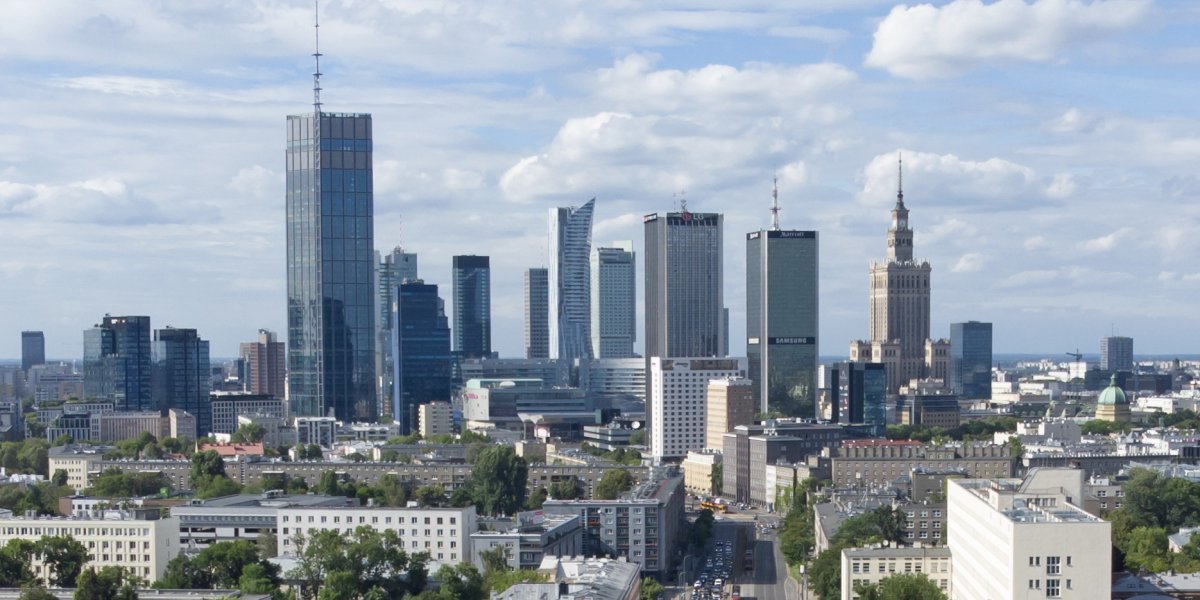
Start at the building Varsovians love to hate. This 237-meter Stalinist wedding cake — a 'gift' from the Soviet Union completed in 1955 — dominates Warsaw's skyline from every direction. Circle the eastern base at Plac Defilad where the morning sun lights up the full tower without shadow, and take in the absurd scale of Soviet ambition now dwarfed by the glass office towers rising on all sides.
Tip: The best photo angle is from the corner of Marszałkowska and Świętokrzyska — you get the full silhouette without lens distortion. Skip the observation deck (30 PLN, 30-minute queue); the free Vistula viewpoint later today is better.
Open in Google Maps →10:30
Neighborhood
Exit Plac Defilad east toward the Centrum metro station — a 10-minute walk through Warsaw's modern business district before you hit the tree-lined elegance of Nowy Świat. Continue north along Warsaw's grandest boulevard, the Royal Route that Polish kings once traveled to their summer palace. Pause at the Copernicus Monument for a photo with the bronze astronomer, then find the plaque on Holy Cross Church's left pillar where Chopin's heart is sealed in the stone. Pass the Presidential Palace sentries and the University of Warsaw's ornate iron gates.
Tip: At Holy Cross Church, Chopin's heart is sealed inside the second pillar on the left — marked by a simple Latin epitaph that most tourists walk right past. The Presidential Palace guard change happens on the hour; if you pass at 11:00, you will catch it.
Open in Google Maps →12:15
Food
Krakowskie Przedmieście delivers you to Castle Square — pause to photograph the 22-meter Sigismund's Column and the Royal Castle's red-brick facade, then walk one block into Old Town along Świętojańska. Zapiecek makes pierogi to order in an open kitchen. Grab a plate of pierogi ruskie (potato and farmer's cheese, ~€6) or the spinach-and-feta szpinakowe (~€7) — fast, no-frills fuel before you tackle the rest of Old Town. Budget €6–10 per person.
Tip: Order at the counter and eat upstairs to avoid the ground-floor crush. The ruskie are what this place does best — skip the meat pierogi.
Open in Google Maps →13:15
Landmark
Step outside and continue north along Świętojańska — in two minutes the narrow street opens into the Market Square, the beating heart of Warsaw's UNESCO World Heritage Old Town. Every colored facade here was reconstructed from wartime rubble using 18th-century paintings as blueprints: the Nazis razed 85% of this city in 1944, and Varsovians rebuilt it stone by stone. Find the Mermaid of Warsaw statue — the city's fierce sword-wielding guardian — then walk north through the Barbican, the red-brick fortification where Old Town meets New Town.
Tip: The northwest corner of the Market Square gives you the widest angle — all four colorful merchant-house facades visible in a single frame with no obstruction. Street musicians set up after 14:00, so the square comes alive as you explore.
Open in Google Maps →15:30
Park
From the Barbican, walk east and descend the stone staircase down the escarpment to the Vistula Boulevards — Warsaw's reclaimed riverfront promenade, opened in 2015. The view back up to Old Town perched on the bluff above is one of the city's most dramatic urban panoramas. Walk south along the water, passing the riverside Mermaid statue (sword raised, far fiercer than her Market Square sister). The late-afternoon light across the river makes this the golden hour of your Warsaw day.
Tip: Grab a cold Tyskie at Barka, the floating barge bar (15 PLN / ~€3.50), and sit on the stone steps facing west — the sunset turns the Old Town cliff face amber. Tourist trap warning: Old Town horse-drawn carriages charge up to 200 PLN (€47) for a 15-minute loop — a scenic scam when you have already walked the best route on foot.
Open in Google Maps →19:00
Food
Walk up from the river via the escarpment stairs — 10 minutes brings you to Podwale street, which runs along the medieval city walls. This cavernous beer hall at Podwale 25 has vaulted brick ceilings and an outdoor garden pressed against the old fortification, and it is where off-duty Varsovians come for serious Polish comfort food. Order the golonka (slow-roasted pork knuckle with crackling skin, ~€13) and start with żurek w chlebie (sour rye soup served in a hollowed bread bowl, ~€7). Budget €12–20 per person.
Tip: Arrive by 18:45 to claim a garden table before the evening rush. Order the golonka first — it takes 20 minutes to prepare — then the żurek as a starter while you wait.
Open in Google Maps →Zu Tag springen
09:00
Landmark
Every pastel facade around this square was rebuilt by hand from wartime rubble using Canaletto's 18th-century paintings as blueprints — making it the most improbable UNESCO World Heritage Site in Europe. At nine in the morning the sun gilds the east-facing townhouses in amber, and you'll share the cobblestones with no one but joggers and the bronze Warsaw Mermaid standing guard at the center.
Tip: Photograph from the southeast corner of the square — you get the full sweep of colorful facades with the Mermaid in the foreground. Skip the horse-drawn carriage rides (150 PLN for 15 minutes of clip-clopping through streets you're about to walk for free).
Open in Google Maps →10:00
Museum
Walk through the Market Square's south passage onto Castle Square — 2 minutes past the Sigismund's Column, Warsaw's oldest secular monument. The castle was dynamited by the Nazis in 1944 and painstakingly rebuilt over two decades; head straight to the Canaletto Room on the first floor, where 23 paintings of pre-war Warsaw are so precise they served as architectural blueprints for the city's resurrection. The gilded Throne Room and Marble Room deserve a slow, deliberate pass.
Tip: Enter right at the 10:00 opening — by 11:00 tour groups fill the Canaletto Room and you'll see backs instead of paintings. Admission is free on Wednesdays. Closed Mondays in winter season.
Open in Google Maps →12:00
Food
From the Castle entrance, turn right and walk 3 minutes along the medieval brick fortifications on Podwale Street. This cavernous Gothic-cellar beer hall is where office workers celebrate Friday lunch — order the żurek w chlebku (fermented rye soup in a hollowed bread bowl, 22 PLN) and the schabowy z ziemniakami (breaded pork cutlet with potatoes, 35 PLN), the two dishes that define Polish home cooking.
Tip: The downstairs cellar rooms are atmospheric but packed after 13:00 — grab an upstairs table if the cellar is full, same kitchen, more elbow room. Budget 40-55 PLN per person with a Żywiec on draft.
Open in Google Maps →13:30
Landmark
Continue south on Podwale as it curves into Krakowskie Przedmieście — the white neoclassical facade of St. Anne's appears on your right after a 5-minute walk. Climb the narrow 150-step bell tower for Warsaw's single best panorama: Old Town's terracotta rooftops stretching north, the Vistula bending east toward Praga's raw skyline, and the Palace of Culture's Soviet spire punctuating the south. On clear days the view reaches 30 kilometers.
Tip: Visit between 13:00–14:00 — the sun is high enough to illuminate all of Old Town without harsh shadows. The staircase is single-file in places; on weekdays there is virtually no queue. Entry is just 6 PLN.
Open in Google Maps →15:00
Park
From St. Anne's, walk south along the Royal Route — Krakowskie Przedmieście becomes Nowy Świat, then Aleje Ujazdowskie, a 30-minute stroll past embassies, bookshops, and musical benches that play Chopin when you press a button. Find the Chopin Monument first — the iconic bronze of the composer under a wind-swept willow, surrounded by peacocks — then follow the lakeside path south to the Palace on the Isle, an 18th-century neoclassical jewel perfectly reflected in the surrounding water.
Tip: The Chopin Monument faces west — shoot between 14:00–16:00 for sunlight on his face. Free Chopin piano concerts happen here every Sunday at 12:00 and 16:00 from May through September; arrive 30 minutes early for a bench seat. Palace entry is 25 PLN; the park itself is free.
Open in Google Maps →19:00
Food
Exit Łazienki from the north gate and walk 20 minutes up Aleje Ujazdowskie, past art nouveau embassy mansions, then turn right on Hoża Street. This candlelit natural wine bar is the place that convinced Warsaw it deserved a serious food scene — the beef tartare hand-cut with a knife (42 PLN) and the duck pierogi with burnt butter and sage (38 PLN) are permanent fixtures on an ever-rotating seasonal menu. The room is small, buzzing with locals, and reservationless regret is guaranteed.
Tip: Reserve for 19:00 the morning of your visit — by 20:00 every seat is taken. Budget 100–150 PLN per person with a glass of wine. Avoid the tourist restaurants clustered around Old Town Market Square, especially those with laminated photo menus on the sidewalk — you'll pay double for half the quality.
Open in Google Maps →10:00
Museum
The baroque Ostrogski Palace houses the world's most immersive Chopin experience — interactive touchscreens let you explore his manuscripts note by note, and listening booths play his complete works on period instruments in velvet-lined solitude. The ground floor holds his last piano, an 1848 Pleyel that still bears the worn impressions of his fingers on the ivory keys — the room goes quiet every time someone steps in front of it.
Tip: Book timed-entry tickets online at least a day ahead — walk-in slots sell out by midmorning, especially on weekends. Closed Mondays. Free on Sundays, but expect longer queues and less intimate viewing.
Open in Google Maps →12:00
Food
Walk 12 minutes west from the Chopin Museum, crossing Nowy Świat and the Świętokrzyska intersection to Marszałkowska Street. This government-subsidized milk bar is the last surviving species of communist-era workers' canteen — beloved by students, pensioners, and budget-savvy locals who point at what they want behind the counter. Order kopytka z sosem grzybowym (potato dumplings in mushroom sauce, 10 PLN) and a bowl of barszcz czerwony (clear beetroot broth, 5 PLN) for a lunch that costs less than an airport coffee.
Tip: Arrive before 12:30 — the lunch rush from nearby offices hits hard at 13:00 and the queue snakes to the door. Budget 15–25 PLN total. No reservations, no table service, no English menu — all part of the charm. Study what others are carrying on their trays for inspiration.
Open in Google Maps →13:15
Landmark
Walk 5 minutes south to Plac Defilad, where the Palace of Culture rises 237 meters — a Stalinist wedding cake that Varsovians spent decades resenting and have slowly, grudgingly learned to love. Take the elevator to the 30th-floor outdoor terrace for a 360-degree panorama that reveals Warsaw's split personality: the reconstructed Old Town clustered to the north, the glass-tower financial district pushing west, and the raw Praga district staring back from across the Vistula.
Tip: Position yourself on the east side of the terrace for the best view of the Vistula and Praga's gritty skyline. Varsovians joke that the best view in Warsaw is from this building — because it's the only place you can't see it. Entry is 20 PLN.
Open in Google Maps →14:30
Park
Walk 10 minutes north through the Marszałkowska corridor to Warsaw's oldest public park, opened to commoners in 1727. The Tomb of the Unknown Soldier — three surviving arches of the destroyed Saxon Palace — shelters an eternal flame and the remains of unnamed soldiers from every Polish conflict since the 11th century. Walk east through the tree-lined allées past baroque sculptures and a sundial fountain for a pocket of green calm before the next museum.
Tip: The ceremonial guard change happens every hour on the hour — arrive by 14:50 for a front-row view of the 15:00 rotation. The most elaborate ceremony is at noon on Sundays with a full military escort and brass band.
Open in Google Maps →15:30
Museum
Exit Saxon Garden's north side and walk 10 minutes through Muranów — the neighborhood built on the compressed rubble of the wartime ghetto, its streets sitting visibly higher than the rest of Warsaw. Inside POLIN, a permanent exhibition traces 1,000 years of Jewish life in Poland through immersive room-sized recreations, including the hand-painted ceiling of the Gwoździec wooden synagogue, rebuilt by 300 volunteers from surviving photographs and fragments.
Tip: The exhibition is enormous — for a focused 90-minute visit, concentrate on the Gwoździec synagogue ceiling reconstruction (Gallery 4), the 19th-century market street (Gallery 6), and the Holocaust galleries (7–8). Free admission on Thursdays. Closed Tuesdays.
Open in Google Maps →19:00
Food
Walk 15 minutes south from POLIN through Muranów to elegant Wierzbowa Street at the edge of Saxon Garden. In the candlelit dining room of Poland's vodka heritage house, modern Polish cuisine meets a curated flight of artisanal spirits — start with the herring in three preparations (28 PLN), each paired with a different house-infused vodka, then follow with the slow-cooked beef cheek with pearl barley and root vegetables (68 PLN). This is the meal where Warsaw's history and table finally meet.
Tip: Reserve for 19:00 at least a day ahead — this is the restaurant Varsovians bring guests they want to impress. Budget 120–160 PLN per person with a vodka tasting flight. Avoid the currency exchange booths near the Palace of Culture advertising '0% commission' — the markup is hidden in terrible rates; use bank ATMs or Kantor exchange offices on side streets instead.
Open in Google Maps →Zu Tag springen
09:00
Landmark
Begin in the square that defines Warsaw's soul. At nine in the morning you will have these pastel facades almost to yourself — tour buses don't unload until after ten. Every building here was reconstructed from wartime rubble using 18th-century paintings by Bellotto as blueprints, making this the most extraordinary act of urban resurrection in European history. The bronze Mermaid at the center, sword raised, is Warsaw's fierce guardian — circle her slowly while the morning sun gilds the eastern townhouses in amber.
Tip: Photograph from the southeast corner — you get the full colorful sweep with the Mermaid in the foreground and no lampposts cutting the frame. The portrait artists along the north side charge 100+ PLN for mediocre sketches; smile and walk past.
Open in Google Maps →10:00
Museum
Exit the Market Square through the southern passage onto Castle Square — Sigismund's Column, Warsaw's oldest monument, towers above you on the left. The Royal Castle opens at 10:00 and the first hour is blissfully uncrowded. Head straight to the Canaletto Room on the first floor, where 23 hyper-detailed cityscapes by Bellotto became the literal blueprints for rebuilding Warsaw after the Nazis dynamited 85% of it. The Marble Room and gilded Throne Room are magnificent, but it is the Canaletto paintings that will stop you mid-step.
Tip: Free admission on Wednesdays — but expect tour groups. Weekday mornings at opening are the sweet spot for a calm visit. Closed Mondays in winter season (October–April). The courtyard is free to enter and gives you a dramatic photo angle with Sigismund's Column framed through the gate.
Open in Google Maps →12:15
Food
From the Castle entrance, walk north through the Market Square and continue along ul. Świętojańska — peek inside St. John's Archcathedral on your left (free, 2 minutes) — until the street opens onto ul. Freta in the New Town. Zapiecek has been handmaking pierogi in its open kitchen since the early 2000s. Order the pierogi ruskie (potato and farmer's cheese, 28 PLN / ~6.50 EUR) — this is their signature and they do it better than anywhere in Old Town — and add the pierogi z kapustą i grzybami (sauerkraut and wild mushroom, 30 PLN / ~7 EUR) for a taste of the Polish countryside. Budget 35–55 PLN per person.
Tip: Go upstairs — the ground floor is cramped and noisy with tour groups. The ruskie are the soul of this menu; skip the meat-filled pierogi, which are ordinary by comparison. If the wait exceeds 15 minutes, walk 100 meters north to Restauracja Polka on Freta for equally excellent modern Polish dishes.
Open in Google Maps →13:30
Landmark
Step outside Zapiecek and turn left — the red-brick semicircle of the Barbican is 30 seconds north. This 16th-century defensive outpost, leveled in the war and rebuilt like everything else, marks the border between Old Town and New Town. Walk through its archway, then continue along ul. Freta into New Town — quieter, greener, and home to Marie Curie's birthplace at number 16 (look for the plaque and the small museum). The New Town Market Square, with the Church of the Holy Sacrament overlooking it, is a peaceful counterpoint to the bustle you left behind. Give yourself 30 minutes of unhurried wandering here — the afternoon light on these streets is luminous.
Tip: A narrow staircase on top of the city walls just south of the Barbican leads to an elevated walkway that most visitors miss — climb up for a rooftop-level view of the red tile rooftops stretching toward the Vistula. The Marie Curie Museum (ul. Freta 16, 11 PLN) is small but beautifully curated; worth 20 minutes if it's not crowded.
Open in Google Maps →19:00
Food
From your afternoon wandering, stroll back south along ul. Freta — Pod Samsonem sits at number 3/5 in a cozy ground-floor room that feels like stepping into a Warsaw grandmother's dining room. This family-run restaurant has served Jewish-Polish cuisine for decades, long before the neighborhood became fashionable. Order the placki ziemniaczane (hand-grated potato pancakes, crispy-edged, with sour cream, 24 PLN / ~5.50 EUR) and the śledź w śmietanie (herring in cream with onion, 22 PLN / ~5 EUR) — two dishes that tell the story of this neighborhood's pre-war soul. Budget 50–80 PLN per person.
Tip: Arrive at 19:00 sharp — by 19:30 the small dining room fills and they don't take reservations for parties under four. Tourist trap warning: the 'medieval-themed' restaurants ringing the Market Square (you'll recognize them by laminated photo menus and aggressive hosts on the sidewalk) charge double for half the quality. Walk past them to Freta without hesitation.
Open in Google Maps →09:00
Religious
Walk south from the Old Town along the Royal Route — Krakowskie Przedmieście is one of Europe's most elegant boulevards, lined with university buildings, palaces, and benches that play Chopin when you press a button. Pass the Copernicus Monument and the Presidential Palace sentries. After 15 minutes you will reach Holy Cross Church, recognizable by the Christ-carrying-the-cross statue at its entrance. Inside, sealed within the second pillar on the left nave, lies Chopin's heart — smuggled from Paris in a jar of cognac after his death in 1849, fulfilling his dying wish to return to Warsaw. At 9 AM the church is nearly empty and the morning light through the stained glass transforms the nave.
Tip: The heart's pillar has a small epitaph in Latin — most visitors walk right past it. It is on the left side, second pillar from the entrance. The church is active, so keep your voice low and dress modestly. Light a candle at the side altar (2 PLN) — a small gesture that connects you to the ritual Varsovians have kept alive for generations.
Open in Google Maps →11:00
Museum
From the church, continue south down Nowy Świat — Warsaw's most famous shopping street, buzzing with café terraces. If you are early, stop at E. Wedel Chocolate Lounge (Nowy Świat 33) for the legendary hot chocolate served from a copper pot. Turn left on ul. Tamka and walk 3 minutes up to the Ostrogski Palace, a baroque gem perched on an elevated terrace housing the world's most immersive Chopin experience. Interactive listening stations let you explore his complete works, and the ground floor holds his last piano — an 1848 Pleyel that still bears the worn impressions of his fingers on the ivory keys. The basement level has an interactive composition experience that is genuinely captivating.
Tip: You MUST book a timed-entry ticket online at least a day ahead — the museum strictly limits visitors per hour and walk-in slots sell out by late morning. Closed Mondays. Free on Sundays but the crowds make it a different experience entirely. The 11:00 slot offers the best balance of calm and natural light in the upper galleries.
Open in Google Maps →13:15
Food
Exit the Chopin Museum and walk west along ul. Tamka, then turn left onto ul. Hoża — a 12-minute walk through a quiet residential neighborhood that gives you a feel for everyday Warsaw away from the monuments. Bar Bambino is a milk bar (bar mleczny), a surviving relic of communist-era subsidized workers' canteens that still feeds Warsaw's students, pensioners, and office workers at absurdly low prices. Order the kotlet schabowy (breaded pork cutlet with mashed potatoes, 16 PLN / ~3.70 EUR) and a bowl of barszcz czerwony (clear beetroot broth, 7 PLN / ~1.60 EUR). Tray service, no frills, total authenticity. Budget 15–25 PLN per person.
Tip: The handwritten menu is Polish-only — use your phone camera to translate, or study what other diners are carrying on their trays. Arrive before 13:00 or after 14:00 to dodge the office lunch crush. Cash and cards both accepted now, despite the communist-era ambiance suggesting otherwise.
Open in Google Maps →15:00
Park
Walk south from Bambino along ul. Marszałkowska, then turn left onto Aleje Ujazdowskie — a 20-minute stroll through Warsaw's embassy district, past art nouveau mansions with iron balconies. Enter Łazienki from the northern gate and find the Chopin Monument first — the iconic bronze of the composer beneath a wind-swept willow, surrounded by peacocks. Then follow the lakeside path south to the Palace on the Isle, an 18th-century neoclassical masterpiece reflected so perfectly in the surrounding water that the real building and its mirror image become indistinguishable. The afternoon sun lights up the white facade against the dark lake — this is the single most photographed view in Warsaw and worth every step to reach it.
Tip: The Palace interior is worth entering (the Solomon Hall upstairs is breathtaking), but if the queue exceeds 20 minutes, the view from the south bank of the lake is actually the superior experience. Free Chopin piano concerts happen at the monument every Sunday at 12:00 and 16:00 from May to September — arrive 30 minutes early for a bench. Palace closed Mondays; the park itself is free and open daily.
Open in Google Maps →19:30
Food
Exit Łazienki from the northern gate and retrace Aleje Ujazdowskie north — a 20-minute walk under chestnut trees with the evening light filtering gold through the canopy. Turn right onto ul. Hoża, where this candlelit natural wine bar has become the place that proved Warsaw deserves a serious food scene. The beef tartare, hand-cut with a knife (42 PLN / ~10 EUR), is a permanent fixture and utterly exceptional. The duck pierogi with burnt butter and sage (38 PLN / ~9 EUR) are the best you will eat in this city. Excellent European natural wine list. Budget 100–150 PLN per person with wine.
Tip: Reserve by phone or Instagram the morning of your visit for 19:30 — by 20:00 there is not a free seat in the house. Tourist trap warning: avoid the restaurants on Nowy Świat that station English-speaking hosts on the sidewalk to lure you inside — those are the places locals walk past. If Kieliszki is full, walk 5 minutes to Dyletanci (ul. Rozbrat 44a) for equally inspired modern Polish cooking with a garden terrace.
Open in Google Maps →10:00
Museum
Take any northbound tram from Marszałkowska toward the Muranów district — a 10-minute ride to a neighborhood built on the compressed rubble of the wartime ghetto (its streets sit noticeably higher than the rest of Warsaw). The POLIN Museum's glass facade, split by a symbolic ravine, is architecture as emotion before you even step inside. The permanent exhibition traces 1,000 years of Jewish life in Poland through eight immersive galleries — it is emphatically not only about the Holocaust; most of the exhibition celebrates the extraordinary cultural flowering that preceded it. The hand-painted ceiling of the Gwoździec wooden synagogue, recreated by 300 volunteers from fragments, will stop you cold. Give yourself the full 2.5 hours.
Tip: Free admission on Thursdays, but expect queues. Closed Tuesdays. The audio guide (10 PLN) is excellent and transforms the visit — don't skip it. After exiting, stand before the Monument to the Ghetto Heroes directly in front of the museum — the surrounding plaza is profoundly quiet, even when the city is noisy.
Open in Google Maps →12:45
Food
Walk south from POLIN through the Muranów neighborhood — past ul. Andersa and through the Mirowski Market area — until you reach Plac Żelaznej Bramy after 15 minutes. Hala Gwardii is a beautifully restored 19th-century market hall with iron columns, skylight ceilings, and communal wooden tables, now home to a rotating cast of food stalls run by Warsaw's young chefs. Head for the pierogi stand for hand-pinched dumplings with seasonal fillings, or the Korean stall for contrast. Grab a Polish craft beer from the bar in the back — the microbrewery scene here is superb and vastly underrated. Budget 30–55 PLN per person.
Tip: Weekday lunchtimes are busiest from 12:00–13:00; arriving at 12:45 catches the tail end of the rush with more open tables. On Saturdays, the hall hosts a breakfast market (8:00–14:00) that is one of Warsaw's best food events. The stalls rotate seasonally, so the specific vendors change, but the quality bar is consistently high.
Open in Google Maps →14:30
Landmark
Exit Hala Gwardii and walk 8 minutes east — the Palace of Culture is unmissable at 237 meters. Stalin's 'gift' to Poland in 1955, this socialist realist colossus is the most debated building in the country; Varsovians joke the best view of Warsaw is from its observation deck, because it is the only place you cannot see the Palace itself. Take the elevator to the 30th-floor terrace for a 360-degree panorama: the reconstructed Old Town to the north, the glass financial district pushing west, the raw Praga skyline across the Vistula to the east. On a clear afternoon you can see the river bend for kilometers. Give yourself 30 minutes on top, then stroll through the surrounding Plac Defilad as modern Warsaw hums around this Soviet monument's feet.
Tip: The elevator queue peaks between 11:00 and 14:00; by 14:30 it is usually under 10 minutes. Go on a clear day — the view in fog is worthless and the 20 PLN feels wasted. The entrance is on the eastern side facing Marszałkowska. Skip the 'interior tour' packages sold near the entrance; the observation deck alone is the only must-do.
Open in Google Maps →16:30
Park
From the Palace of Culture, walk east along ul. Świętokrzyska toward the Vistula — a 15-minute walk that takes you through Powiśle, once an industrial riverbank, now Warsaw's most creative neighborhood with street art, third-wave coffee shops, and galleries in converted factories. The Warsaw University Library building looks unremarkable from street level, but climb the exterior path on its east side and you will emerge into one of Europe's best-kept secrets: a lush, multi-level rooftop botanical garden with sweeping views of the Vistula, the Copernicus Science Centre below, and the National Stadium glowing across the river. Free, open to all, and at 16:30 bathed in golden pre-evening light. This is your thirty minutes of unhurried wandering for the day — no agenda, just beauty.
Tip: The garden is open roughly April through October (closed in winter) and closes at dusk — check seasonal hours before walking over. The bridge walkway connecting the two rooftop sections offers the single best panoramic photo opportunity in Warsaw, with the river and stadium in one frame. Almost no tourists know about this place; it is a local sanctuary.
Open in Google Maps →19:00
Food
Walk west from the Library Garden along ul. Dobra, then turn onto ul. Foksal — a gentle 10-minute stroll through Powiśle's leafy residential streets. Opasły Tom (meaning 'The Fat Volume,' a literary reference) occupies a beautiful townhouse at Foksal 17, its interior moody and bookish — think cocktail bar meets literary salon. This is your farewell dinner. The steak tartare (48 PLN / ~11 EUR), hand-cut and dressed at the table, is the dish that put them on Warsaw's map. Follow it with the duck breast with cherry reduction (62 PLN / ~14 EUR). The cocktail list is one of the best in the city. Budget 120–180 PLN per person with drinks.
Tip: Reserve a ground-floor table for the best atmosphere — the upstairs room is quieter but lacks the energy of the main salon. If you have an early flight, Opasły Tom is a 15-minute taxi to Chopin Airport or 25 minutes on bus 175. Tourist trap warning: the 'free walking tour' promoters near the Palace of Culture steer groups toward partner restaurants that pay commission — the food at those places reflects the arrangement. Trust your own choices.
Open in Google Maps →
Trip builder
Plan this trip around Warsaw
Turn this guide into a bookable rail itinerary with FlipEarth.
Keep exploring
Related cities
Nearby cities
More in the same country
FAQ
Frequently asked questions
How many days do you need in Warsaw?
Most travelers enjoy Warsaw in 1 days, with enough time for headline sights and a slower meal or museum stop.
What's the best time to visit Warsaw?
The easiest season for most travelers is May-Sep, especially if you want good weather and manageable crowds.
What's the daily budget for Warsaw?
A practical starting point is about €35 per person per day before hotels, then adjust based on museums, dining, and transport.
What are the must-see attractions in Warsaw?
A good first shortlist for Warsaw includes Palace of Culture and Science, Warsaw Old Town.