City Guide
Athens
Griechenland · Best time to visit: Apr-Jun, Sep-Oct.
Day-by-day plan
Choose your pace
Reisedauer
08:00
Landmark
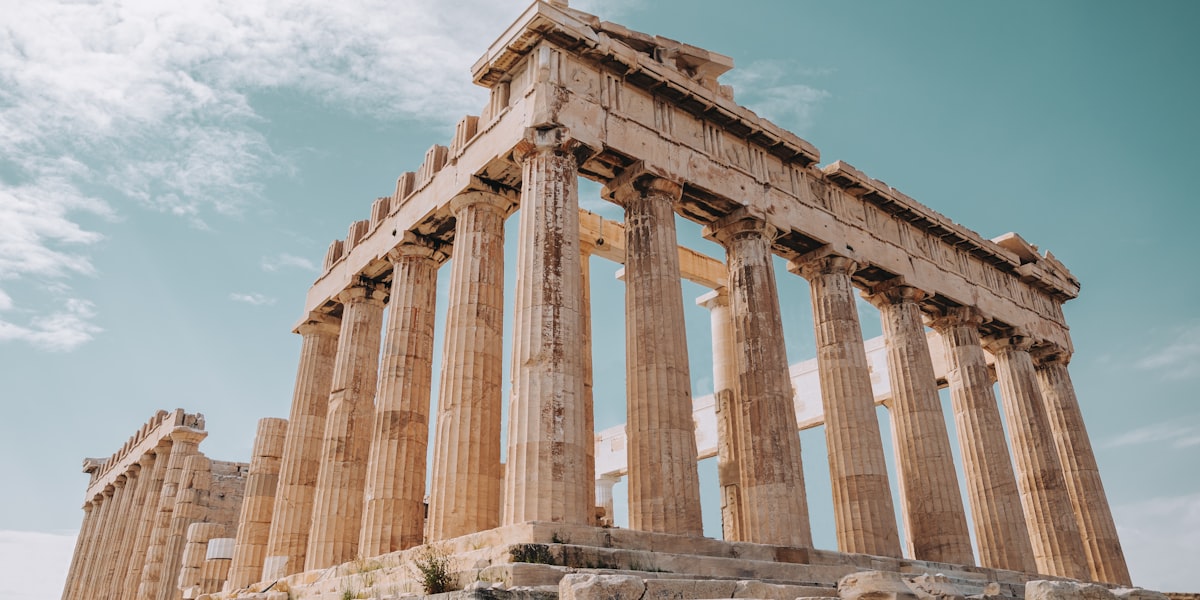
From Acropolis metro station, exit south and walk five minutes along the marble-paved Dionysiou Areopagitou boulevard — café awnings on one side, the Acropolis wall soaring above on the other. The site opens at 08:00, and this first hour is your golden window: a third of the midday crowds, cool air, and clean morning light striking the Parthenon's eastern colonnade at a low, honey-warm angle. Enter from the south slope to pass the Theatre of Dionysus, climb through the monumental Propylaea gateway, and circle the Parthenon counterclockwise to the Erechtheion's Caryatid porch — six marble maidens holding up a roof for 2,400 years.
Tip: Buy your ticket online the night before — summer mornings sell out and the ticket queue alone costs 45 minutes. Use the south slope entrance via Dionysiou Areopagitou, which has far shorter lines than the main west gate. Best Parthenon photo: stand at the northwest corner around 08:30 when the marble glows gold against a still-blue sky.
Open in Google Maps →10:15
Landmark
Exit the Acropolis through the west gate and bear right — the bare, pale-stone hilltop of Areopagus is directly ahead, a 3-minute walk with no fences and no tickets. This ancient limestone outcrop is where the Athenian high council once judged murder trials and Saint Paul preached to skeptical philosophers. But the reason every traveler climbs it is the view: a full 360-degree panorama with the Parthenon looming behind you, the Ancient Agora's restored columns below, and all of Athens sprawling white toward the Saronic Gulf.
Tip: The marble slabs on top are polished glass-smooth by millions of feet — rubber soles only, and never attempt it after rain. Face southeast for the definitive Athens photo: Acropolis filling the upper frame, city stretching to the sea below. At 10:15 the light is warm but not yet harsh — this is the single best free viewpoint in the city.
Open in Google Maps →11:00
Shopping
Descend the north side of Areopagus and follow Adrianou Street downhill — the Ancient Agora's columned Stoa of Attalos lines your right and the noise of Monastiraki hits you before the square does, an 8-minute walk. The square itself is pure Athens chaos: vendors calling out, street musicians, the 15th-century Tzistarakis Mosque, and the best Acropolis-above-the-rooftops photo in the city. Duck into the flea market along Ifestou Street for vintage records, hand-hammered copper briki pots, and leather sandals stitched to measure while you wait — the further from the square you walk, the better the finds and the lower the prices.
Tip: Face south from the center of the square for the classic postcard shot — Acropolis, terracotta rooftops, blue sky all stacked in one frame. Avoid the restaurant row along Adrianou Street: menus in six languages, aggressive touts, and tourist-trap prices at twice the going rate. If anyone offers 'ancient coins' or 'genuine antique' jewelry, keep walking — factory replicas at a 10x markup.
Open in Google Maps →12:30
Food
From Monastiraki Square, walk one block east along Mitropoleos Street — the charcoal smoke will guide you to number 69 on the left. O Thanasis has been the benchmark for Athens kebabs since 1964: a no-frills counter, outdoor tables facing the bustle of Mitropoleos, and meat charcoal-grilled to order in front of you. This is not a sit-down affair — it is fast, loud, and exactly what you need before the afternoon heat arrives. Kebab pitta wrap (κεμπάπ σε πίτα), €3.50 — the signature order, smoky and dripping. Bifteki plate with salad and fries (grilled beef patty stuffed with cheese), €9. Budget €8–12 including a cold Mythos.
Tip: Order at the counter for faster service — table service adds 15 minutes you don't need. If the line stretches past the door, walk two doors down to Savvas for the same quality with less wait. Athens between 14:00 and 17:00 in summer hits 40°C — after lunch, do as locals do: grab a freddo espresso at a shaded café on Ermou Street or duck into the cool of the National Garden and save your legs for the evening.
Open in Google Maps →17:00
Landmark
When the heat breaks, walk east along Mitropoleos — a straight, pedestrian-friendly boulevard lined with churches and neoclassical facades — 10 minutes from Monastiraki to Athens' grand civic square. Syntagma is where modern Greece performs itself: the vast marble plaza, the Hellenic Parliament in its neoclassical grandeur, and at the Tomb of the Unknown Soldier, two Evzone guards in pleated foustanella skirts and pom-pom shoes executing a slow, hypnotic synchronized march. The changing ceremony happens on the hour, every hour — arrive at 16:55 to claim a front-row spot at the base of the steps.
Tip: Best photo angle: shoot from the bottom of the Parliament steps looking upward to frame the Evzones against the columns. The full-dress grand ceremony with a complete platoon is Sundays at 11:00, but the hourly change is intimate and dramatic enough. After the ceremony, slip through the gate behind Parliament into the National Garden for 10 minutes of birdsong and shade — a hidden decompression chamber before dinner.
Open in Google Maps →19:30
Food
Walk two minutes west from Syntagma along Mitropoleos to number 12 — the open kitchen and the buzz of Greek conversation tell you this is where Athenians eat after work, not where tourists end up by accident. The name means 'The Cicada and the Ant,' and the menu is a love letter to regional Greek home cooking done with precision. Start with saganaki — a thick slab of graviera cheese pan-fried until it blisters and squeaks, €8. Follow with gemista — tomatoes and peppers slow-stuffed with herbed rice and a whisper of cinnamon, €10. If you are still hungry, the grilled lamb chops are pink-centered and smoky, €16. Budget €22–28 per person with a glass of crisp Assyrtiko white wine.
Tip: No reservation needed if you arrive before 20:00 — by 20:30 there is a queue out the door. Ask for a table in the back room where the ceiling is lower and the kitchen noise wraps around you like eating at a friend's house. Skip the rooftop restaurants in Plaka that trade on Acropolis views and charge €18 for a mediocre moussaka — the food here is twice as good at half the price, and the view you are taking home is the one on your plate.
Open in Google Maps →Zu Tag springen
08:00
Landmark
Enter through the south slope gate on Dionysiou Areopagitou at 8:00 sharp — at this hour the sacred rock is yours before the tour buses arrive. Walk the Propylaea gateway and emerge onto the plateau to face the Parthenon in soft morning light, its eastern columns glowing gold. Circle counterclockwise to the Erechtheion's Caryatid porch, then pause at the south wall for a panorama stretching from Lycabettus Hill to the Saronic Gulf.
Tip: Buy the €30 multi-site combo ticket at the south slope entrance — the queue is shorter than the main west gate, and it covers the Ancient Agora, Temple of Zeus, and five other sites over five days, saving roughly €22 versus individual tickets.
Open in Google Maps →10:30
Museum
Exit the Acropolis via the south slope and walk straight down to the glass-and-concrete museum visible from the gate — a 5-minute downhill stroll along the pedestrian path. Head directly to the top-floor Parthenon Gallery: the original frieze panels are mounted at the exact orientation they occupied on the temple, with the Parthenon itself visible through floor-to-ceiling windows. Work your way down to the first-floor Caryatids — the ones on the hill above are replicas; these are the 2,400-year-old originals.
Tip: Start on the third floor and work down — most tour groups do the opposite, so you'll have the Parthenon Gallery nearly to yourself. The glass floor in the entrance hall reveals active excavations underneath; pause to look down before heading upstairs.
Open in Google Maps →12:30
Food
Turn right out of the museum onto Falirou Street — Mani Mani is a 3-minute walk at number 10, a whitewashed ground-floor restaurant with serious Peloponnesian cooking beyond the tourist-menu clichés. Order the sautéed wild greens with poached egg and xinomyzithra cheese (€9) and the slow-roasted pork with celery root and lemon (€16). Lunch service moves fast — you'll be in and out in 45 minutes.
Tip: No reservation needed for weekday lunch — arrive by 12:30 and you'll seat immediately. Ask for tap water (νερό βρύσης) instead of bottled; Athens' water is excellent and it's free.
Open in Google Maps →14:00
Landmark
Walk east along Falirou then left onto Syngrou Avenue for 5 minutes — Hadrian's Arch appears at the intersection, framing the Acropolis behind it like a stone picture frame. Step through into the temple precinct: fifteen colossal Corinthian columns still stand from what was once the largest temple in Greece, a project so ambitious it took 700 years to complete. In early afternoon the columns cast long dramatic shadows perfect for photography and the crowds are thin.
Tip: Stand at the southwest corner and aim your camera northeast through the columns — you'll frame both the temple and Lycabettus Hill in one shot. The fallen column near the southeast corner toppled in an 1852 storm and was never re-erected; it gives the best sense of original scale.
Open in Google Maps →15:30
Neighborhood
Walk north from the temple through the National Garden's eastern gate, cross Lysikratous Square, and enter the winding alleys of Plaka. Climb the narrow stone steps until lanes shrink to shoulder-width and bougainvillea spills over whitewashed walls — this is Anafiotika, a hidden Cycladic village built on the Acropolis' north slope by 19th-century islanders from Anafi who recreated their island home in the heart of Athens. Descend through Plaka's pedestrian streets as late-afternoon light turns the neoclassical facades amber.
Tip: Enter Anafiotika via Stratonos Street along the Acropolis wall rather than climbing up from below — less steep, fewer people, and the views down over Plaka's terracotta rooftops are far better. The blue door at Erechtheos 37 is the neighborhood's most-photographed spot.
Open in Google Maps →19:30
Food
Walk down through Plaka along Tripodon Street — Scholarchio sits at number 14, a faded-sign wine tavern with a terrace packed with Athenians sharing meze. Order the grilled octopus with capers and vinegar (€12) and the fava santorinis — silky split-pea puree from Santorini with raw onion and olive oil (€7). Pair with a half-liter of house white from Nemea. Budget €22-30 per person with wine.
Tip: Avoid every restaurant on Adrianou Street between Monastiraki Square and Lysikratous — they employ aggressive touts, serve reheated moussaka at double the price, and no Athenian has eaten there in decades. If someone standing outside tries to hand you a menu, keep walking. Scholarchio needs no tout; the crowd spilling onto the sidewalk is its only advertisement.
Open in Google Maps →09:00
Museum
Take Metro Line 1 from Monastiraki to Victoria — one stop, 3 minutes — then walk east on Patission Street for 5 minutes to the museum's neoclassical colonnade. This is the greatest collection of Greek antiquities on earth. Go straight to Room 15 for the golden Mask of Agamemnon, then Room 21 for the bronze Poseidon — or Zeus, scholars still argue. The Antikythera Mechanism in Room 38, a 2,000-year-old analog computer pulled from a shipwreck, will stop you cold.
Tip: The museum opens at 13:00 on Mondays — avoid scheduling this on a Monday. Rooms 1-5 and Room 15 fill with school groups after 10:30; hit those first, then work backward through the quieter sculpture halls at your own pace.
Open in Google Maps →11:30
Landmark
Walk south from the museum on Patission Street for 20 minutes through the Exarchia neighborhood — graffiti-muraled neoclassical buildings and corner kafeneia where old men play backgammon. Enter the Agora from the Adrianou Street gate. The Temple of Hephaestus rises on the hill to your right — the best-preserved ancient Greek temple in existence, all 34 columns intact. Below it, the reconstructed Stoa of Attalos houses a museum of everyday Athenian life: jury ballots, children's toys, and the ostraka pottery shards citizens used to vote politicians into exile.
Tip: Climb to the Temple of Hephaestus terrace and look southeast — you'll see the Parthenon centered perfectly between the Doric columns, putting 2,500 years of architecture in a single frame. Most visitors only shoot the temple from below at the Stoa and miss this entirely.
Open in Google Maps →12:45
Food
Exit the Agora at Adrianou Street and walk 5 minutes east to Plateia Agia Irini — look for the line at a tiny window with a hand-lettered menu board. Kostas has served what most Athenians consider the city's best kebab from this counter since the 1950s. Order the pork kebab wrap with tomato and onion (€3) — a spiced patty grilled to order over charcoal, folded into warm pita with a squeeze of lemon. Get two. Eat standing in the square under the orange trees.
Tip: Kostas closes when the meat runs out, usually by 14:30. There's a second souvlaki shop on the same square — Kostas is the one on the northeast corner with the single serving window. Cash only.
Open in Google Maps →14:00
Shopping
Walk 3 minutes west from Agia Irini through Monastiraki Square — the blue dome of the Tzistarakis Mosque marks the entrance to the flea market quarter. Avissinia Square is the heart: antique dealers, vinyl shops, and copper vendors spill their wares onto the cobblestones. Continue down Ifestou Street for leather sandals handmade to order at Melissinos — the poet-sandal-maker who once fitted the Beatles. Loop back through Normanou Street's vintage shops.
Tip: Prices in permanent shops are fairly fixed, but at open stalls in Avissinia Square negotiate from 60% of asking. Handmade olive-wood items and copper briki coffee pots make the best souvenirs; skip the mass-produced evil-eye keychains manufactured overseas.
Open in Google Maps →16:00
Landmark
Walk east from Monastiraki along Ermou Street — Athens' main pedestrian shopping avenue, a flat 10-minute stroll past the tiny Byzantine Chapel of Kapnikarea stranded in the middle of the modern road. Arrive at Syntagma Square by 15:50 and position yourself at the foot of Parliament's grand staircase. At the top of every hour, the Evzones presidential guards — in fustanella kilts and red pom-pom shoes — perform an elaborate slow-motion ceremony at the Tomb of the Unknown Soldier, each step taking a full ten seconds.
Tip: Stand on the right side of the tomb facing the building — guards turn this direction during the handover, with Parliament's columns as backdrop. The grand Sunday ceremony at 11:00 draws big crowds; the hourly weekday change is more intimate and far easier to photograph.
Open in Google Maps →19:30
Food
Walk west from Syntagma back along Ermou, then turn left into the narrow streets of Psyrri — 12 minutes on foot. Oineas sits at Aisopou 9, a corner taverna with a vine-covered terrace on a pedestrian lane strung with lights. Order the lamb shank with orzo in tomato sauce (€16) and the baked feta with honey and sesame (€8). The house Nemea red by the glass (€6) is a perfect match. Budget €24-32 per person with wine.
Tip: Reserve for outdoor seating on weekends; weeknights walk in by 19:30. Avoid the touts near Monastiraki Square redirecting tourists to 'a cousin's restaurant' — they earn commission and the food is never worth it. In Psyrri, follow the Greeks: if the terrace is full of locals, sit down.
Open in Google Maps →Zu Tag springen
08:00
Landmark
Enter through the southeast gate on Dionysiou Areopagitou Street and climb the worn marble path toward the Propylaea — the monumental gateway reveals its columns gradually as you ascend, each step widening the frame. At 8 AM the site opens with barely a dozen visitors; by 10 AM there will be hundreds. The Parthenon stands in full morning light, its east façade glowing warm against a blue Attic sky — this is the angle to photograph before the sun climbs too high and flattens the shadows. Walk around to the south side for Athens sprawling to the Saronic Gulf, then to the Erechtheion to see the Caryatid porch up close.
Tip: Buy your ticket online the night before to skip the kiosk queue entirely. The combo ticket (€30) covers the Acropolis plus six other archaeological sites — including the Ancient Agora and Hadrian's Library you will visit tomorrow — and is valid for 5 days. Buy it here and you will not queue again. Wear shoes with grip; the marble paths are polished slippery by 25 centuries of footsteps.
Open in Google Maps →10:15
Museum
Exit the Acropolis from the south slope and walk straight down the pedestrian path — the Museum's glass-and-concrete building is visible below, a 5-minute downhill stroll. The ground floor's glass panels let you see the excavated ancient neighborhood beneath your feet. The star is the top-floor Parthenon Gallery: a glass hall oriented exactly like the real Parthenon above, with the original frieze sculptures mounted at eye level. Stand at the north windows and see the Parthenon itself framed perfectly — the museum was designed so the sculptures and their original home are in direct visual dialogue.
Tip: Head straight to the third-floor Parthenon Gallery first while it is quiet — most visitors linger on the ground floor. The five original Caryatids are on the first floor in a climate-controlled case; compare them with the replicas you just saw on the hill. The museum café terrace offers the best-value Acropolis-view coffee in Athens — €4 for an espresso with that backdrop.
Open in Google Maps →12:30
Food
Walk north from the Museum along Makrygianni Street, cross Dionysiou Areopagitou, and enter Plaka through the narrow lane of Kydathineon — the shade of bougainvillea overhead is a relief after the exposed hilltop, a 7-minute walk. Scholarhio is a traditional ouzeri tucked on Tripodon Street where neighborhood regulars share meze plates under a low stone ceiling. Order the grilled octopus drizzled with olive oil and oregano (€12) and a plate of dolmadakia — vine leaves stuffed with herbed rice (€7). Add a small carafe of house ouzo and you have lunch for €20-25 per person.
Tip: Arrive before 12:45 to get a courtyard table without waiting. Point to the meze display case at the bar and ask what was made today — the daily specials are always better than the printed menu. Skip the moussaka here; the cold meze and grilled items are what they do best.
Open in Google Maps →14:00
Neighborhood
From Scholarhio walk east on Tripodon, then turn uphill on Stratonos — within two minutes the city noise fades and you enter Anafiotika, a secret Cycladic village clinging to the north face of the Acropolis rock. Whitewashed houses with blue shutters, cats dozing on stone steps, jasmine spilling over walls — built in the 1840s by workers from the island of Anafi who recreated their island home in the heart of Athens. Wander without a map; every alley leads to a tiny chapel or a terrace with a rooftop view over the city. Use the 30 minutes of free time here to sit on a doorstep with a cold coffee from a corner kiosk and watch the light shift across the Plaka rooftops below.
Tip: The afternoon light between 14:00 and 16:00 turns the white walls golden and casts long shadows through the alleys — this is the best photography window. Enter from Stratonos Street on the east side and exit on Pritaniou to the west, which drops you back into upper Plaka. Beware of the restaurants lining Adrianou Street below — the ones with laminated photo menus and terrace touts serve frozen food reheated at double the price, and their Acropolis view is no better than what you just had for free in Anafiotika.
Open in Google Maps →19:30
Food
Walk downhill through the cobbled streets of upper Plaka toward Erechtheos Street — a 5-minute stroll past neoclassical houses and lamp-lit terraces. Psaras has occupied this corner since 1898, with a wide stone terrace shaded by a massive plane tree and views toward the Acropolis glowing in its evening floodlights. This is a seafood taverna where the fish is priced by weight from the daily catch. Order the shrimp saganaki — prawns baked in tomato, feta, and ouzo (€14) — and a whole grilled sea bream (€18). Budget €28-38 per person with a carafe of house wine.
Tip: Reserve a terrace table by calling ahead or arriving at 19:15 before the rush. Ask the waiter which fish was caught today and order that — the printed menu includes frozen options not labeled as such. The house barrel wine (€5 per half-liter) is an honest Attic white, better than the bottled options under €20.
Open in Google Maps →09:00
Landmark
Take the pedestrianized Apostolou Pavlou walkway west from the Plaka area — plane trees line the path, and buskers set up by mid-morning, but at 9 AM it is just you and the joggers. Enter the Agora from the north gate on Adrianou Street. This was the civic heart of classical Athens: where Socrates debated, democracy was administered, and citizens voted with pottery shards. The Temple of Hephaestus crowning the hilltop is the best-preserved ancient Greek temple in the world — more complete than the Parthenon itself. Walk through the fully reconstructed Stoa of Attalos, a two-story marble colonnade that now houses a small but riveting museum of everyday Athenian life.
Tip: Free with the combo ticket from Day 1. The Temple of Hephaestus has a roped-off interior, but you can photograph straight through the columns from the east side — the morning sun lights the interior perfectly around 9:30. The Stoa of Attalos museum is cool and shaded; save it for last as a midday refuge from the exposed site.
Open in Google Maps →10:45
Landmark
Exit the Agora's east gate onto Polignotou Street, walk through the Monastiraki backstreets past vintage shops and street art murals — a 6-minute walk brings you to the entrance on Areos Street. Hadrian built this monumental library complex in AD 132, and the scale of the surviving Corinthian columns at the entrance will stop you — each one 8 meters tall, carved from Karystos marble. Inside, a peaceful courtyard with a long reflecting pool has been recently restored, and you can trace the foundations of three successive churches built on top of each other through the Byzantine centuries. Far fewer visitors come here than to the Acropolis, so you may have the courtyard almost to yourself.
Tip: Also covered by the combo ticket. Walk to the far west end of the courtyard to find the excavated remains of the library's reading rooms — the mosaic floor fragments are easy to miss. From the viewing platform at the back, you get a surprising eye-level angle of the Acropolis that most tourists never photograph.
Open in Google Maps →12:00
Food
Step out of Hadrian's Library and walk 2 minutes south to Monastiraki Square — the busy intersection where ancient and modern Athens collide beneath the mosque dome and the metro station canopy. Thanasis has anchored the corner of Mitropoleos Street since 1964, serving what many Athenians consider the city's definitive kebab. Ground lamb is pressed onto flat skewers, grilled over charcoal, and served on warm pita with raw onion, tomato, and a pinch of sumac. Order the kebab plate — two skewers with pita, salad, and tzatziki (€12) — or grab a kebab pita wrap (€3.80) if you want to eat lighter. The aroma of charcoal and spiced meat fills the entire square.
Tip: Sit upstairs for a view over Monastiraki Square and the Acropolis — downstairs fills first but upstairs has the same food and better air. Order the ayran (€2) instead of a soft drink — the cold yogurt cuts through the richness of the lamb perfectly. The kebab here is the real thing; do not bother with the souvlaki shops on Mitropoleos closer to Syntagma that display rotating meat towers in the window.
Open in Google Maps →13:30
Shopping
Walk west from Thanasis across Monastiraki Square and into the narrow lanes around Avissinia Square and Ifestou Street — the flea market begins immediately. Weekdays you will find permanent shops selling leather sandals, copper coffee pots, vintage vinyl, handmade jewelry, and Orthodox icons. Avissinia Square itself is a sunlit plaza ringed by antique dealers with accordion music drifting from the café terraces. Continue down Ifestou and Normanou Streets for the more chaotic stalls: old cameras, military surplus, questionable antiques, and genuine finds jumbled together. Use the 30 minutes of free time to circle back to anything that caught your eye, or sit in Avissinia Square with a Greek coffee and people-watch.
Tip: The permanent shops on Ifestou are open daily, but the open-air antique stalls in Avissinia Square are at their best on Sundays. Melissinos Art Sandals (Agias Theklas 2, a 2-minute detour south) makes custom leather sandals while you wait — the shop has served everyone from the Beatles to backpackers. At the stalls, the first price quoted is typically 40% above what they will accept; negotiate with a smile.
Open in Google Maps →19:30
Food
Walk northeast from Monastiraki into the Psyrri neighborhood along Aiolou Street — the graffiti-lined lanes transition from market chaos to a quieter district of small bars and candlelit tavernas within 5 minutes. Oineas sits on a pedestrian corner of Aisopou Street with tables spilling onto the cobblestones. This is where young Athenians eat when they want taverna food done with ambition: slow-cooked pork cheeks in Mavrodaphne wine (€14), handmade hilopites pasta with wild mushrooms (€12), and a smoked eggplant salad that alone justifies the walk (€8). Budget €22-32 per person with a glass of Nemea red.
Tip: No reservations needed on weeknights — arrive at 19:30 and you will be seated immediately; by 21:00 there is a wait. Ask for the daily dessert, which is never on the printed menu. Avoid the cluster of tourist bars around Agia Irini Square two blocks south — they charge €8 for a beer that costs €4 everywhere else in Psyrri, and their food is an afterthought.
Open in Google Maps →09:00
Museum
Take the metro from Monastiraki to Omonia (one stop, Line 1) and walk north on 28th Oktovriou Street — the neoclassical museum façade appears after 7 minutes, flanked by palm trees. This is the greatest collection of Greek antiquities on earth, and at 9 AM on a weekday you will share the halls with a handful of university students. Go directly to Room 15 for the gold Mask of Agamemnon — 3,500 years old and still the most haunting face in archaeology. Then Room 21 for the Antikythera Mechanism, an ancient analog computer pulled from a shipwreck. The bronze sculptures in Rooms 28-30 include the Artemision Zeus, a 2-meter figure frozen mid-throw — stand in front and the anatomy is so precise it feels alive.
Tip: The museum is closed on Mondays — plan your three days accordingly. Start with the Mycenaean collection (Rooms 3-6) and work chronologically forward; this gives you the emotional arc the curators intended. The gift shop sells museum-quality bronze and ceramic replicas for €15-30 — genuinely better souvenirs than anything in Plaka.
Open in Google Maps →12:00
Food
Take the metro back from Omonia to Syntagma (two stops, Line 2, every 3 minutes) and surface into Syntagma Square. Walk one block south on Mitropoleos Street — the restaurant is at number 12-14, behind a modest doorway that hides a buzzing two-story dining room. The Cicada and the Ant is a modern Greek bistro beloved by office workers from the surrounding ministries, which means the food is honest and the prices sane despite the prime location. The crispy pork shank with honey-mustard glaze (€14) is the signature, and the baked feta wrapped in phyllo with sesame and honey (€9) is the dish you will try to recreate at home. Budget €16-22 per person with a draft beer.
Tip: Arrive at noon when the doors open and you will be seated instantly — by 13:00 the lunch crowd fills every table and the wait stretches to 20 minutes. Sit downstairs near the open kitchen for atmosphere. Skip the restaurants on the pedestrian stretch of Mitropoleos closer to Monastiraki — laminated photo menus are a reliable sign of mediocre food in Athens.
Open in Google Maps →13:30
Landmark
Step outside and walk 2 minutes north to the top of Syntagma Square. The Hellenic Parliament occupies the Old Royal Palace, and in front of it stands the Tomb of the Unknown Soldier flanked by two Evzones — the presidential guards in pleated fustanella skirts, pom-pom shoes, and bolt-upright posture. The changing of the guard happens every hour on the hour: two replacement guards march in with exaggerated slow-motion steps, their shoes cracking against the marble. It is brief, theatrical, and strangely moving. The grand ceremony on Sunday mornings at 11:00 brings the full regiment marching from the barracks with a military band.
Tip: Stand to the right side of the tomb (facing it) for the best photo angle — the guard's profile is framed against the carved relief of a fallen soldier. After the ceremony you may stand beside the guards for a photo; they will not move or blink and it is permitted. The carved inscriptions list every battle in modern Greek history — find ΚΡΗΤΗ 1941 for a reminder of how recent this country's struggles are.
Open in Google Maps →14:30
Park
Walk directly behind the Parliament building and through the iron gates into the National Garden — the temperature drops noticeably as you enter the canopy of 500 species of trees planted by Queen Amalia in the 1840s. This 15-hectare park is Athens' green lung: shaded gravel paths, duck ponds, ancient column fragments lying casually among the flower beds. Walk south through the garden to reach the Zappeion, an elegant neoclassical hall ringed by a café terrace. This is your afternoon rest — sit at the Zappeion café under the plane trees, order a freddo cappuccino (€4.50), and watch Athenians jog past while the Acropolis peeks above the treetops to the west. Use the 30 minutes of free time to simply breathe before your farewell evening.
Tip: Enter from the Parliament side and walk south — this route passes the small turtle pond, a Roman mosaic floor fragment half-hidden by hedges, and exits at the Zappeion. The garden closes at sunset, typically around 20:00 in summer and 17:30 in winter. On scorching summer afternoons when direct sun becomes genuinely dangerous, these shaded paths are the best refuge in central Athens.
Open in Google Maps →19:00
Food
Walk west from the Zappeion along Dionysiou Areopagitou — the grand pedestrian promenade wrapping the south face of the Acropolis — and turn left on Rovertou Galli Street, a 12-minute walk as the Parthenon grows larger above you with every block. Strofi has held this rooftop since 1975, and its terrace delivers the most dramatic farewell Athens can offer: the floodlit Parthenon so close overhead you feel you could reach out and touch the columns. The lamb kleftiko — slow-baked in parchment until it falls apart (€16) — is the order, alongside a classic horiatiki salad with a slab of barrel-aged feta (€9) and a carafe of Assyrtiko white wine. Budget €28-38 per person.
Tip: Call ahead and specifically request a rooftop table with Acropolis view — without a reservation you will be seated in the indoor room, which misses the entire point. Arrive at 19:00 while it is still light to watch the sunset turn the Parthenon gold, then stay as the floodlights click on at dusk. Avoid the taxis idling outside after dinner — they routinely quote €15 for a ride that should cost €5 on the meter. Use a ride-hailing app or walk 5 minutes to Acropoli metro station instead.
Open in Google Maps →Zu Tag springen
09:00
Landmark
From Syntagma, walk south along the wide marble promenade of Dionysiou Areopagitou street — the Acropolis rises above you the entire way, and this 12-minute approach is the grandest in all of Europe. Arrive at 09:00 to walk the Sacred Rock before midday heat and tour-bus crowds descend. Stand at the Propylaea gateway, let your eyes adjust, and the Parthenon appears — 2,500 years of history in golden Pentelic marble. Circle the entire plateau, lingering at the Erechtheion with its Caryatid porch and the south wall for sweeping views over Athens to the sea.
Tip: Buy the €30 combined archaeological sites ticket at the entrance — it covers seven major sites over five days including the Ancient Agora and Kerameikos, saving you both money and queueing time later. For the best Parthenon photograph, walk to the northeast corner of the plateau where the Erechtheion frames the Parthenon at a three-quarter angle — this is the shot that professionals use.
Open in Google Maps →12:00
Food
Descend through the Acropolis south slope exit, follow Dionysiou Areopagitou east past the Odeon of Herodes Atticus, then cut north through Plaka's marble lanes to Mitropoleos street — a 12-minute walk through Athens' oldest neighborhood. This boisterous modern mezedopolio is packed with Athenian office workers at lunchtime, not tourists. The name means 'Cicadas and Ants' and the menu is a celebration of regional Greek ingredients done with real precision. Smoked eggplant with feta and pomegranate (€8.50), crispy zucchini chips with tzatziki (€7), and the signature lamb meatballs (€11). Budget €15–20 per person.
Tip: Arrive by 12:00 sharp — by 12:30 the lunch crowd fills every table and you'll wait 20 minutes. Sit on the upper level for a quieter meal. Skip the frappé and order a freshly squeezed orange juice instead — the frappé here is average, but the juices are superb.
Open in Google Maps →13:30
Museum
Exit the restaurant and walk south on Makrigianni street — 8 minutes downhill with the Acropolis looming above — until Bernard Tschumi's striking modern glass building appears on your left. The collection builds chronologically as you ascend: archaic korai with traces of original paint on Level 1, the haunting original Caryatids in their climate-controlled gallery on Level 2, and the entire Parthenon frieze reassembled on Level 3 in natural light that mirrors the orientation of the actual temple above. The glass floors throughout reveal an active excavation of an ancient Athenian neighborhood directly beneath your feet.
Tip: Go directly to Level 3 first — the afternoon sun floods the Parthenon Gallery from the north, illuminating the marble frieze exactly as Phidias intended 2,500 years ago. The ground-floor glass sections near the entrance are the thinnest; look down for the clearest view of the excavated streets below. The museum café terrace has a direct Acropolis view and is far less crowded than the tourist cafés in Plaka.
Open in Google Maps →16:30
Neighborhood
Exit the museum's north door, cross Dionysiou Areopagitou, and take the stone steps upward past the Church of the Metamorphosis of the Savior — within three minutes the noise of the city vanishes entirely. Anafiotika is a hidden Cycladic village clinging to the northern slope of the Acropolis rock, built in the 1840s by stonemasons from Anafi island who recreated their island home — whitewashed walls, blue shutters, bougainvillea cascading over paths barely wide enough for two. Continue downward through winding lanes of upper Plaka, where tourist shops give way to quiet residential streets with the scent of jasmine and roasting coffee.
Tip: Enter from the steps beside the Church of Metamorphosis of the Savior (Sotiras) on Prytaniou street — this is the back door that most visitors miss entirely. Walk upward and to the left for the best Acropolis views through gaps between whitewashed houses. The neighborhood cats are practically the welcoming committee; the locals are private but friendly if you keep your voice low.
Open in Google Maps →19:00
Food
Wind downhill through Plaka's pedestrian streets, emerge onto Rovertou Galli at the base of the Acropolis south slope — a 10-minute walk. The terrace will be glowing softly on your right. Athenians have celebrated name days and anniversaries at Strofi since 1975. The rooftop terrace faces the Acropolis directly — as the sun sets, the Parthenon turns gold, then is lit by floodlights while you eat. This is not a tourist-trap view restaurant; the kitchen is genuinely excellent. Slow-cooked lamb kleftiko (€19), grilled octopus with fava bean purée (€16), baked feta saganaki with honey (€9). Budget €30–40 per person with house wine.
Tip: Reserve the rooftop terrace for 19:30 — sunset in Athens during spring and autumn paints the Parthenon gold between 19:00 and 20:00. Ask for a table on the left side of the terrace for an unobstructed view. Avoid the restaurants lining Adrianou street in Plaka below — they have barkers at the door, inflated prices, and mediocre food designed for one-time tourist visits.
Open in Google Maps →09:00
Museum
From Syntagma, take Metro Line 1 (green) two stops to Omonia, then walk north on 28is Oktovriou (Patission) street for 5 minutes — the neoclassical façade appears on your right. This is the world's greatest collection of ancient Greek art and one of Europe's most underrated museums. Room 4 holds the gold Mask of Agamemnon — 3,500 years old, still breathtaking. Room 15 has the Artemision Bronze, either Poseidon or Zeus mid-throw, arguably the finest bronze statue ever cast. Give yourself three unhurried hours; rushing this museum is like speed-reading Homer.
Tip: The Antikythera Mechanism in Room 38 — the world's oldest analog computer, recovered from a 1st-century shipwreck — sits in a small corner case that most visitors walk right past. Don't miss it. The museum is closed on Mondays; if your Day 2 falls on a Monday, swap Days 2 and 3. The Mycenaean gold collection (Rooms 3–5) is best seen first when your eyes are fresh for the fine detail work.
Open in Google Maps →12:30
Food
Exit the museum, turn right and walk two blocks south into Exarchia on Tositsa street, then left onto Valtetsiou — 7 minutes through Athens' most counterculture neighborhood, past anarchist bookshops and vibrant street art murals. Rozalia is a tree-shaded courtyard hidden behind an unassuming doorway, feeding Exarchia residents for decades. The garden is draped in jasmine and grapevine, and on warm afternoons you share it with university professors, artists, and neighborhood regulars. Gemista — stuffed tomatoes and peppers (€9), grilled sardines with lemon (€10), horta salad with wild greens (€6). Budget €14–18 per person with a beer.
Tip: Walk through the courtyard to the back tables — the front fills first but the rear is quieter and cooler under the thickest vine cover. This is an all-cash kitchen, so have euros ready. Exarchia's street art changes weekly; the murals on Valtetsiou and Navarinou streets are worth photographing on your walk.
Open in Google Maps →14:30
Landmark
From Rozalia, walk south down Valtetsiou, cross Akadimias, and continue through Kolonaki's residential streets to the funicular station on Aristippou street — a gentle 20-minute walk uphill through increasingly elegant neoclassical townhouses. Take the funicular through a tunnel carved into the limestone (3 minutes, runs every 30 min) and emerge at the highest point in central Athens. The 360-degree panorama is staggering: the Acropolis below to the southwest, Piraeus and the Saronic Gulf glinting to the south, and on clear days the mountains of the Peloponnese on the horizon. The tiny whitewashed Chapel of St. George at the summit completes the scene.
Tip: Ride the funicular up but walk down through the pine-shaded eastern path — 20 minutes of cool shade with constantly changing Acropolis angles through the trees. Afternoon light between 15:00 and 17:00 is best for photography: the sun is behind you as you face the Acropolis, and the Parthenon glows amber. The café at the summit is overpriced and mediocre; save your appetite for Kolonaki below.
Open in Google Maps →16:30
Neighborhood
The pine path descends to Dexameni Square at the eastern edge of Kolonaki — exit the trees and you're in Athens' most elegant neighborhood, a 5-minute transition from wilderness to espresso. Kolonaki is where well-dressed Athenians come to see and be seen. Dexameni Square has a small open-air cinema in summer. Wander south on Patriarchou Ioakim past independent boutiques and galleries, then cut through to Kolonaki Square where café terraces are filled with the city's creative class. The architecture is Athens' finest — ornate balconies, wrought-iron railings, neoclassical doorways with fading grandeur.
Tip: Order an espresso freddo at any café on Kolonaki Square — this cold espresso is Athens' signature drink, and the people-watching from these tables is among the best in Europe. Skip the shops on Voukourestiou street; they're international luxury brands you can find in any major city. The real finds are in the small galleries and design shops on the side streets off Patriarchou Ioakim.
Open in Google Maps →19:30
Food
From Kolonaki Square, walk one block east on Patriarchou Ioakim and turn right onto Xenokratous street — 4 minutes. Open since 1923, Filippou looks frozen in time: white tablecloths, wood paneling, elderly waiters who remember regulars by name. This is where Kolonaki grandmothers have eaten every Thursday for decades. The food is unshowy Athenian home cooking elevated to an art — moussaka (€14) with a béchamel so light it defies physics, and the veal stifado (€16). Budget €25–32 per person with house wine.
Tip: No reservations needed on weekdays; arrive by 19:30 on weekends. Ask for the ground-floor room — the basement dining area is functional but charmless. Do not attempt to navigate the menu yourself; let the waiter tell you what's best today. He has been making this decision correctly for longer than you have been alive.
Open in Google Maps →09:00
Landmark
From Syntagma, walk west on Ermou street past Monastiraki Square and enter through the gate on Adrianou street — 12 minutes through increasingly lively market streets where the modern city dissolves into antiquity. This was the beating heart of Athenian democracy — the marketplace where Socrates debated, citizens voted, and the first jury trials were held. The Temple of Hephaestus at the western edge is the best-preserved ancient Greek temple in the world — every column stands, every architrave intact. The reconstructed Stoa of Attalos houses the Agora Museum with everyday objects from ancient Athenian life.
Tip: Free with the €30 combined ticket. Enter from the Adrianou gate on the north side and walk to the Temple of Hephaestus first — at 09:00 you will have it nearly to yourself. Stand at the temple's east colonnade for a photograph with the Acropolis framed perfectly behind the ancient columns. The shaded path along the south side of the Stoa of Attalos is the coolest spot in the Agora on hot mornings.
Open in Google Maps →11:30
Shopping
Exit the Agora through the Adrianou gate and turn right — Monastiraki Square is 2 minutes ahead, and the flea market lanes radiate south from Avyssinia Square. Not a polished tourist market but a gloriously chaotic warren of shops, stalls, and pavement sellers. Vintage vinyl records, old coins, handmade leather sandals, Ottoman-era copperwork, military surplus, and things you cannot identify but suddenly need. Sundays bring the full outdoor bazaar, but weekday permanent shops are where the real finds hide.
Tip: Avyssinia Square is the heart of the antiques trade — the shops surrounding the square have curated pieces worth browsing seriously. Melissinos Art on Agias Theklas street hand-makes leather sandals and is a genuine Athenian institution since 1920, not a tourist gimmick — past customers include the Beatles and Jackie Onassis. Haggle gently at street stalls (30% off is fair) but fixed shops have set prices.
Open in Google Maps →12:30
Food
Walk north from Avyssinia Square into the narrow lanes of Psyrri — Aisopou street is 4 minutes away through graffiti-covered walls and past small artisan workshops. Oineas is a creative mezedopolio on a quiet Psyrri corner where the chef treats humble Greek ingredients with real imagination. The locals who fill this place at lunch are not here by accident — they have tried every taverna in the neighborhood and keep returning. Fried saganaki with fig jam (€9), slow-braised pork cheeks with orzo (€14), and dakos salad with Cretan barley rusk (€8). Budget €16–22 per person with wine.
Tip: Sit at the sidewalk tables — the interior is cramped. Order the daily special; it is always the best thing in the kitchen that morning. Psyrri transforms at night into a bar district, but at lunchtime it has a quiet village quality with workshops and small galleries that make it one of Athens' most authentic pockets.
Open in Google Maps →14:30
Landmark
From Oineas, walk west on Ermou street past flower sellers and small Byzantine churches — 10 minutes to the quiet entrance on Ermou 148, a gate most visitors walk right past. Athens' most contemplative archaeological site and its ancient cemetery. The Sacred Way to Eleusis once began here, and the Street of Tombs preserves heartbreaking marble reliefs of families saying goodbye — a father touching his daughter's hand, a woman gazing at her husband for the last time. The Eridanos River still trickles through the ruins. The small on-site museum holds original grave stelae of extraordinary delicacy.
Tip: Free with the combined ticket. Kerameikos is the least-visited major archaeological site in Athens — you will likely have the Street of Tombs entirely to yourself. The marble reliefs on the tombs of Dexileos and Hegeso are among the most emotionally powerful works of ancient art anywhere. Come with patience; this place rewards silence and slow looking more than any other ruin in the city.
Open in Google Maps →19:00
Food
Exit Kerameikos and walk south on Salaminos street, then right onto Leokoriou — 7 minutes through the Gazi neighborhood where old gasworks buildings have been converted into galleries and performance spaces. Kanella is an industrial-chic space where the kitchen serves the kind of hearty, unpretentious home cooking Greek grandmothers are famous for — elevated with real technique and careful sourcing. Butcher paper on tables, mismatched ceramics, and aromas that pull you in from the street. Pastitsio with hand-cut pasta (€13), lamb shank with orzo (€17), and loukoumades — honey doughnuts (€7) for dessert. Budget €22–28 per person.
Tip: No reservations; arrive at 19:00 to beat the 20:00 crowd. The pastitsio alone is worth crossing the city for — it bears no resemblance to the cafeteria versions you may have encountered elsewhere. Avoid the tourist restaurants on the Monastiraki side of Ermou street heading east; the quality drops dramatically as you approach the square, with hawkers, laminated picture menus, and prices double what locals pay.
Open in Google Maps →09:30
Landmark
From Syntagma, walk southeast through the National Garden's shaded gravel paths — exit at the southern gate and the all-marble stadium appears across Vasileos Konstantinou avenue, 15 minutes of cool green walking before the day warms. The only stadium in the world built entirely of white Pentelic marble, and the site where the first modern Olympic Games were held in 1896. Walk through the tunnel where athletes have entered for 2,400 years, climb to the top of the marble seats, and stand on the podium on the field — the free audio guide tells the story of every Games held here from antiquity to the modern revival.
Tip: Climb to the very top row of seats — the view of the Acropolis with the Parthenon centered above the marble curve of the stadium is one of Athens' finest photographs, and most visitors stop halfway up. The audio guide included with admission is genuinely excellent and covers both ancient and modern Olympic history; do not skip it.
Open in Google Maps →11:30
Landmark
Exit the stadium's south gate, cross Ardittou street, and walk 5 minutes uphill on Anapafseos avenue — the cemetery entrance appears among tall cypress trees filtering the morning light. Not a morbid detour but an open-air sculpture museum in a garden of cypress and oleander. Founded in 1837, it holds masterworks of neoclassical funerary sculpture by Greece's greatest artists. The 'Sleeping Girl' by Yannoulis Chalepas — depicting a young woman resting on her tomb with marble carved so finely the fabric appears translucent — is considered the finest modern Greek sculpture ever created. Heinrich Schliemann, who uncovered Troy, rests here beneath a temple-shaped tomb decorated with scenes from the Iliad.
Tip: Find the Sleeping Girl first — she is in Section 3 along the central path. Schliemann's elaborate tomb stands at the highest point of the cemetery with a panoramic view over the city. Morning light filtering through the cypress trees makes this visit feel like walking through a 19th-century painting. The cemetery is free, uncrowded, and profoundly peaceful.
Open in Google Maps →12:30
Food
Exit the cemetery and walk east into Pangrati on Ymittou street, then turn left onto Arrianou — 8 minutes through quiet residential blocks where laundry hangs from balconies and cats sleep on parked motorcycles. 'Black Sheep' is Pangrati's modern taverna — exposed brick walls, a rotating chalkboard menu, and a crowd that is entirely local professionals and young Athenian families. The kitchen bridges traditional Greek and contemporary Mediterranean with confidence. Grilled halloumi with fig compote (€9), slow-roasted pork belly with lentils (€15), house-baked bread with smoked butter (€4). Budget €18–24 per person with wine.
Tip: Sit at the communal table near the kitchen for the most convivial experience. Ask the waiter what is freshest today — the menu changes weekly and the specials board is always the best choice. The surrounding blocks of Arrianou street have excellent small shops selling Greek ceramics and single-estate olive oils — the best non-touristy souvenirs in Athens.
Open in Google Maps →14:30
Neighborhood
Step out of the restaurant and turn left — Plateia Varnava is 3 minutes ahead through the heart of Pangrati. This square is Pangrati's living room. Elderly men play tavli under plane trees, children chase pigeons, and the surrounding cafés have the unhurried quality of a neighborhood that has never needed tourists. Wander the surrounding streets: Archimidous for its small art galleries, Eratosthenous for independent bookshops, and the blocks south of the square where neoclassical houses are being slowly restored by young Athenian families. This is the Athens that guidebooks forget — unpolished, warm, and entirely real.
Tip: Order a Greek coffee at a café on the square — specify 'metrio' for medium sweetness — and sit long enough to watch the neighborhood rhythm turn: parents collecting children from school, shopkeepers chatting across the street, the koulouri seller making his rounds. Saturday mornings bring a farmers' market to nearby Plateia Proskopon with local honey, mountain herbs, and village cheeses worth bringing home.
Open in Google Maps →19:00
Food
Walk south from Varnava Square on Arktinou street — 10 minutes through peaceful evening streets with the sound of televisions drifting from open windows, arriving at the corner where a vine-covered courtyard spills warm light onto the pavement. Operating since the 1920s, Karavitis is a time capsule. The courtyard tables sit beneath an ancient grapevine, wine comes from the barrel, and the menu is handwritten in Greek. The charcoal grill sizzles audibly from the courtyard. Charcoal-grilled lamb chops (€14), barrel retsina by the carafe (€6), horiatiki salad (€8), fried peppers with feta (€6). Budget €22–28 per person.
Tip: This is an all-cash taverna — no cards accepted, so bring euros. The barrel retsina is the real thing: pine-resin infused wine from a tradition nearly extinct in modern Athens. Order a small carafe first to see if you love it — most visitors are surprised to find they do. For your last Athenian evening, order slowly, let the grapevine above you do the decorating, and resist any urge to rush. Avoid the 'Greek Night' restaurants near Syntagma that promise bouzouki music and plate-smashing — they are expensive theater for tourists, bearing no resemblance to how Athenians actually spend an evening.
Open in Google Maps →
Trip builder
Plan this trip around Athens
Turn this guide into a bookable rail itinerary with FlipEarth.
Keep exploring
Related cities
Nearby cities
More in the same country
FAQ
Frequently asked questions
How many days do you need in Athens?
Most travelers enjoy Athens in 1 days, with enough time for headline sights and a slower meal or museum stop.
What's the best time to visit Athens?
The easiest season for most travelers is Apr-Jun, Sep-Oct, especially if you want good weather and manageable crowds.
What's the daily budget for Athens?
A practical starting point is about €65 per person per day before hotels, then adjust based on museums, dining, and transport.
What are the must-see attractions in Athens?
A good first shortlist for Athens includes Acropolis of Athens, Areopagus Hill, Syntagma Square and Tomb of the Unknown Soldier.